  Analysis UN Panel of Experts: How Cold War squabbling hinders North Korea sanctionsFormer members of the U.N. Panel of Experts speak on previous disputes and how they affected the final reports  Editors note: This is the second article in a five-part series featuring interviews with former members of the U.N. Panel of Experts. (Part 1 is here | Part 2 is here) | (Part 3 is here) | (Part 4 is here) | (Part 5 is here) The U.N. Panel of Experts (PoE) is facing chronic disagreements among key member states about the goals and techniques of its work. This can manifest itself as evidence that is eventually dismissed from PoE reports, as resistance to investigate alleged sanctions breaches, and as pressure to literally reduce the length of published reports. Occasionally, these differences can even derail reporting entirely. For example, former U.S. Ambassador to the U.N., Nikki Haley, accused Russia of pressuring the PoE into “amending” its reporting in Sept. 2018. While Russia rejected the claims, the dispute caused the midterm report of Sept. 2018 to be blocked — and, consequently, it was never published. More recently, China appears to be a key source of friction to the Panel’s work. NK Pro understands that Beijing recently spearheaded an effort to whittle down the maximum word count for the PoE’s Midterm 2020 report from 20,000 words to just 8,000, for example. There has also been a recurring dispute over the last few reports, particularly between the U.S. and its partners and Russia and China. The disputes were about the quantities of oil that North Korea may have illegally imported through ship-to-ship transfers, culminating into a series of accusatory letters from the three countries that were published in the latest report. So, how does working with the pressure of competing visions impact the PoE’s work? NK Pro spoke to five former members of the Panel to gather their thoughts and analysis. Experts for the interview series include*:
*Please note that Chinese and Russian former members of the Panel declined to take part in all interviews. 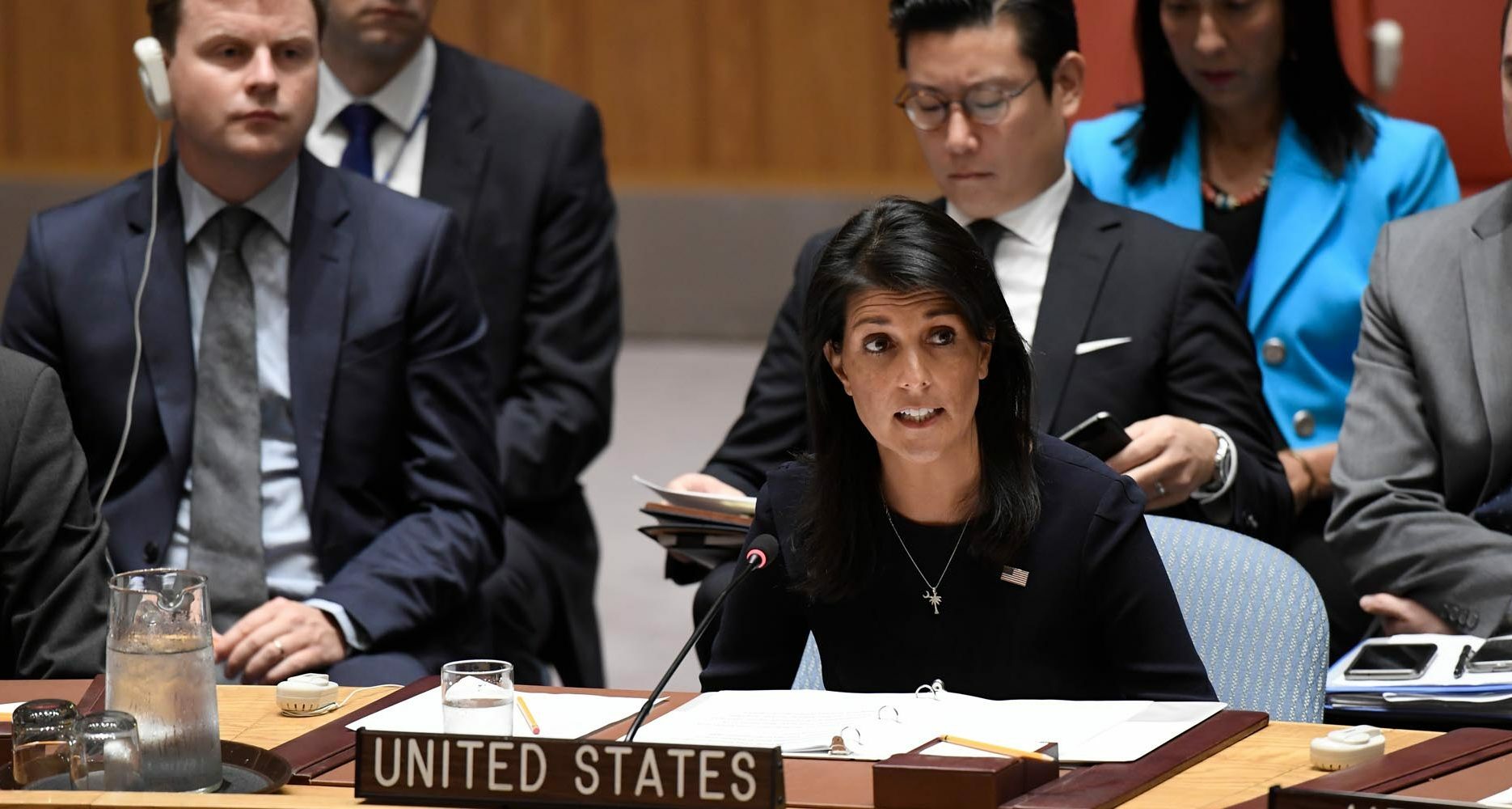 NK PRO: Cold War-style quarreling is playing out between member states sharing information and responding to allegations through the PoE with increasing frequency. What will be the impacts of such obstacles and quarreling likely to be for the PoE should they continue to emerge with increasing frequency in the years ahead? These responses have been lightly edited and condensed for clarity and readability.
What I don’t know is how much it all plays into the Panel itself. And with all the secrecy, I just don’t know how it’s going there ,currently. Are the Chinese and Russian members on the Panel reflecting those quarrels or not? I just don’t know the answer to that, but I hope not. Even if they are not, having that sniping from outside – the feeling that you’re not really supported by the Committee – can make you wonder: “Well, why am I bothering with this?” Here we are, some very highly qualified people doing some very, very good work, and [we] are being told, for example, that “we only want 8,000 words from you — we don’t actually want to hear the whole story. We just want an executive summary.” That really does make you wonder, “Why am I bothering?” So, that’s a problem. Of course, it becomes a problem, too, later on, in recruiting the right people to be on the Panel. And if these problems carry on with increasing frequency, the consequences really depend on the feelings of the Panel.
In response to these issues, you can just decide “Well, what the heck … We’re going to go for this.” Often, that was the reaction we had to [the] attempts by China and Russia to restrict some aspects of Panel reporting. And with the tacit support of all our members, we were consequently able to push back against that. It wasn’t always successful, but nonetheless, it did mean that we still got on with the work.
When I was in the Panel, I and 13 colleagues were really careful in making our case. In order to prevent Russia and China from arguing that our investigation was based on unreliable sources or insufficient evidence, we put in considerable effort to gather a preponderance of evidence through established due procedures, along the lines of U.N. practice. In my view, in recent years, particularly since around 2017, the Panel’s recommendations began to rely too heavily on information provided by anonymous U.N. member states. When we received information from member states, we didn’t use it in raw form. We took every step to verify the credibility of the information from other sources as well. By reading the recent PoE reports, I think the Panel’s practice in this regard has been weakened, considerably, compared to the previous practice. If the Panel relies on information from a single U.N. member state to make a case of sanctions violations, then, of course, China and Russia can make a counter-argument that it’s just an allegation or incredible. And that leads to a quagmire over procedures or whether or not to take it into consideration. Frankly, the Panel’s work should not be about whether or not to believe — it should be about whether you can verify it or not.
Of course, China and Russia are always the unconstructive parties and they try to sabotage the work of the U.N. PoE often, but the Panel also needs to strengthen its practices and procedures in order to prevent such criticism. By the way, it’s not only China and Russia who approach the panel over its investigation or who disregards investigation results: It’s almost all U.N. member states. When a specific country’s national or company was involved in connection with a specific sanctions violation case, that U.N. member state becomes sensitive, and they make the case that the Panel’s work is unreliable. This happens for South Korea, as well. This is the U.N. world. It’s a highly political environment, and so the Panel should find a way to be able to work effectively under those circumstances – meaning, they need to work a lot more. 
Stephanie Kleine-Ahlbrandt: Well, definitely, this is all consistent with attempts by member states to erode the Panel’s independence – which have been increasing in scope and scale in recent years. One of the easy ways to mute the Panel is to pressure the Secretariat to reduce the allotted word count in the Panel’s twice-yearly reports to the Security Council. The Panel’s midterm report of Aug. 30, 2019 was half the size of its previous reports due to such Member State intervention. And even after the reports are issued, disagreements amongst member states then ensure that the recommendations contained inside of them languish. None of this is surprising: Both China and Russia have stated in the Security Council that they would like certain types of sanctions lifted. On Chinese efforts to dismiss PoE evidence? Well, that has become the dynamic. The Panel receives satellite images from member states that cooperate with the Panel, which then are sent in requests for information to China and other relevant member states. The pushback on this sort of intelligence information has become intense, ranging all the way to outward denial of evidence. This is not helped by the fact that satellite imagery is not always completely clear and requires interpretation, which of course lends itself to disagreements. But the pushback also happens in cases where the images are crystal clear. Working with satellite imagery has led to the Panel being subject to intense political interference. Such satellite imagery only became available to the Panel in the past several years due to the sensitivity of sharing such information and the lengthy declassification process. But it’s not hard to wonder why things are as bad as they are: U.S.-China relations are at a historic low, with the Trump administration even openly advocating regime change in China.
In these circumstances, how much can we expect Beijing to cooperate with the DPRK Panel, particularly when it may incriminate itself or undermine its strategic position?
It goes in phases. When the Panel was first set up, there was a lot of obstruction of the work – both within the Panel, of course, by Chinese and Russian experts, and in the 1718 Committee. We then went through a period where there was a lot less obstruction. But things have gotten much worse again in the last few years, reflecting, I think, both growing tensions between China and the United States, and indeed Russia and the West in general … And also, growing unease by China about sanctions against the DPRK.
The technique of simply saying that clear evidence is not evidence is not new. I recall that happening way back in the very earliest reports, also. But I suspect that its resurgence reflects a new confidence in China that, of course, we are seeing in many other areas, too. 
I think that’s symptomatic of a lack of agreement – or an attitude towards mentions in Panel reports – because many member states feel that a mere mention in the report is enough, because of the reputational damage that it incurs. So, it makes it very, very difficult. In recent reports, there are also mentions of, “A couple of experts are of the view that this information can’t be further corroborated.” That just means that the information is politically sensitive, or that some members do not agree with the conclusion of the majority of the Panel. So, this is symptomatic of what is happening. Of course, what is also quite evident from the last three Panel reports is that the incidences of North Korean coal and commodities — such as sand involving vessels going into Chinese waters — have increased exponentially. So, one has got to read into that [and see] that the enforcement of sanctions is not where it should be. Further, being mentioned in the report doesn’t seem to be a deterrent in terms of clamping down on incidences taking place within China territorial waters. That’s what I read into that. Edited by Kelly Kasulis © Korea Risk Group. All rights reserved. |

October 04, 2026Oct 04, 2026

The ultimate resources for professionals working on North Korea
 SHARE
SHARE COPY LINK
 X
X MASTODON
 Martin Uden:
 Katsu Furukawa:
 John Everard:
  Neil Watts: