  Analysis UN Panel of Experts: Why North Korea investigations don’t lead to new sanctionsFormer Panel of Experts members blame wide range of issues for reticence to issue new sanctions designations 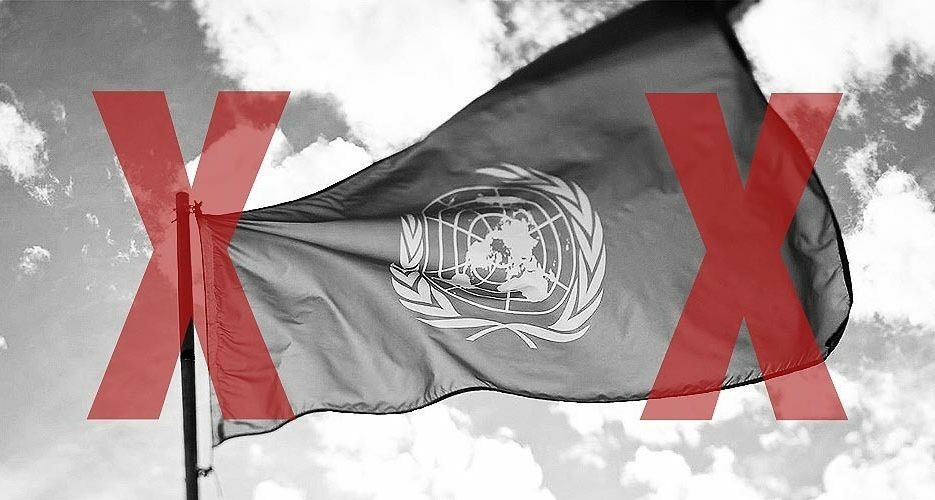 Editors note: This is the first article in a five-part series featuring interviews with former members of the U.N. Panel of Experts. (Part 1 is here | Part 2 is here) | (Part 3 is here) | (Part 4 is here) | (Part 5 is here) The latest U.N. Panel of Experts (PoE) report once again sheds light on North Korea’s ongoing sanctions-breaching activities. The report, officially published on Sept. 29, provides rich new information about how Pyongyang is expanding its missile and nuclear programs, as well as how people and entities worldwide are facilitating illegal imports and exports for the DPRK. The report ultimately adds to a growing body of evidence documenting North Korean sanctions breaches, which carry on despite the U.N.’s elaborate regime of rules. However, North Korea’s widespread and chronic breaching of sanctions isn’t exactly news: The DPRK views UNSC resolutions as unjust and does not respect the authority of the PoE or its findings. The PoE updates the U.N. Security Council twice per year through the publication of midterm and final term reports. But it seems that their investigations, data and satellite imagery are falling on deaf ears. The UNSC hasn’t issued any new sanctions on North Korea since 2017, and the U.N.’s 1718 Committee – responsible for sanctions implementation – has not designated a new person or entity for sanctions since then. So, what is the reason for the ongoing sanctions stasis? And what’s the point of the PoE if its recommendations are never translated into legally binding actions? To find out answers to this and a lot more – four more interview features are coming in the days ahead – NK Pro spoke to five former members of the Panel to gather their thoughts and analysis. Experts for the interview series include*:
*Please note that Chinese and Russian former members of the Panel declined to take part in all interviews.  NK PRO: There have been no new U.N. sanctions on North Korea since 2017, yet the PoE has shown that sanctions-breaching behavior has continued unabated since. What do you think explains the UNSC reticence to issue new designations or sanctions in recent years? And what’s the point of the PoE’s work if sanctions designations never come? These responses have been lightly edited and condensed for clarity and readability.
It was previously the case that the U.S. pushed really hard against China or Russia. And that’s how, in the U.N. Security Council, China and Russia would compromise and eventually agree with the U.S. position on sanctions. And for this, there has to be a considerable investment of political resources by the U.S. to persuade or pressure China and Russia to accept its recommendations. But since early 2018, the U.S. government no longer appears to place any serious investment or political resources [in sanctions]. Therefore, it’s always China and Russia who oppose the strengthening of sanctions, which is why there are no more designations.
And from what I heard, particularly the White House or, more specifically, President Trump is to be blamed because he even refused to sign presidential orders for U.S. unilateral sanctions against violators anymore. So, the lack of political will in the United States, particularly President Trump, is a problem. But having said that, the PoE recommendations can still have some effective impact. Although it is modest, the PoE can have some impact on certain sectors or certain countries. This is notable with the financial industry, which has adapted by strengthening its due diligence measures as part of the FATF (Financial Action Task Force) recommendations. Financial institutions, in general, have the freedom to make their own judgment as to whether or not to grant international remittance from a particular country or particular individuals. So even though PoE recommendations don’t have legal power unless adopted by the Security Council, if their messages are taken seriously by industries, or companies, or some governments, they still have value.
Stephanie Kleine-Ahlbrandt: I would say that in 2017 there was still support for strengthening sanctions against North Korea aimed at bringing an end to nuclear weapons and long-range ballistic missile testing, reducing tensions, and restoring regional stability. There was still a willingness, to a certain extent – among China, Russia, and others with uneven sanctions implementation records – to implement sanctions. But I would say that now, after three years the general appetite to maintain a harsh sanctions regime against North Korea amongst the countries which matter most for implementation has pretty much ended. Many of the smaller, African countries that have also been the site of illicit DPRK activities have also been less interested in being seen as doing the right thing on the DPRK. Pyongyang’s sustained diplomatic outreach since early 2018, the status Trump granted Kim Jong Un with his summits and love letters, and the DPRK’s choice to restrain its nuclear and missile testing has allowed it to assume a position of seeming responsibility and good intention for many in the international community and removed the imperative for strict sanctions implementation – a tough technical job even when the imperative exists. The DPRK has launched more than twenty missiles since 2017. This included the successful firing of a submarine-based missile in October 2019 – for which Washington didn’t even press for any action at the U.N. I can say that there was a lot of surprise by all members of the Security Council that Washington decided not to pursue that, as it was a more black-and-white case than other provocations which led to arguments over whether it met the threshold of the resolutions. That failure to do that, and Trump’s policy to play down sanctions and impede action at the Security Council – together weakened the sanctions regime.
If there are no new resolutions, then there are no updated tools for the Panel to use that would enable it to go after violations as they evolve. New resolutions enabled the Panel to investigate some activities that had already been long-standing but had not yet been part of the sanctions regime. This broadened the sanctions regime and opened up new areas of investigation, while ensuring that at least some of the loopholes and methods of evasion were addressed. The inclusion of clauses to close loopholes and address circumvention was often done on the basis of Panel reporting on those issues. But without a resolution for three years, that dynamic no longer exists. Right now a growing issue in DPRK sanctions is increasing activity by DPRK Advanced Persistent Threat actors using the cyber domain to launch attacks and other activity in evasion of sanctions. While this activity arguably violates the resolutions already on the books, certain member states have argued that without specific mention in a resolution they will not cooperate with the Panel on this issue. They have also used this reasoning to try to limit the Panel’s ability to report on it. You add to this that without member states agreeing to designations, you lose an important mechanism for addressing sanctions violations. A United Nations designation is one of the strongest signals that can be sent to governments that they need to take action against an entity or an individual caught violating the resolutions. Failing that, a weaker argument is that the individual was operating on behalf of a designated entity. And that’s a less convincing determination for many governments hosting this sort of activity. It can require sharing intelligence, which can be difficult and time-consuming, and also investigations by the relevant countries which give these actors all the time they need to morph into a new form that’s more difficult to detect. Just the mentioning of an entity in a Panel report has been sufficient for some countries to take action. Those are often not the countries that host the largest amount of illicit activity, which generally consider that that this sort of mention is not actionable. If they care about appearing in conformity with the resolutions, they might just make superficial moves to ensure that the company is removed from the register and any official offices shut down. But most of these companies exist only paper anyway, and after being deregistered find multiple ways to continue their illicit activities in different forms. A lot of the financial activity we used to investigate passed through front companies registered in Hong Kong, which is one of the easier jurisdictions to register a company or buy one off the shelf so to speak. 
To be frank, I would see that more as a matter of the United States steamroller, as it were. The way that they’ve tried to and have succeeded very often in getting resolutions through, but while leaving a slightly bitter taste at times – and without total support for the strategy. The idea of maximum pressure is one that is very popular with the Trump administration, but it is not actually something that either China or Russia would sign up to. So, sometimes they’ve managed to get something through, but without winning hearts and minds. And that means that when it comes to implementation, the Security Council isn’t actually all there. And again, for big power reasons, countries may be prepared to let those resolutions go through, but won’t actually agree to full implementation.
And if PoE designations never come? I think the designations are an important part, but I never actually saw them as the be-all and end-all of the work of the Panel. We were there to monitor and enforce the sanctions. Purely monitoring, I think, is a very, very important aspect. Just being able to tell the world, “this is what we found out, this is what the DPRK is up to,” has an extremely sanitary effect on the DPRK and making them even more clandestine. But it also has a sanitary effect on other governments knowing that there is a risk that their dirty laundry could be washed in public. Mostly, what you wanted to make sure was that governments were actually keeping an eye on suspicious actors. And that, I think, was an important aspect of the PoE’s work. So I think although it is very sad that designations aren’t coming, from what I can see, the PoE is doing a very good job, keeping abreast of the sanctions and telling the world what’s going on.
So, the Panel makes sure that evidentiary standards are met. And, of course, there is also the involvement of the Office of Legal Affairs to make sure that all the I’s are dotted and T’s are crossed in terms of the legal standing of the Panel’s reports and recommendations. It’s a pretty serious thing. And if someone is recommended for designation, you must know the evidence is pretty strong and that it was thoroughly investigated as far as humanly possible, and that whoever was mentioned had an opportunity to reply to whatever the Panel had to say in its reports. But recently, all those boxes were ticked and yet designations were not forthcoming. Typically, a designation would be sponsored by a member state on the [1718 Sanctions] Committee. They would bring it up and say that they recommended the same, and then the Committee would discuss it and then make a decision on whether to designate it or not. These would be the designations outside of the resolutions.
The resolutions themselves often include (in their annexes) designations. But, as you correctly said, there hasn’t been a resolution since 2017, so that option has been off the table. Also, only the Committee is authorized to make designations itself and these haven’t been forthcoming. One can only conclude that this means either member states don’t feel strongly enough that they are willing to designate an individual or entity, or it’s not politically expedient to bring up the designation. 
The reasons for this blocking, of course, go back to wider issues of power and rivalry by some countries at applying sanctions to the DPRK. Even without designations, I think the reports are very valuable. They certainly inspire anxiety in the hearts of people who might otherwise be inclined to simply flout the sanctions.
I remember on several occasions when I coordinated the Panel, receiving alarmed phone calls by the representatives of countries that we had fingered for having willfully broken sanctions. And I recall requests that paragraphs be excised from the report (which of course, we didn’t), followed by a scramble to do something about the ignominy of being named and shamed in a PoE report. So that remains potent. Also, you have to ask yourself, in the specific case of the DPRK, how effective are designations? Designations in the work of many of the African PoEs are a very effective tool because rich African warlords, for example, like to be able to travel to flaunt their wealth, to live the good life in Western capitals. That applies, of course, a lot less to the North Korean elite. © Korea Risk Group. All rights reserved. |

October 25, 2026Oct 25, 2026

The ultimate resources for professionals working on North Korea
 SHARE
SHARE COPY LINK
 X
X MASTODON
 Katsu Furukawa: First of all, this is simply because the U.S. government is no longer serious and does not push for any U.N. designations over sanctions violators.
 Martin Uden: Why isn’t the Security Council being more supportive? I generally see that as a matter of big power politics and it isn’t necessarily anything to do with the DPRK.
 Neil Watts: When the Panel produces a report and makes recommendations on the basis of an investigation, they make sure that they meet the evidentiary standards in order to mention somebody’s name or an entity’s name. This is because it has serious repercussions in terms of whether someone will do further business with them or whether countries will do the unilateral sanctions. It’s pretty serious to have a name of an individual, or a company, or a ship mentioned in the report.
 John Everard: Essentially, most of the designations are being blocked by the 1718 Committee. Part of the problem is that although the Security Council works by majority, the 1718 Committee works by consensus. So, a couple of countries objecting to a designation can block that designation. And that, in my experience, has happened quite a lot.