  Investigations Satellite imagery reveals extensive upgrades at North Korean prison campsNK Pro analysis reveals two facilities rebuilt and a third expanded, likely to improve security and handle more inmates 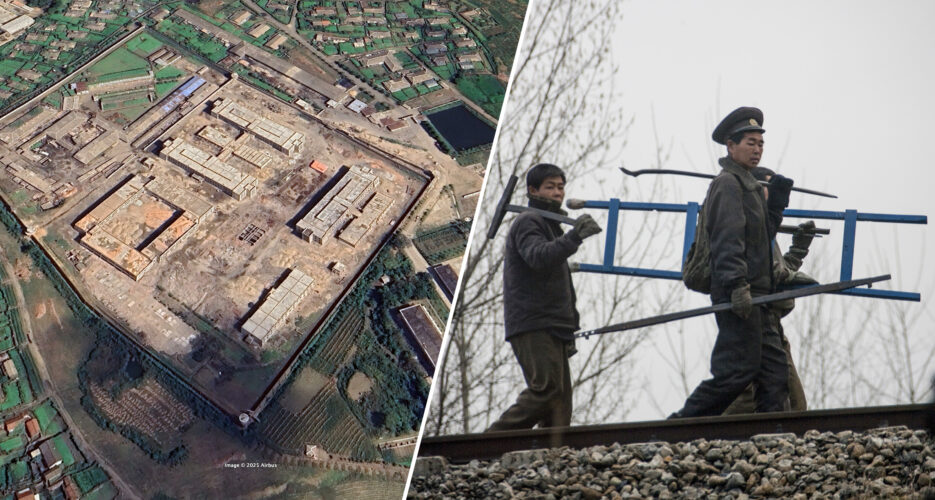 North Korean authorities have demolished and completely rebuilt at least two prisons and expanded a third, new high-resolution satellite imagery reveals, providing evidence that the DPRK is increasing its capacity to detain citizens. The reconstruction of detention facilities in Sinuiju, Sariwon and Chonnae since late 2023 is the latest in ongoing efforts by the DPRK regime to upgrade and expand its prisons and concentration camps. NK Pro was first to report on the upgrades at the three “kyohwaso” facilities last June based on low-resolution imagery, detailing simultaneous new construction in Sinuiju on the Chinese border in the northwest, Sariwon in the southwest and Chonnae on the east coast. Now, new Airbus high-resolution imagery, taken in Sept. and Oct. 2024 and accessed via Google Earth, shows that the Sinuiju prison, known as Kyohwaso No. 3, has received the most extensive upgrades of the three, likely resulting in increased prisoner capacity. SINUIJU The position of the outer walls at Kyohwaso No. 3 has not changed, but old, low-lying buildings inside the 6-hectare (15-acre) compound were demolished to make way for several new multi-story buildings and even underground facilities. There are now three identical three-story buildings each covering a footprint of about 1,400 square meters (15,000 square feet), as well as a square two-story building covering about 2,725 square meters (30,000 square feet) with a large inner courtyard. 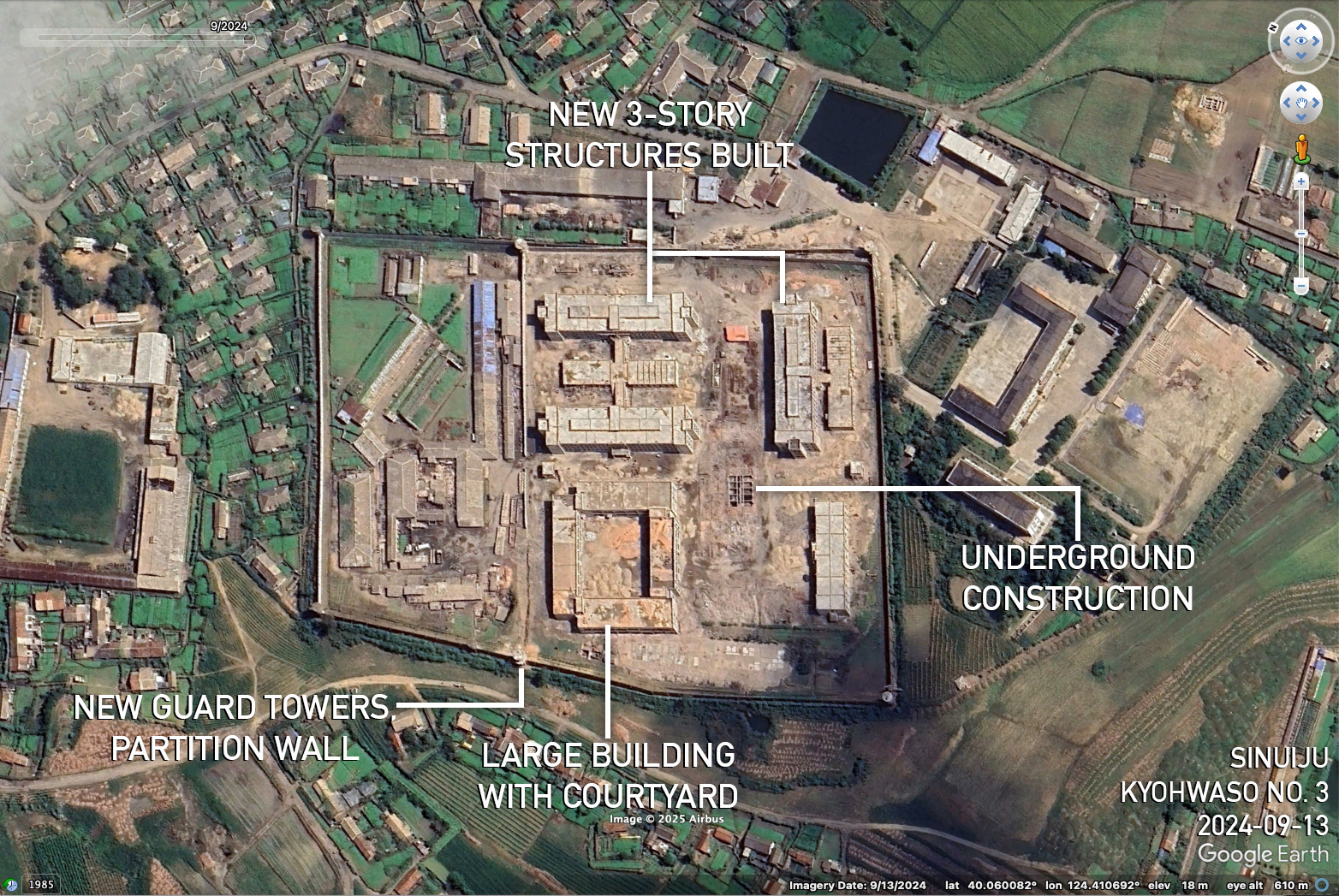
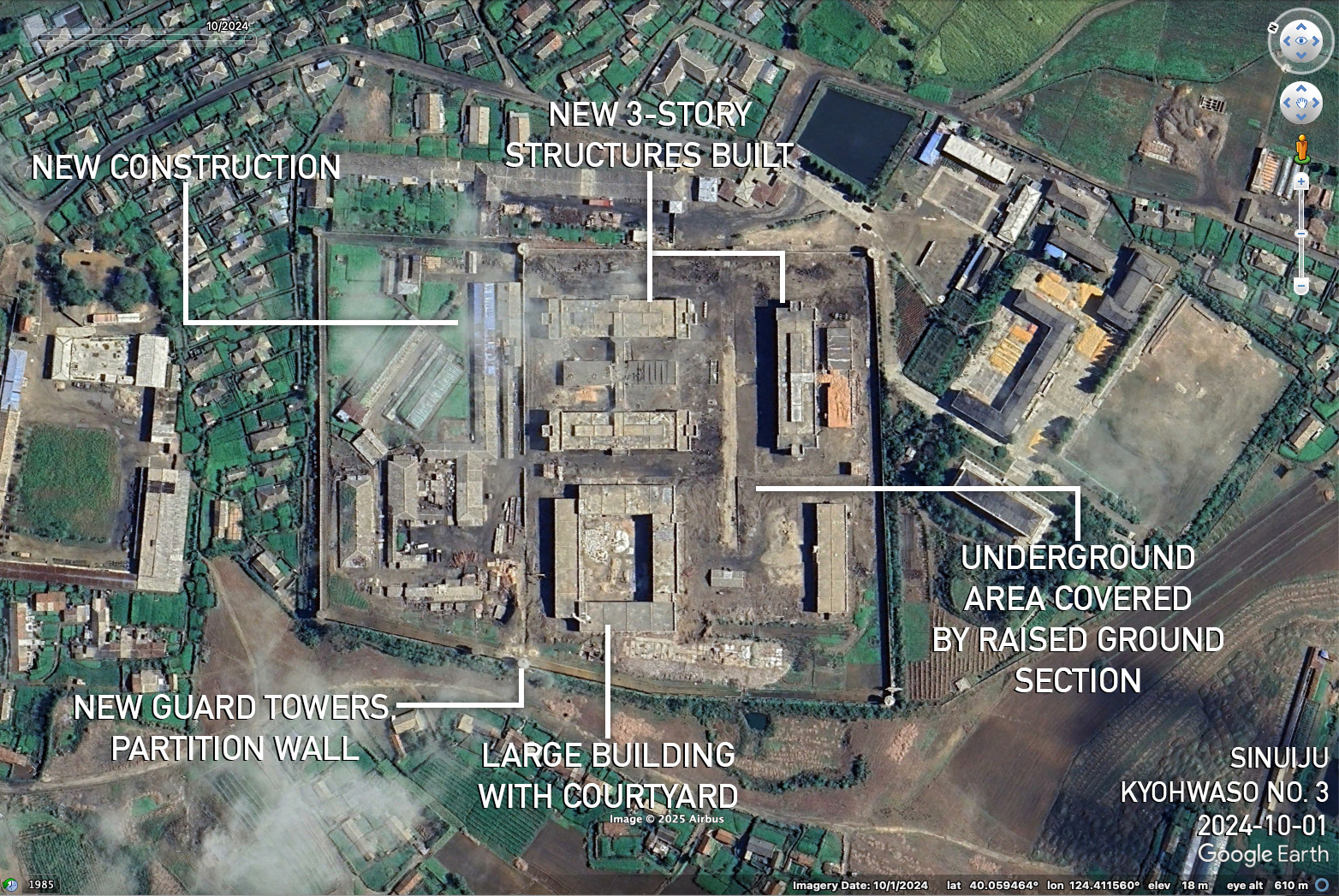
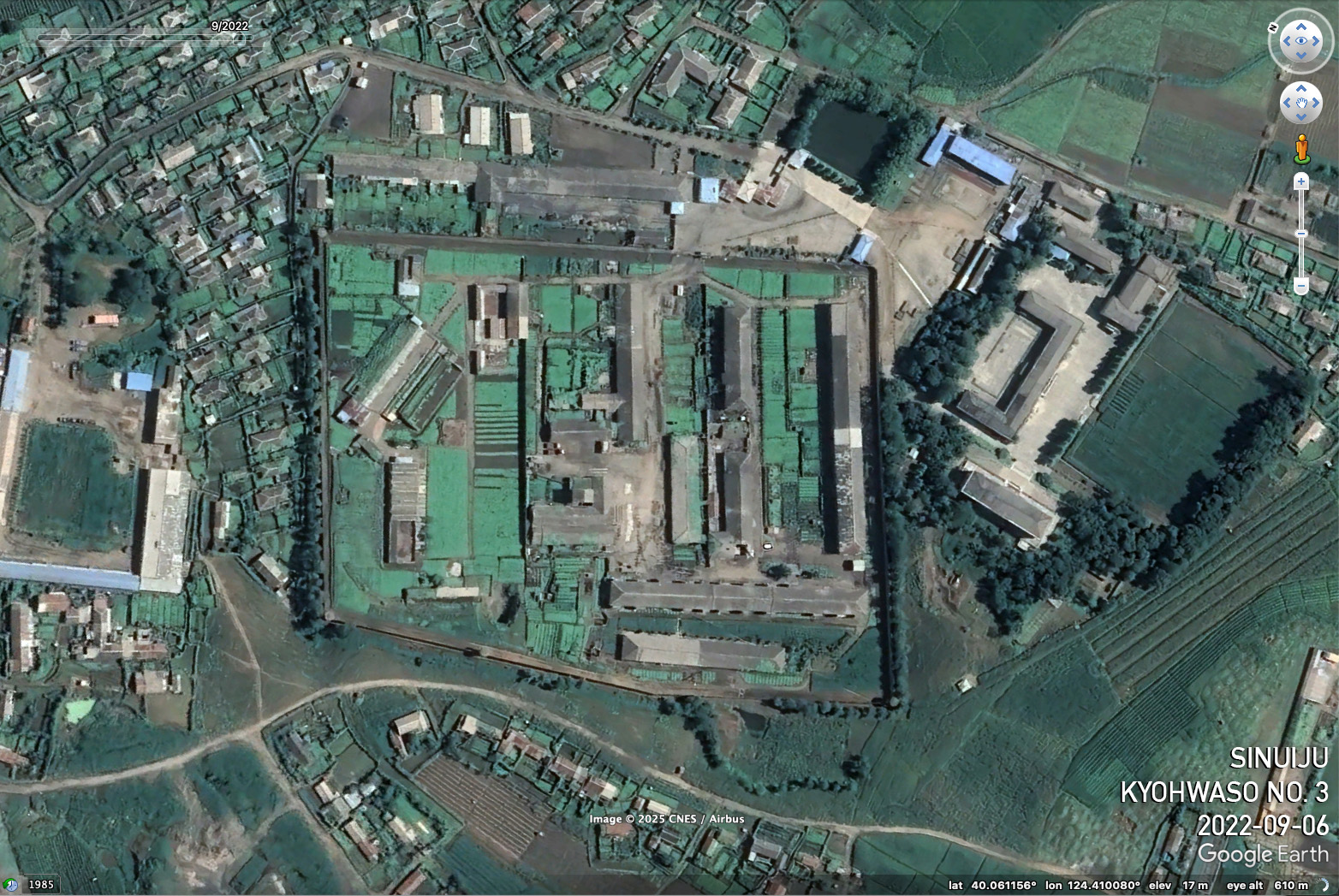
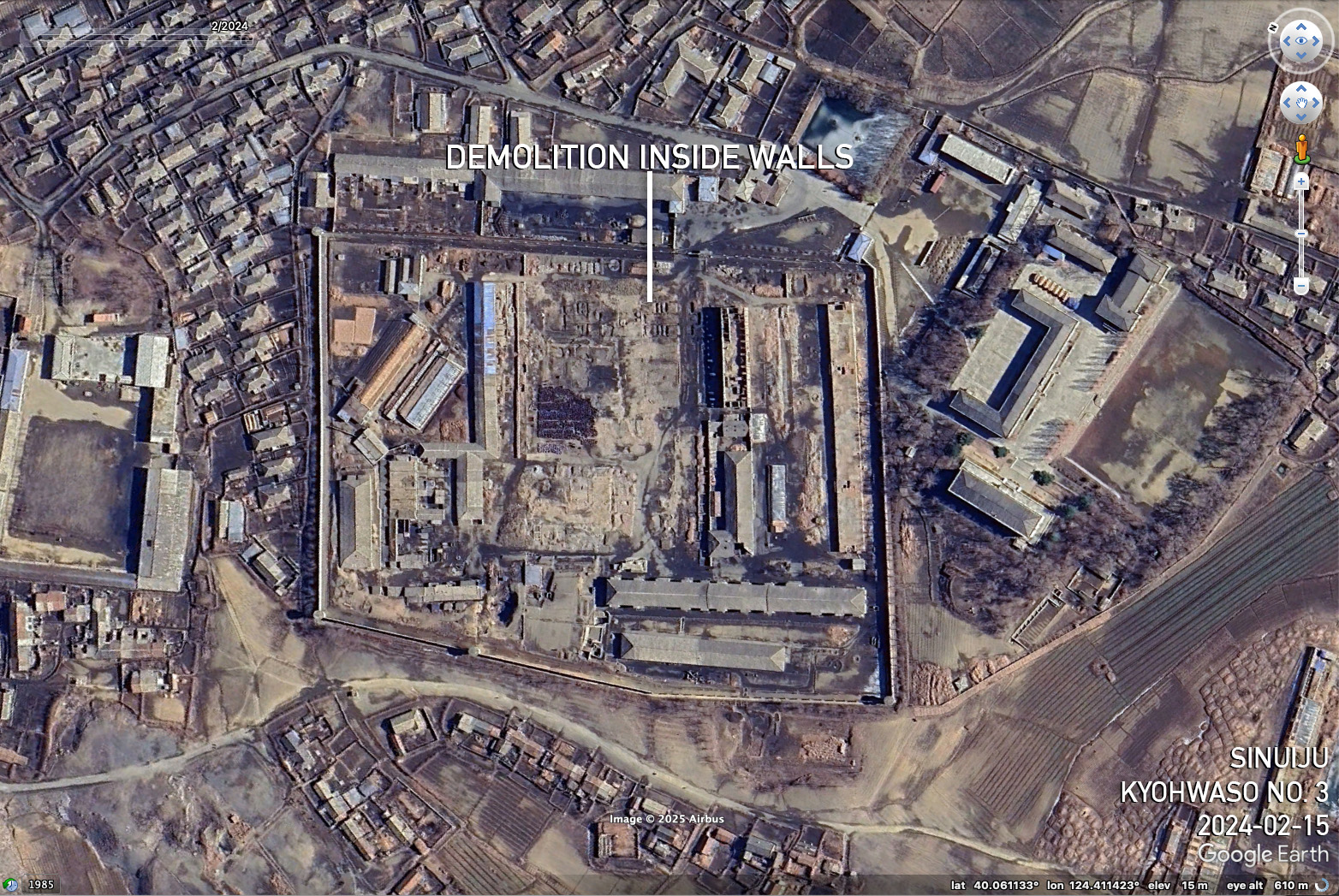
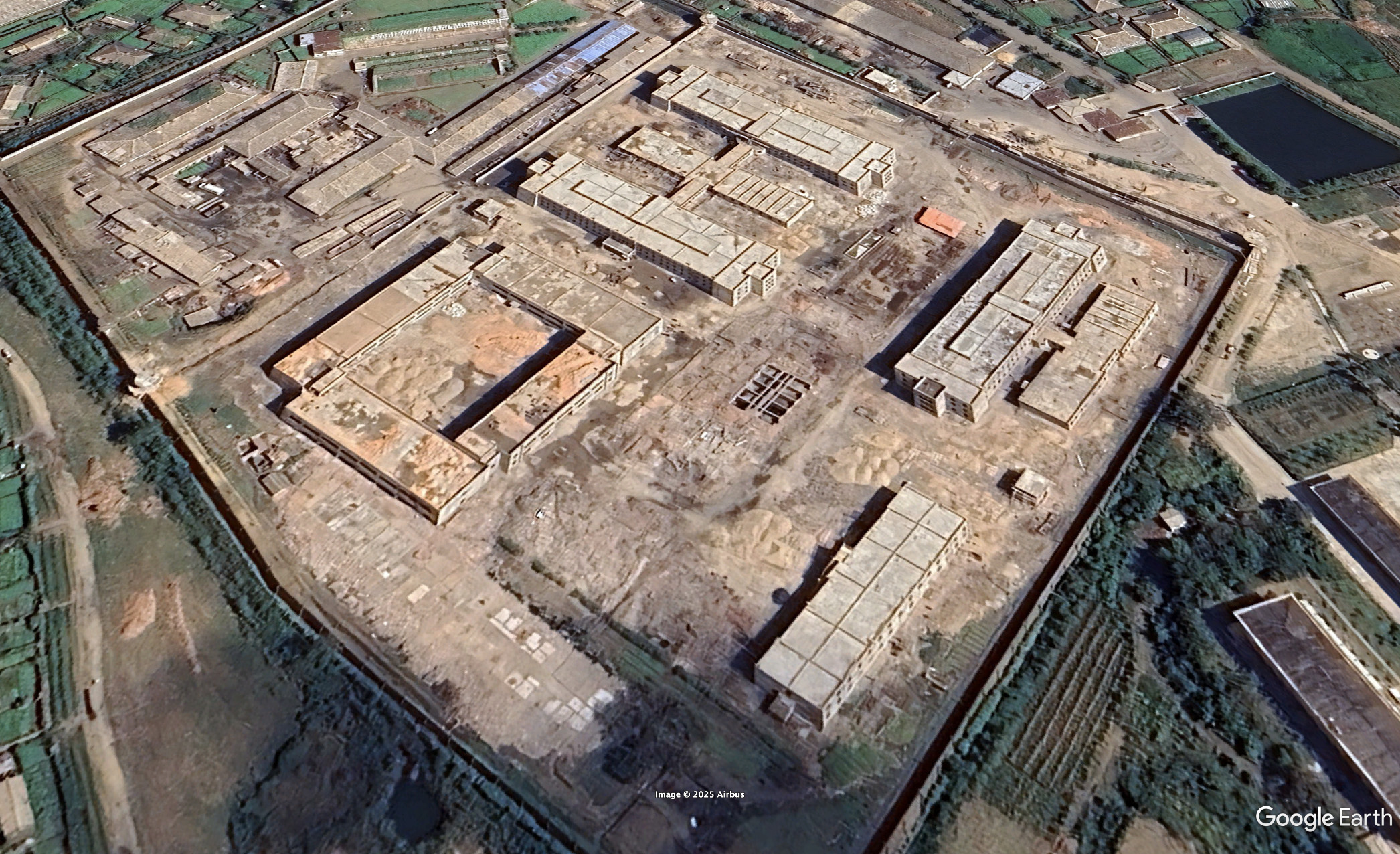 Imagery taken on Sept. 13 also reveals a grid of walls built underground and later covered by a raised land section by Oct. 1, pointing to the construction of subterranean structures. By Oct. 20, Planet Labs high-resolution imagery shows roads surrounding these new buildings starting to take shape. New circular guard towers were built on the perimeter wall, and a new inner partition wall was also built to effectively split the prison into two sections. The larger section, described above, likely houses prisoners and the smaller one possibly contains workshops. New buildings have also been built in this smaller section since the project started at the end of 2023. South Korean outlet Daily NK previously claimed that authorities ordered upgrades to the Sinuiju facility because the prison was outdated, seeking to prevent escapes and improve detention conditions. But the renovation likely also expands the facility’s capacity. Yvonne Jewkes, an expert in prison design and architecture at the University of Bath told NK Pro that based on the imagery, “extensive building and reconfiguring have clearly gone on, probably to accommodate more inmates and do so more efficiently.” The expert said that it’s hard to tell the exact purpose of each building based on satellite imagery alone, but speculated that “the long arms of the ‘H’ construction could be accommodation, with central services in between.” Like in Sinuiju, the Sariwon prison (Kyohwaso No. 6) has maintained the same size — 1.1 hectares (2.7 acres) — while demolishing and rebuilding structures inside and building a new guard tower on the outer walls. The new two-story building inside is not significantly larger than the one it replaced, suggesting the purpose may simply be to establish better quality and more secure facilities. 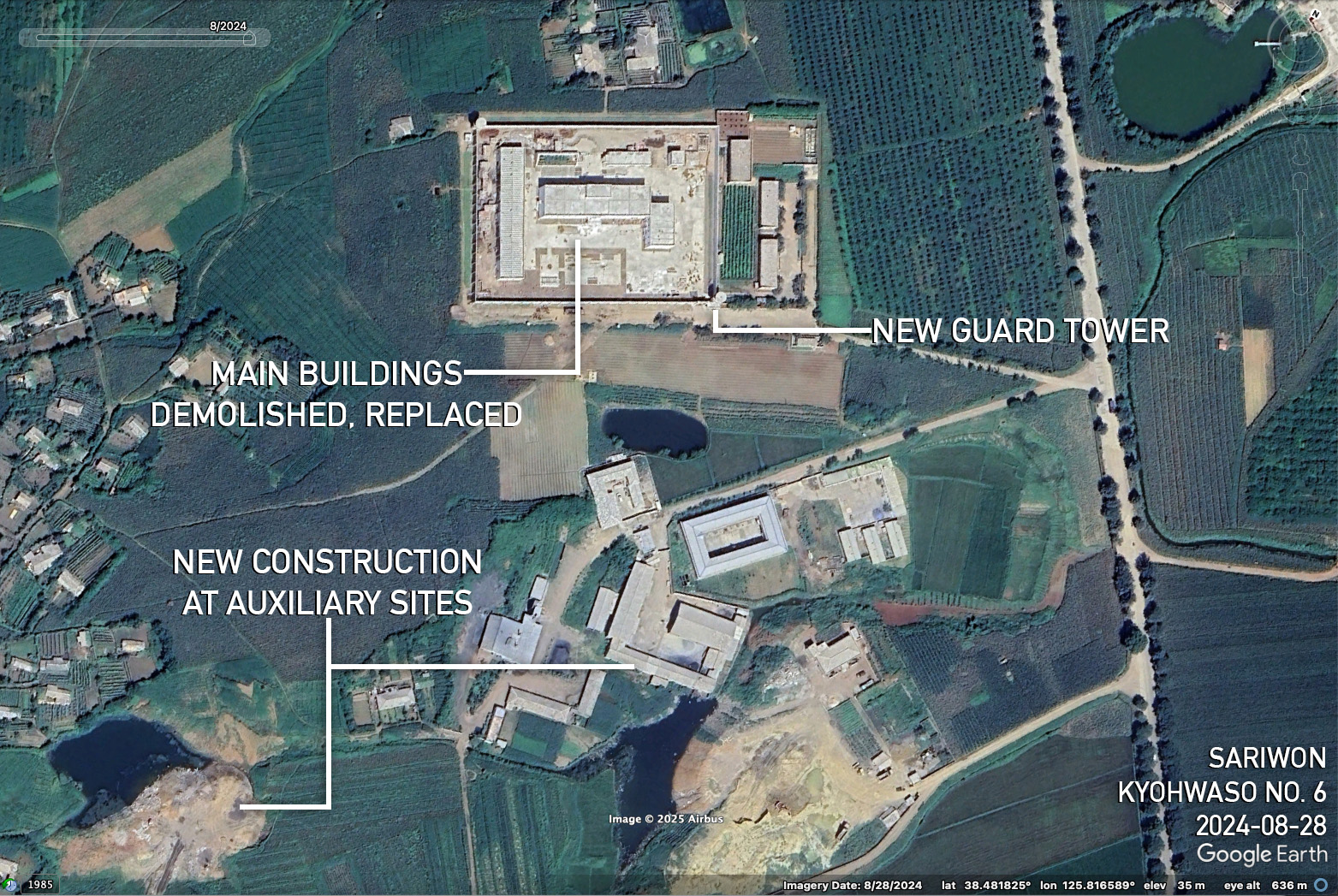
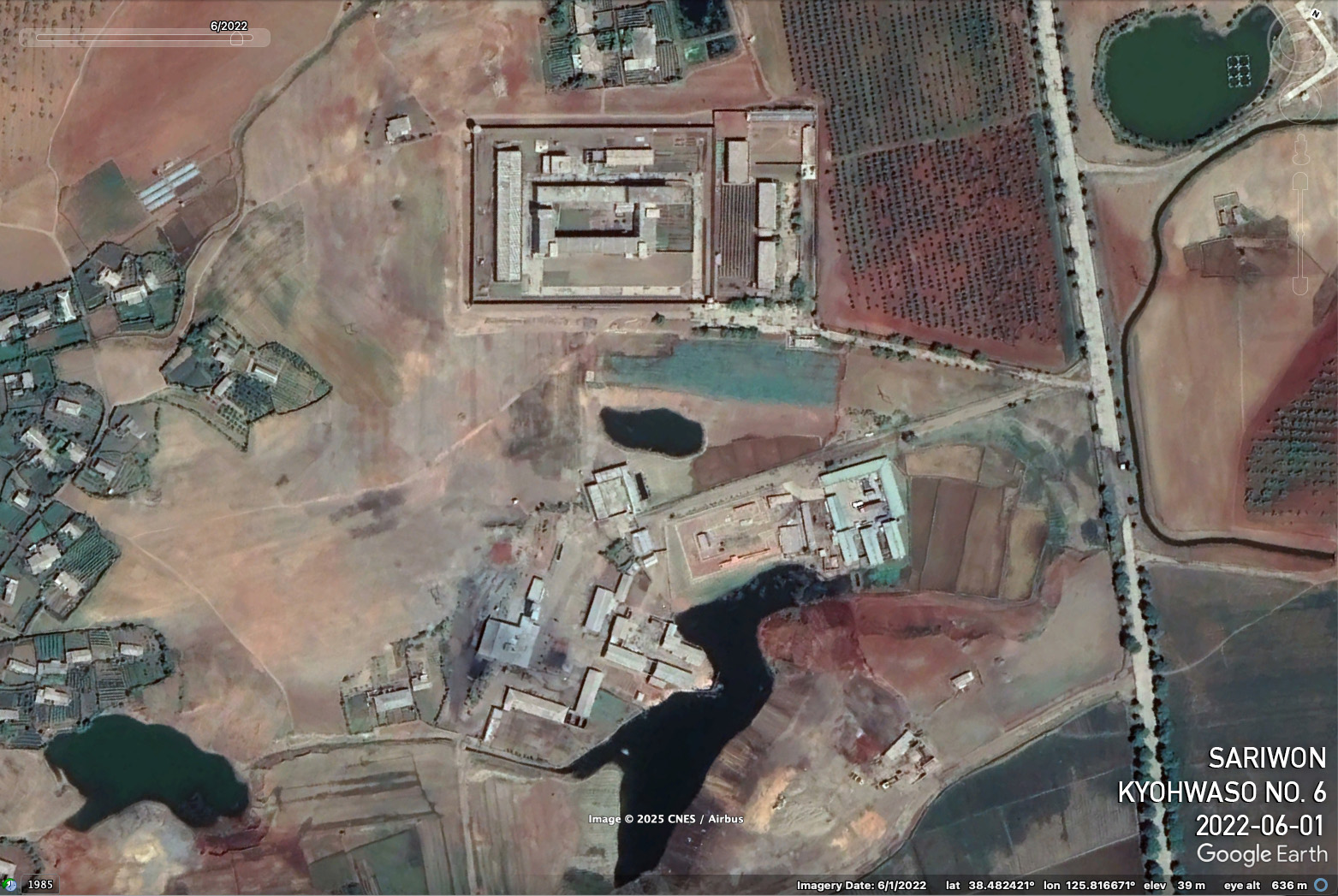
New construction has also taken place right outside the walls, which could be for administrative purposes or related to the forced labor the prisoners are reportedly subjected to. The 2014 COI report found that the Sariwon facility “has 3,000-4,000 prisoners who are forced to engage in farming and the production of clothing and shoes,” citing interviews with North Korean escapees. It said less is known about the Sinuiju and Chonnae prisons. Rights groups have assessed that many so-called reeducation facilities like Kyohwaso No. 6 house forcibly repatriated North Koreans, many of them women who tried to escape the country. These prisoners often “endure severe violence, including sexual assaults, forced nudity, rapes, forced abortions, beatings and extrajudicial killings,” a recent report by a Seoul-based NGO noted. “Those who fail to meet [work] quotas face reduced food rations as punishment, exacerbating existing malnutrition and related diseases.” The facility in Chonnae on the east coast, north of Wonsan, is the only one of the three to involve the expansion of prison grounds, with imagery showing its footprint and possibly prisoner capacity has doubled. The name of the prison is unknown. Old structures within the walls were demolished and new walls were built to increase its size from 1.2 to 2.8 hectares (3 to 7 acres). Six new multi-story rectangular blocks have been built inside the walls, each covering around 1,000 square meters (10,700 square feet), though higher resolution imagery is required to determine their precise height and size. 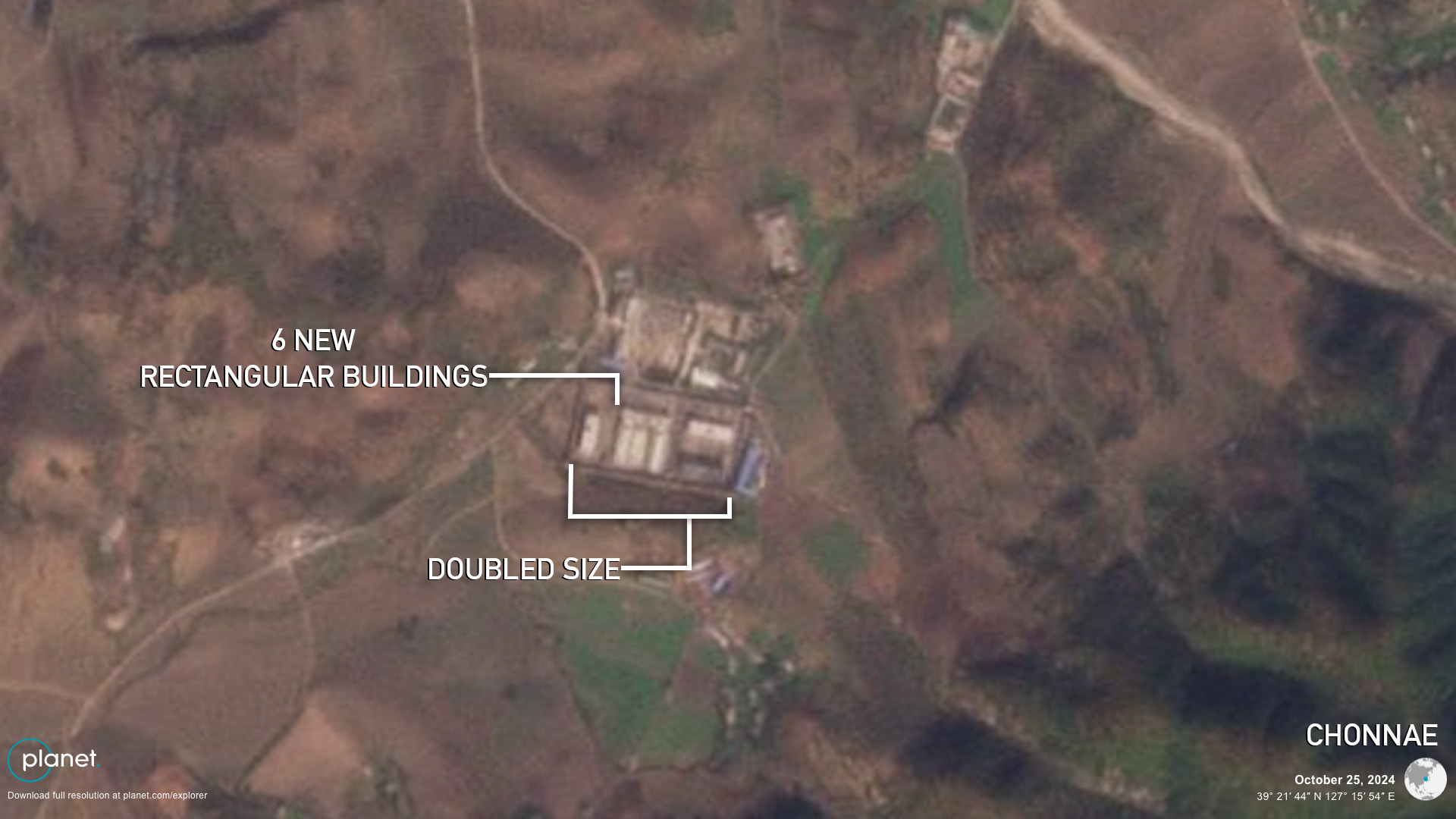
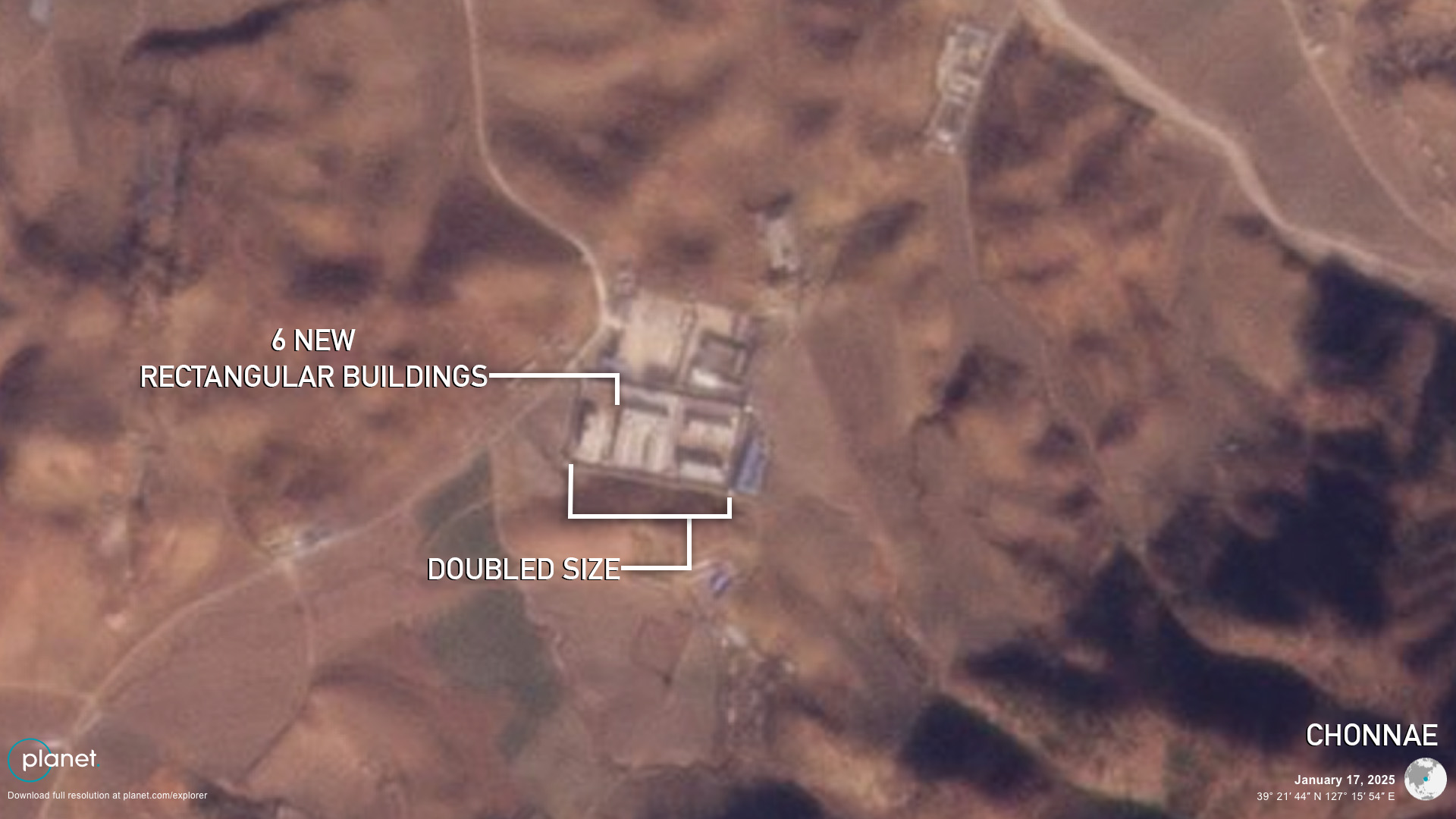
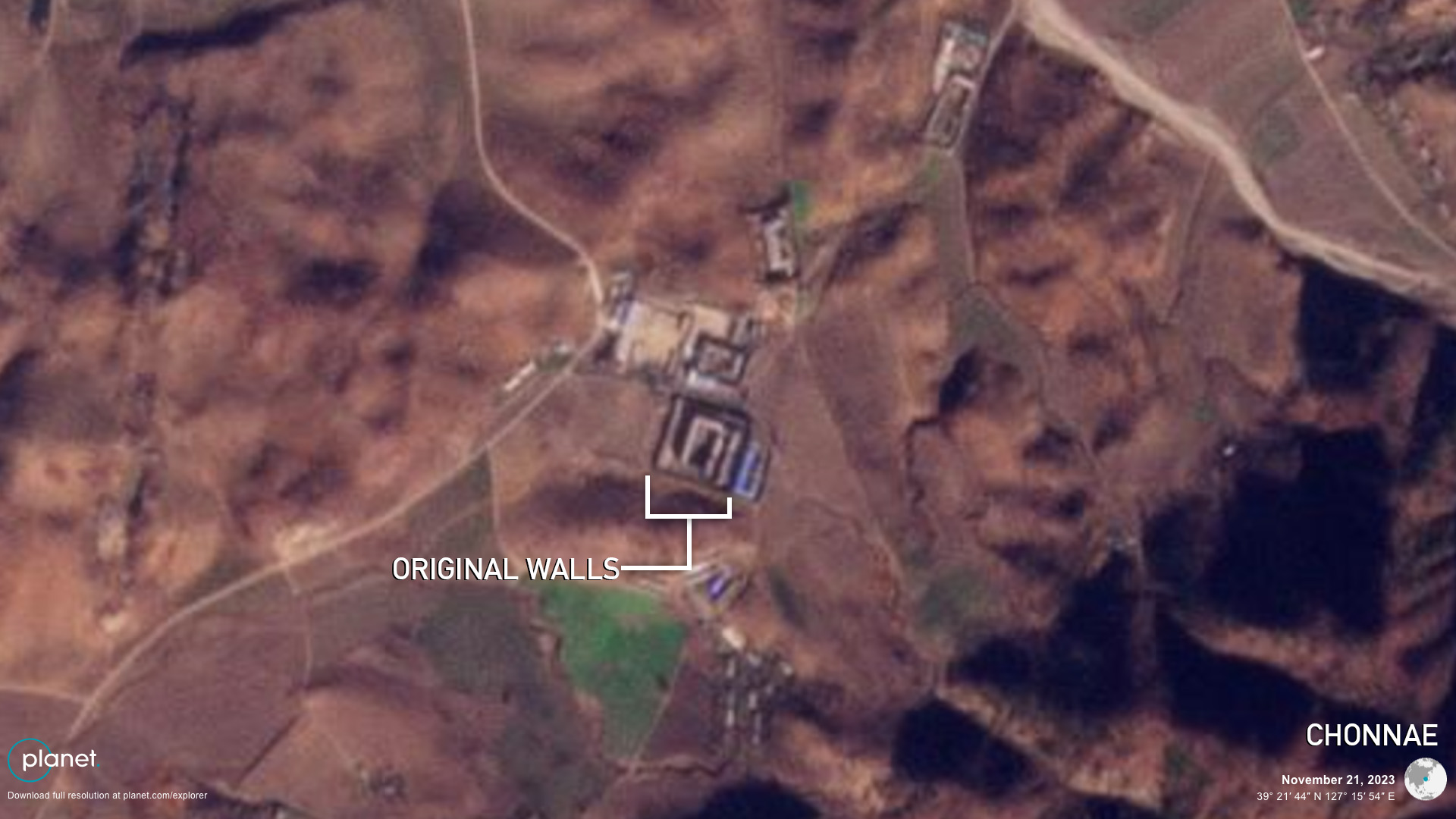
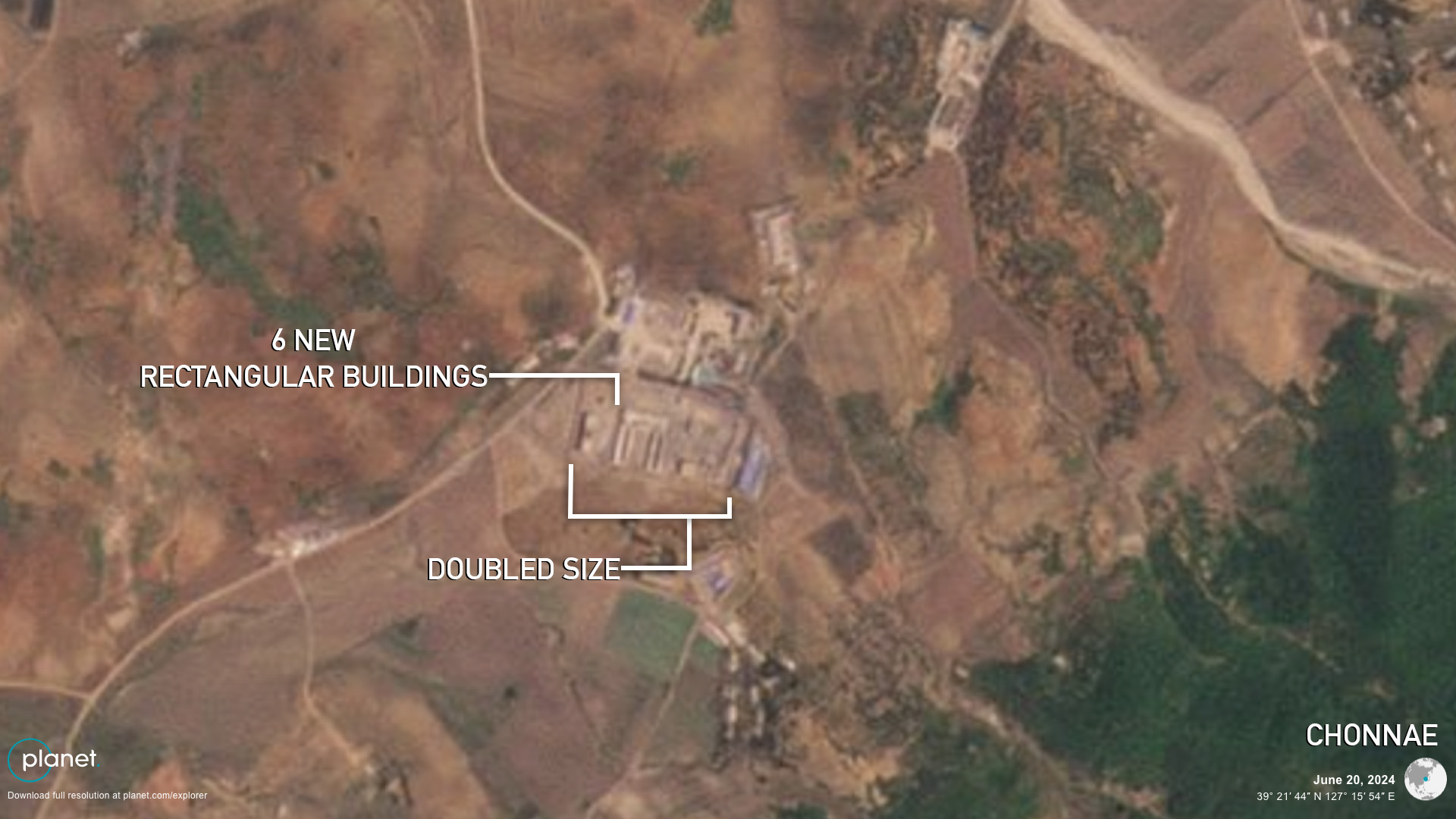
Since NK Pro’s last report in June 2024, there does not appear to have been new construction at the dozen or so other known comparable facilities around the country besides the above three, though it’s possible new ones have been built at locations not yet discovered. As of late January, Planet Labs medium-resolution imagery suggests the Sinuiju, Sariwon and Chonnae projects are nearly but not yet complete. North Korea’s penal system consists of three types of facilities: pre-trial detention centers (kuryujang), reeducation facilities (kyohwaso) and long-term prison camps (kwalliso). North Korea has always denied the existence of kwalliso camps but has acknowledged the operation of kyohwaso, describing them as detention facilities where criminals undergo labor-based reform. NK Pro previously reported that under Kim Jong Un the DPRK has not only upgraded its kyohwaso but in recent years also expanded and renovated at least two kwalliso camps — the most extreme concentration camps where families can be detained for generations. While the North Korean government has not reported on its efforts to overhaul its detention facilities, the upgrades come as Kim Jong Un has stressed efforts to crack down on “anti-socialist” crimes such as enjoying foreign cultural materials. Leaked videos have shown mass trials of young students, with the goal of the crackdown to safeguard Kim’s dictatorial rule for years to come. Edited by Bryan Betts Correction: Updated on Jan. 29 at 3:10 p.m. KST to clarify the status of kyohwaso facilities. While they are known to house political prisoners, they are not typically classified as political prisons. © Korea Risk Group. All rights reserved. |

October 10, 2026Oct 10, 2026

The ultimate resources for professionals working on North Korea
 SHARE
SHARE COPY LINK
 X
X MASTODON