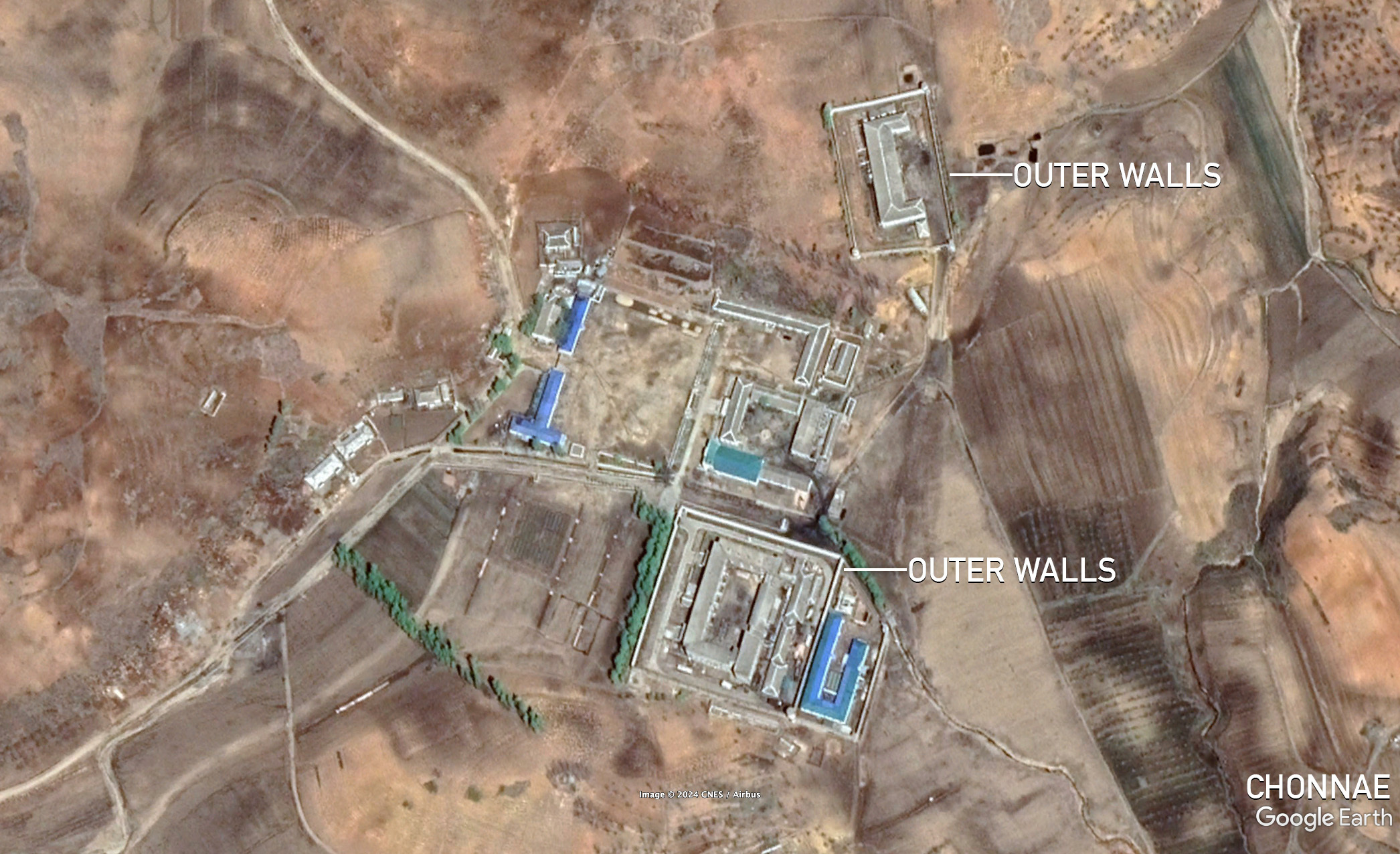
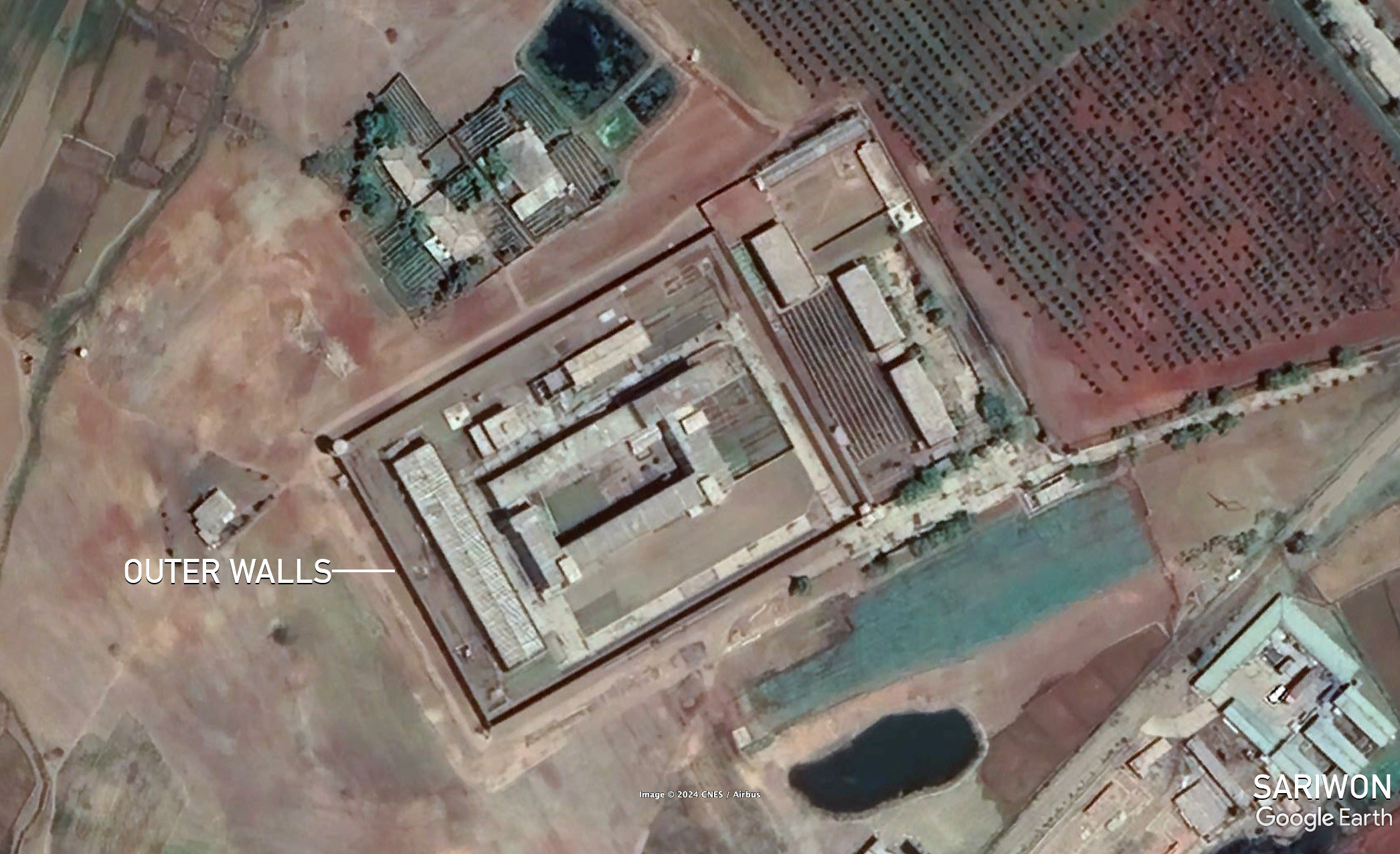
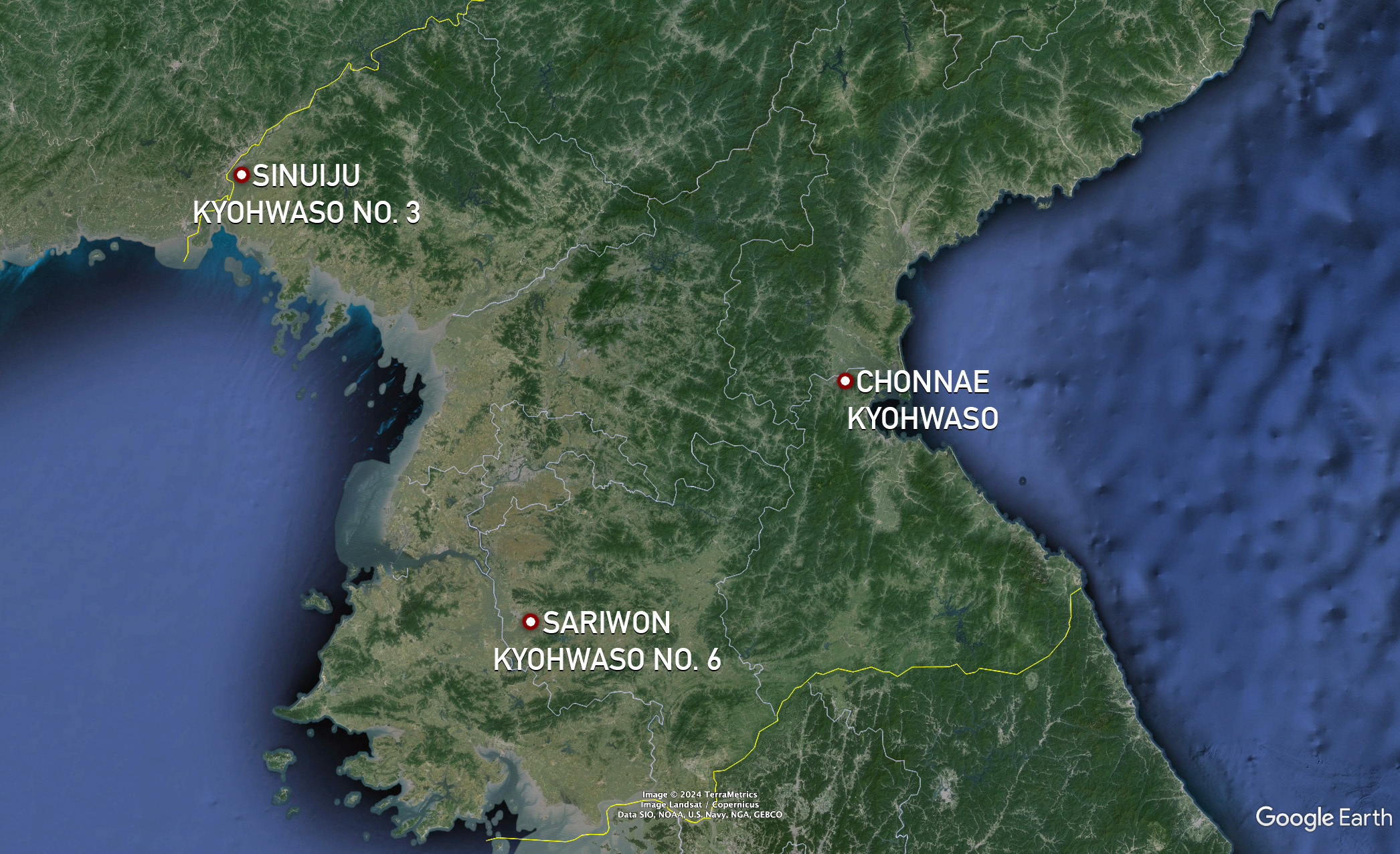
  Analysis North Korea expanding and rebuilding prison camps around country, imagery showsConstruction at kyohwaso facilities known for forced labor comes as Kim Jong Un cracks down on foreign media consumption 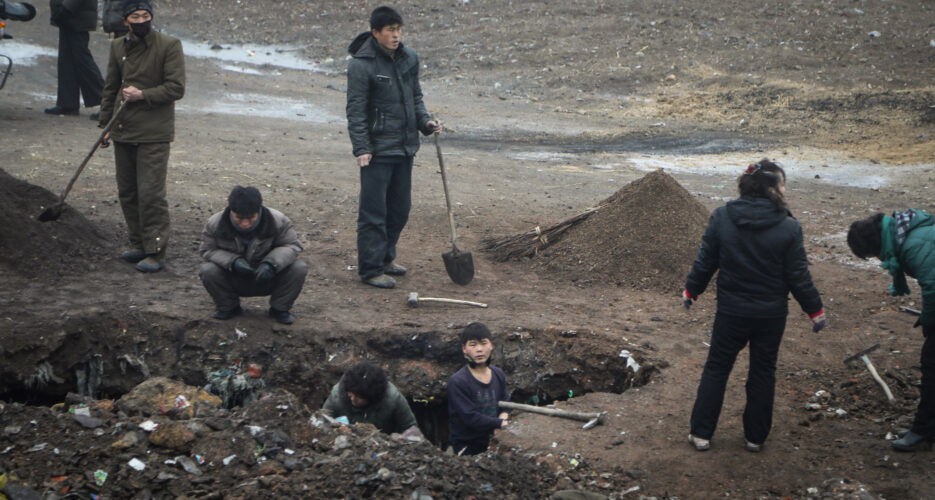 North Korea has partially demolished several notorious political prison camps and is currently rebuilding or expanding the facilities, according to NK Pro analysis of satellite imagery. It is the first time such large-scale construction at multiple prison camps has simultaneously occurred in the Kim Jong Un era, pointing to a major policy change amid efforts to crack down on foreign cultural influence. Planet Labs imagery shows construction on new buildings in recent weeks inside at least three small “kyohwaso” prison facilities, after demolition started on each around the same time late last year. While the exact purpose of the new construction remains unknown, experts said it could aim to accommodate a larger prisoner population. The U.N. Human Rights Council’s landmark 2014 Commission of Inquiry (COI) report on DPRK human rights refers to kyohwaso facilities as “ordinary prison camps” where North Korea sends people for political or “anti-socialist” crimes. The U.S.-based Committee for Human Rights in North Korea (HRNK), which has published detailed reports on many of the prisons, calls them “long-term prison-labor facilities.” REBUILDING PRISON CAMPS NK Pro has detected new construction projects at Kyohwaso No. 3 in Sinuiju near the border with China, Kyohwaso No. 6 south of the capital in Sariwon and a kyohwaso of unknown name in Chonnae near Wonsan on the southeast coast. Almost identical construction of twin rectangular buildings measuring around 65 by 15 meters (215 by 50 feet) appeared last month at both the Sinuiju and Chonnae prisons, suggesting the two facilities are likely the same type of prison. While the new buildings are not much bigger in terms of footprint than those they’re replacing, it’s not yet clear how many stories tall they will be. 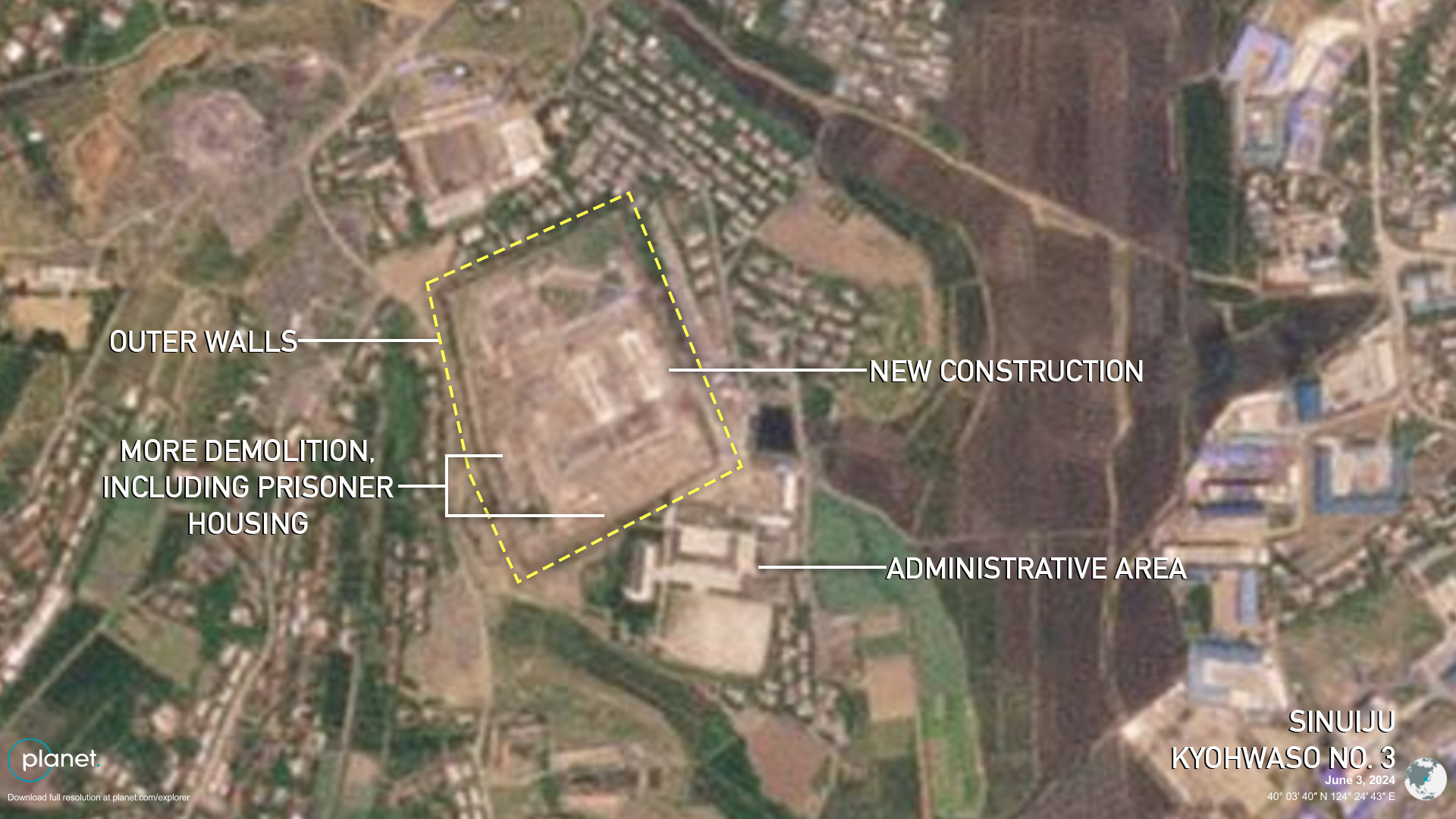
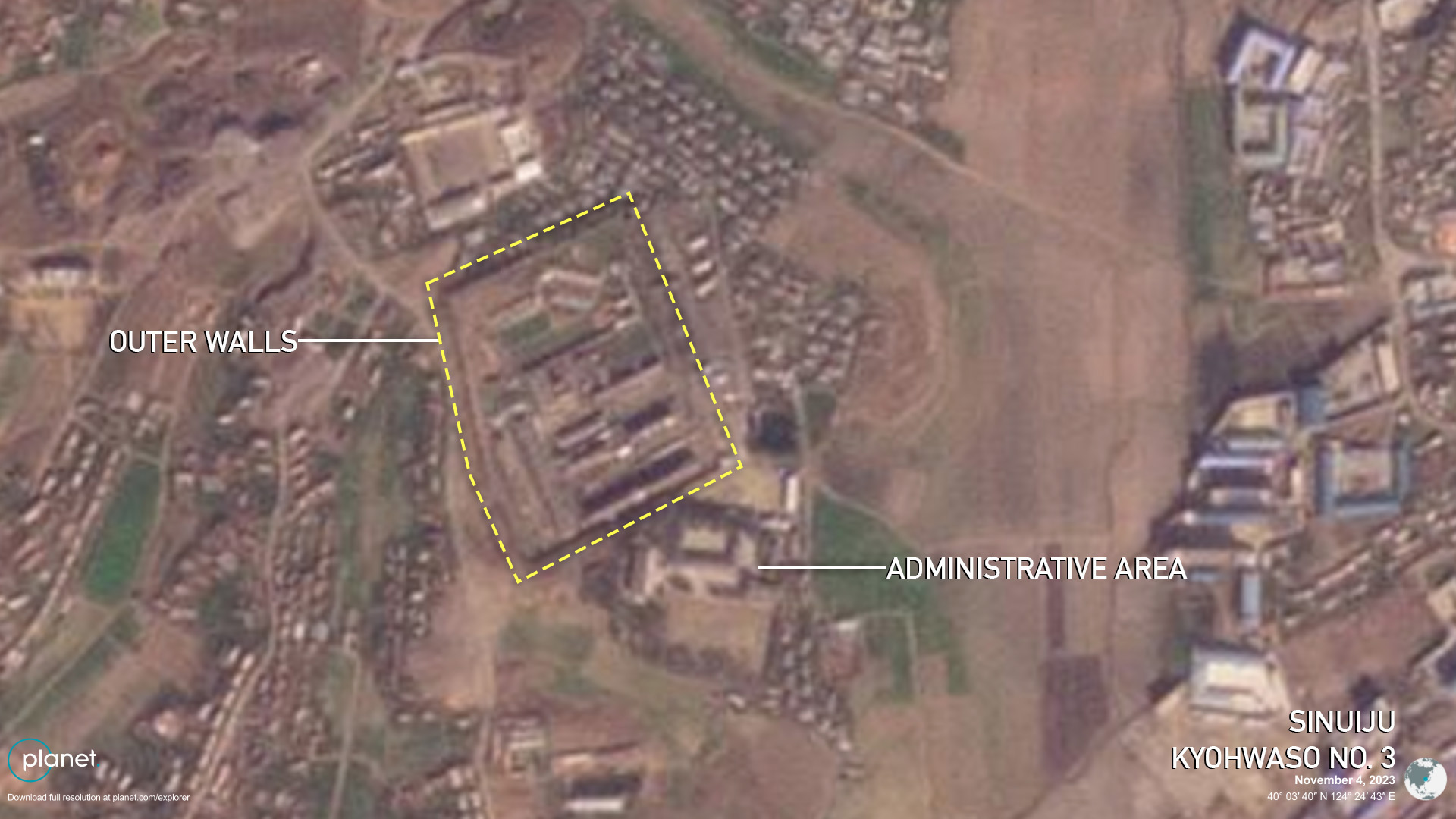
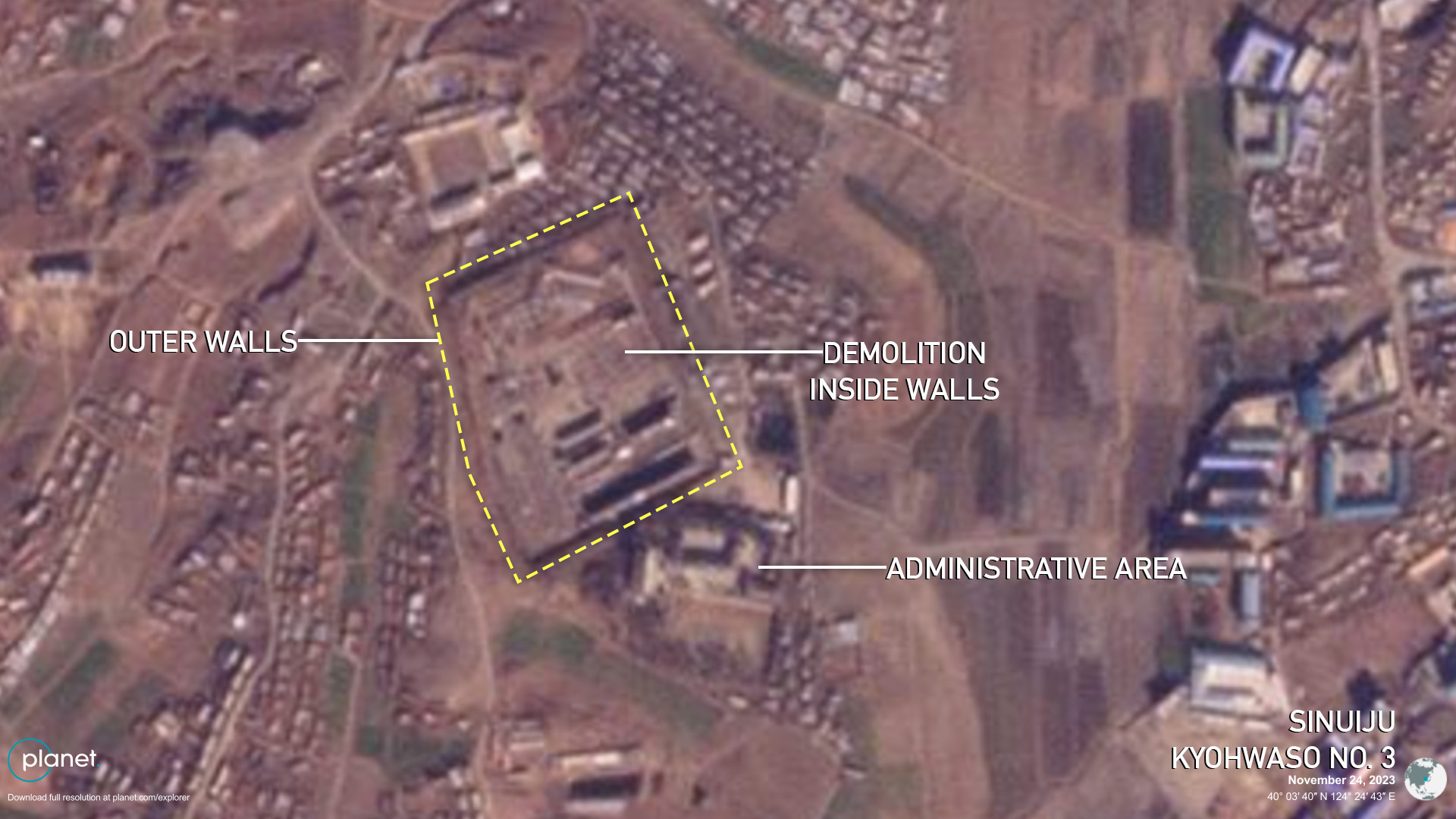
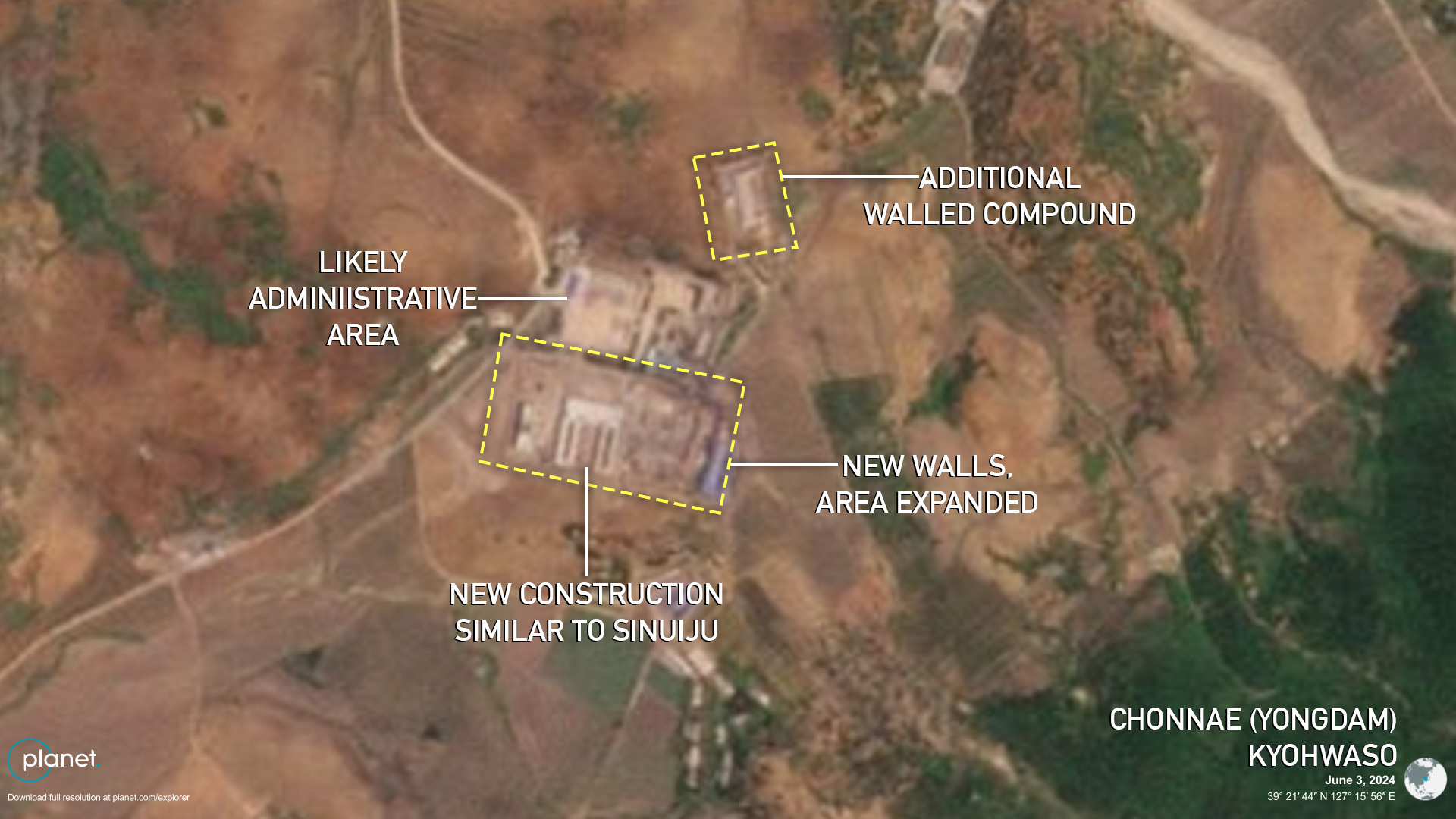
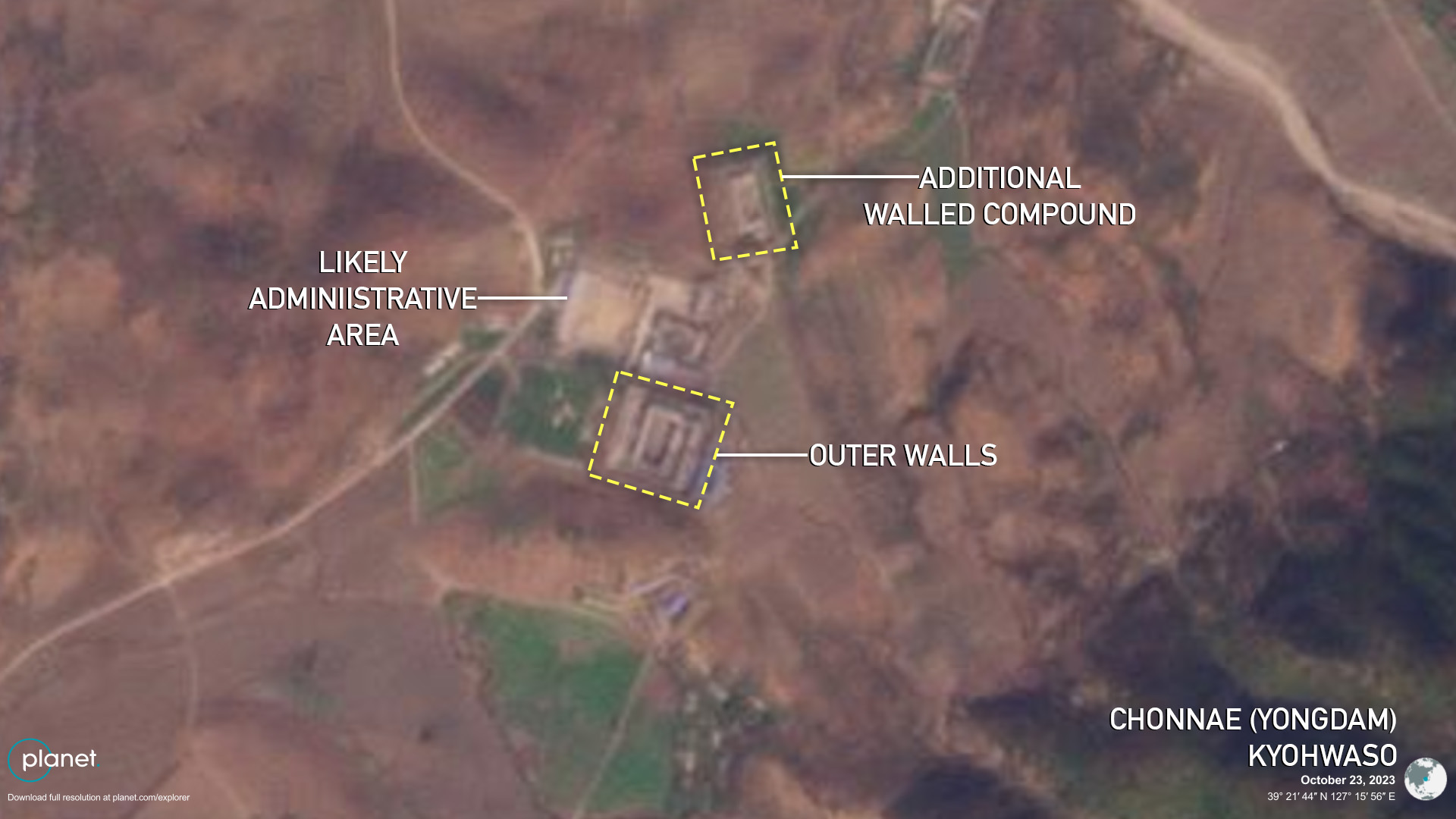
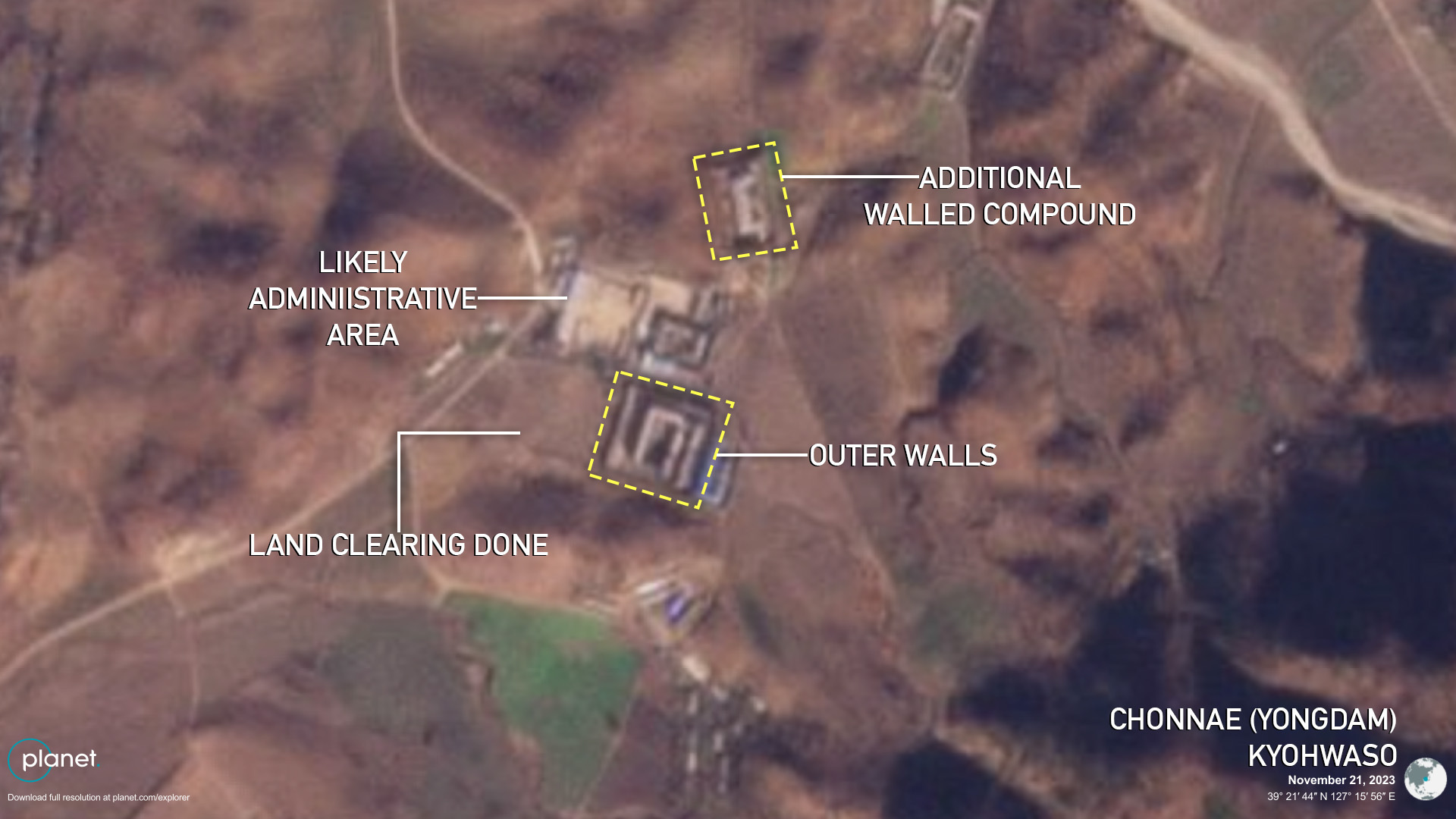
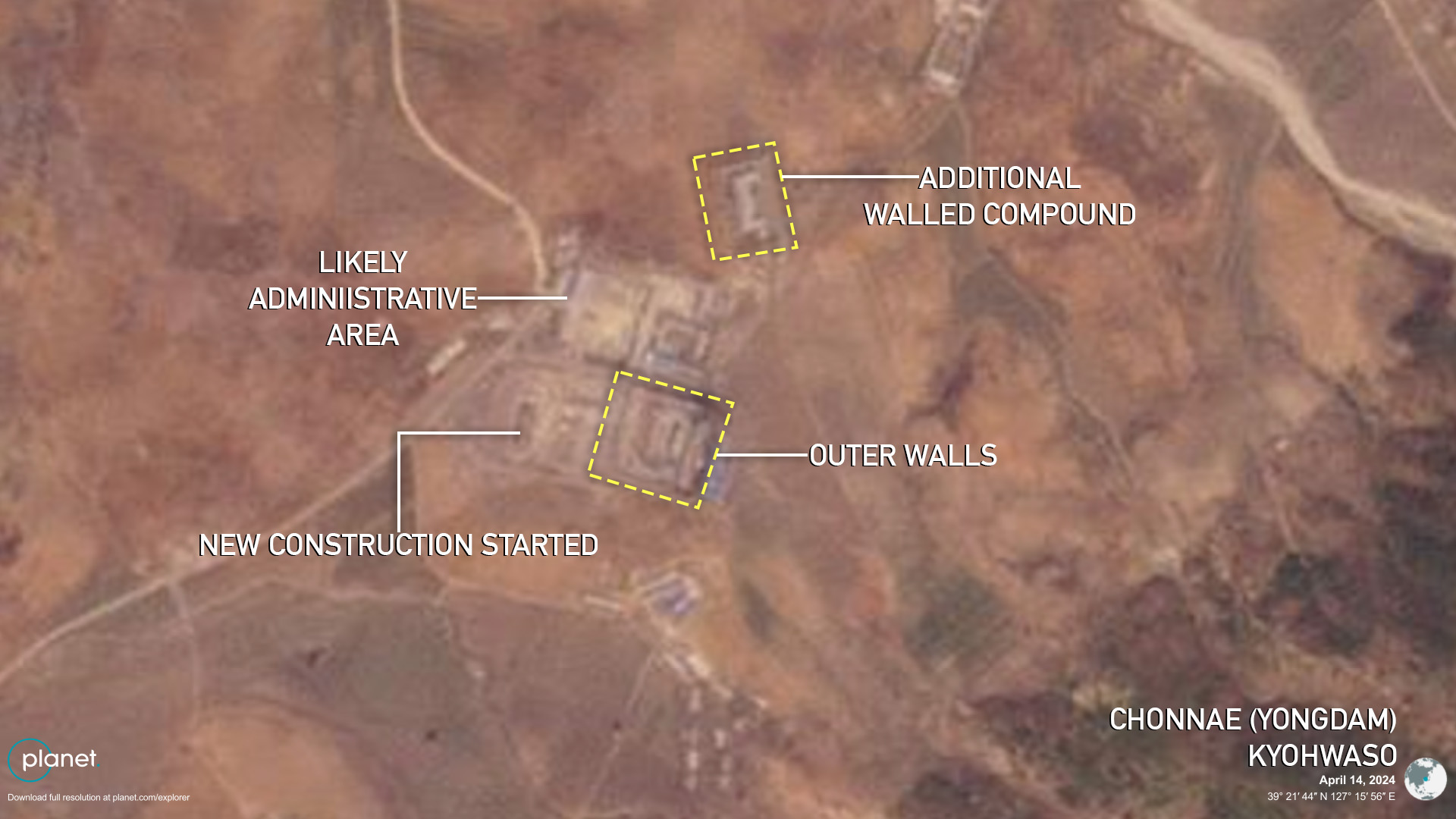
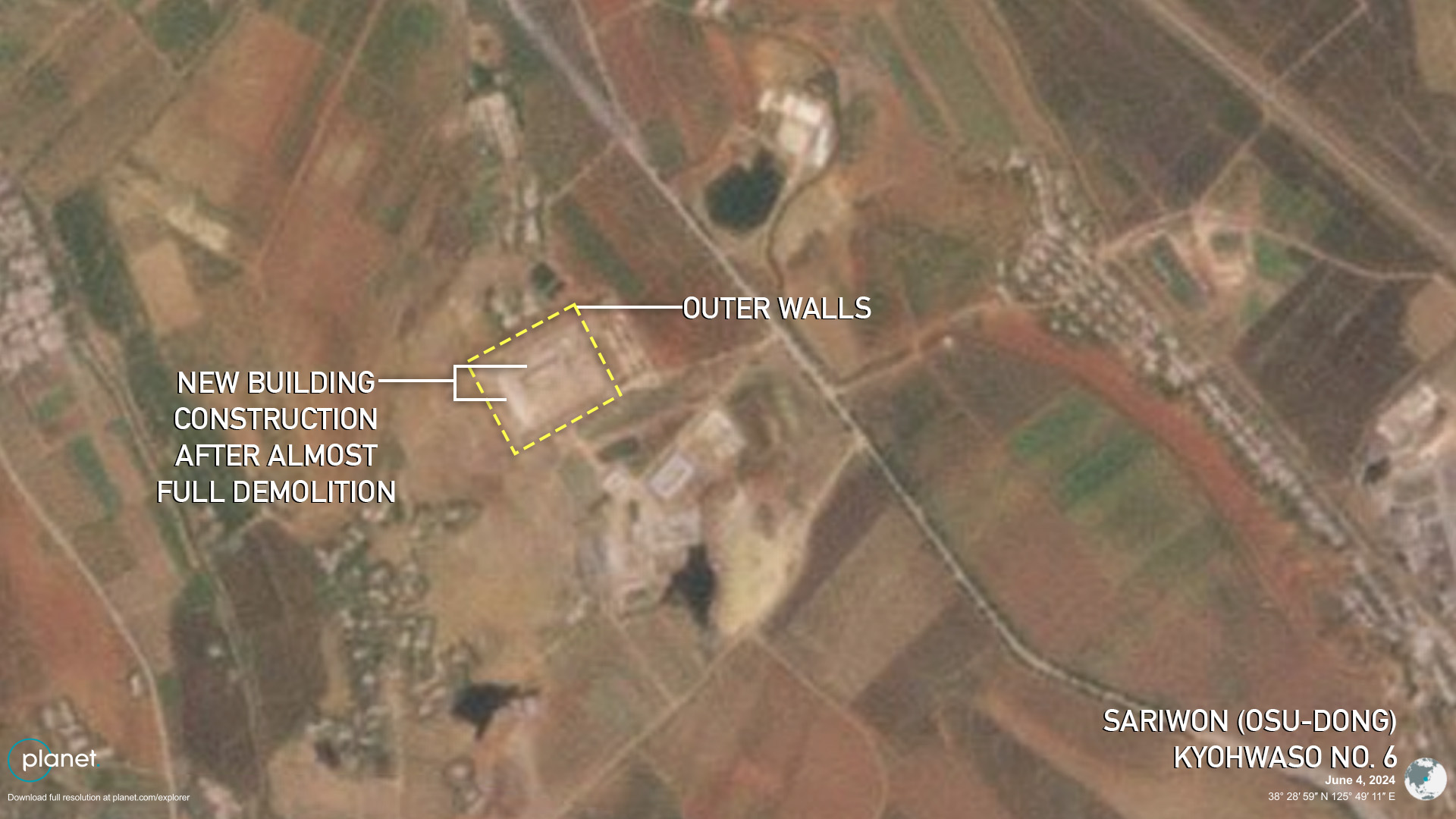
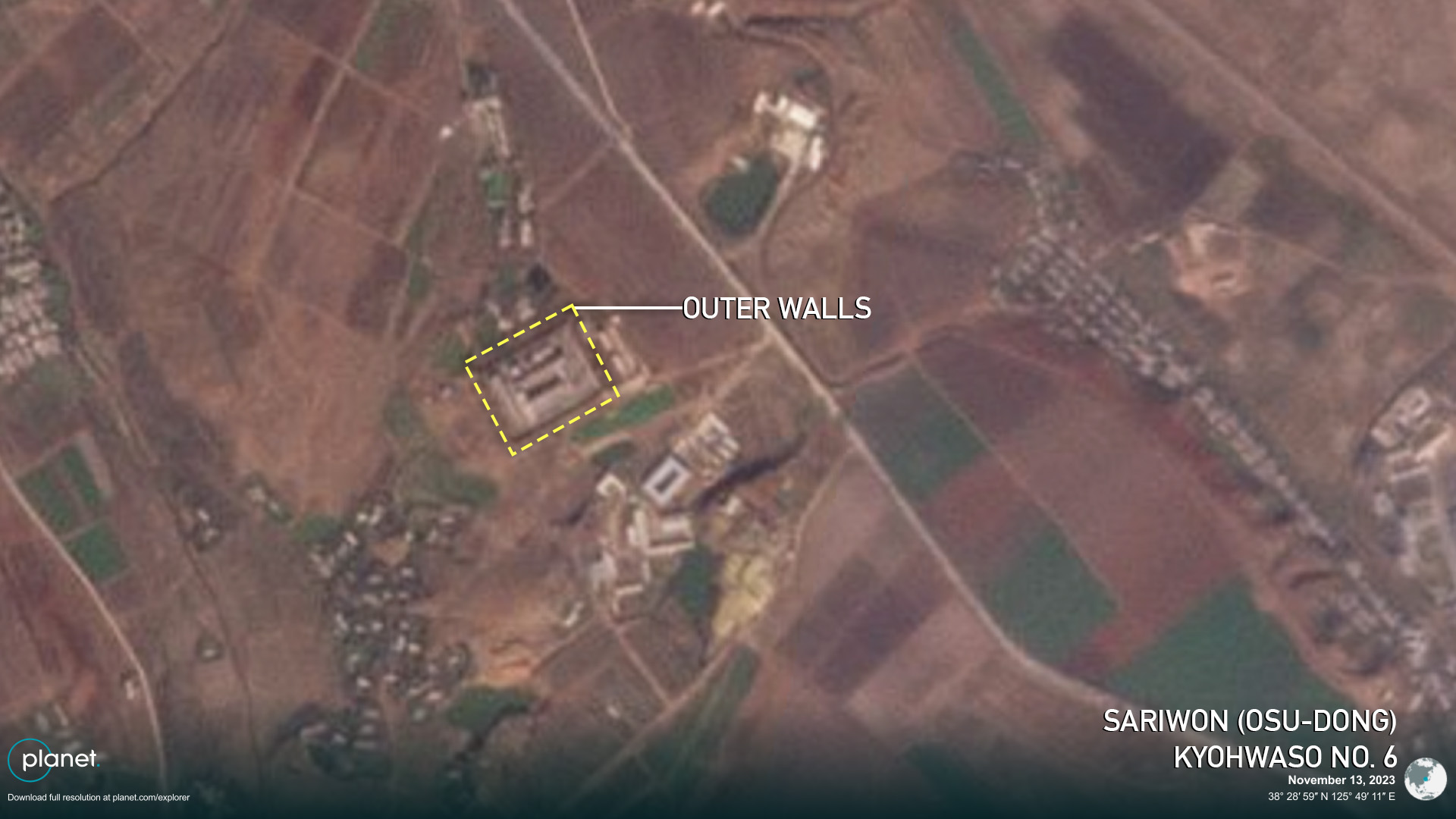
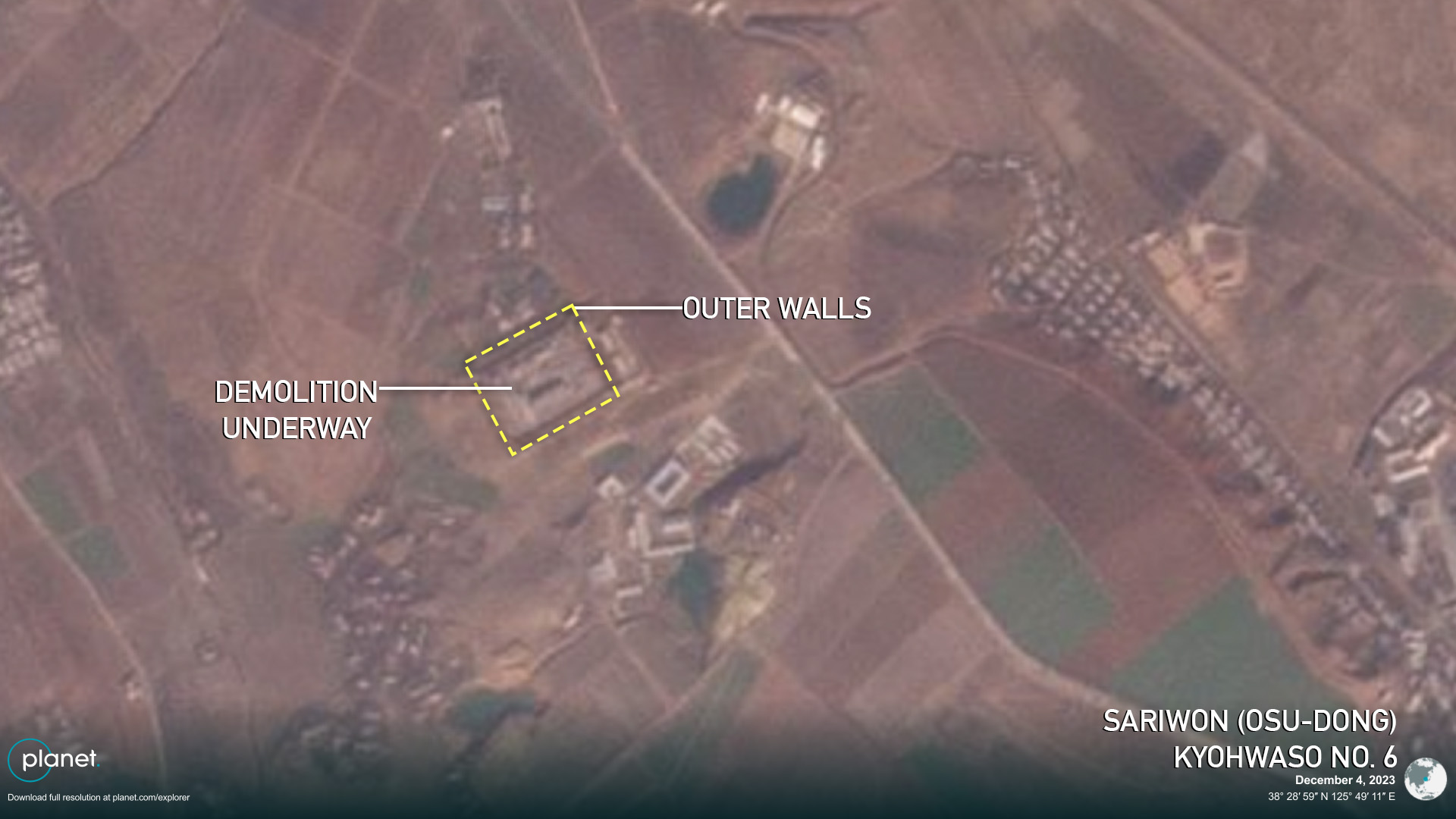
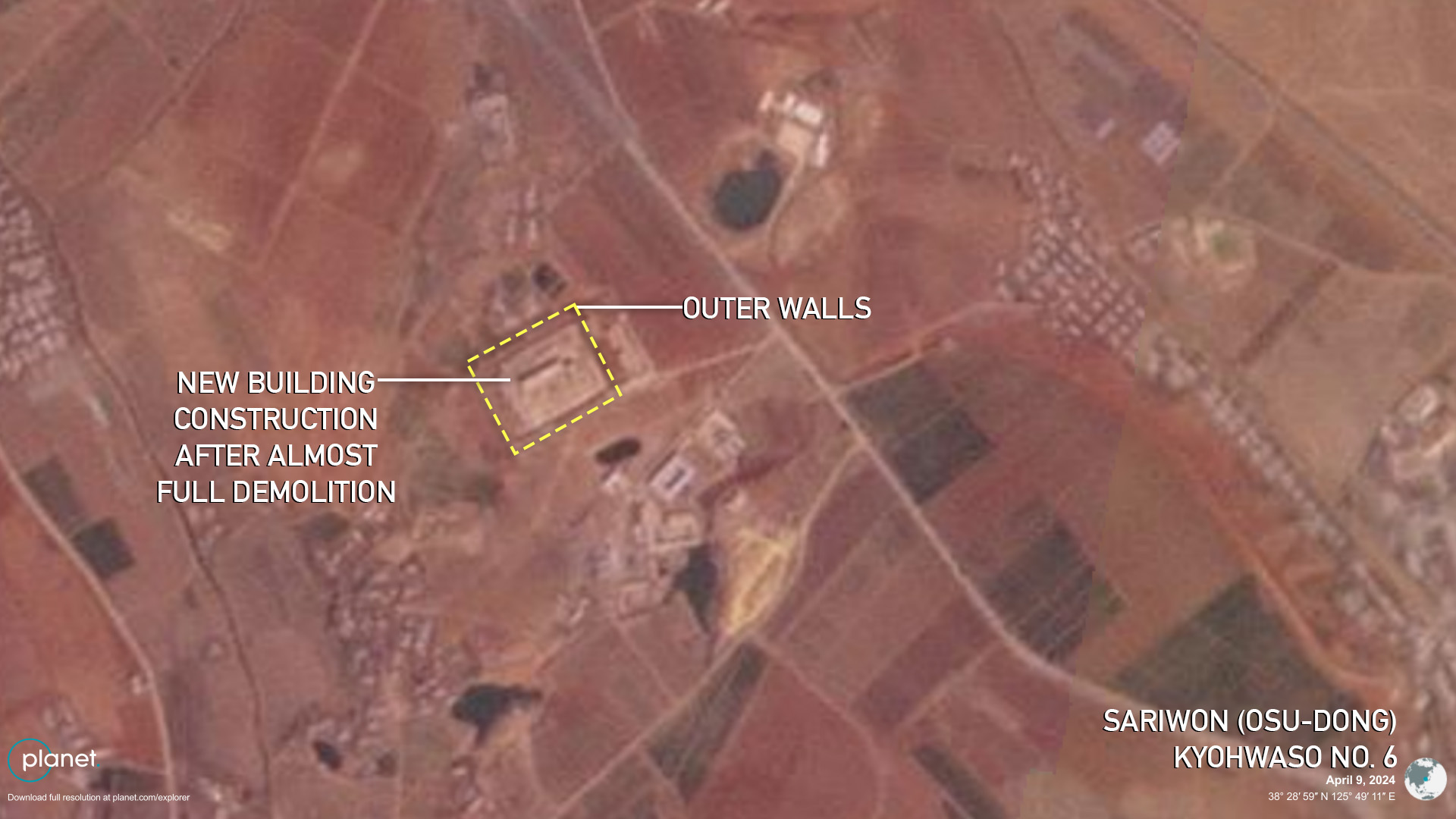
Work is also underway to more than double the size of the Chonnae prison, expanding the walled-in area from around 1.2 to 2.8 hectares (3 to 7 acres), while the Sinuiju construction is taking place inside the existing walled area of just over 6 hectares (15 acres). Some buildings in the center of the Sinuiju kyohwaso were demolished in Nov. 2023, while most of the remaining buildings inside the walls were knocked down from Feb. to April 2024. At the Chonnae facility, ground clearing also appeared to begin in Nov. 2023, before construction started the following month. Buildings were demolished inside the main walled compound in March 2024 before its eastern wall was knocked down in April and new construction started inside the expanded walled area in May. The Sariwon prison (Kyohwaso No. 6), located east of the city in Osu-dong (also called Osu-ri), covers an area of 1.1 hectares (2.7 acres), and buildings inside the walls were demolished in Dec. 2023. One new building measuring 50 by 15 meters (165 by 50 feet) was built from Feb. to April 2024, and another narrow building around 60 meters long (200 feet) appeared under construction in May. Planet Labs imagery suggests there may also be new construction at a smaller walled facility nearby to the north in Sinchang-dong. 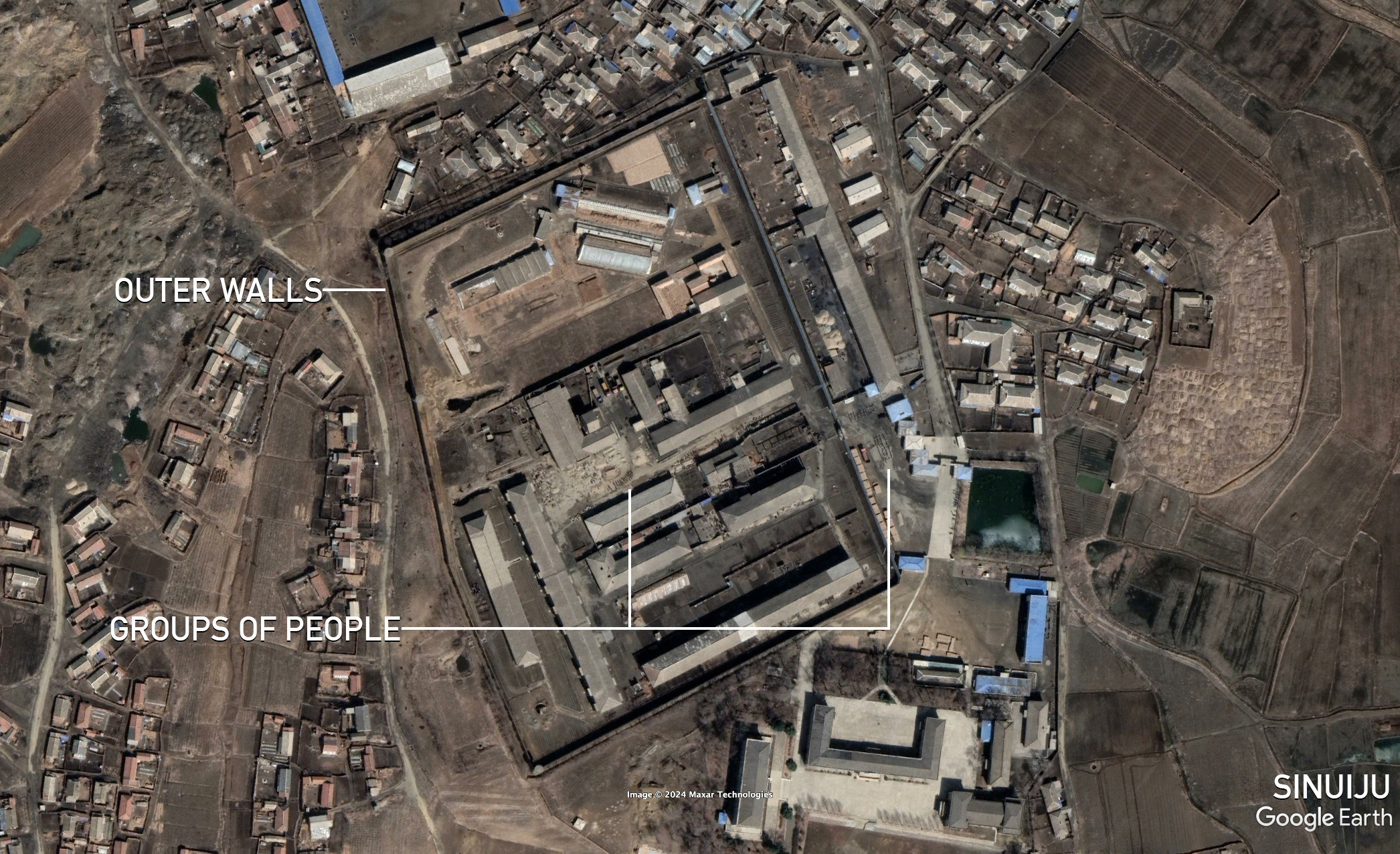
 Work appeared unfinished and ongoing at all of the sites as of early June. There were no similar signs of major demolition and construction at other known kyohwaso facilities in Kaechon, Kangdong, Sungho, Hamhung and Hoeryong, according to NK Pro analysis of the latest imagery. NK Pro previously revealed that North Korea renovated a kwanliso in the country’s remote northeast during the pandemic. Kwanliso are the most severe prison facilities in the DPRK, where the regime holds prisoners for life for political and religious reasons. PURPOSE OF THE PRISONS North Korea’s penal system consists of three types of facilities: pre-trial detention centers (kuryujang), reeducation facilities (kyohwaso) and long-term prison camps (kwanliso). North Korea has always denied the existence of kwanliso camps, but has acknowledged the operation of kyohwaso, describing them as detention facilities where criminals undergo labor-based reform. The 2014 COI report found that the Sariwon kyohwaso “has 3,000-4,000 prisoners who are forced to engage in farming and the production of clothing and shoes,” citing interviews with North Korean escapees. It said less is known about the Sinuiju and Chonnae prisons. A 2021 HRNK report, which includes detailed annotations of buildings at the Sinuiju site, said interviews with escapees revealed prisoners have been forced to produce “bicycles, uniforms, padded winter coats, boots, and hats for all security agencies.” According to a 2017 HRNK report, the specific function of the facility now under construction in Osu-dong is unconfirmed, but Kyohwaso No. 6 is where Venezuelan and French prisoners Ali Lameda and Jacques Sedillot were held in the 1960s and 70s. Hanna Song, executive director of the Database Center for North Korean Human Rights (NKDB) in Seoul, told NK Pro that while escapee testimony has not confirmed whether the three locations above have served as political prison camps in recent years, the new construction is possibly related to accommodating more prisoners prosecuted under a new “reactionary ideology” law. They could also be to contain and reeducate a recent influx of repatriated North Koreans influenced by their extended time abroad, she added. 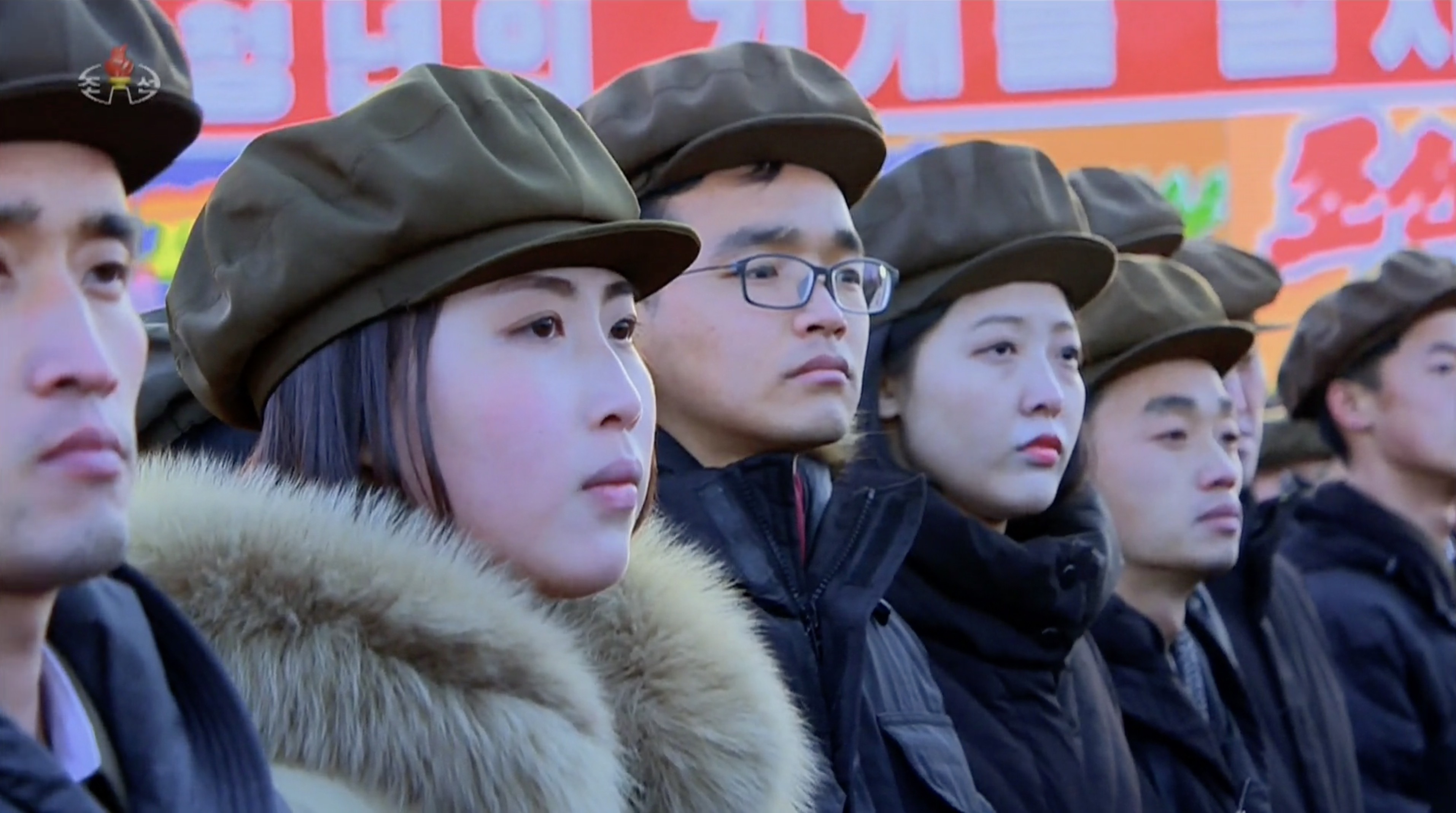 “Recent escapees who came during COVID that we spoke to all confirmed that there have been periods where they have been cracking down a lot more, especially on the youth,” Song said. “But after a while, [authorities] realized there were too many people they would have to then detain if they were really to implement these new laws, which would be too overwhelming — you can’t get rid of an entire generation — and so they started loosening up again.” Joanna Hosaniak, deputy director general at the nonprofit Citizens Alliance for North Korean Human Rights (NKHR), told NK Pro all North Korean prisons use forced labor to produce products for export. Renovation of Sinuiju’s kyohwaso, which benefits from its vicinity to the Chinese city Dandong, “indicates such produce from slavery practices will continue to enter international markets in the future,” she said. KIM JONG UN’S POLICY The expansion and rebuilding of several prison camps at the same time suggests orders have come down from the highest level, likely North Korean leader Kim Jong Un, to change or improve the national political prison system. It is not yet possible to determine exactly what changes are in store, but at least at Chonnae, growing floorspace means the prisoner population could rise, or their labor expectations expanded. With the apparent demolition of prisoner housing structures at all three sites, new construction could mean the project involves building more modern jail cells or improving security. Kim has been highly active in recent years carrying out an apparent project to eliminate unapproved thoughts and behavior in society, perfect obedience to state directives at all levels and prevent escape from the country. Since enacting a new “Law on Rejecting Reactionary Ideology and Culture” in late 2020, authorities have convened numerous national-level conferences to address plans to crack down on citizens consuming and mimicking foreign pop culture. At the central level, Kim has also recently placed heavy state media attention on a new Workers’ Party of Korea Central Cadres Training School in the capital meant to improve the nationwide bureaucratic process of obedience and executing his orders. The efforts appear to be part of ensuring Kim and his children maintain their luxurious lifestyles and totalitarian rule over North Korea’s 25 million inhabitants for decades to come — a future threatened by technological advances that have allowed easier access to foreign media, triggering questions about the Kim family’s legitimacy. Edited by Bryan Betts © Korea Risk Group. All rights reserved. |

October 10, 2026Oct 10, 2026

The ultimate resources for professionals working on North Korea
 SHARE
SHARE COPY LINK
 X
X MASTODON