
  News North Korea appears to test rocket engine after Kim-Putin space agreementSatellite imagery shows newly burnt vegetation at Sohae test stand, pointing to prep for another satellite launch 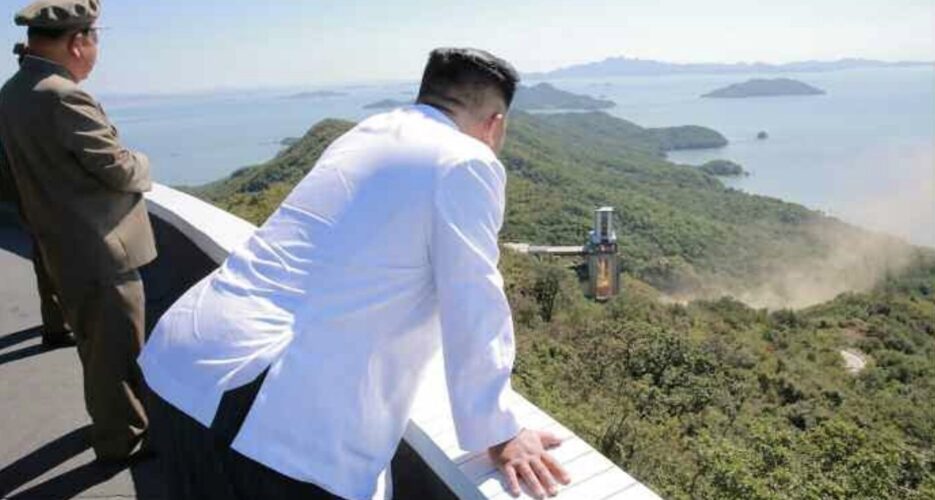 North Korea appears to have conducted a rocket engine test in recent days, according to NK Pro analysis of satellite imagery, after Russian leader Vladimir Putin signed a new agreement on space program cooperation with Kim Jong Un. The apparent test at the Sohae Satellite Launching Grounds vertical engine test stand follows the DPRK’s failed attempt to put a second military reconnaissance satellite into orbit on May 27, indicating preparations are underway for another attempt soon. Planet Labs and Sentinel-2 satellite imagery suggests an engine test took place at the vertical stand between June 21 and 25, evident in the appearance of dying vegetation downhill from the stand caused by heat and chemicals dispersed by a likely extended motor burn. NK Pro previously reported on at least two engine tests around one month and then two weeks before that launch, while an ROK military official reportedly said North Korea was conducting such tests “much more than expected.” 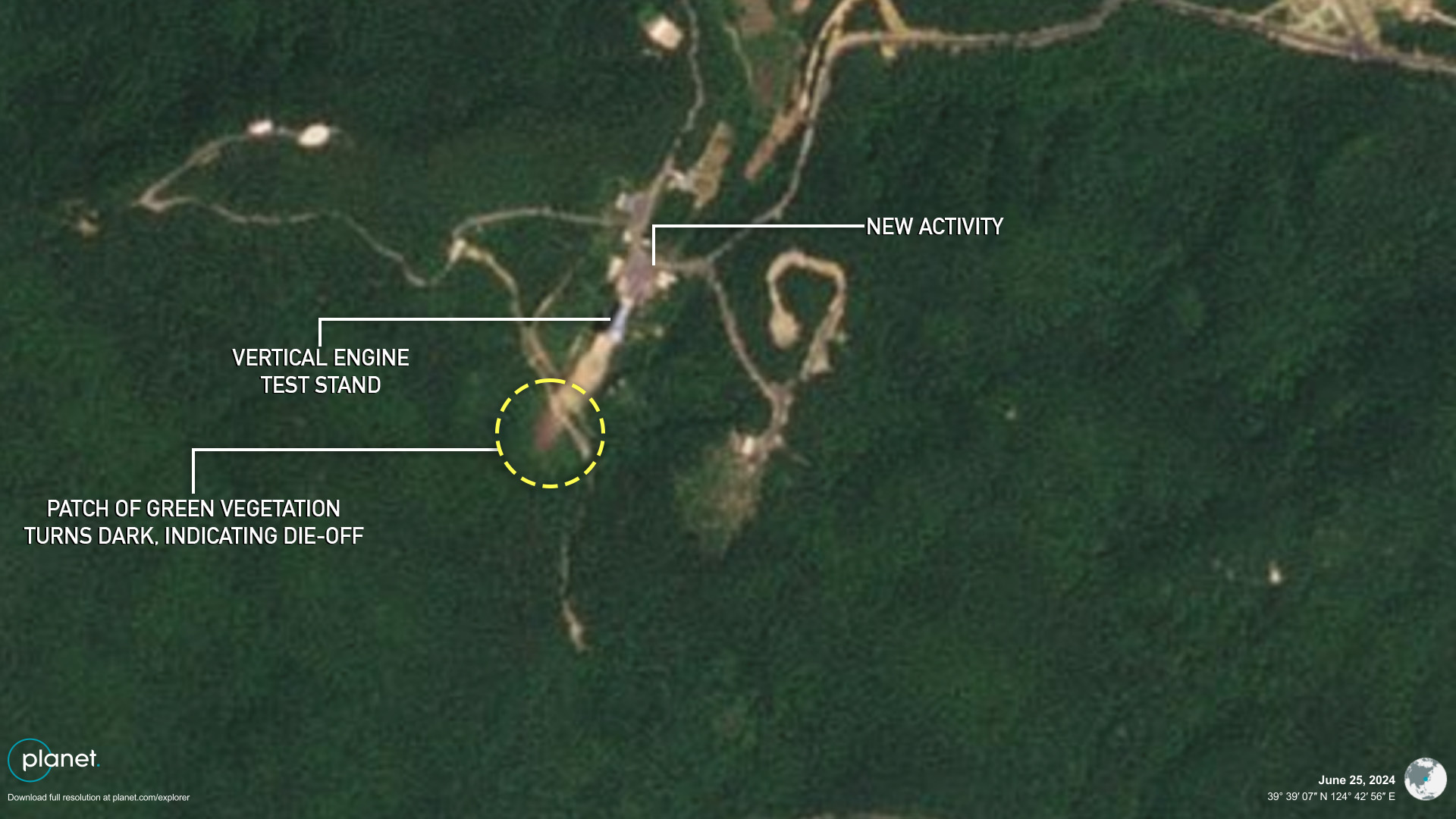
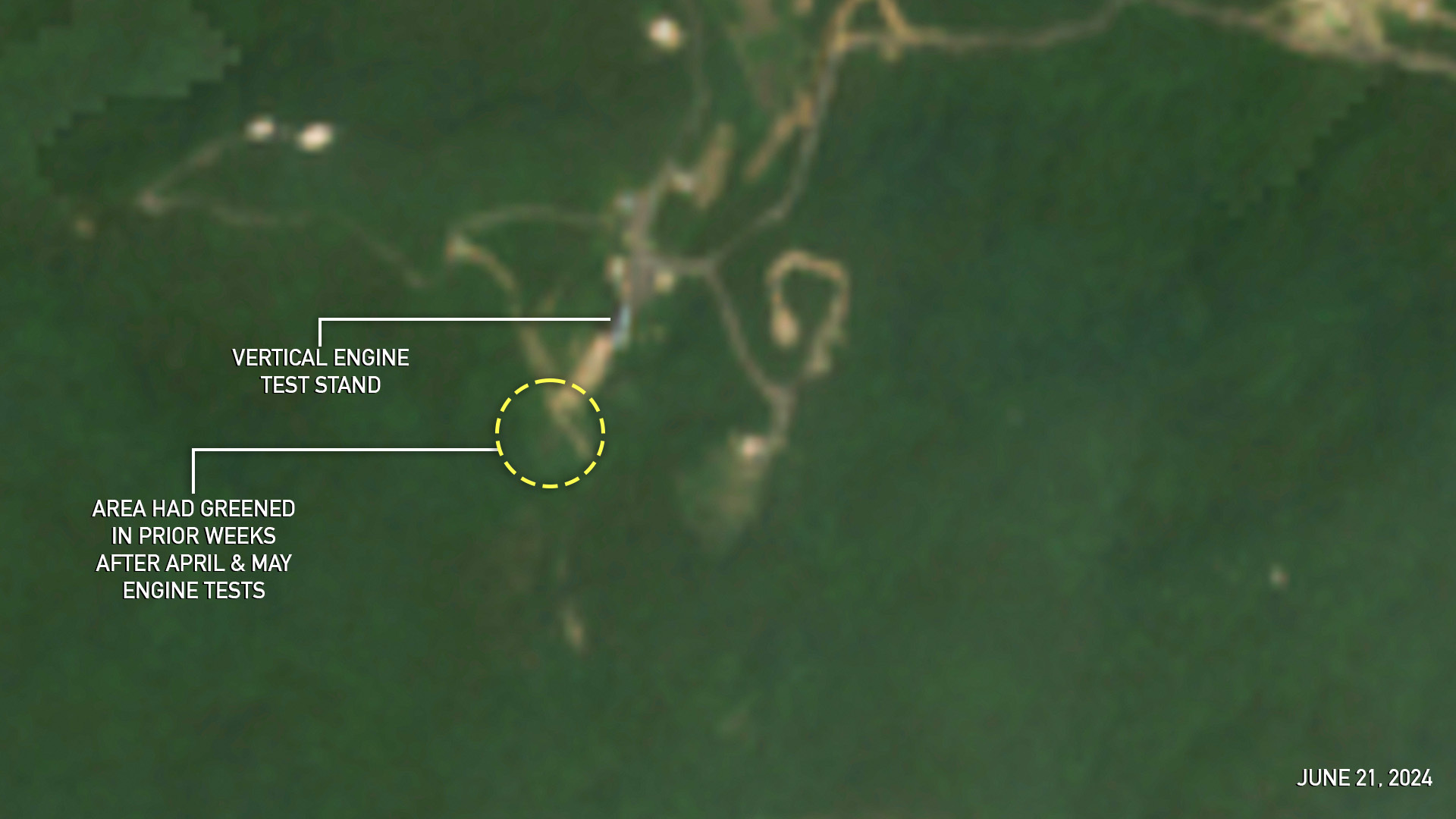
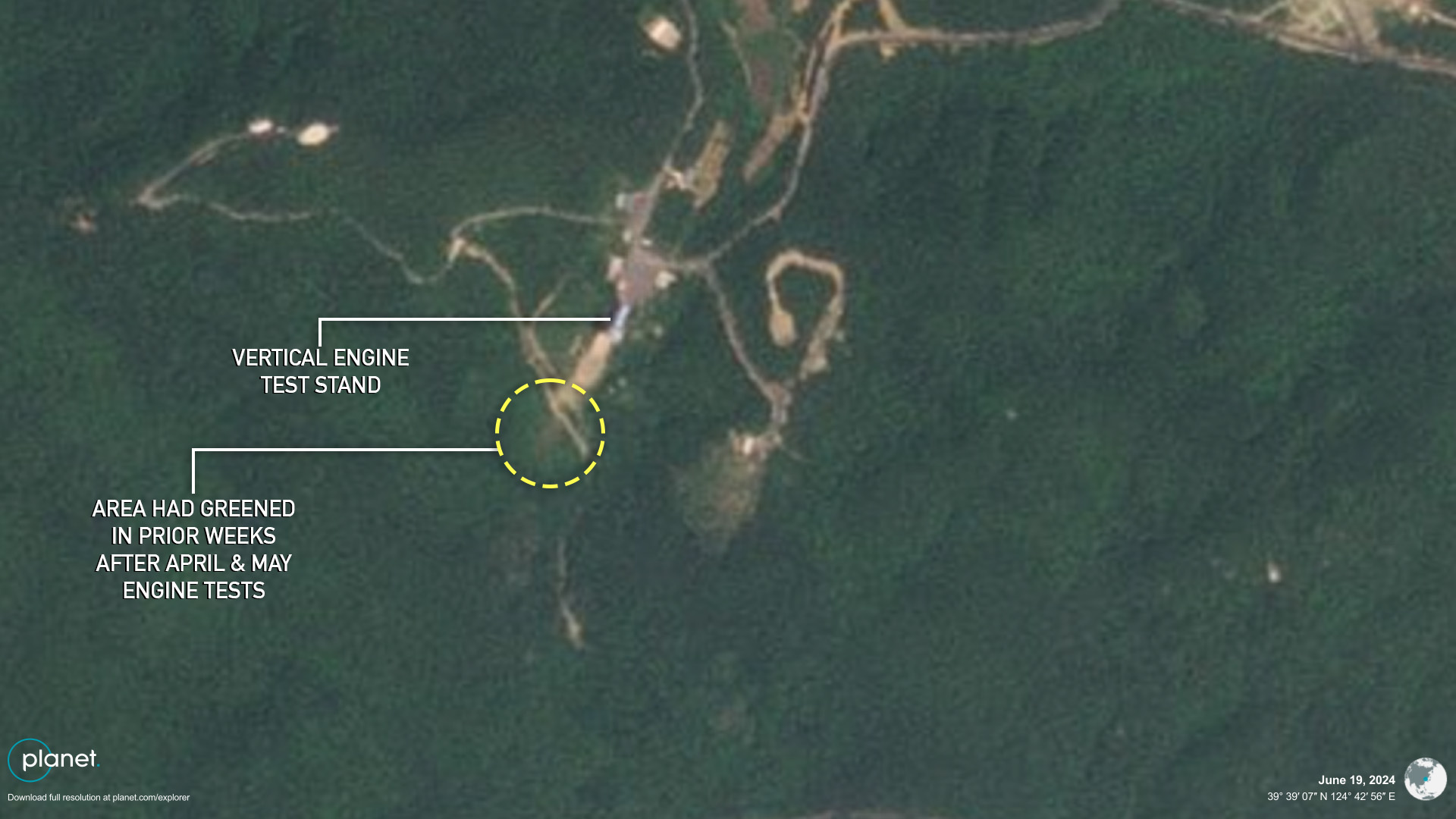
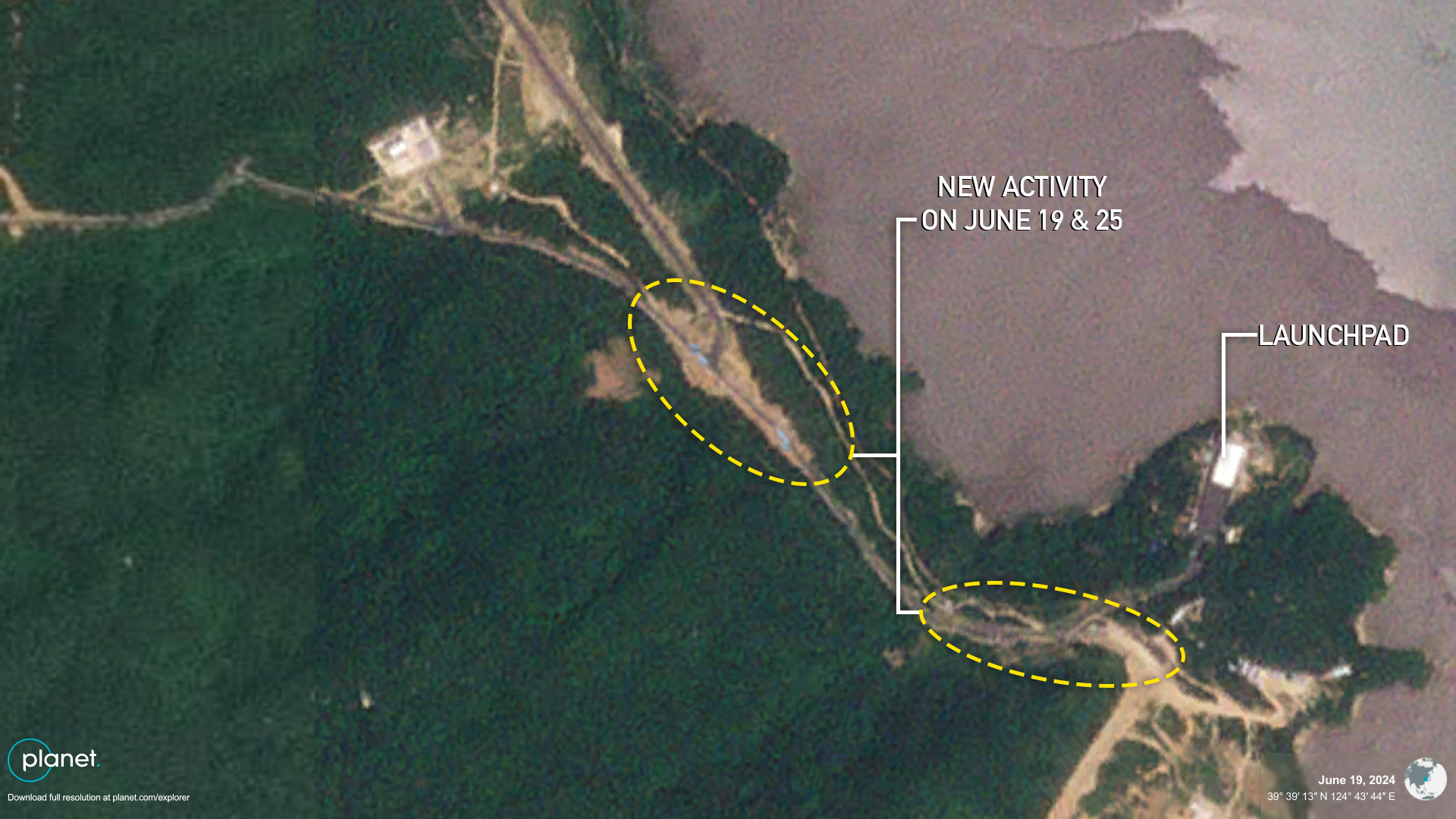
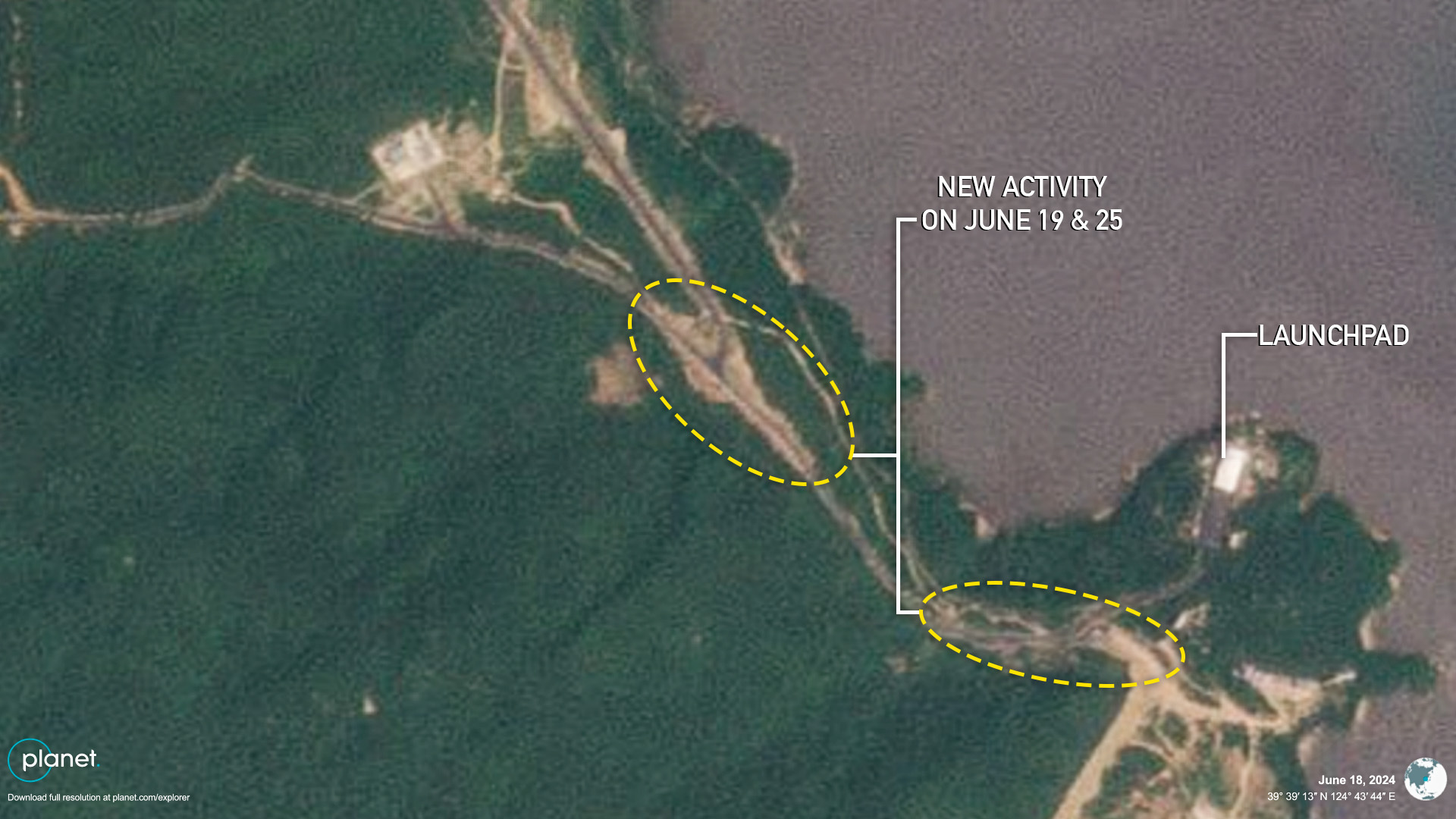
Putin toured Pyongyang with DPRK leader Kim Jong Un on June 19, where the two signed a new treaty promising to “develop exchanges and cooperation” and “actively promote joint research” in the aerospace sector. The treaty has yet to be ratified. Planes carrying a large Russian delegation — including Russian space agency Roscosmos chief Yuri Borisov — appeared to have left Pyongyang by June 21, but it is still possible the two cooperated on the latest engine test given their promotion of space cooperation since last year, when Putin explicitly offered to help the DPRK put satellites in space. Experts have assessed that the first-stage engine North Korea used for the late May failed launch was new and possibly acquired from Russia, given similarities in stated liquid fuel combinations. Pyongyang also suggested it was a different engine from the one used in the Chollima-1 satellite launch vehicle (SLV) that put North Korea’s first military reconnaissance satellite into orbit last November, but state media never released photos of the latest failed launch to help visually confirm the new engine’s characteristics. The apparent engine test in recent days follows work to redo or replace the roofing of the transfer structure at the vertical engine test stand between June 6 and 11, imagery shows, in an early indication of test preparations. The Sohae complex has also appeared busy in other spots in recent weeks, including at both the new launchpad and the older dormant one. Planet Labs imagery shows road work or a heavy presence of vehicles on the road leading to the new launchpad on June 19 and 25, though the resolution of the imagery is not high enough to determine the precise activity. 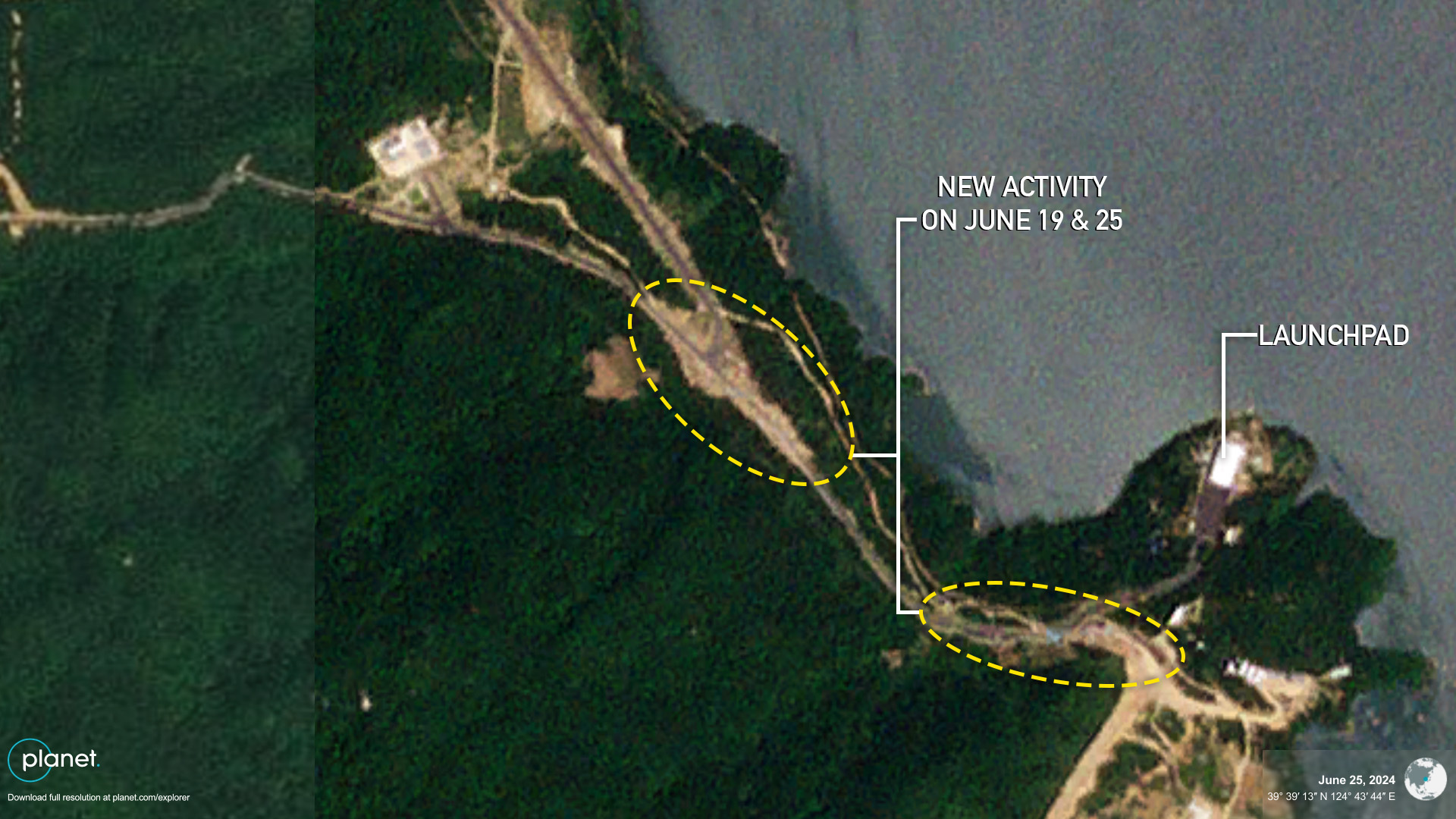
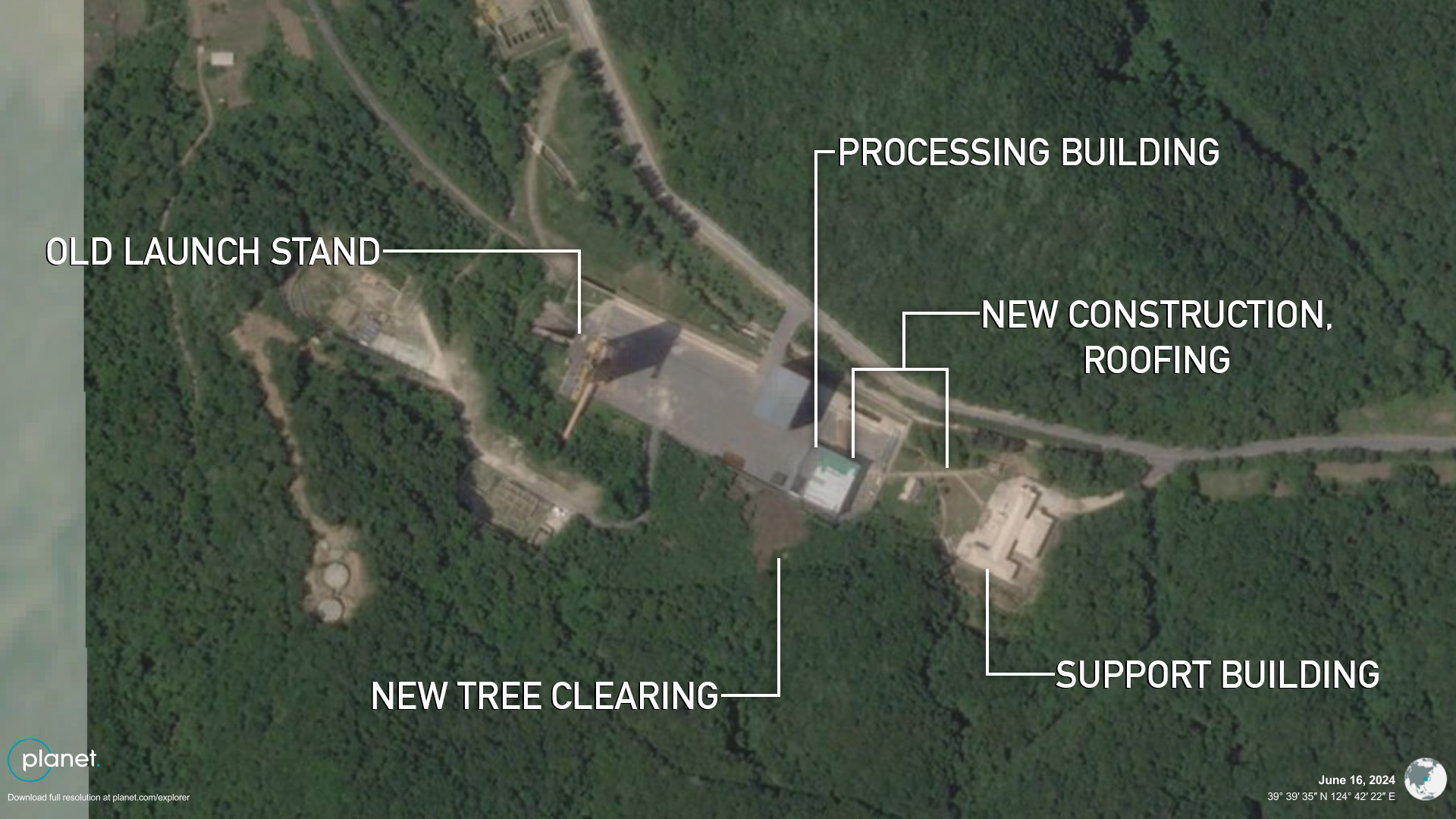
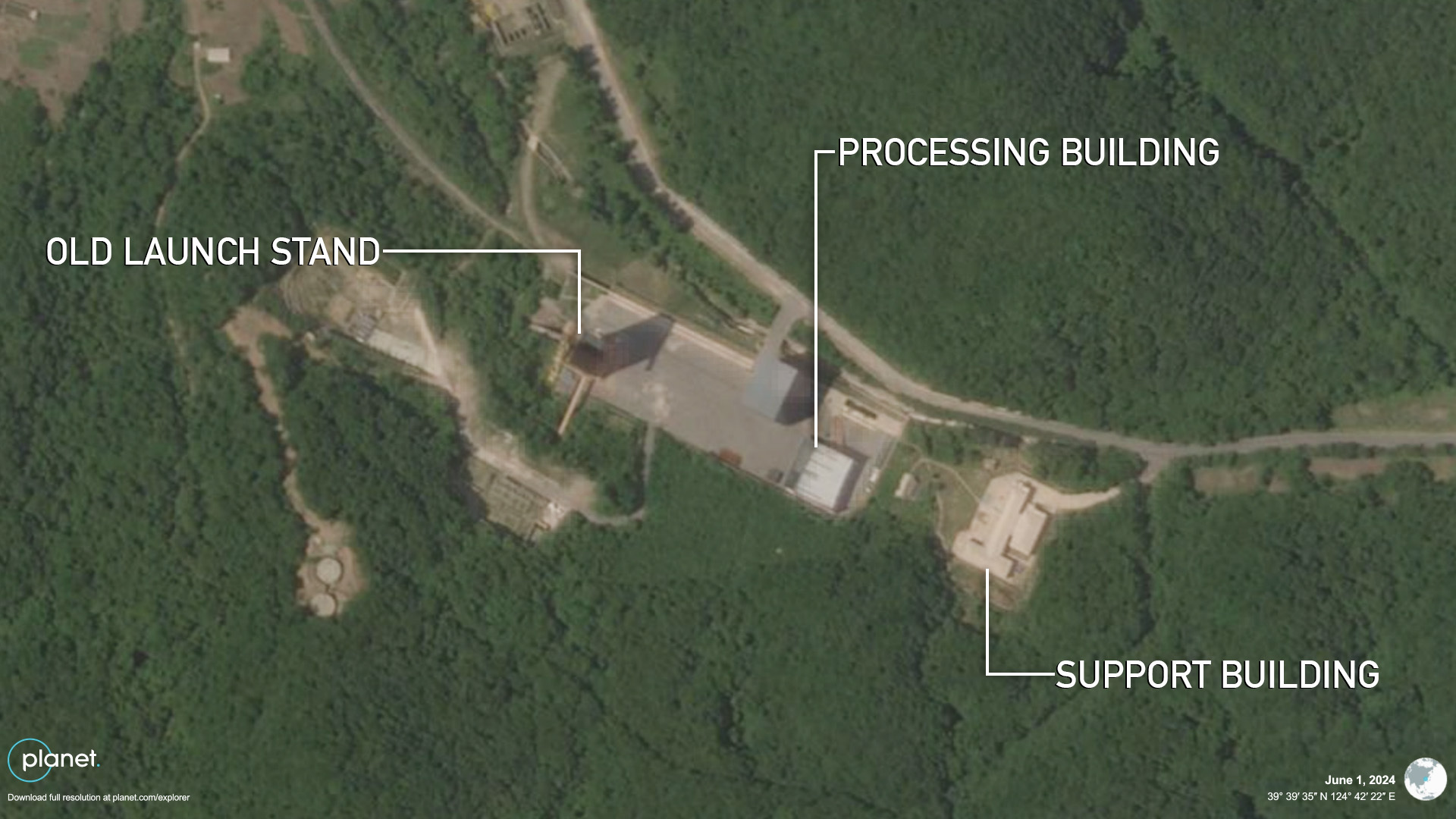
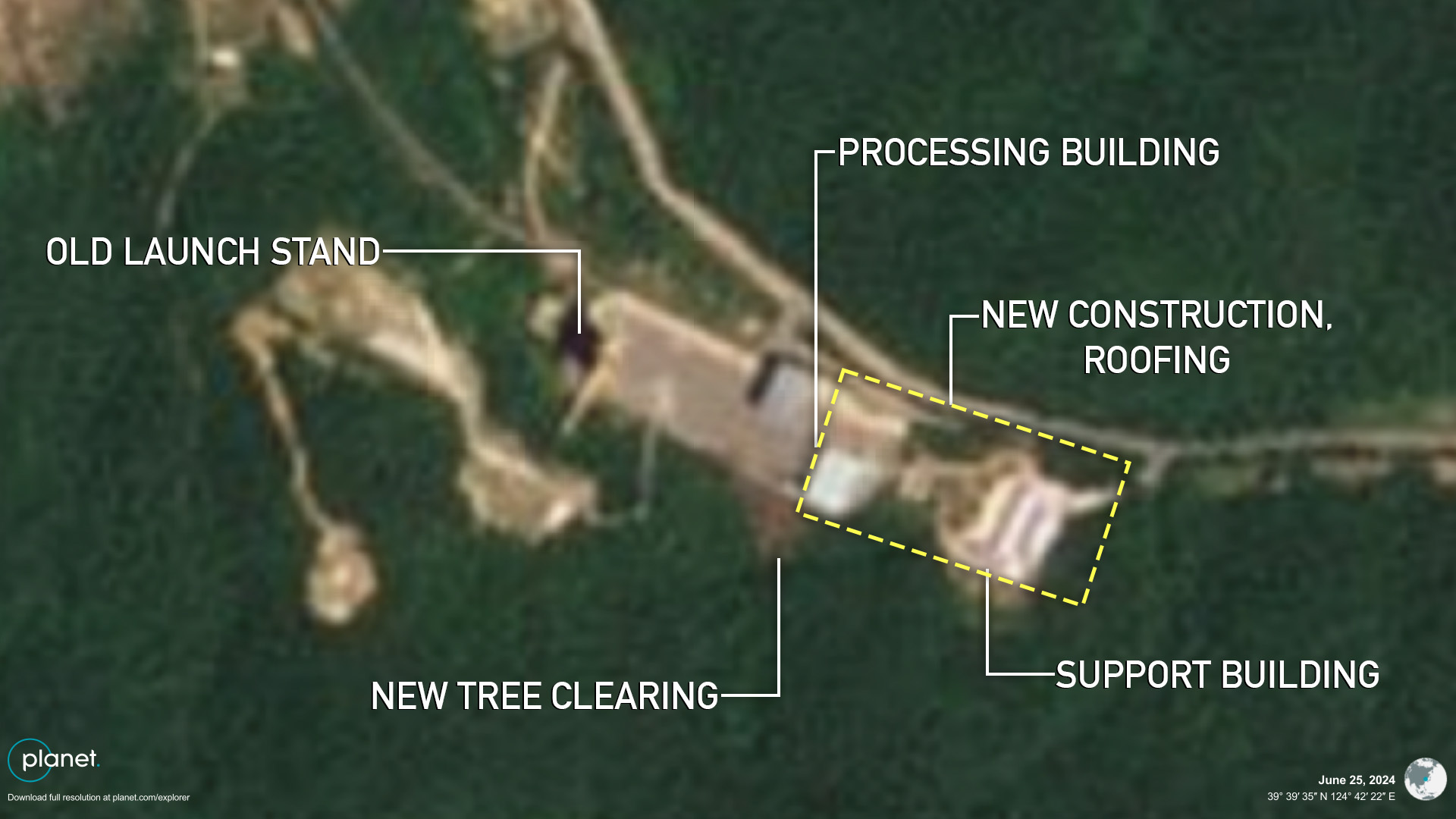
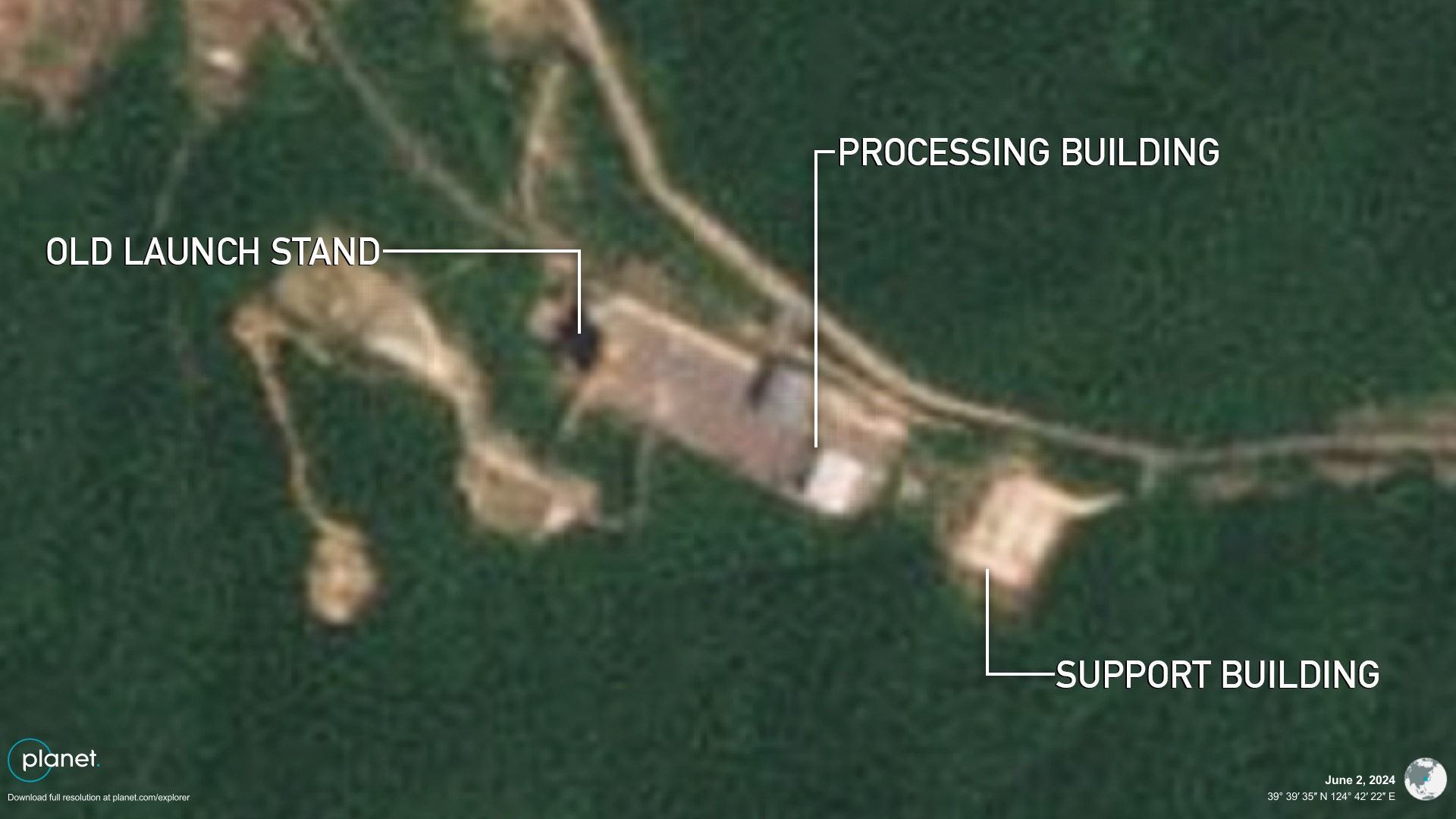
High-resolution imagery also shows a wooded area next to the old launchpad was cleared gradually starting between June 4 and 5, while roof work was done on the adjacent processing building. Voice of America was the first to report these changes on June 24. NK Pro analysis also shows there was new construction activity on a nearby support building and in the area between it and the processing building, though the purpose of the activity at this launchpad remains unclear. It was last used for a launch in 2016, while new construction ordered by Kim Jong Un has stalled after starting in late 2022. Other buildings do not appear to have made progress recently, such as a suspected horizontal rocket assembly building at the tunnel’s west entrance and new construction at an apparent VIP observation point across from the new launchpad, though this has not prevented previous launches from going forward. If the pattern holds from the last four launches since last year, North Korea should announce its next launch at least half a day in advance, in the form of navigational warnings regarding falling rocket stage debris. DPRK leader Kim Jong Un vowed in December to put three more military reconnaissance satellites in orbit in 2024. The DPRK National Aerospace Technology Administration (NATA) will have to significantly speed up preparations for future launches and avoid more failures to meet Kim’s demands, after taking three months between three separate launches last year. Edited by Bryan Betts © Korea Risk Group. All rights reserved. |

October 28, 2026Oct 28, 2026

The ultimate resources for professionals working on North Korea
 SHARE
SHARE COPY LINK
 X
X MASTODON