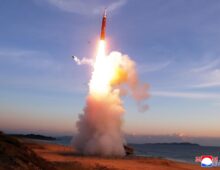
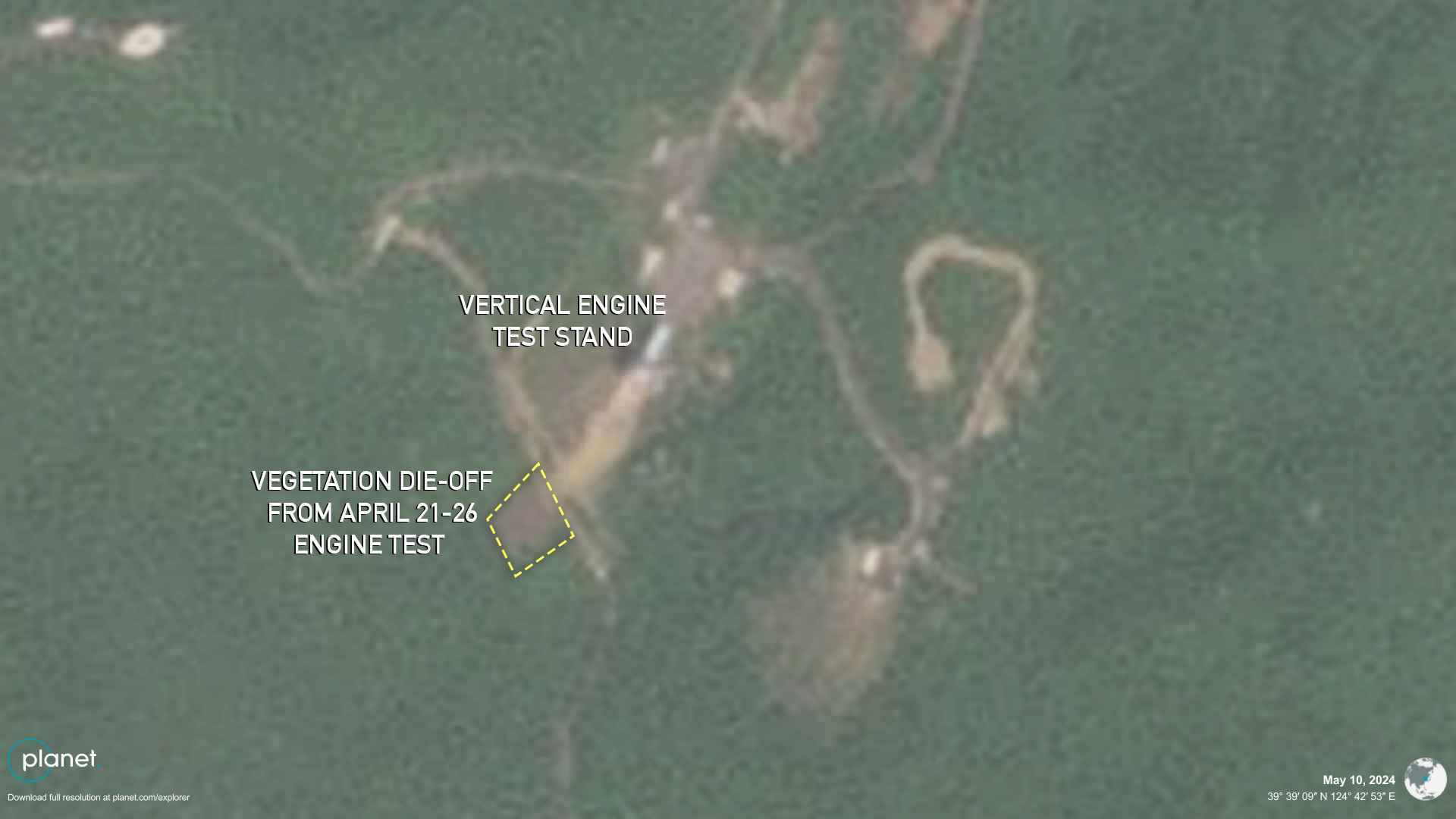
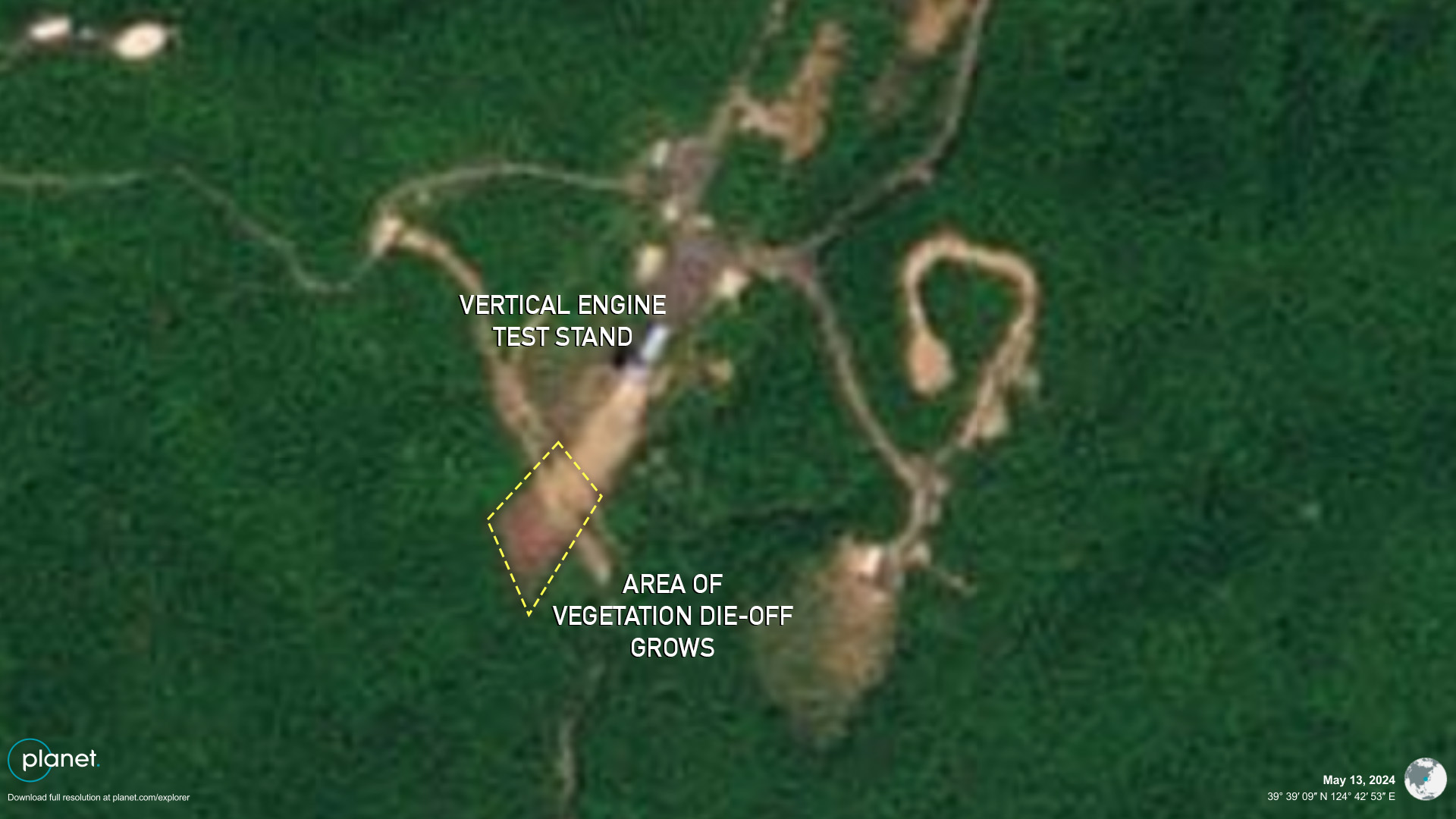
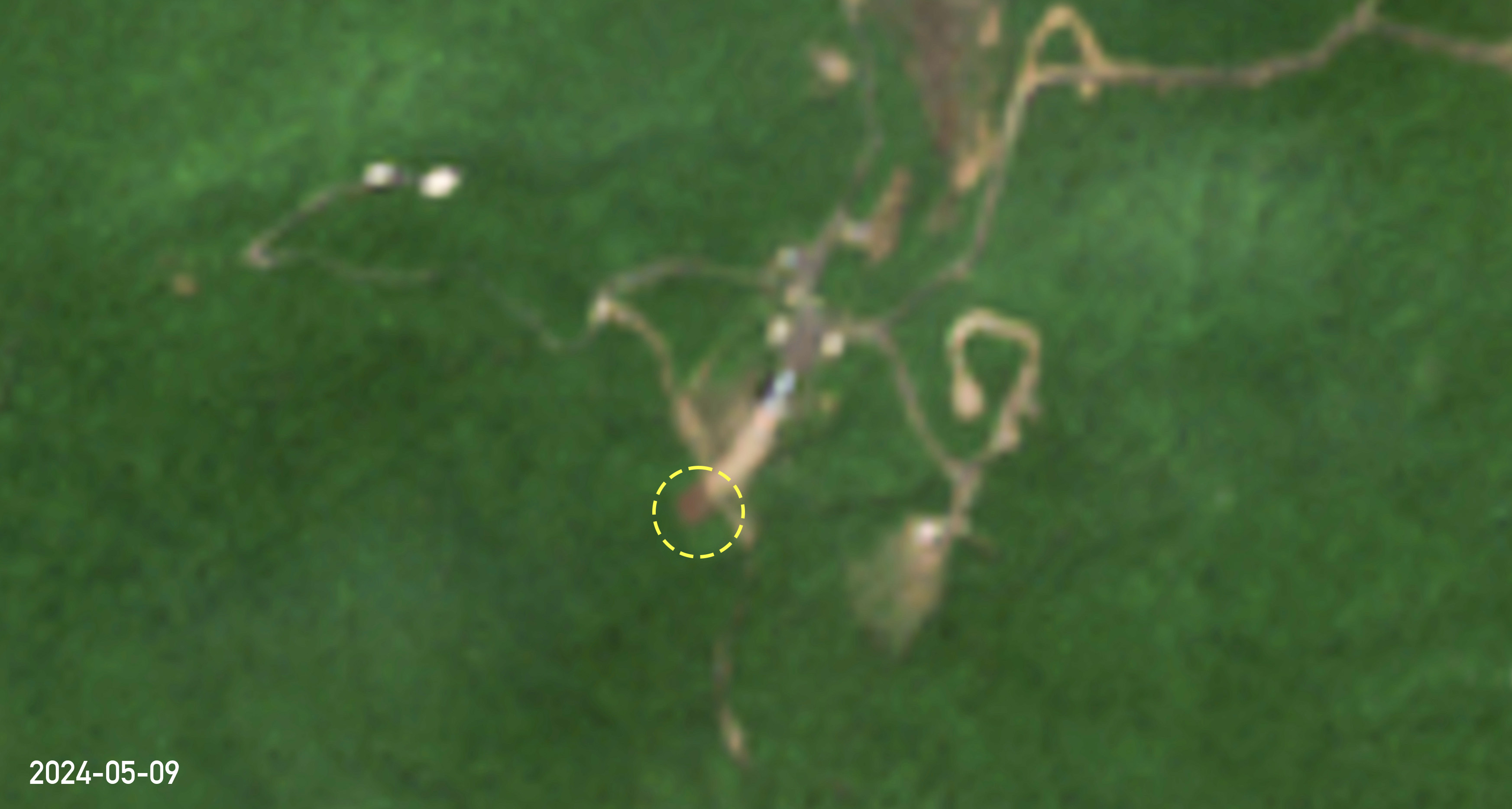
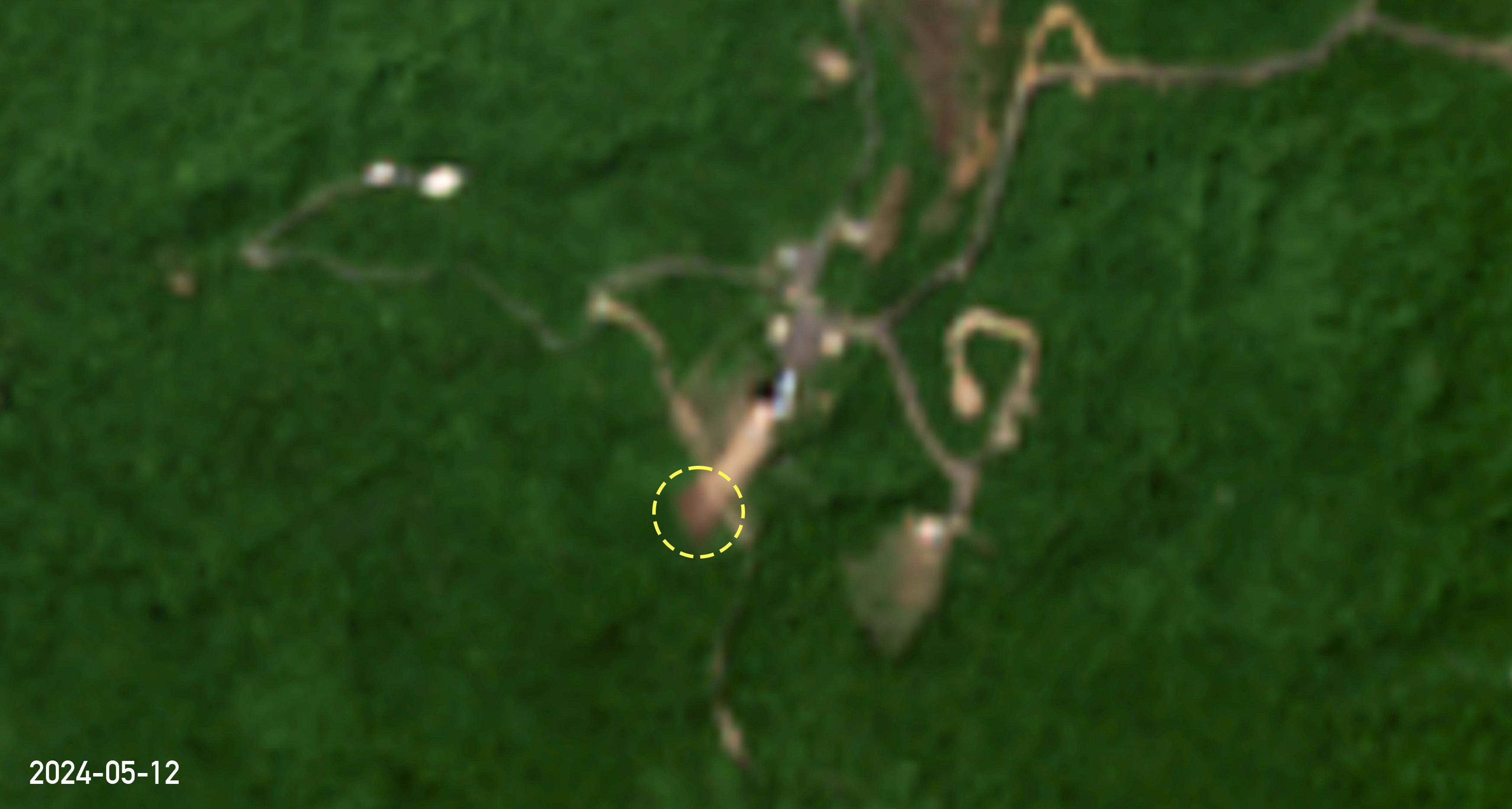
  Analysis North Korea conducted multiple engine tests before latest failed rocket launchSatellite imagery points to increased testing compared to last year, supporting Pyongyang’s claim it used new engine 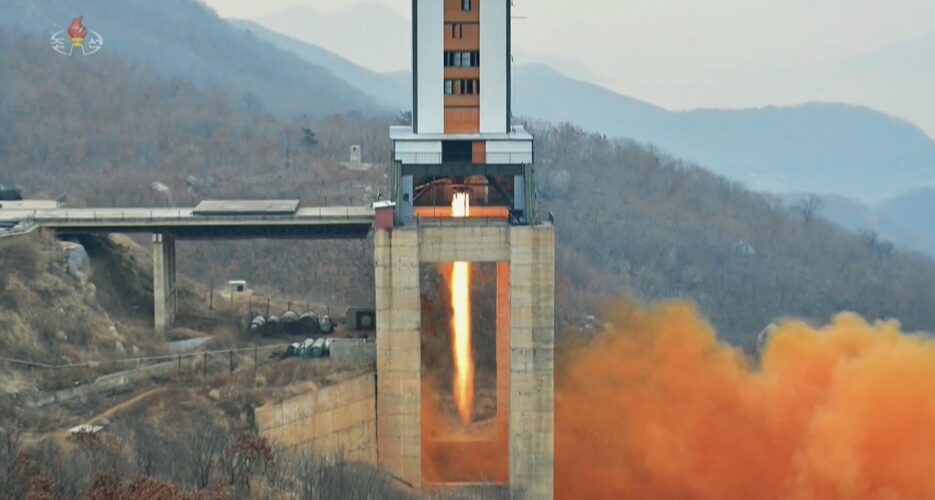 North Korea conducted at least two rocket engine tests ahead of Monday’s failed military satellite launch, according to NK Pro analysis of imagery, an increase from the amount of testing before last year’s launches that points to intensified preparations likely related to the use of a new engine type. Planet Labs imagery shows additional vegetation die-off appeared under the vertical test stand at the Sohae Satellite Launching Grounds between May 10 and 12, suggesting North Korea conducted a second engine test after one previously reported by NK Pro at the same location between April 21 and 26. The findings support Yonhap News Agency’s report, citing an anonymous ROK military official, that Pyongyang recently conducted satellite carrier rocket engine tests “much more than expected.” 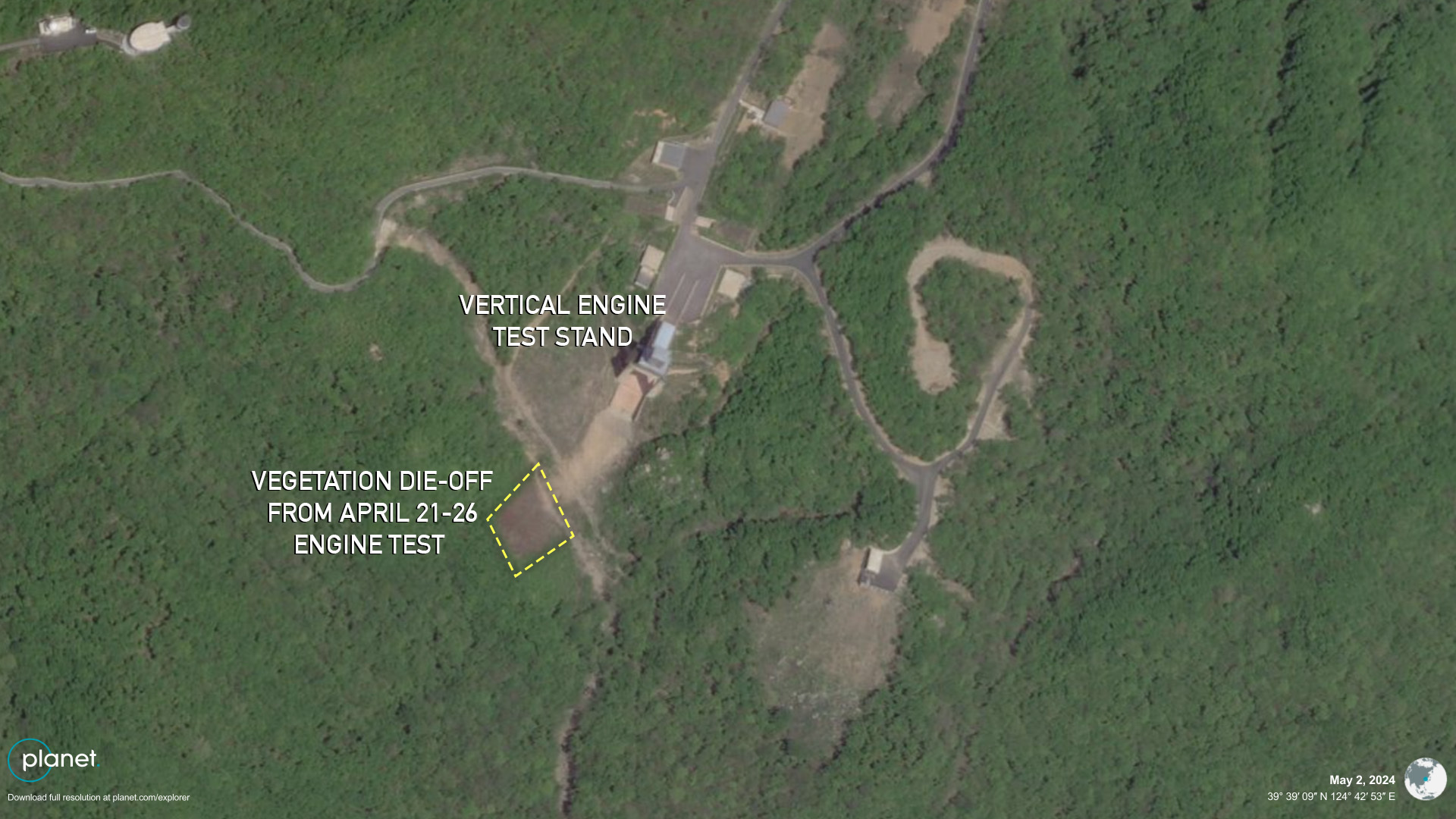
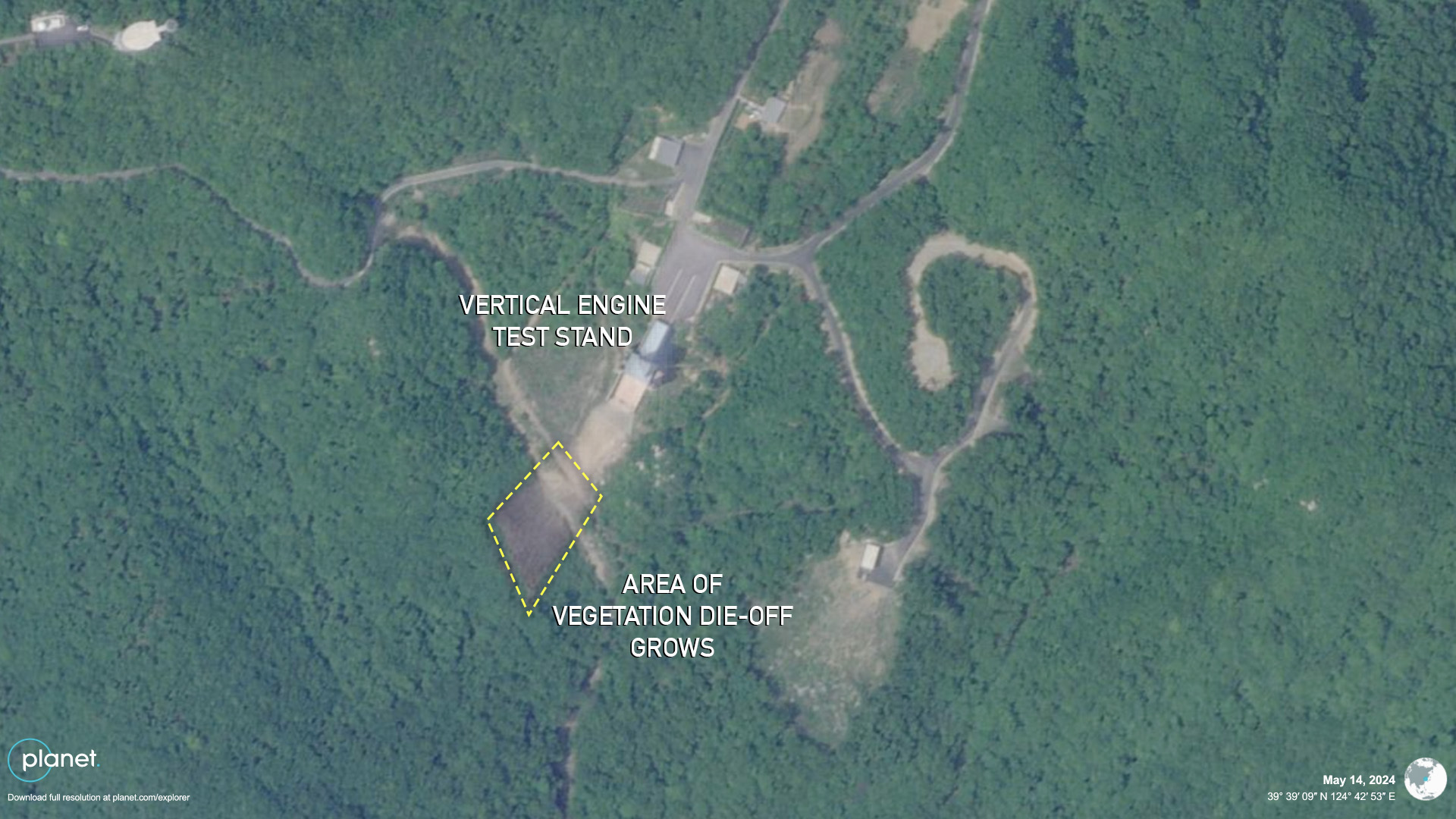
The official claimed this was a sign of North Korea’s space agency adopting higher quality standards compared to last year and that this was urged by cooperating Russian scientists. The multiple engine tests in quick succession were likely also related to the DPRK’s plans to use a “newly developed liquid oxygen + petroleum engine” in the carrier rocket for Monday’s satellite launch, which was revealed by the vice general director of the DPRK National Aerospace Technology Administration (NATA) in a statement after the launch failure. The DPRK official said issues with the new first-stage engine’s “reliability” were to blame for the rocket’s explosion, despite the apparent string of recent testing. It remains possible that more than just two tests occurred at Sohae in the last month, but these may not be visible in satellite imagery if the heat and chemicals from extended engine burns didn’t kill off additional areas of vegetation — typically the clearest visible sign of a test. The relative lack of satellite launch vehicle (SLV) engine testing at Sohae last year also supports the notion that North Korea has decided to go in a different direction for this year’s program, which includes plans to put three more military reconnaissance satellites into orbit. NK Pro analysis of Planet Labs imagery shows evidence of engine testing at the vertical stand only once in mid-July, around six weeks before a failed launch in late August, but not before a failed launch in May or successful launch in late November. However, it is possible that testing also took place at other unknown locations. While North Korea hasn’t revealed specifications of the engines used in those three launches, the NATA official’s statement on Monday suggests the one used in the first stage of the carrier rocket this week was new. The DPRK appeared to spend around three months on analysis and preparations after both the first and second failed launches last year before conducting new attempts, while six months have passed since the successful November launch — another sign of a major shift in the program. NATA will need to both accelerate its launch preparation schedule and avoid additional failures if it is to meet Kim Jong Un’s demand to successfully place three more military satellites into orbit this year. Edited by Bryan Betts © Korea Risk Group. All rights reserved. |

October 06, 2026Oct 06, 2026

The ultimate resources for professionals working on North Korea
 SHARE
SHARE COPY LINK
 X
X MASTODON