  Analysis Exclusive: North Korea testing larger new recon drone, pushing deployment planNK Pro identifies apparent improved Global Hawk copycat UAV in satellite imagery as hanger construction accelerated 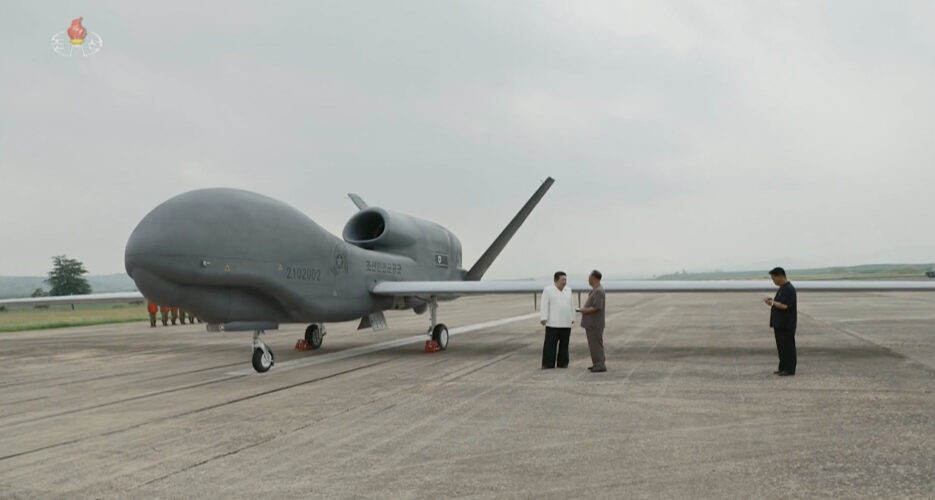 North Korea appears to be testing a larger version of its Global Hawk copycat reconnaissance drone, according to NK Pro analysis of satellite imagery, while accelerating deployment preparations with new drone hangar construction. NK Pro is first to report on the apparent new and improved drone model, appearing outside old hangars at Panghyon Airbase in a Planet Labs high-resolution SkySat image taken on Jan. 22. The aircraft appears similar in design to the Saetbyol-4 reconnaissance drone North Korea unveiled in 2023, but with a wingspan measuring around 40 meters (131 feet) — up to 5 meters longer than the Saetbyol-4. 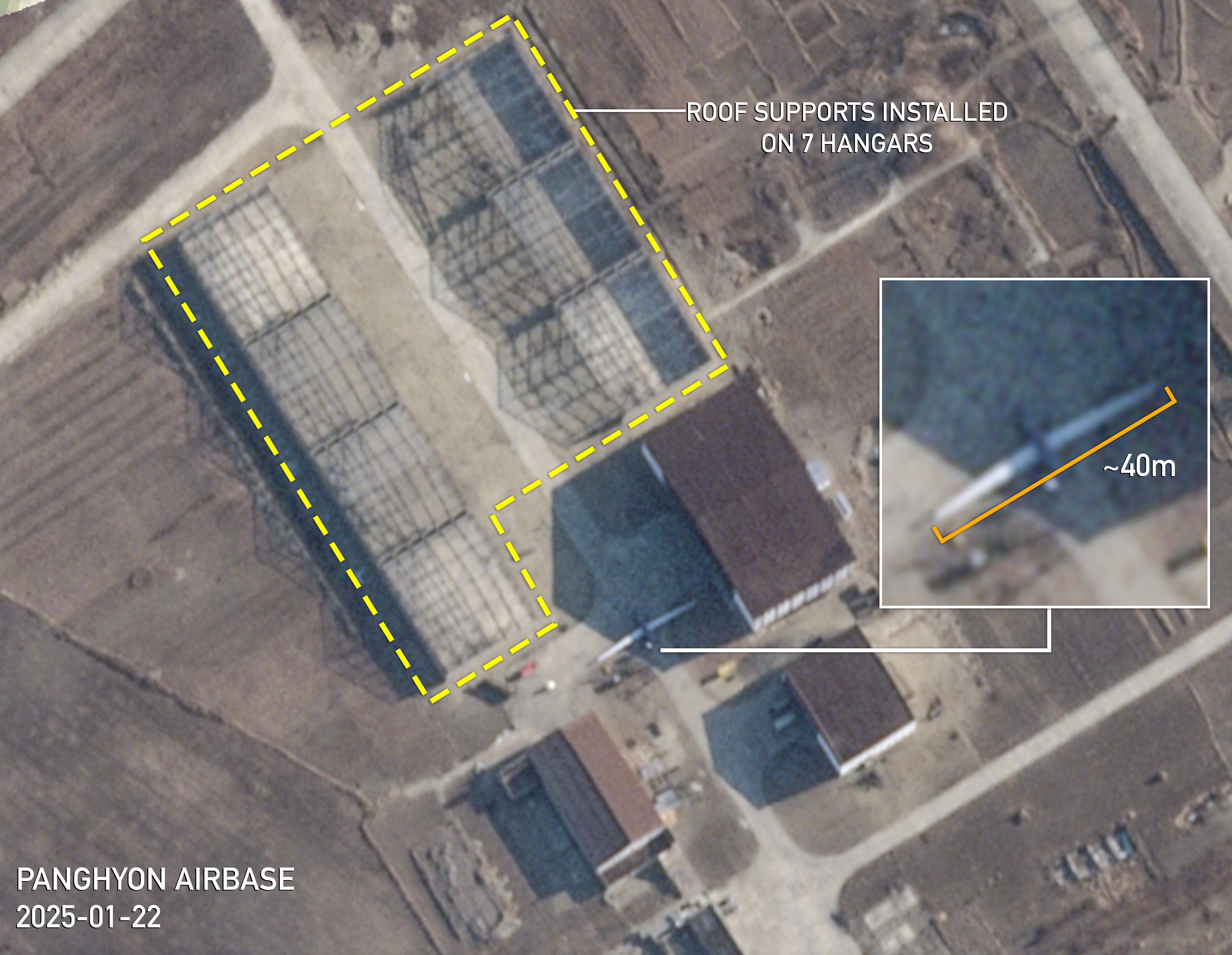
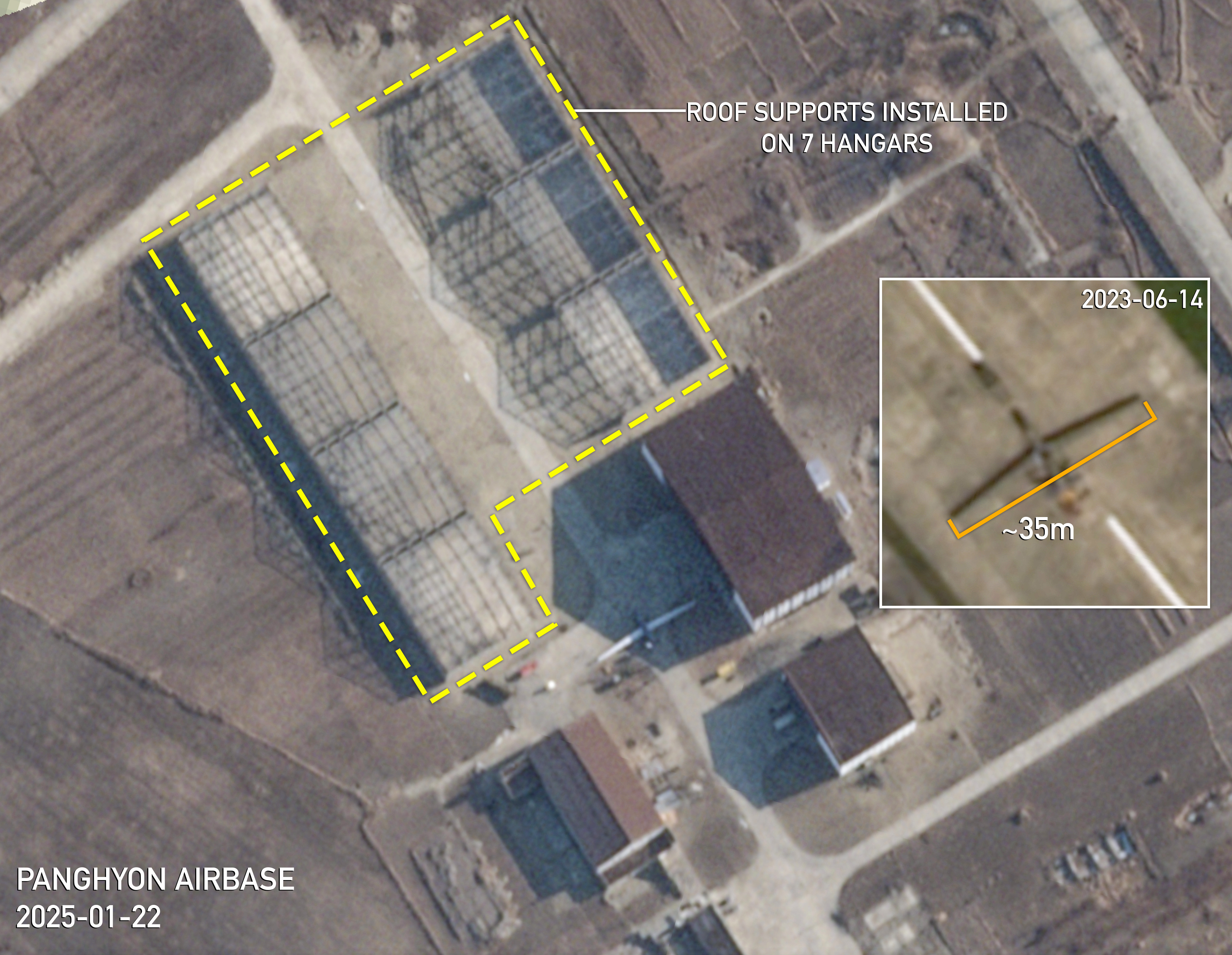
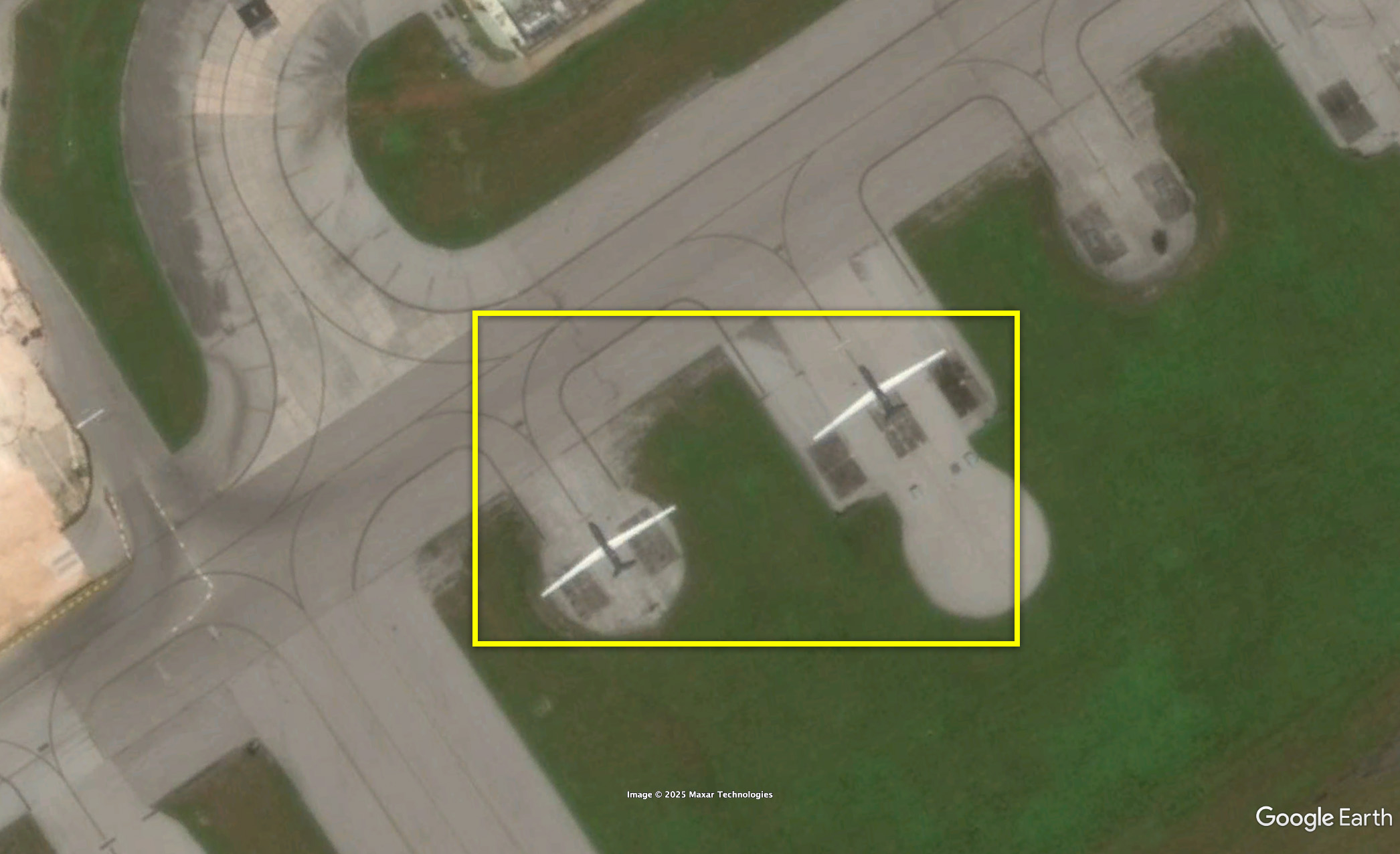 In addition to the previously known aircraft mimicking the U.S.’s RQ-4A Global Hawk in design and now even in color scheme, the increase in size from around 35 to 40 meters also mirrors Washington’s transition to the upgraded RQ-4B with a 39.8-meter wingspan. This upgrade improved the unmanned aerial vehicle’s (UAV) payload capacity while decreasing its range 800 nautical miles, from 9,500 to 8,700 — meaning North Korea’s upgrade could also have similar implications. In another sign of efforts to speed up the timeline on deploying these aircraft, Planet Labs imagery shows that work to install roofing on seven new hangars at Panghyon Airbase began between Feb. 14 and 17, located near where the new drone was spotted. One hangar was covered in red roofing by that time, and work started on a second between Feb. 19 and 20. Roof supports on the structures were installed on all seven hangars as of the Jan. 22 high-resolution image. 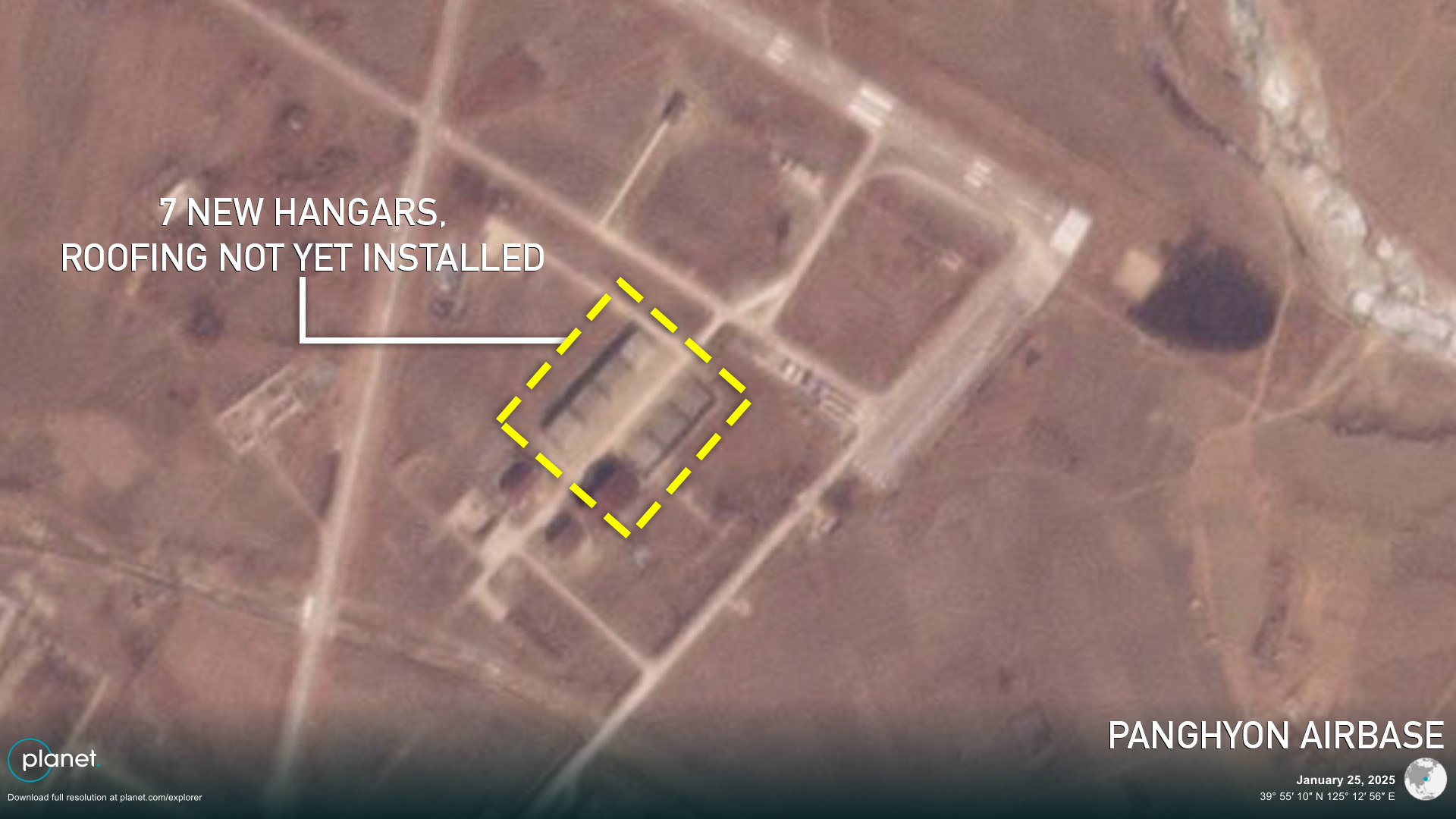
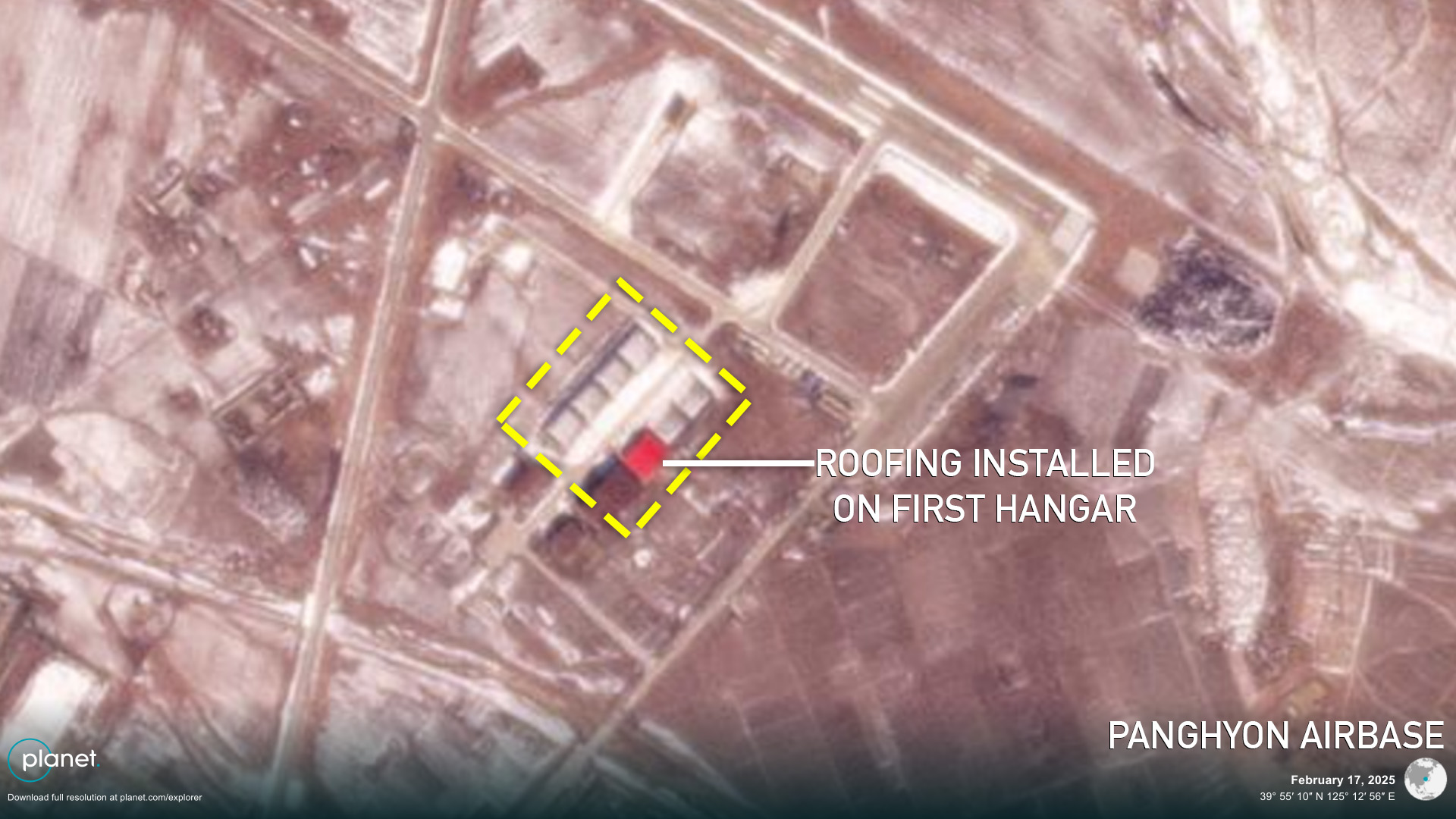
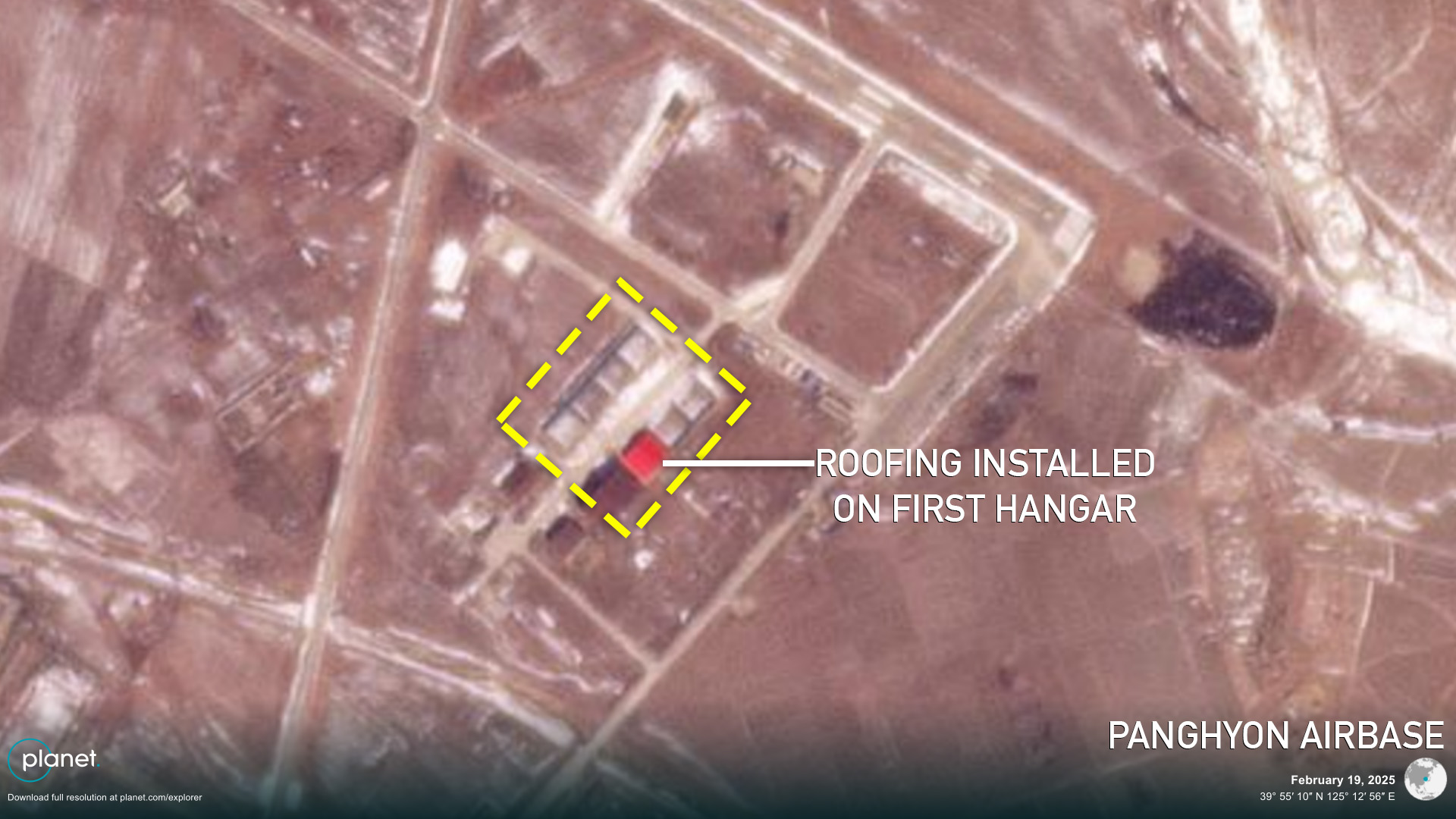
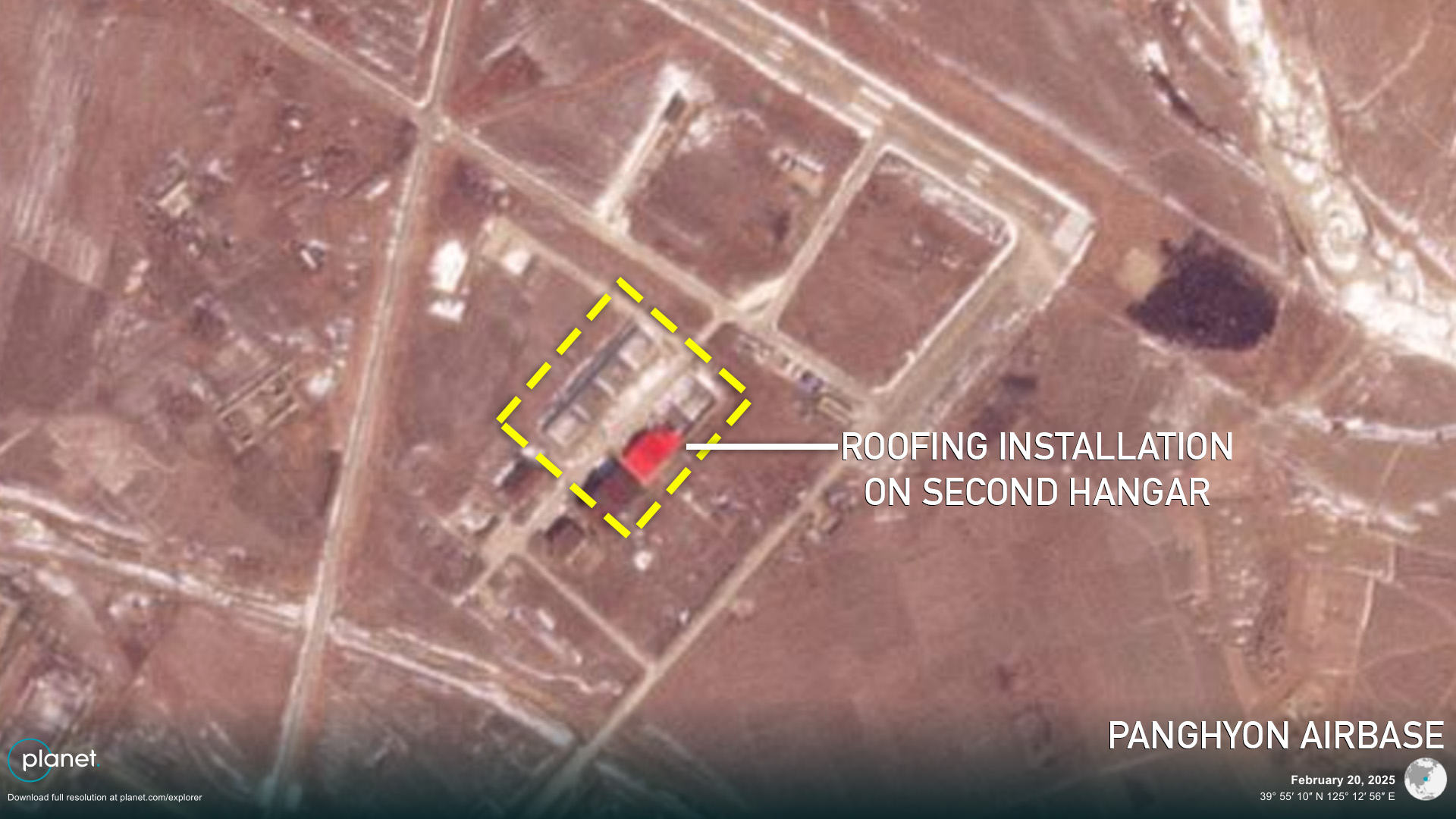
The hangar project launched last June but stalled after the basic framework of the structures was erected in August. If utilizing vertical lifting doors, each hangar will likely be able to accommodate wingspans slightly over 40 meters, which would include both older and newer versions of the Saetbyol-4, as well as the Saetbyol-9 combat drone with its 20-meter wingspan (65-foot). The U.S. has similar-sized hangars for its Global Hawk drones. The North’s smaller combat drone was first spotted in commercial satellite imagery outside the older hangars at Panghyon in Sept. 2022, while NK Pro was first to report on apparent flight testing of both UAV types at the airbase in June 2023. Pyongyang officially unveiled both models at a military expo and parade a month later, but state media has been short on details ever since. When DPRK Leader Kim Jong Un first announced combat and reconnaissance drone development plans at the Jan. 2021 party congress, he said designs were “completed” and “important research” was still being planned. He didn’t specifically mention a deadline or target timeframe for deployment, but generally presented all weapons goals in the speech in the framework of a five-year plan through the end of 2025. His direction to produce spy drones “capable of precisely reconnoitering up to 500 km deep into the front” suggests that once deployed, regular Saetbyol-4 operations could involve flights along the inter-Korean border but over DPRK territory. Pyongyang frequently criticizes U.S. and South Korean reconnaissance flights from international airspace off North Korea’s east and west coasts, but could test Washington and Seoul with similar flights south of the maritime boundary. However, North Korea has yet to thoroughly demonstrate the capabilities of both new drone models, only showing brief clips of them in flight and not claiming further testing beyond those apparently related to practicing military parade flyovers. State media has instead focused attention in the last year on plans to mass produce a wide range of small suicide drones, with Kim Jong Un publicly attending two tests last year, one at Panghyon Airbase and another at Pyongyang International Airport. Meanwhile, construction appears stalled on new production facilities at a nearby factory which could be involved in current suicide drone or larger drone manufacturing. Edited by Alannah Hill © Korea Risk Group. All rights reserved. |

October 08, 2026Oct 08, 2026

The ultimate resources for professionals working on North Korea
 SHARE
SHARE COPY LINK
 X
X MASTODON