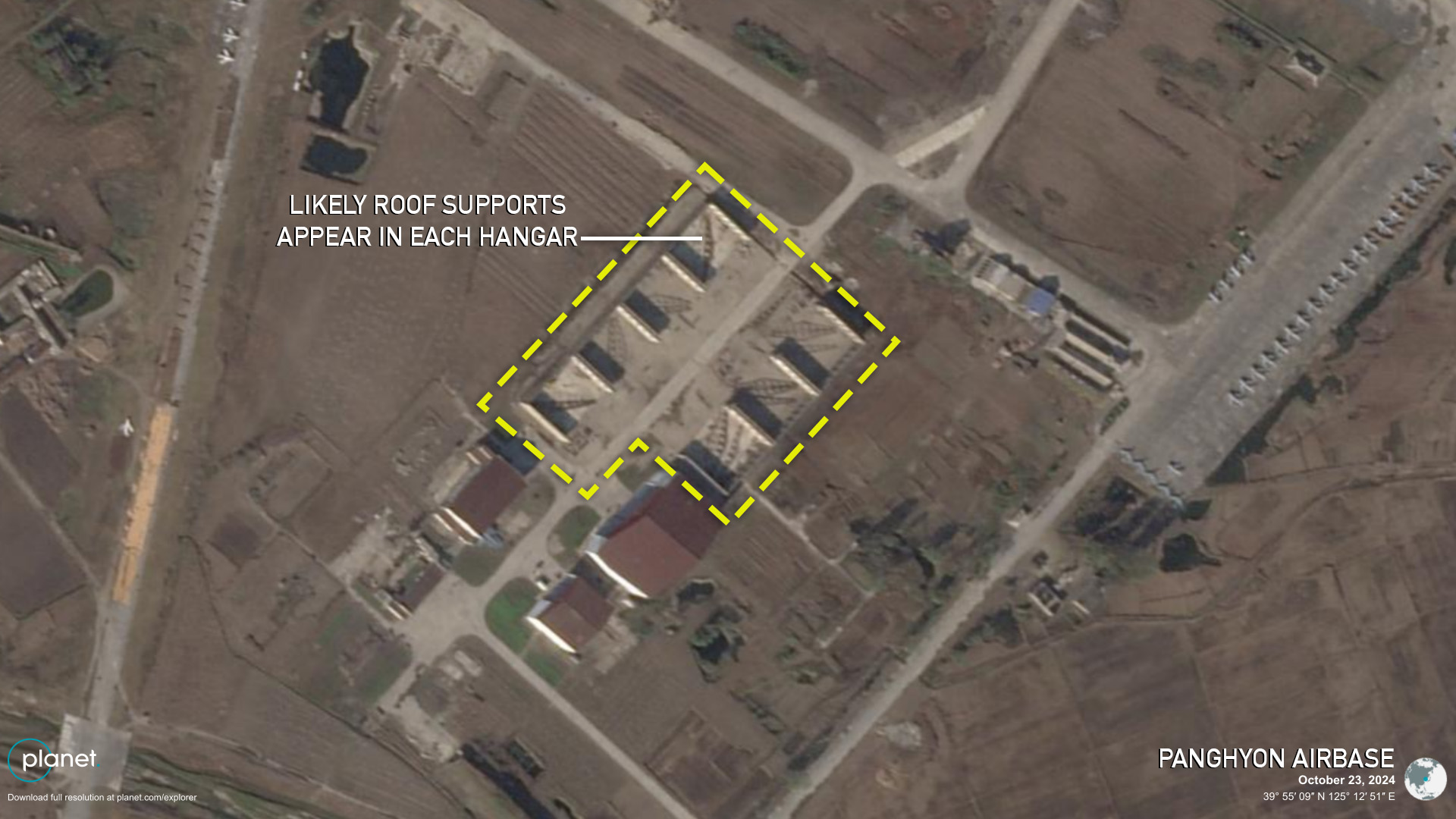
  Analysis Suspected North Korean drone base and factory face construction slowdownSlow progress points to lack of urgency or shortages, even as DPRK pushes development of large UAVs and suicide drones 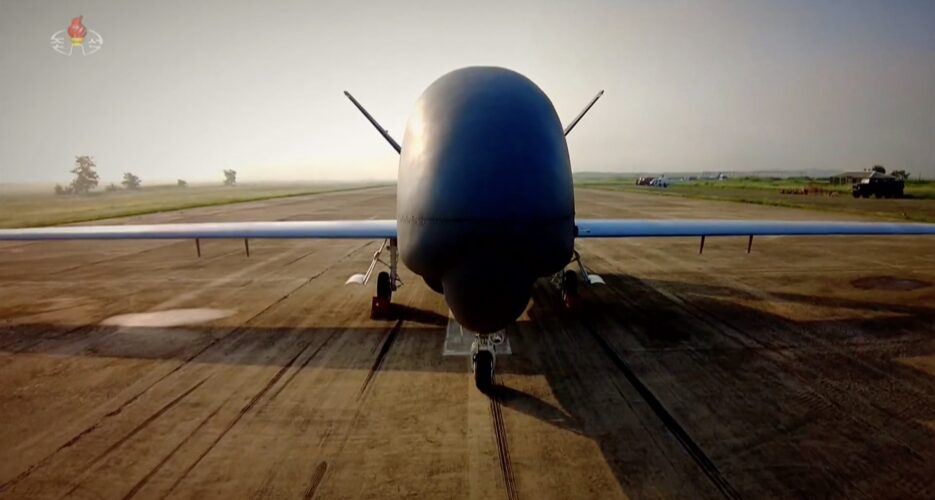 North Korea has made slow progress in recent months on building its first military drone airbase and remodeling a nearby factory, possibly for suicide drone production, pointing to a lack of urgency or resources shortages, according to NK Pro analysis. Planet Labs satellite imagery shows that construction on seven large hangars at Panghyon Airbase largely stalled in early October, after excavation work started in June and framework structures were built in early August. They are likely for North Korea’s large new Saetbyol-9 combat UAV (with a 20-meter wingspan) and Saetbyol-4 reconnaissance UAV (35-meter wingspan), since flight testing for both took place at the airbase last year. Each hangar measures around 45 meters wide by 40 meters deep (148 by 131 feet). A high-resolution Planet Labs image taken on Oct. 23 showed long, narrow objects that appeared to be gable-shaped roof beams and supports on the floor of each hangar. They arrived in the first half of October but appeared static until changing positions on the ground in December. 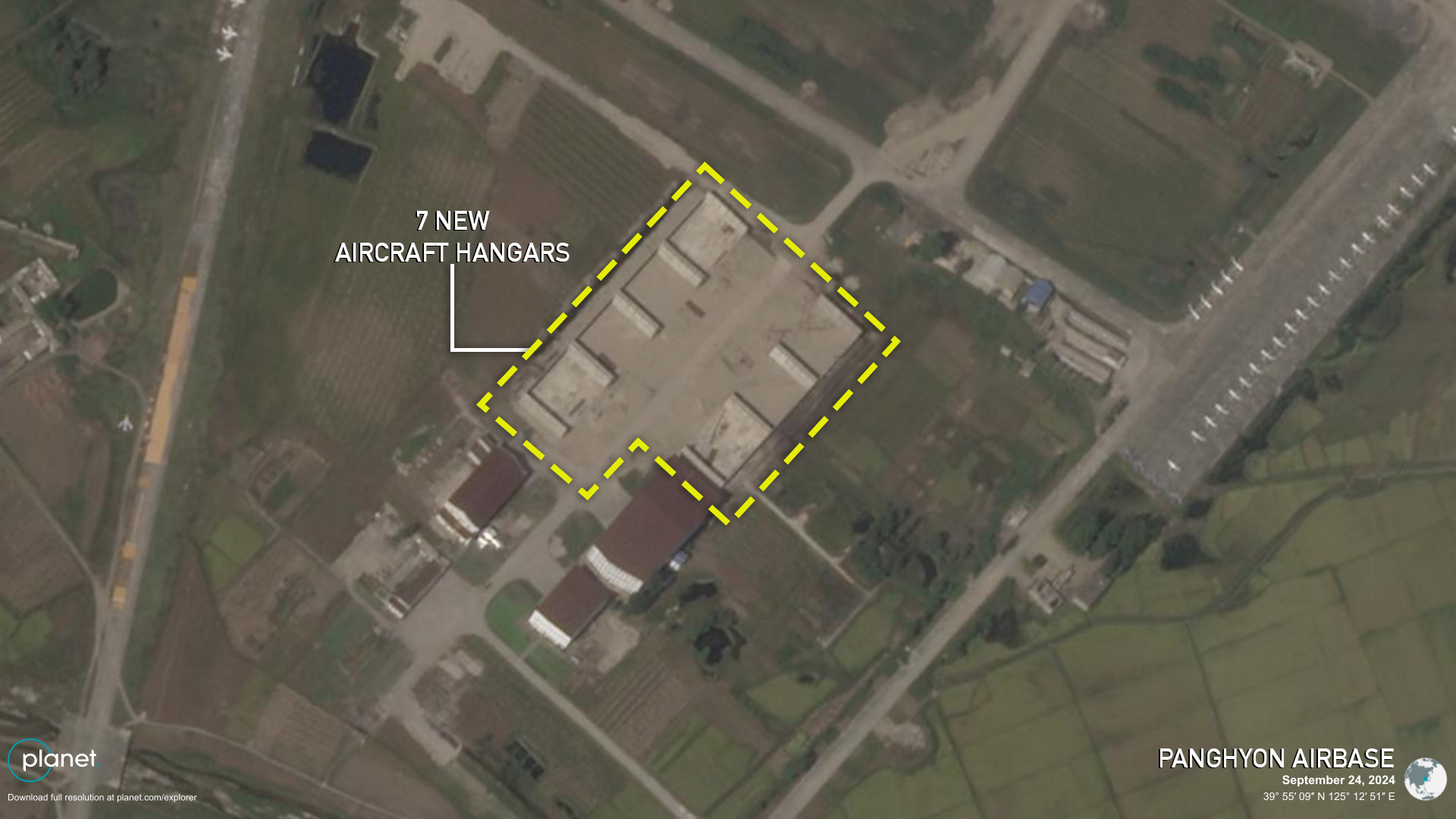
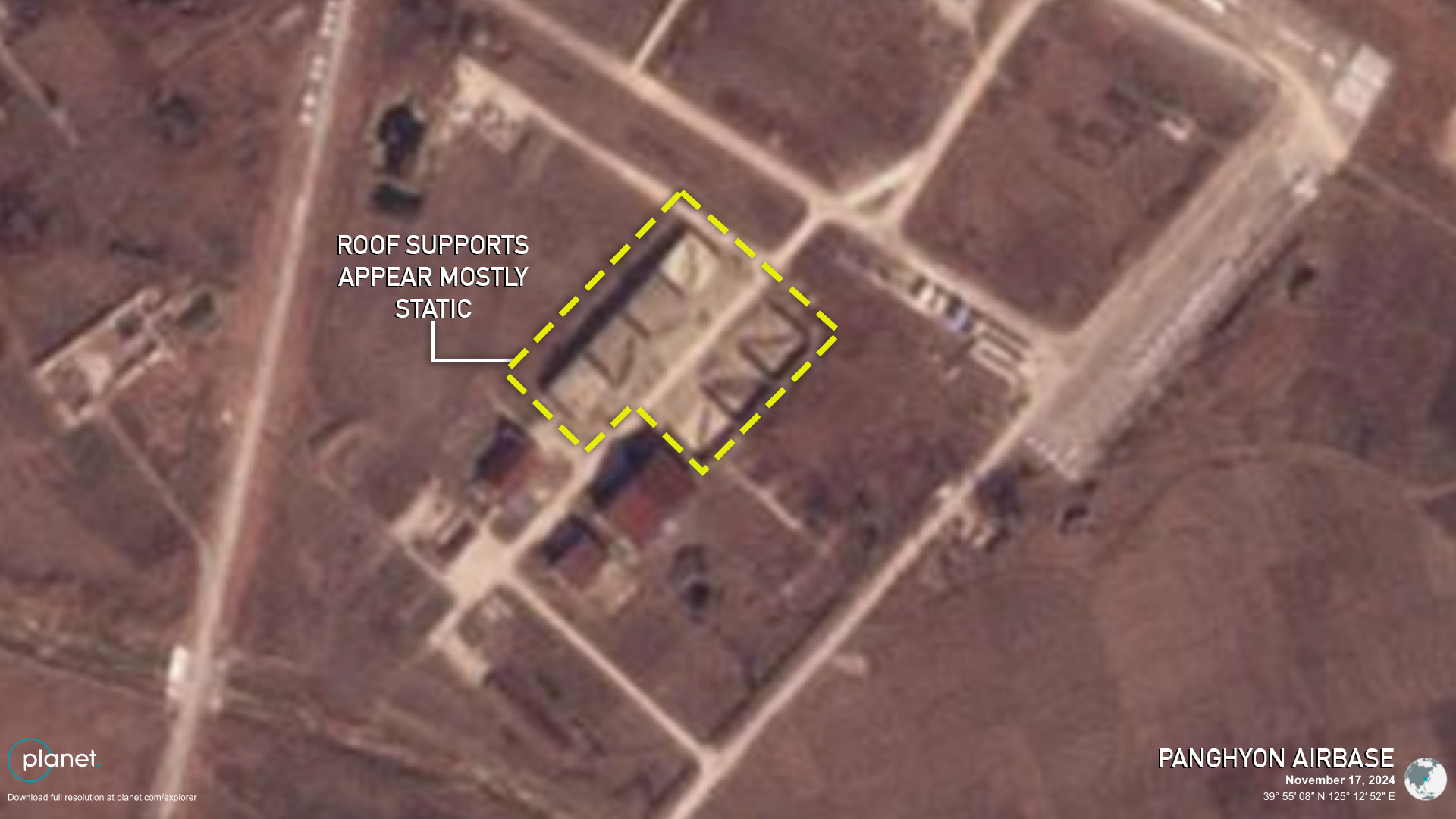
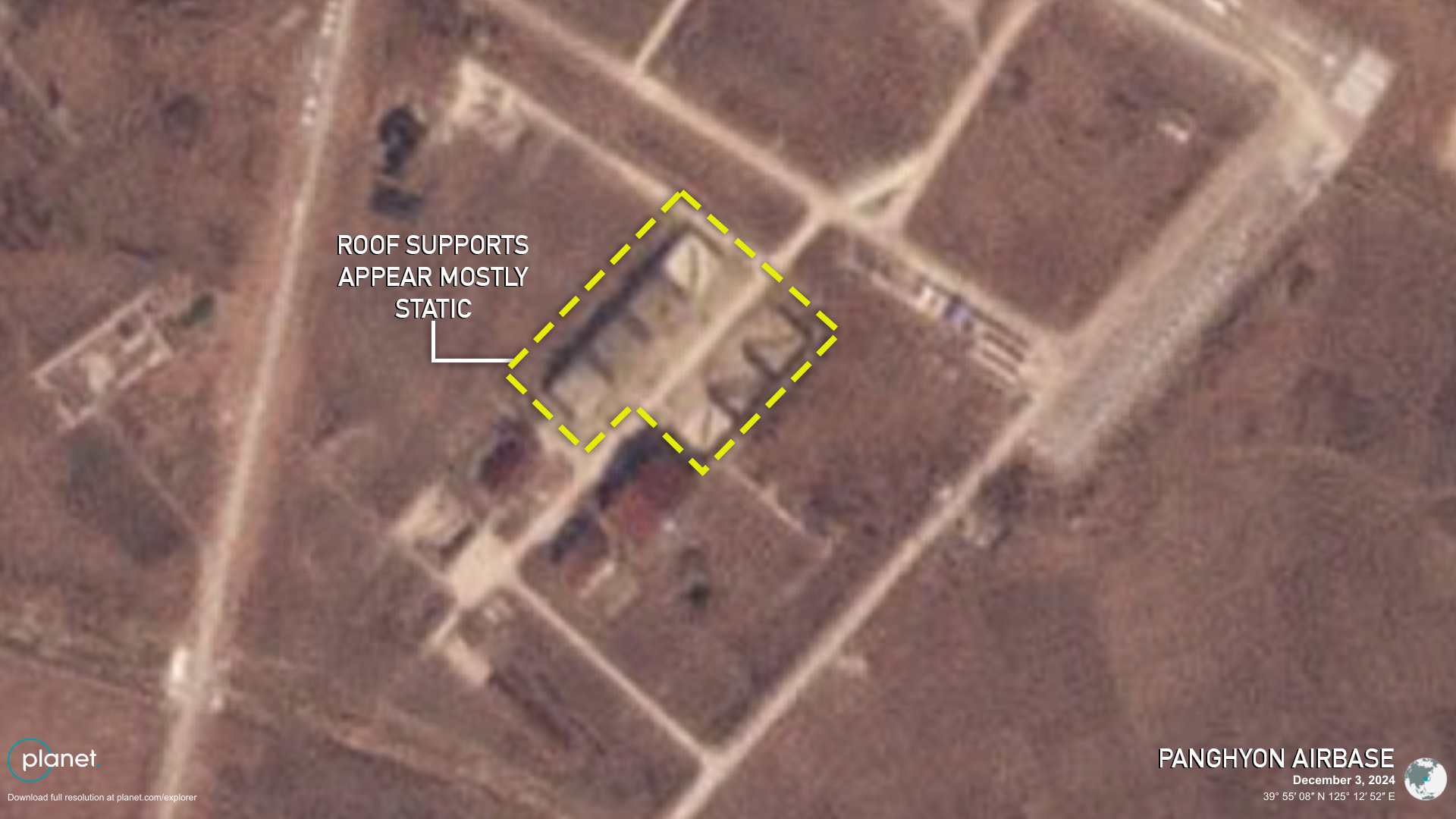
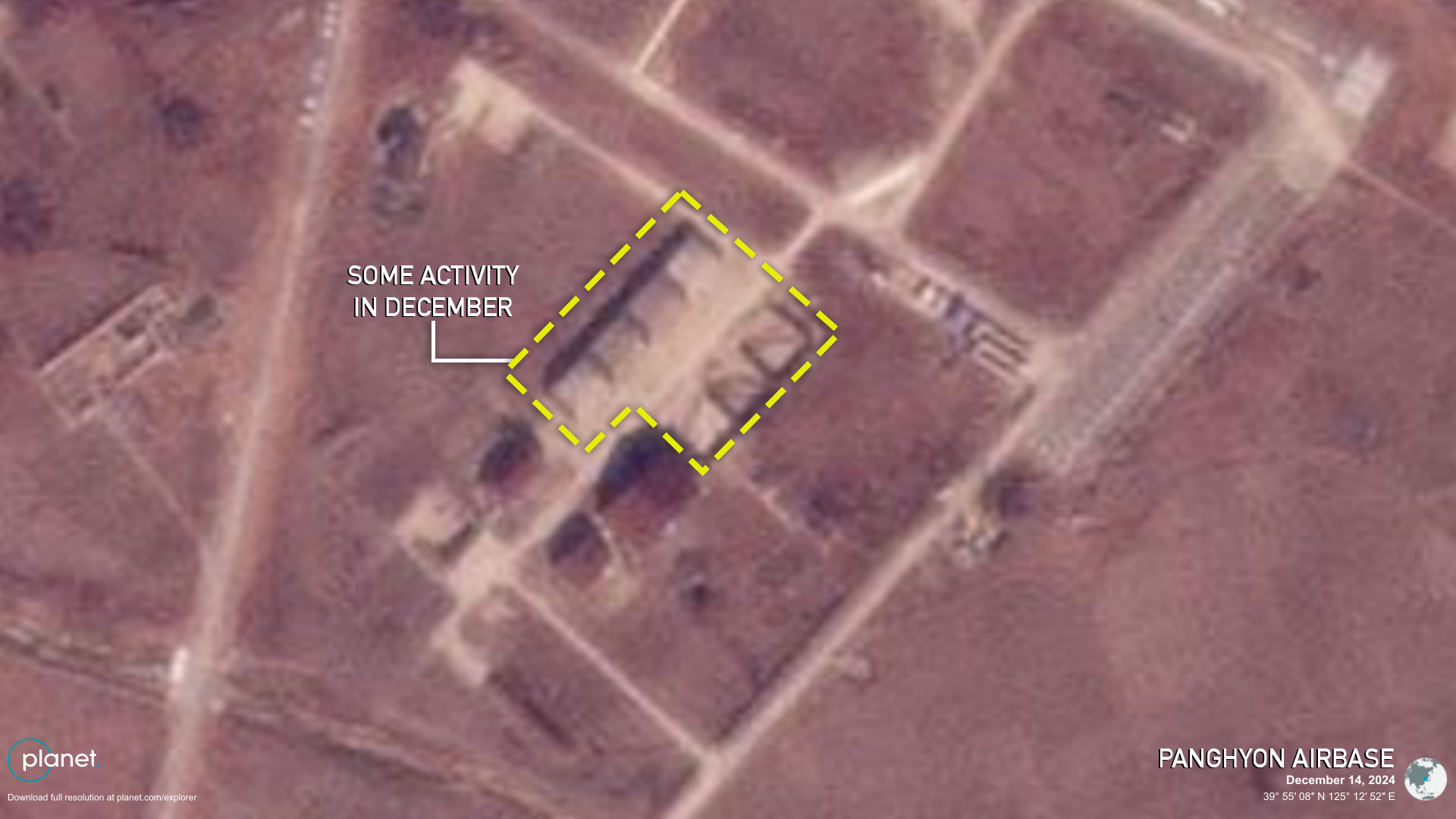
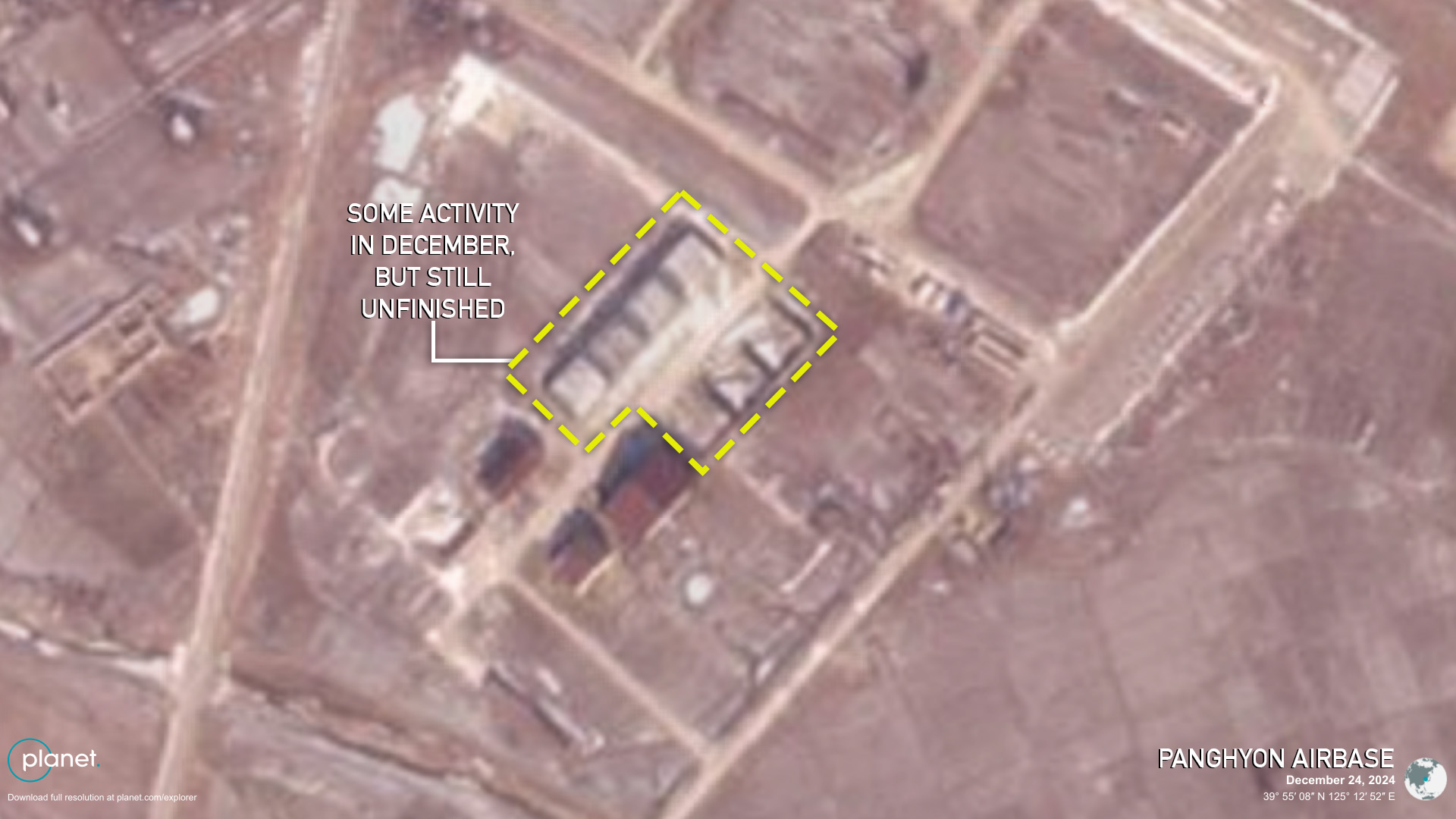
As of Dec. 24, roofing had yet to be installed on all seven of the new hangars. The slowdown points to possible construction resource shortages, or delays in large drone production. It would be more efficient to complete construction of the hangars as quickly as possible after starting the project, but the buildings would require specialized retractactable door machinery and other maintenance equipment that project organizers could have trouble acquiring due to U.N. sanctions or funding constraints. The project may also have been halted if authorities decided it’s not worth spending limited resources on the hangars before a sufficient number of drones are built. It’s still not clear where the two drone models or potential updated models are being manufactured. DPRK leader Kim Jong Un visited a factory producing engines for the drones as well as cruise missiles in Aug. 2023, but state media did not disclose its location. An aircraft plant attached to the Panghyon Airbase is a candidate location for engine production since satellite imagery shows that the complex features jet engine test cells. The Machine Plant Managed by Jon Tong Ryol, located nearby to the southeast, could be involved in airframe production since state media claimed it was producing light aircraft bodies as recently as 2015. NK Pro previously reported that numerous buildings were demolished at the factory in June. Planet Labs imagery now shows outer walls for likely manufacturing halls were erected sporadically in the months since, but there hasn’t been significant progress. 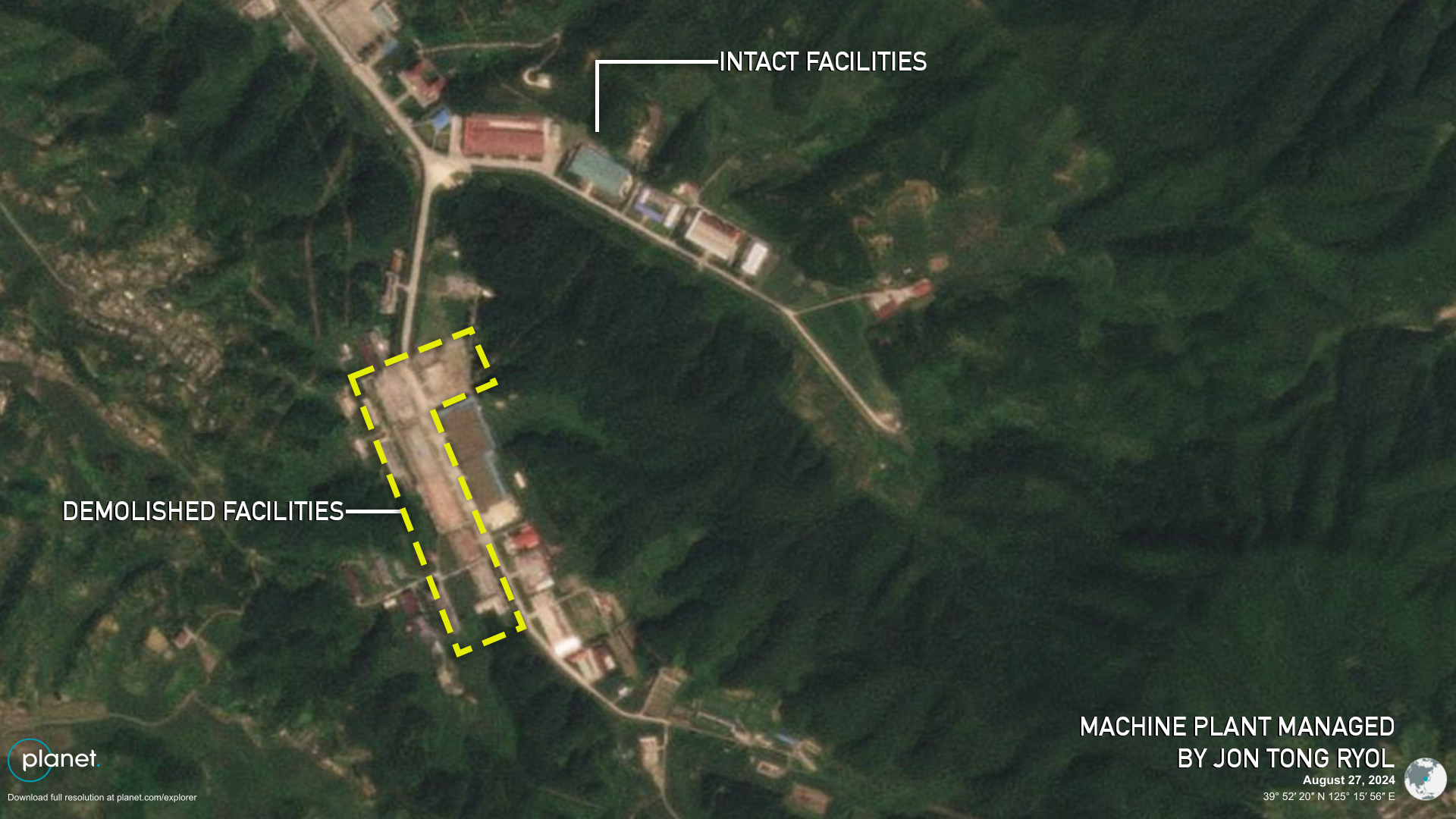
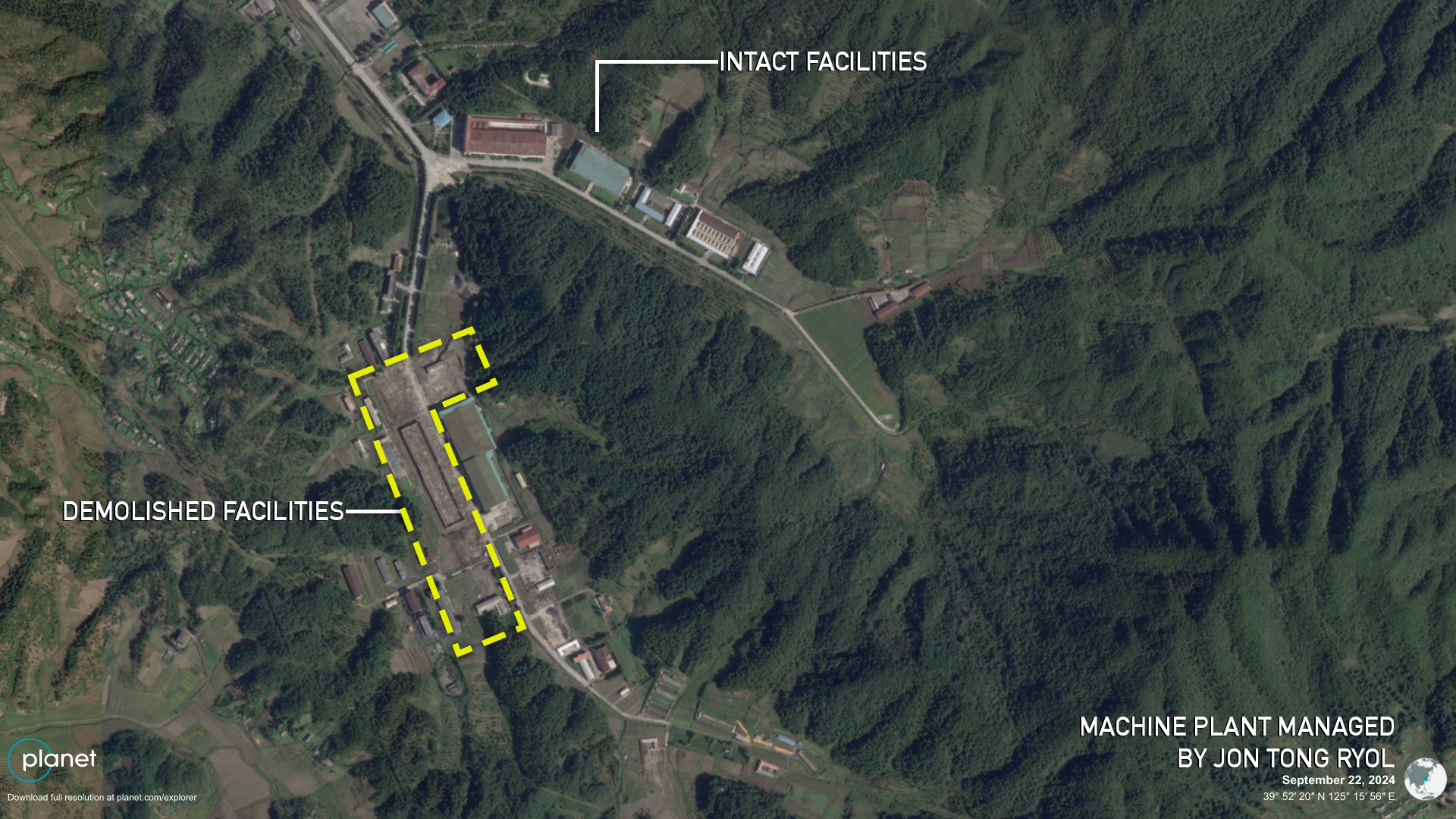
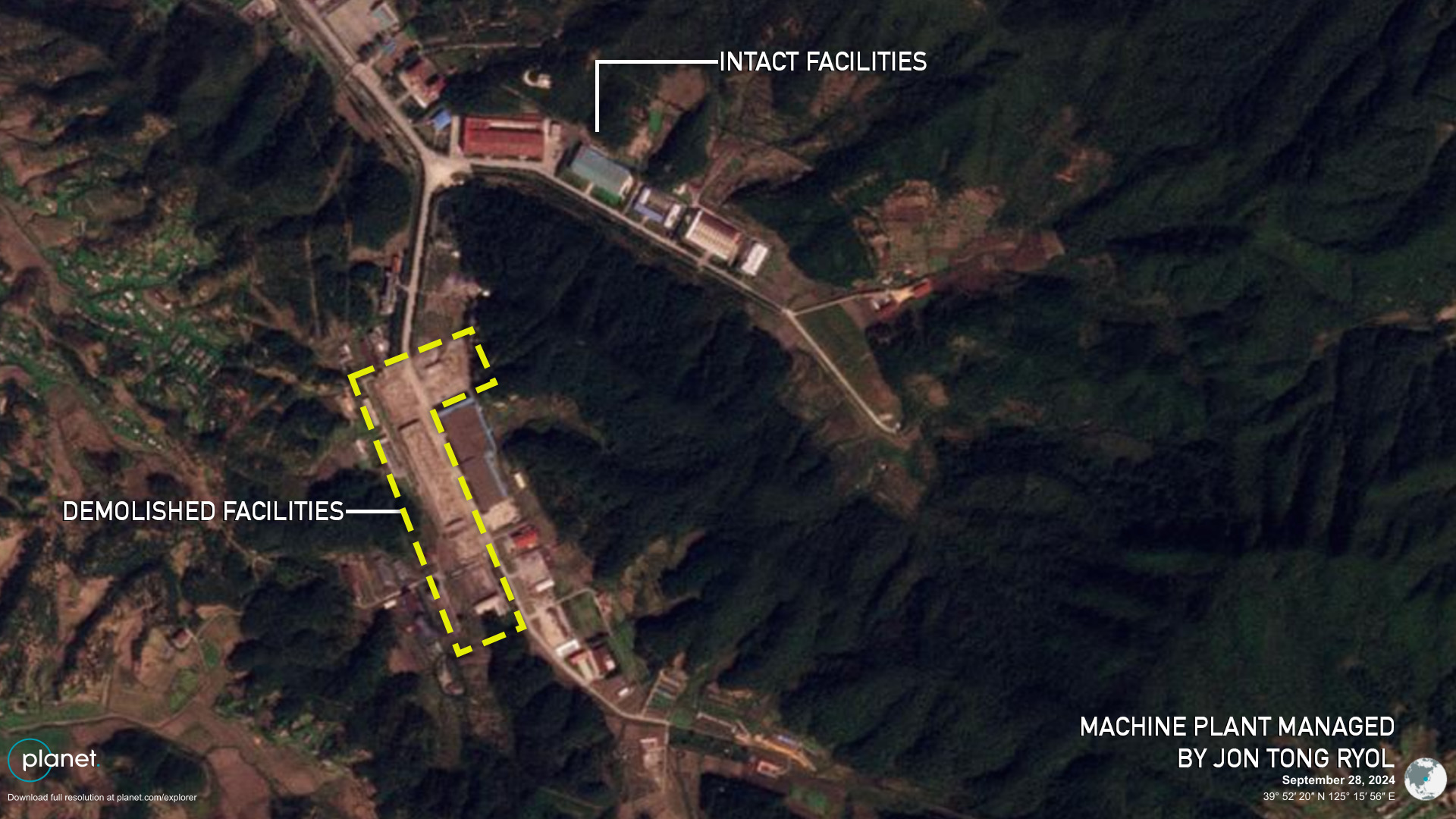
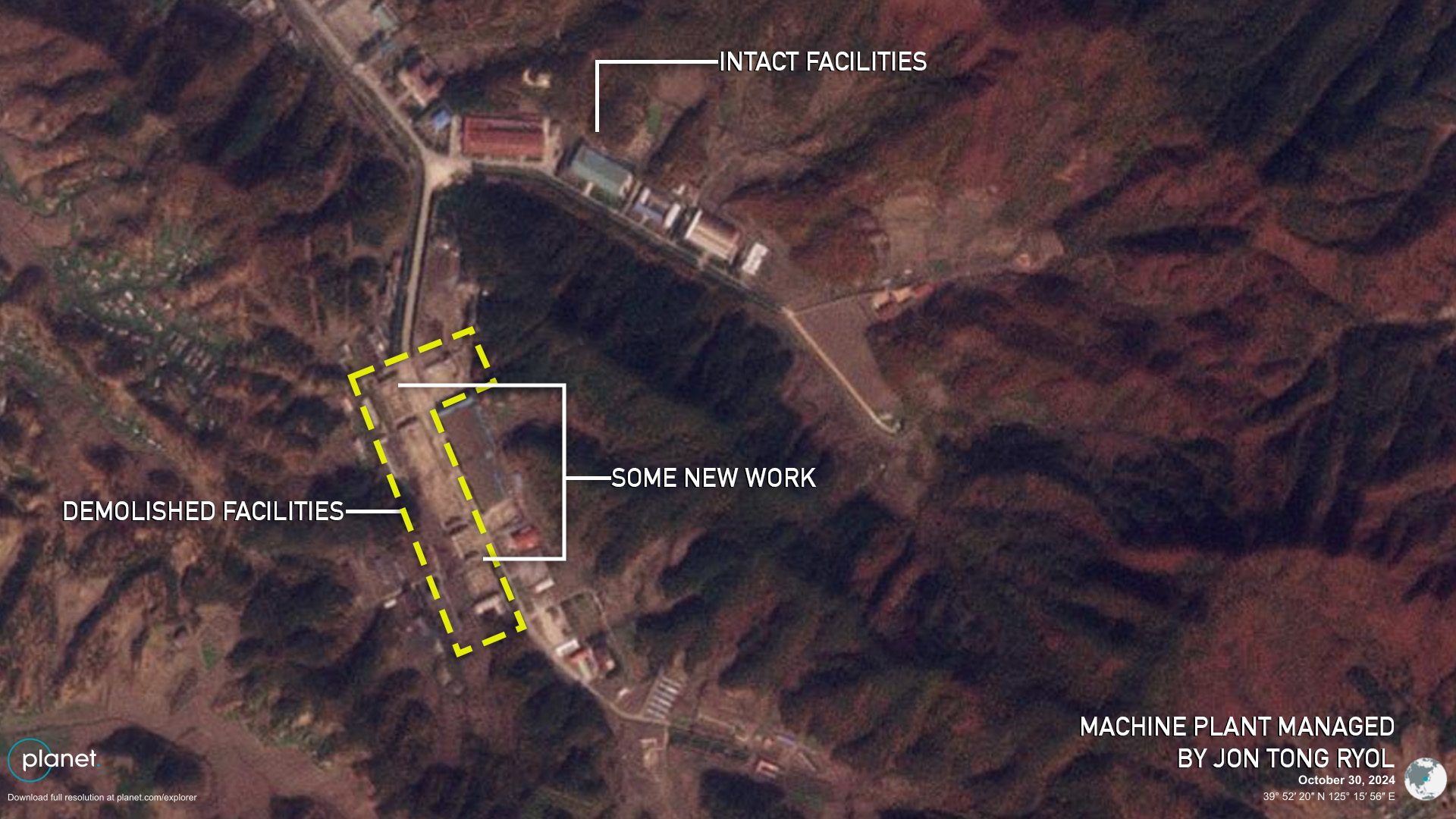
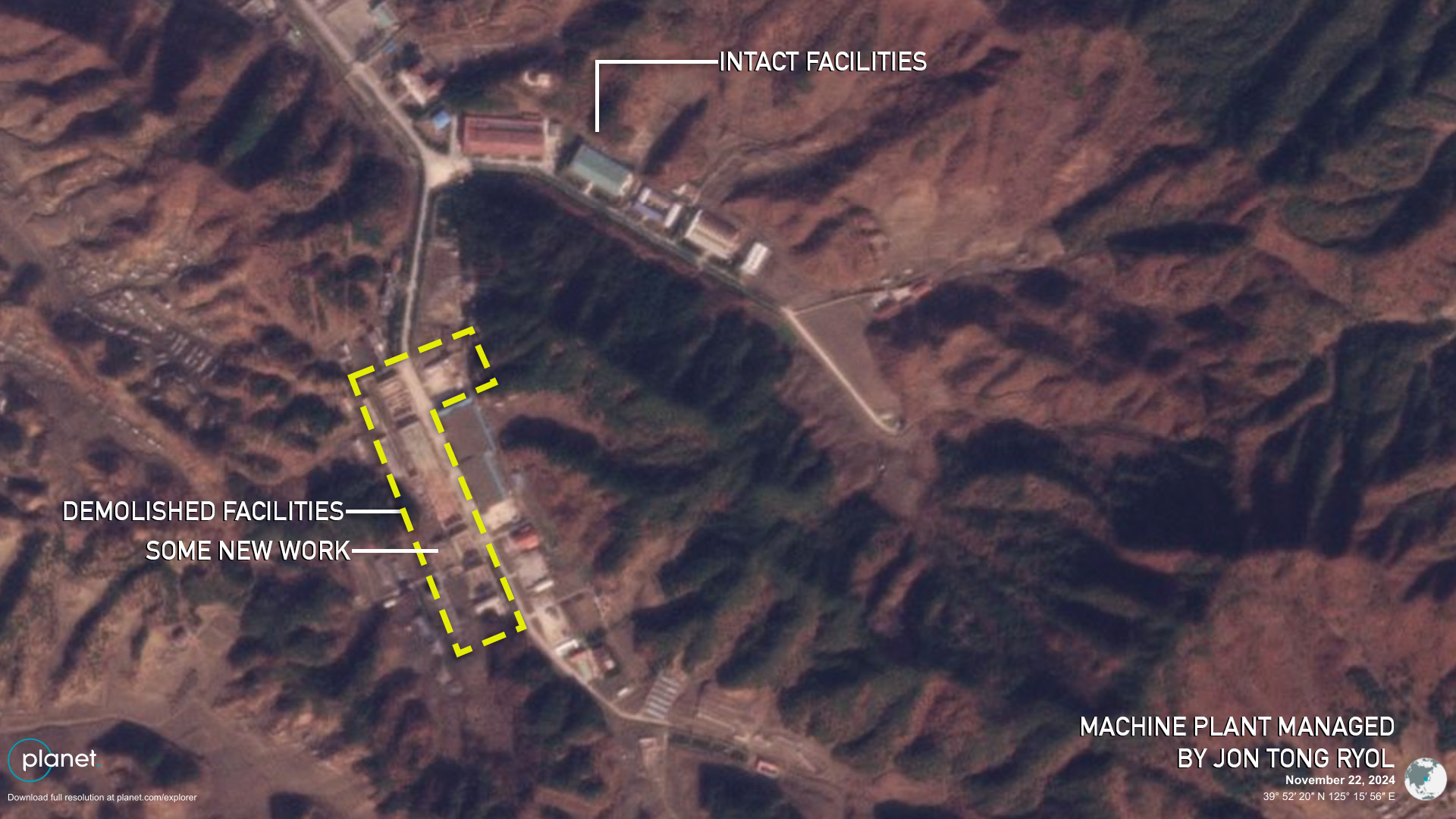
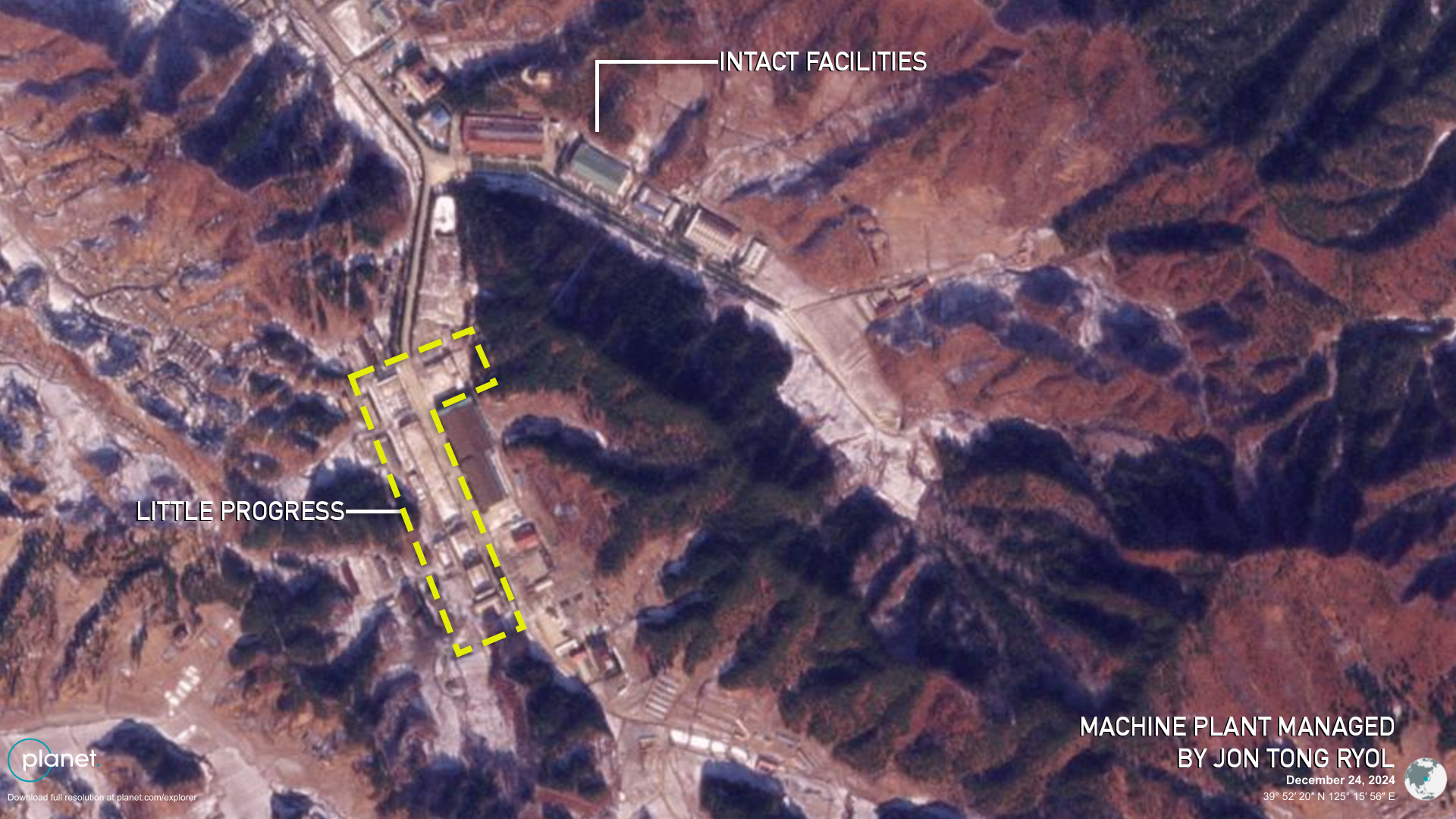
The new buildings could be related to large UAVs, but suicide drone production is another high likelihood since Kim Jong Un oversaw testing of such models at Panghyon Airbase in August. North Korea showed off 10 attack or suicide drone models at a weapons expo last month, including vertical take-off and landing (VTOL) designs based on Israeli and Turkish models. Kim called for mass production at another public test in November, praising their “low production costs and simple manufacturing processes.” But the program may face hurdles due to the sheer number of models being developed and their technical requirements, especially as Kim demanded the drones incorporate cutting-edge technology like artificial intelligence (AI). Along with resource shortages, delays on the factory construction could also be related to military cooperation with Russia as the two sides have continued high-level negotiations in recent months. Assistance on suicide drone development could be part of deals that have seen North Korea send weapons and soldiers to fight in the war on Ukraine. If the new factory buildings are indeed slated to be North Korea’s main suicide drone production center, construction delays would mean reportedly planned transfers of the weapons to Russia would not take place until later in 2025. However, it’s possible that they are being produced in existing buildings at the Jon Tong Ryol complex or another factory entirely. NK Pro has uncovered a direct link between the factory and suicide drone production: A lieutenant general (two-star) who appeared to be in charge of both the August and November drone tests also joined Kim to inspect the factory in March 2015, though likely in the role of a central weapons official and not a factory manager. 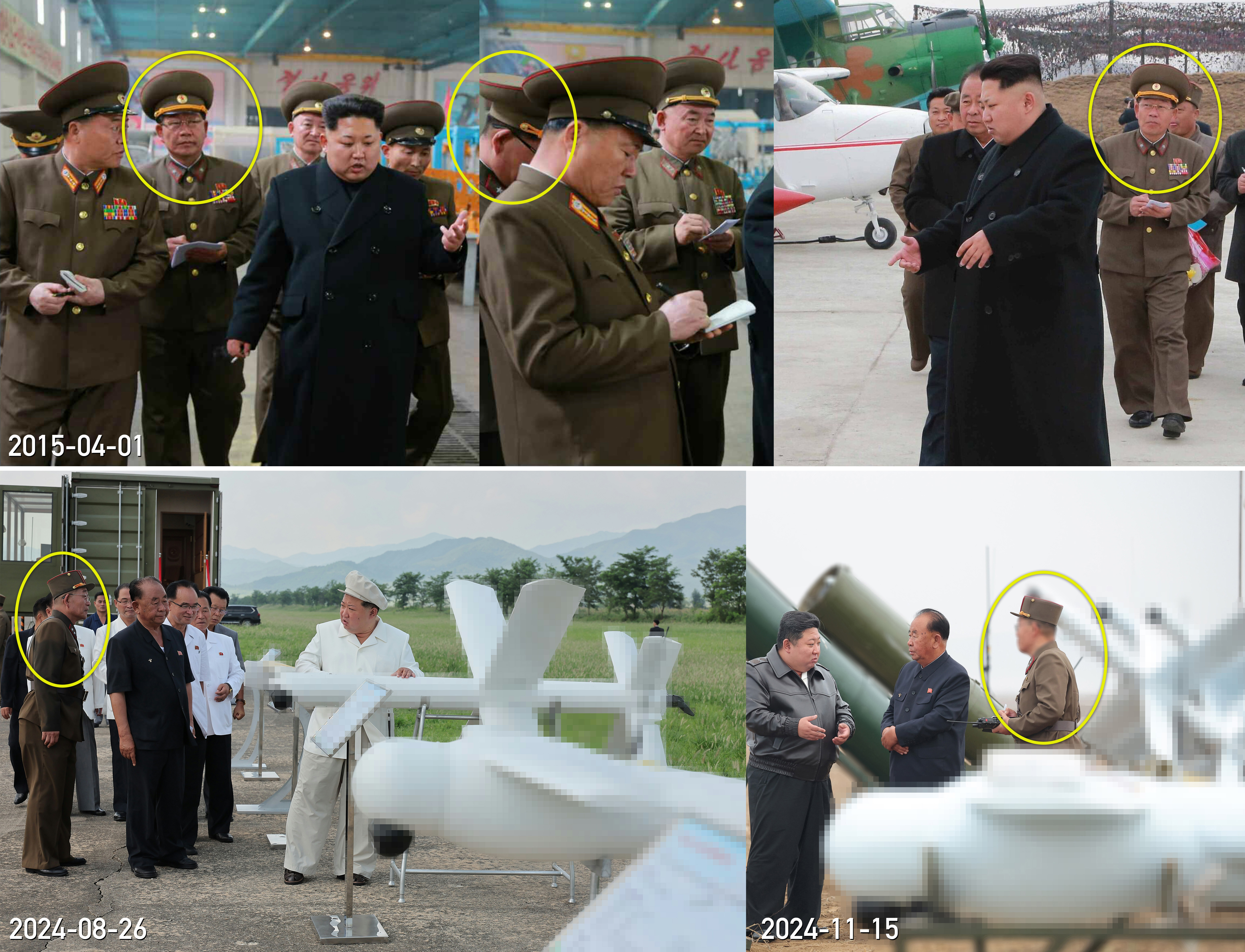 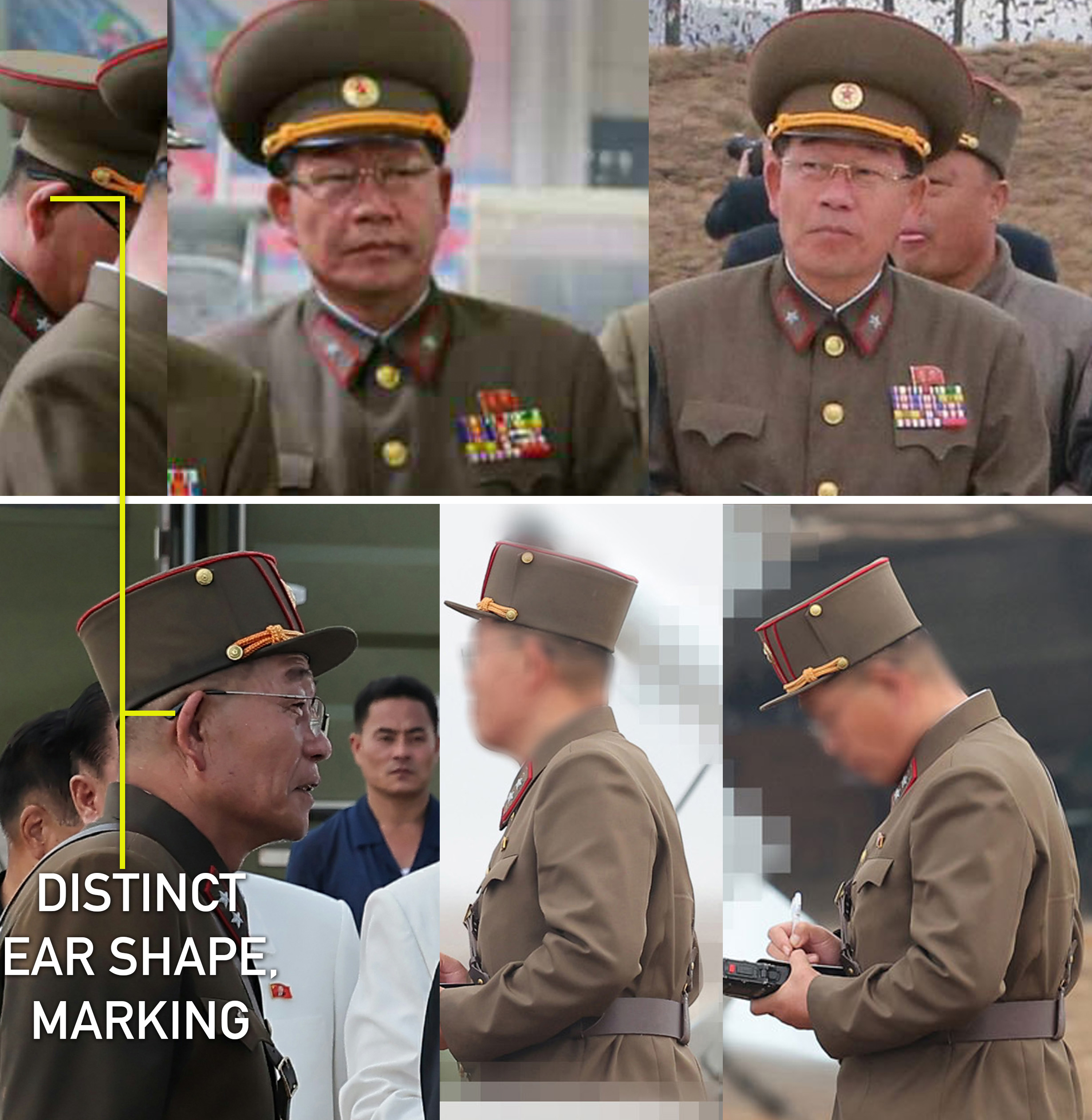
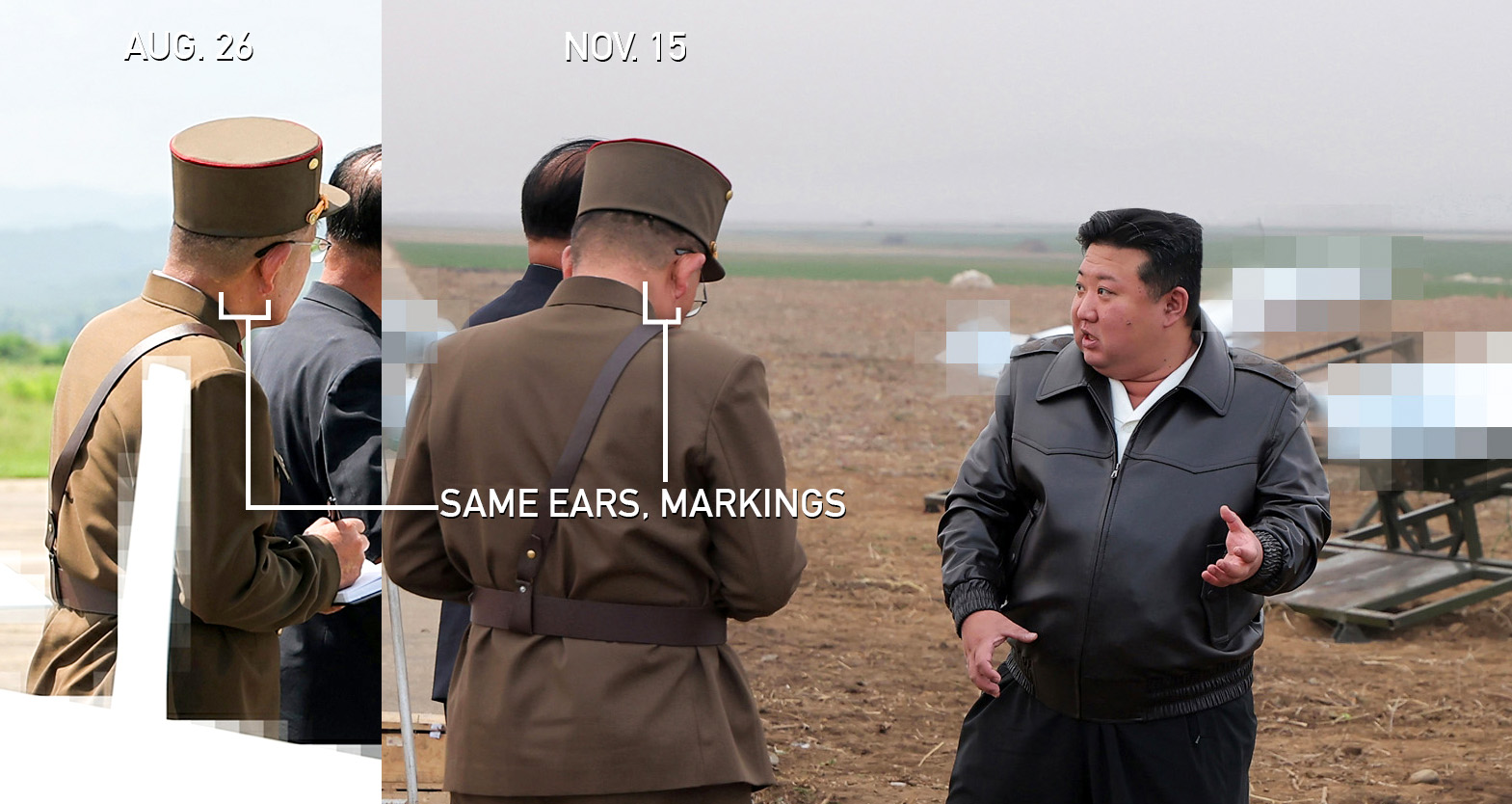
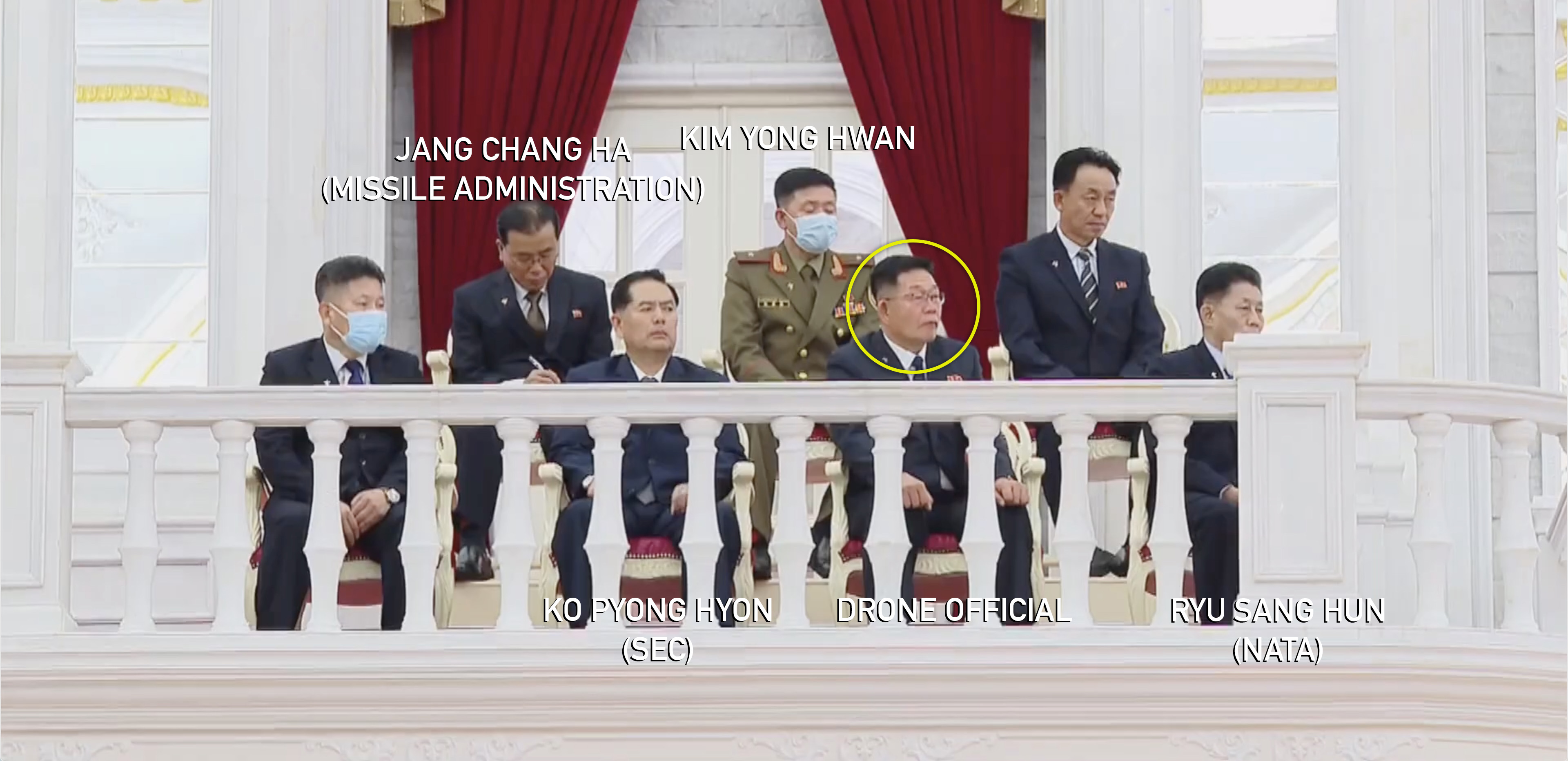

State media blurred his face in coverage of the most recent suicide drone test in November but not for the August test. His name is unknown, but he is a member of the Supreme People’s Assembly (SPA) and has been seen sitting next to top weapons and rocket officials at recent SPA sessions. He also sat among an exclusive group of weapons officials for a Kim Jong Un speech in September, indicating Kim considers the suicide drones project a top priority. NK Pro also found that an apparent manager of the factory who appeared to guide Kim Jong Un during both his public visits in Aug. 2014 and March 2015 is involved in North Korea’s cruise missile program, as he joined the leader for a group photo celebrating a cruise missile test in Oct. 2022. This could point to joint management of the Jon Tong Ryol factory and the complex attached to Panghyon Airbase, which might be the one Kim visited that was said to be producing both cruise missile and large drone engines. 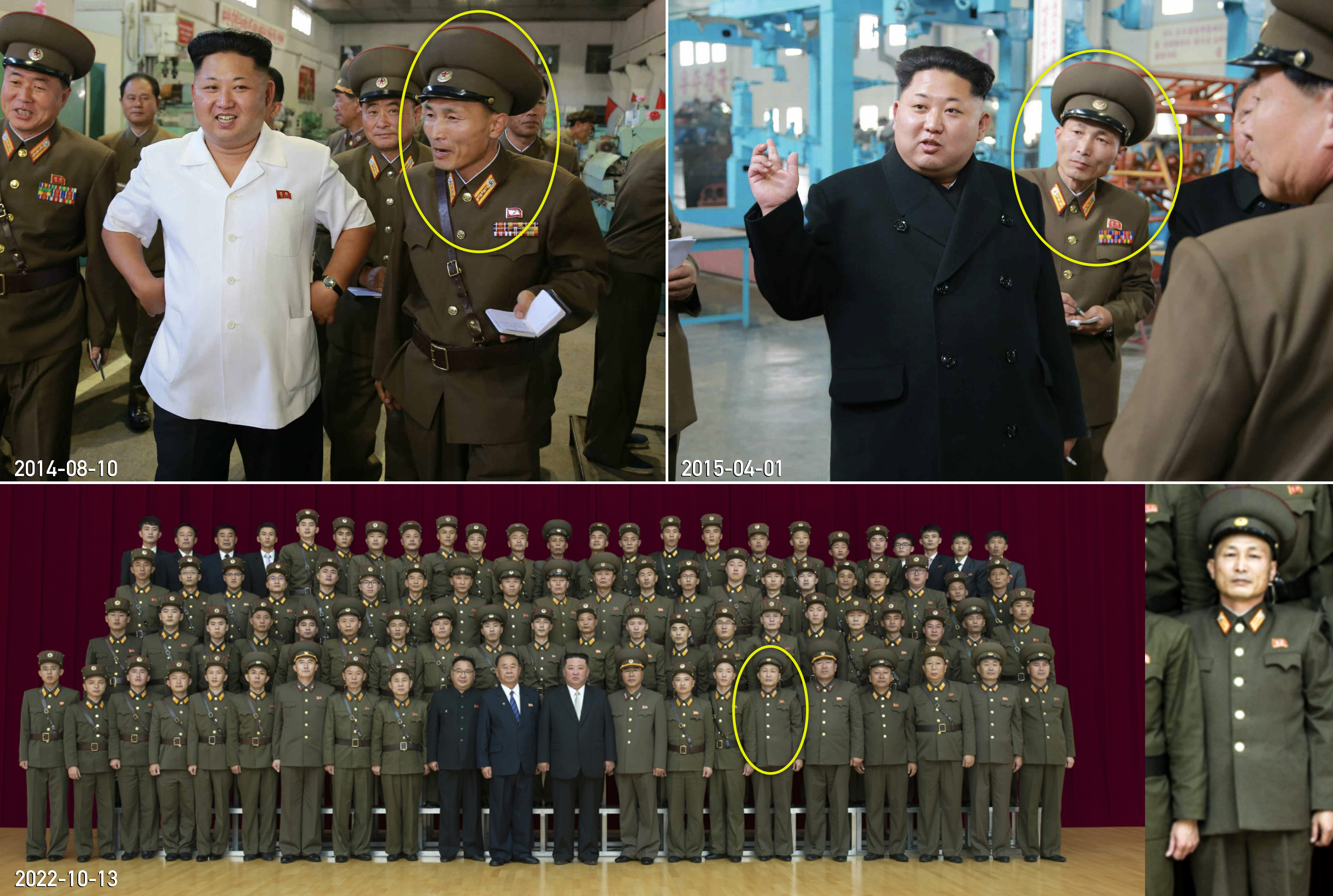 Edited by Bryan Betts © Korea Risk Group. All rights reserved. |

October 08, 2026Oct 08, 2026

The ultimate resources for professionals working on North Korea
 SHARE
SHARE COPY LINK
 X
X MASTODON