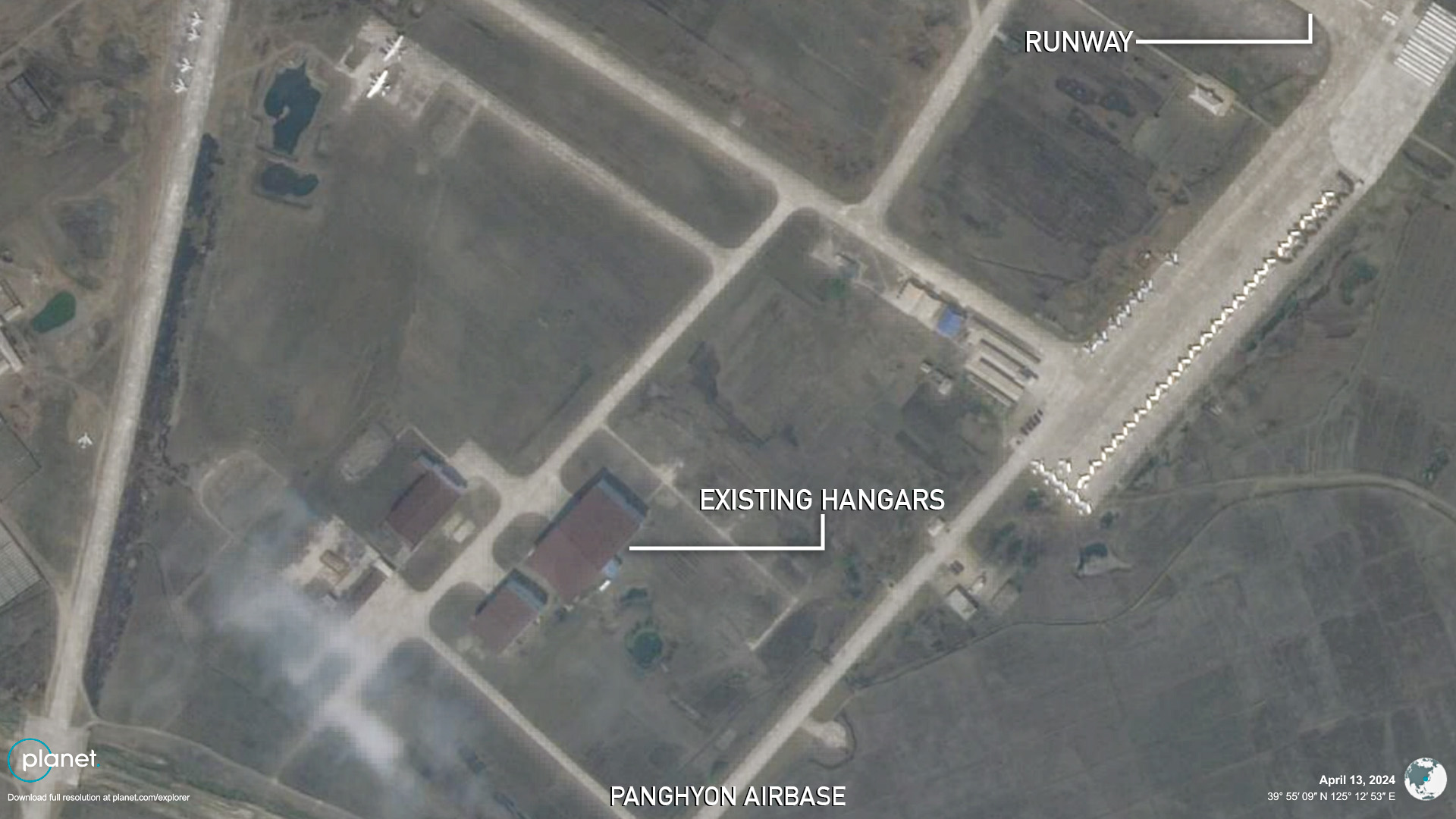
  Analysis North Korea likely building 7 large hangars at advanced drone airbase: ImageryNearby aircraft factory also dismantled ahead of possible reconstruction, sign it could manufacture drones 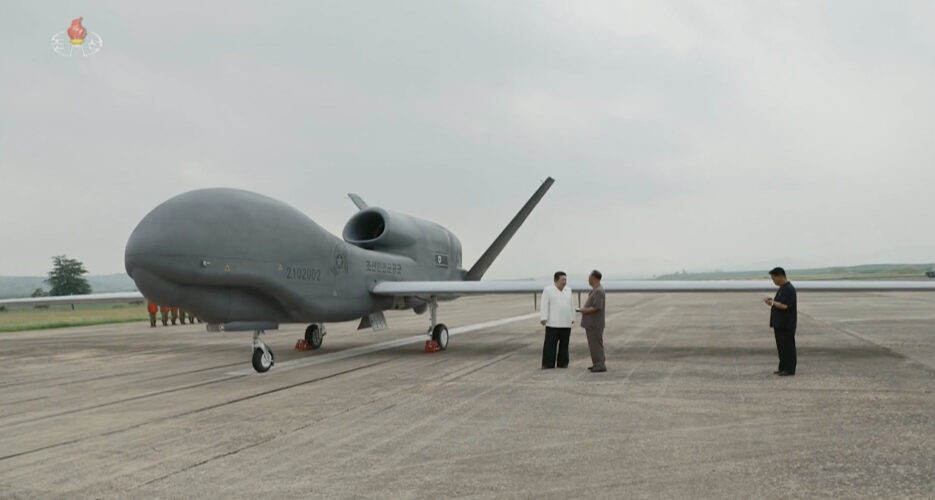 North Korea appears to be building at least seven large hangars at an airbase recently used to test new combat and reconnaissance drones in the past, according to NK Pro analysis of satellite imagery, while partially dismantling a nearby aircraft factory in recent months. The new activity suggests Panghyon Airbase may become the home base for the large combat and reconnaissance drones North Korea is developing based on U.S. models, and that the factory could be manufacturing them or other small “suicide drones” that leader Kim Jong Un inspected at Panghyon last week. DRONE BASE HANGARS Planet Labs high-resolution imagery shows that the frames for seven structures measuring around 45 meters wide by 40 meters long (148 by 131 feet) were built at Panghyon Airbase next to existing hangars in the latter half of August. NK Pro previously reported on the start of this construction. The structures are large enough to house both the Saetbyol-9 combat drone (with a 20-meter wingspan) and Saetbyol-4 reconnaissance drone (35-meter wingspan). The U.S. has similar-sized hangars with vertical lifting doors for its Global Hawk drones, which the Saetbyol-4 is based on. 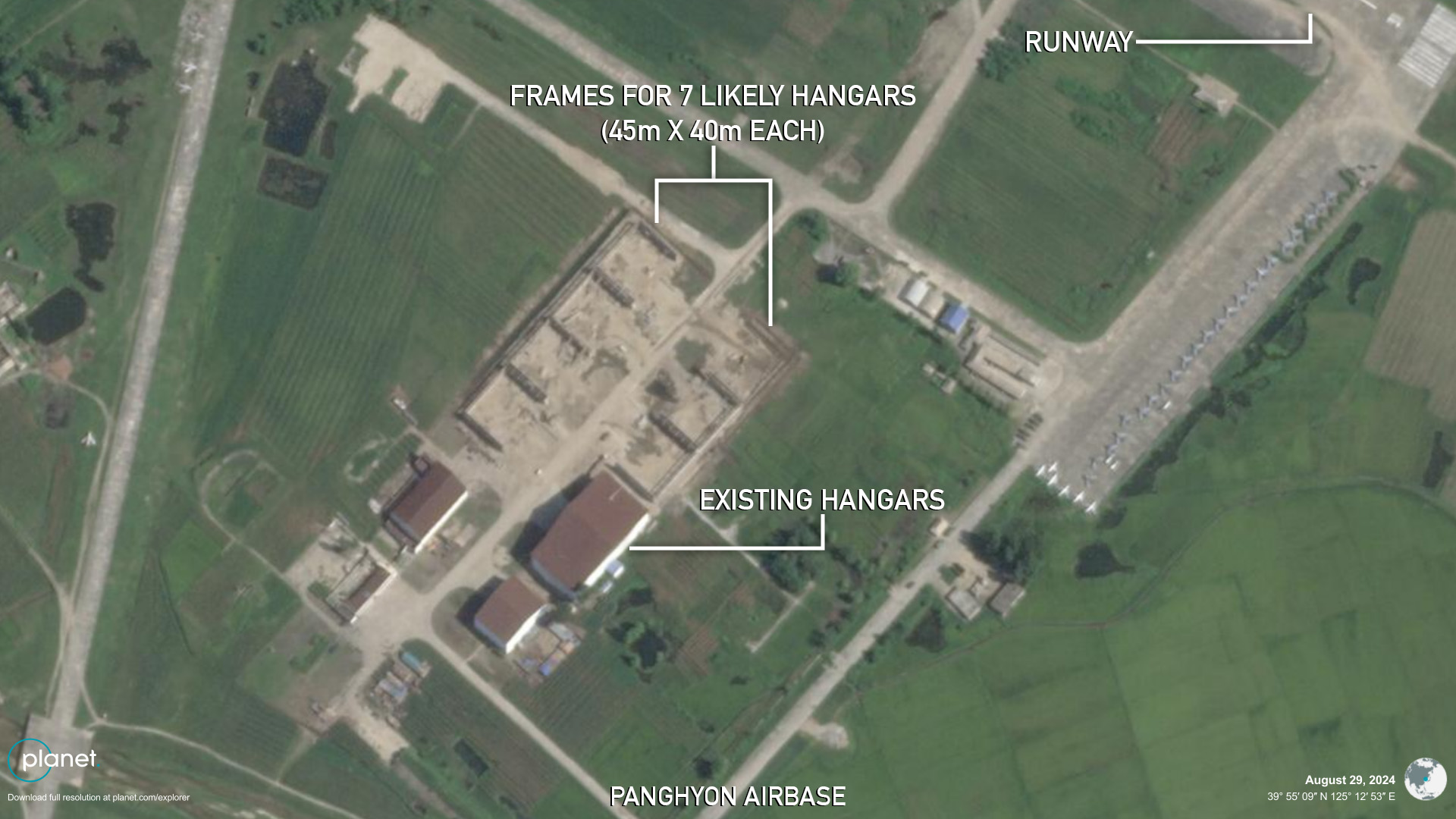
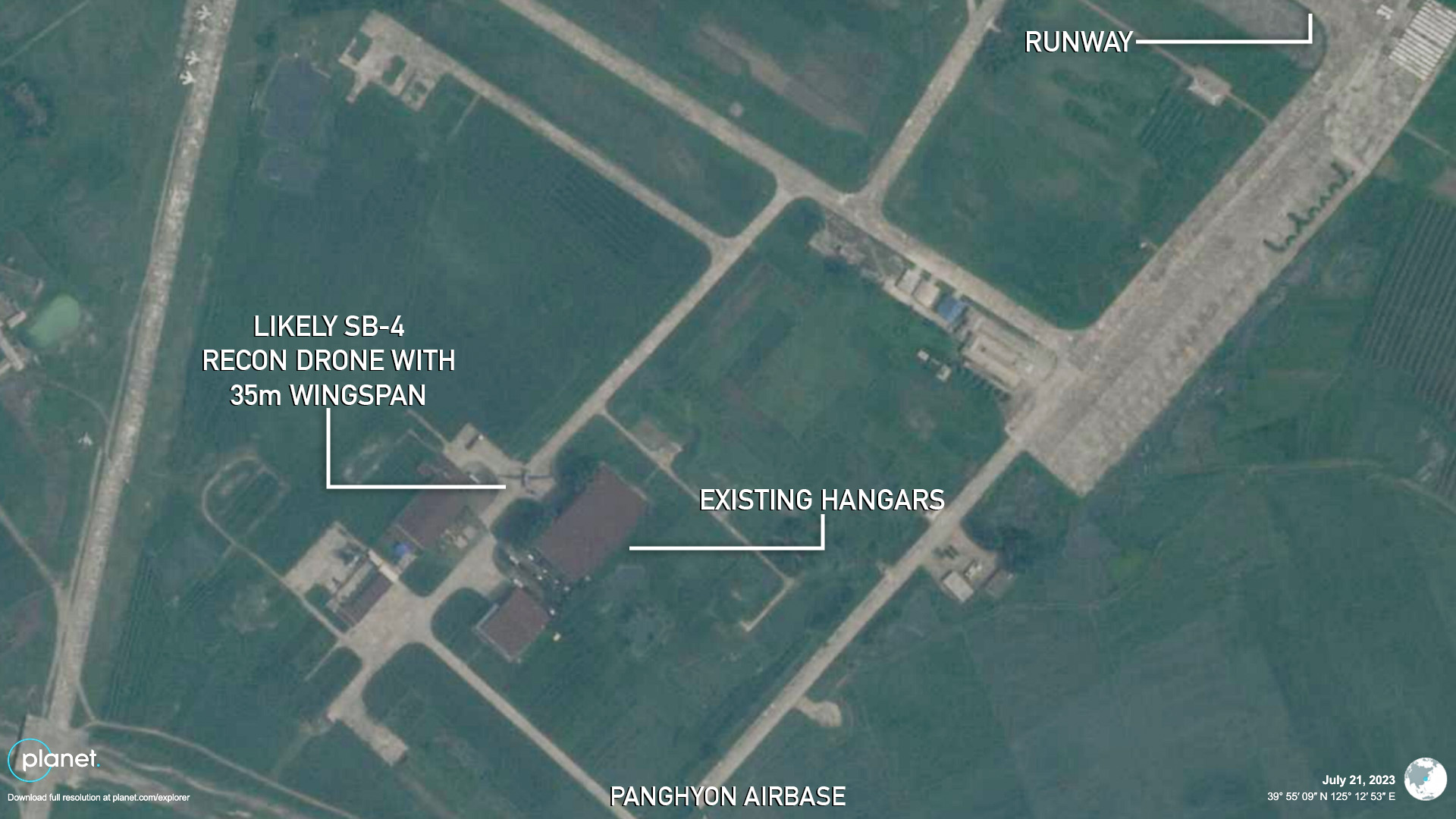
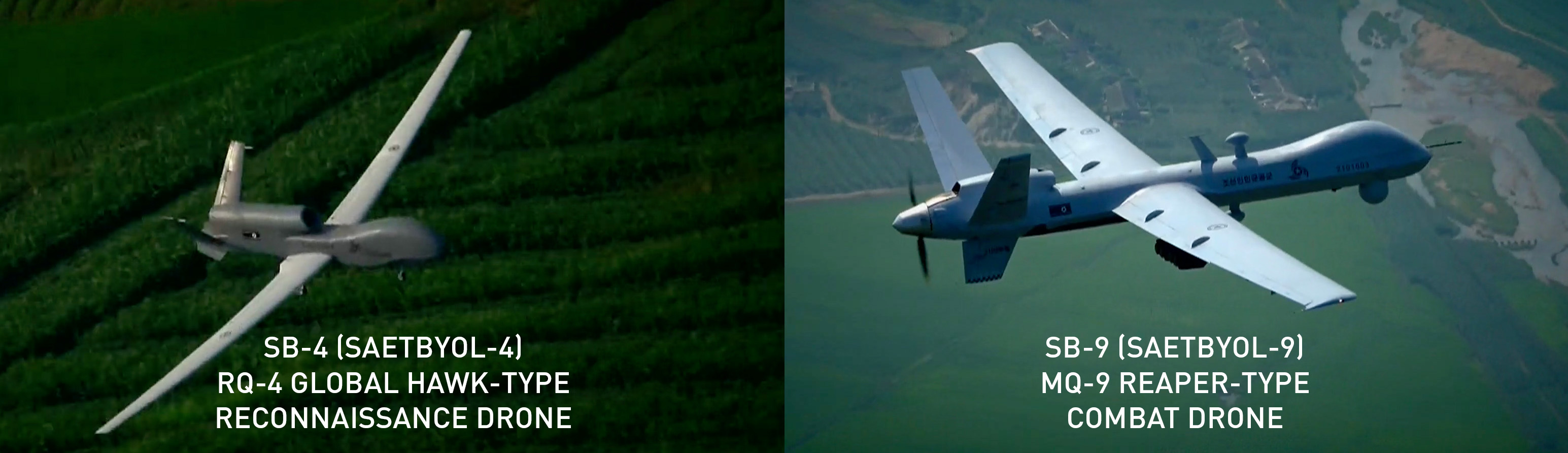 If indeed intended for these drones, the construction of new hangars would suggest North Korea is moving toward deploying the aircraft for regular reconnaissance missions and flight training. Large-scale reconstruction of Pukchang Airbase is also still ongoing but there are not yet any signs there of building hangars that could accommodate drones. North Korea tested both new unmanned aerial vehicle (UAV) designs at Panghyon Airbase in June 2023 and presented at least six individual models — two reconnaissance and four combat drones — at a military parade and weapons expo a month later. It’s unclear how many of each type were working and flightworthy at the time, and the location of the factory where they are produced remains unconfirmed — though a number of facilities near Panghyon Airbase are good candidates. AIRCRAFT FACTORY DISMANTLEMENT Planet Labs imagery shows that a large-scale dismantlement project started in June at a factory southeast of the airbase. State media called it the Machine Plant Managed by Jon Tong Ryol in coverage of visits by Kim Jong Un in 2014 and 2015, where he was shown inspecting the reported production of light aircraft. U.S. intelligence has called it the January 6 Factory and said it produced aircraft and helicopter fuselages. Work to dismantle three large production halls and a few other smaller structures at the southern branch of the valley factory complex started in early June. By mid-August, a five-hectare (12-acre) area of land where they previously stood was completely cleared. 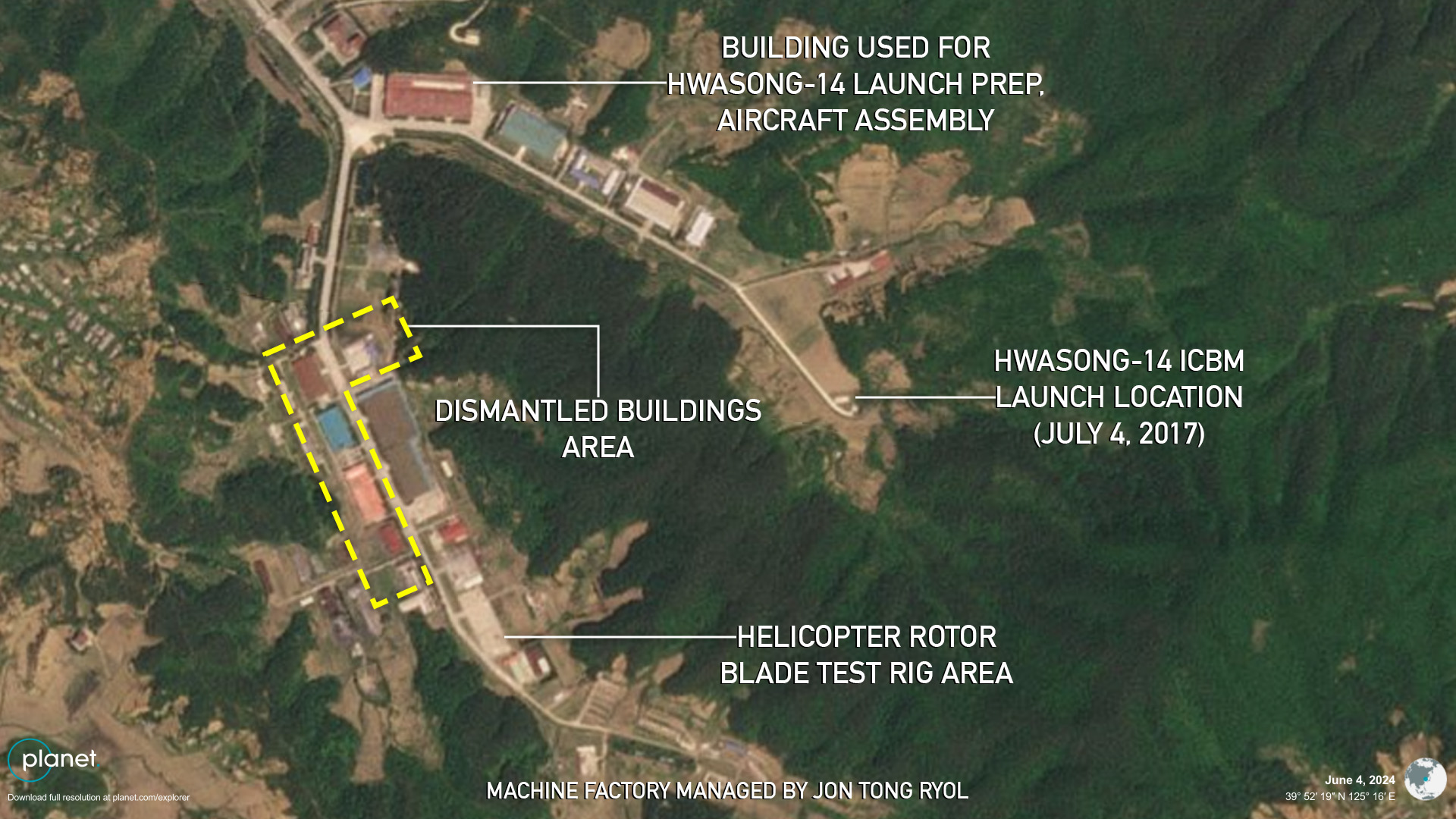
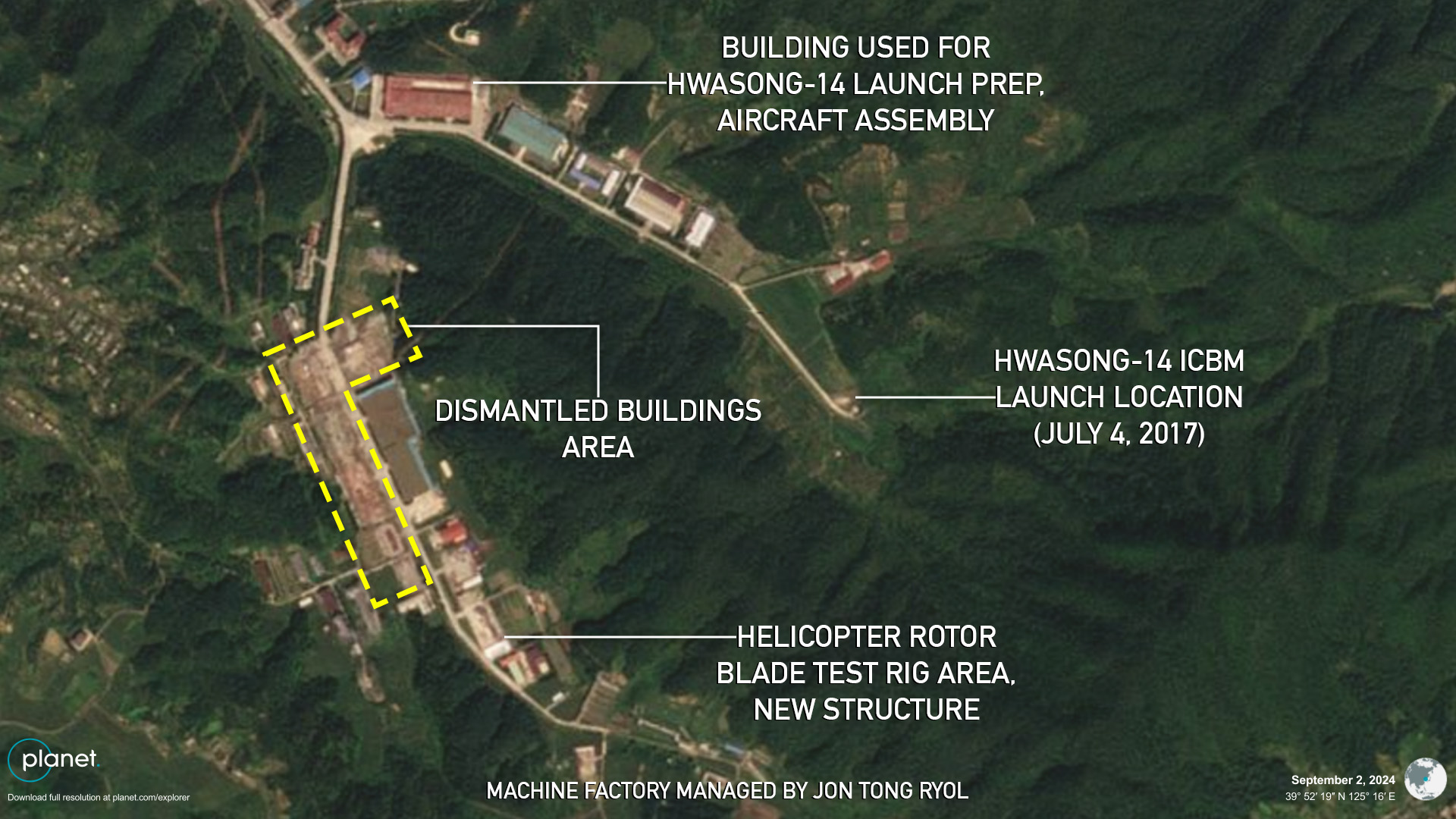
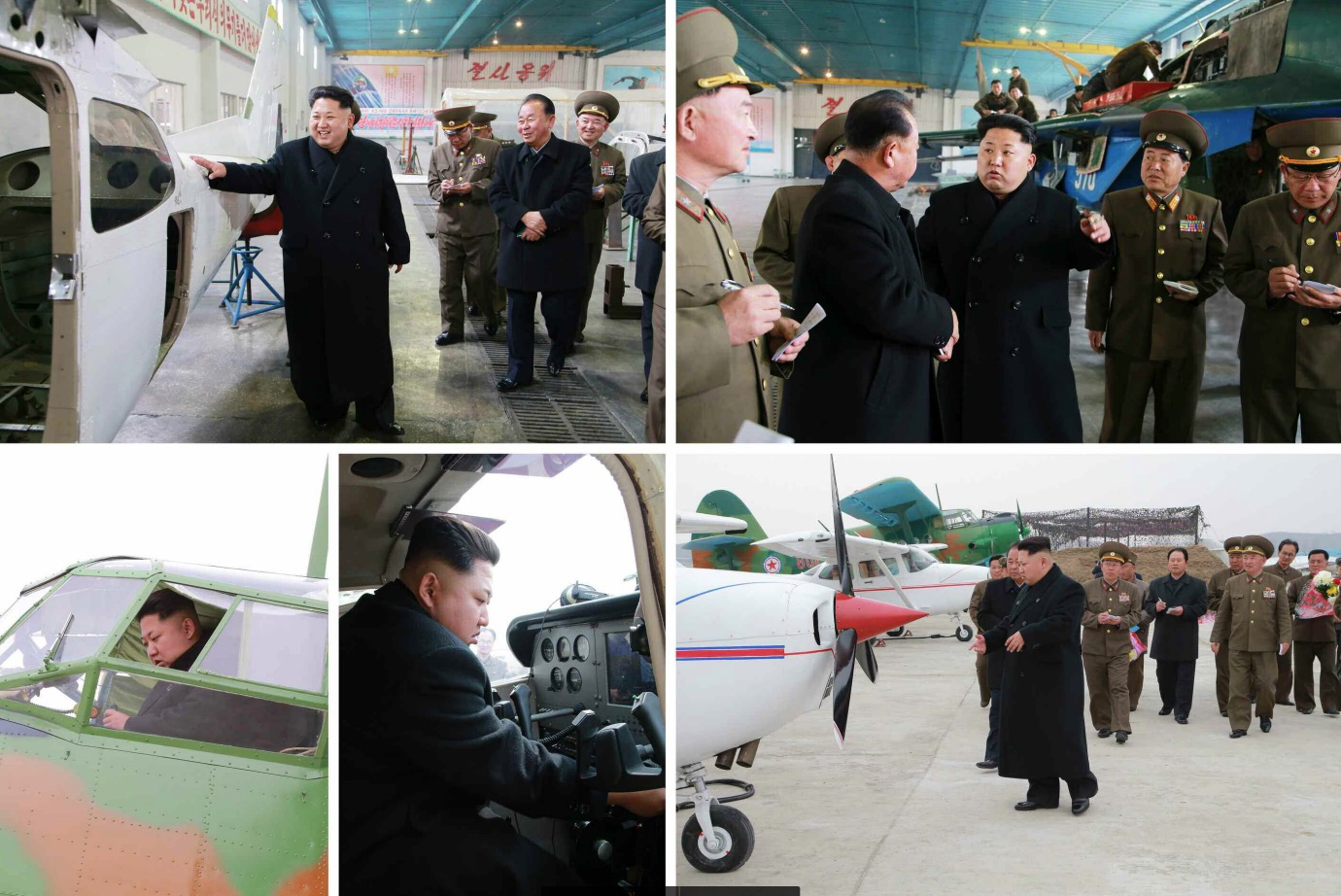
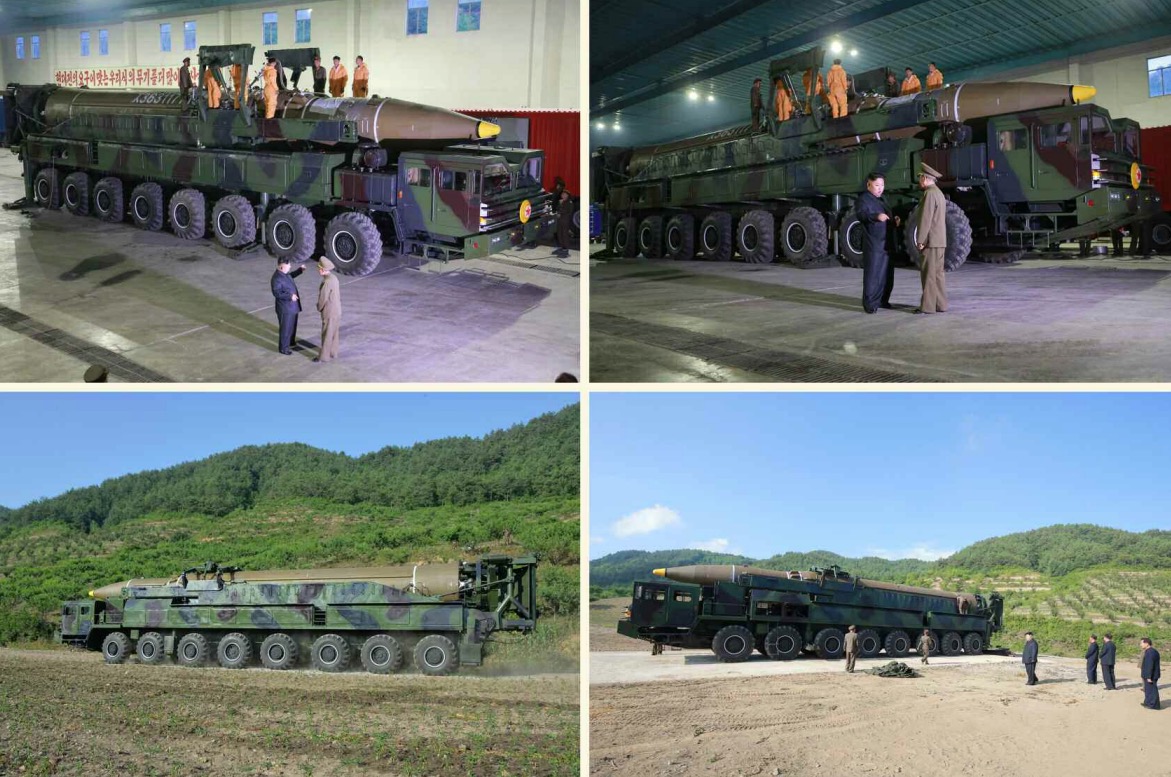
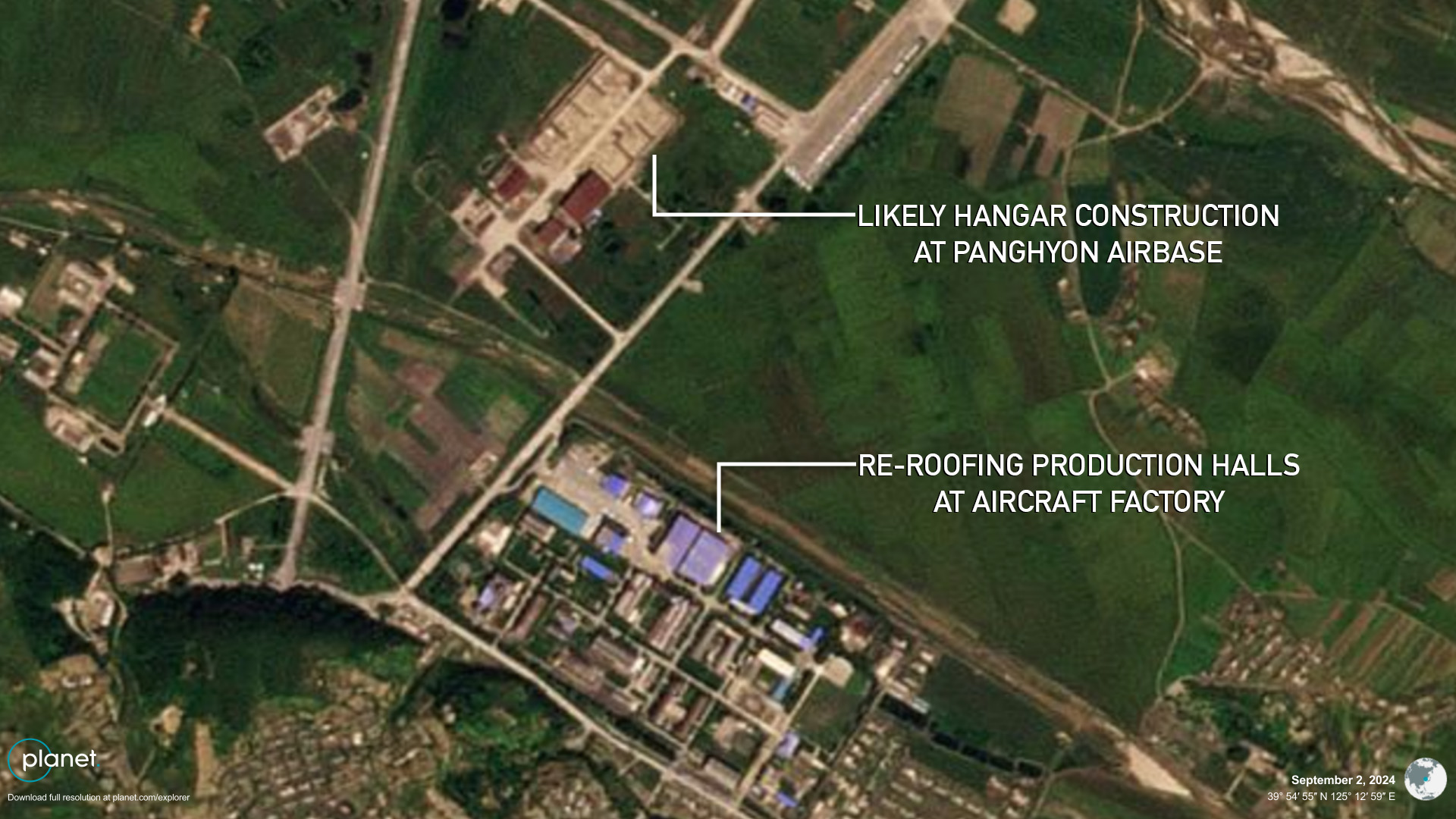
This could be related to plans to build newer facilities, as the entire factory complex does not appear to be in the process of total dismantlement. Analysts have suspected the factory complex is linked to the country’s nuclear missile program, pointing to its role as the site of a Hwasong-14 intercontinental ballistic missile (ICBM) test on July 4, 2017, North Korea’s first ICBM launch. Other hints include Kim Jong Un bringing his top nuclear missile scientists and officials like Jang Chang Ha and Hong Yong Chil on public visits to the factory in 2014 and 2015, and celebrating its reported production of light aircraft with large-scale group photos featuring many nuclear weapons-related officials like Hong Sung Mu. North Korea did not end up mass-producing the planes but did test the ICBM there two years after the group photos. Available high-resolution Google Earth and Planet Labs images show no signs of aircraft outside buildings at the factory since 2019. A helicopter rotor blade test rig remained in an open paved lot near the now-dismantled buildings at least until June, and a new structure has since sprouted up next to that spot. Meanwhile, it is still unclear where Kim Jong Un inspected UAV and cruise missile engine production in Aug. 2023, but one candidate location is the aircraft factory connected to Panghyon Airbase that features engine test cells. Planet Labs imagery shows that large production halls at the factory, which U.S. intelligence has called the April 4 Factory, were re-roofed between April and August. 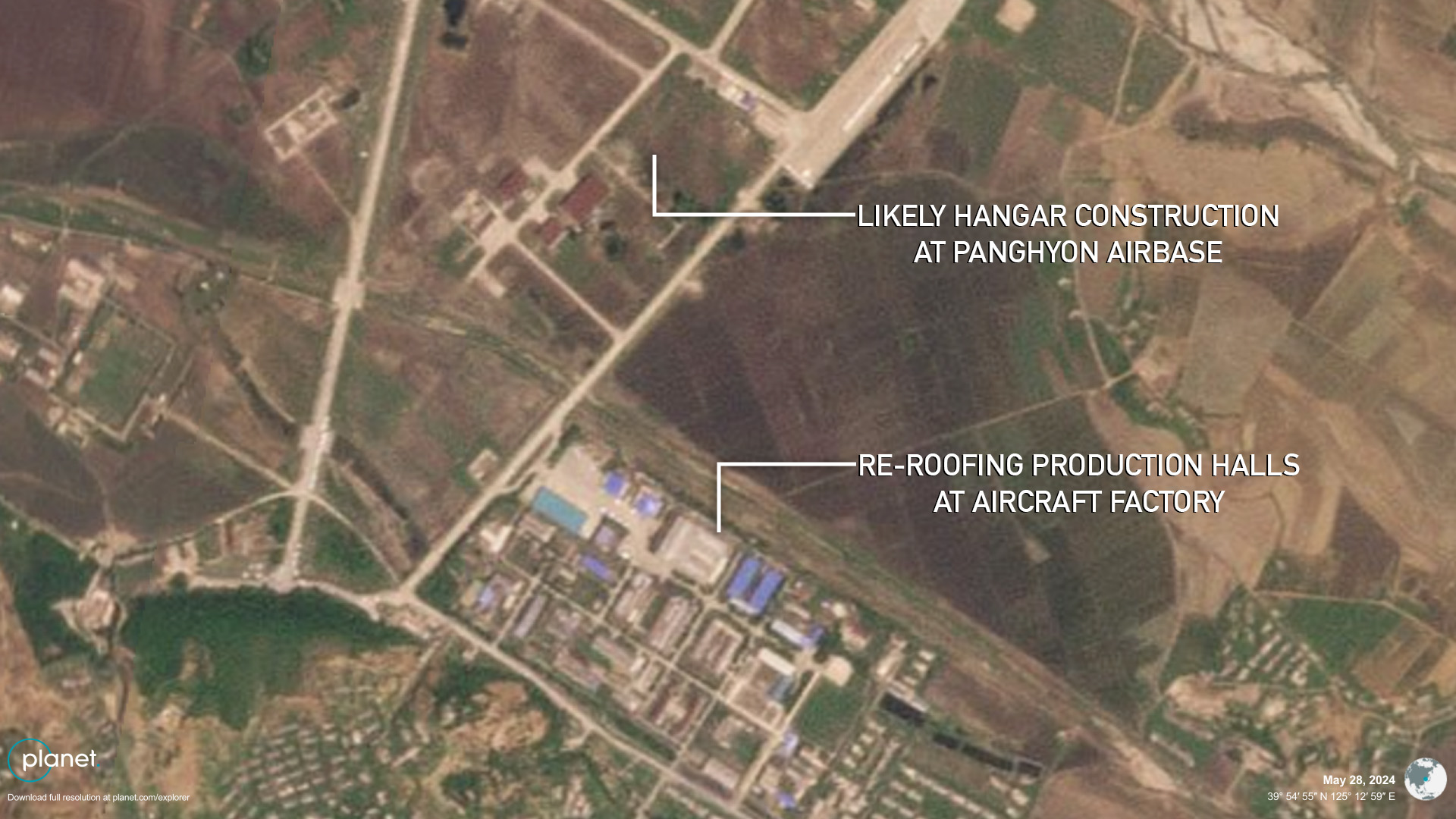
Edited by Bryan Betts © Korea Risk Group. All rights reserved. |

October 28, 2026Oct 28, 2026

The ultimate resources for professionals working on North Korea
 SHARE
SHARE COPY LINK
 X
X MASTODON