
|
News North Korea says Kim Jong Un led salvo tests of nuclear-capable rocket systemsMonday's test was fifth military drill overseen by North Korean leader in last two weeks
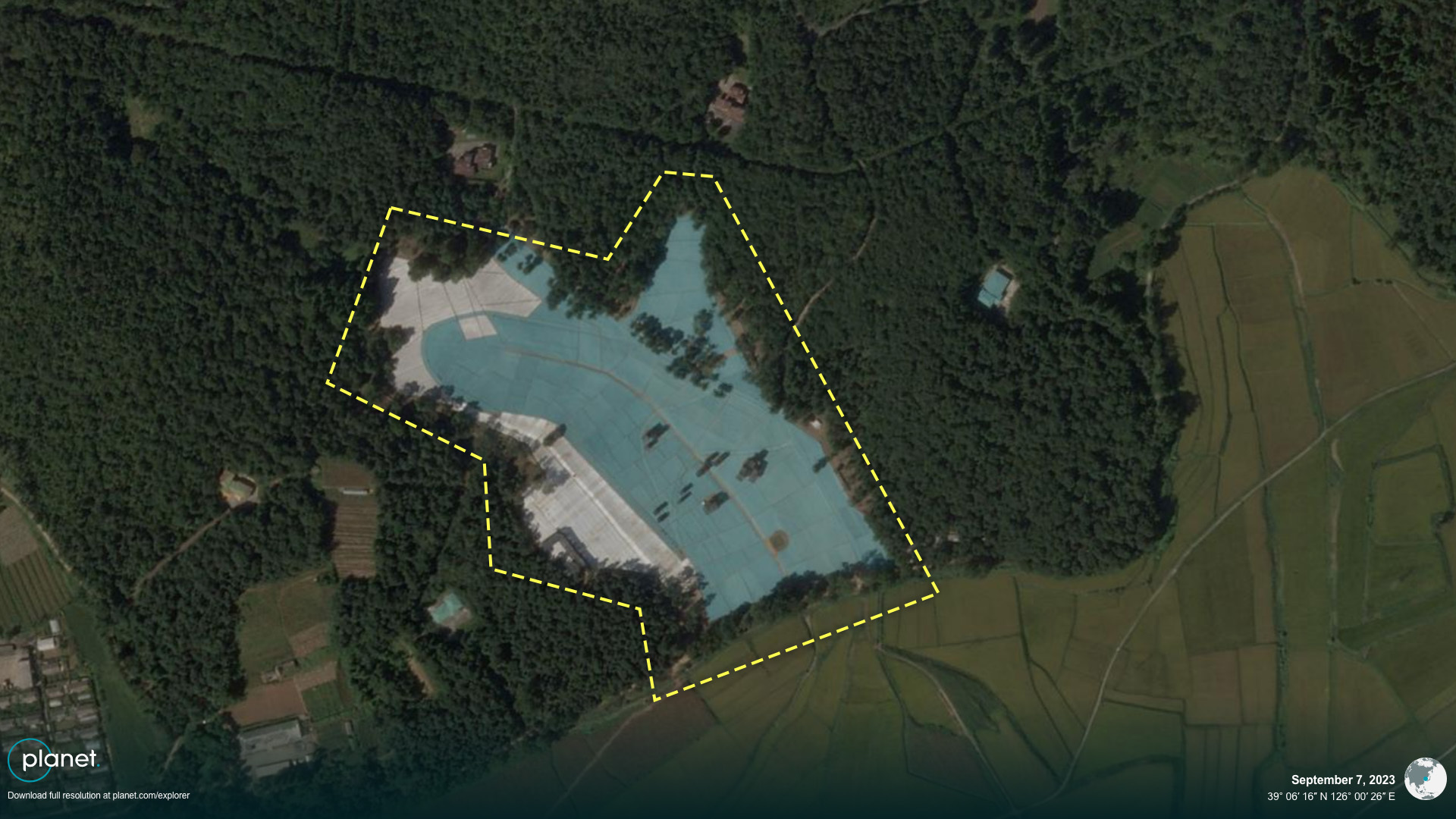
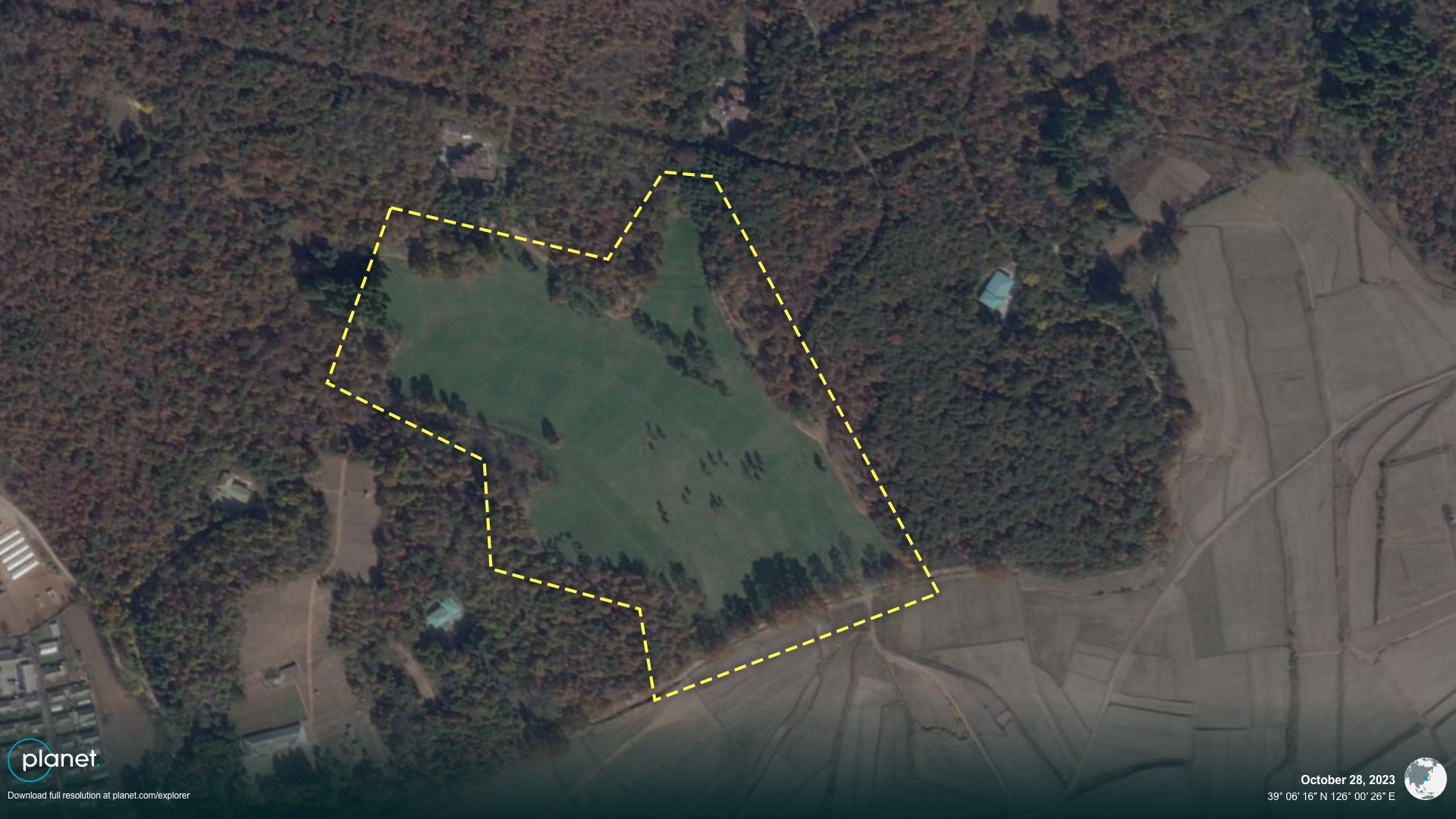
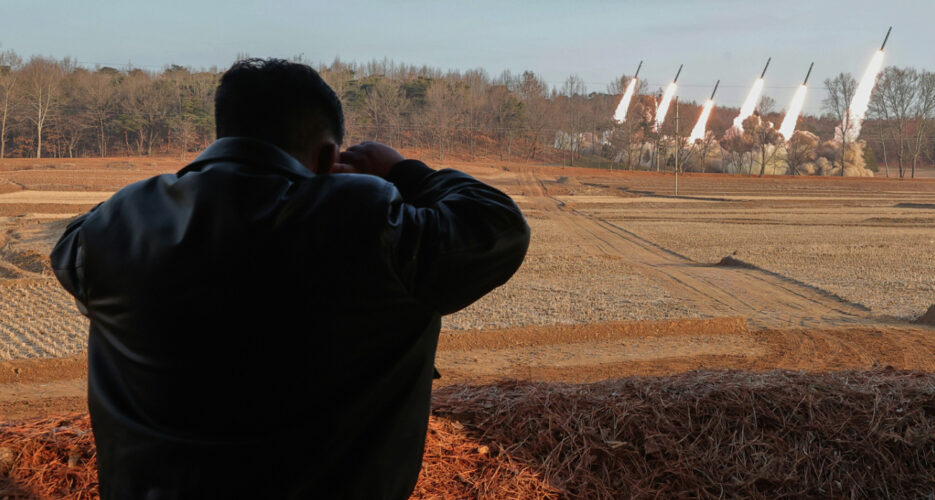 North Korean leader Kim Jong Un oversaw salvo tests of a “super-large” multiple launch rocket system (MLRS) on Monday, according to state media, his fifth appearance at military drills in the last two weeks. The Rodong Sinmun on Tuesday said the test was aimed at demonstrating “unexpected” maneuvers to change firing positions between launches. Photos published with the report show six 600mm MLRS rockets firing simultaneously from six mobile launch vehicles parked next to each other. Pyongyang has said that the rockets can be fitted with nuclear warheads, posing a headache for South Korean missile defenses. Japanese and South Korean military authorities announced the detection in real time of what it called short-range ballistic missile (SRMB) launches on Monday morning from the Sangwon area southeast of Pyongyang, but said they only involved launching two missiles at around 7:44 a.m. KST and one more at around 8:24 a.m. South Korea’s defense minister Shin Won-sik cryptically told reporters hours later that joint analysis with the U.S. led to discovering the launches involved something different than typical missile tests, hinting the allies may have belatedly understood they were salvo launches. NK News analysis of state media photos of the test and satellite imagery suggests the launch took place from a newly constructed grassy area in east Pyongyang, not Sangwon. It is next to another new launchpad used for recent long-range missile tests. 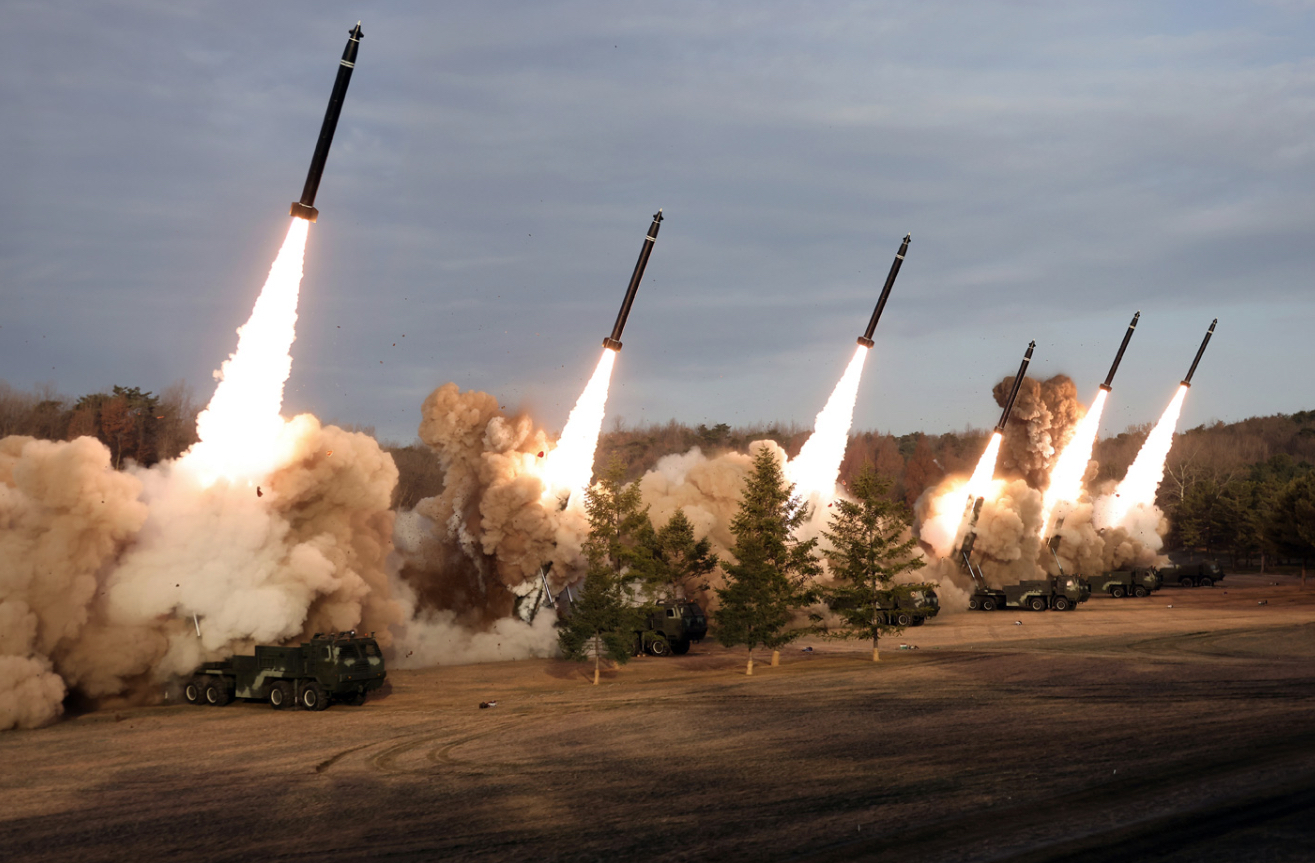
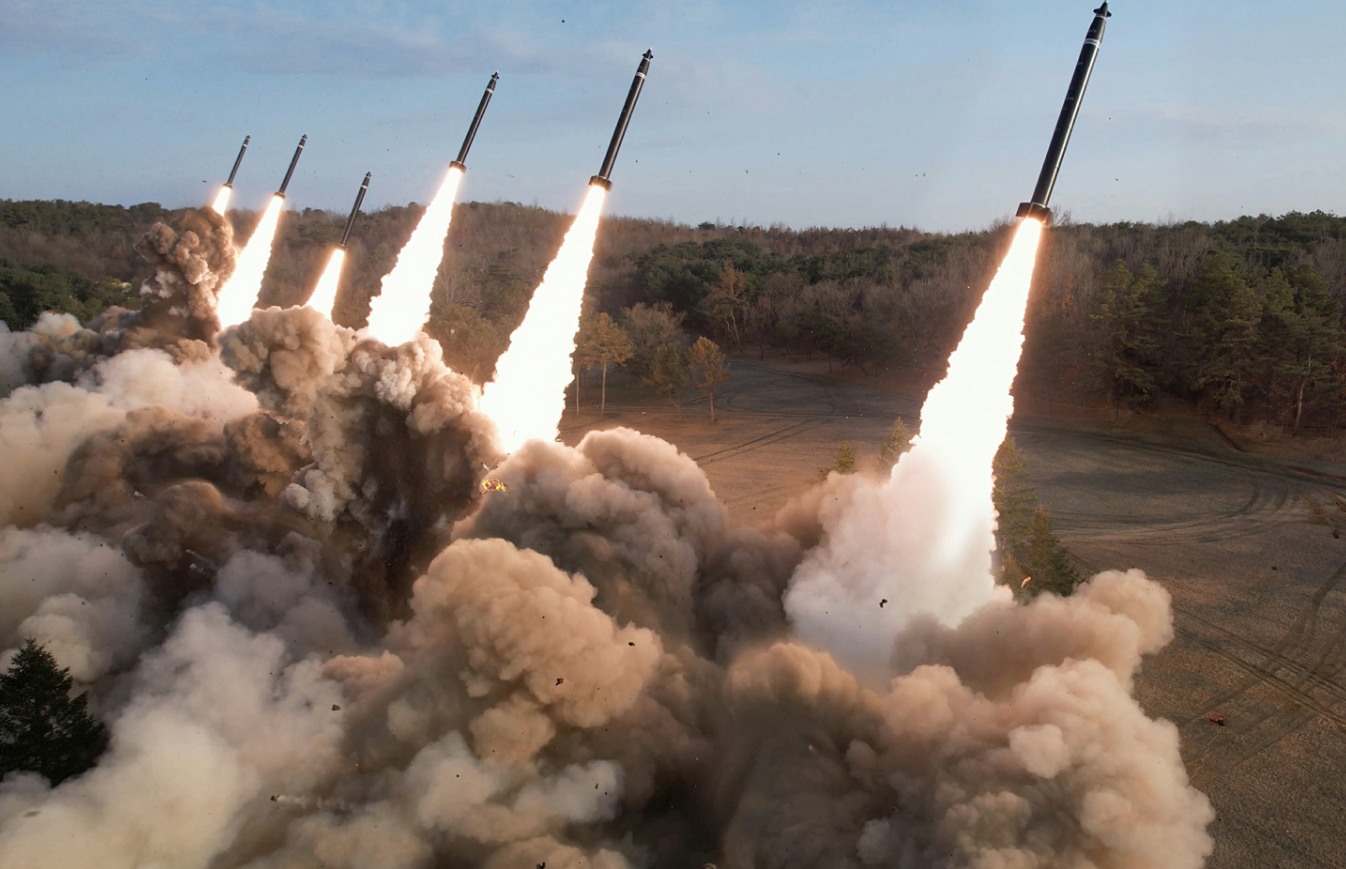
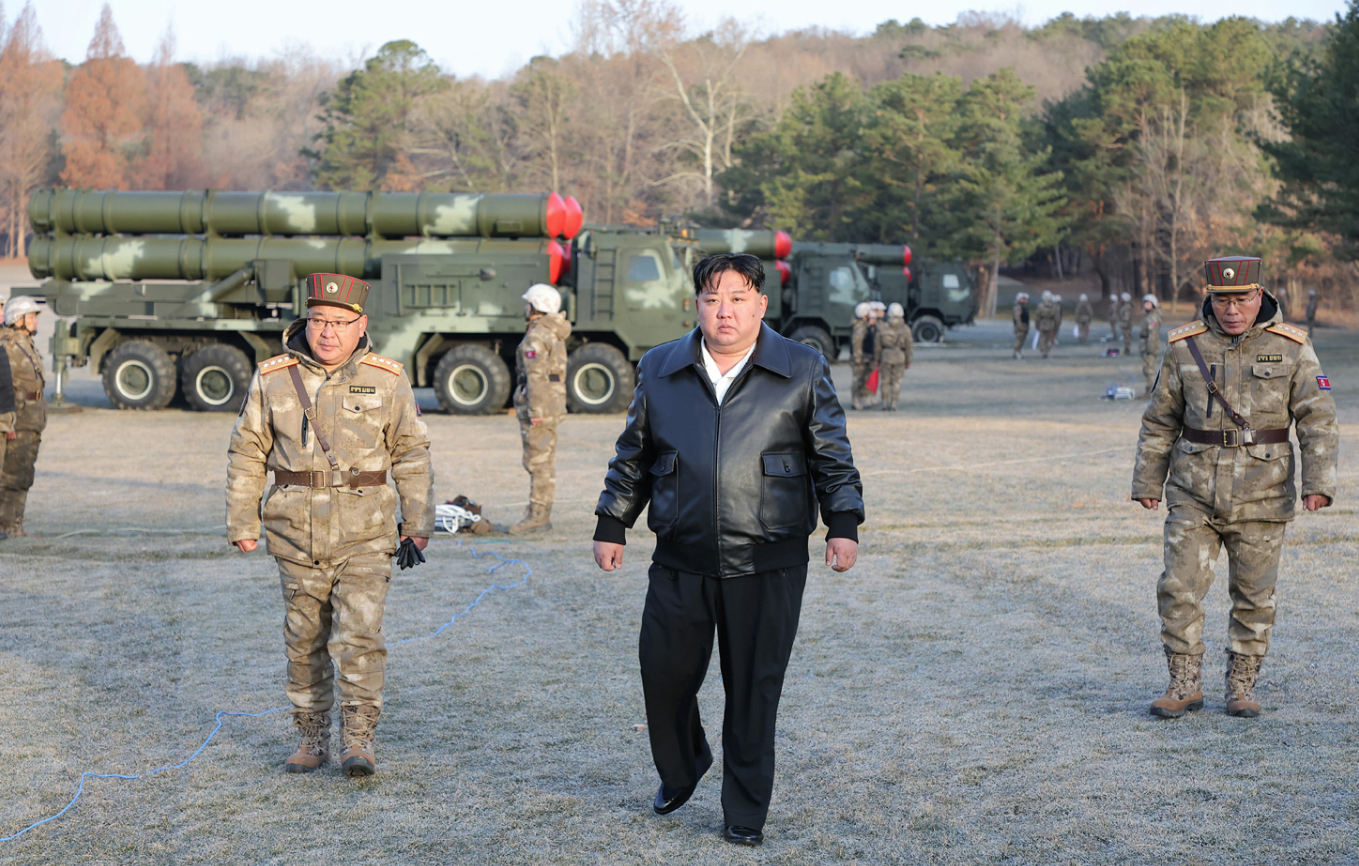
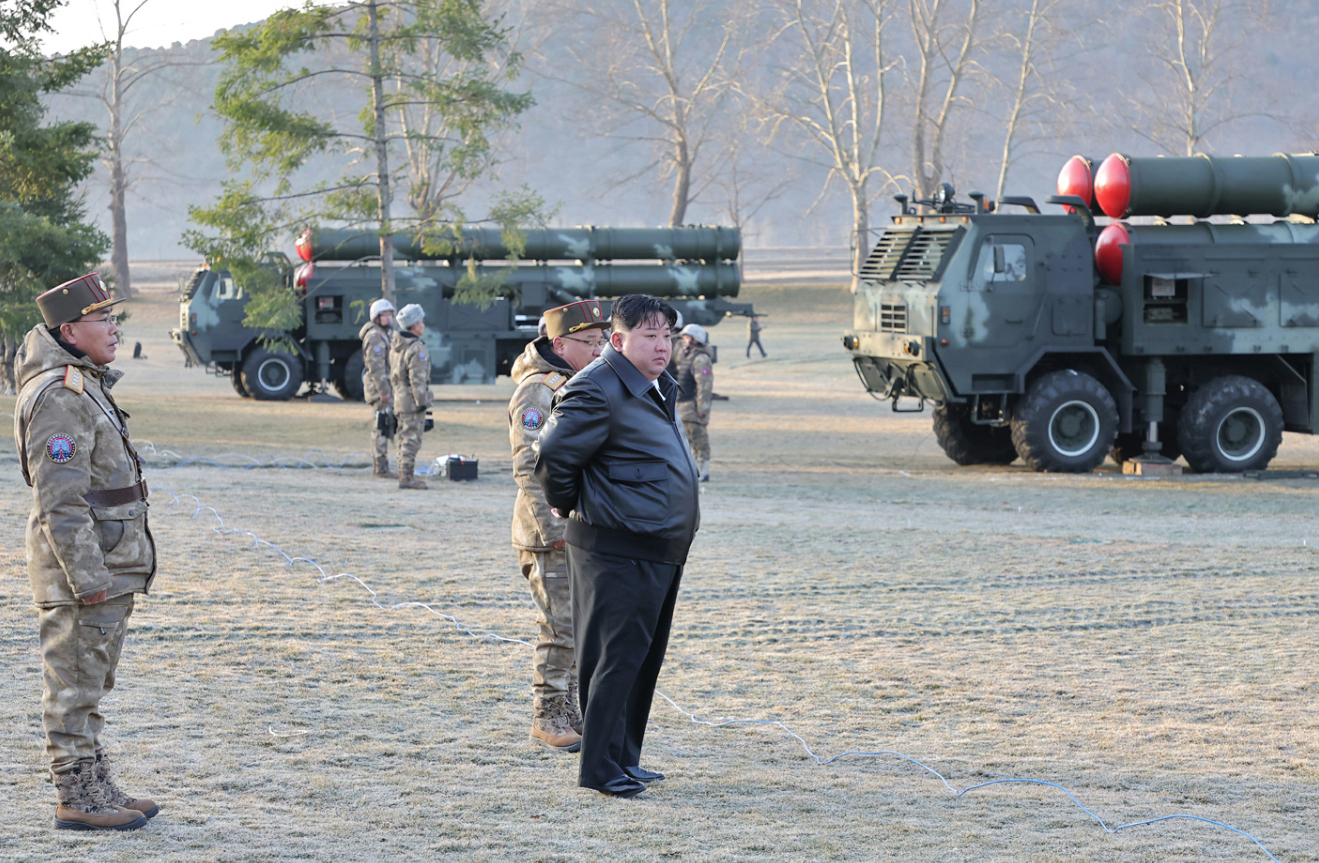
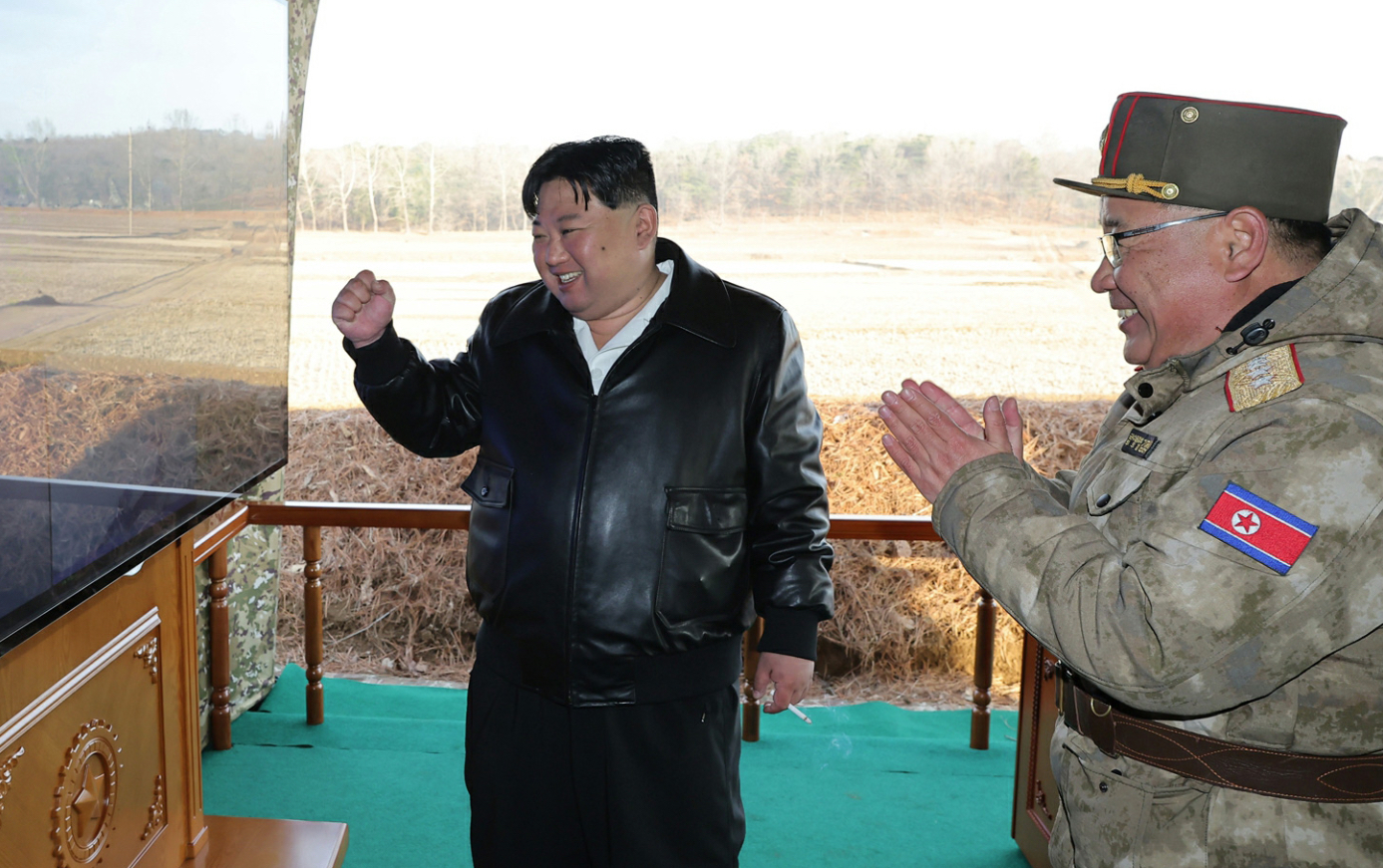
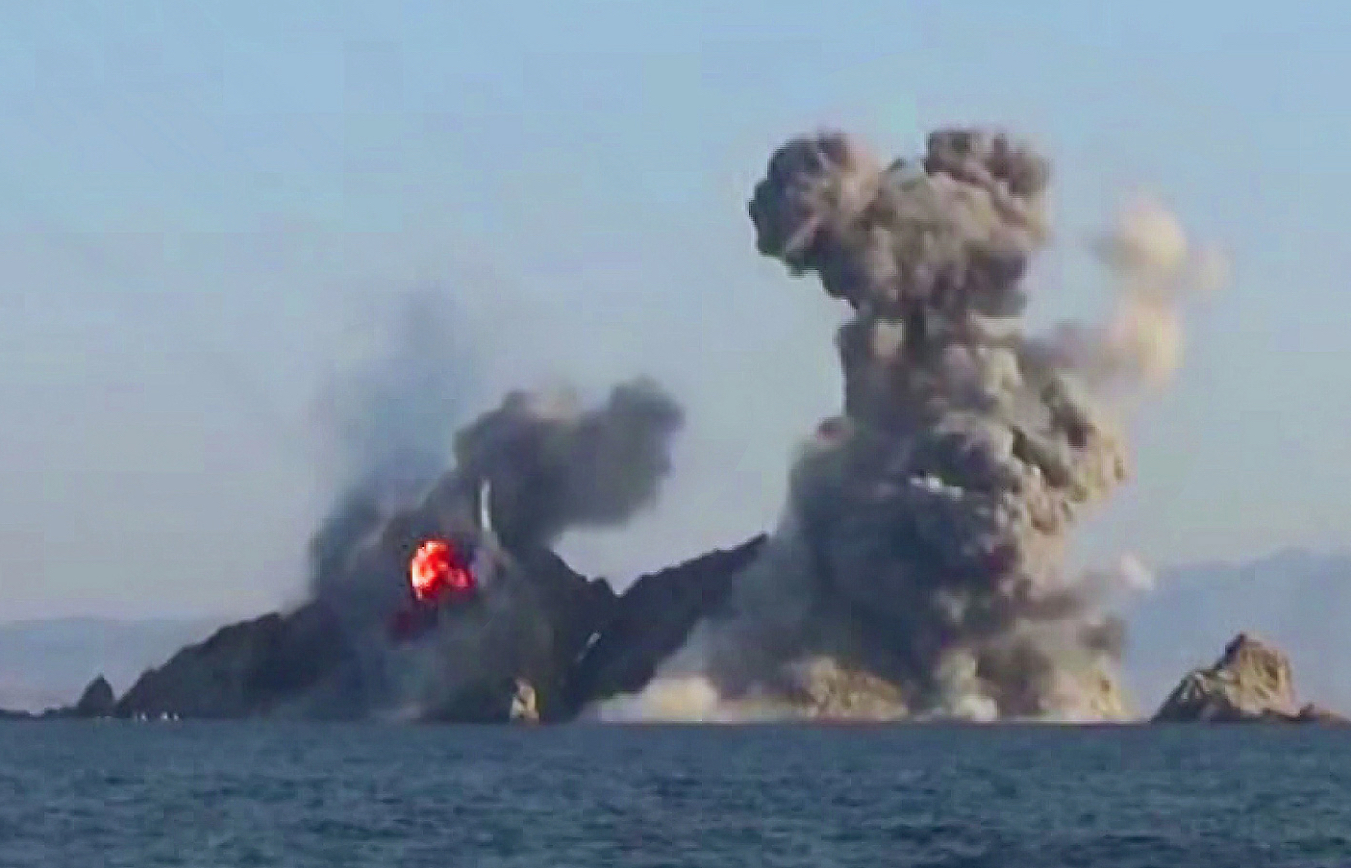
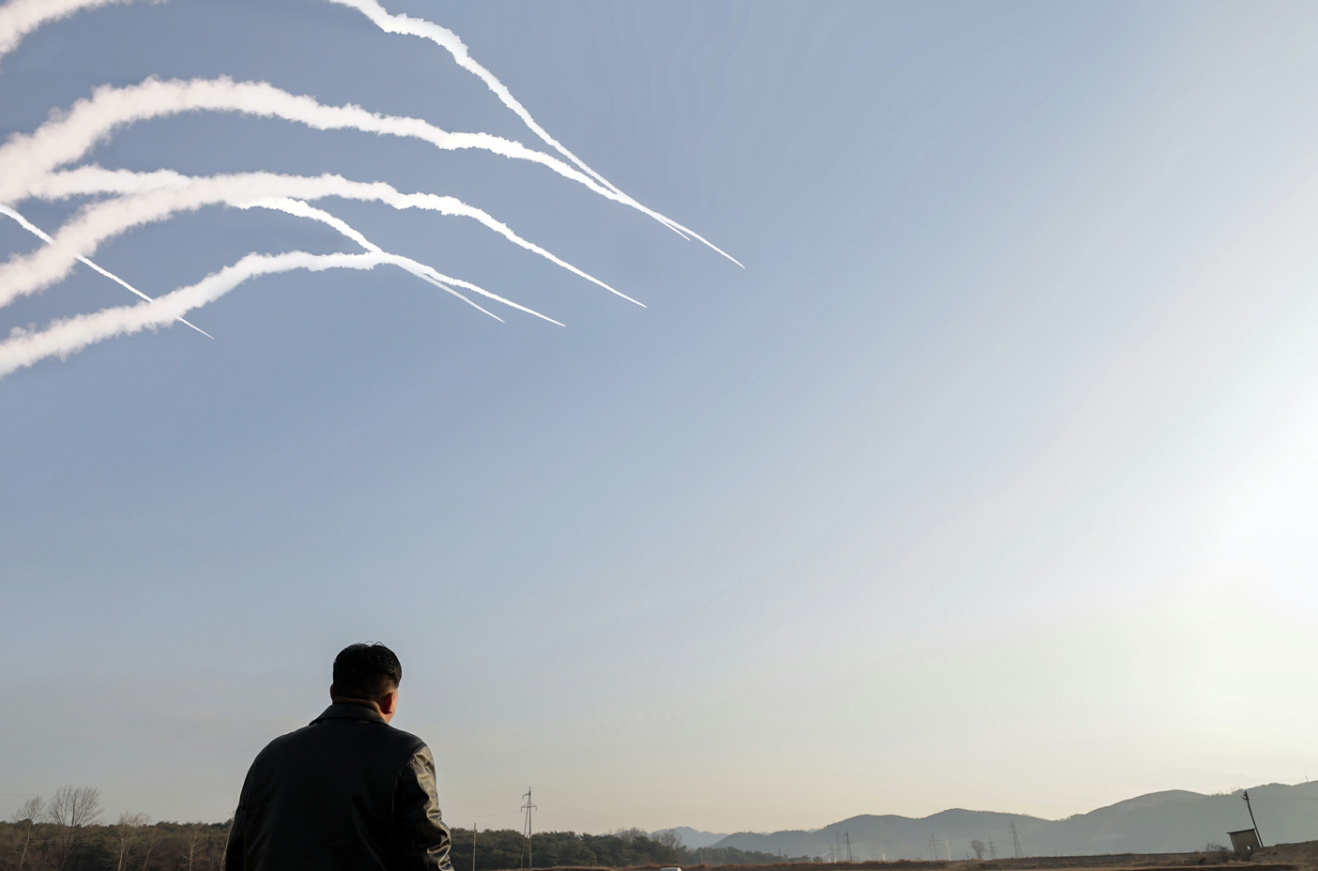
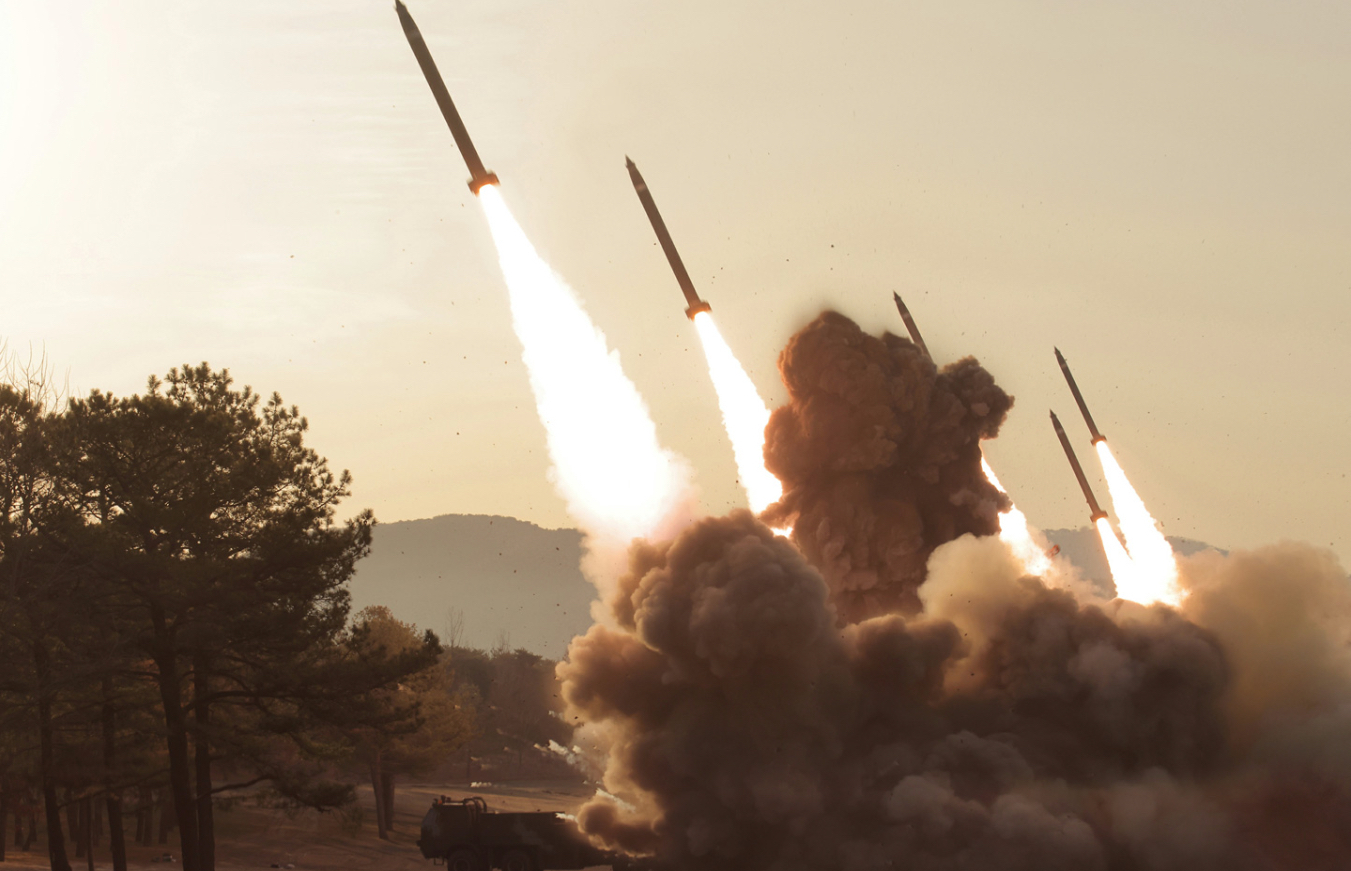
State media on Tuesday did not specify how many separate salvo launches the drills involved. Each rocket was fired from a four-canister wheeled transporter erector launcher (TEL). The test was conducted to confirm the system’s “strength and capabilities in a real war situation through unexpected movement of launchers and salvo launches,” the Rodong Sinmun report said. “It is necessary to further impress upon the enemies that if an armed conflict and a war break out, they can never avoid disastrous consequences,” Kim reportedly said at the test. He added the military should “block and suppress the possibility of war with the constant perfect preparedness to collapse the capital of the enemy and the structure of its military forces,” referring to the ROK capital Seoul. Photos show at least some of the missiles struck commonly used target islands off the northeast coast, while the report said the test also involved an airburst detonation as part of a launch after the salvo firing. The distance between the launch location in Pyongyang and the islands is around 216 miles (348 km), about the same as the Japanese defense ministry estimated Monday. A South Korean military headquarters complex in Gyeryong in the western central area of the country is at the outer edge of this range from the launch spot. Though it’s unclear precisely how many rockets South Korea’s Joint Chiefs of Staff (JCS) detected at the initial launch — JCS characterized the launch as involving only “multiple” projectiles — one expert told NK News such a salvo launch poses detection and defense challenges. “It’s clear that there are still limitations in the ability of Japan and South Korea to assess complex launch events in real-time with high fidelity,” Ankit Panda, Stanton Senior Fellow in the Nuclear Policy Program at the Carnegie Endowment for International Peace, told NK News on Tuesday. Panda said Seoul would “benefit from the U.S. sharing space-based infrared sensor-derived data with them,” which is currently not being shared in real time and only during post-launch joint analyses. It would only take “a couple minutes” for such short-range missiles to reach targets in Seoul when launched from Pyongyang, Panda said, adding that there’s “a very short window for missile defense (terminal)” systems to attempt intercepts. Meanwhile, satellite imagery shows work on the launch grounds occurred from July to September last year, suggesting the DPRK was planning a launch from the spot since that time. It also suggests the ground beneath the TELs was hardened or reinforced to make it easier for them during their reported maneuvers between launches, making the test not likely representative of a real war scenario. 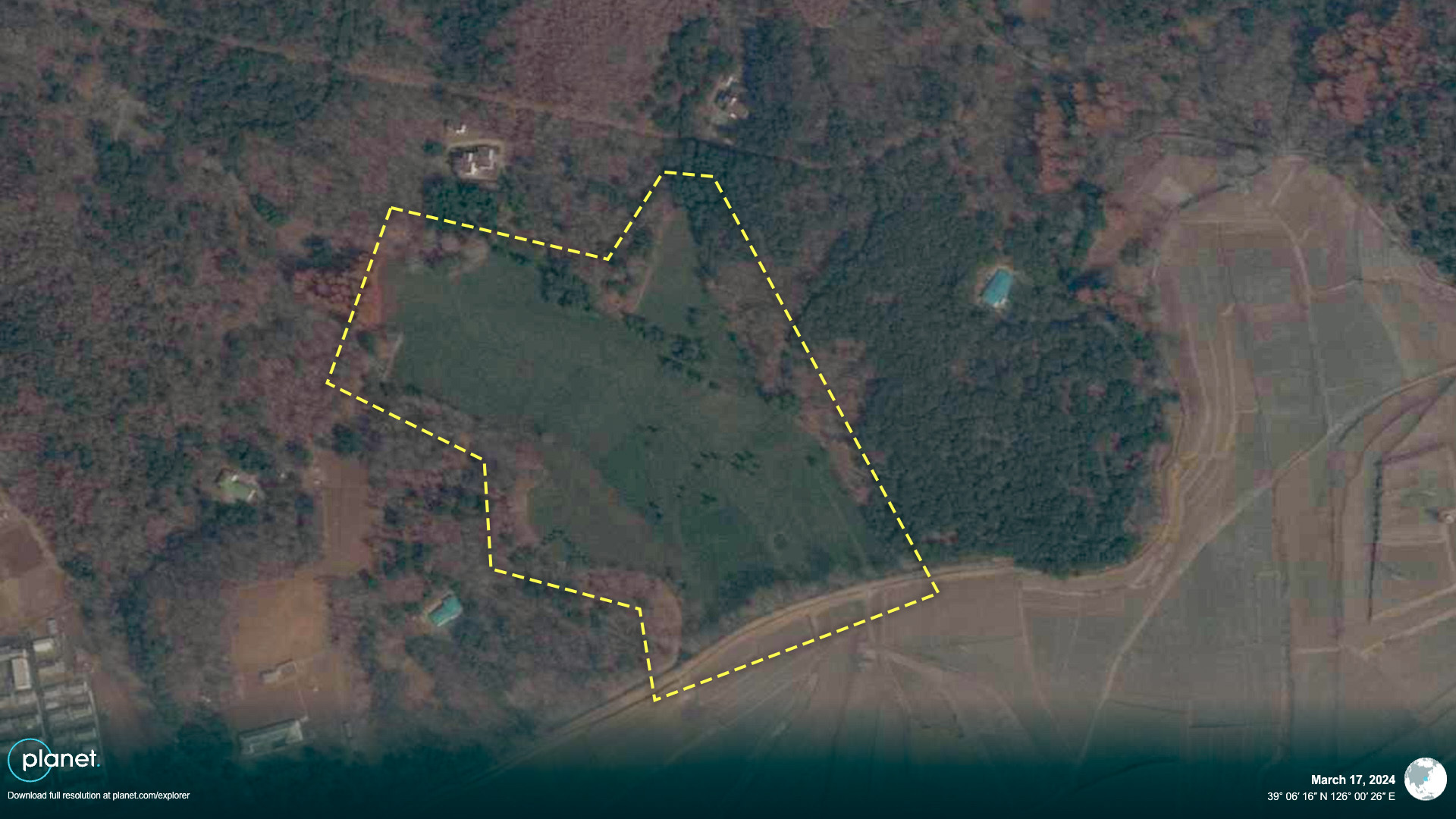
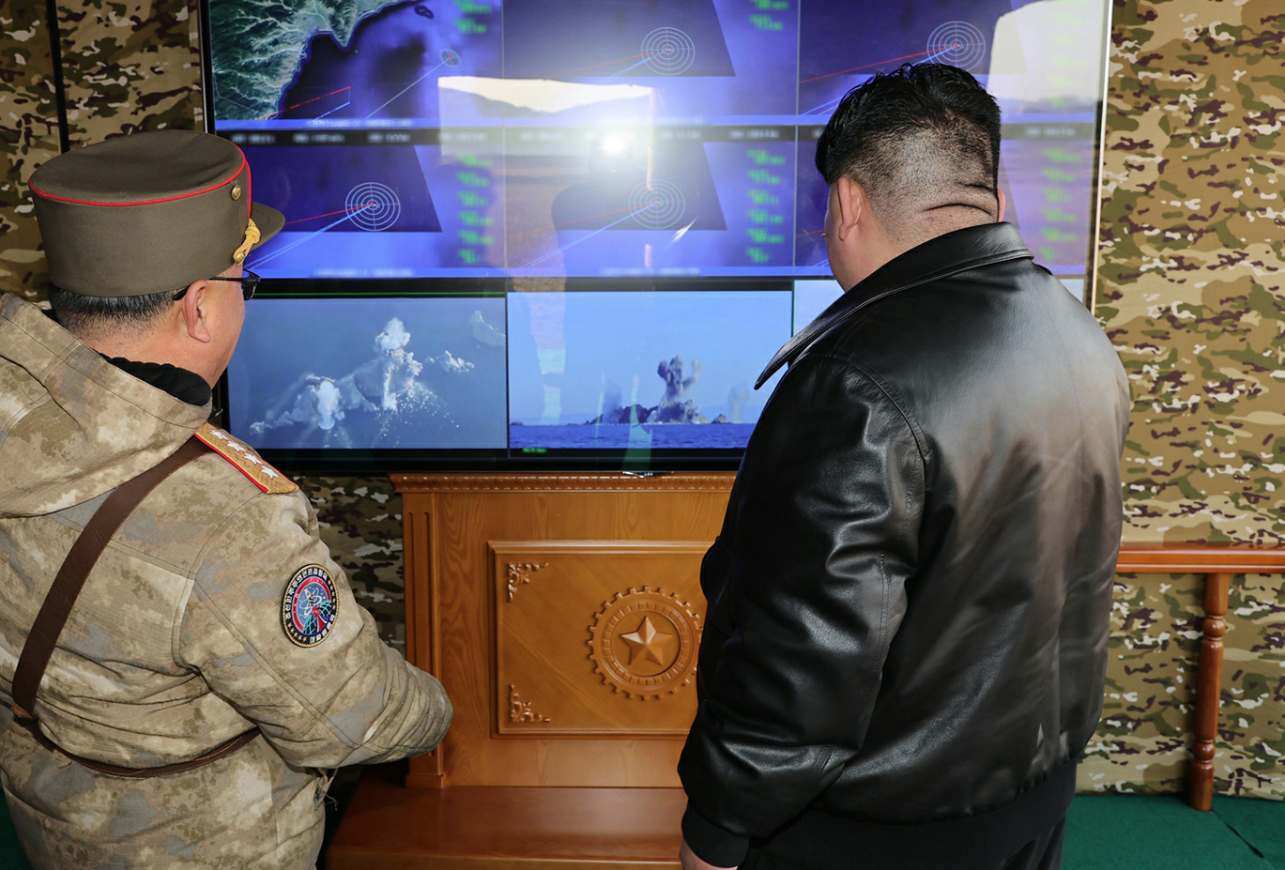
Kim reportedly inspected an “automatic fire command and control system” for the MLRS ahead of the first launch Monday. He hoped to demonstrate “overwhelming military power as a deterrent to completely eliminate the possibility of a military clash and war” and guarantee peace through the test, the report said. The launch units “fully demonstrated their excellent crack-shot artillery marksmanship and prompt and thorough combat readiness,” it added. The DPRK leader called for “continuously increasing the number of batteries” of 600mm MLRS TELs. Vice director of the Department of Munitions Industry of the Party Central Committee Kim Jong Sik and general director of the Missile Administration (General Missile Bureau) Jang Chang Ha reportedly joined the DPRK leader at the launch. The 600mm “super-large” MLRS, also known as the KN-25, is one of North Korea’s most frequently tested missiles since it was introduced in July 2019. Monday’s launch appears to be at least the 17th test of this system. In Jan. 2023, North Korea’s military received 30 of a different six-tube tracked TEL for the 600mm MLRS in a handover ceremony, suggesting the system has been widely deployed. Kim Jong Un led similar salvo launch drills for another new SRBM system one year ago. Over the last two weeks, he also oversaw tank drills and other exercises simulating attacks on and infiltration of South Korea by special forces, artillery and paratrooper units. Edited by Arius Derr Last updated on March 19 at 9:01 a.m. KST with additional details from state media, and at 10:56 a.m. with expert comments. © Korea Risk Group. All rights reserved. |


 SHARE
SHARE COPY LINK
 X
X MASTODON


Recent Stories