  
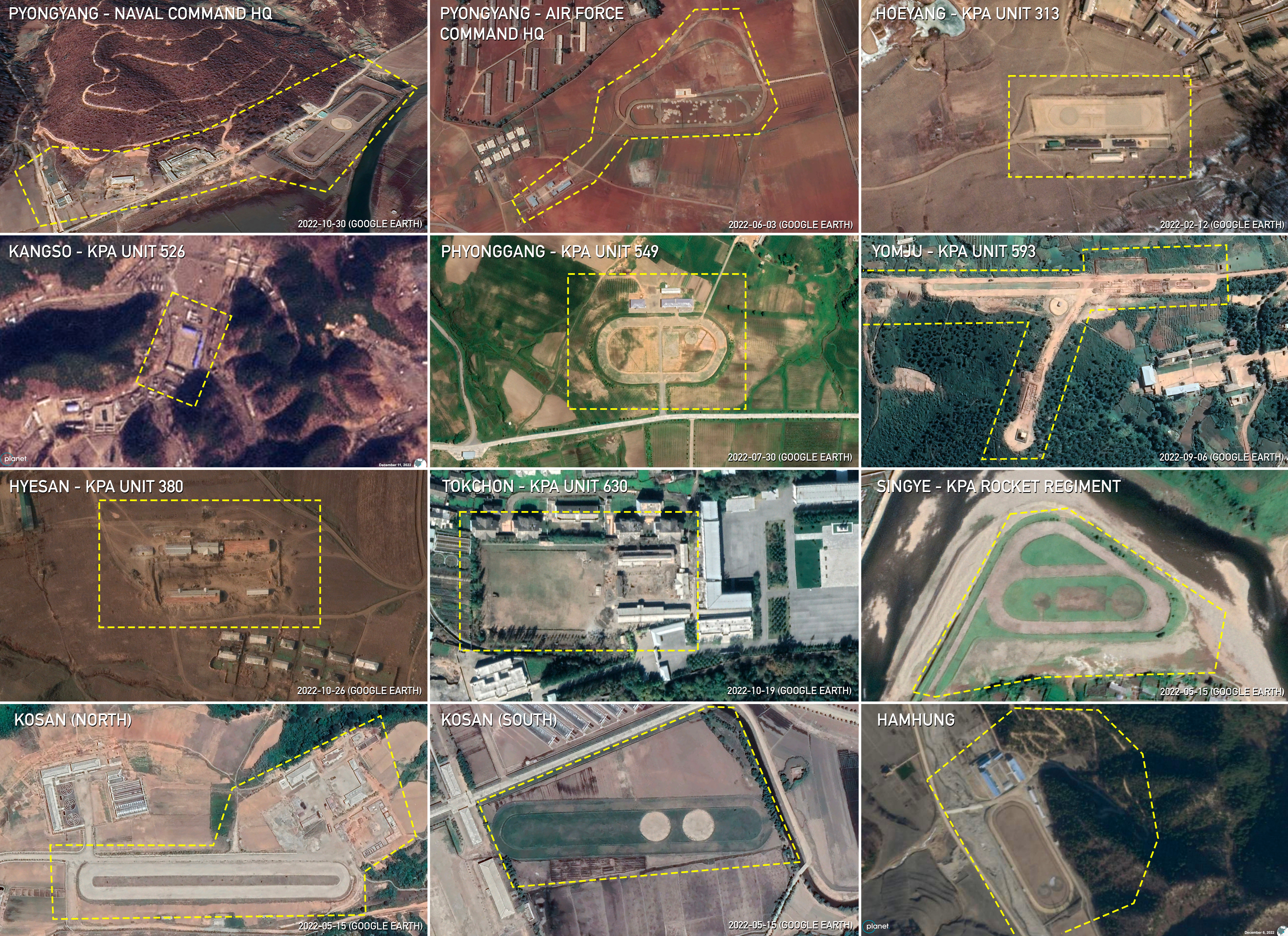
Analysis Stable genius? Kim Jong Un pushes secret military horse programNK Pro analysis shows North Korea rapidly built at least 12 horse tracks at army bases, for reasons that remain unclear 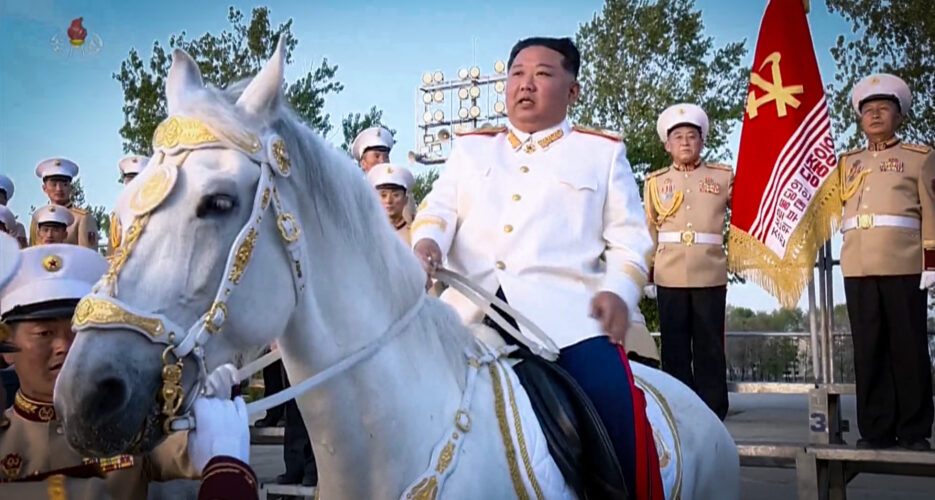 Throughout last year, North Korea launched a record number of missiles and openly took steps toward its goal of deploying tactical nuclear weapons. But behind the scenes, the DPRK military also invested significant resources in an instrument of war that fell to the wayside in the early 20th century — horses. NK Pro analysis of satellite imagery shows that the Korean People’s Army (KPA) rapidly built new horse tracks and support facilities at 12 of their command headquarters around the country in the last half year, and it was likely involved in the construction of at least five others during the same period. Construction on all 17 of the suspected equestrian facilities occurred in 2022 and mostly wrapped up in November, indicating it is a recent and high-priority project of DPRK leader Kim Jong Un. It comes as Pyongyang has spent over $600,000 to import purebred and other horses from Russia since 2010, including 70 horses in the last three years, according to official trade data. Kim also previously built new private horse tracks at his mansion compounds before filming a key propaganda film in 2019. The purpose of the new project is unclear. While it’s unlikely North Korea intends to use the relics of war in actual combat, the DPRK ruling family’s long obsession with horses and current leader Kim Jong Un’s recent equine escapades point to their use as propaganda symbols and possibly even an expanded program to breed horses for export. 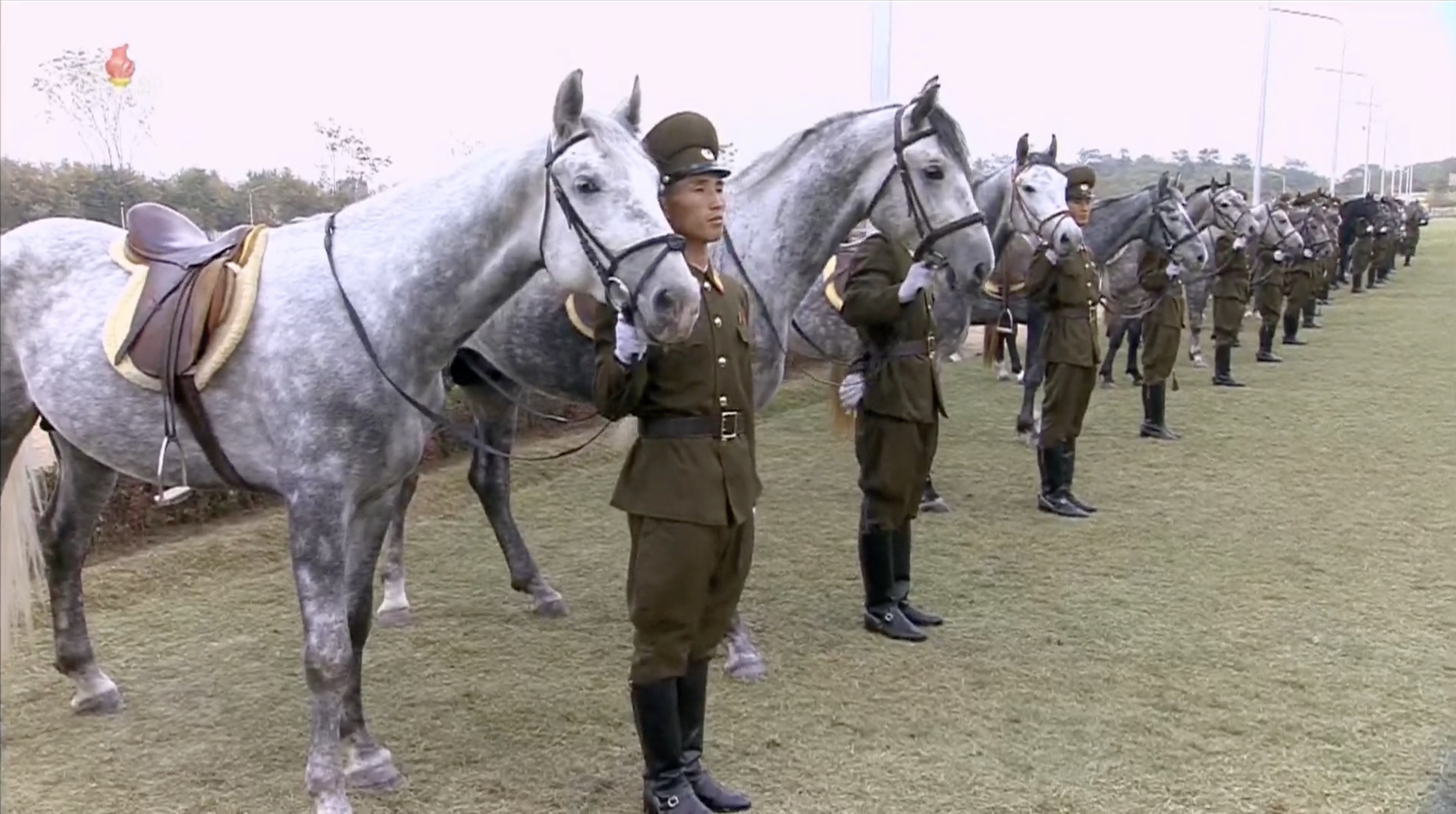 CONSTRUCTION DETAILS The most recent construction features clusters of long and narrow blue-roofed buildings likely intended for use as stables, veterinary and administrative facilities, as well as oval or other makeshift horse tracks. Work on the buildings has taken place since July 2022 at or near the following 12 KPA bases (the KPA corps listed below are widely thought to be attached to the units or cities in question, but NK Pro has not been able to verify the links in all cases):
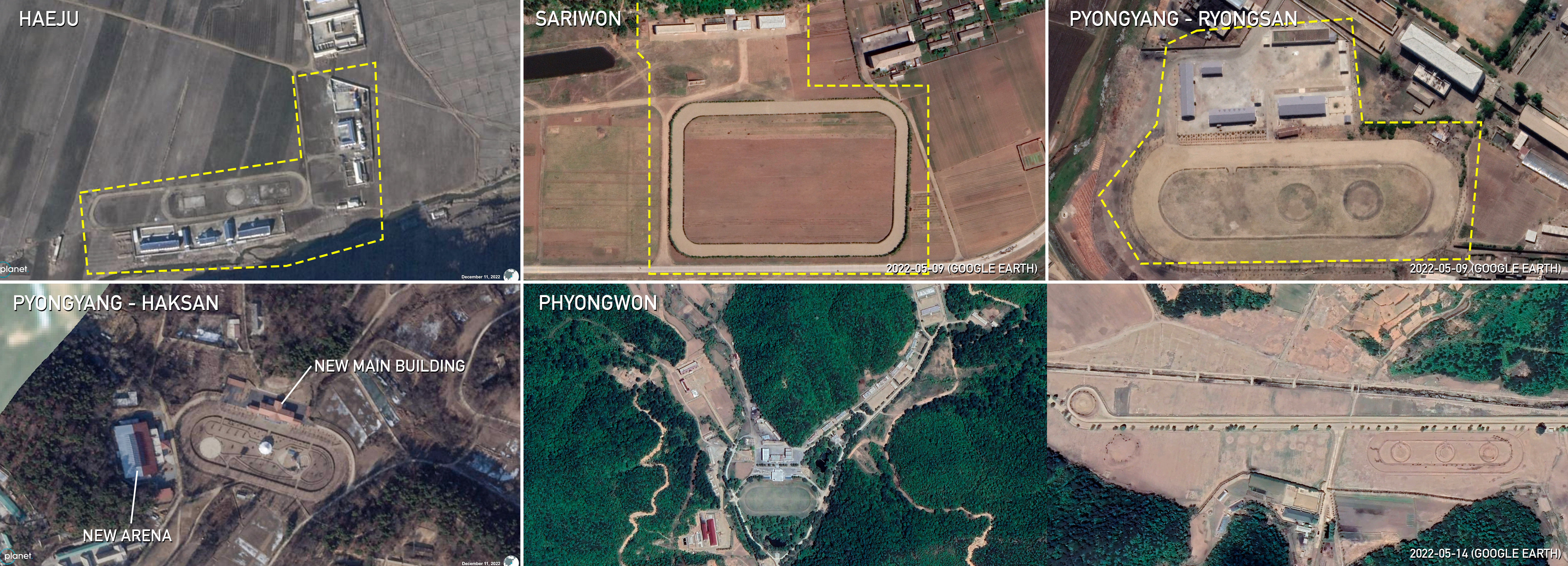
 Tracks and similar-looking clusters of blue-roofed buildings sprouted up in the same time period in the following three locations not directly attached to military bases (military facilities close to the tracks or corps command HQs believed to be located in the same city are included in parenthesis):
Two other tracks that may be military-related but are also not directly attached to bases were fitted with new tracks and indoor arenas in late 2022 and with other upgrades since 2019:
 North Korean national carrier Air Koryo built a proper horse track, indoor arena and related facilities in 2020 at its Kobangsan Hotel in Pyongyang, while the Mirim Riding Club received upgrades in 2021, but neither appeared to be part of the latest military-centric project. WHAT SPURRED THE PROJECT State media has not disclosed the purpose of the horse track construction, but NK Pro has identified several possible explanations. Kim’s personal use? Even though most of the new tracks are connected to KPA unit HQs, they could ultimately be used to breed and train horses for Kim and his family’s personal use at his mansion tracks. While this might seem an excessive use of resources, Kim also requires the maintenance of dozens of luxurious mansions across the impoverished country, some of which he may not often visit. 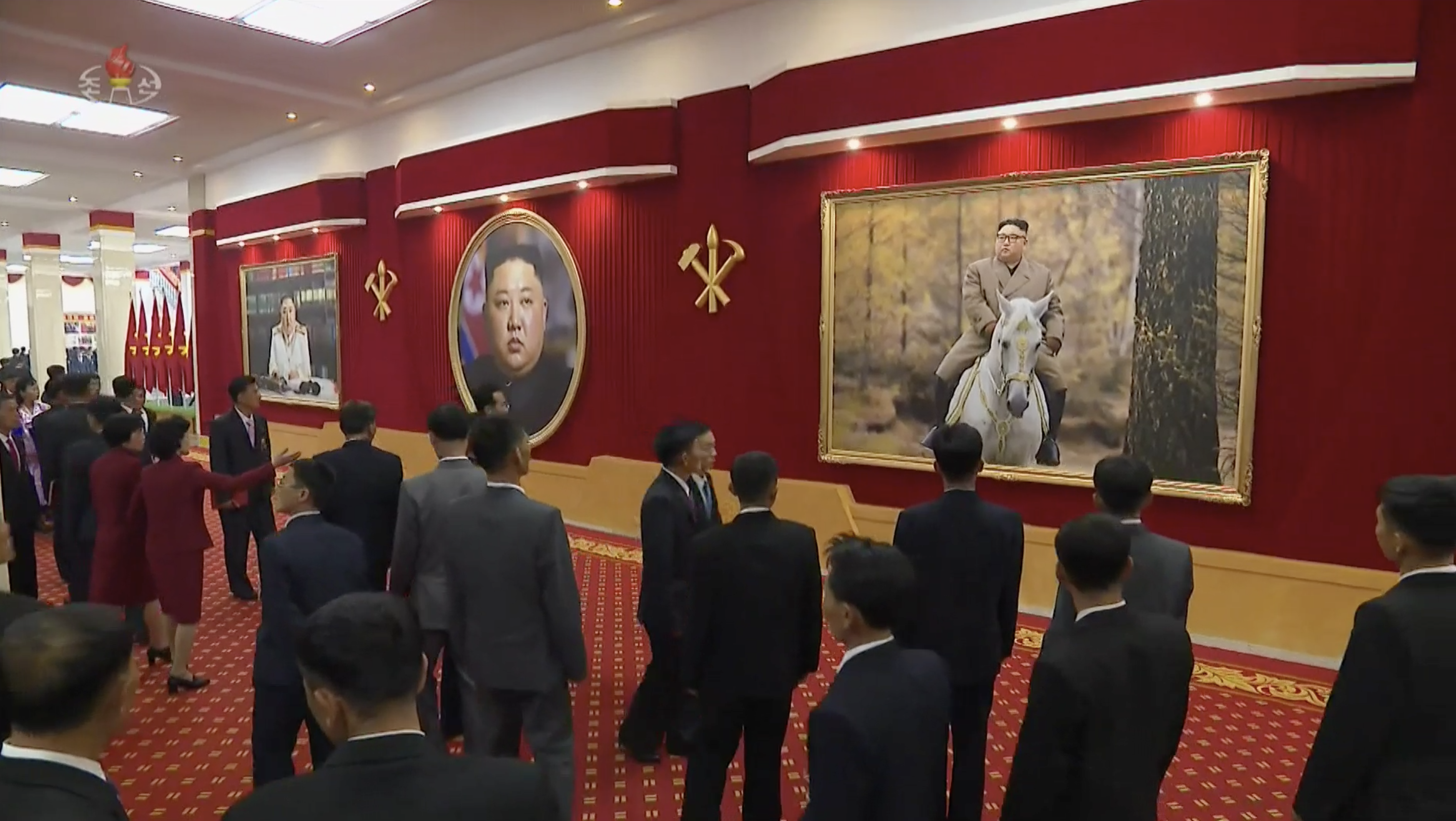 Kim has demonstrated his personal love of horses through frequent state media propaganda reports on his riding activities since 2012, showing him riding both as a child and as an adult alongside his father Kim Jong Il. The Mirim Riding Club history museum also claims Kim visited that track or rode horses throughout the country 386 times between his birth and 2013 — including 149 times in 1995 alone, a year before he reportedly left to study in Switzerland. The white horse has been a symbol of power in Korean culture for centuries, and North Korea even depicts the ancient King Tangun as riding one with ornamental tack closely resembling that worn by the three Kim leaders’ horses. Most recently, a Feb. 2021 Korean Central Television (KCTV) propaganda film showed him on horseback staring out at the sunrise at his Hamhung area mansion and galloping at high speed with his wife, sister and top aides. 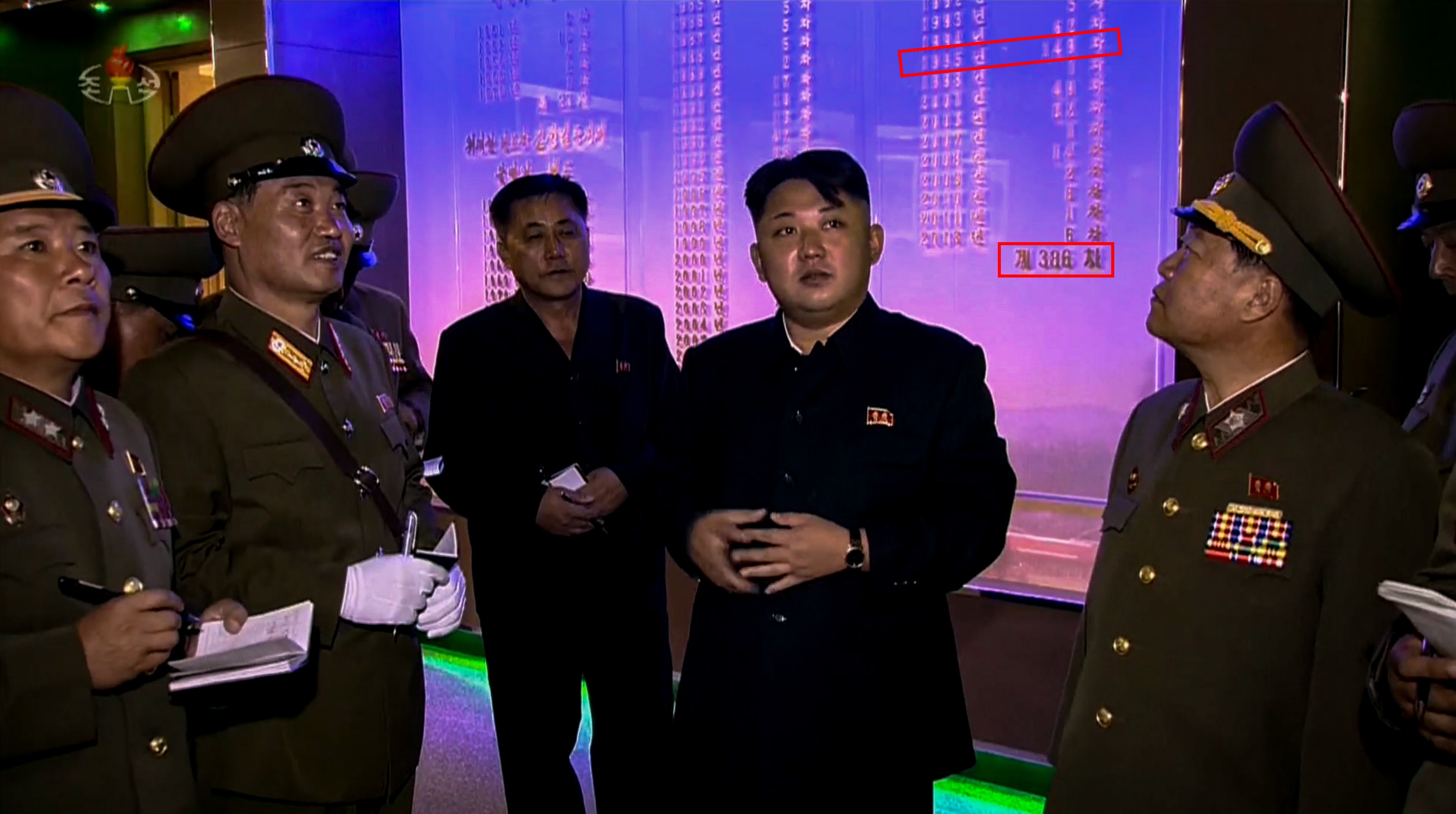 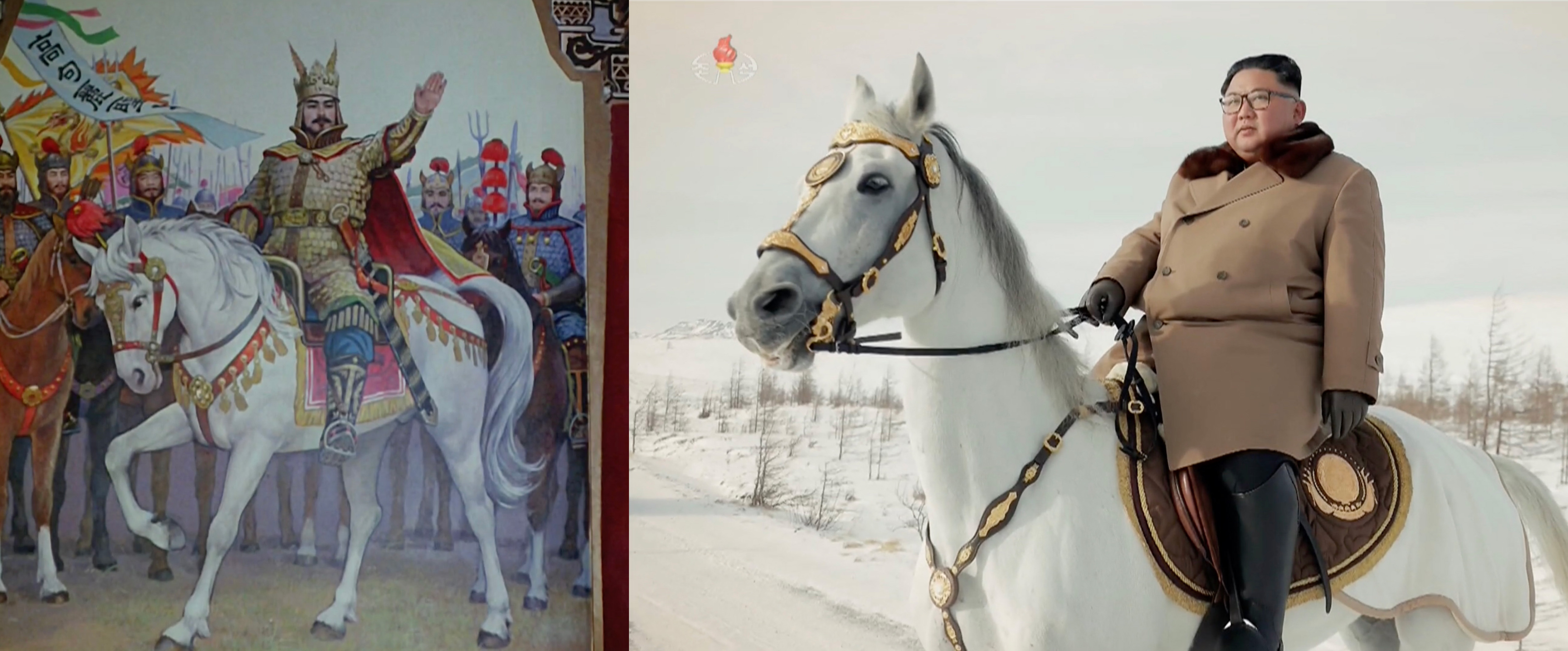 Breeding for export? The large scale of the project and simultaneous construction at KPA command HQs points to the possibility the military is organizing a horse breeding program, North Korea geospatial analyst Jacob Bogle told NK Pro. Bogle was first to publicly report the existence of the new tracks at the Ryongsan, Phyonggang and Singye locations. “It looks like North Korea has been laying the foundations for an expanded horse population which will further develop in the coming years,” he said, adding that “breeding for export can’t be ruled out.” While Bogle believes “the number of facilities does seem excessive to military needs,” he cautioned that the spread and relatively small size of each facility is not perfectly consistent with an export-oriented breeding program. Mirim is still the country’s largest and most well-known equestrian facility and is reportedly open to the public, but it was the military’s main track (under KPA Unit 534) for horse riding training prior to Kim Jong Un ordering its transformation into the club in late 2012. Since the KPA is likely still involved with Mirim despite its civilian face, the new nationwide military project could ultimately be related to breeding strong specimens to send to Mirim, which last year began to host more major competitions on the national stage. 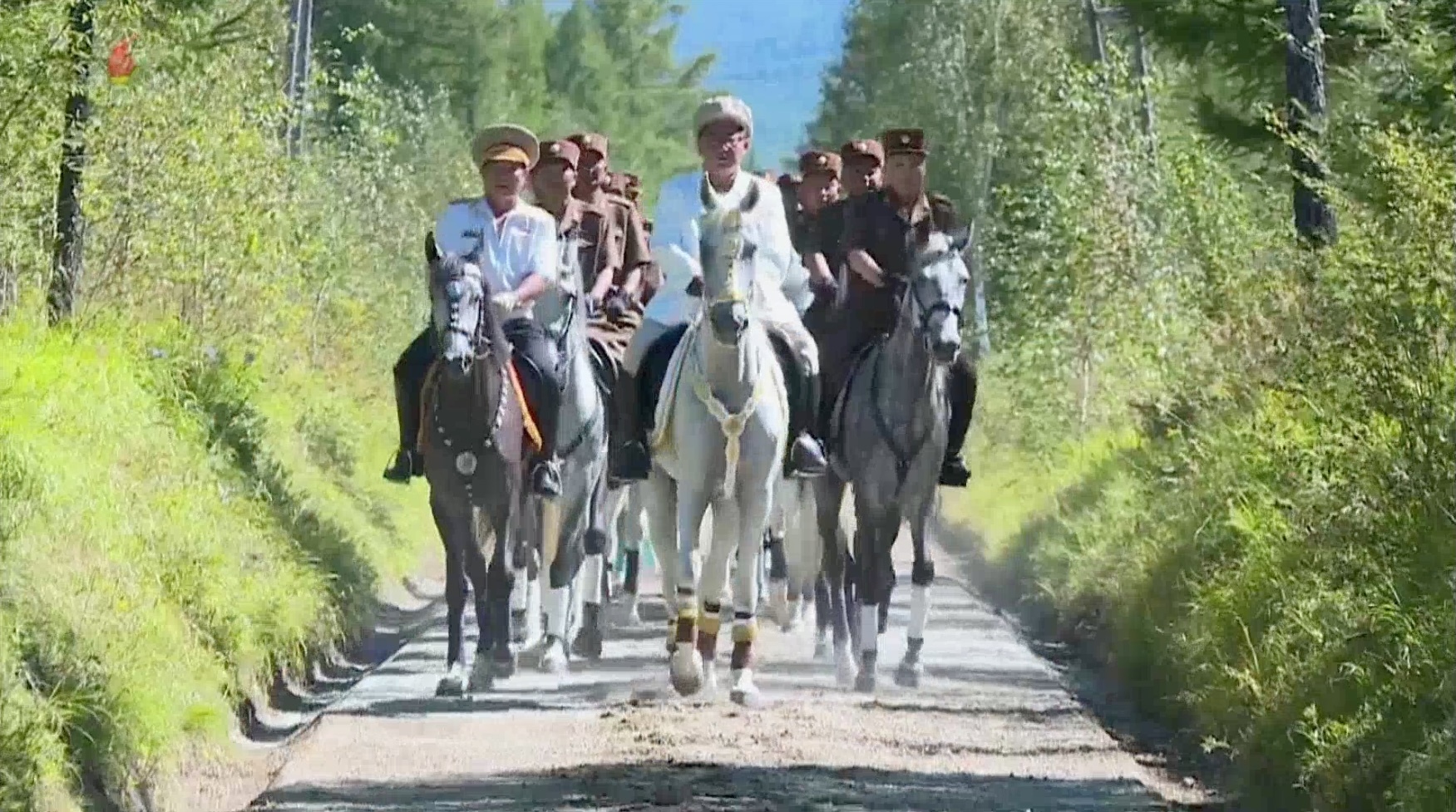 Soldier training and symbolism? If not intended for export, the recent construction push suggests that the DPRK military plans to put a large number of horses to use. Planet Labs satellite imagery taken since December also shows most of the new tracks have been cleared of snow, meaning they are likely already being used. It’s possible Kim Jong Un wants his military to train in horse riding and ordered top KPA commanders nationwide to fulfill this plan. Given the timing of most construction between Aug. and Nov. 2022, Kim could have delivered the order at a three-day Central Military Commission (CMC) meeting in June. Such instructions would be consistent with a quote by founding DPRK leader Kim Il Sung displayed in the Mirim Riding Club’s revolutionary history museum: “[Military] commanders must ride horses. A person who rides horses will gain a stronger disposition and higher command ability, while [riding] is also related to physical strength.” Kim Jong Un is quoted in another display at the club saying that it’s “important to conduct close-order horse drills,” referring to military riders controlling their horses in formal or synchronized movements. With commanders stationed at the HQ campuses now seeing new track construction, it’s possible Kim Jong Un wants to spur a change in their attitude to strengthen his overall weapons development plans or prepare them for a bigger steed-related propaganda role in the near future. 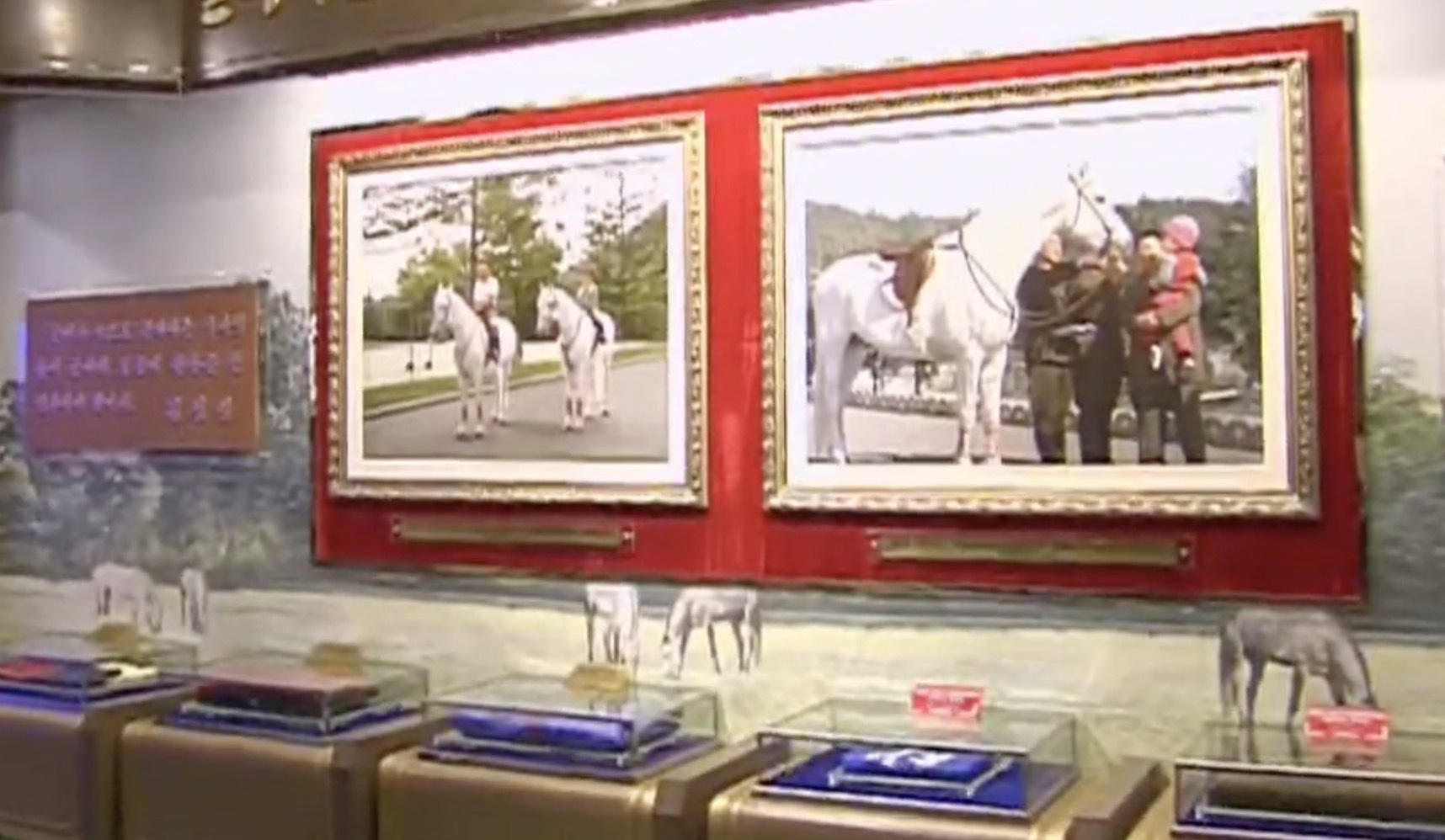 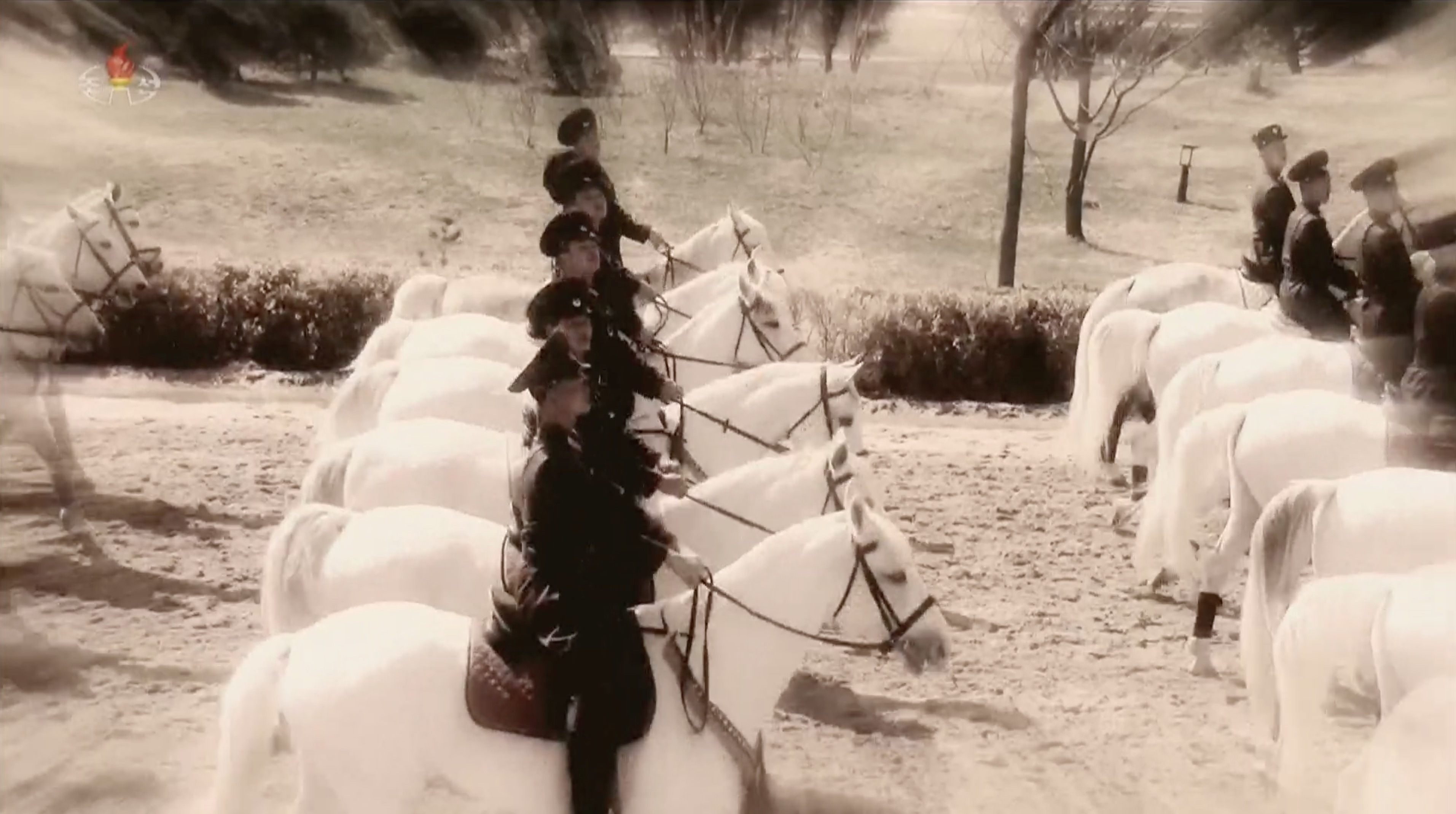 New propaganda film or event in the works? The last time North Korea built new horse tracks in a short span in late 2019, it appeared to be related to preparations for Kim Jong Un and his top officials and family to shoot a propaganda film on Mt. Paektu. It could be that the similarly rapid construction in recent months means KPA corps commanders will join another such large-scale ride at the mountain or other location for a film or event in the near future and need time to train separately while carrying out their local duties. A clue to this sort of goal appeared in the Feb. 2021 propaganda film, which included separate scenes of Kim galloping along forest trails with a dozen or more military officials. Building all the new tracks for this purpose may seem excessive, but so did the construction of two large and luxurious tracks at Kim’s mansion compounds on both the east and west coasts in 2019, ostensibly to offer Kim flexibility to train in either place as well as existing tracks at two of his Pyongyang area mansions. Besides a propaganda film, we could see horses play an even larger role in military parades. Kim’s personal guard unit cavalry regiment started appearing at parades in Oct. 2020, and a police horse unit joined the Sep. 2021 paramilitary parade. Kim’s unit is officially called the Cavalry Regiment of Office 6 of the Party Central Committee under the Workers’ Party of Korea (WPK) Advance Guard. 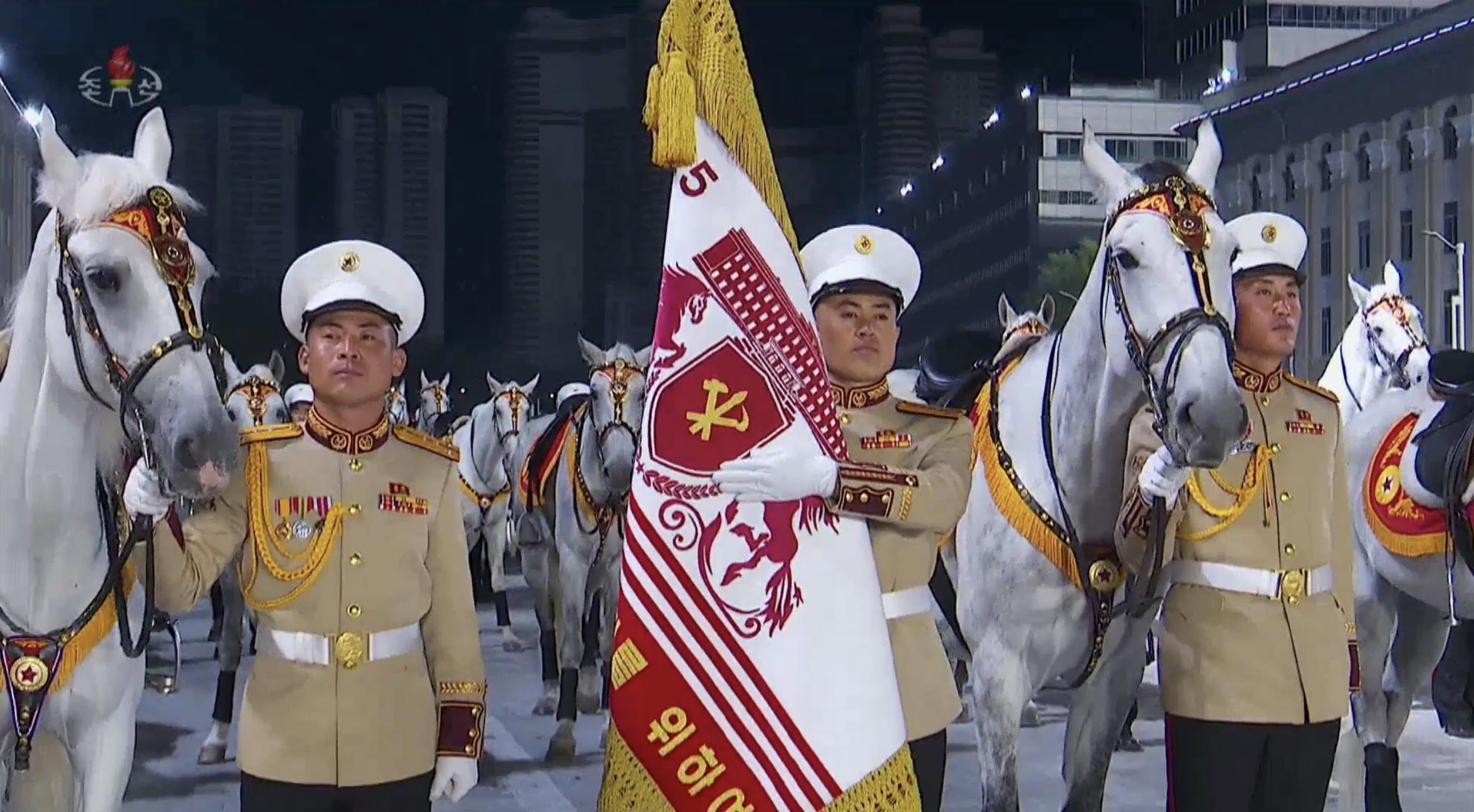 Military patrols? Images emerged in 2020 of DPRK soldiers on horseback patrolling the border with China, offering an example of the military using horses in the course of their regular duties. The new horse facility construction could signal the military’s intention to increase such patrols in other parts of the country as well, possibly as a measure against fuel shortages. New secret to defeating South Korea? If not for patrols, training or propaganda purposes, could it be that North Korea is now looking to new cavalry units to make a difference in a hypothetical war with South Korea? This is unlikely, and Kim Jong Un said as much himself: According to another quote on display at the Mirim Riding Club, Kim said “horses may no longer be used in war, but the war horse is important from the perspective that they display the military’s greatness.” Kim’s words further point to the new horse track construction being for symbolic purposes, whether for the benefit of commanders themselves, or to inspire the military or general population. 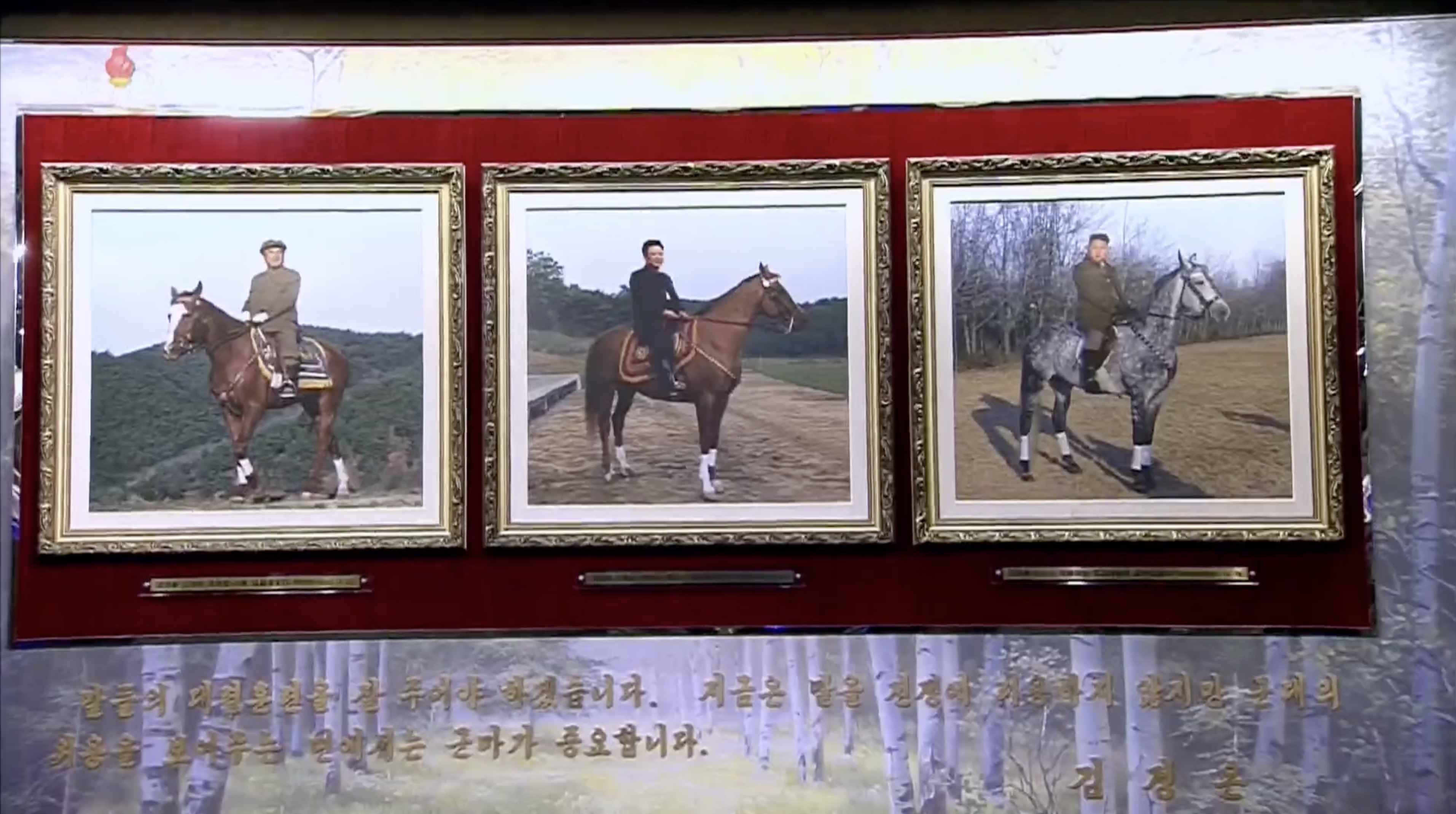 A CLOSER LOOK Construction on most of the equestrian facilities began in 2020, with only Kangso, Hyesan and Tokchon appearing as brand-new projects in 2022, according to Planet Labs imagery. Leaving out the decades-old Phyongwon facilities, the first of the military sites to get a new horse track was the KPA Naval Command HQ starting in late 2019. 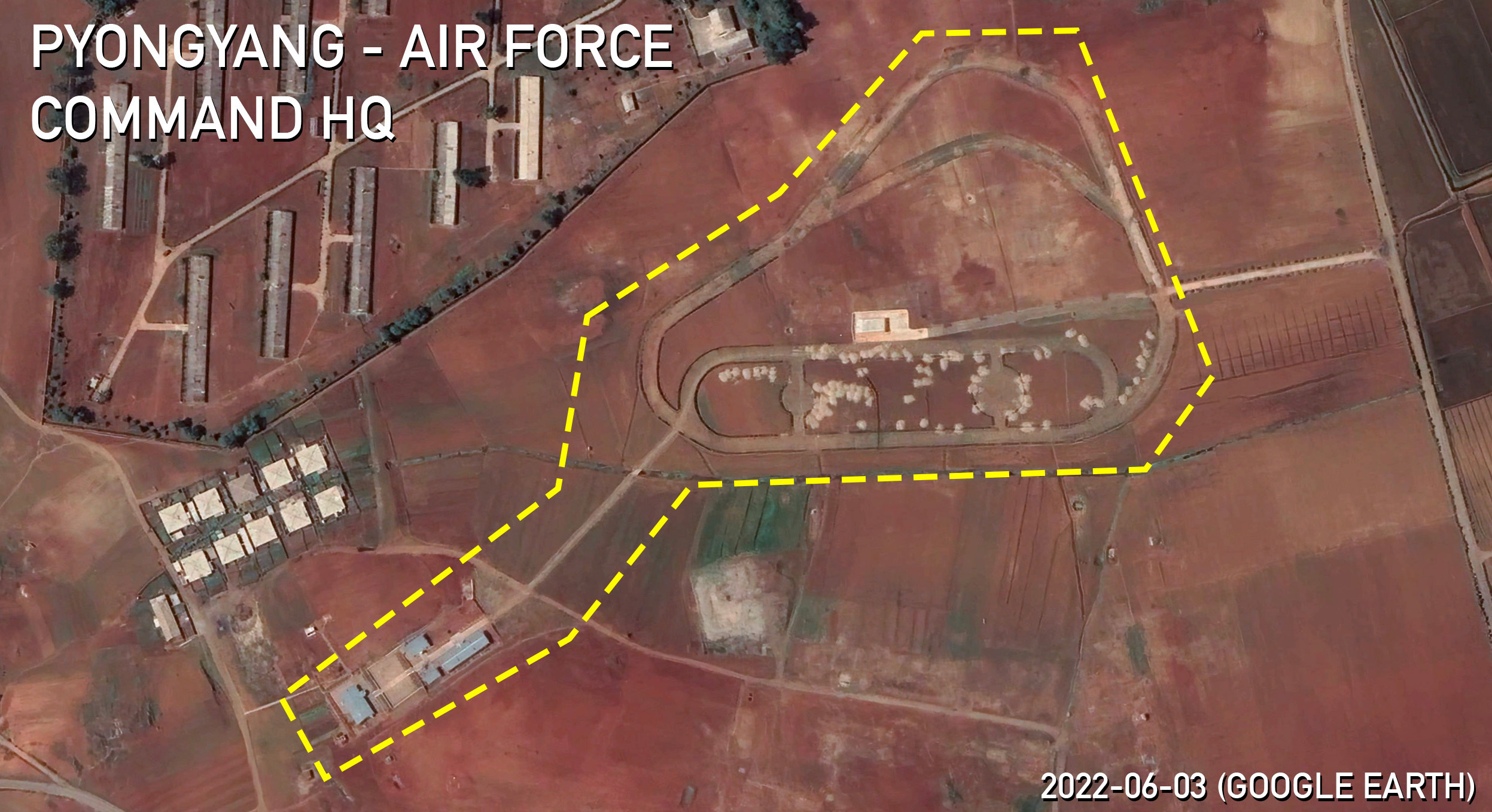 The above example of the Air Force Command HQ to the south of Pyongyang illustrates the typical timeline, going through multiple stages of construction starting in 2020. Two of the tracks that first appeared in 2022, the Kangso and Tokchon tracks, were built within the grounds of existing sports fields, suggesting the military’s nationwide plans were urgent or in preparation for something specific. No major new construction has appeared at any of the sites since November, meaning the overall project is finished or on pause for winter. More tracks at military sites may also be newly built in the future, and other existing ones may remain undiscovered by outside analysts. Below is a table including the coordinates for each location and construction periods before and during 2022:
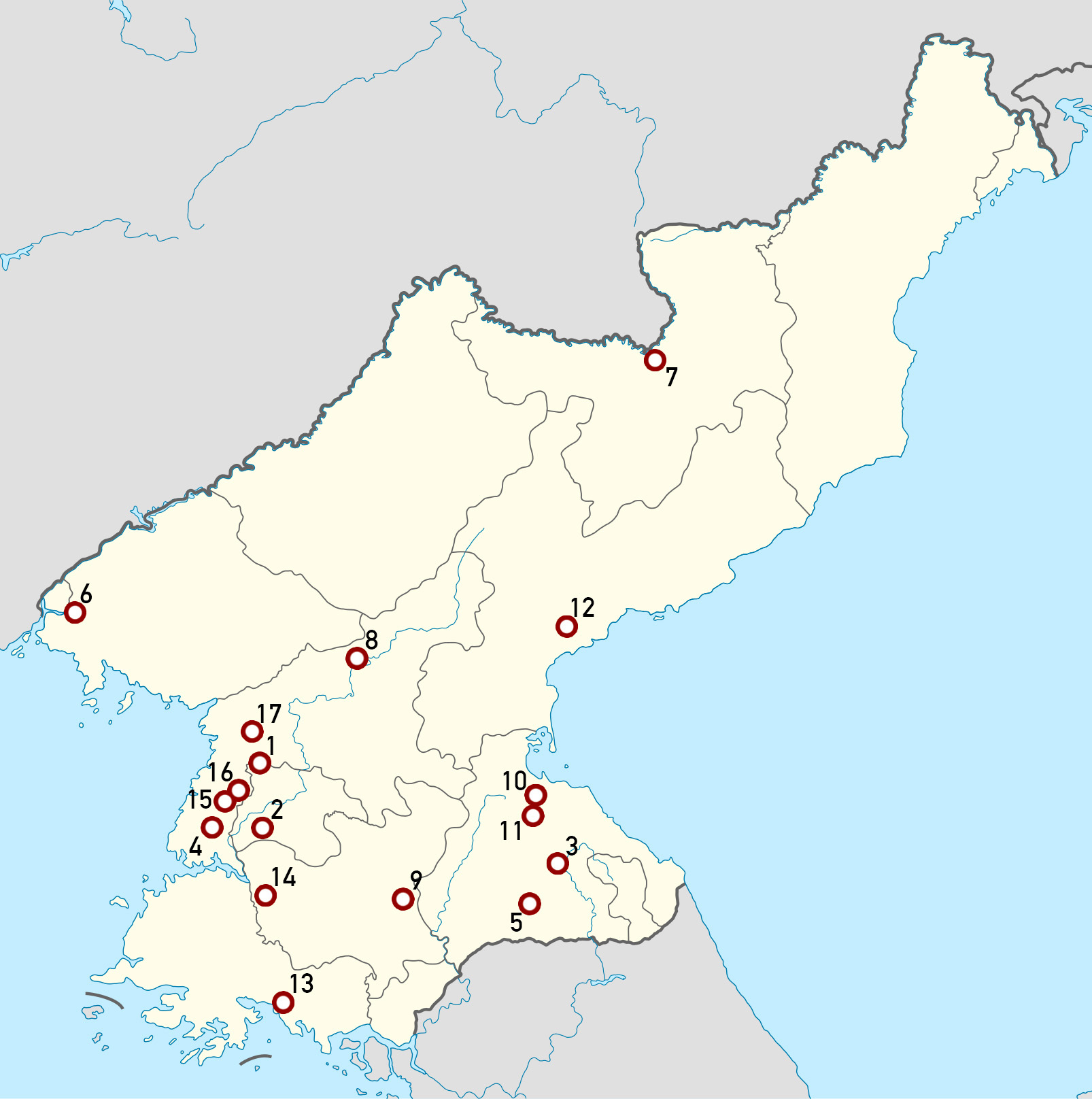 Edited by Bryan Betts © Korea Risk Group. All rights reserved.

|

September 22, 2026Sep 22, 2026

The ultimate resources for professionals working on North Korea
 SHARE
SHARE COPY LINK
 X
X MASTODON