  
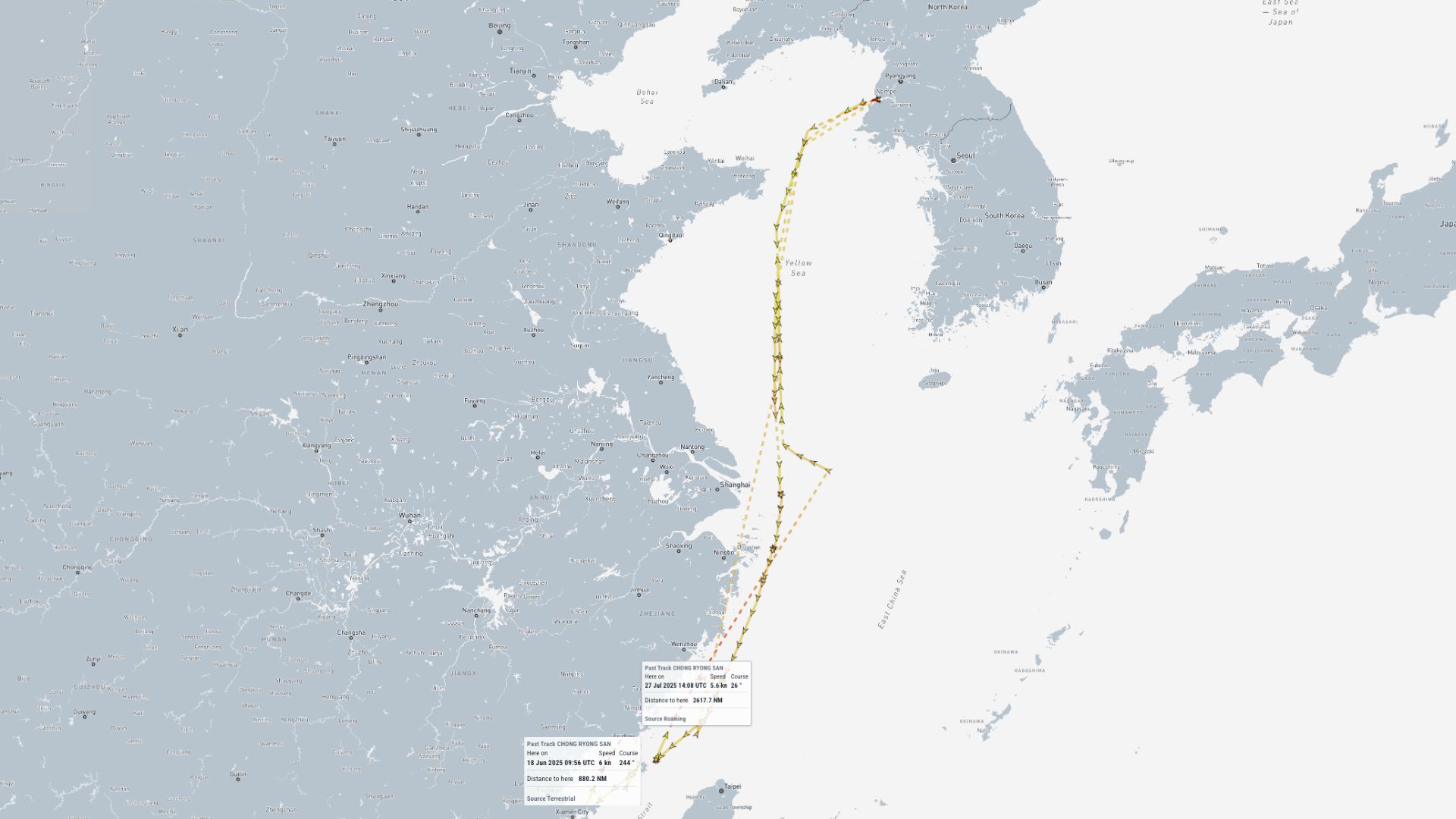
Investigations Sanctioned North Korean tankers sail freely in Chinese waters, defying UN rulesExpert says brazen activity reflects a new reality in which Beijing and Russia provide cover for DPRK sanctions evasion  Sanctioned North Korean oil tankers have been openly broadcasting their locations in Chinese waters despite U.N. resolution requiring Beijing to seize and inspect the vessels, with an expert identifying the trend as part of “new normal” in which China and Russia turn a blind eye to illicit DPRK activity. NK Pro analysis of MarineTraffic data found at least five DPRK tankers sailed to Chinese waters in July, presumably for fuel pickups, all while transmitting their signals. Four are under U.N. sanctions and one is a known oil smuggler. The blacklisted vessels include the Song Won 2 (IMO 8312497), An San 1 (IMO 7303803), Kum Jin Gang 3 (IMO 8791667) and Sin Phyong 9 (IMO 8916293). The latter three have also frequented an oil pier at Russia’s Vostochny Port, the DPRK tankers’ main destination for fuel runs, in the past. The fifth vessel, the Chong Ryong San, is not subject to U.N. sanctions, but the now-disbanded U.N. Panel of Experts previously reported on the tanker illegally shuttling petroleum products to North Korea’s main port of Nampho and conducting illicit ship-to-ship transfers. Little is known about the vessel, as it is not registered with the International Maritime Organization and thus lacks an IMO number. Other particulars like its deadweight tonnage are also unknown. 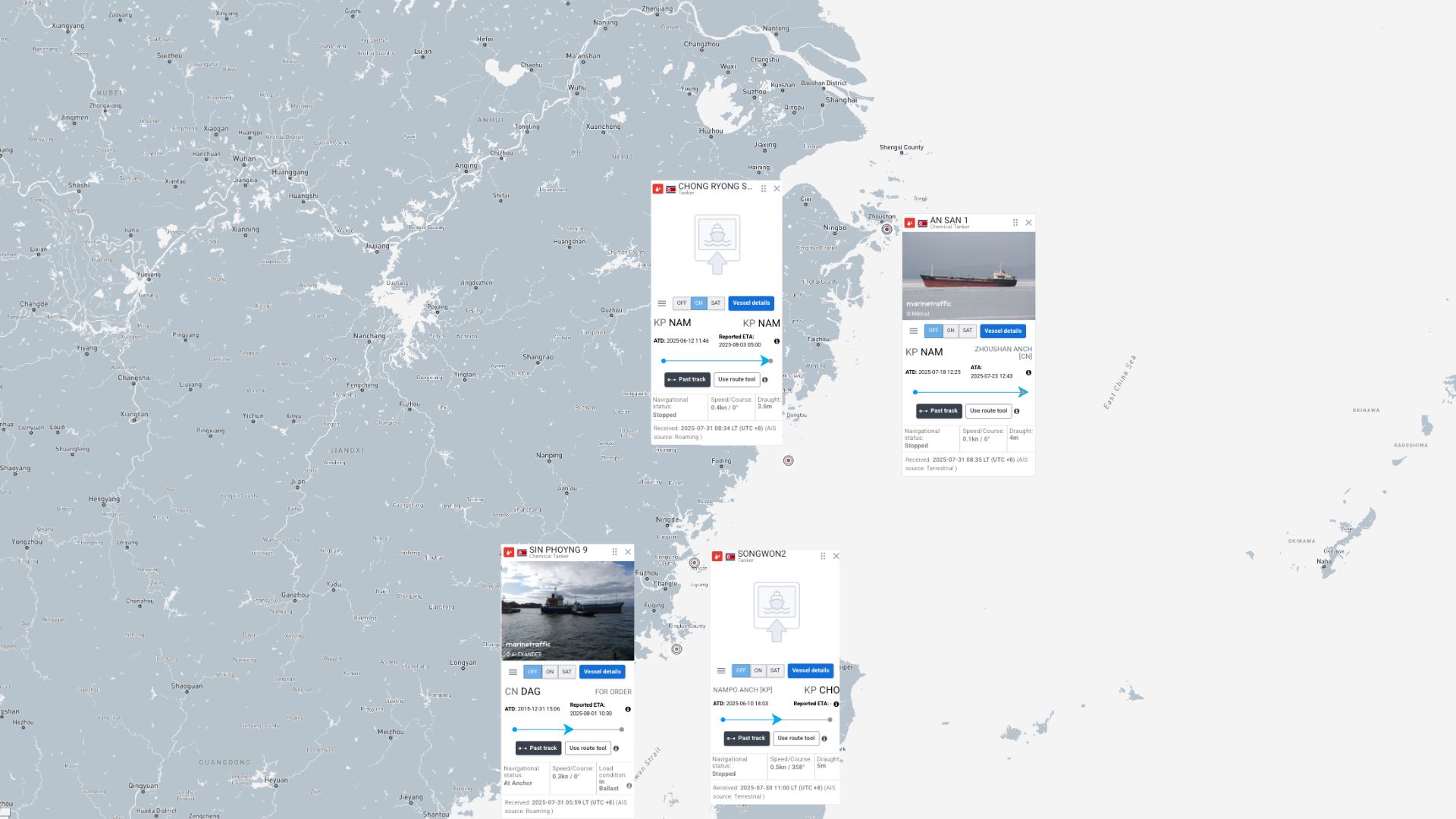 Aside from the Kum Jin Gang 3, all the tankers have broadcast their locations from China’s southeast coast, spanning from the Taiwan Strait to near Ningbo-Zhoushan, a stretch featuring key hotspots for DPRK smuggling operations. Neil Watts, a sanctions specialist and former member of the U.N. Panel of Experts, said North Korea’s open broadcasting of its tankers, which it had previously sought to conceal, reflects a “return to business as usual.” He emphasized that this is a result of Russia’s support for Pyongyang in defying sanctions, with Moscow vetoing the mandate of the Panel of Experts last year and openly admitting to military cooperation with the DPRK. “The freer movements of North Korean vessels over the last two years, since the start of the war in Ukraine, suggest that China is following Russia in dismissing sanctions against North Korea since sanctions are perceived as a Western tool against their three nations and therefore somehow discriminatory and unjustifiable as they apply to them,” Watts told NK Pro. It is unclear whether the vessels engaged in illicit ship-to-ship fuel transfers at their anchorage points off China’s coast, but their past records suggest their voyages aimed to secure fuel for delivery to the DPRK. IT WILL ONLY GET WORSE U.N. Security Council Resolution 2371 bars blacklisted vessels from entering ports except for emergencies, while Resolution 2397 mandates member states to seize, inspect and impound ships suspected of breaching sanctions, including illegal fuel pickups. But the five North Korean tankers movements underscore Beijing’s reluctance to enforce these resolutions despite their repeated visits to Chinese waters. The Kum Jin Gang 3 broadcast from near Zhoushan Island in June and appeared in the Taiwan Strait in mid-May. The Taiwan Strait, a hub for dark voyages and illicit dealings, also drew the Chong Ryong San, which sailed from the area on July 27 toward Nanji Island off Wenzhou. In June, it traveled to the Fuzhou area, just across Taiwan. While the Song Won 2 has not broadcast its IMO number since June, a ship by the same name (Songwon2) has continued to appear in MarineTraffic data and is likely the same tanker. The lack of an IMO number may be part of efforts to obscure the identity of the sanctioned vessel. 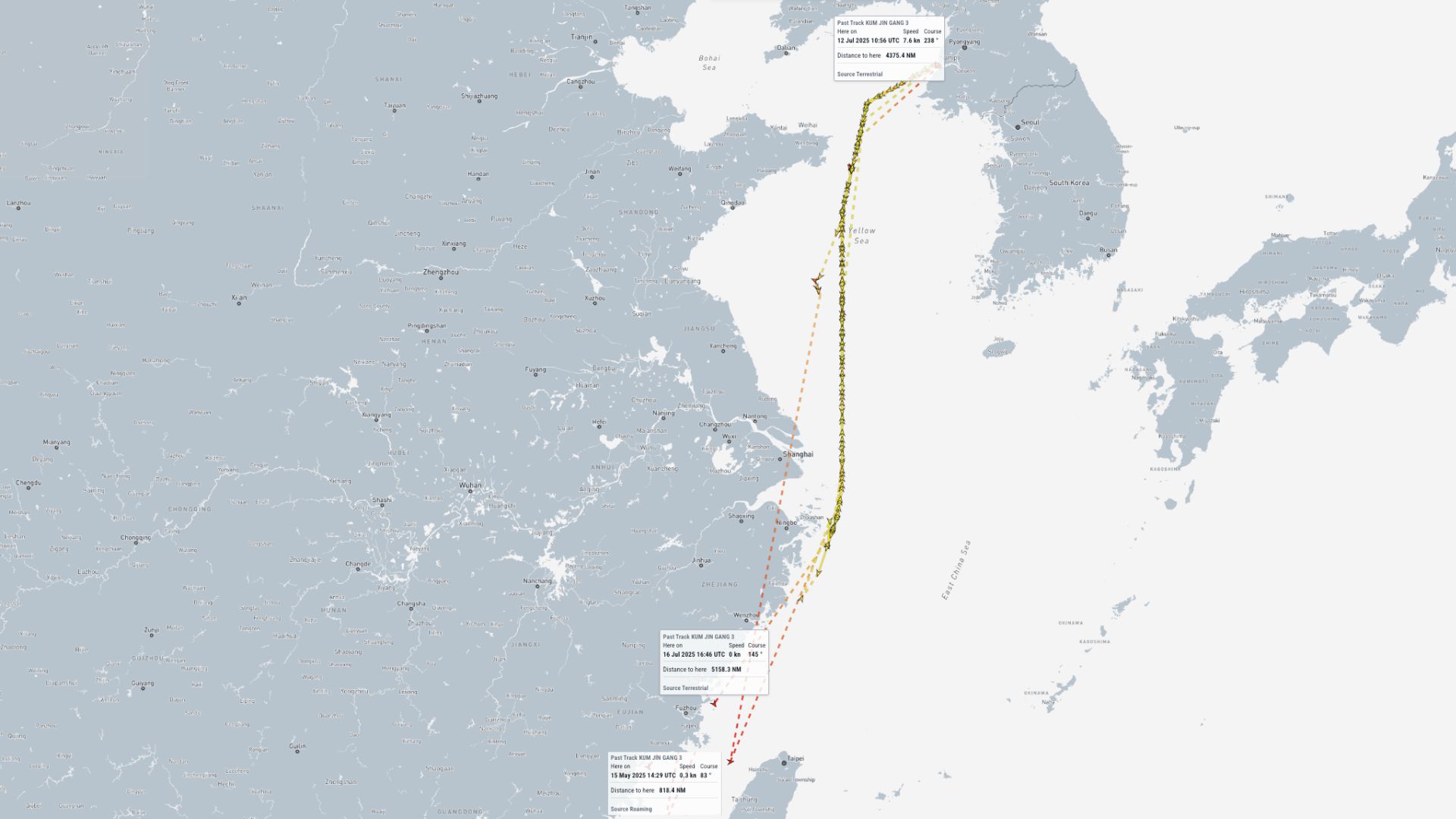
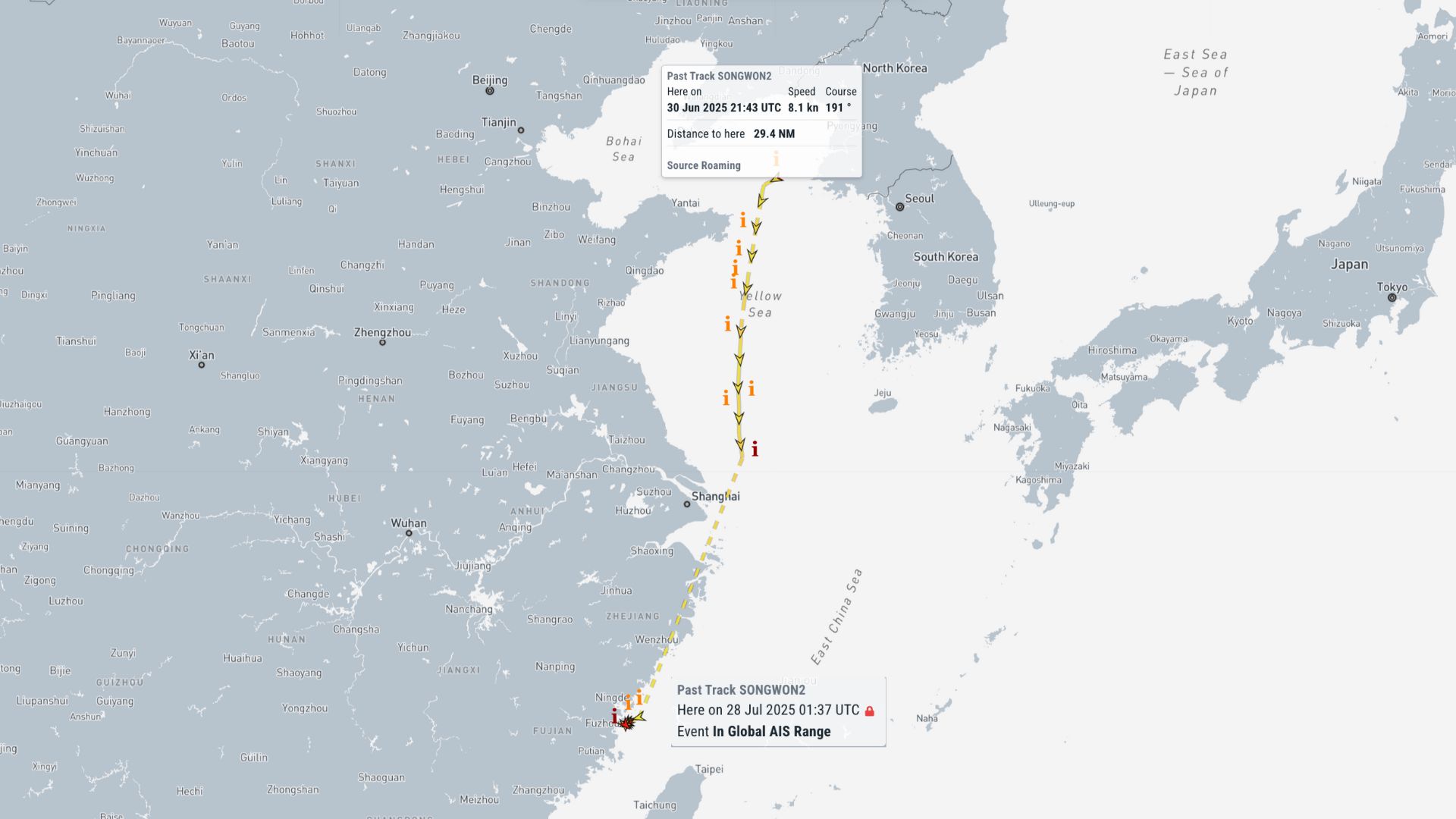
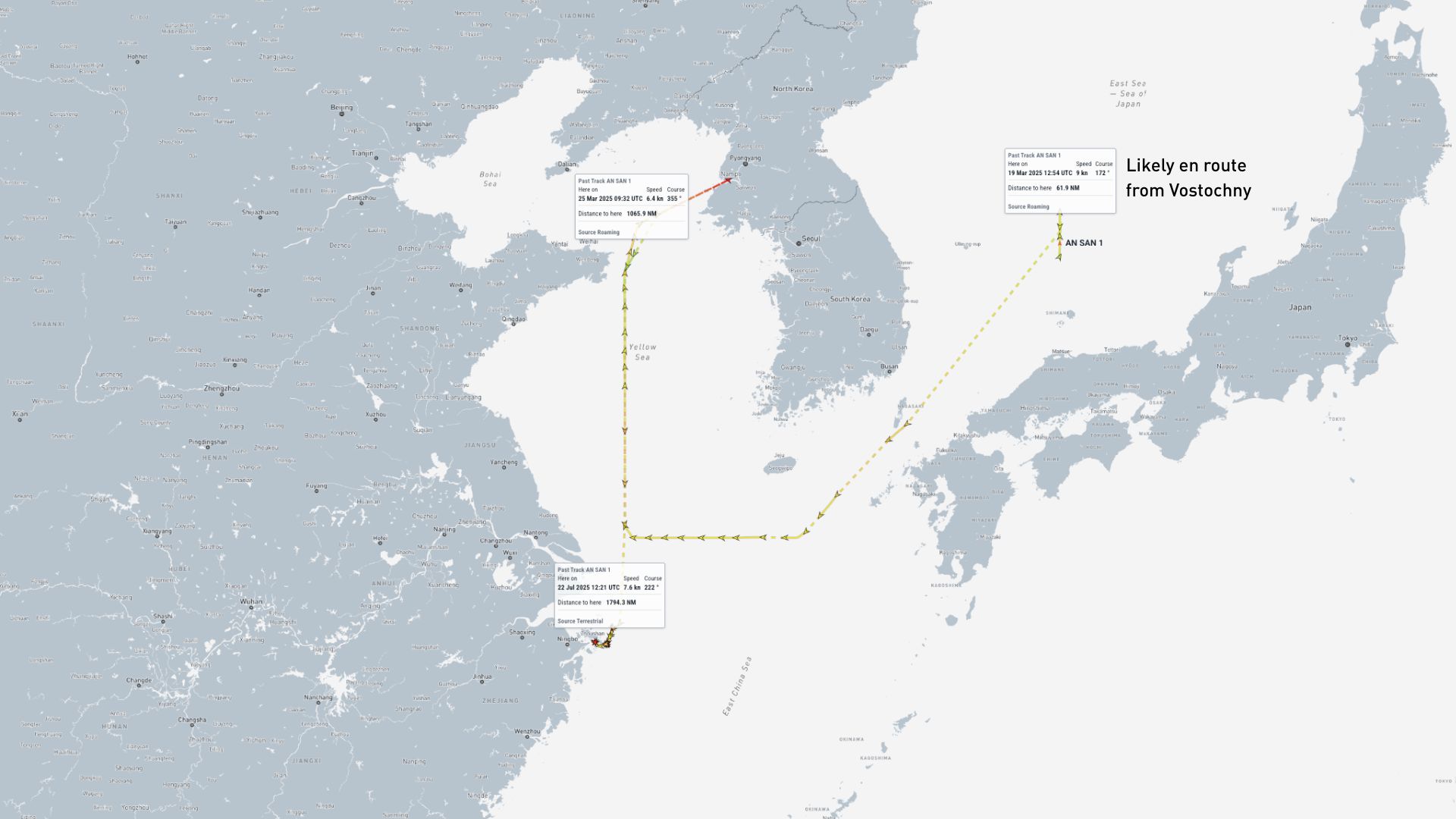
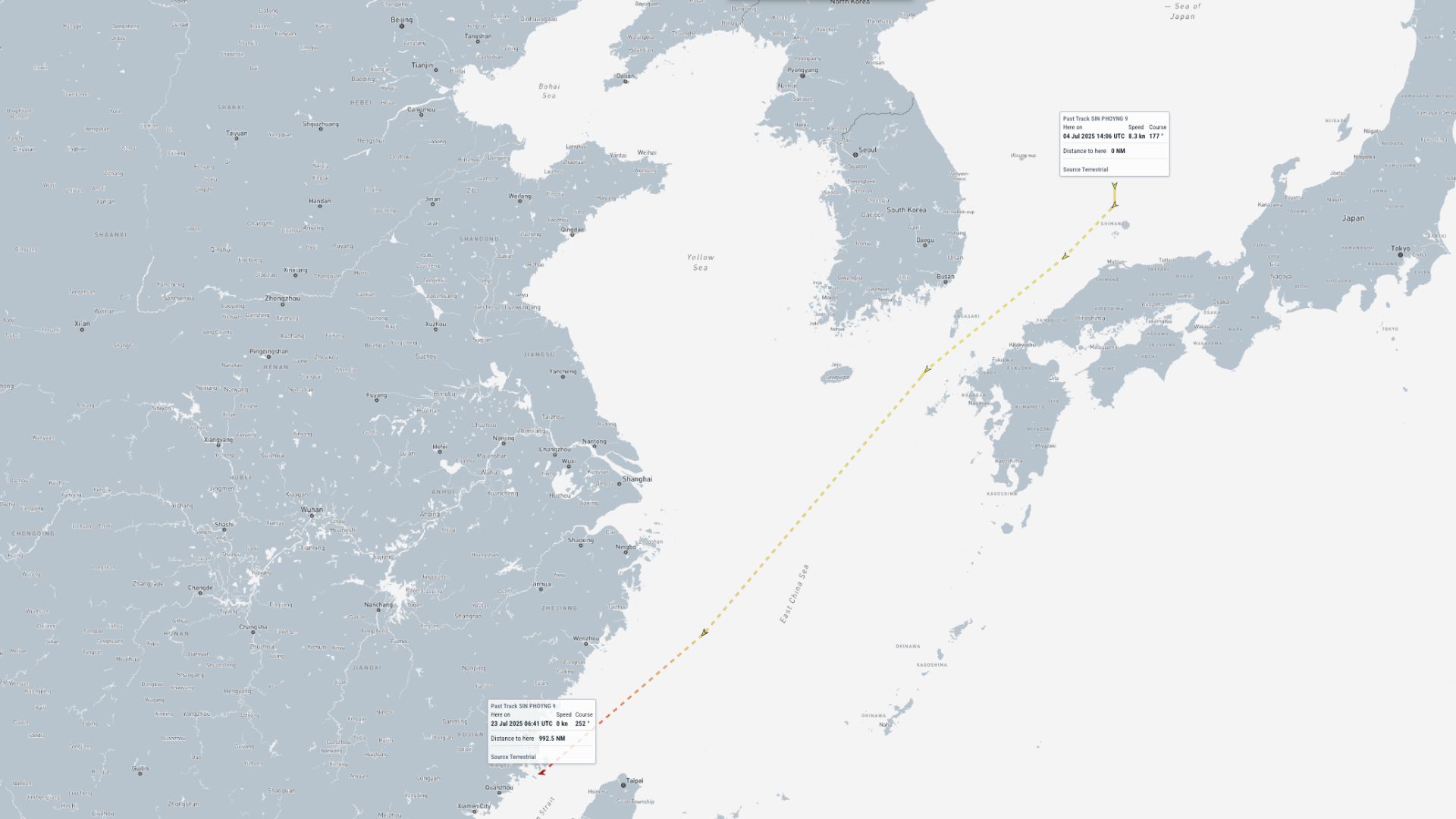
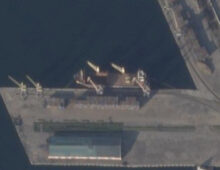
The vessel, previously known as the New Regent, stayed near China’s Matsu Islands for all of July after departing from the DPRK’s Nampho on June 30. The previously visited Taizhou Bay north of its current position in mid-June, MarineTraffic data showed. The An San 1 has loitered near Zhoushan since July 22. It has made several runs to Russia’s Vostochny Port since 2024, including last March, according to MarineTraffic. The Sin Phyong 9 — which used to sail under the names of Chong Rim 2 and Saebyol — switched on its transponder south of Fuzhou on July 23 after a weeks-long break. Its sparse broadcasts in early July show it sailed through the Sea of Japan (East Sea), likely from North Korea’s east coast or Russia. The return of North Korean tanker traffic to China and their active broadcasts follows a major surge in DPRK tanker runs to Russia in 2024 and early this year, though Planet Labs imagery has not captured any North Korean tanker visits to the usual oil pier at Vostochny Port since May. A timelapse video showing no tankers berthing at Vostochny Port’s oil pier, which was previously frequented by DPRK tankers, from May-July 2025 | Image: Planet Labs, edited by NK Pro It is possible that North Korean vessels have bunkered at other Russian Far East ports or that cloud cover obscured some oil deliveries. While the DPRK is not banned from importing oil, U.N. sanctions imposed a 500,000-barrel annual cap and require member states to report oil shipments to the U.N. committee overseeing the sanctions regime. Seven months into the year, China has officially reported fuel deliveries to North Korea only in January and February, with the total volume at under 20,000 barrels or just 3.98% of the annual limit. Russia has not declared any fuel shipments to North Korea since Jan. 2024, according to the U.N. Despite the lack of reported shipments, researchers estimated that North Korea’s dark tanker fleet may have brought in over a million barrels of oil last year, double the limit. “We can expect to see brazen movements of North Korean vessels as they see themselves untouchable under Russian and Chinese protection,” Watts said. Edited by Bryan Betts © Korea Risk Group. All rights reserved.

|

September 26, 2026Sep 26, 2026

The ultimate resources for professionals working on North Korea
 SHARE
SHARE COPY LINK
 X
X MASTODON