  News North Korean tanker docks in Russia as US accuses Moscow of breaching oil capExpert says Russia should have impounded sanctioned A Sa Bong given history of illegal ship-to-ship transfers 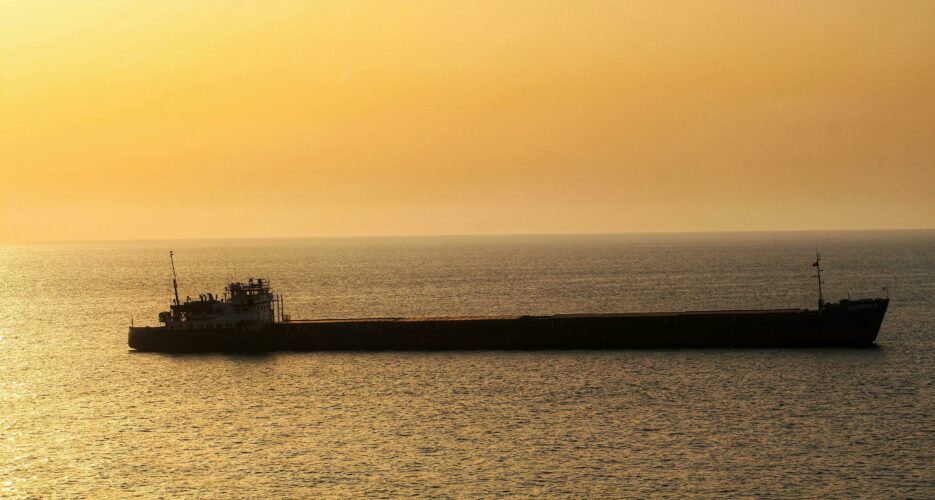 A presumed North Korean oil tanker has recently docked at a Russian Far Eastern port, according to NK Pro analysis of satellite imagery, a sign Russia continues to supply fuel to the DPRK as the U.S. accuses Moscow of breaching the U.N. cap on oil deliveries. Planet Labs satellite imagery shows that a vessel matching the dimensions of the DPRK-flagged A Sa Bong (IMO 9054896) oil tanker berthed at a small pier at the Russian port of Vostochny from April 30 to May 1. The pier is linked to an on-shore oil facility located east of the city of Nakhodka. Katsu Furukawa, a former member of the U.N. Panel of Experts and a maritime specialist, assessed that the vessel is most likely the A Sa Bong. He told NK Pro that the vessel captured in satellite imagery shares features with both the A Sa Bong and the Paek Yang San 1, another DPRK tanker linked to illegal fuel shipments. 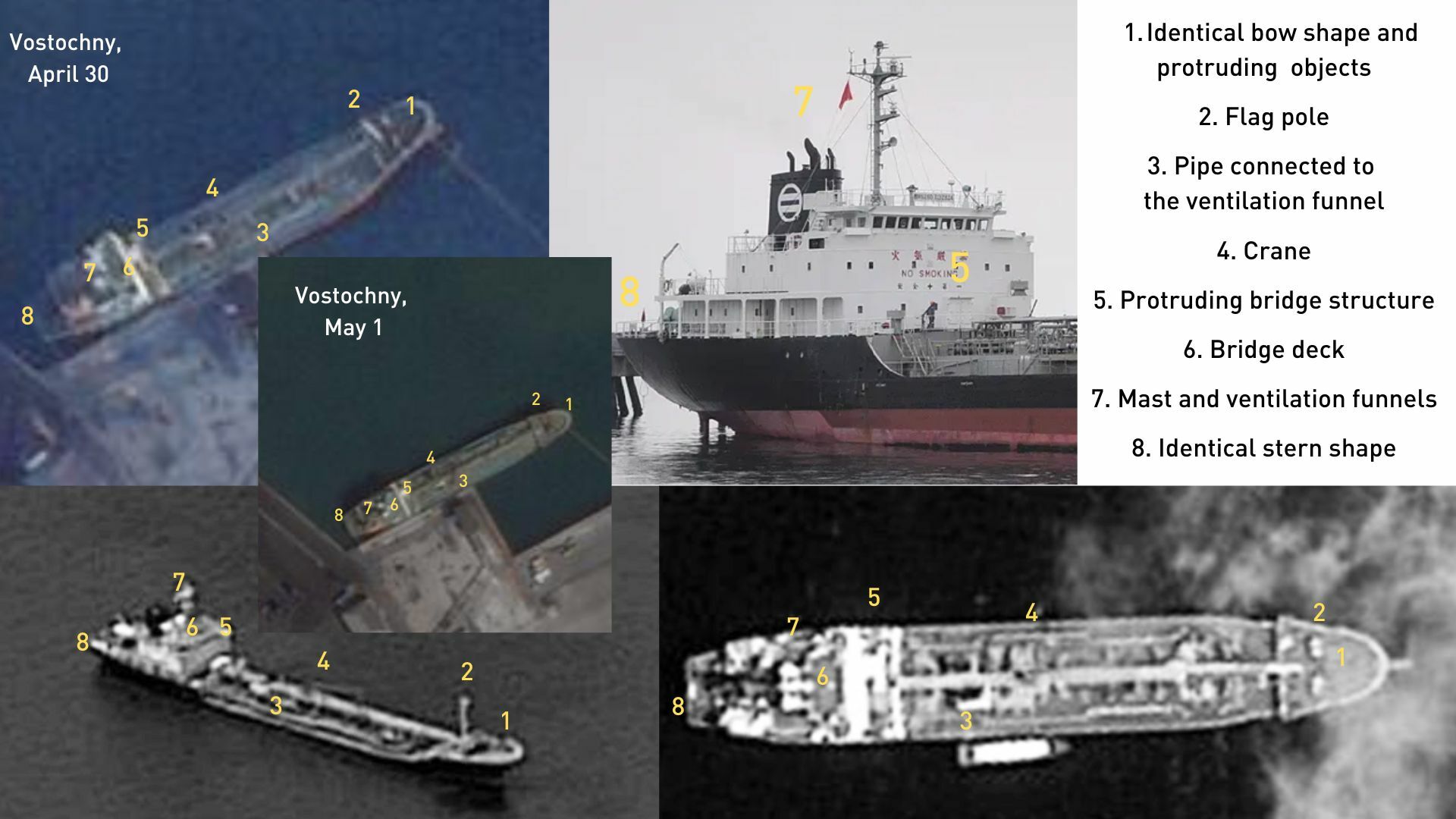
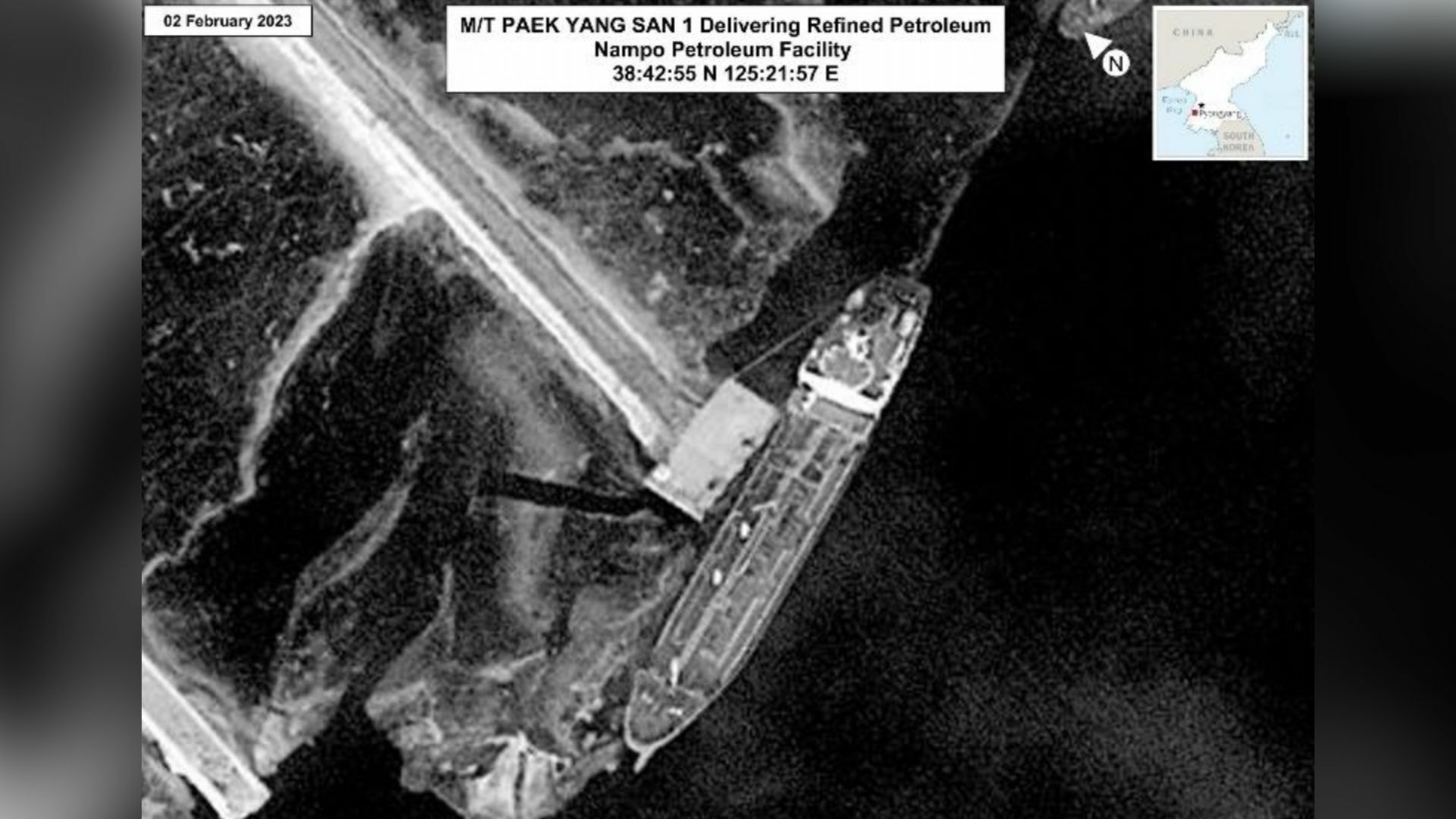
However, despite their nearly identical dimensions — both are listed at 104.5 meters by 15.2 meters in maritime databases — Furukawa said the two vessels have “subtle differences,” such as the number of ventilation funnels, cranes and their bridge structures. “In my observation, the [spotted oil] tanker shares identical sizes, shape, and other features with A Sa Bong and Paek Yang San 1, but some features resemble more closely to A Sa Bong,” the expert said. The A Sa Bong, previously known as the Hai Jun, took part in multiple illicit transfers of oil in the past, including near Taiwan in 2021. The tanker continued to shuttle fuel to the DPRK after the country illicitly acquired the vessel last year and put it to use in the vicinity of North Korea’s largest port of Nampho in June 2023, according to the last report by the U.N. Panel of Experts. South Korea sanctioned the A Sa Bong along with a number of other oil tankers linked to North Korea early this year. Furukawa stated that the vessel’s history of illicit fuel deliveries constitutes sufficient grounds for Russia to impound the vessel as stipulated under U.N. Security Council Resolution 2397. The A Sa Bong is not the only tanker that sailed to Vostochny — a hub for suspected deliveries of DPRK arms to Russia — in recent weeks, with low- and medium-resolution imagery showing that multiple presumed North Korean vessels berthed at the same pier over the past month. A timelapse series of satellite imagery from the port of Vostochny depicting the arrival of multiple presumed North Korean tankers in April 2024 | Images: Planet Labs It is unclear what kind of fuel the A Sa Bong and the other tankers may have picked up at Vostochny. Former U.N. expert Neil Watts said that the port authorities “should have prevented the pumping of petroleum products onboard” the vessels. The transfers were likely illegal because they were not reported to the 1718 U.N. sanctions committee in advance. Watts stressed that Resolution 2397 also directs the sanctions committee to update information on fuel deliveries in real-time to ensure that new shipments don’t exceed the U.N.-imposed cap of 500,000 barrels per year. The expert told NK News that member states must cease any sales or transfers of fuel to the DPRK as soon as the committee sees such deliveries reach 90% of the cap. Watts emphasized that the U.N. Panel of Experts was tasked with “closely monitoring the implementation” of Resolution 2397 before it disbanded earlier this week after Moscow vetoed an extension of its mandate. As a result, there is now no effective oversight of illicit dealings between Russia and the DPRK, he said. The A Sa Bong’s apparent visit to the Russian port came just days before White House national security spokesperson John Kirby accused Russia of violating the U.N. cap on North Korea’s fuel deliveries, stating that Russia supplied over 165,000 barrels of refined petroleum to the DPRK in March alone. Royal United Services Institute (RUSI) previously estimated that North Korea had imported 125,000 barrels of refined petroleum as of March. So far, Russia and China have officially declared only 22,257 barrels of refined petroleum delivered to North Korea, which is just 4.5% of the cap. U.S. State Department spokesperson Matthew Miller announced on Thursday that the U.S. is planning to introduce additional sanctions “against those working to facilitate arms and refined petroleum transfers between Russia and the DPRK” in coordination with its allies in Australia, the EU, Japan, New Zealand, South Korea and the U.K. Edited by Bryan Betts © Korea Risk Group. All rights reserved. |

October 22, 2026Oct 22, 2026

The ultimate resources for professionals working on North Korea
 SHARE
SHARE COPY LINK
 X
X MASTODON