  News Report alleges Taiwanese firm helped smuggle illicit oil into North KoreaUN experts say firm puppeteered phony shell companies to funnel oil and cash to and from Pyongyang 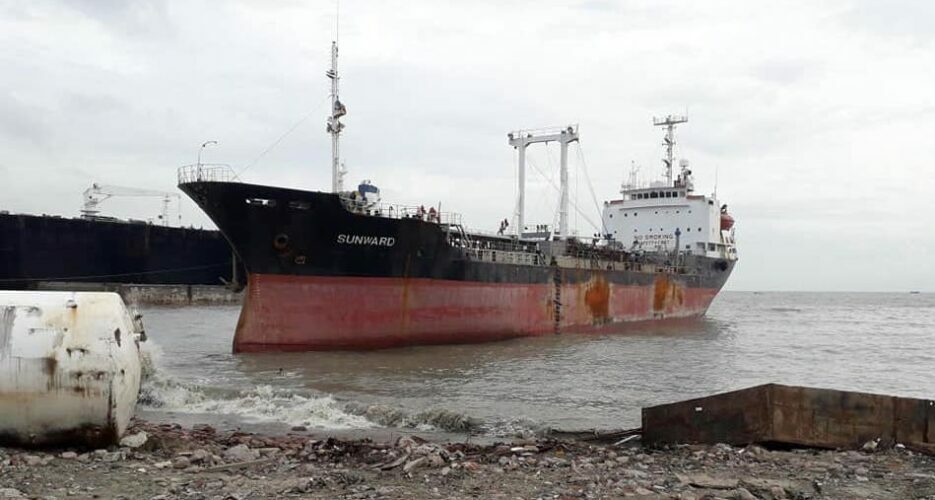 A Taiwanese shipping agency helped North Korea secure tens of thousands of tons of oil in 2021, utilizing a convoluted web of shell companies, off-grid voyages and multi-stage ship-to-ship transfers to keep oil flowing to Pyongyang, an upcoming U.N. report alleges. Cheng Chiun Shipping Agency Co Ltd (CCSA) used two vessels — the Sunward (IMO 8920115) and Sky Venus (IMO 9168257) — to conduct the transfers, an advanced draft of the upcoming Panel of Experts report shows. U.N. sanctions ban North Korea from importing more than 500,000 barrels of refined oil per year, and all shipments to the country must be reported. Taiwan-based companies have long made up a large share of North Korea’s illicit oil suppliers, in part due to the country having multiple free trade zones where foreign buyers can purchase diesel duty free. But according to the upcoming report seen by NK Pro, CCSA set up several shell companies to funnel cash from Pyongyang and obscure the oil shipments’ final destination. Ship-to-ship transfers are a common feature in North Korea’s illicit oil supply chain. This time around, Pyongyang has been even more cautious, at times conducting three or more transfers to nameless, unidentifiable vessels before finally loading oil onto a DPRK-bound tanker. Lucas Kuo, a senior analyst with the Center for Advanced Defense Studies (C4ADS) who has conducted extensive investigations into North Korea’s underground procurement networks, said this multi-stage process has proven “highly adaptive and resilient.” “North Korea’s illicit oil supply chain is anchored by these networks that have the financial and logistical infrastructure to facilitate illicit oil transfers at the scale needed to meet North Korea’s demand,” he told NK Pro. “There is clearly a strong demand signal for illicit oil coming from Pyongyang — and no shortage of willing and capable networks that can supply it.” According to the U.N. report, CCSA has denied the allegations through a legal firm. CCSA did not immediately reply to an NK Pro request for comment. THE SUNWARD The U.N. report says the Sunward engaged in at least four illicit ship-to-ship transfers between late March and early April last year. These transfers allegedly involved the Sin Phyong 2 (IMO 8817007), An San 1 (IMO 7303803), Un Hung (IMO 9045962) and Sam Jong 2 (IMO 7408873), all of which are DPRK-flagged and known to the Panel for moving illegal oil. According to shipment records obtained by the Panel, the Sunward purchased 10,000 metric tons of oil (roughly 80,000 barrels) across two separate transactions in Taichung. The recipient of both hauls is listed as Everyway Global Ltd, itself a shell company linked to CCSA. An NK Pro analysis of automatic identification system (AIS) data, a sort of GPS for ships, found that the Sunward indeed offloaded cargo immediately after the alleged transfers took place. 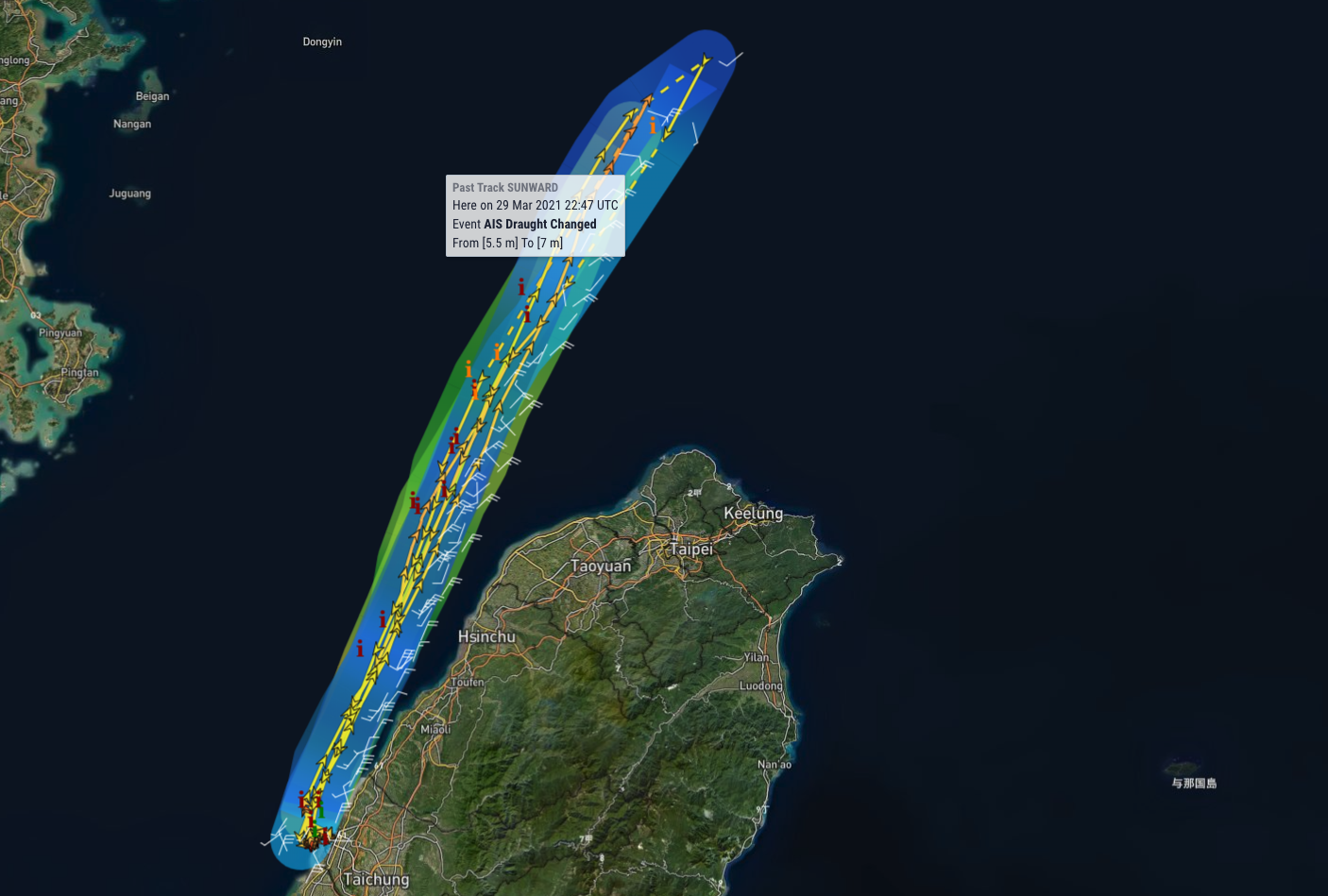 Voyage data provided by MarineTraffic shows the vessel shuttling cargo between Taichung and waters north of Taiwan during this time. The ship also registered draft changes during this time indicative of the loading and unloading of cargo.  Only two of the four ships the Sunward allegedly rendezvoused with have been spotted via AIS in recent years. Both ships — the An San 1 and Sam Jong 2 — can be seen sailing north through the Korea Strait just days after their respective transfers from the Sunward. While the Sam Jong 2 registered an increased draft on its return journey, the An San 1 broadcasted over AIS from Chongjin a little over a week after linking up with the Sunward. Satellite imagery appears to confirm the An San 1’s presence in the area both on April 10 and April 20. 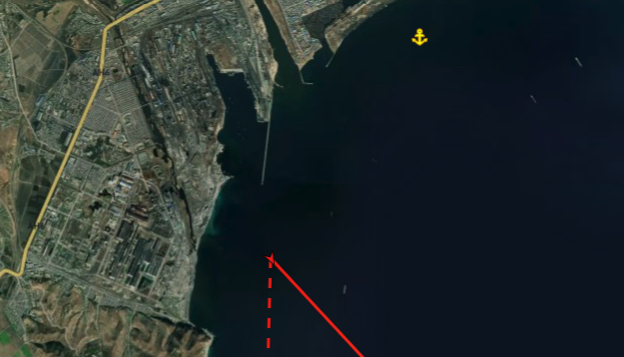 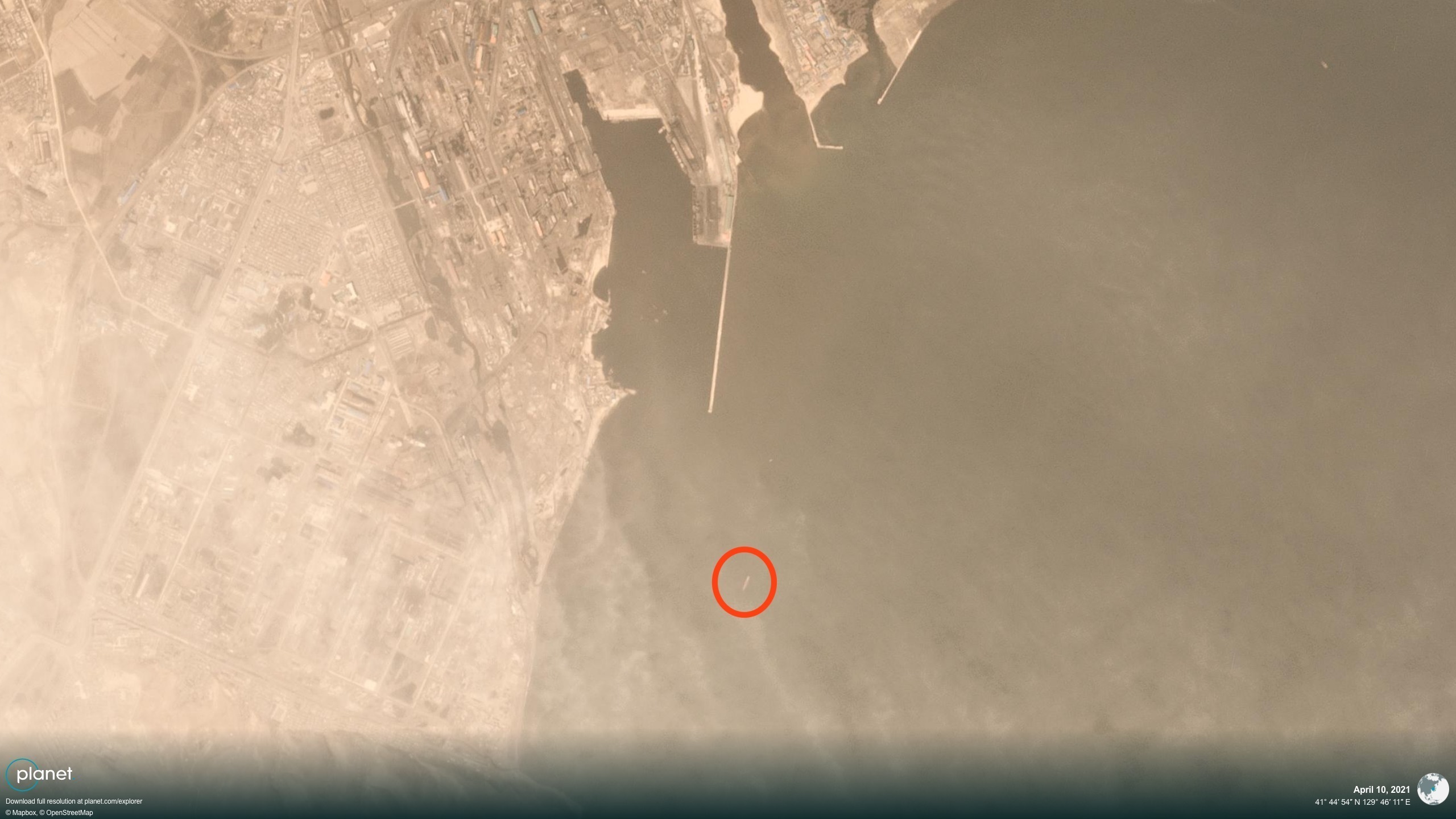 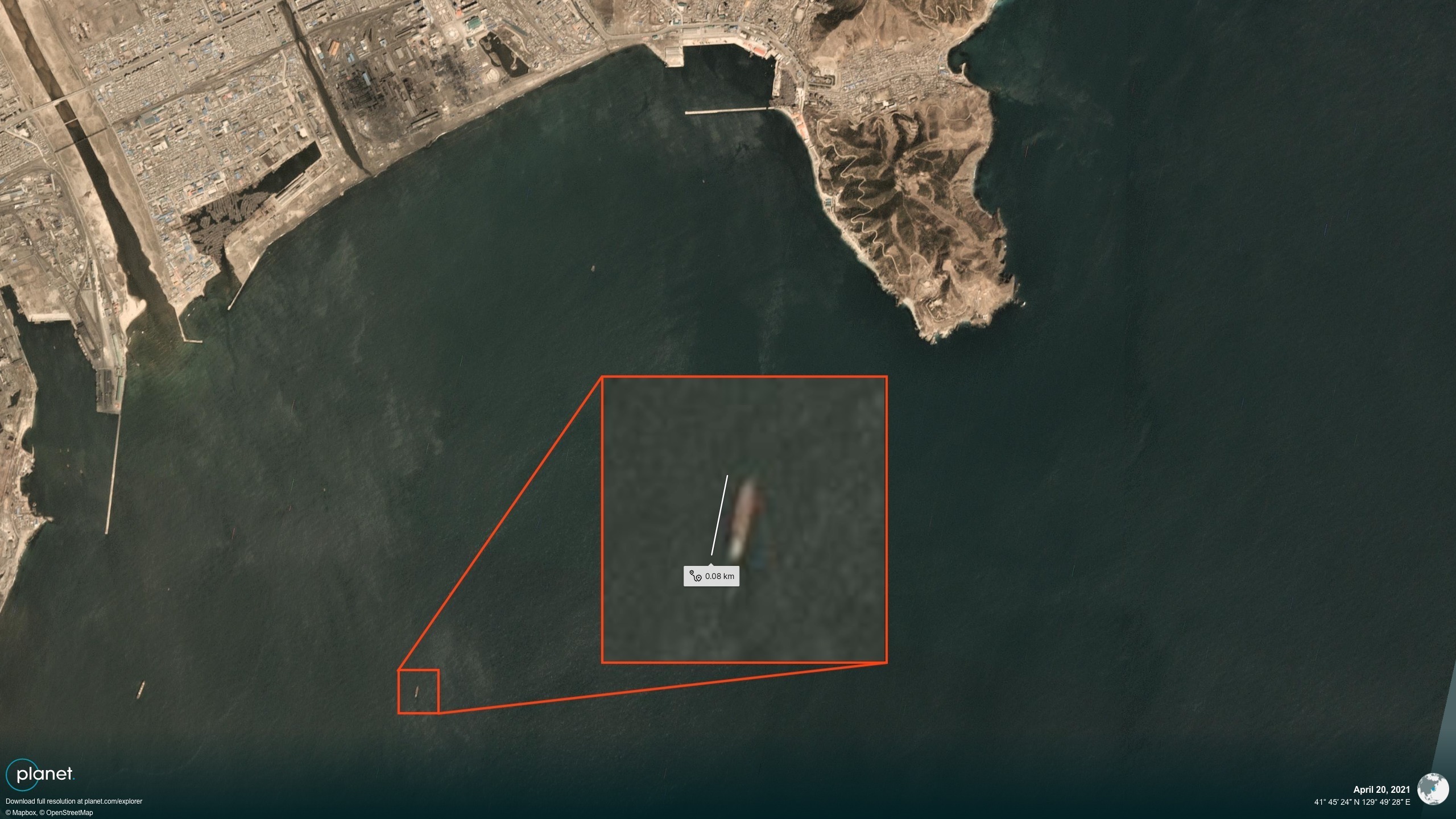 According to MarineTraffic, the Sunward’s final voyage came in June 2021, when it sailed to a shipbreaking yard in Bangladesh. THE SKY VENUS Meanwhile, the Sky Venus participated in at least eight ship-to-ship transfers, this time with the Yu Jong 2 (IMO 8604917), Sin Phyong 5 (IMO 8865121), Sam Jong 1 (IMO 8405311), the Hai Jun (IMO 9054896) and an unknown number of other unidentified vessels. The Sky Venus’s whereabouts during these transfers are less clear. It registered no draft changes on or around the alleged transfer dates, according to ship tracking data, and was completely off the grid for the May 14 and May 17 transfers. 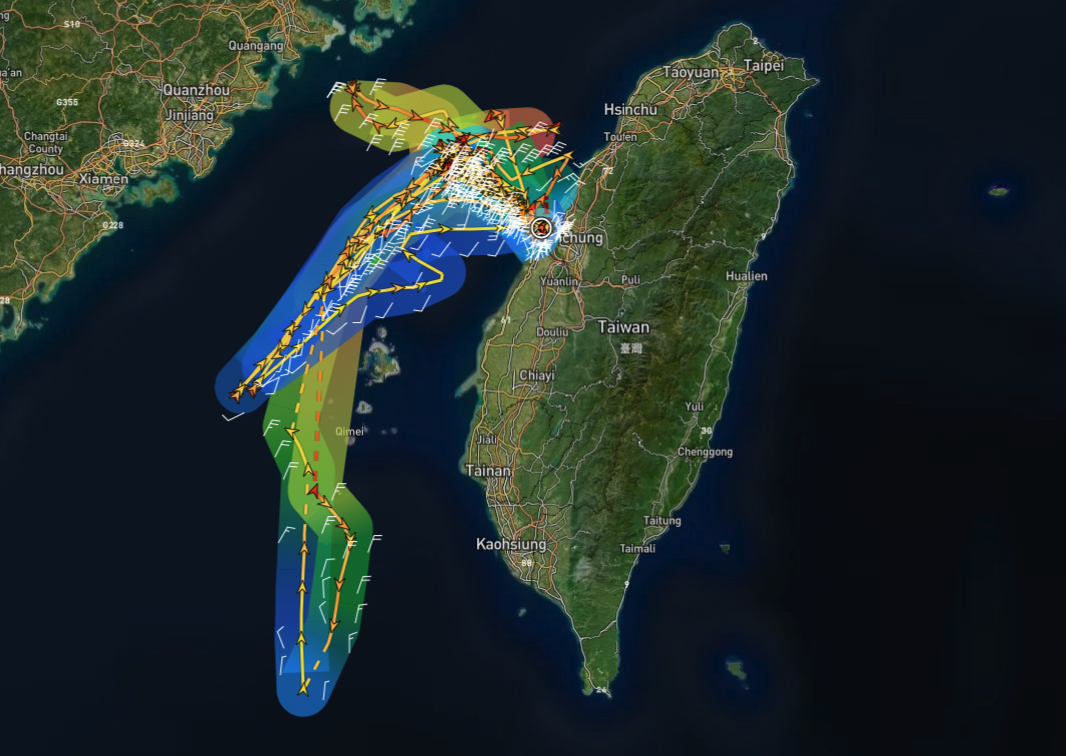 The Panel also alleges the Sky Venus met the Hai Jun sometime in August and once more between Sept. 23 and 24. MarineTraffic data for the latter dates shows the Hai Jun appearing to cease broadcasts on Sept. 24 for 9 hours while directly between Taiwan and China, where vessels are typically still visible via AIS. Within minutes of the Hai Jun going dark, the Sky Venus also dropped off AIS, with its last transmission appearing only a few kilometers away from the Hai Jun’s. Of the four known DPRK vessels the Sky Venus transferred oil to between May and August, only the Yu Jong 2 and Hai Jun have been spotted via AIS since: the Yu Jong 2 when it sailed north through the Korea Strait five days after the alleged ship-to-ship transfer, and the Hai Jun on numerous voyages throughout the region. THE COMPANIES Further muddying the waters is an assortment of shell companies allegedly set up by CCSA to hide its role in the illicit supply chain. According to the U.N. report, CCSA manages at least seven shell companies. One of those companies, Will International, shares an address with CCSA and is the effective owner of the Sunward. Ship records from maritime database Equasis show that the Sky Venus was also operated by Wills International before it was scrapped. In other words, CCSA operated both the Sunward and Sky Venus through shell companies. CCSA told the Panel that the oil shipments in question were bound for a Mr. Liu, who represents an unspecified Hong Kong-registered company. CCSA further stated that the oil was bound for inland ships and fishing vessels near Fujian Province on China’s southeast coast directly across from Taiwan. The Panel does not provide the name of Mr. Liu’s company or its connections with North Korea, nor does it elaborate on the role of several other shell companies named in the report. This crucial detail, as well as several others — such as how the transactions between CCSA’s shell companies and North Korea actually took place — point to an ongoing investigation that strikes deep at the heart of Pyongyang’s oil procurement rings. Edited by Arius Derr © Korea Risk Group. All rights reserved. |

October 20, 2026Oct 20, 2026

The ultimate resources for professionals working on North Korea
 SHARE
SHARE COPY LINK
 X
X MASTODON