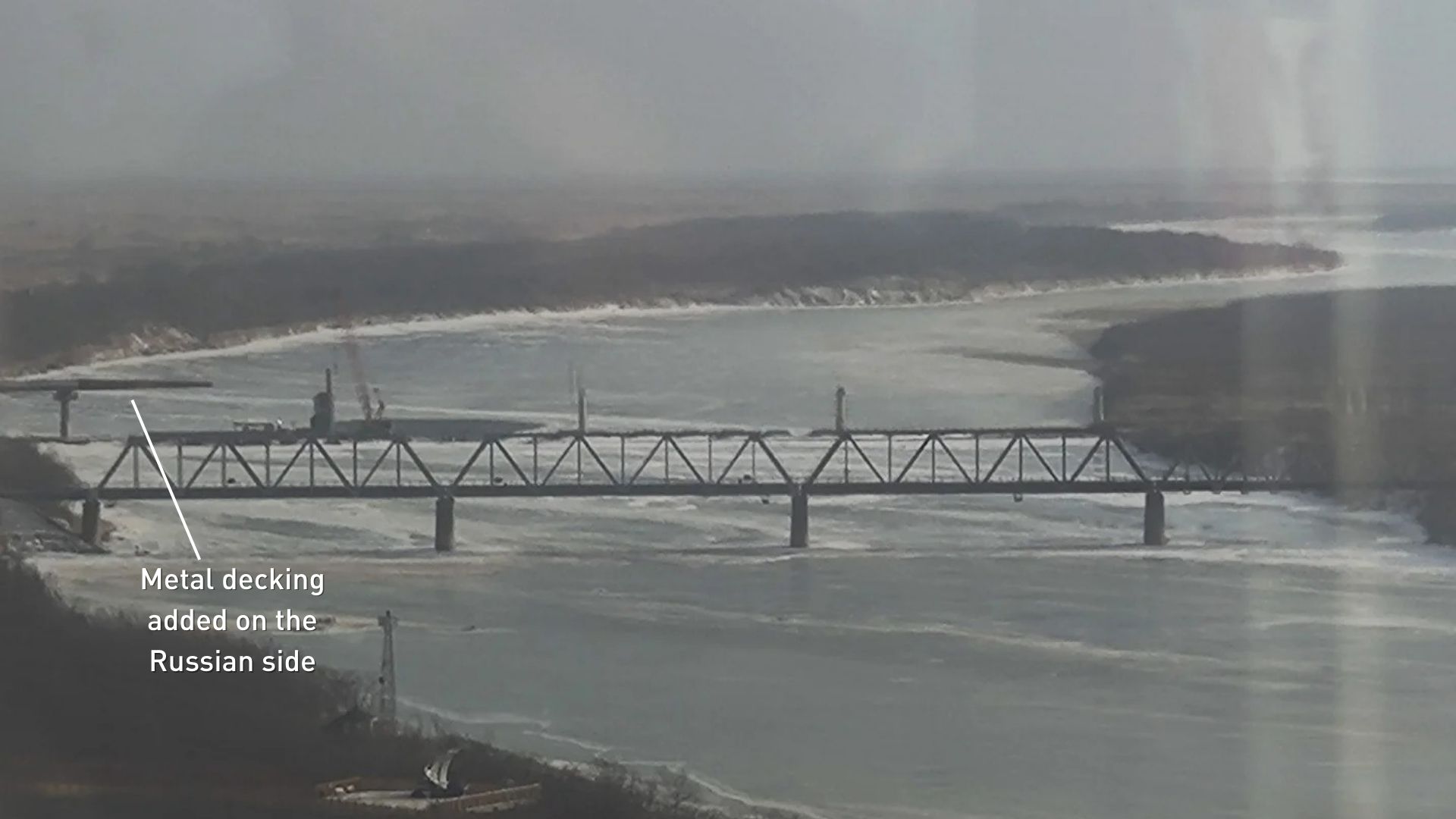
  Investigations North Korea, Russia speed up work on border bridge ahead of June deadlineNK Pro finds checkpoint on Russia side will cost nearly $173M, four times more than originally expected  North Korea and Russia have sped up work on a new car bridge over the Tumen River, installing metal decking on both sides ahead of the deadline for completion later this year. Both sides have also pushed ahead with border checkpoints on their respective sides, with an NK Pro investigation suggesting Moscow’s facilities will cost four times more than originally expected. Analysis of Planet Labs satellite imagery and Chinese social media shows that Russia has made more visible progress on its part of the vehicle bridge in recent months. The DPRK has begun installing decking as well. The allies officially kicked off the bridge construction in April, and work on the deck began in November. 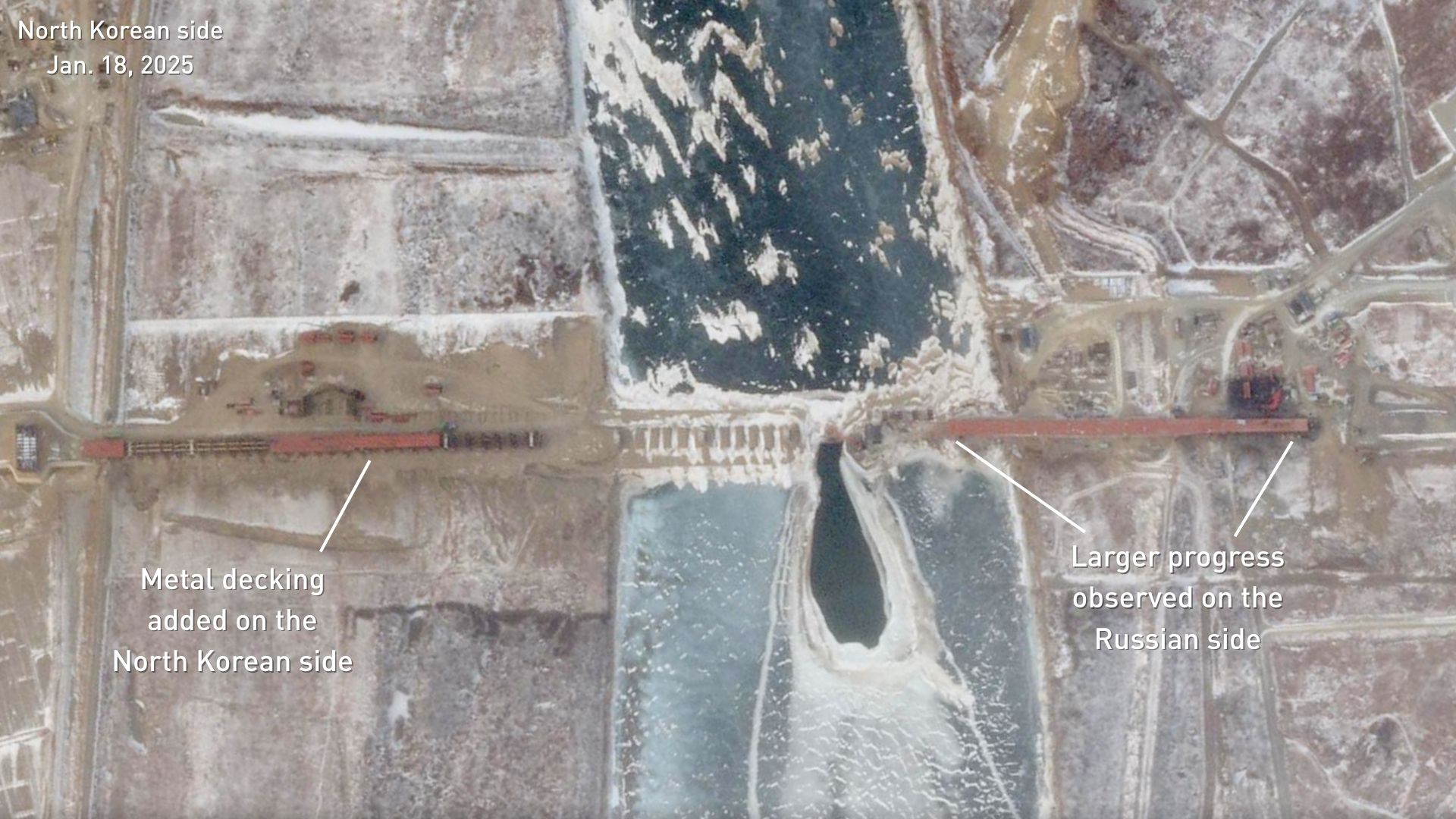
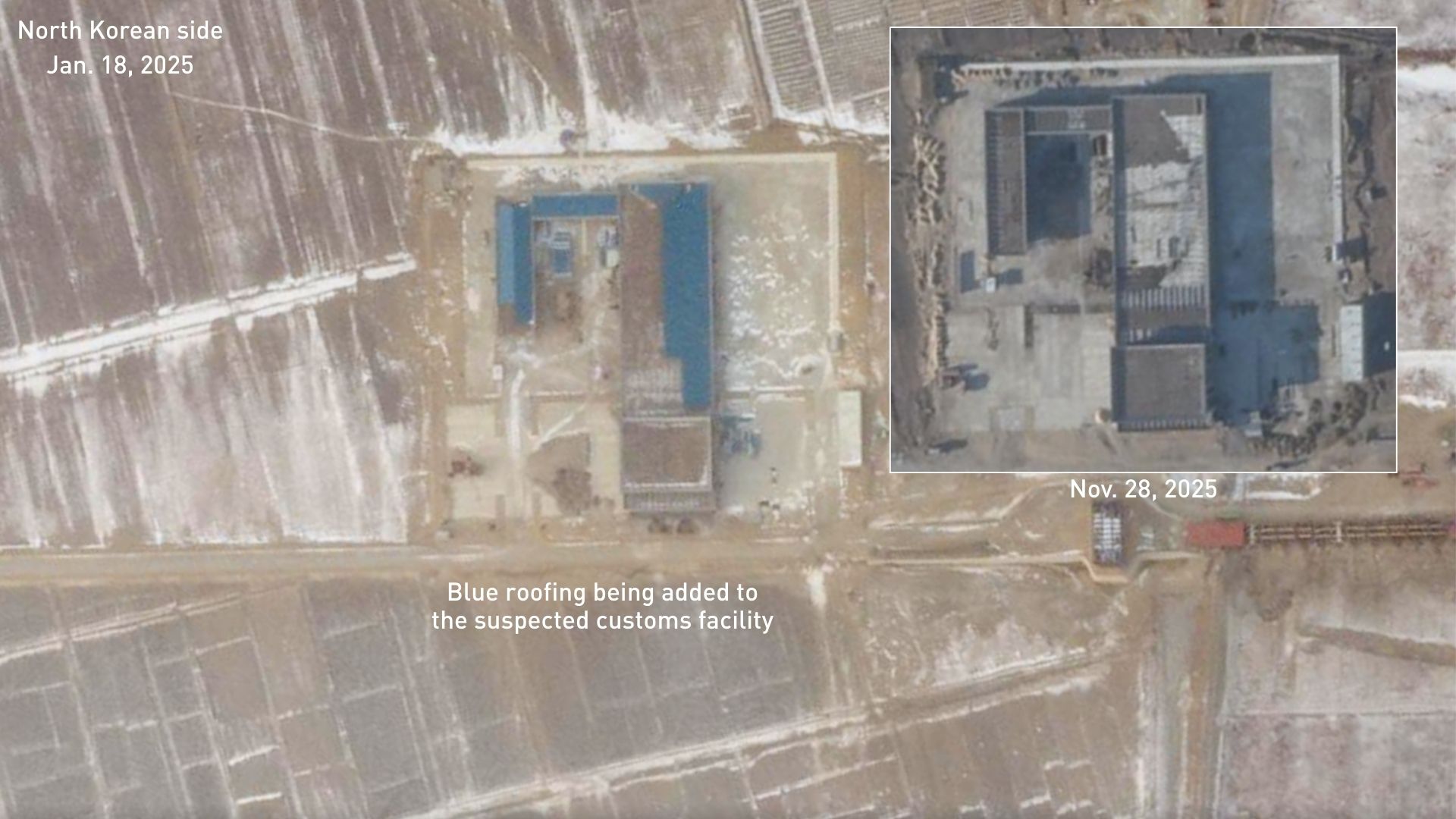
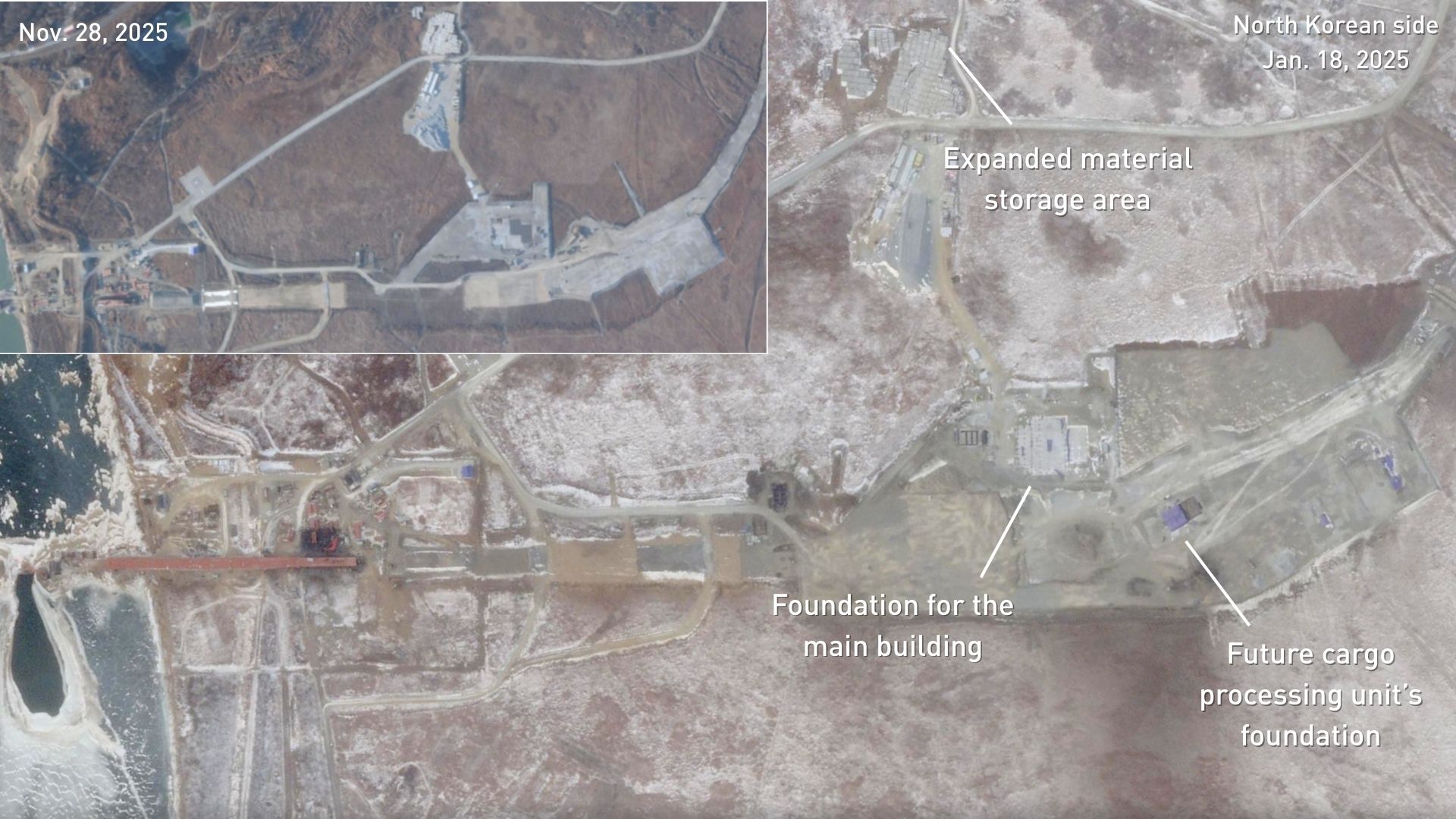
Russian state media has reported that the deadline to finish construction is June 19, the second anniversary of the signing of a de facto military pact between the two sides. The agreement paved the way for Pyongyang’s troop deployment to Russia starting in Oct. 2024. North Korea installed roofing on a suspected customs building on its side in the first weeks of January, though the facility still appears far from completion. Russia has also seen expanded construction activity for its checkpoint, laying concrete and foundations for several buildings. NK Pro previously reported that Rosgranstroy, the Russian state agency overseeing the project, was seeking to hire a subcontractor to assemble modular buildings for the checkpoint for $40 million. The contract eventually went to the Tatarstan-based firm TSK Rual. But additional investigation shows that Russia plans to invest over four times more than originally known into the border checkpoint, with the total expected cost running up to nearly $173 million. According to Russian procurement documents, Moscow has hired four subcontractors to design and equip the checkpoint, as well as ensure its compliance with construction standards. 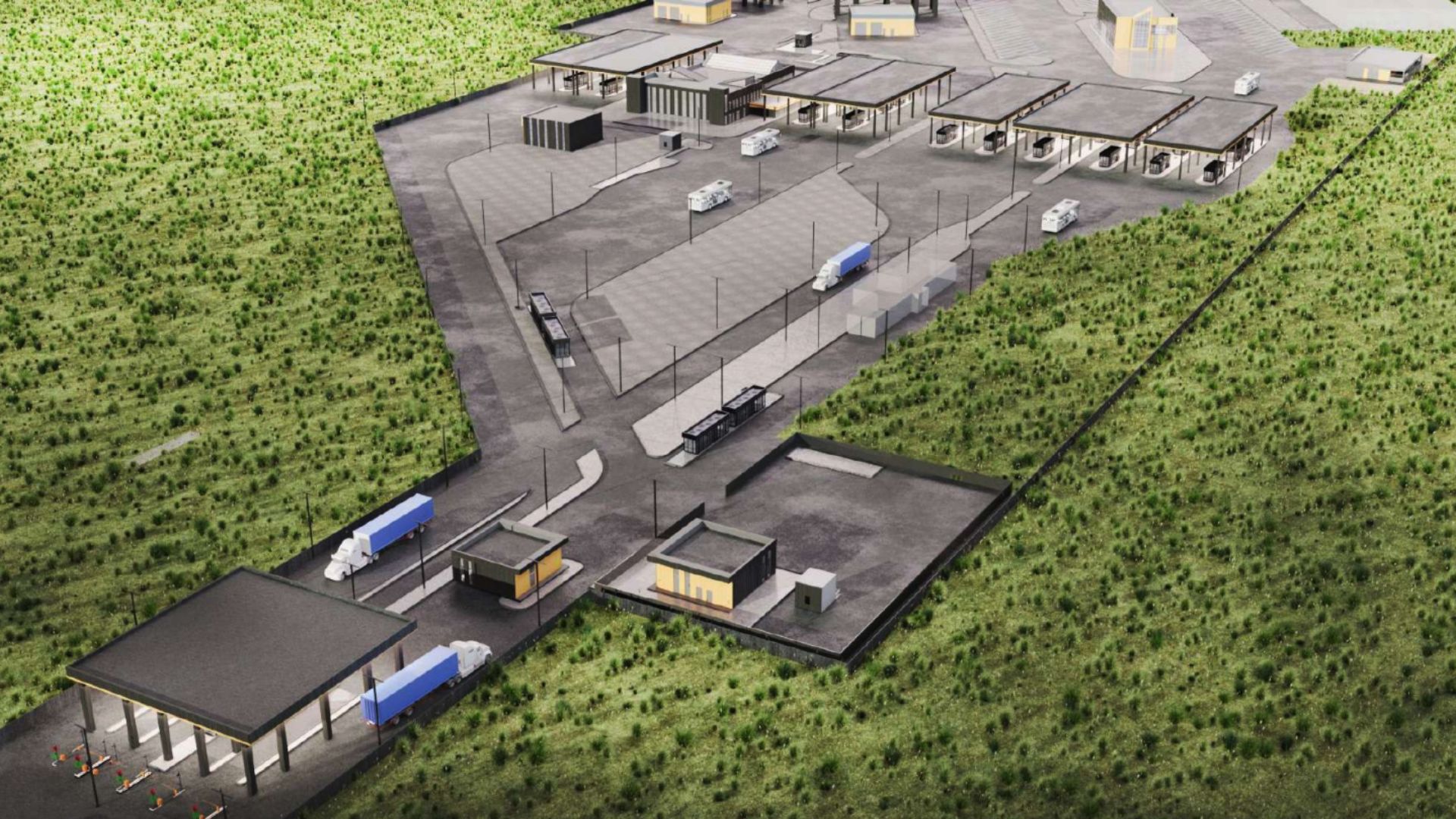
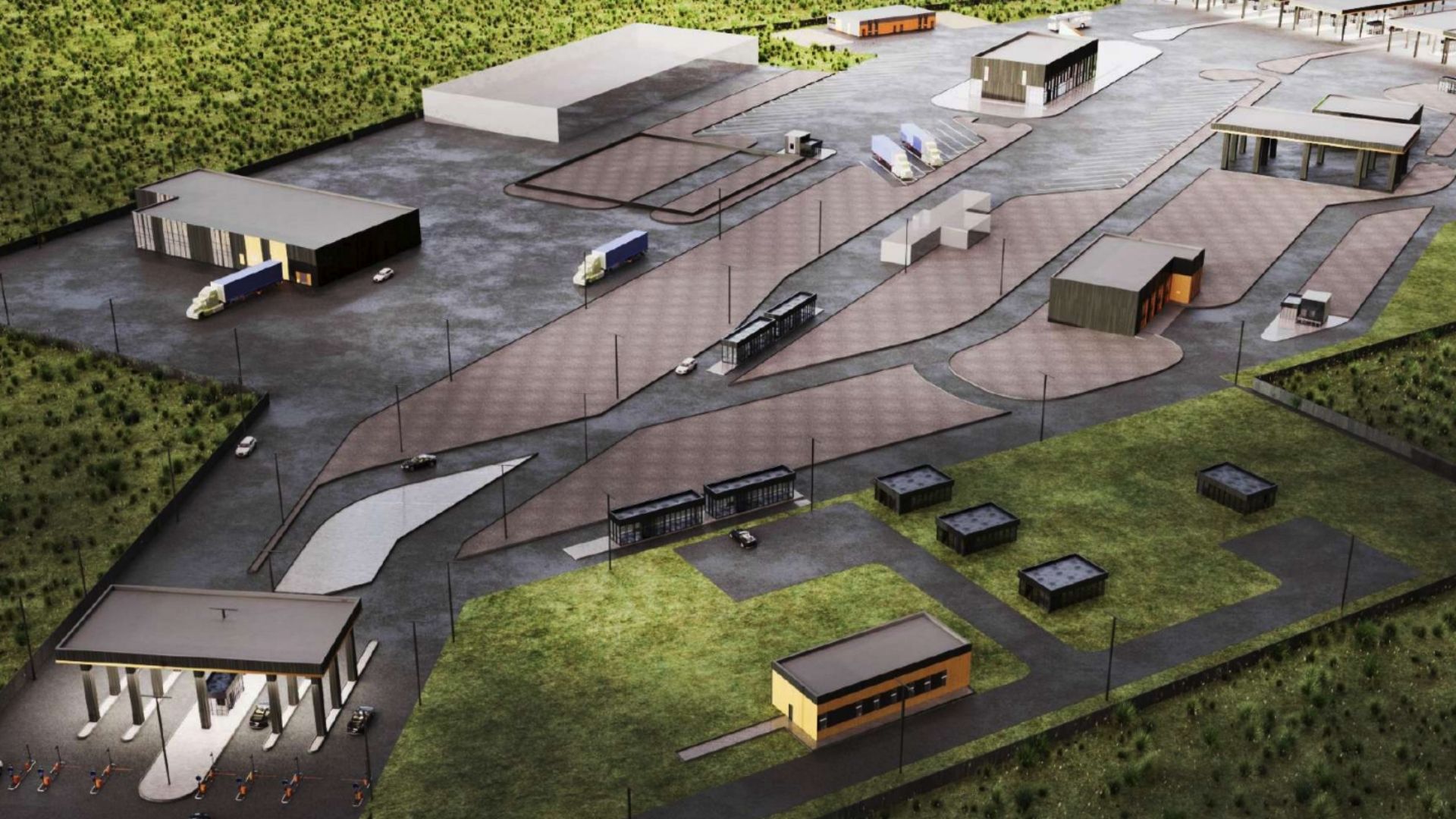
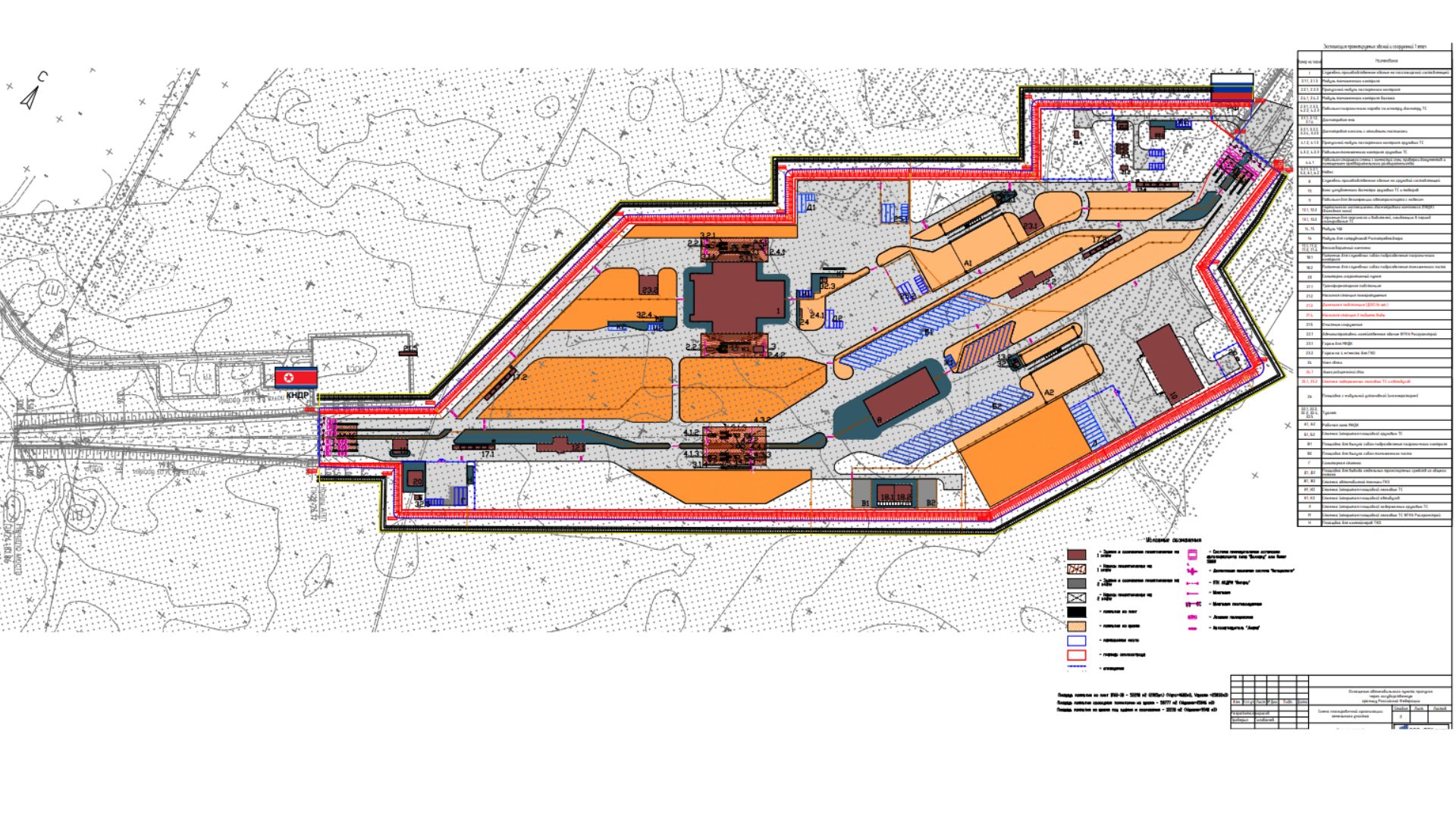
In addition to the modular building assembly, Russia has tasked TSK Rual with carrying out preparatory work like installing CCTV cameras, drainage and wiring networks, for $28 million. Another firm, Stroilabcontrol from the Siberian city of Chita, is set to conduct an independent technical assessment of the construction and installation work carried out by Rual for nearly $70 million. Rosgranstroy recruited the St. Petersburg-based PMC Avangard to develop project documentation for technical equipment for $658,686, and to install security, communications and monitoring equipment for passport control for over $37.6 million. Meanwhile, the Saratov-based PSK Group handled the concept and blueprints for the checkpoint, procurement documents show, without indicating the monetary sum of its contract with Rosgranstroy. Russia initially agreed to shell out some $117 million (over 9 billion rubles) for the entire 3-mile (4.7 km) crossing, including a 2,800-foot (850-meter) two-lane bridge. The government assigned the project to a small obscure firm with suspected ties to Chechen construction elites. The checkpoint itself will have 10 lanes and the capacity to process 300 vehicles and 2,850 people per day, according to Russia’s transportation ministry. The construction of the new bridge is expected to lead to an increase in bilateral trade and the number of Russian travelers visiting North Korea, Primorsky Krai’s tourism ministry reportedly assessed. Russian authorities previously reported that 2,116 Russian tourists visited North Korea through September last year. Russia has yet to finalize tourism figures for 2025. The Vladivostok-based tour agency Vostok Intur reportedly placed the number of Russian visitors to North Korea last year at around 3,200 people. Edited by Bryan Betts © Korea Risk Group. All rights reserved. |

October 12, 2026Oct 12, 2026

The ultimate resources for professionals working on North Korea
 SHARE
SHARE COPY LINK
 X
X MASTODON