  News North Korea, Russia to install new decking structures on $100 million bridgeSatellite imagery shows steady progress on bridge promoted by Moscow as key to DPRK-Russia connectivity  North Korea and Russia plan to begin installing large sections of a new $100 million bridge across the Tumen River next month, a top Russian official in charge of bilateral operations announced Thursday, as satellite imagery showed progress on the construction that kicked off last year. Russian natural resources and ecology minister Alexander Kozlov on Thursday highlighted “big progress” in transportation projects during talks with North Korea’s external economic relations minister Yun Jong Ho, with Kozlov’s ministry stating he had briefed his counterpart on the bridge’s construction. The two officials co-chair the intergovernmental commission on trade, economic, scientific and technical cooperation, which convened in Moscow earlier this week. Kozlov said work on the new motorway bridge is “proceeding on schedule,” adding that the installation of load-bearing span structures is set to begin December as the allies aim to complete the project by the end of 2026. His comments followed Russian President Vladimir Putin’s remarks earlier this year identifying the bridge as the key to improving connectivity between the two countries. North Korea has recently installed an approach ramp and 11 bridge columns, including two placed in the riverbed less than 130 feet (40 meters) from column abutments on the Russian side and six bridge piers onshore, according to NK Pro analysis of Planet Labs satellite imagery and publicly shared footage. 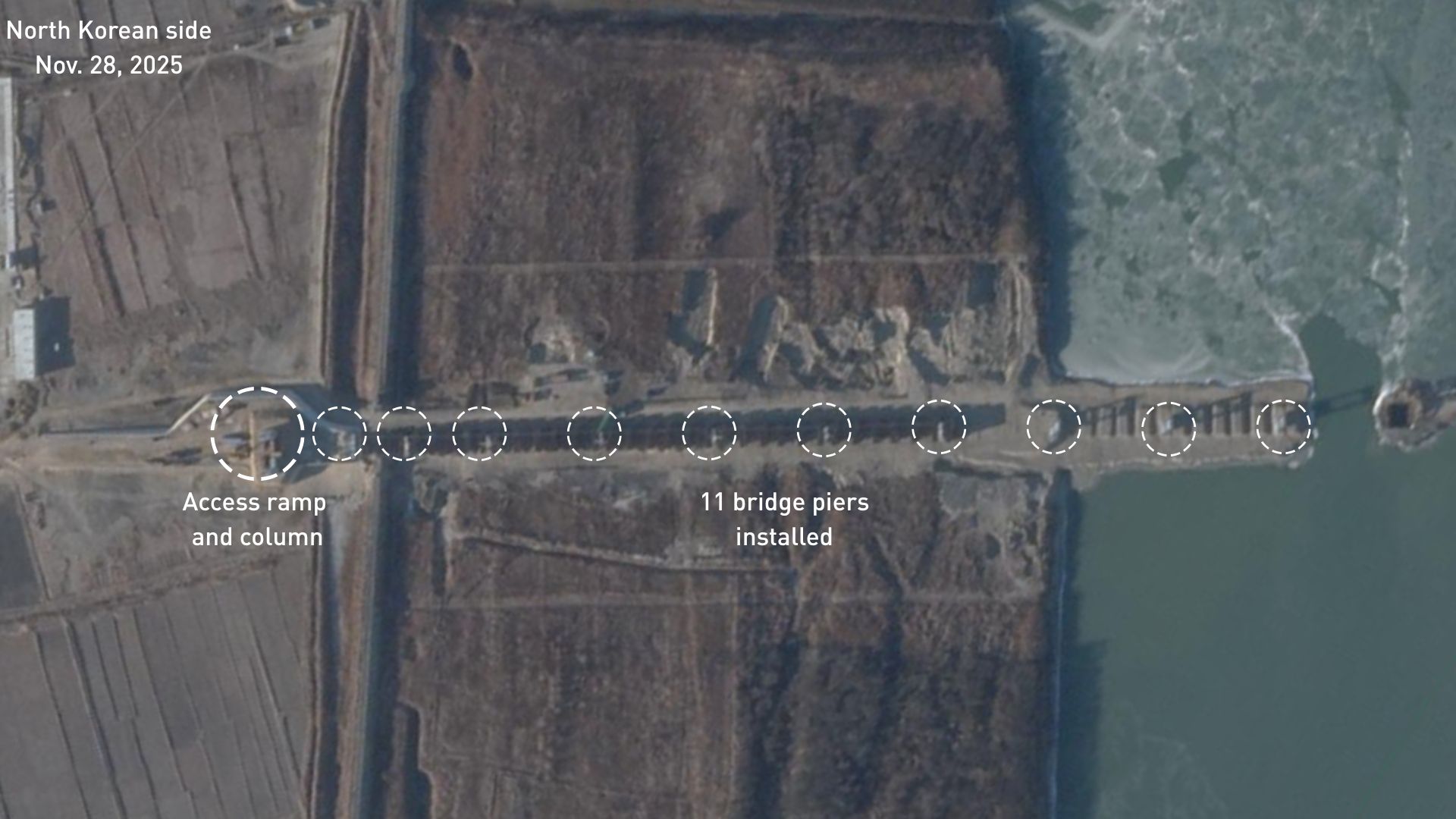
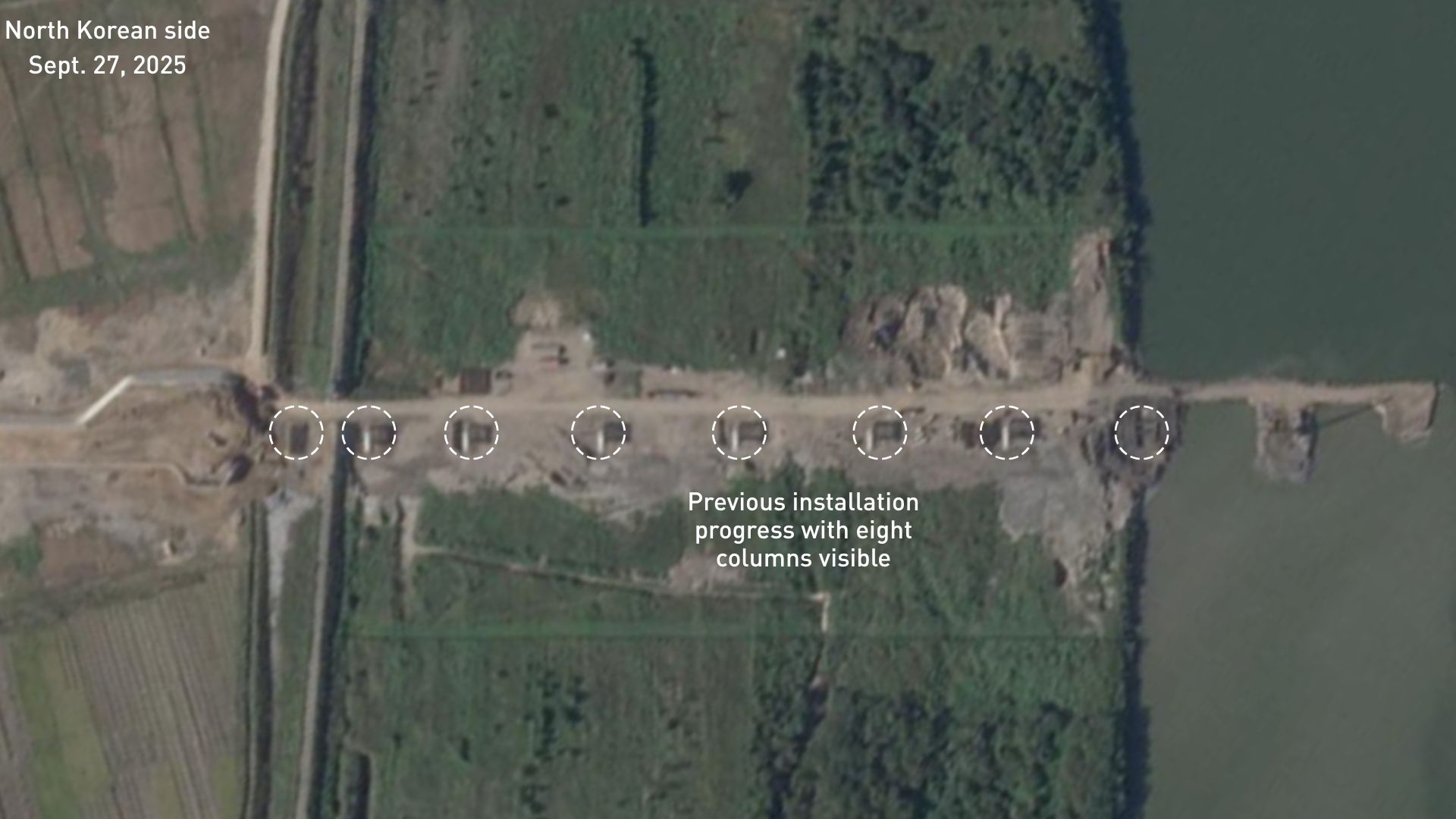
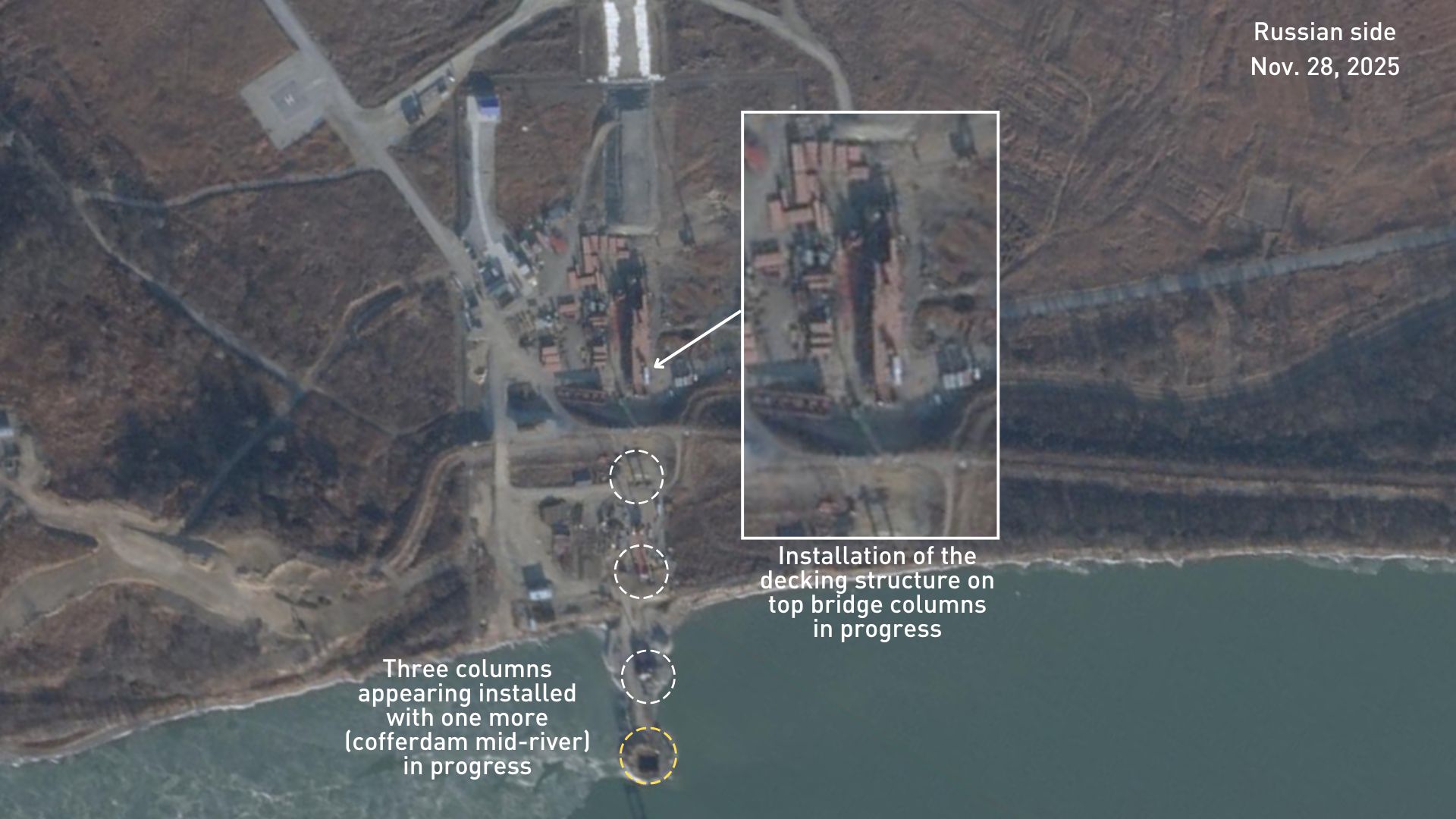
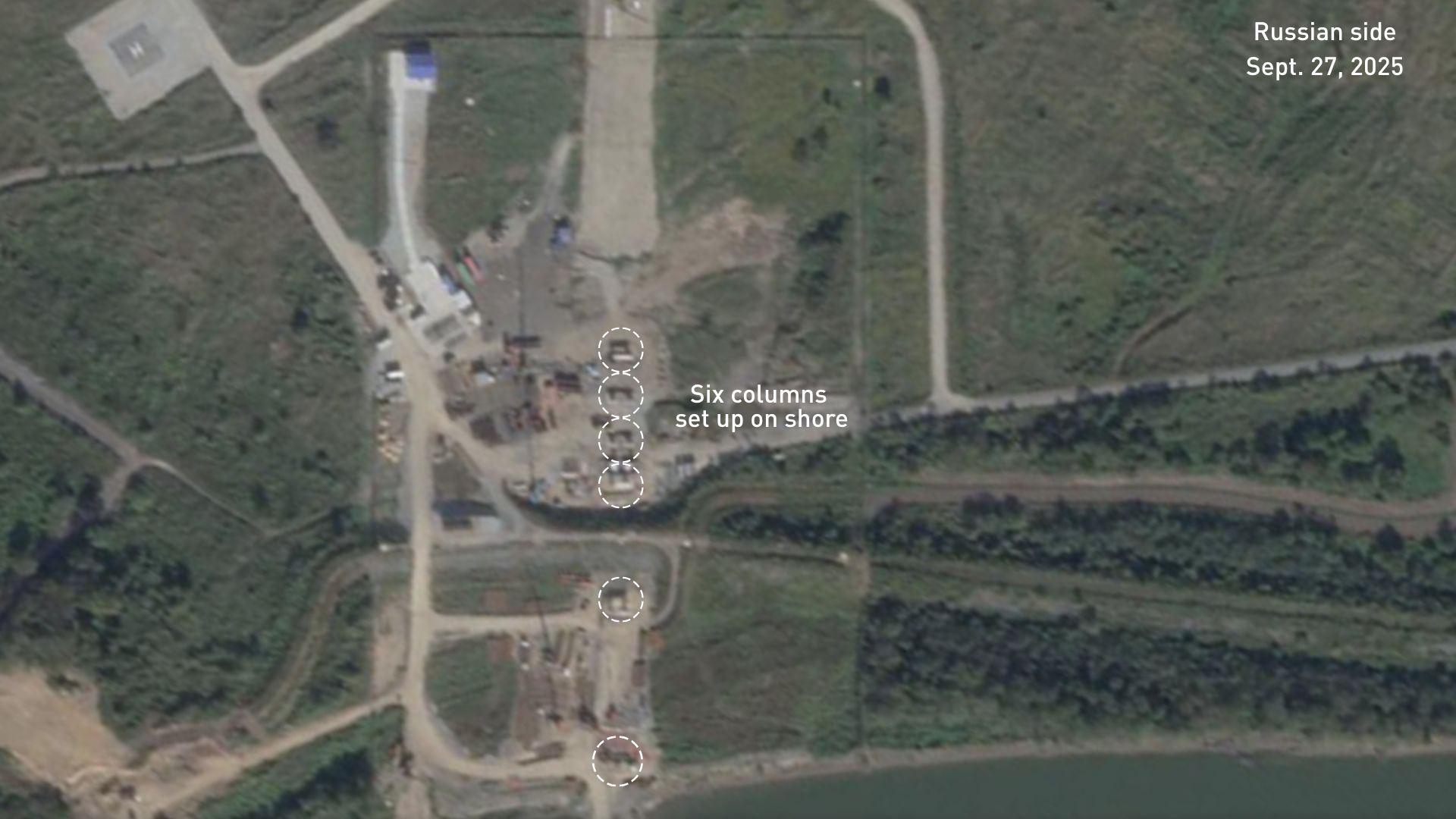
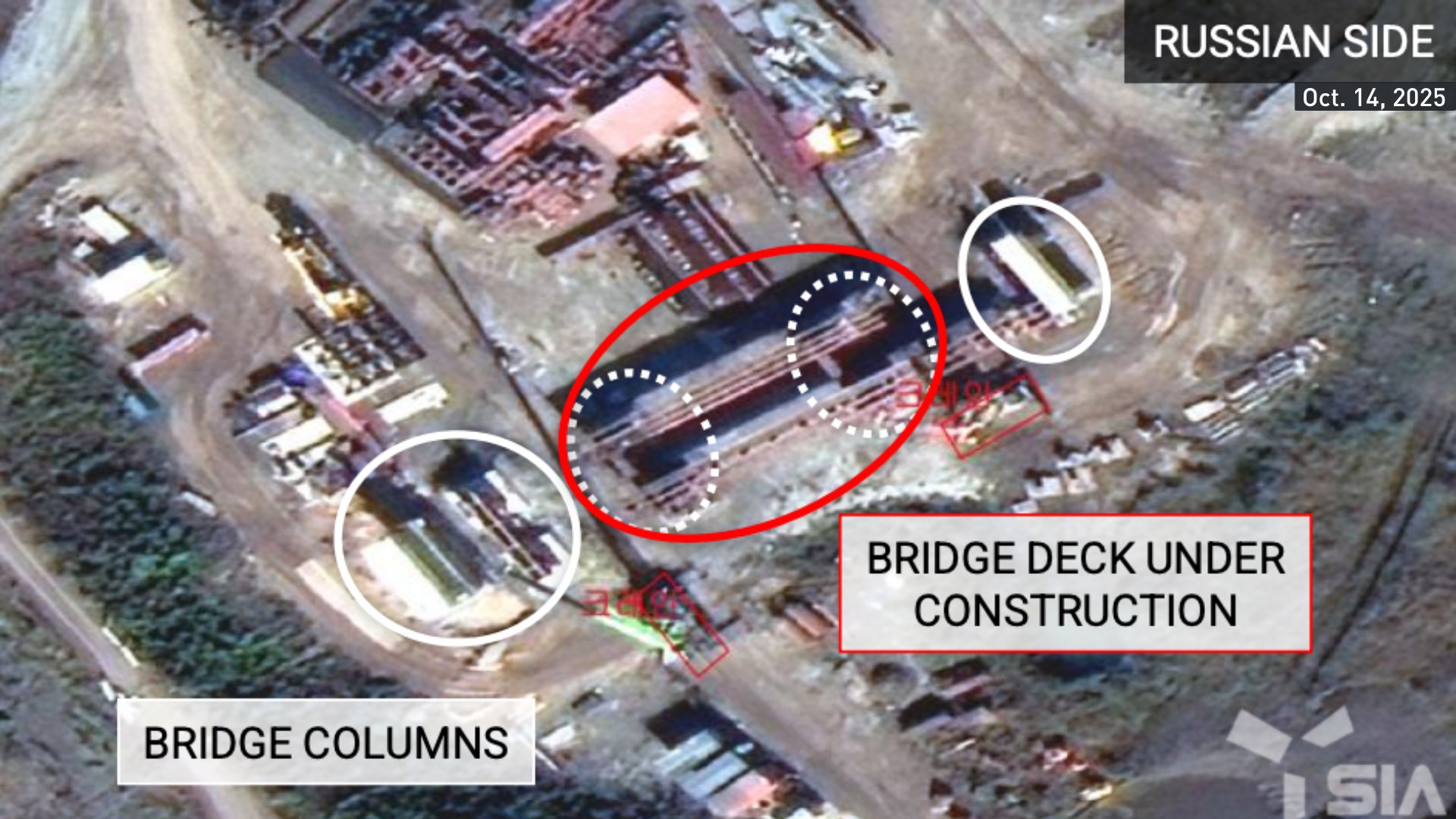
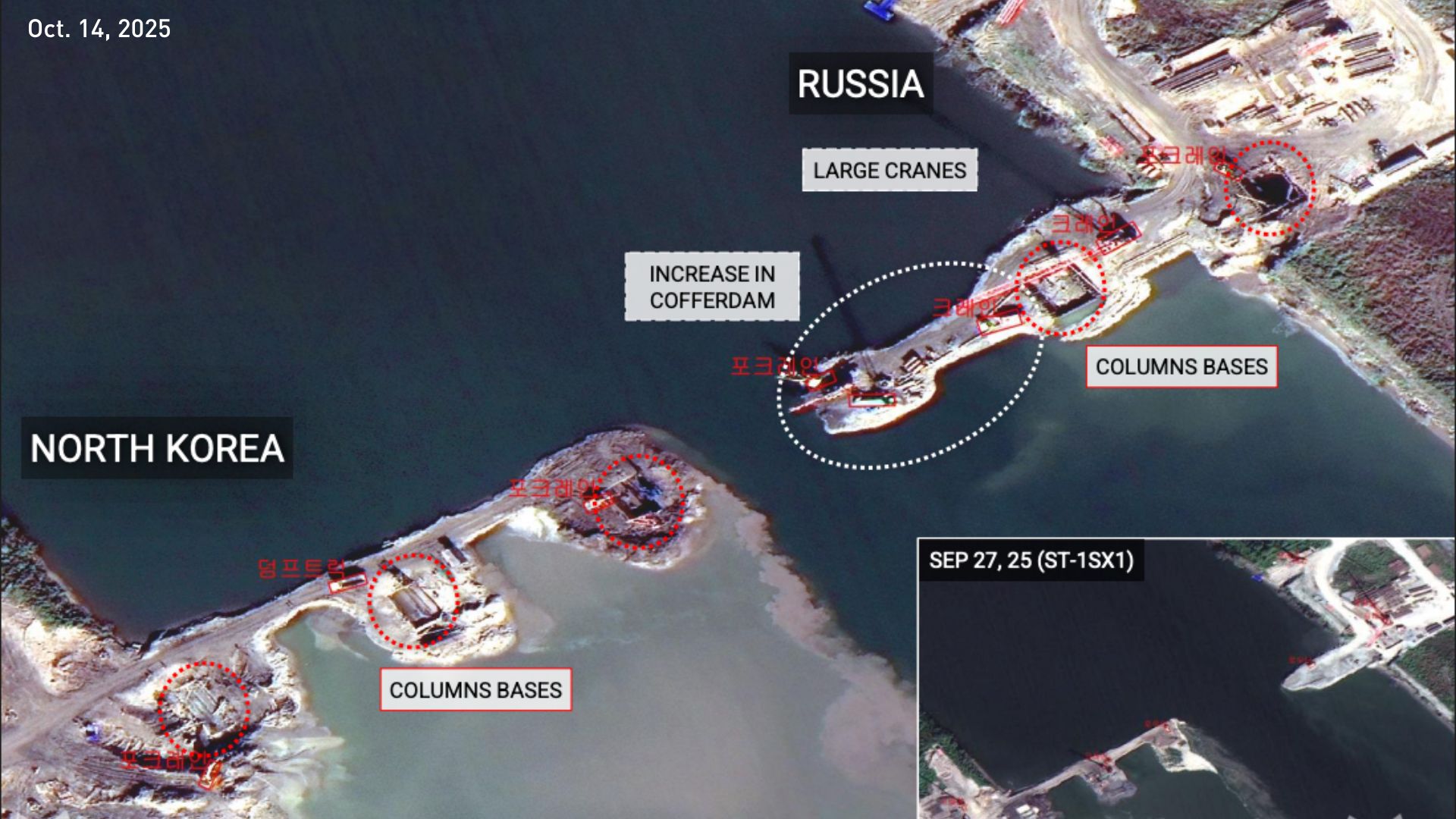
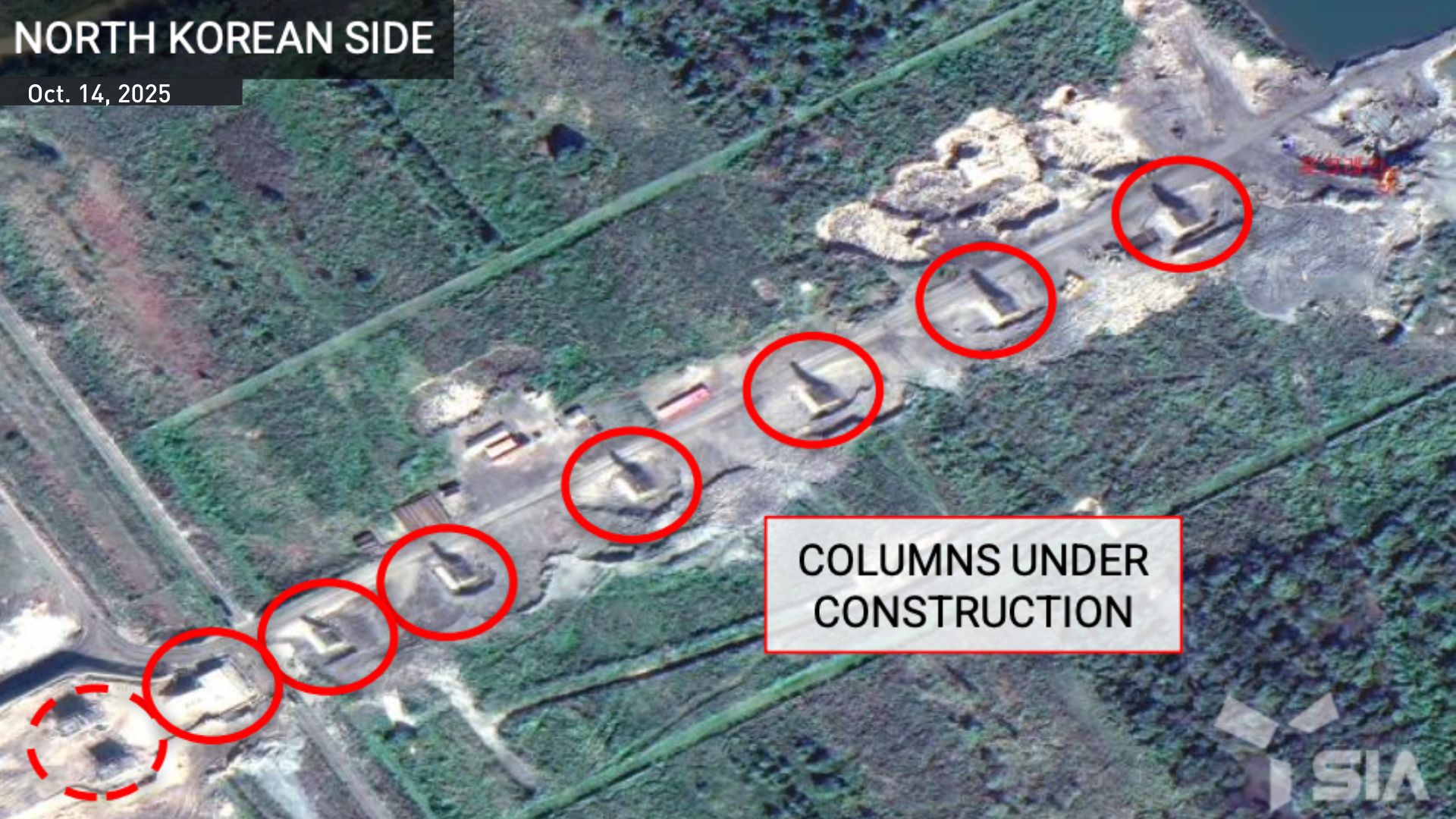
The DPRK also appears to have erected protruding structures roughly 32 feet (10 meters) apart along its portion of the projected bridge and may be preparing to add more in the riverbed. Pyongyang has nearly finished the main structure of a suspected customs facility, with visible progress on the roofing and surrounding concrete-covered grounds, marking clear progress since an NK Pro report in August. Russia also appears to be in the early stages of installing overstructures above its on-land columns. Multiple metal decking elements are visible at the site, likely prepared for upcoming span installation. The Russian government agreed to pay over $100 million for the entire 3-mile (4.7 km) crossing, including a 2,800-foot (850-meter) two-lane bridge, and tasked an obscure Sochi-based firm with the project last year. A large construction conglomerate with ties to a Chechen strongman close to Putin appeared to be the actual beneficiary of the construction initiative, NK News later determined. Moscow will also spend around $40 million on the Khasan checkpoint now under construction, which is expected to feature $2 million dog kennels and $70,000 toilets by 2027. Russia connected the border facility to its highway network via a new road link in November, according to satellite imagery. The checkpoint will have 10 lanes and the capacity to process 300 vehicles and 2,850 people per day, according to Russia’s transportation ministry. 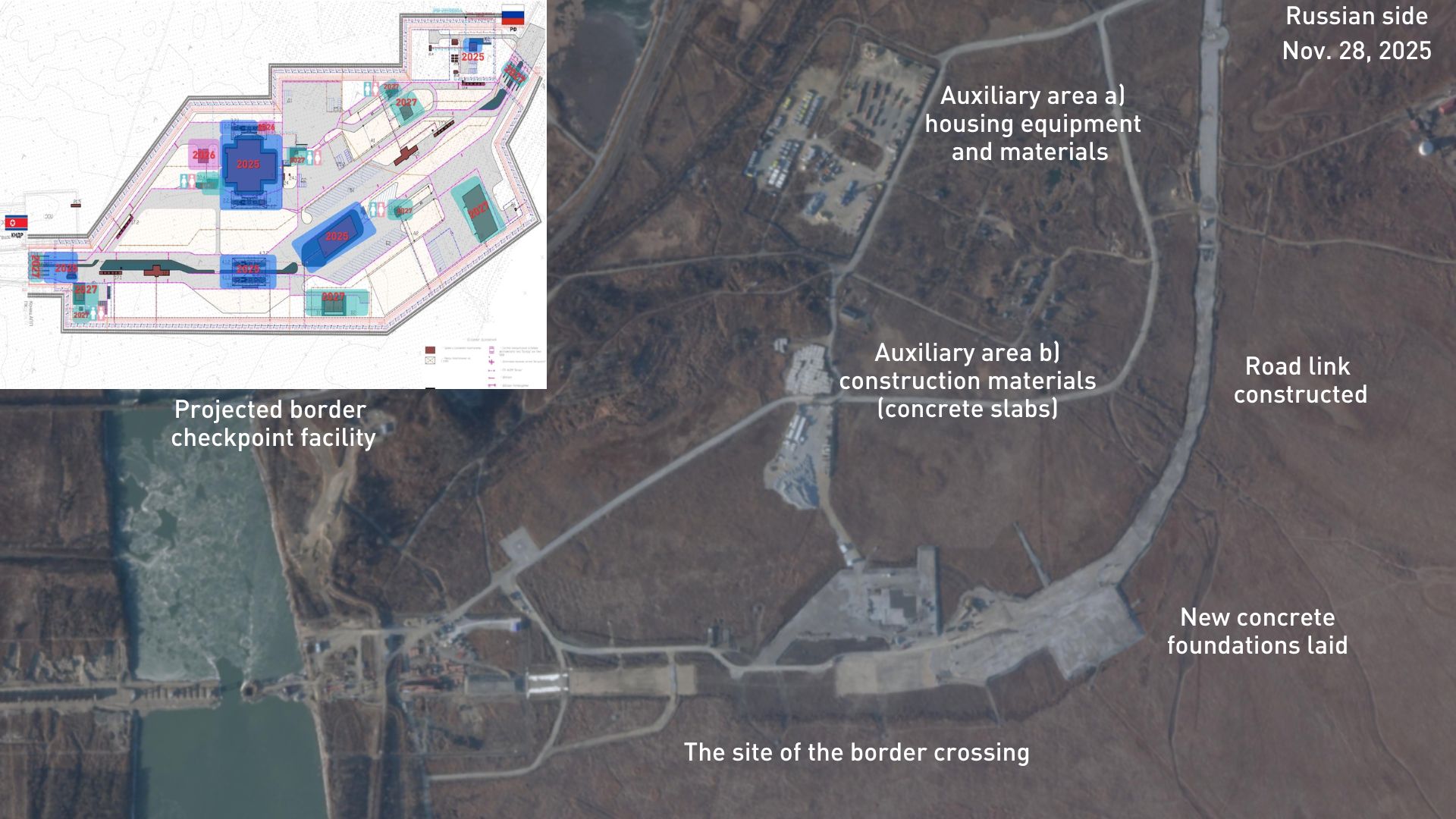
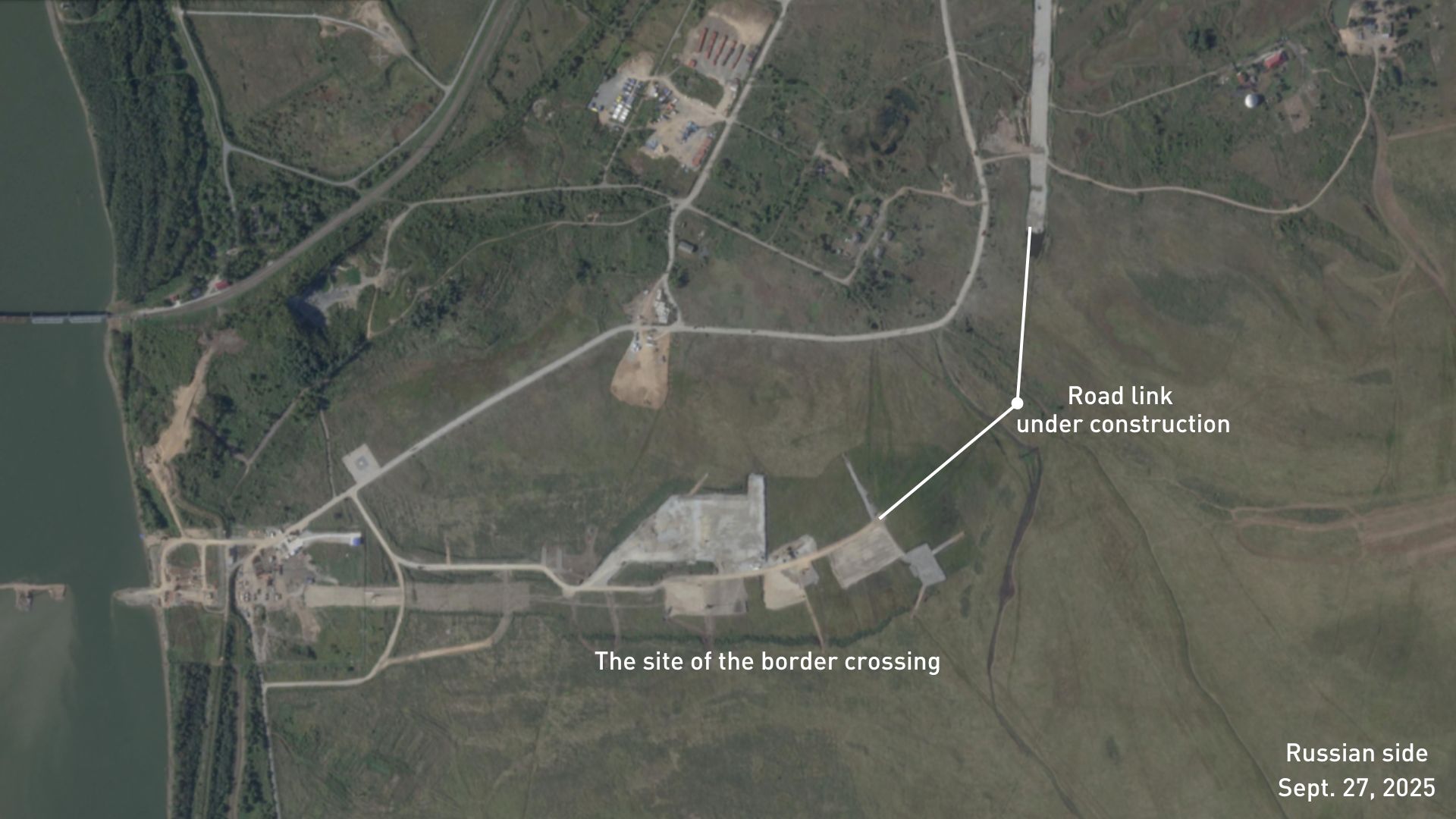
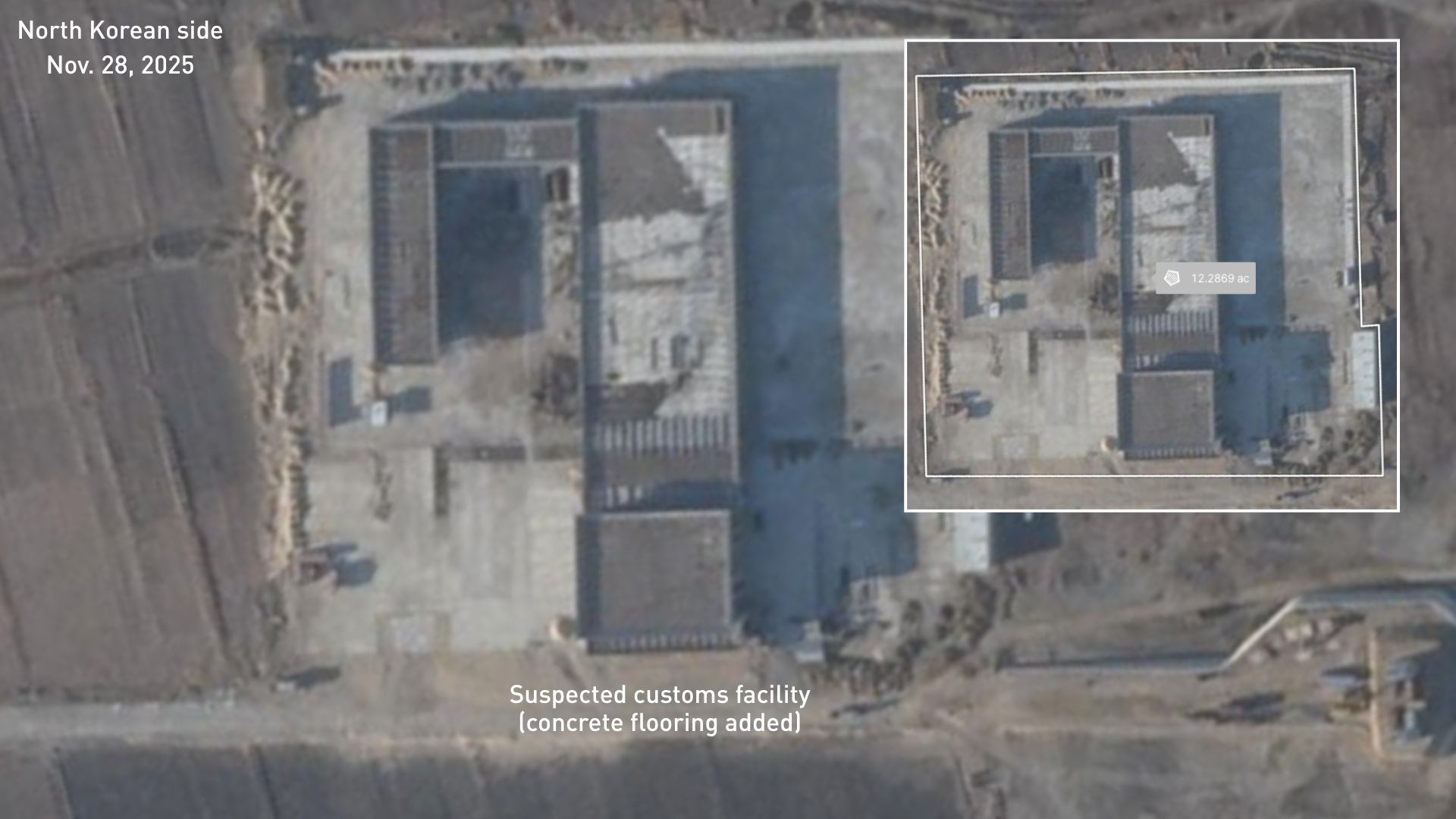
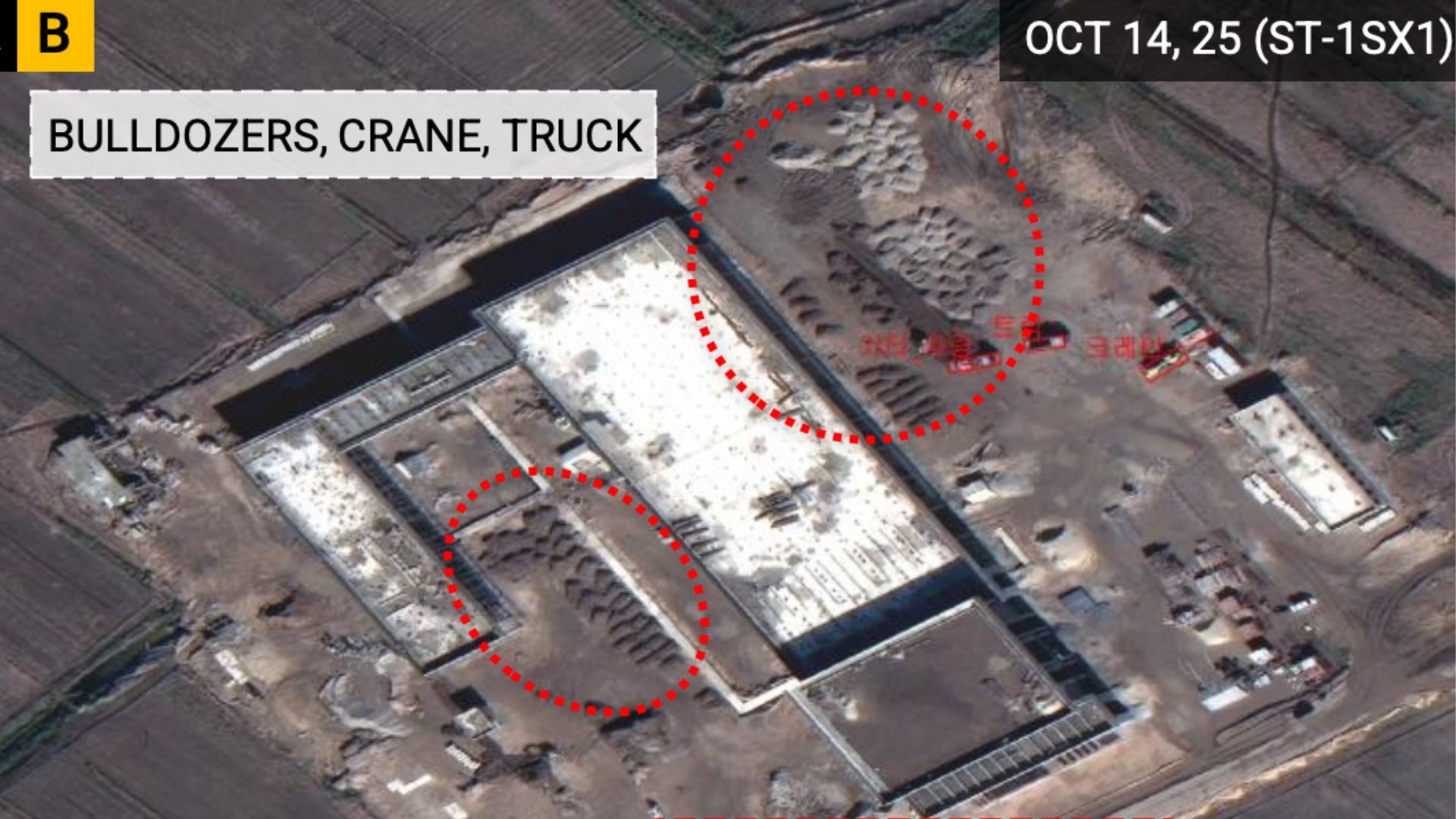
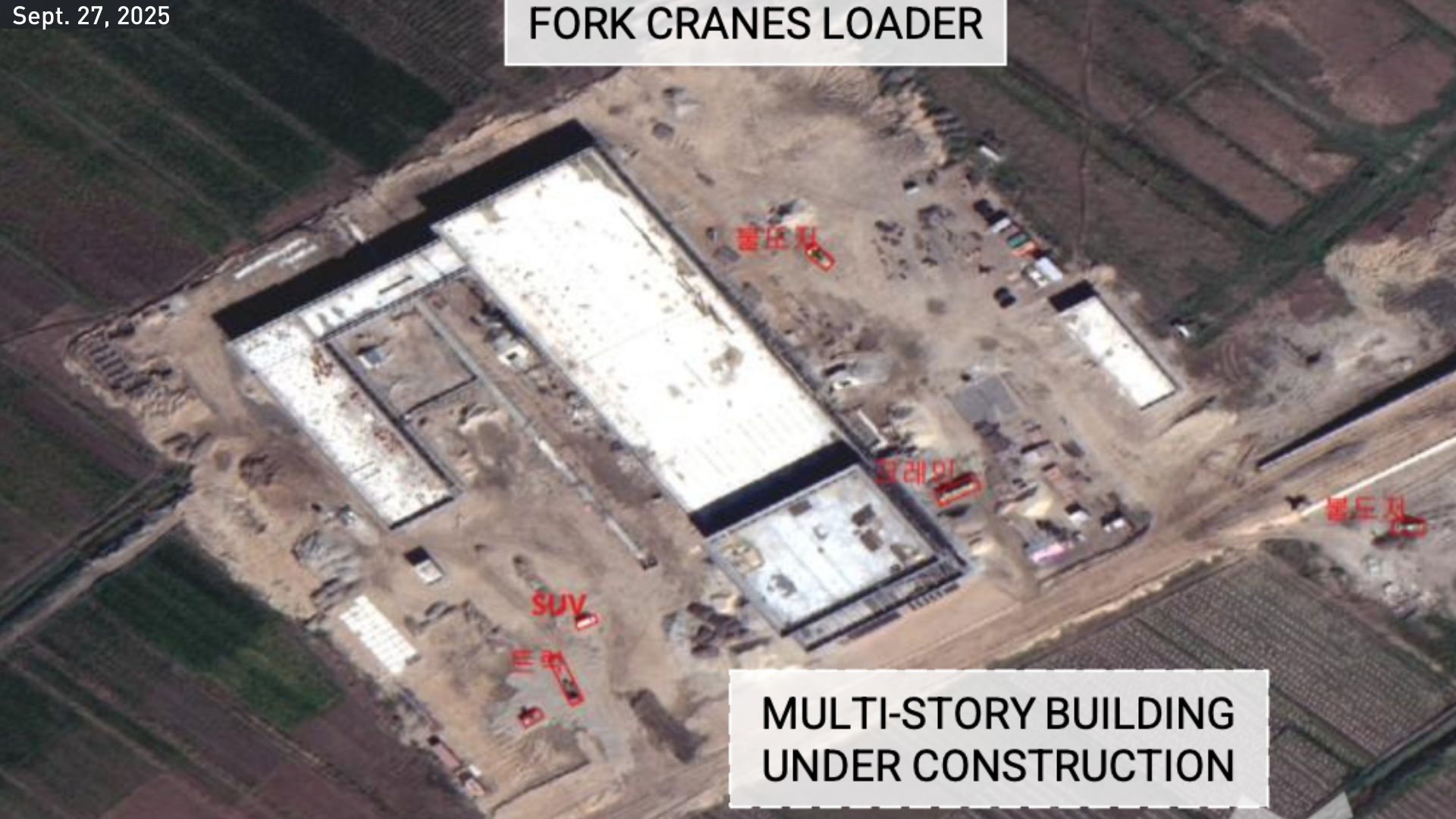
While the two countries officially kicked off the construction in April, early preparatory work began last year. North Korea first built a road leading to the future bridge site in Nov. 2024 and Russia cleared land on its side of the river the following month, NK Pro analyses of satellite data previously showed. The first signs of riverbed construction on the Russian side appeared in February. This was followed by the placement of wooden structures and additional land clearing for bridge footings and future vehicle crossings the following month. Construction picked up speed over the summer, with North Korea erecting a customs facility and Russia installing cofferdam platforms on the river, according to NK Pro and SI Analytics imagery analysis. A time-lapse video showing construction progress on the new car bridge between Russia and North Korea in Nov. 2024 and Nov. 2025 | Video: Planet Labs The decision to build the motorway bridge came about during Putin’s visit to Pyongyang last year, when he and North Korean leader Kim Jong Un backed the plan alongside a new comprehensive strategic partnership agreement that effectively cemented the countries’ allied status. Edited by Shreyas Reddy and David Choi © Korea Risk Group. All rights reserved. |

October 12, 2026Oct 12, 2026

The ultimate resources for professionals working on North Korea
 SHARE
SHARE COPY LINK
 X
X MASTODON