
  Analysis North Korea prioritizes shipyard construction as major naval base project stallsImagery shows work hasn’t begun on east coast base set to host new destroyer, despite Kim Jong Un’s demand for upgrades 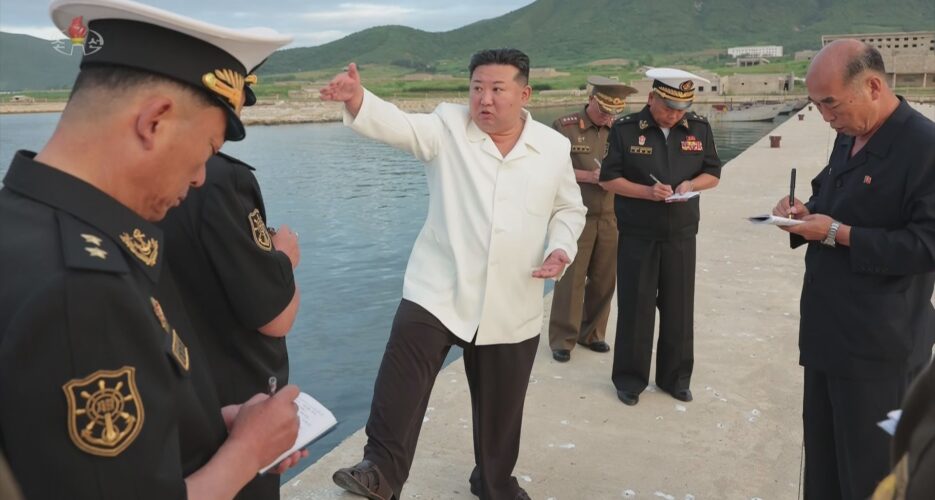 North Korea has signaled its intention to sail a new warship around the Korean Peninsula in the next year, setting up a showdown with the South by assigning the destroyer built on the west coast to an east coast fleet, but NK Pro analysis shows that upgrades to the base set to host the ship have not even begun. NK Pro analysis of Planet Labs imagery shows that naval base construction north of Wonsan remains stalled after Kim Jong Un visited last fall demanding “urgent” work to “build a modern port city as a symbol” of his new naval modernization efforts. At the same time, Pyongyang’s spending priorities appear centered on upgrading the shipyards building its new “blue-water” fleet, as NK Pro has found that large-scale work has commenced on the Chongjin shipyard in line with Kim’s instructions. NAVAL BASE STALLED At a ceremony to launch the first new Choe Hyon-class destroyer last Friday, North Korea signaled once again that its naval aspirations will rely primarily on east coast infrastructure, despite the ceremony taking place in Nampho on the west coast. State media said the new 140 to 145-meter destroyer was “conveyed” to the East Sea Fleet but that it will undergo testing before starting operations there “early next year,” meaning it will have to sail around South Korea before then. Kim already led missile tests from the ship this week. The destroyer could sail to the east coast at an early date and dock at an existing naval base or factory for further testing, like two recently developed corvettes, but its likely new home base remains unfinished 11 years after construction started. 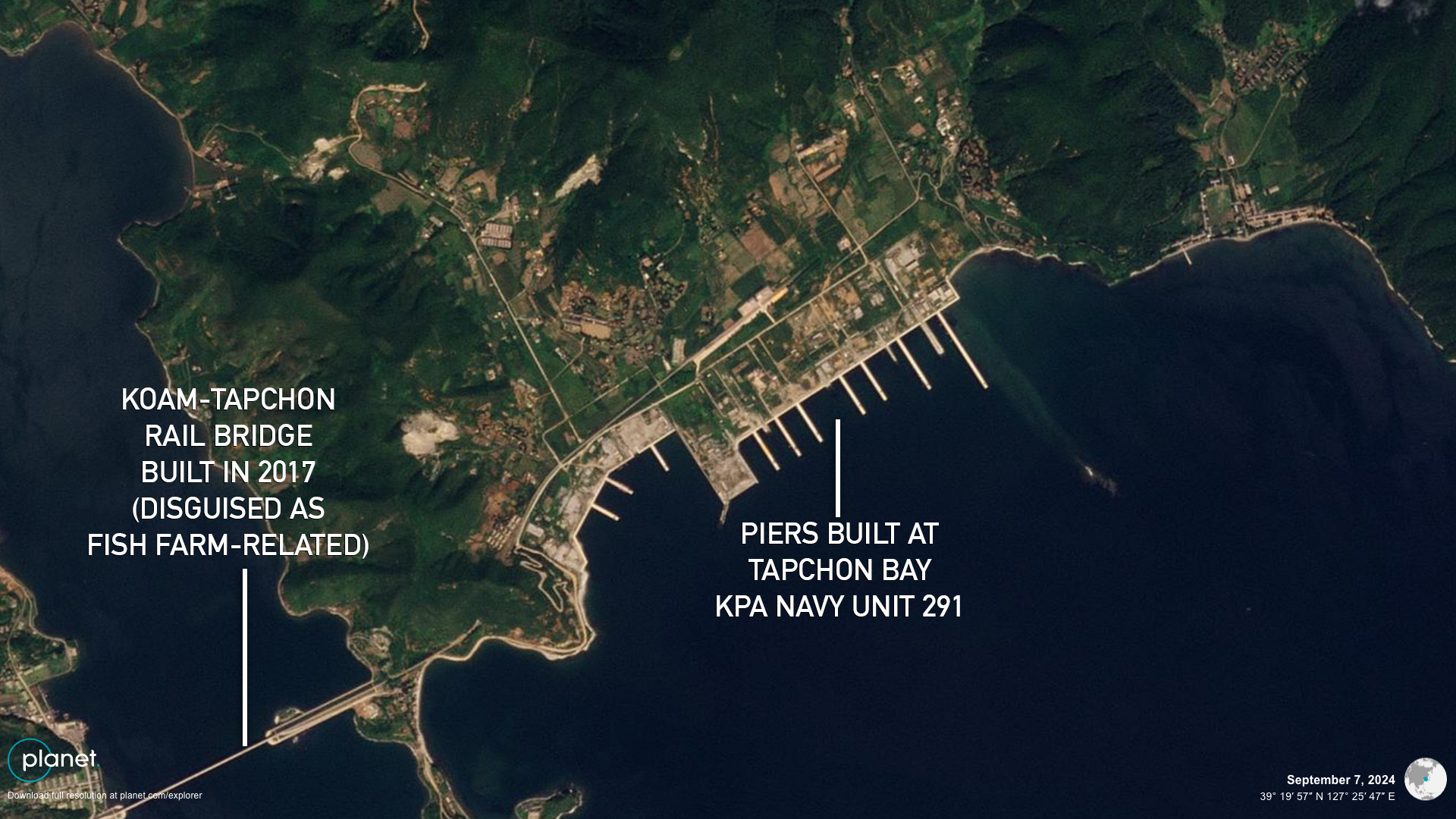
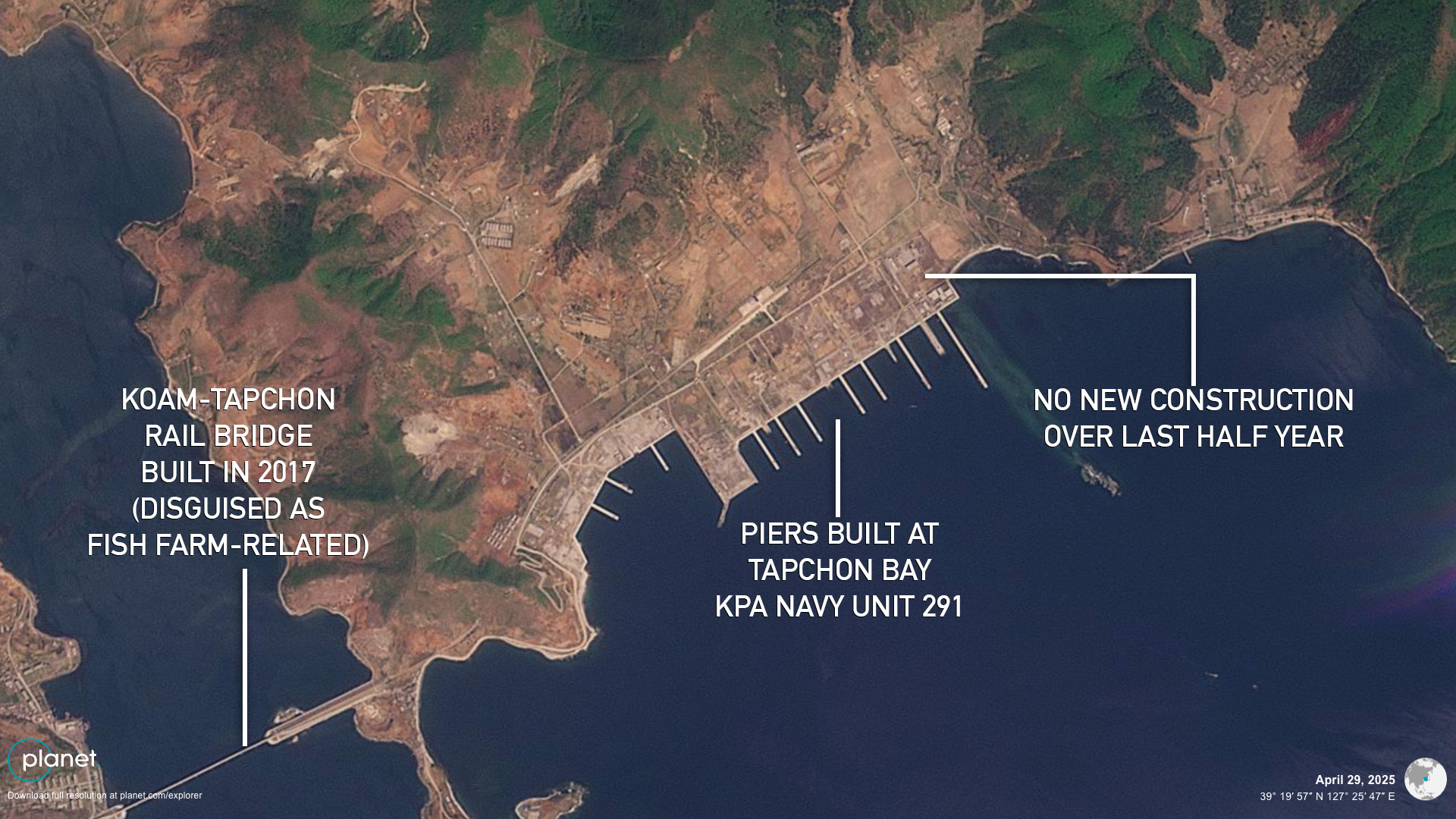
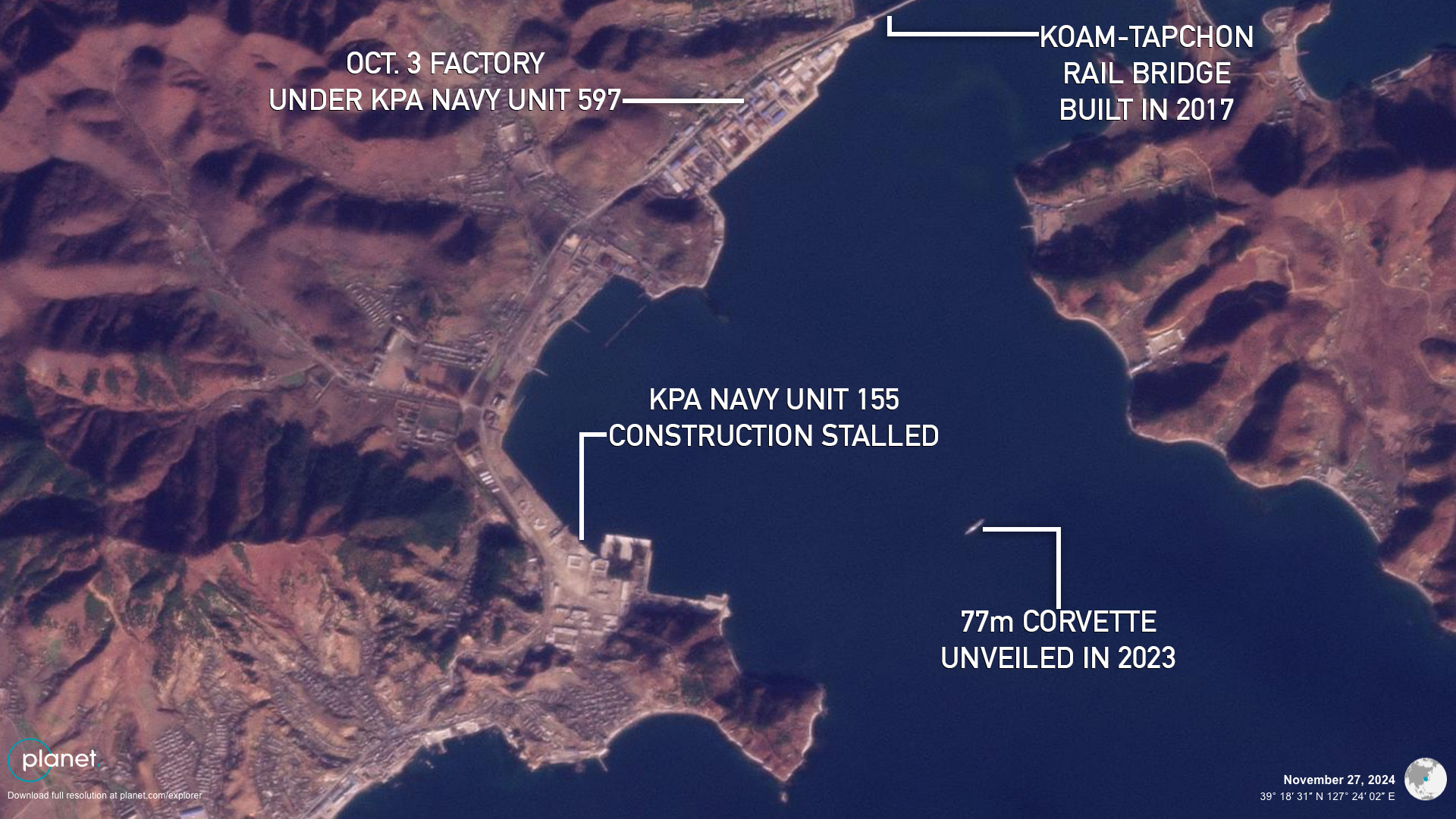
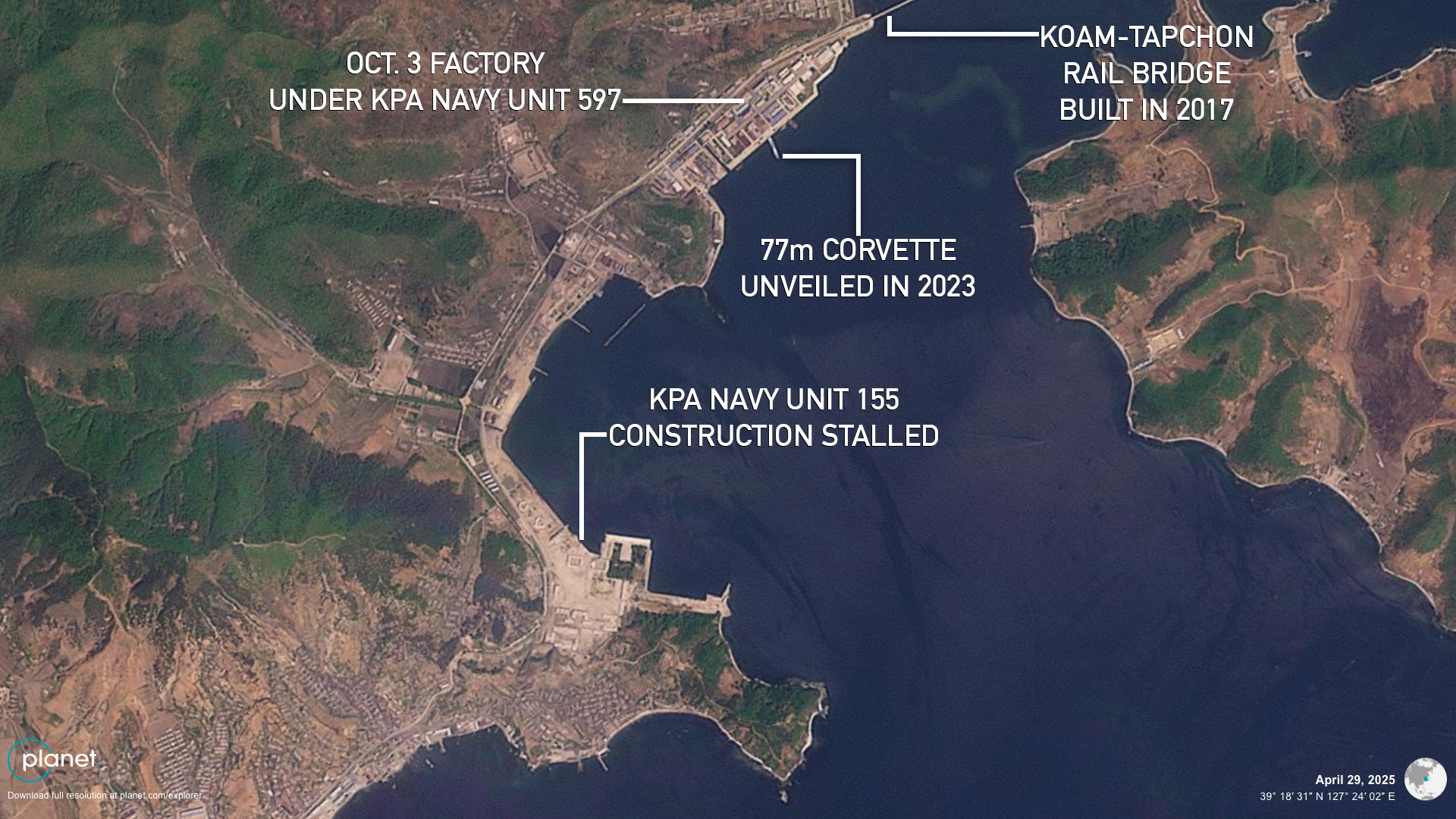
Kim first ordered construction of the base in Tapchon Bay, north of Wonsan and Munchon, in 2013, saying it belonged to the Korean People’s Army (KPA) Navy Unit 291 at the time. The DPRK leader visited again last September to demand the project restart as an “urgent,” “pressing” and “immediate” task. He said it should be a “modern and multifunctional naval base” that will host “large surface warships and submarines which can not be anchored at existing facilities.” Its location boasts a “geopolitical advantage … as a strategic vantage” for operations in the region. And at the destroyer launching ceremony last week, Kim unveiled his longer-term plans for the navy to eventually “stretch its fighting capability to the oceans” and “never limit its operations to our territorial waters.” This plan will likely rely on the new Tapchon Bay naval base, where at least 10 piers and six slipways have already been built and which features space for dozens of buildings. But Planet Labs satellite imagery shows that work to finish the project has not resumed since Kim’s adamant demands during his visit last fall. Construction has also largely stalled since last November at the KPA Navy Unit 155 base nearby to the south, where large-scale rebuilding started after Kim visited and demanded the project in Aug. 2023. 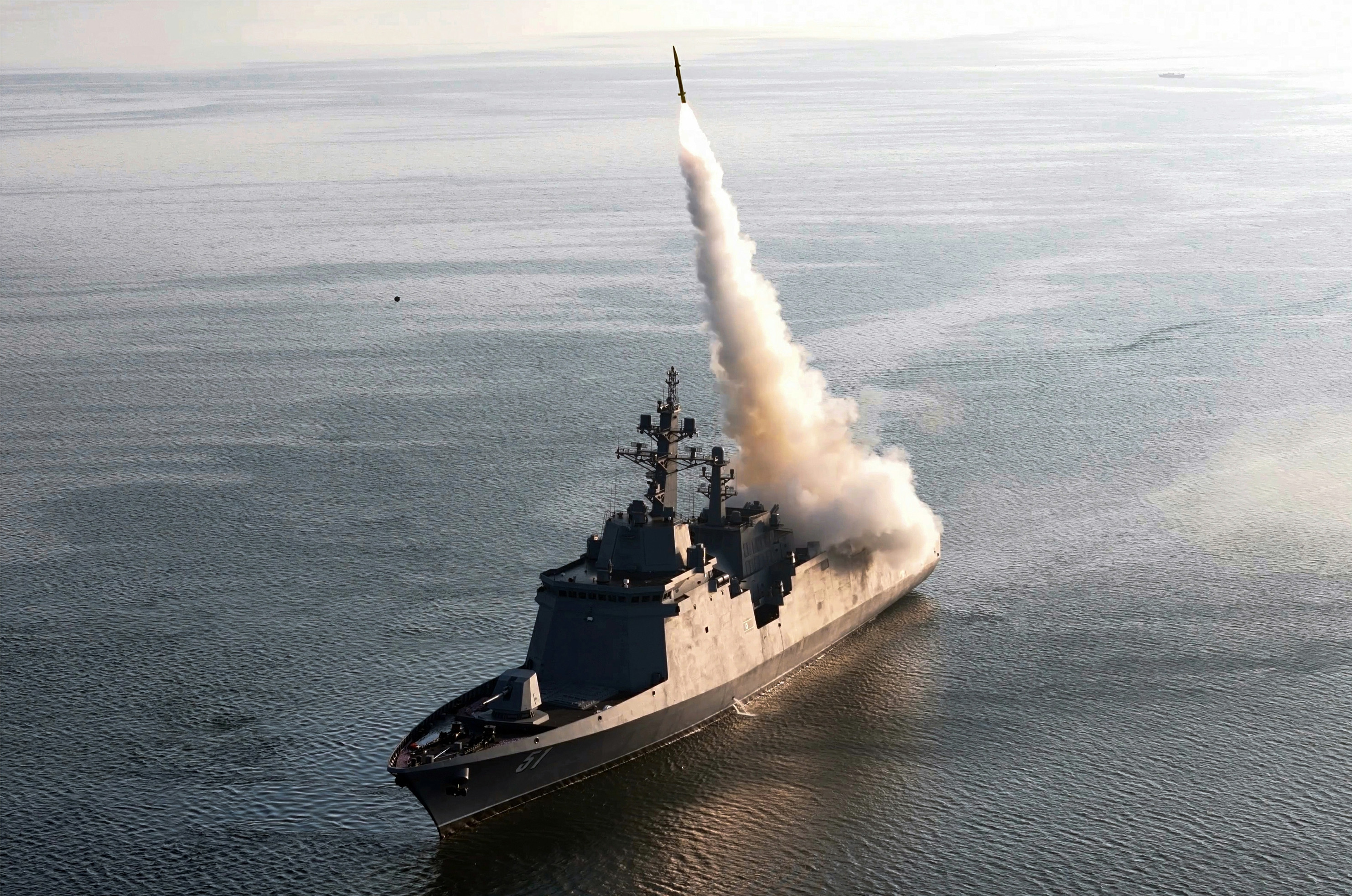 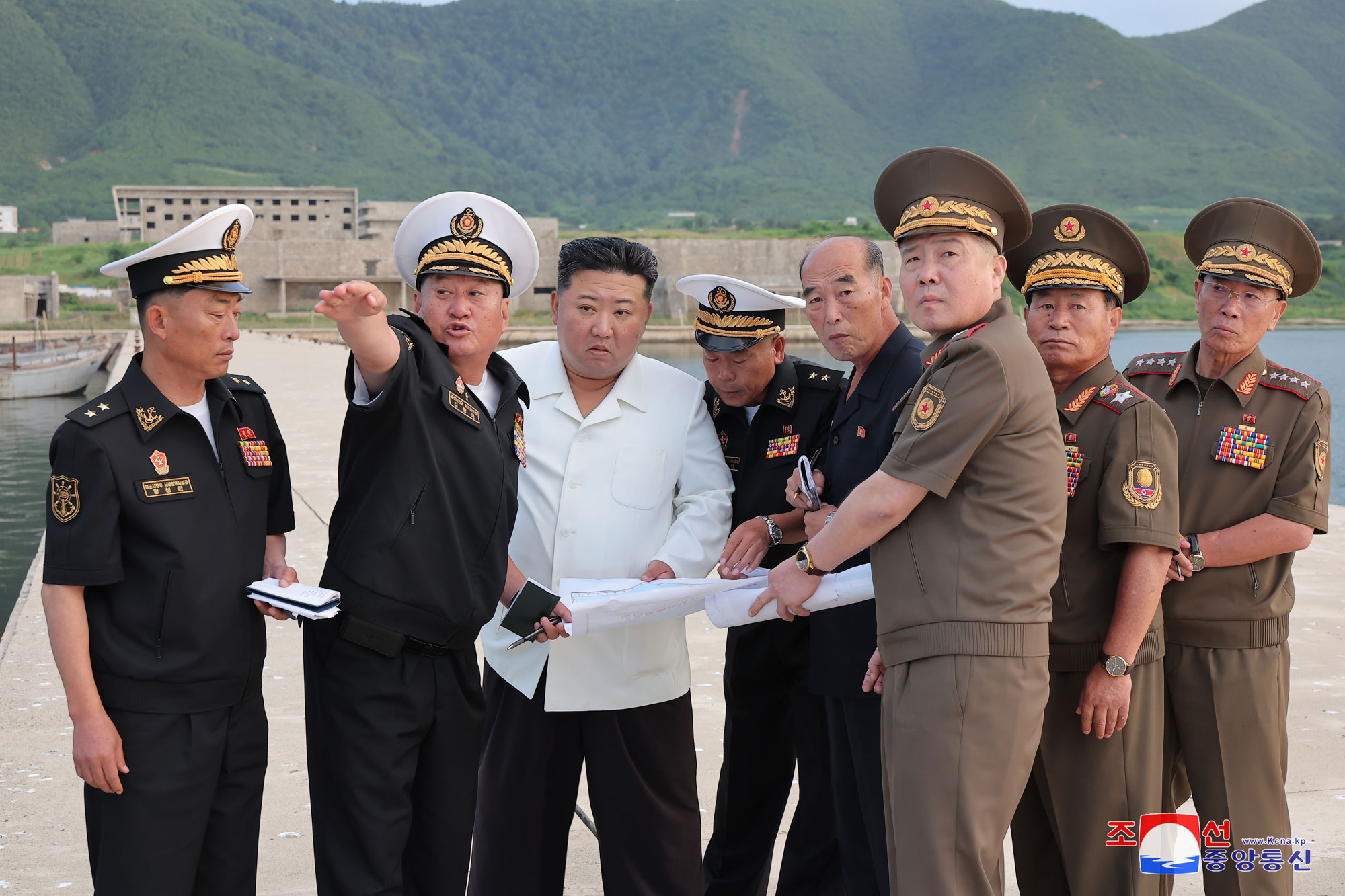

The allocation of workers and resources at the same time to rebuild the two shipyards in Nampho and Chongjin in recent months suggests Kim is focusing his efforts on shipbuilding for the time being, before likely pushing ahead with the naval base projects later this year. Given the size of the project (the Tapchon Bay base appears to cover around 300 hectares or 730 acres), it is likely that the military will offer an early clue of its resumption by installing a temporary worker’s camp on site ahead of new construction. CHONGJIN SHIPYARD UPGRADES During his visit to two unnamed shipyards in early March — identified by NK Pro as the Chongjin Shipyard and Nampho Dockyard (now translated by Korean Central News Agency as Nampho Shipyard) — Kim Jong Un demanded their “modernization” and said construction should not be “passive” but instead carried out rapidly to “boldly and perfectly create new and high-tech bases suited to the prestige and status of a powerful nation.” A February “nK Insight” report by SI Analytics was the first to identify new warship construction at the Chongjin Shipyard, finding it started in March 2024 — similar to the Choe Hyon-class destroyer’s construction schedule at Nampho. 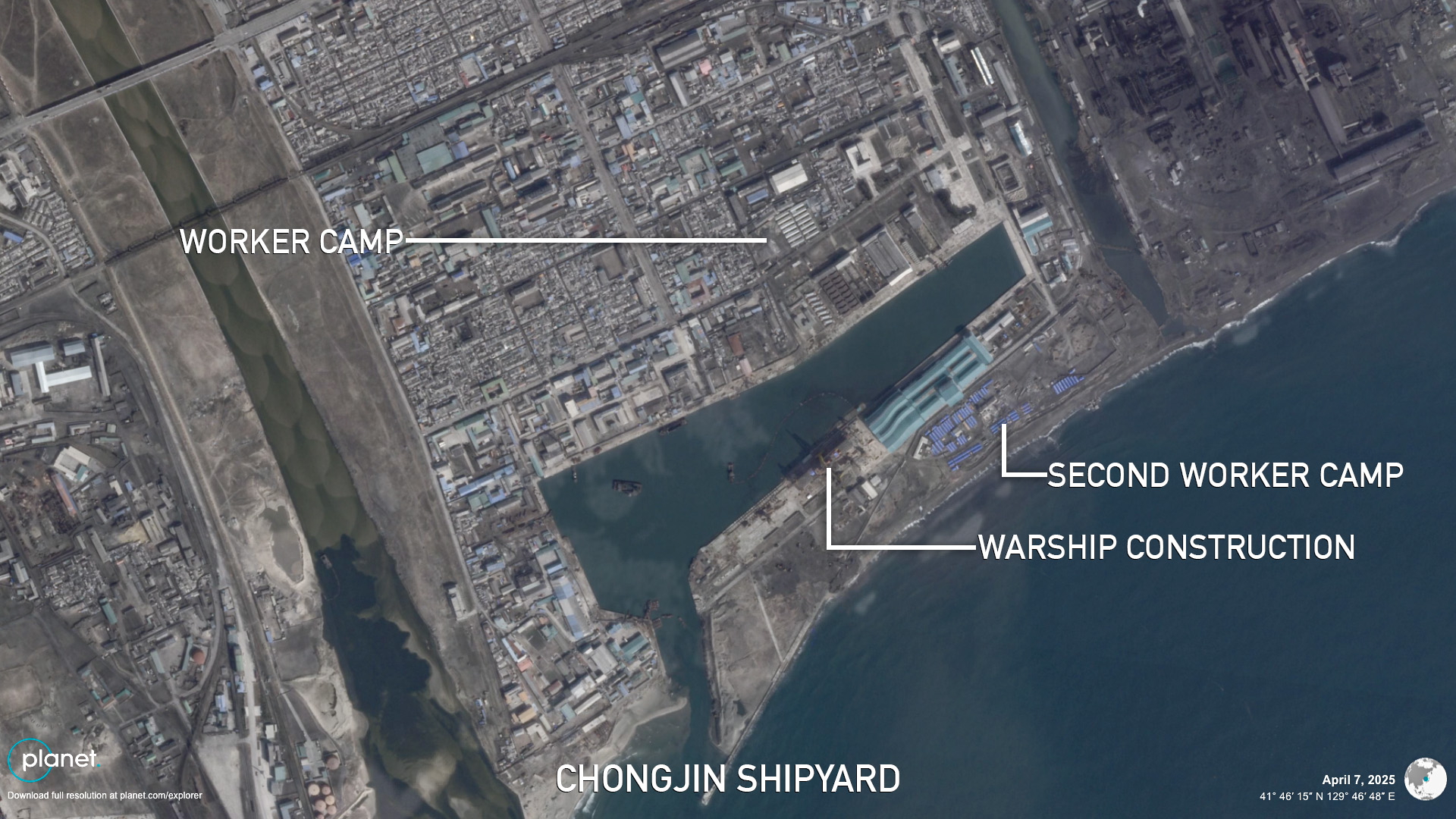
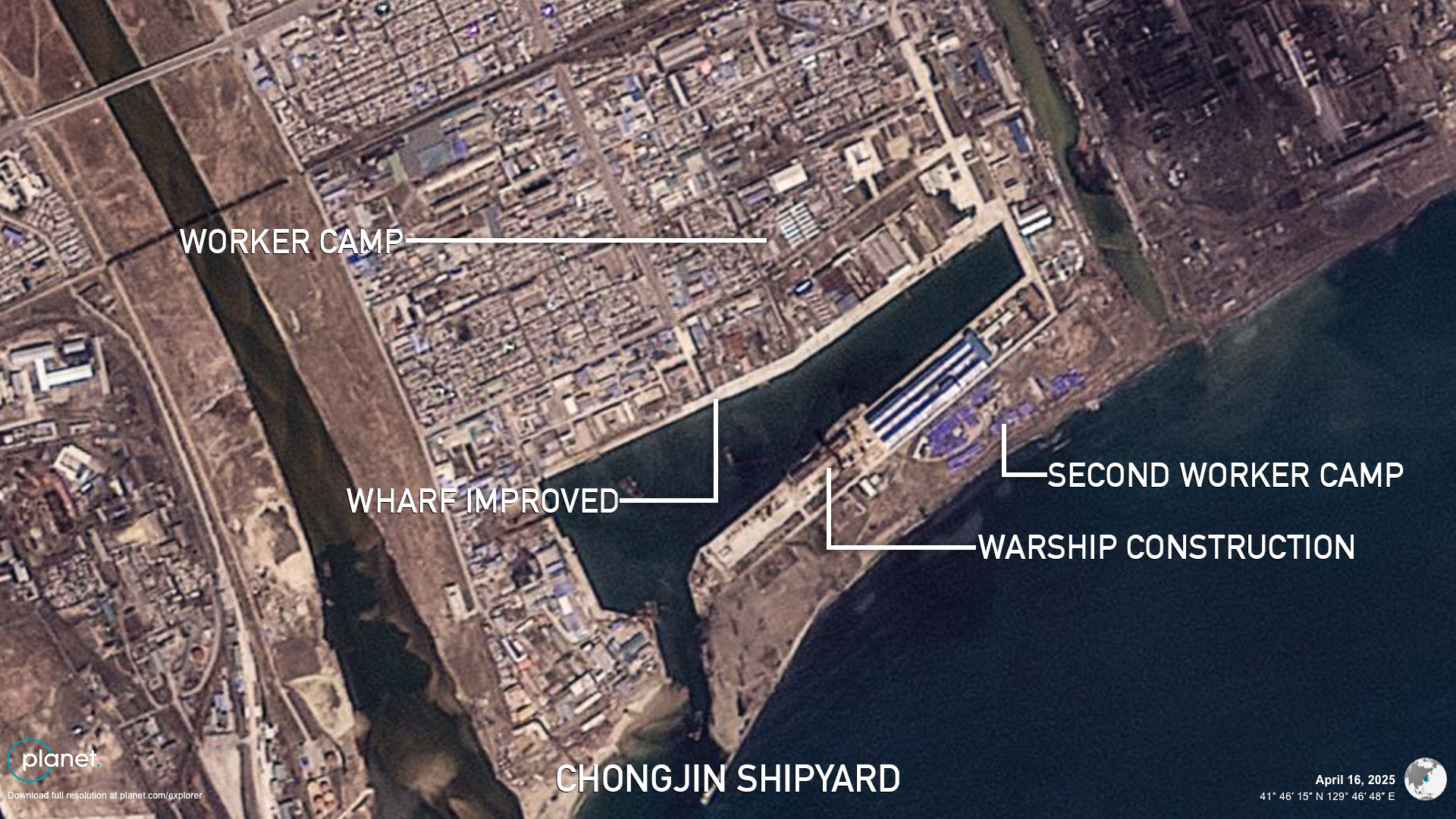
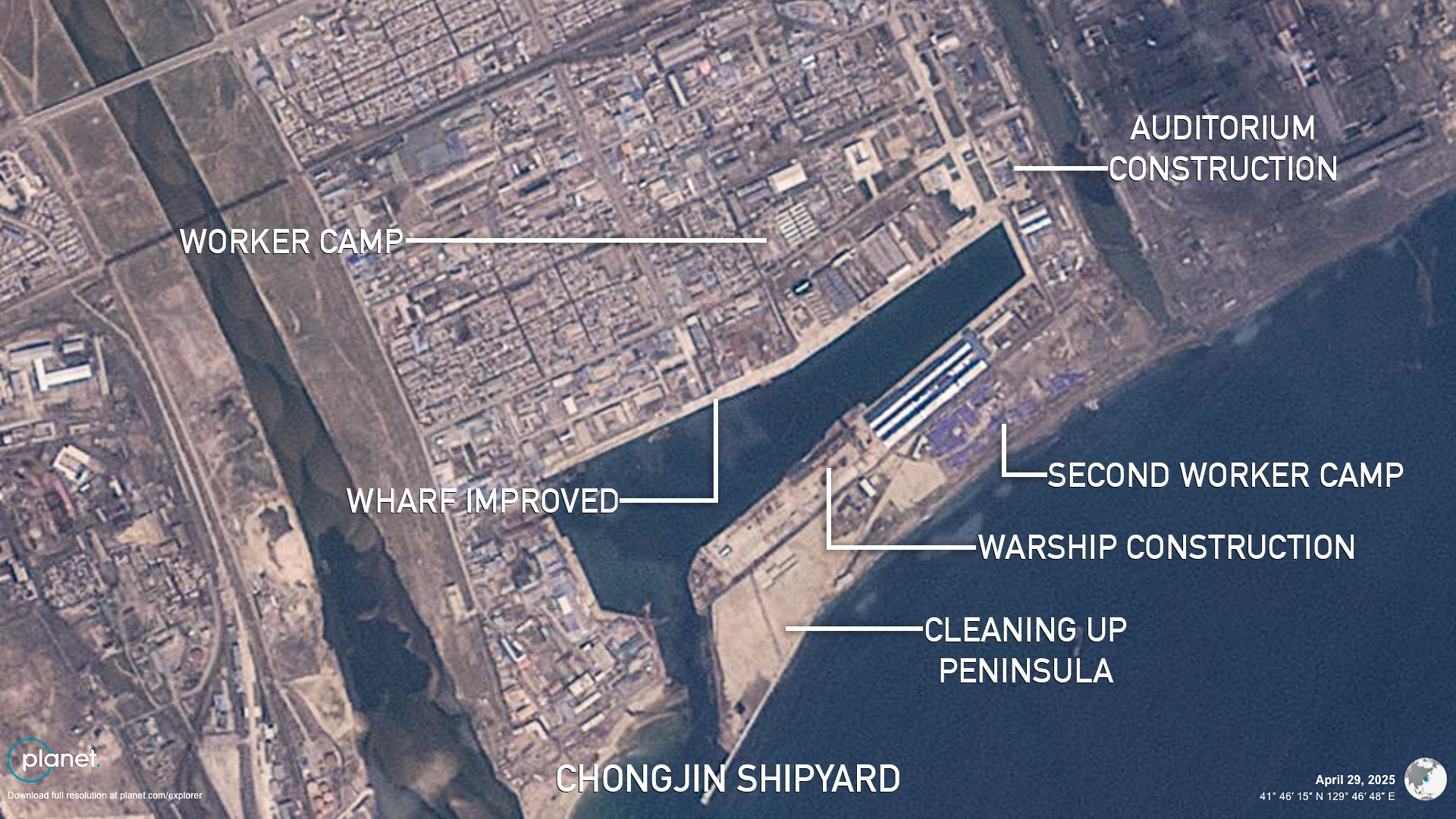
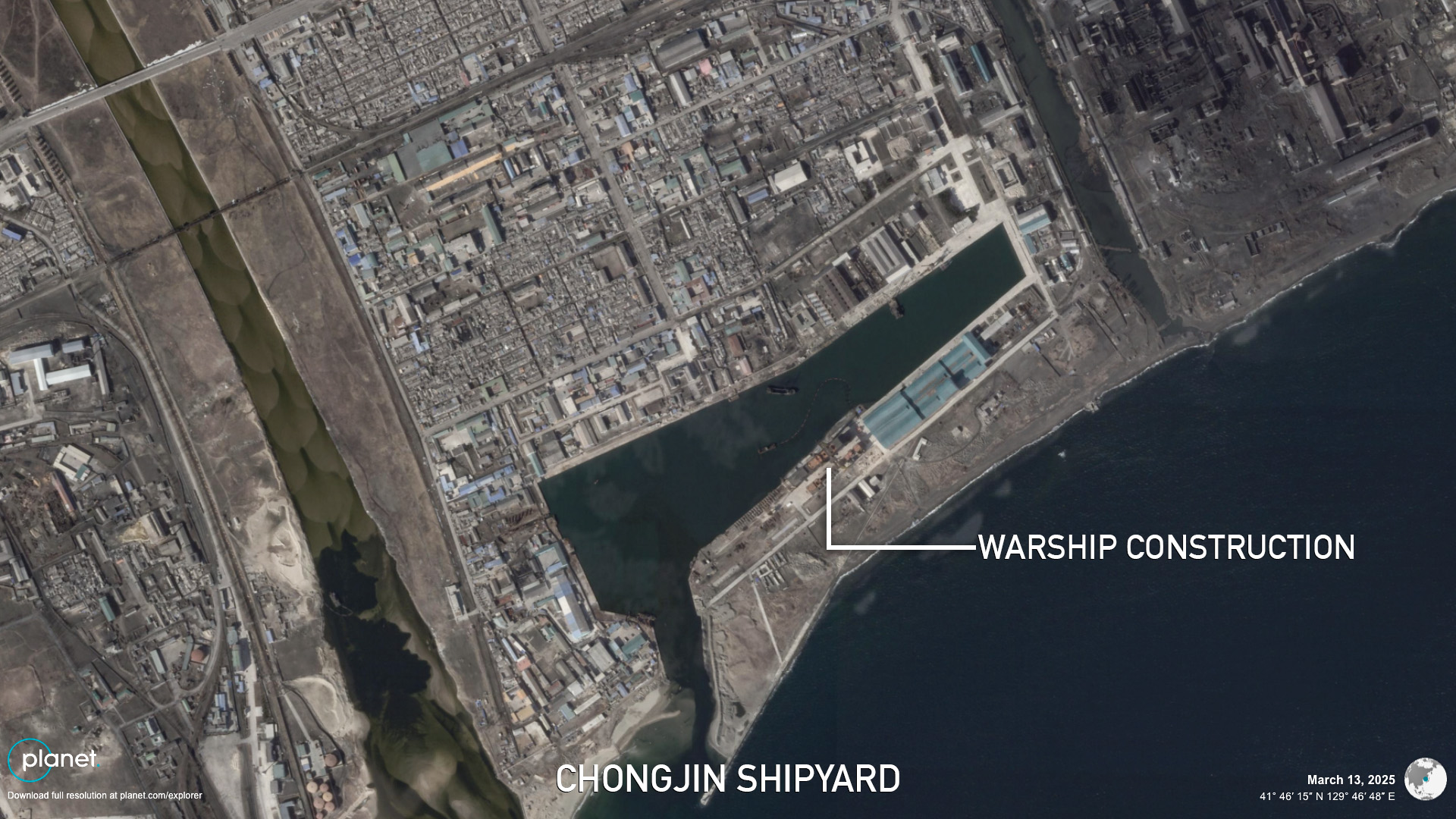
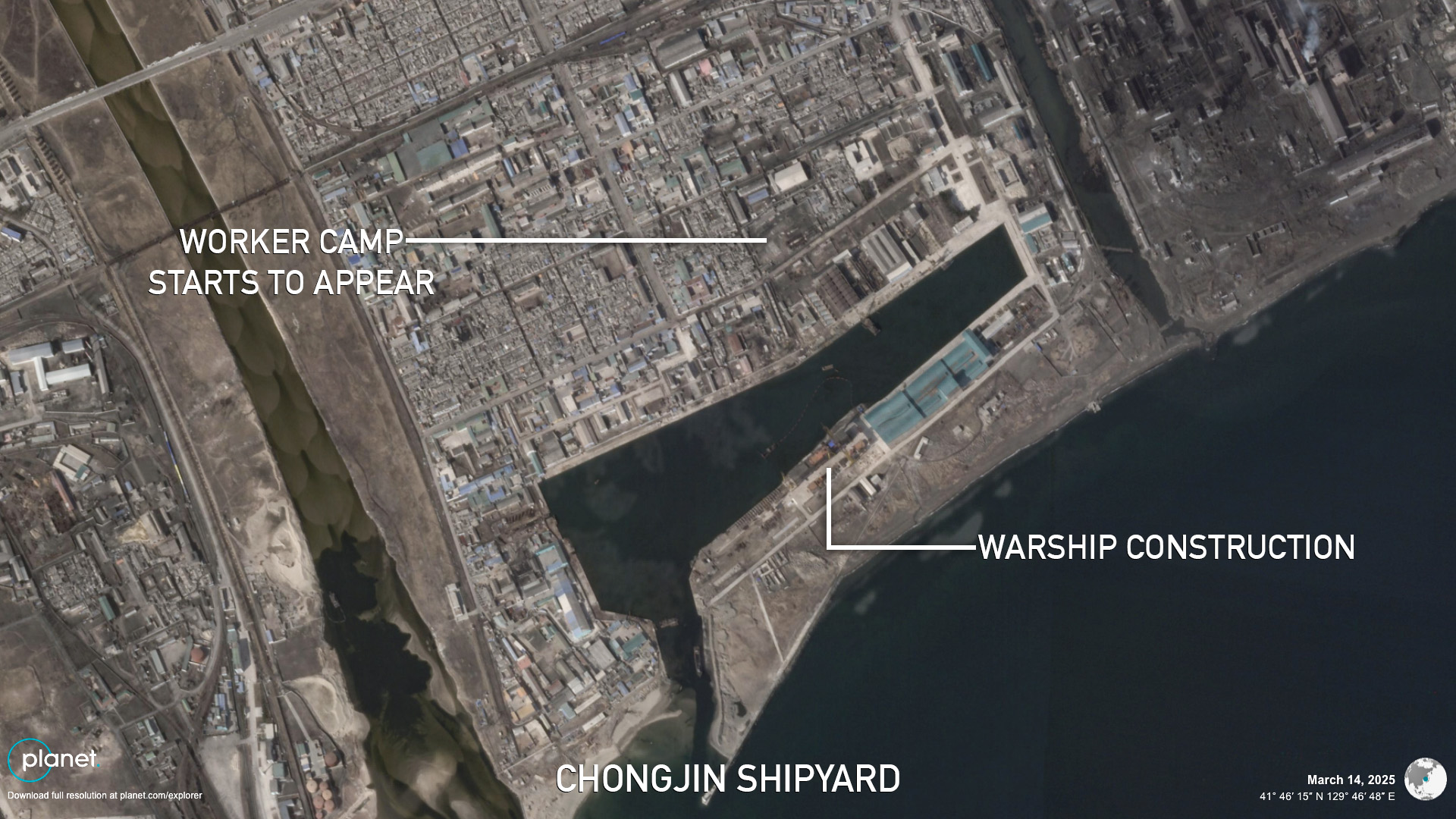
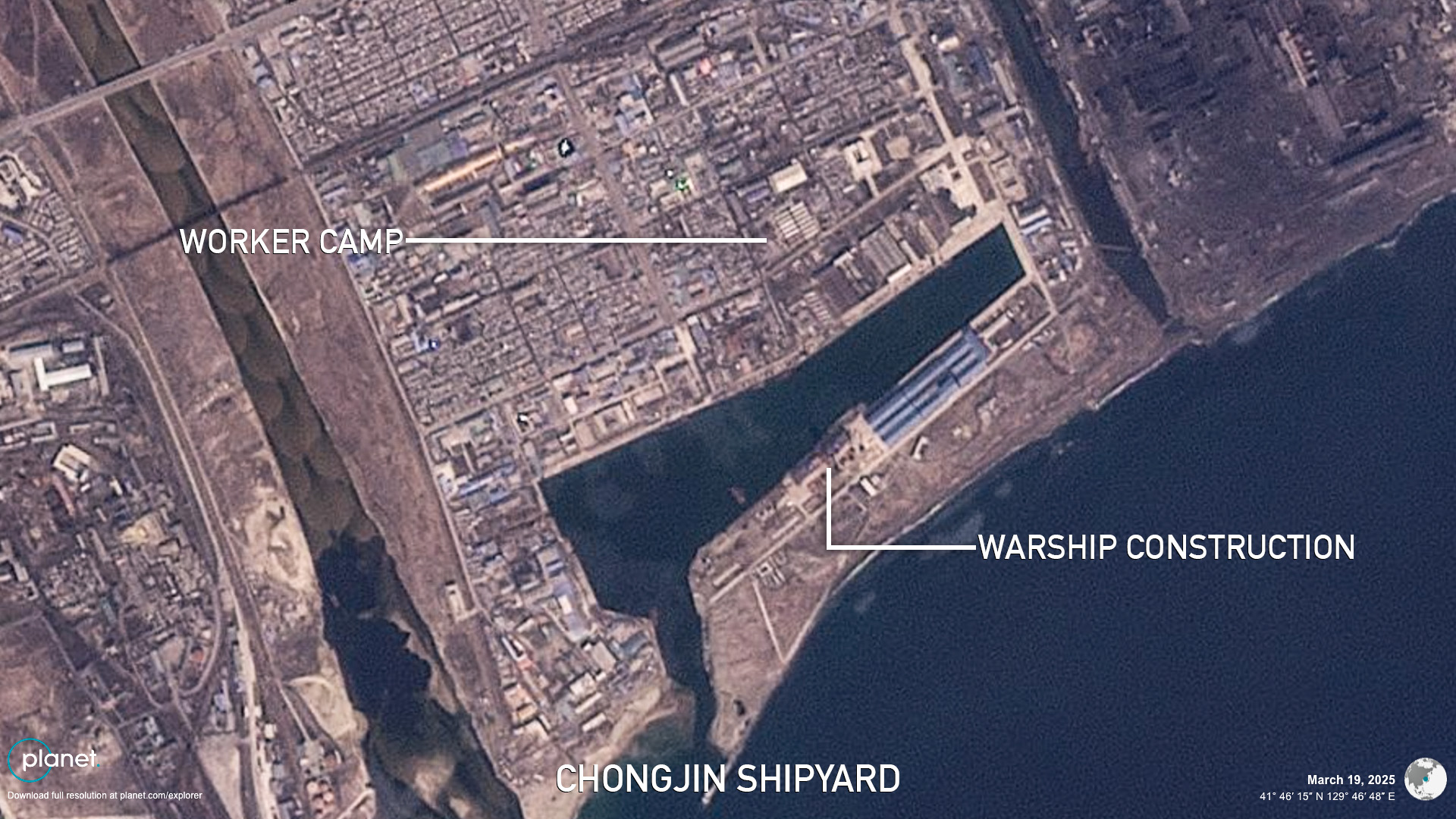
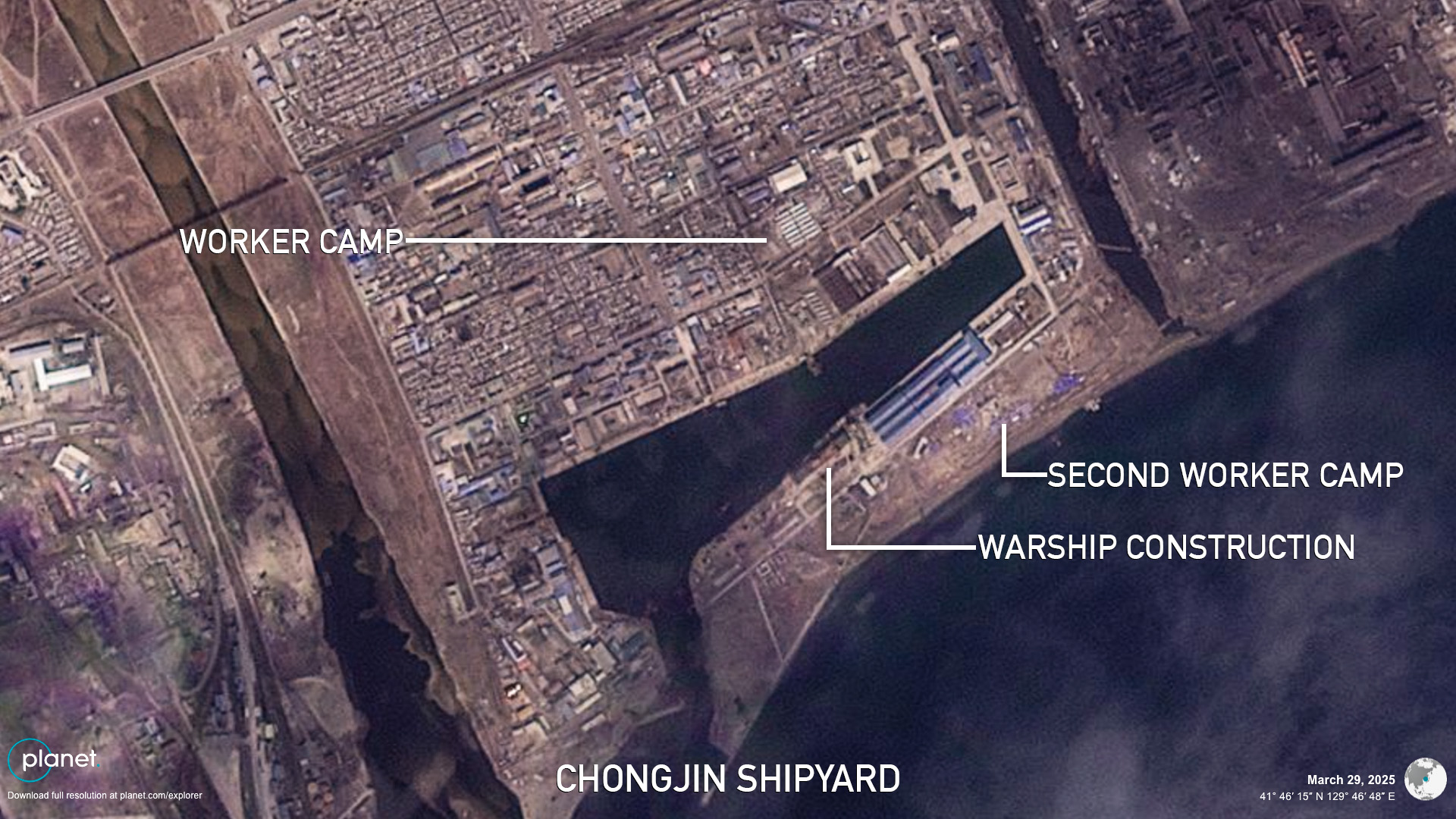
A shelter installed over the ship at Chongjin last December makes it difficult to measure its full length and other aspects to determine whether it is indeed a second Choe Hyon-class destroyer, but NK Pro analysis of pre-shelter satellite imagery suggests it likely is. This is based on its length at the time and its vertical launch system (VLS) cutouts appearing similar to those on the Nampho destroyer. Upgrades to the Nampho Dockyard already began last summer, but new NK Pro analysis has found that officials quickly took heed of Kim’s modernization orders and initiated major construction at the Chongjin Shipyard over the last month. Planet Labs imagery shows that temporary worker camp housing and administrative structures began to be installed across the complex between March 13 and 14. Workers then improved most of the northern wharf in the first week of April, before clearing the southern peninsula of the complex and restarting construction on a half-built meeting auditorium toward the entrance in the last couple weeks. 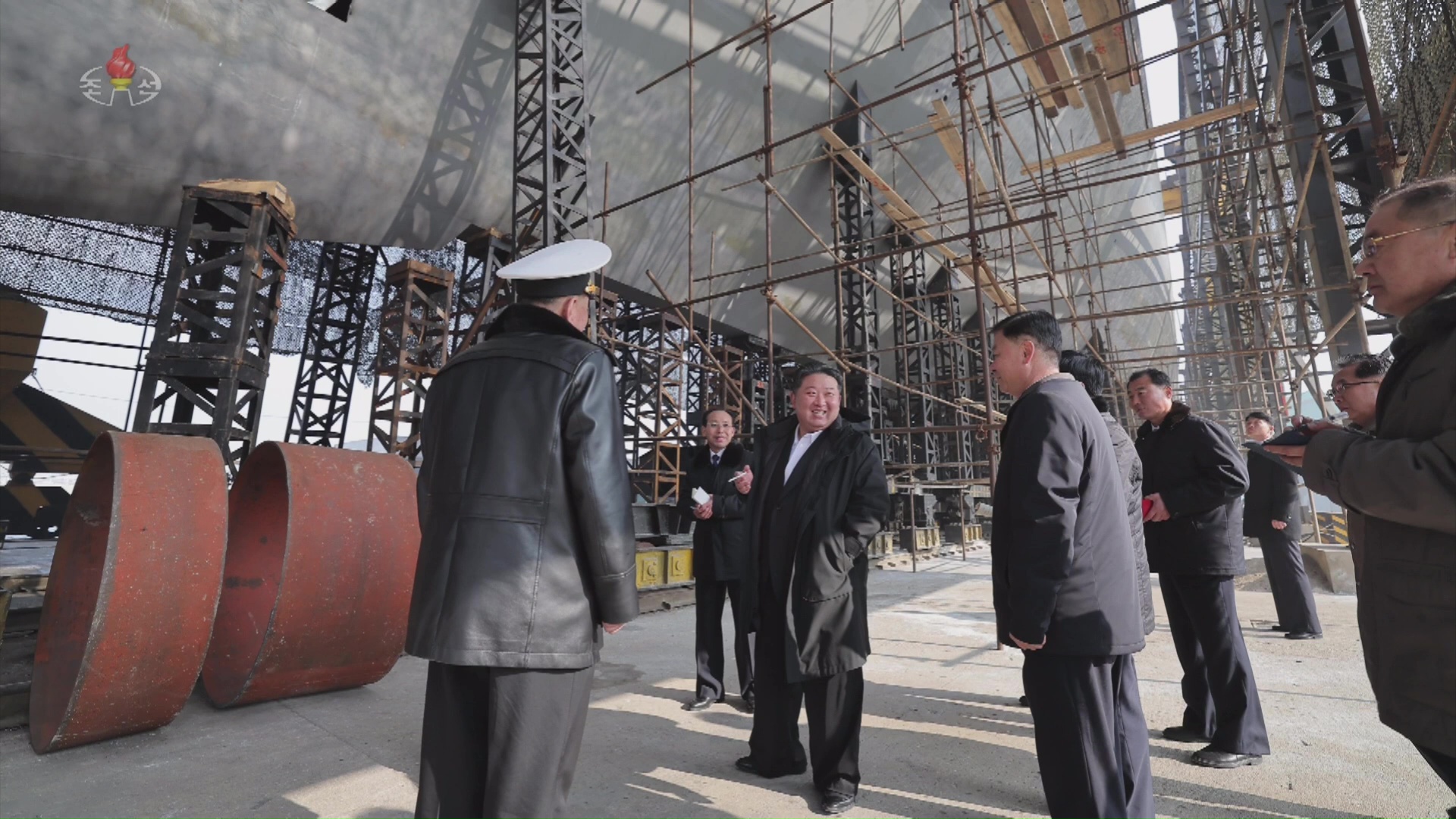 COAST TO COAST One remaining mystery is why the west-coast Nampho Shipyard produced a Choe Hyon-class not for the West Sea Fleet but for the East Sea Fleet, when the east-coast Chongjin Shipyard also appears to be in the latter stages of building a destroyer of the same class. One explanation could be that Kim has always planned on strengthening the East Sea Fleet first, and that the Nampho vessel was the only one ready to appear in a finished state for a ship-launching ceremony on the April 25 military holiday. He may also have been planning all along to move one or more ships from coast to coast as part of an intentional show of force against the U.S. and South Korea, in which case the Nampho destroyer’s construction schedule and destination would make sense together. Given Kim’s vow to build a fleet of ships including cruisers larger than the destroyers and “escort ships of various classes,” the Chongjin and Nampho shipyards may focus on separate classes going forward, or Kim may choose to continue to move ships between coasts in line with his geopolitical goals. However, the move appears odd in light of Kim’s apparent intention to utilize new naval developments to enforce North Korea’s preferred, but still unspecified, west coast maritime boundary. His interest in using new warships armed with long-range surface-to-air missiles (SAMs) to force the U.S. and ROK to stop surveillance flights from international airspace — especially on the west coast closer to the capital and DPRK weapons factories — also appear to be less of a priority with the new destroyer’s conveyance to the east coast. All of this may simply mean a ceremony to launch the Chongjin ship is imminent and that it may be conveyed to the west coast, offering Kim two opportunities to sail around the peninsula and test his adversaries. Edited by Bryan Betts © Korea Risk Group. All rights reserved. |

October 11, 2026Oct 11, 2026

The ultimate resources for professionals working on North Korea
 SHARE
SHARE COPY LINK
 X
X MASTODON