  News North Korea appears to test rocket engine as it preps for next satellite launchImagery suggests test sought to troubleshoot launch vehicle that failed in late May, amid renovations at spaceport 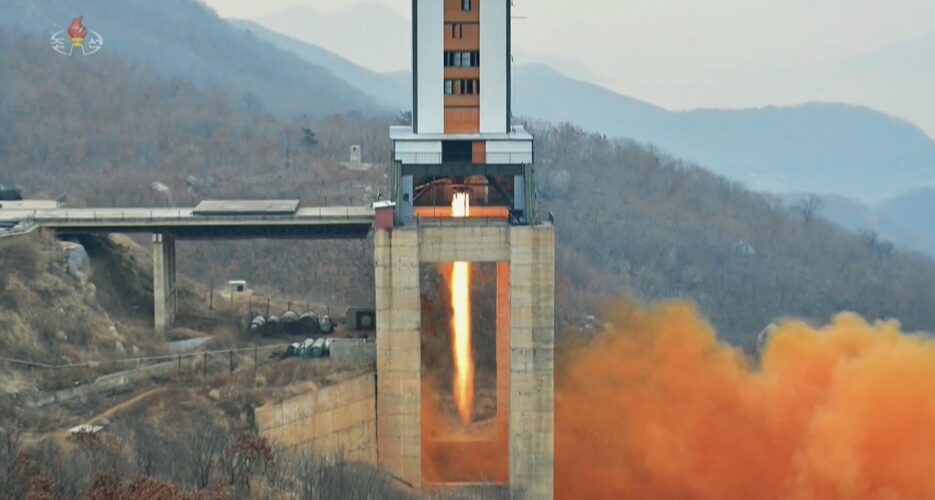 North Korea appears to have conducted a rocket engine test at its main spaceport in July, possibly to troubleshoot the launch vehicle that failed to put a military satellite in orbit in late May and prepare for the next attempt, according to NK Pro analysis of satellite imagery. Planet Labs imagery suggests the test took place at the vertical engine test stand inside the Sohae Satellite Launching Ground complex between July 7 and 16. It comes as construction and upgrades have continued in recent weeks around the entire Sohae complex. The clearest sign of an engine test last month is the appearance in high-resolution imagery of vegetation die-off under the vertical stand — likely a result of intense heat and exposure to chemicals emitted during the test. This is consistent with past tests from the same spot, including one last August. North Korea has typically used this particular stand to test liquid-fuel engines for its satellite-carrying rockets and intercontinental ballistic missiles (ICBMs). State media hasn’t publicly reported on a test here since Dec. 2019, but reported a solid-fuel ICBM engine test at a new horizontal stand built next door in Dec. 2022. It is unlikely that a Hwasong-18 solid-fuel ICBM launch from Pyongyang on July 12 is related since the vertical stand is likely still tuned for liquid-fuel motors, according to Dave Schmerler, a senior research associate at the James Martin Center for Nonproliferation Studies. There also did not appear to be any vegetation die-off in the area beneath the horizontal stand as of the latest image taken on Aug. 1. 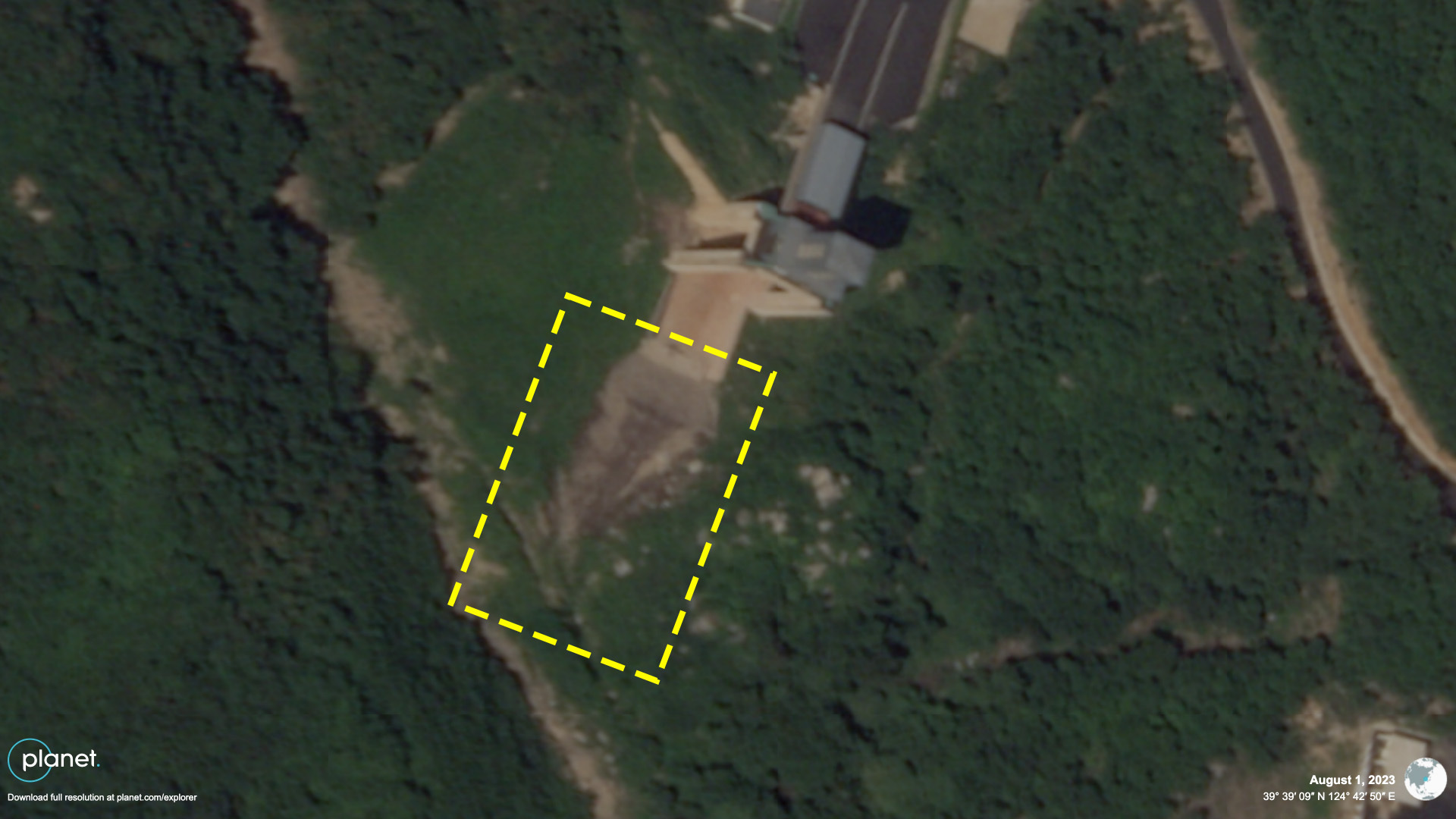
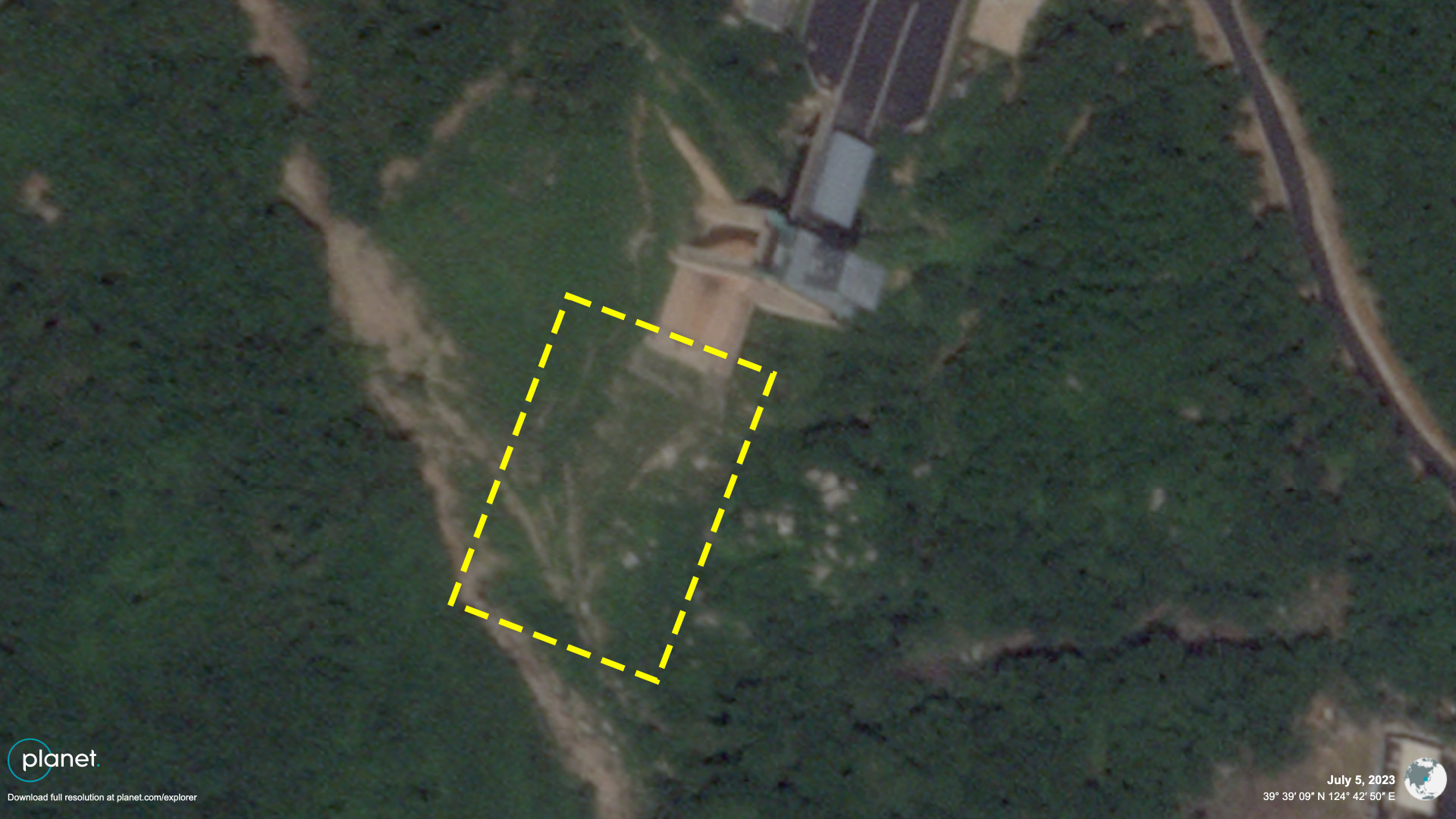
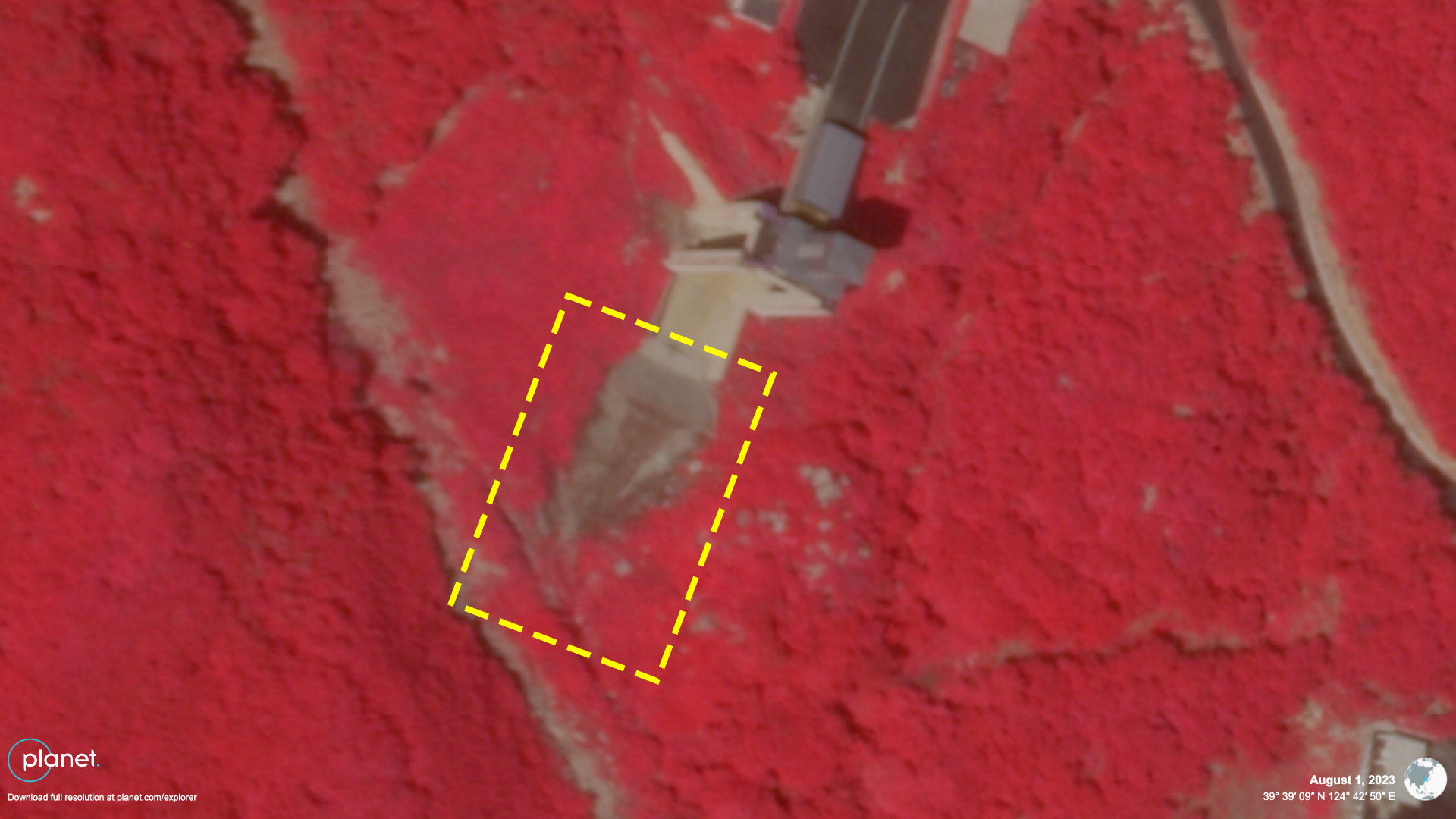
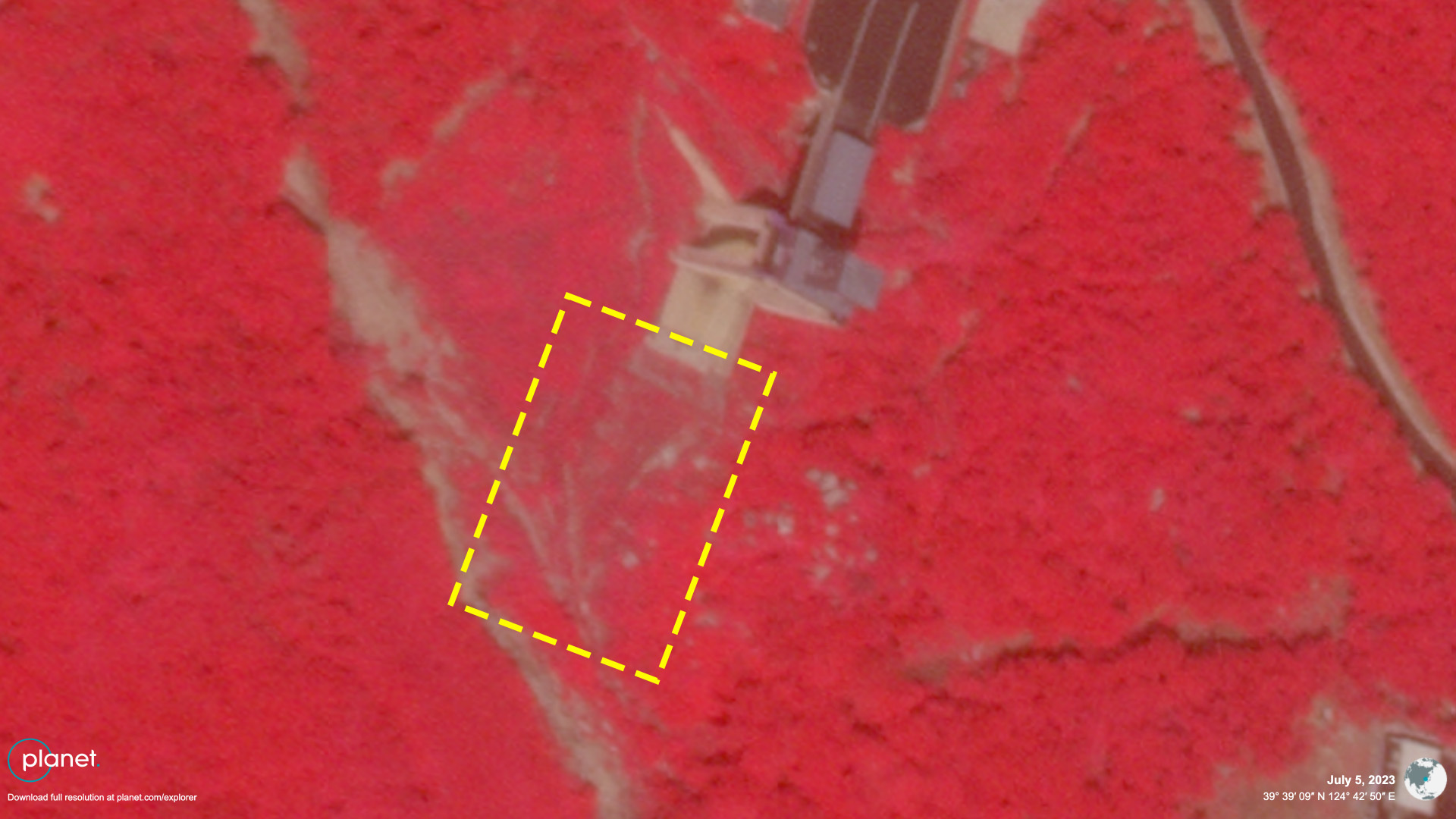
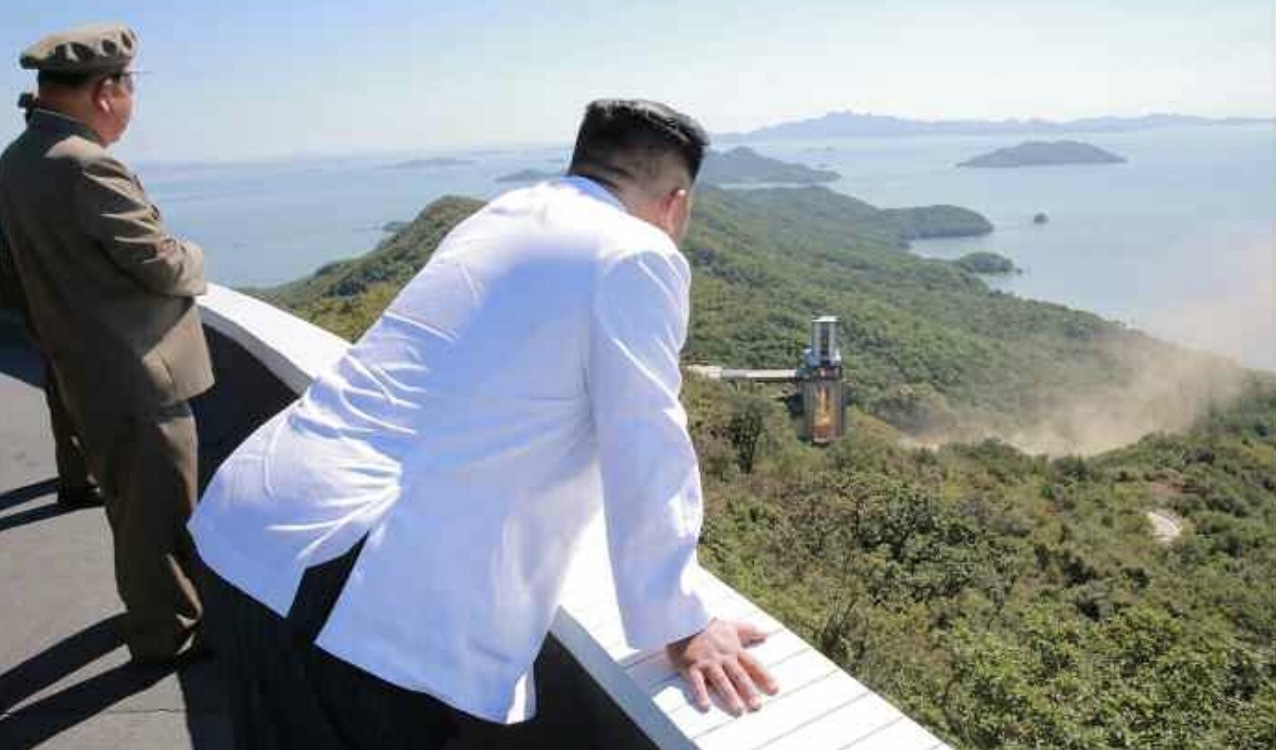 The latest test followed increased activity and renovation work at the vertical engine stand in the last half of June, including repaving the entire area and re-roofing and likely fixing up other parts of the test stand itself. The rail-mounted transfer structure, used to cover work such as setting up an engine at the base of the stand, also appeared to be upgraded or replaced. A DPRK National Aerospace Development Administration (NADA) spokesperson blamed engine issues with the carrier rocket “Chollima-1” (or “Chonma-1”) for the failed launch of the military reconnaissance satellite on May 31, promising to “conduct various tests in order to carry out a second launch within the shortest period possible.” Emphasizing the urgency of the matter, DPRK leader Kim Jong Un and top officials condemned the “irresponsibility” of NADA workers at a party plenum in June and repeated a promise to conduct a second attempt “at an early date.” North Korea took around eight months to assess, test and prepare for a second launch after two failed liquid-fuel rocket launches in the past, possibly offering insights about when the next spy satellite launch will take place. In the most recent example, North Korea conducted its second Hwasong-17 ICBM launch in Nov. 2022 after a failed first attempt that March, and the August engine test at Sohae may have been related. Previously, North Korea launched the Kwangmyongsong-3 Unit 2 satellite in Dec. 2012 after an initial failure that April. 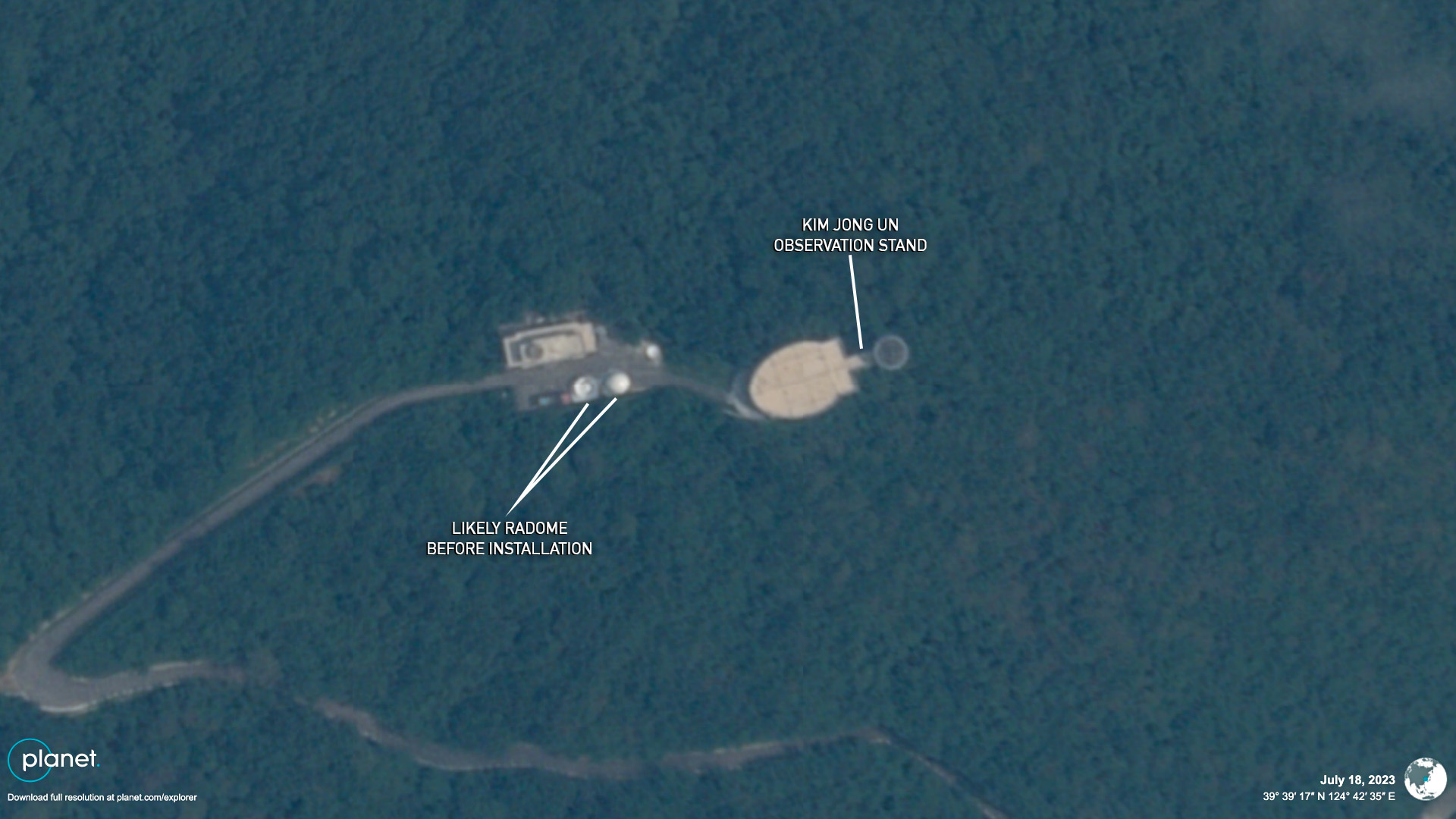
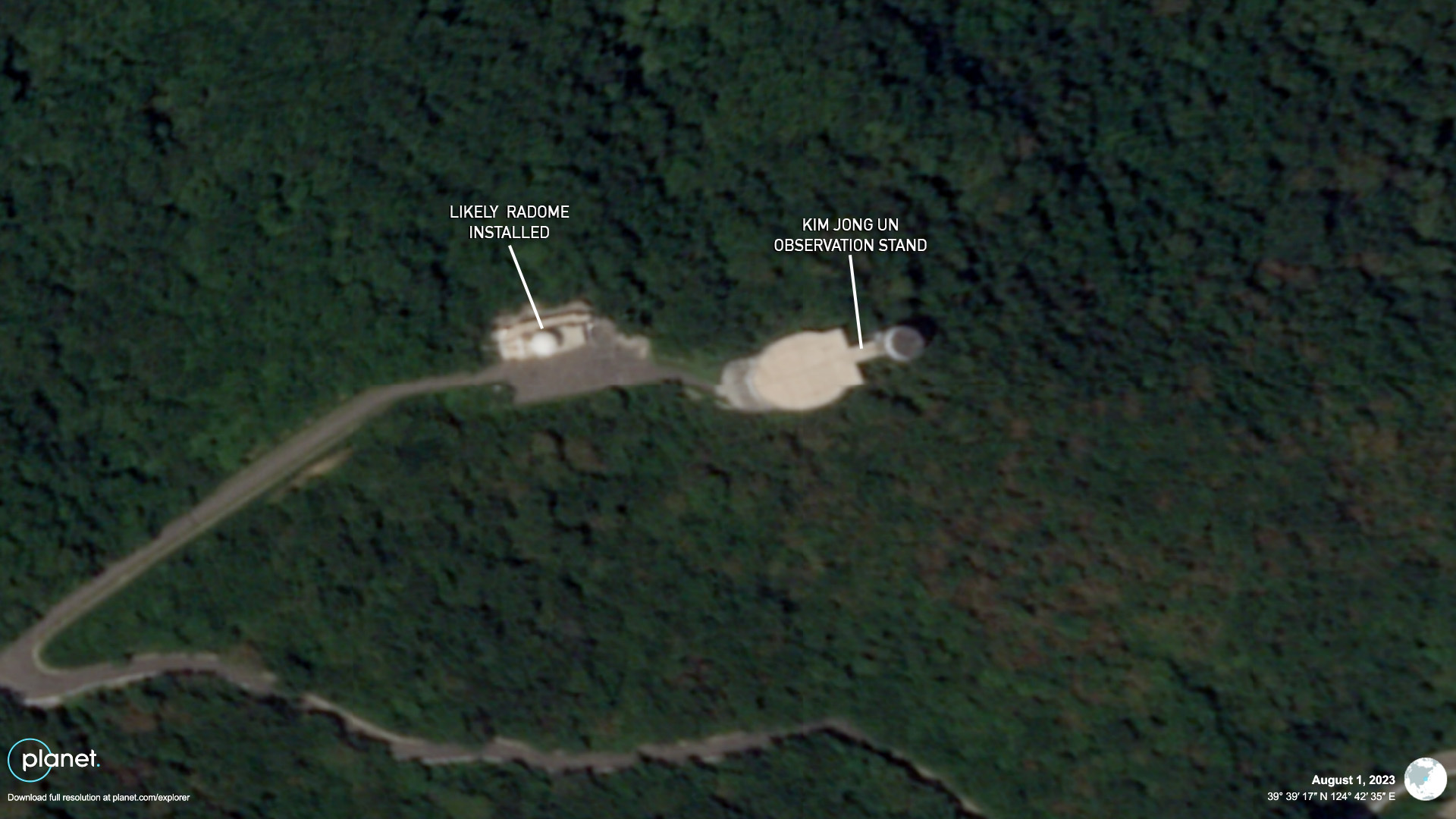
UPGRADES AROUND THE COMPLEX Imagery also shows a large-scale project to upgrade the entire Sohae complex has continued in the last month. This includes the installation of what appears to be a radome in the days after the apparent engine test, atop a building on a hill next to one where Kim Jong Un typically watches tests at the vertical and horizontal engine stands below. The radome could house radar tracking systems, telemetry equipment or other communication, monitoring and control equipment for use during rocket launches. Construction of roads leading to the new launchpad — where the recent launch took place — also appears to be a main focus of the ongoing upgrades. One new road leads from an unfinished tunnel to the launchpad, where paving work is underway, and another just started to take shape in mid-July between the launchpad and an unfinished seaport to the south. 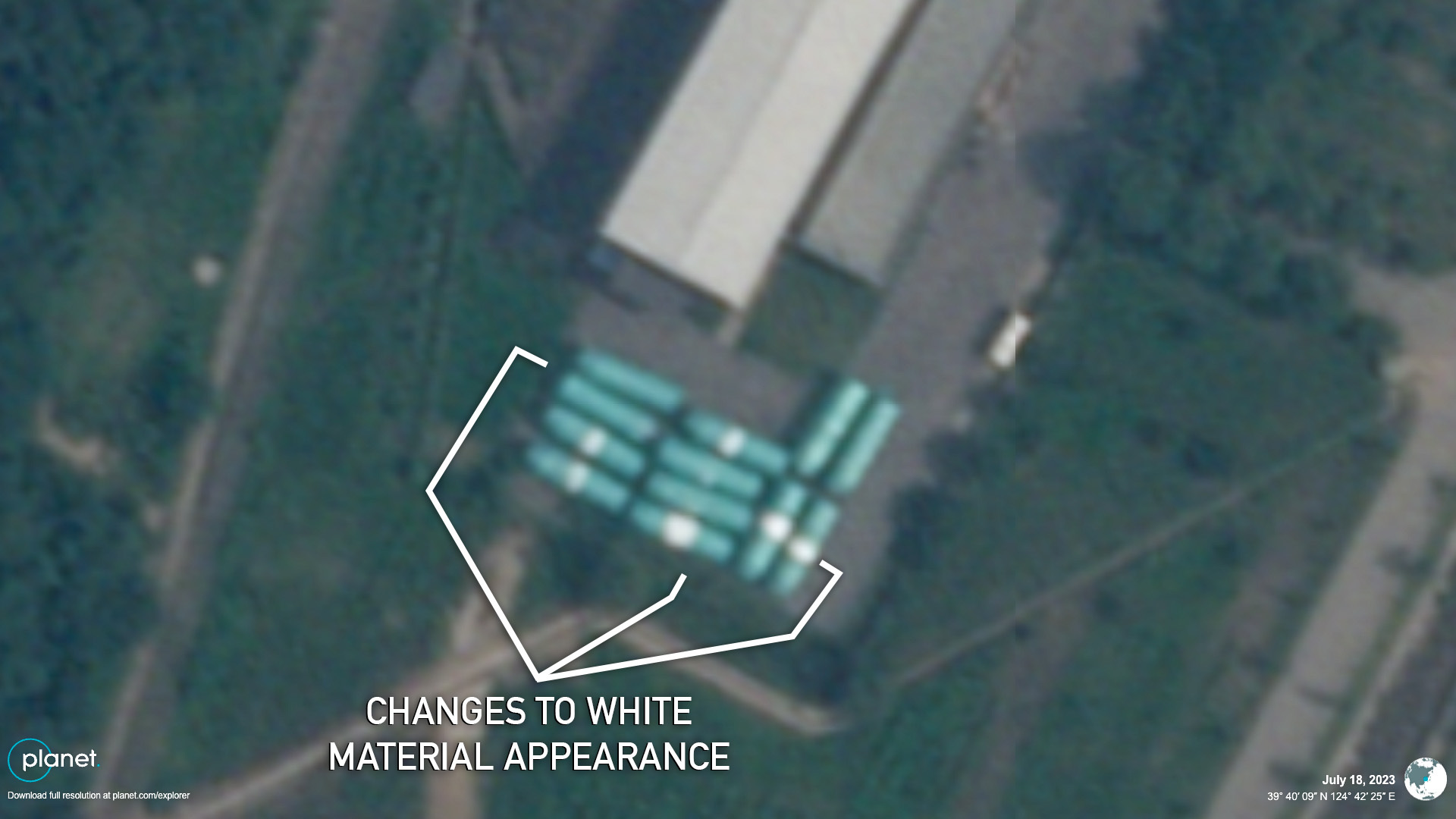
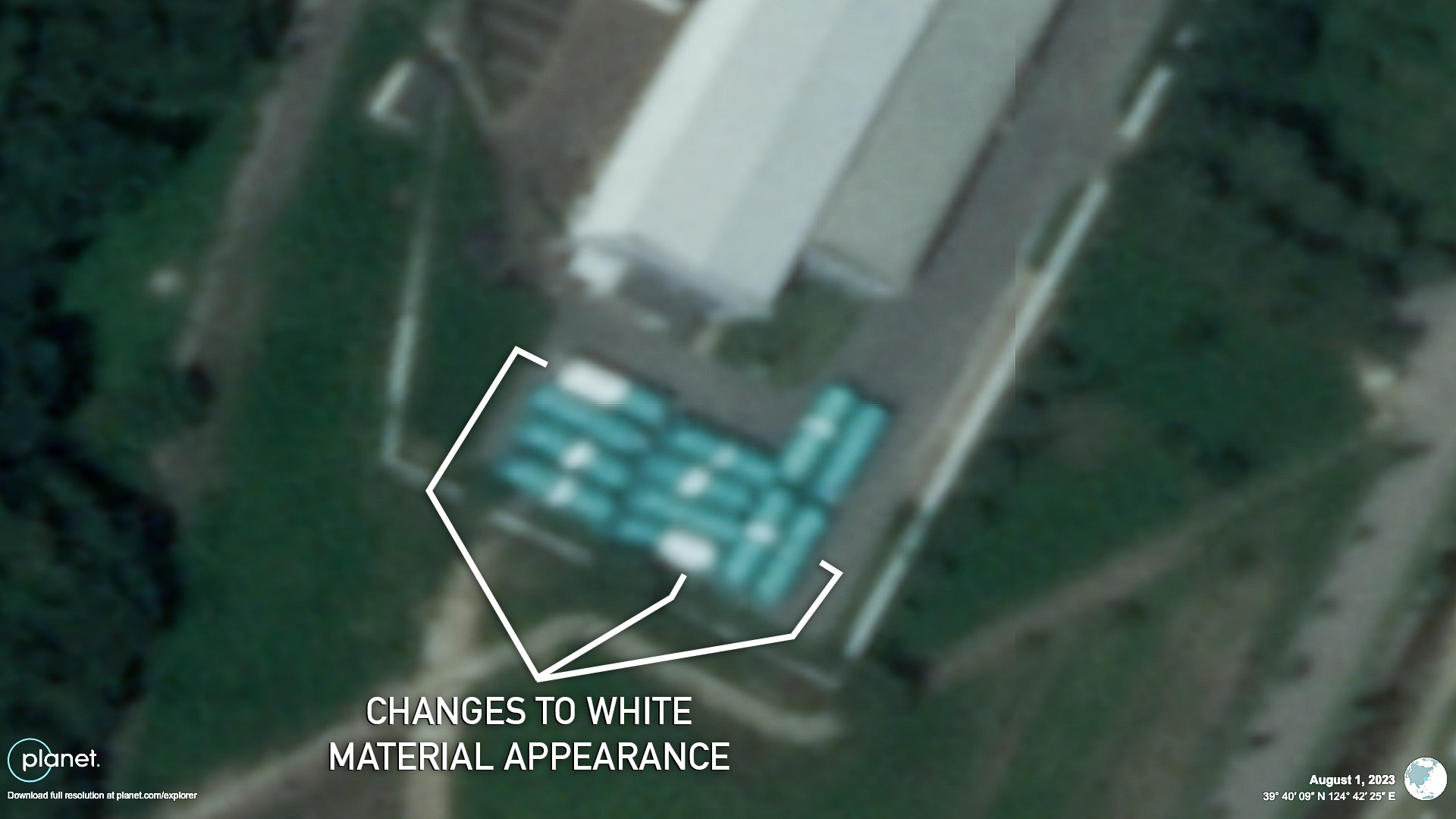
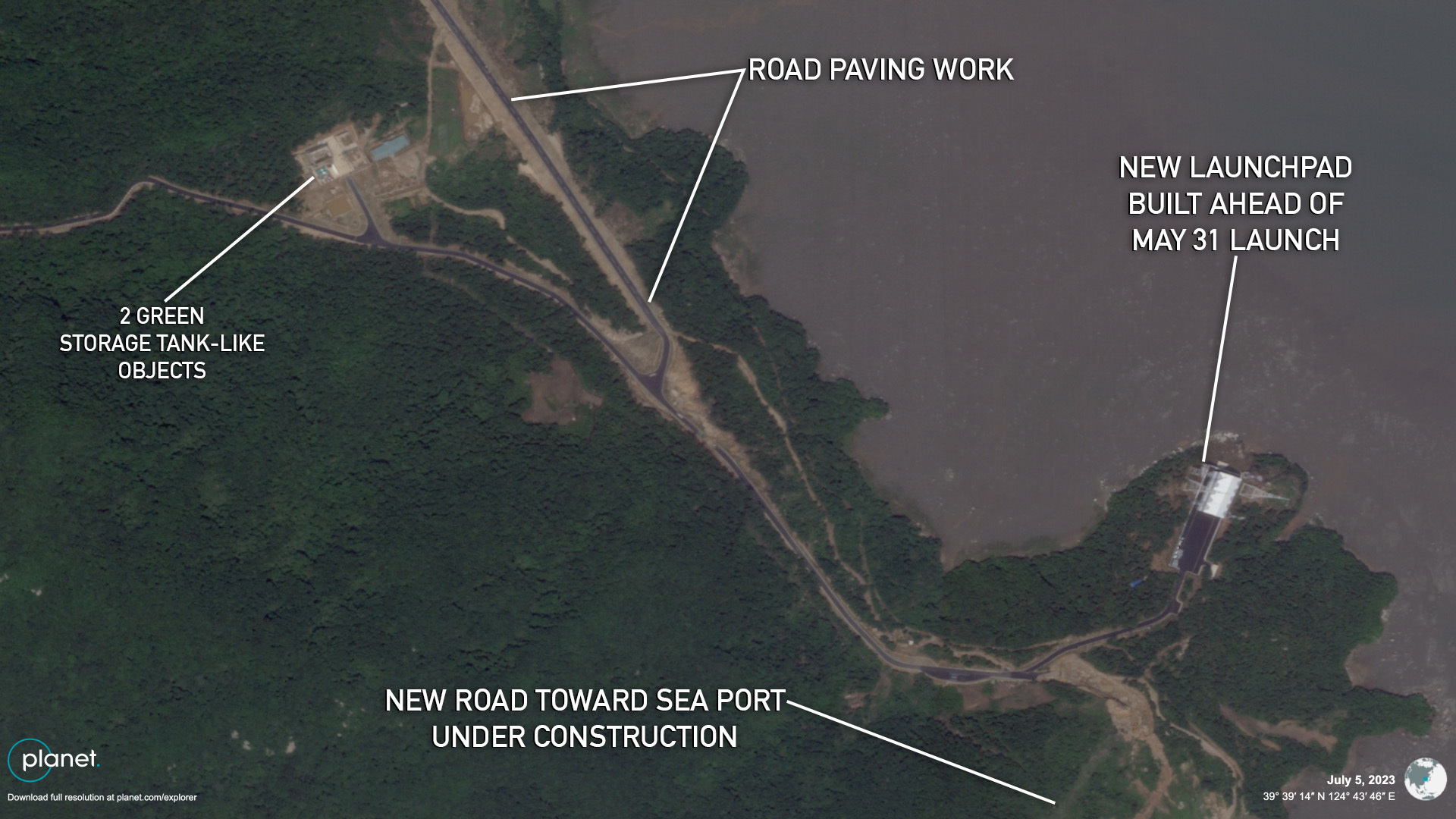
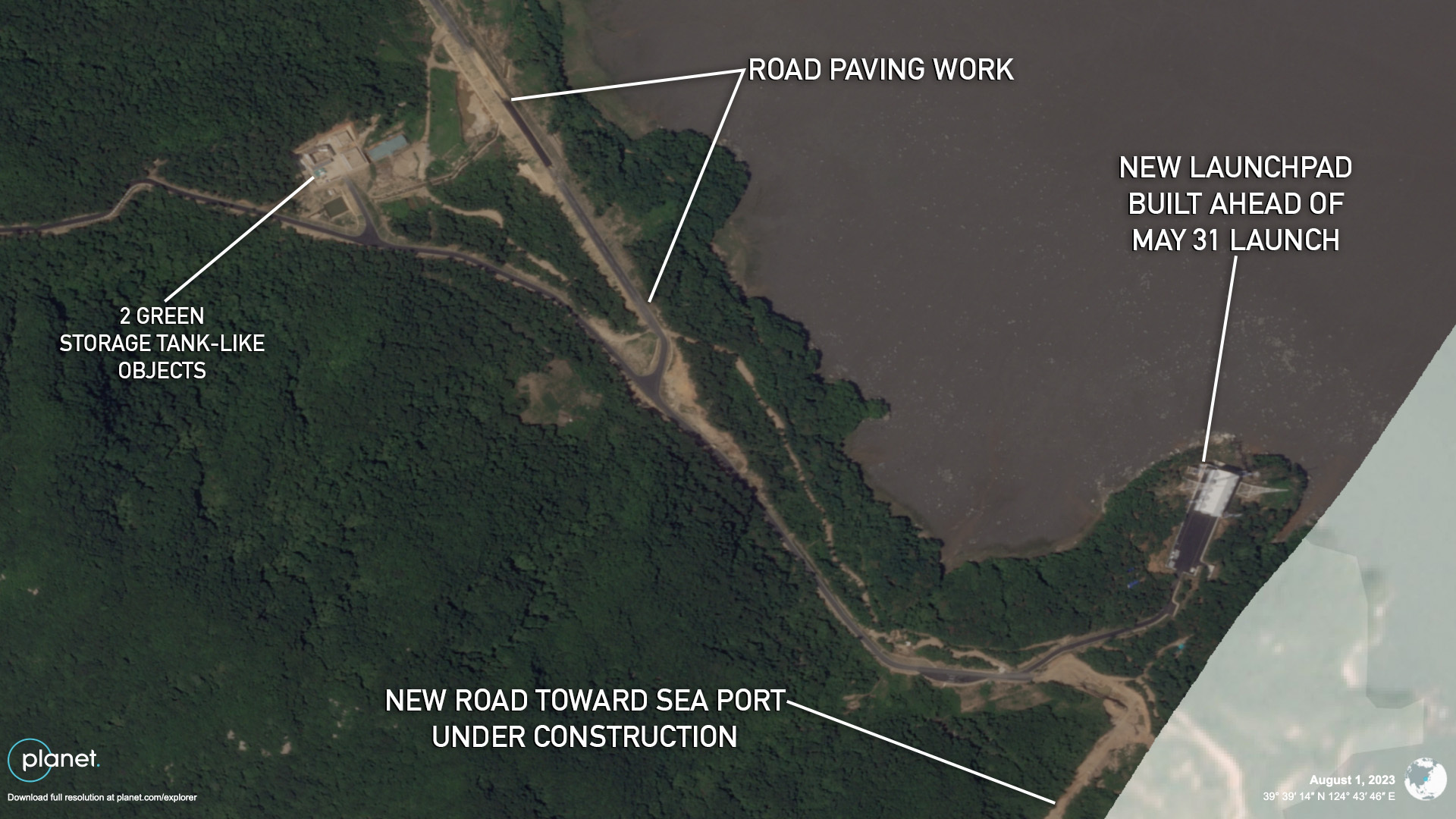
The repaving and upgrading of the new launchpad appeared to take place between June 16 and July 18, but no major changes appeared through the latest image taken on Aug. 1, according to NK Pro analysis. Imagery also shows that 12 large green objects, measuring around 32 by 8 feet (10 by 2.5 meters) and possibly cylindrical in shape, appeared in the parking lot of the rocket processing facility at the complex between July 10 and 16. Some of the objects are partially covered in a white material that has changed shape in recent weeks. The objects could be storage tanks of some kind or containers holding equipment, but the fact that they have been kept outdoors during heavy rains between mid-July and Aug. 1 suggest they do not contain sensitive materials. Two of what appear to be the same kind of object have been parked at another new construction site next to a reported security barracks in the complex since June 18. Edited by Bryan Betts © Korea Risk Group. All rights reserved. |

October 28, 2026Oct 28, 2026

The ultimate resources for professionals working on North Korea
 SHARE
SHARE COPY LINK
 X
X MASTODON