  Analysis North Korea repaves spaceport launchpad after recent satellite failureFresh work throughout Sohae complex comes as party vows to quickly attempt another launch 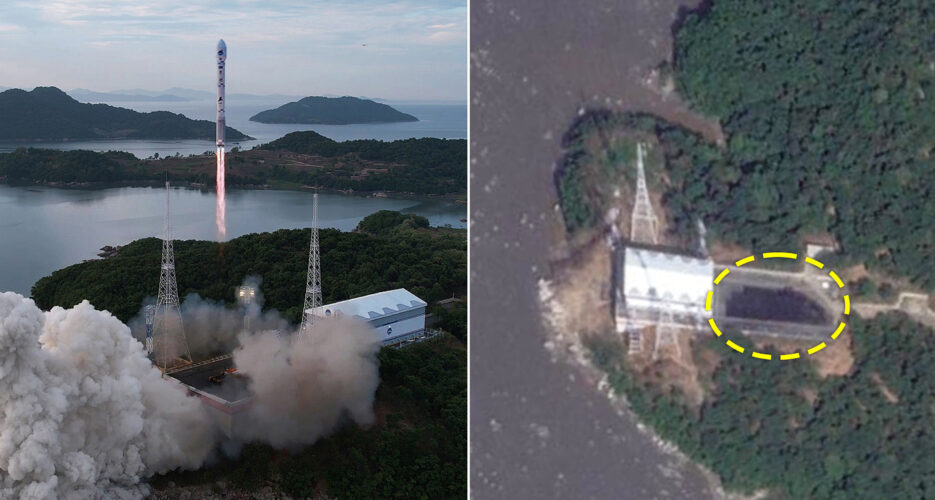 North Korea has begun repaving the new launchpad used for the country’s failed military satellite launch, according to NK Pro analysis of satellite imagery, as the ruling party promised again this week to attempt another launch “in a short span of time.” Planet Labs high-resolution imagery shows repaving efforts began between June 16 and 18 throughout the Sohae Satellite Launching Ground complex, including on the new coastal launchpad, on the new and old rocket engine test stands and near the old launchpad. The new launchpad was first paved black within eight days of the last launch attempt on May 31, imagery shows, as part of the speedy construction of the entire pad and its infrastructure starting in mid-April. 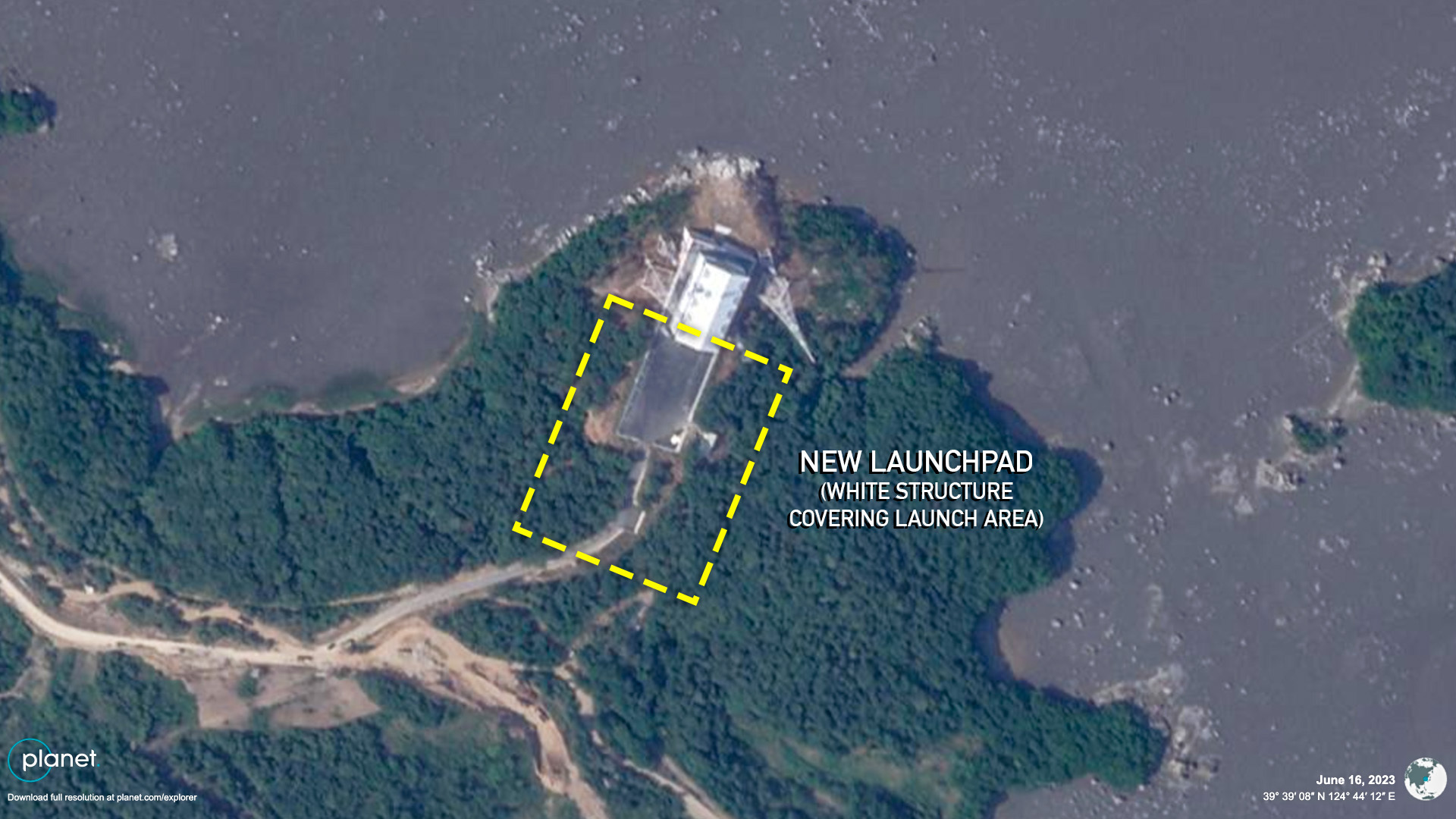 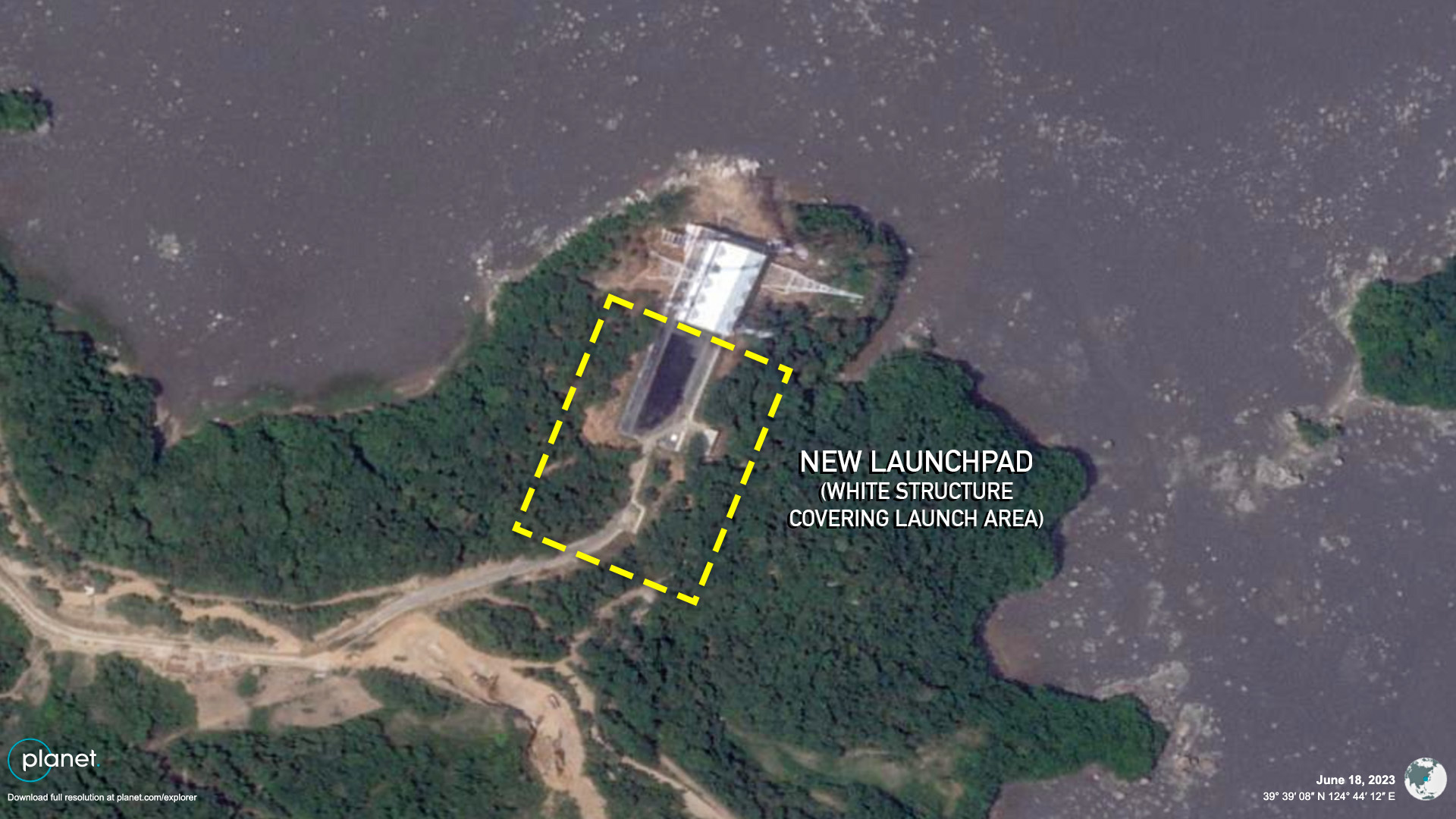 On the new coastal launchpad, an area slightly larger than the footprint of the white covering structure appeared a darker shade of black than the rest of the pad on June 18, indicating repaving work was underway. A large rail-mounted structure appeared to still be covering the precise spot of the last launch after it also appeared covering the area hours after the May 31 launch and in images taken in the weeks since. A fixed arm raised the rocket in this spot and was lowered prior to liftoff. (Please refresh page if images do not load.) | Images: Planet Labs, edited by NK Pro A fresh repaving could be a necessary precursor to the next launch — especially since analysts found evidence of damage to the launchpad after the last attempt — but the schedule remains unknown. Further signs such as abnormally high vehicle activity on the pad and the appearance of fuel or oxidizer tanks are expected before the next launch. Some analysts have also raised the possibility the DPRK will conduct another engine test at the older test stand where repaving now appears underway before another attempt, since the failure involved engine ignition problems. However, poor weather conditions could make it difficult to observe such signs via satellite imagery, and North Korea has suggested it might not notify international organizations of the timing window for its next launch like it did last month. The DPRK has also been carrying out large-scale reconstruction of the entire Sohae complex since last July. The apparent repaving work in multiple parts of the complex suggests the activity this week could alternatively be part of these plans and not preparations for a specific launch. 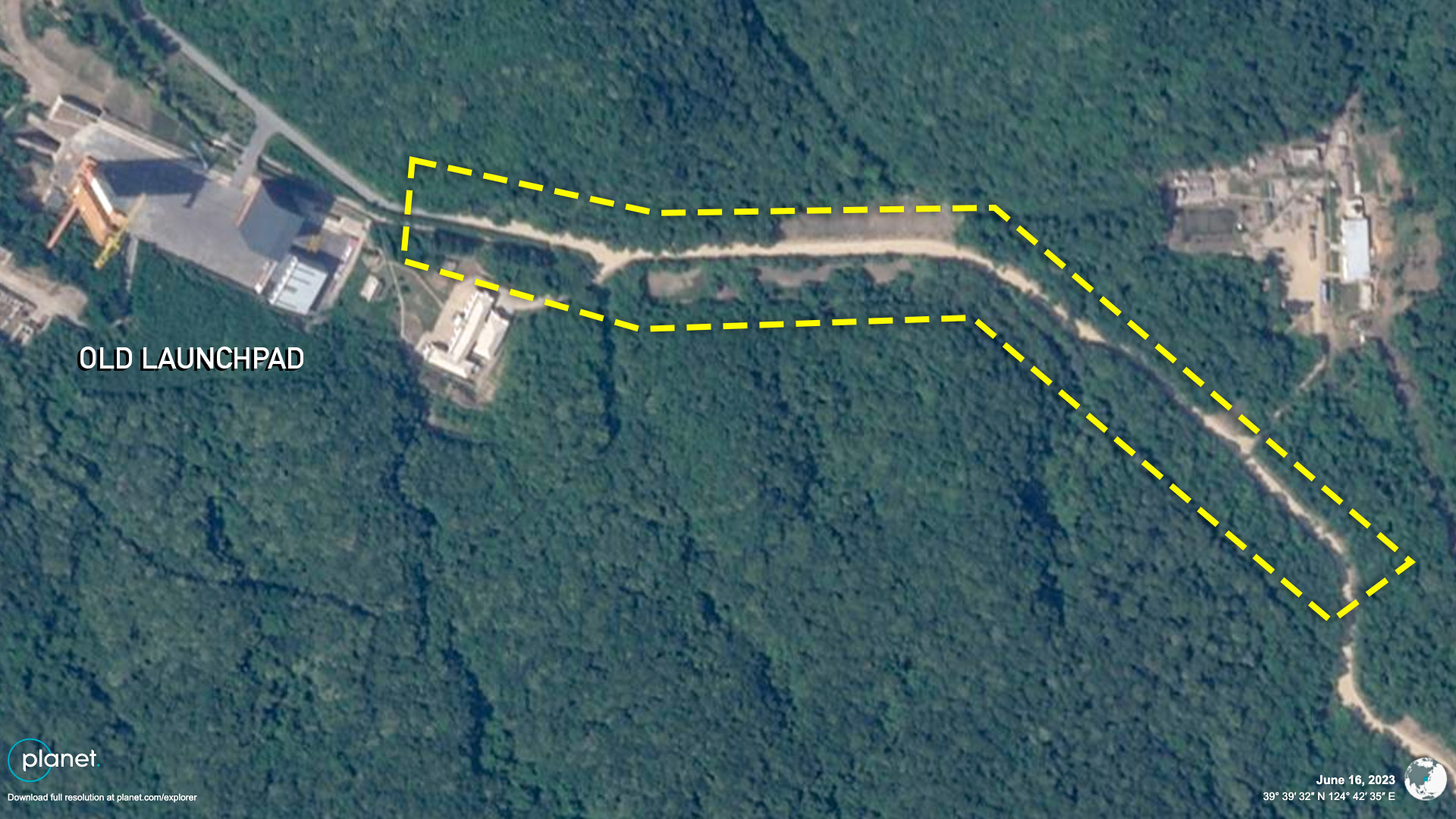 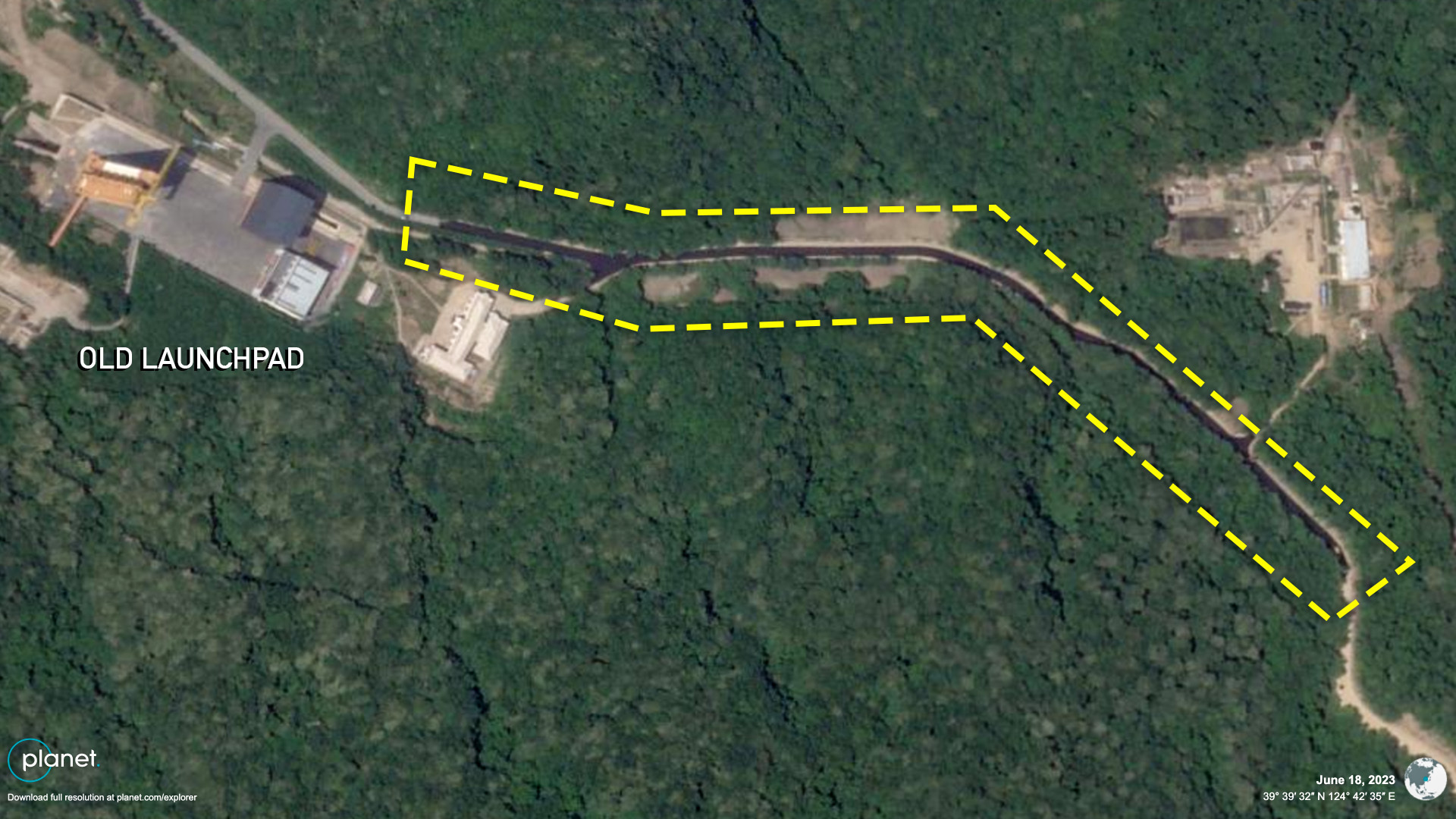 The old launchpad has appeared mostly quiet since early June despite a high level of activity in late May, suggesting North Korea may have planned a launch here in addition to on the newer pad. Repaving work has not appeared on the pad itself, seen on the left of these images, but rather on a road connecting it to the engine test stand area to the southeast. (Please refresh page if images do not load.) | Images: Planet Labs, edited by NK Pro 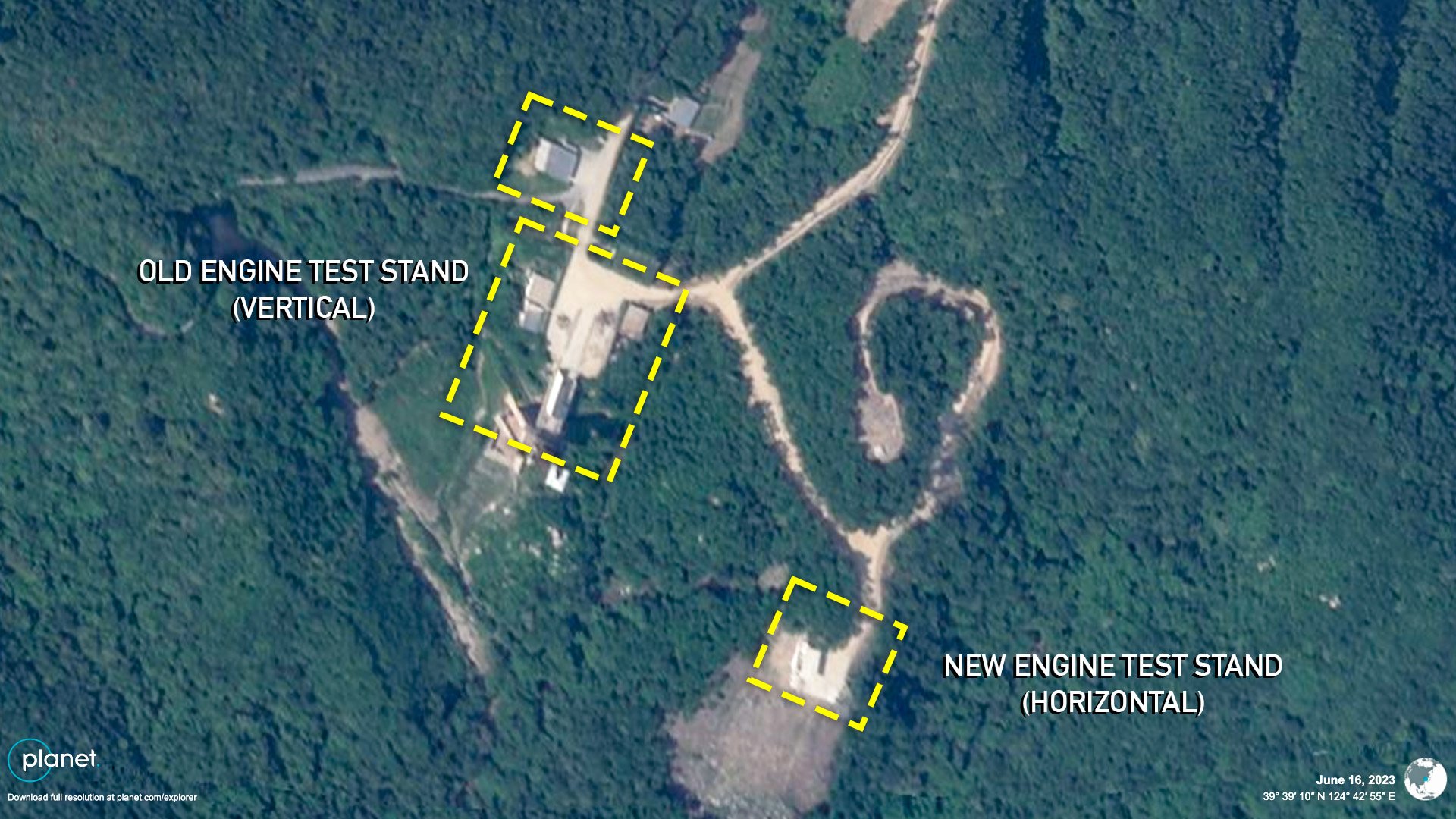 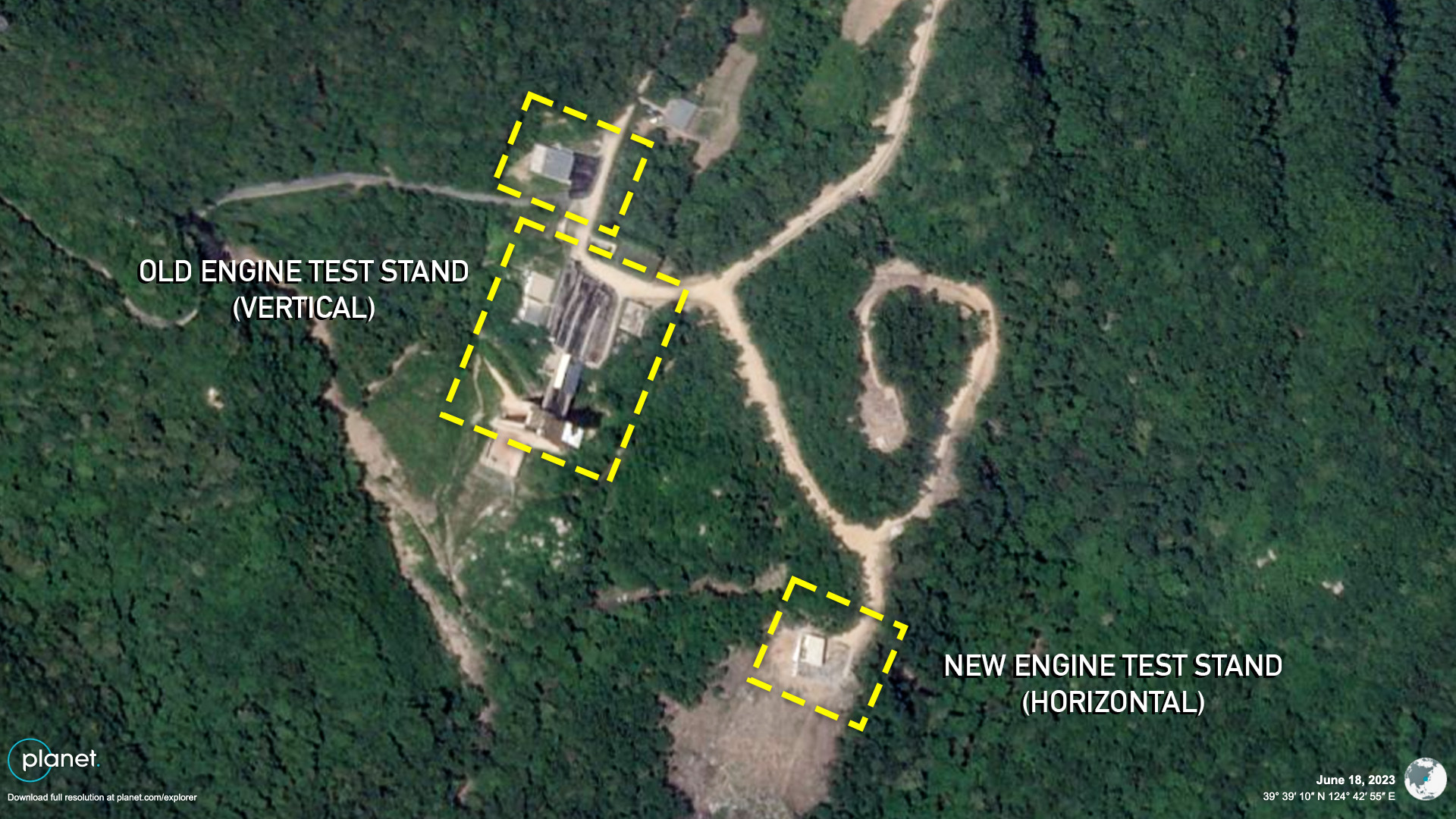 Dark discoloration around the old vertical engine test stand and new horizontal test stand appears to be due to pouring asphalt and repaving the areas (Please refresh page if images do not load) | Images: Planet Labs, edited by NK Pro Read more: Eyes in the sky: How North Korea could realize vision for spy satellite network The ruling Workers’ Party (WPK) reiterated its intention to “successfully launch the military reconnaissance satellite in a short span of time” at a major plenum over the weekend, saying it would first “make a thorough analysis of the cause and lesson of the recent failure.” After another failed satellite launch in April 2012, North Korea waited eight months to make a second attempt. Leader Kim Jong Un also waited eight months to launch the Hwasong-17 ICBM a second time after a catastrophic explosion over the capital in March 2022, presumably to allow for proper analysis of the failure. Analysts have said the Chollima-1 (also called Chonma-1) rocket that carried the new military spy satellite last month appeared to use a similar rocket engine as the Hwasong-17. Edited by Bryan Betts © Korea Risk Group. All rights reserved. |

October 28, 2026Oct 28, 2026

The ultimate resources for professionals working on North Korea
 SHARE
SHARE COPY LINK
 X
X MASTODON