  Analysis Goods clearing out of North Korean disinfection zone 3 months after trade freezeSatellite imagery appears to reconfirm suspected quarantine period for DPRK’s overland imports from China 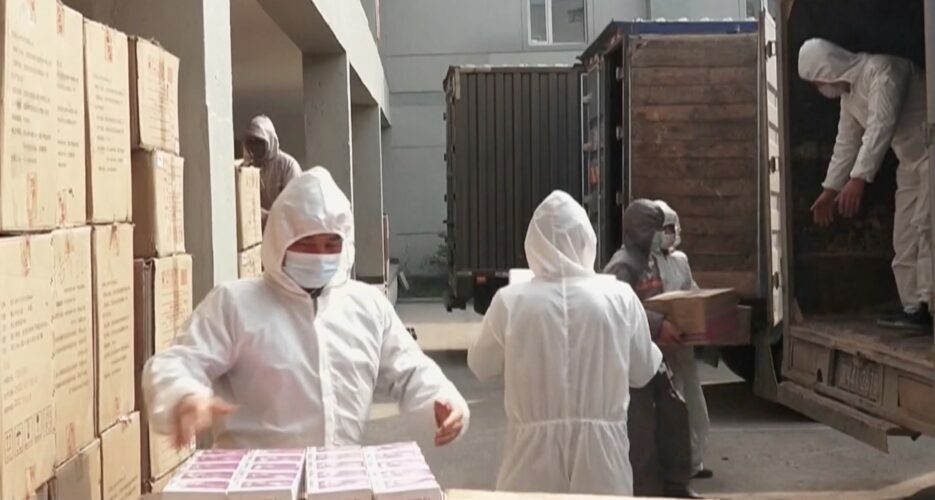 Goods have begun to clear out from North Korea’s large-scale import disinfection and quarantine complex near the Chinese border, three months after the two sides suspended train deliveries due to surging COVID-19 cases, NK Pro satellite imagery analysis shows. The move could mean North Koreans will soon see more medicine and other scarce foreign goods arrive on store shelves. NK Pro previously reported on multiple sources claiming authorities were enforcing a three-month quarantine period at the Uiju Airport complex to avoid COVID-19 contamination. Imagery previously suggested items began exiting the complex around three months after the train deliveries from China restarted in January. Planet Labs satellite imagery shows a significant portion of large blue and white covered stacks of goods disappearing from the airport runway between July 22 and Aug. 2. However, some goods appeared to remain in place across the runway. 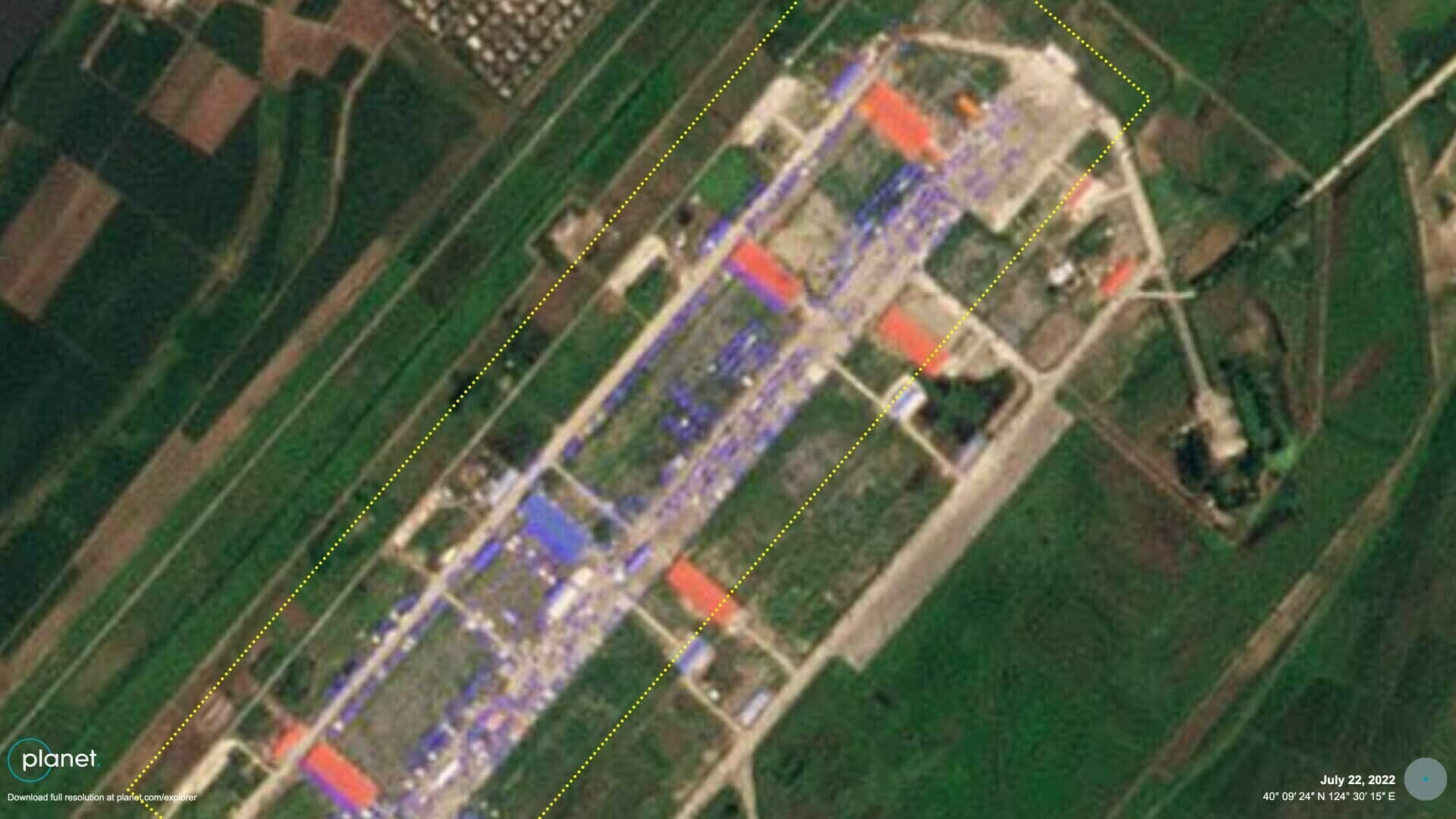 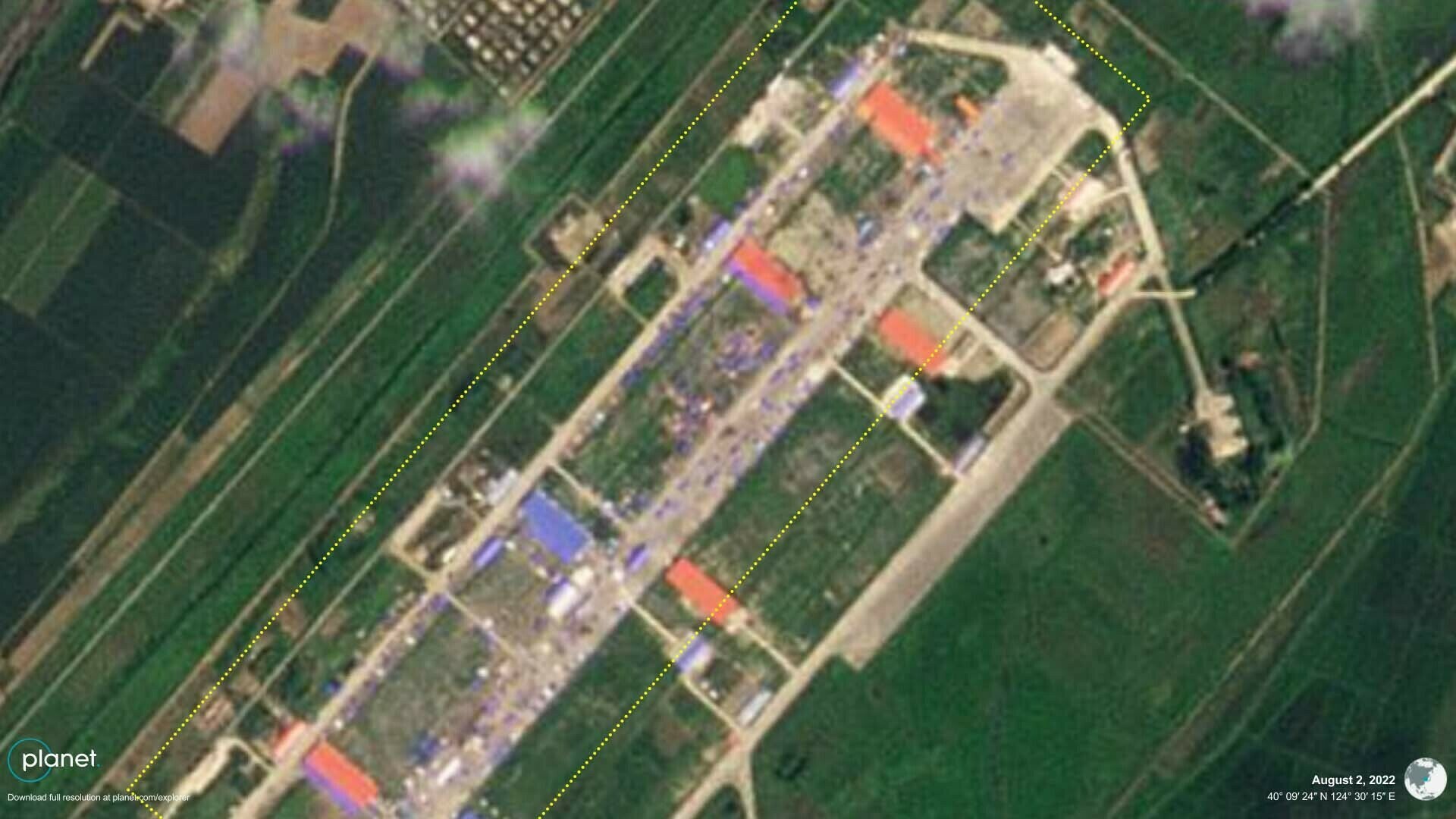 The amount of blue- and white-covered stacks of goods, indicated within the yellow dotted-line box, appeared to decrease between July 22 and Aug. 2 | Images: Planet Labs PBH, edited by NK Pro This could mean a few things: that the facility will take time to process the remaining goods and will be completely cleared in the coming days; that some goods are placed under longer quarantine for special reasons; or that additional shipments from unknown sources came into the zone after China said it halted overland train services on April 29. If no new shipments arrived after that date, the open runway areas visible in satellite imagery would be expected to clear out completely at some point, revealing the zone’s maximum processing and quarantine period. Pyongyang and Beijing have not publicly announced plans to restart the trade route, but both sides have signaled progress battling major COVID-19 outbreaks in recent months. The existence of the Uiju disinfection complex suggests North Korea is open to once again allowing items through the trusted overland trade corridor, especially as state media claimed Wednesday that the spread of COVID-19 was reaching an “end stage” after reporting the country’s first major outbreak in May. North Korean authorities spent significant time and resources to build the disinfection center — taking a military airport out of commission to do so — and eventually signaled comfort with foreign vehicles and items coming directly over the country’s border for the first time in almost two years when it approved the first rail shipments in January. Additionally, the state-run Korean Central News Agency (KCNA) reported Tuesday that authorities were reinforcing “testing and quarantining manpower at trading ports and improving tests and medical checkups of seamen and workers of trade cargo boats.” It’s unclear if the land port at the Sinuiju-Dandong border is included in these measures. Japanese outlets Asahi Simbun and Nikkei Asia also reported in June and July, respectively, that North Korean companies were requesting a restart to rail trade from China’s Dandong across the border. DPRK state media began reporting a decline in suspected COVID-19 cases in early June, and have reported no new “fever” cases since last week. On the Chinese side, Dandong resumed domestic train services to the rest of the country in late July after overcoming the outbreak, which led to the DPRK trade route closure in April. The city’s residents have also appeared on social media walking around the riverfront across from Sinuiju without masks, a sign of confidence by local authorities that the virus will not blow over from North Korea and cause a new outbreak. In contrast to the overland train route, North Korea has not completely shut off maritime trade since the pandemic. Authorities appear to require incoming cargo ships to wait at least a month outside Nampho’s lock gates before entering and offloading goods at that city’s ports, according to Planet Labs imagery. Edited by Arius Derr © Korea Risk Group. All rights reserved. |

October 25, 2026Oct 25, 2026

The ultimate resources for professionals working on North Korea
 SHARE
SHARE COPY LINK
 X
X MASTODON