  Analysis New activity at North Korean COVID quarantine zone may signal goods on the moveImported goods from China might be leaving border disinfection area 3 months after arriving 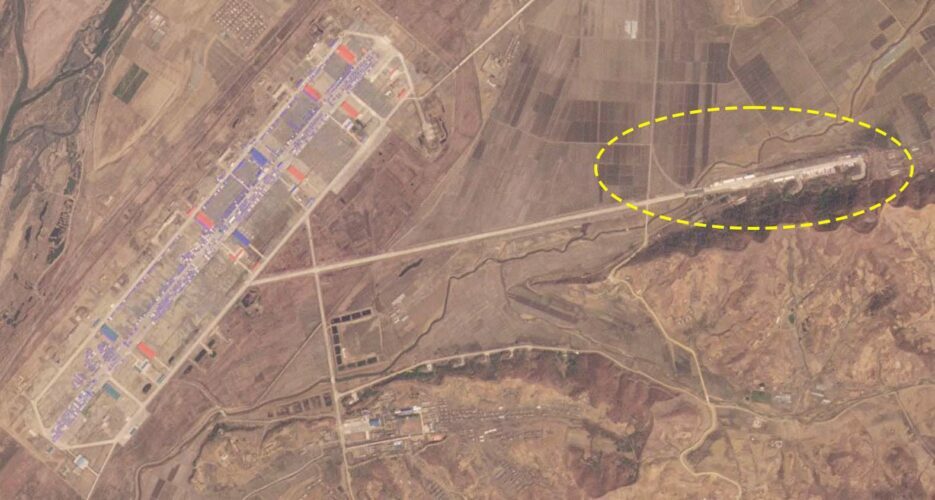 Activity has increased this month at a previously quiet section of a large-scale North Korean import disinfection zone near the Chinese border, suggesting goods may have begun leaving the zone after nearly three months of COVID-19-related quarantine. Planet Labs imagery of the Uiju Airport disinfection complex near Sinuiju shows that, starting in the final days of March and continuing through April 19, goods began to appear and move around at an outdoor storage area located to the east of the quarantine zone on the main runway. This eastern section, which includes an underground storage facility, is situated around 1.5 miles (2.5 km) down a straight road from the main airport runway and used to serve as an airplane parking and storage area. New warehouses or administrative buildings, an outdoor storage area and a rail line were built there last July, months after the rest of the airport had already been transformed into disinfection and quarantine facilities.  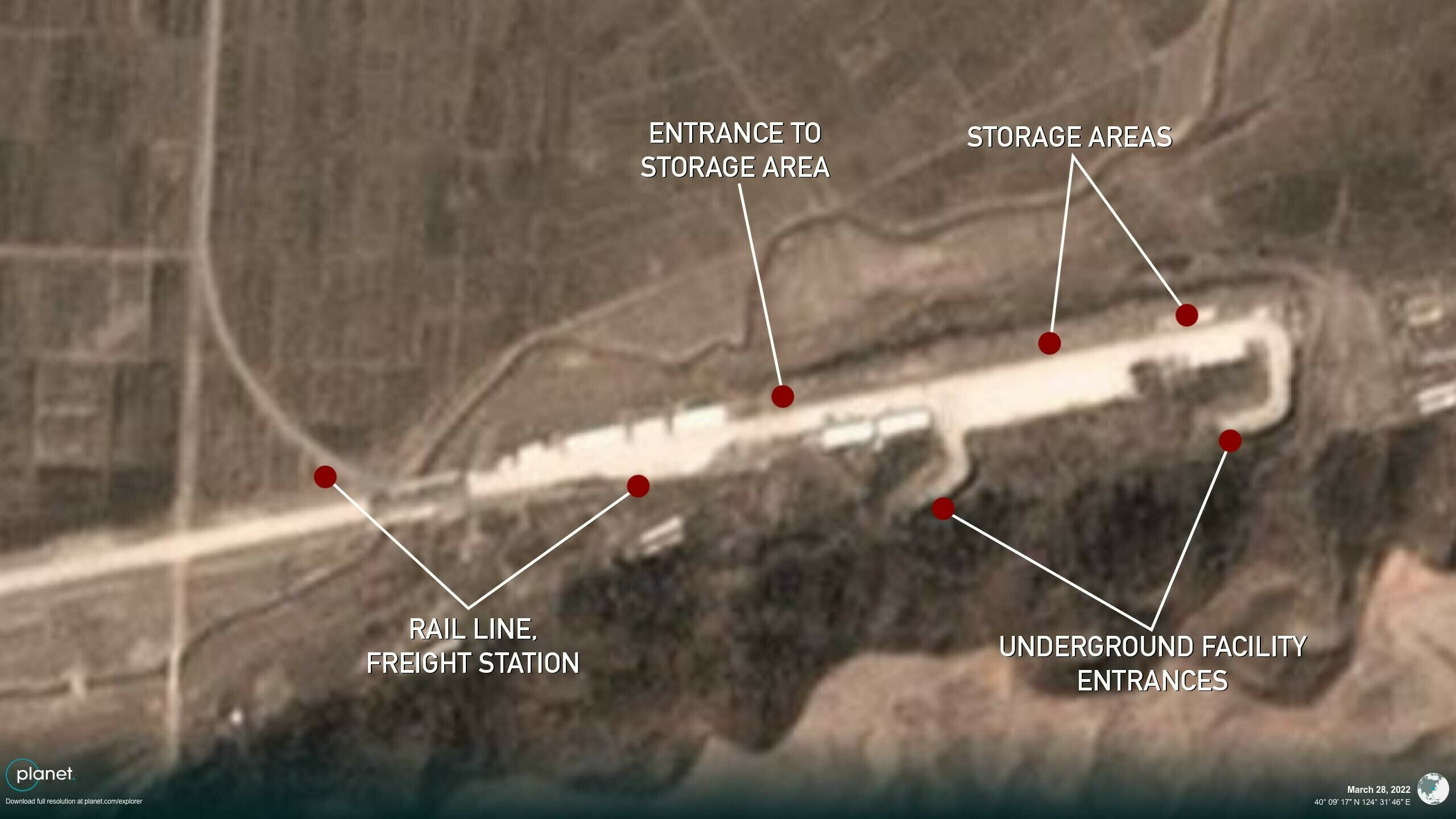 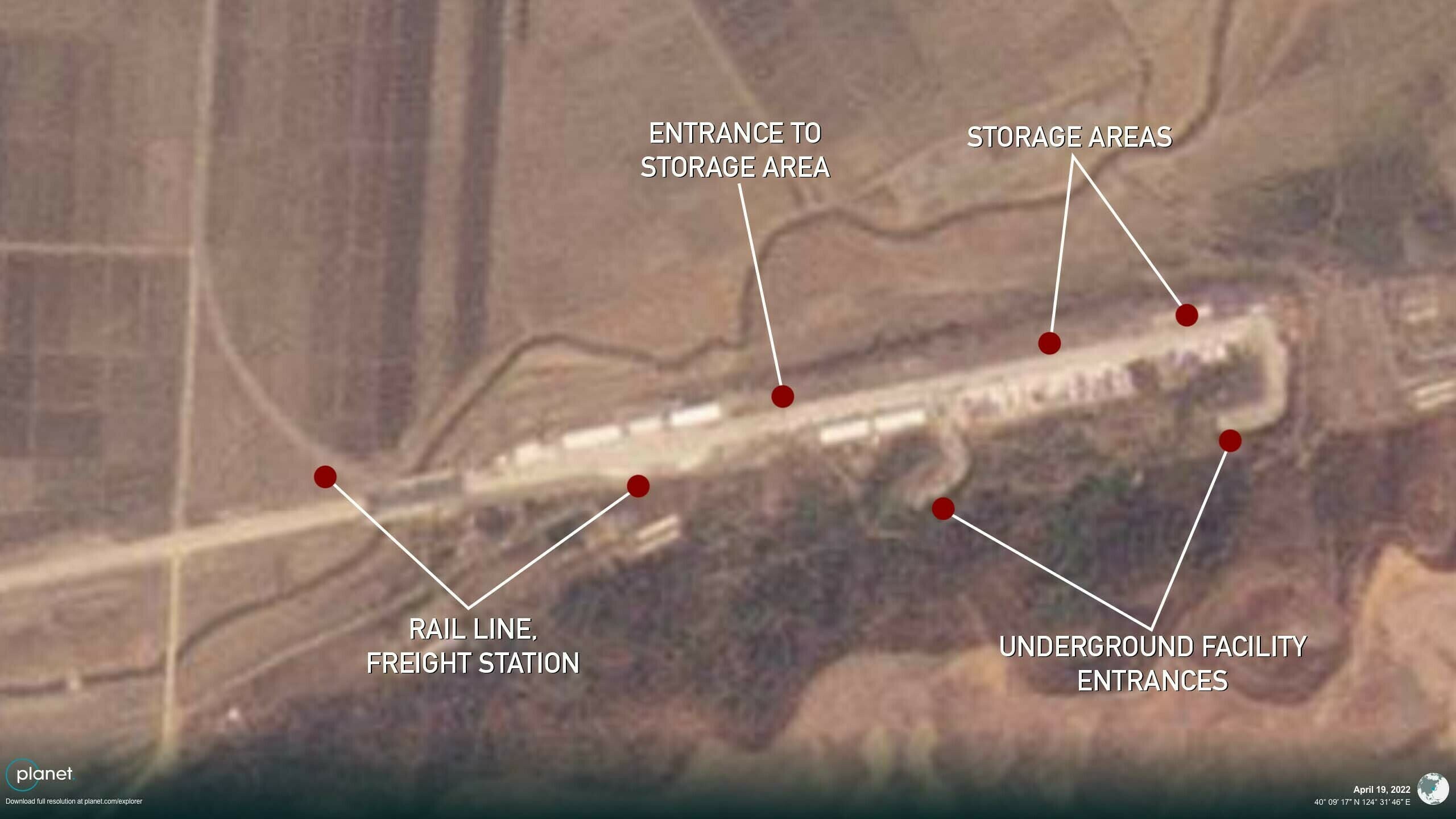 A comparison of images taken on March 28 and April 19 show the outdoor storage area at the eastern section became active and full of items | Images: Planet Labs PBH, edited by NK Pro The main airport runway began to fill up with goods when trains carrying freight from China first started to make daily cross-border journeys on Jan. 17. It’s possible that the eastern area is receiving goods from the main disinfection center after their quarantine ends, in order to organize them for shipping out to the rest of the country via freight cars. Multiple sources previously told NK Pro that authorities planned to quarantine imports for three months, and at least one Pyongyang shop was recently restocked with foreign goods after a long shortage. In another sign that goods may have started to exit the quarantine zone, daily truck activity appeared along the eastern side of the main airport runway since late March, on the opposite end of the outdoor quarantine area and five rail stations used to receive trains from China. (An April 3-dated high-resolution image published by 38 North shows trucks in a parking area at the south of the runway, in an area indicated in a yellow box in the video timelapse below.) If some goods are being moved from the main airport disinfection and quarantine center to the section seeing new activity 1.5 miles to the east, it appears they would have to make the journey via road, likely on trucks. Satellite imagery shows large vehicles on this stretch of road on April 1 and 15, but more frequent and higher resolution images are needed to determine if vehicles transported goods along this road in recent weeks. While some of the imported items covered in colored material on the airport runway have appeared to move recently, the apparent static nature of other items that first showed up in late January with the first batch of shipments suggested quarantine was still in part ongoing in April, as NK Pro reported earlier this month and 38 North last week referencing high-resolution imagery. NK Pro cannot confirm the precise nature of the new activity in the eastern section, but it is not likely to be a result of overflow from the main runway’s quarantine area, which still has empty space and has appeared to continue to fill up with goods in recent weeks. The eastern facility’s outdoor storage area also has only a single entrance, meaning North Korea’s apparent system of not moving disinfected items back through the same receiving facilities — out of fear of recontamination — would not be possible here. This means it is likely meant for “clean” goods that can come back out of the same entrance in order to be loaded onto trains at the adjacent rail station. A question remains over why such a staging area for disinfected imports would be built so far away from the main quarantine area, requiring a 3-mile round trip for trucks ferrying goods there. However, North Korea’s extreme paranoia over COVID-19 surviving on surfaces and flying through the air on dust or snow may at least partially explain this arrangement. Edited by Arius Derr © Korea Risk Group. All rights reserved. |

October 25, 2026Oct 25, 2026

The ultimate resources for professionals working on North Korea
 SHARE
SHARE COPY LINK
 X
X MASTODON