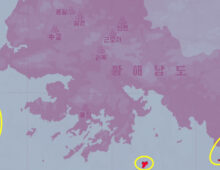
  Analysis Flood-destroyed bridges likely to obstruct North Korean nuke program, arms salesNew imagery confirms more damage to rail and road infrastructure that links military facilities, impeding production 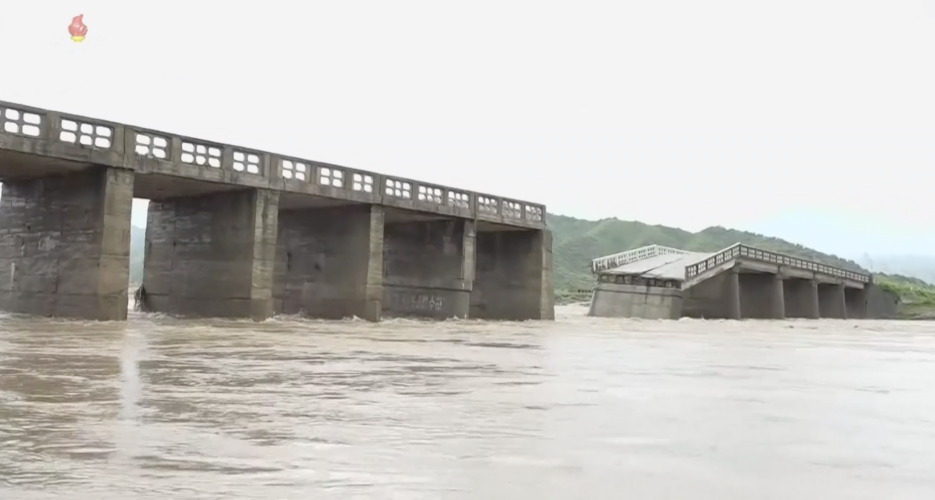 The destruction of multiple bridges by flooding and landslides in North Korea will likely disrupt the country’s nuclear program, as well as weapons production and exports to Russia, according to NK Pro analysis of satellite imagery taken in recent days. The new imagery confirms at least four railroad bridges and two road bridges in Jagang Province collapsed or were damaged in storms around July 26 to 27, cutting rail and road networks that connect a string of weapons and chemical factories linked to the DPRK’s nuclear weapons program. Some of the repairs are likely to take time to complete given the size of the broken bridges, but authorities are certain to make the recovery project a priority given the importance leader Kim Jong Un has placed on weapons development and apparent export contracts with Russia. The latest imagery adds to outsiders’ understanding of the effects of the flood destruction in the DPRK, after NK Pro previously found that the humanitarian disaster in Jagang and Ryanggang provinces was likely bigger than reported by state media and that blocked roads would complicate aid efforts. State media has been more open about massive flooding in Sinuiju and Uiju of North Phyongan Province, but Kim Jong Un claimed there were no deaths there, suggesting his previous comments about “loss of life” refer to the destruction in Jagang and Ryanggang. 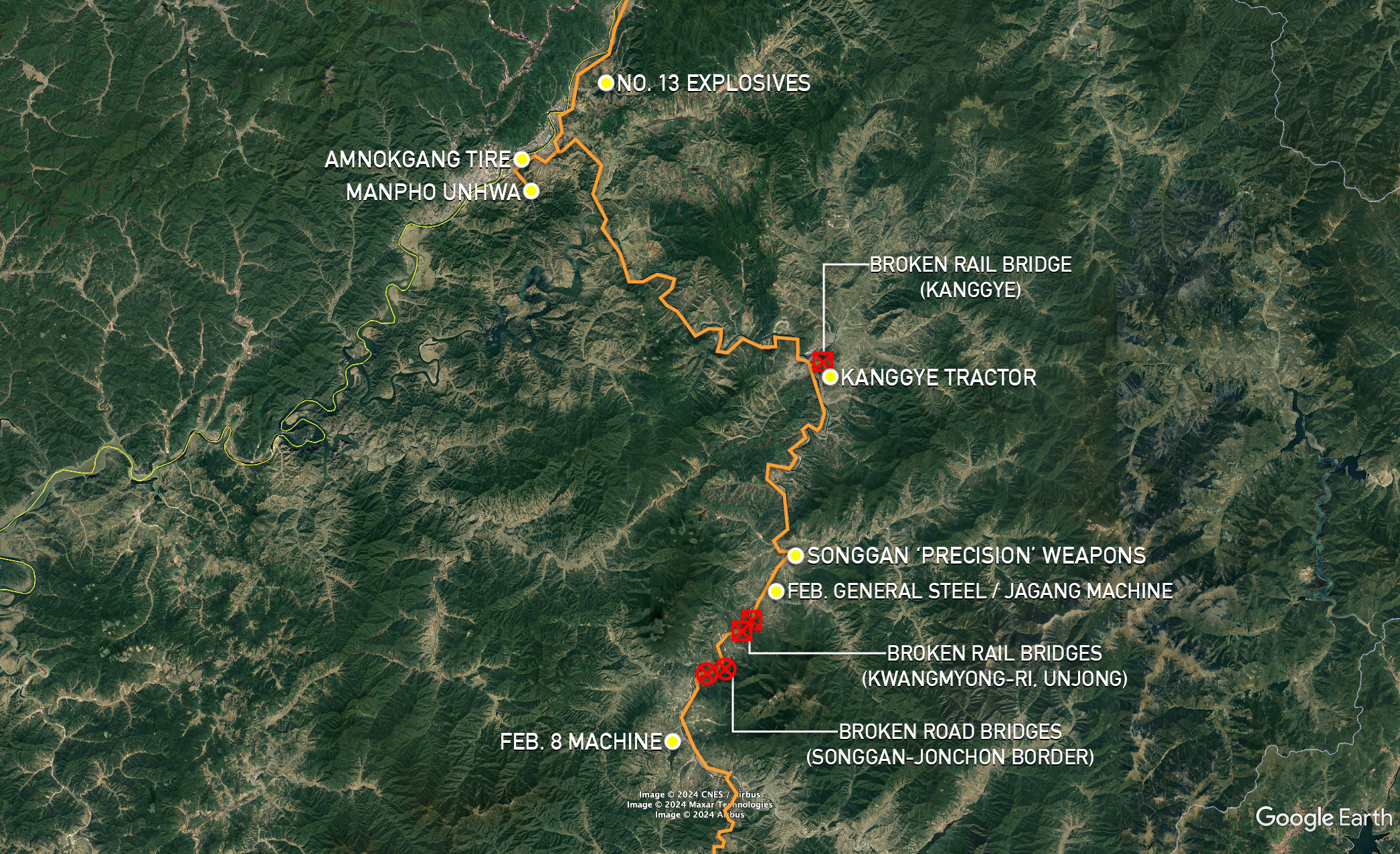 As the above map demonstrates, a number of major factories north of Jonchon have been completely cut off from Pyongyang in multiple places, while additional facilities in Jonchon are cut off by at least one broken bridge. Starting at the northern end of Jagang’s weapons corridor in Manpho, on the border with China, there are at least three large factory complexes linked to nuclear or weapons production. The Manpho Unhwa Factory is located in a valley south of Manpho and lies at the northernmost end of the inter-province rail line. Researchers at the Center for Strategic & International Studies’ (CSIS) Beyond Parallel publication previously reported that trains have picked up chemicals at the factory that would go on to be used for producing missile propellants, chemical weapons and fissile material, and that it serves a vital role in supplying the Yongbyon Nuclear Research Center. Next on the line is the Amnokgang Tire Factory, which state media has said produces tires for the country’s largest nuclear missile launch vehicles, and possibly for the range of new short-range missile launchers now being mass produced. The No. 13 Explosives Plant lies to the northeast of Manpho and is believed to produce rocket propellants. None of the largest rail or road bridges leading south from Manpho to the provincial capital Kanggye appear to have been destroyed, but major flooding along the Jangja River between the two cities likely damaged riverside railroad tracks and roads to some degree. 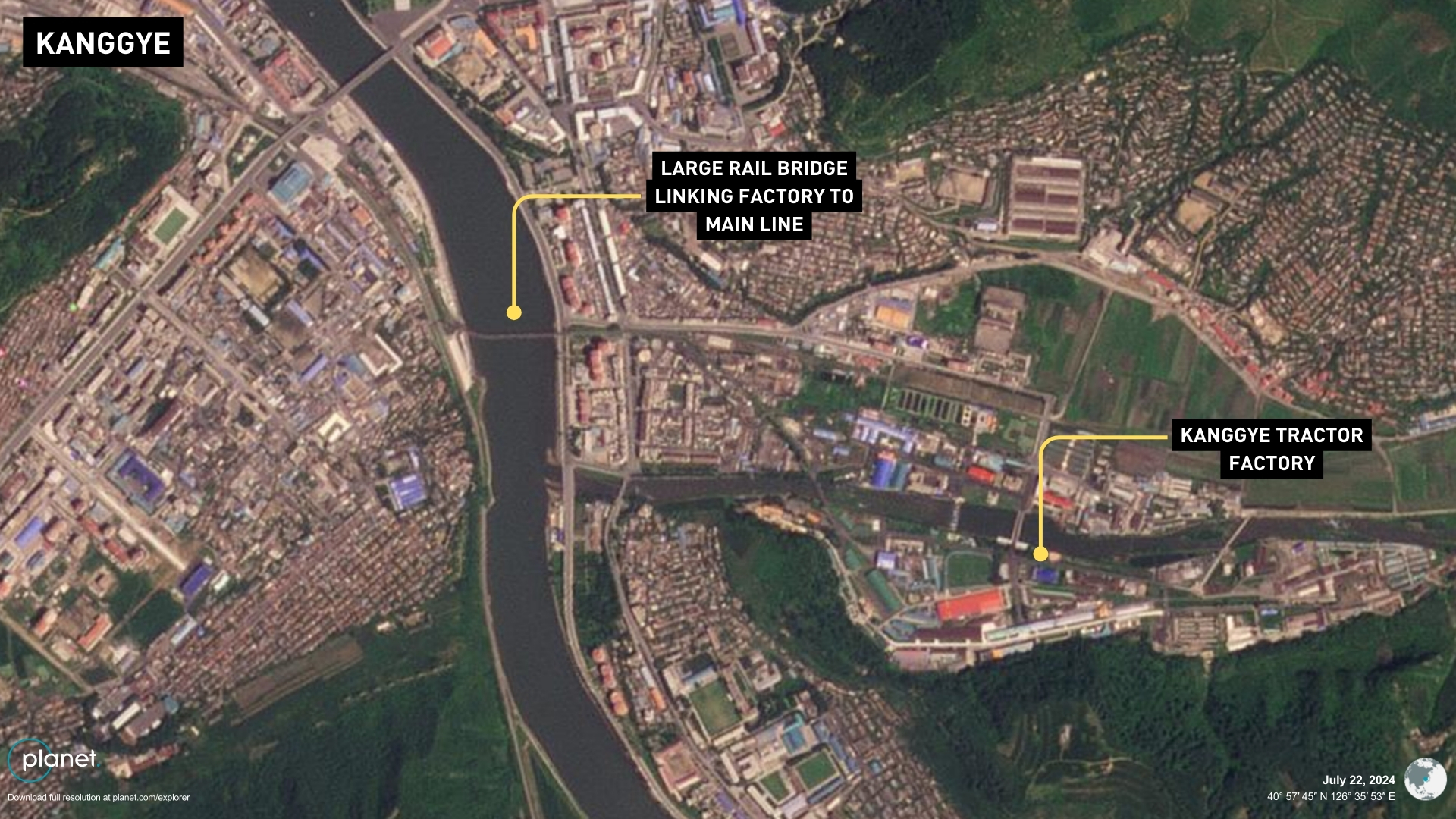
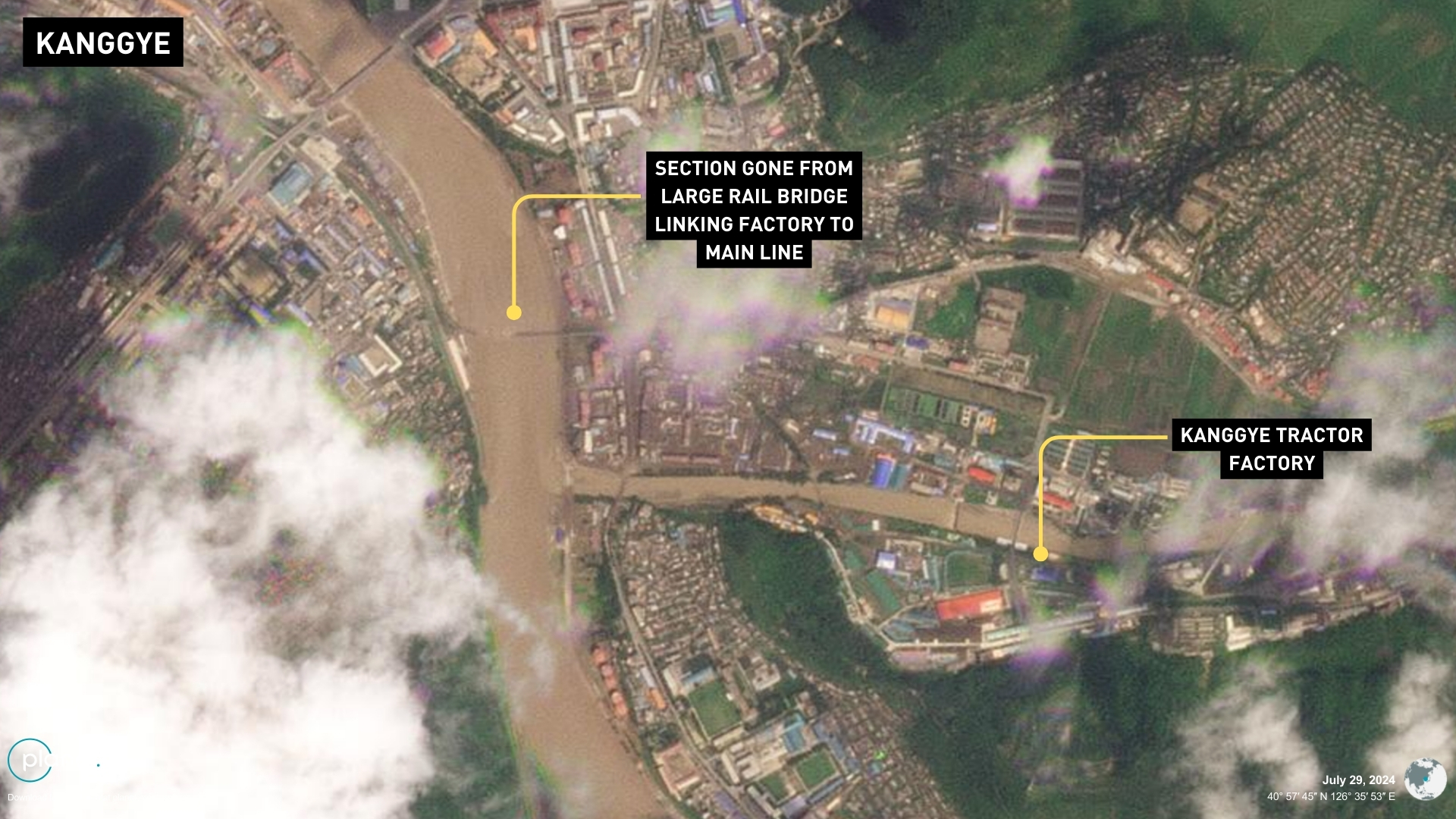
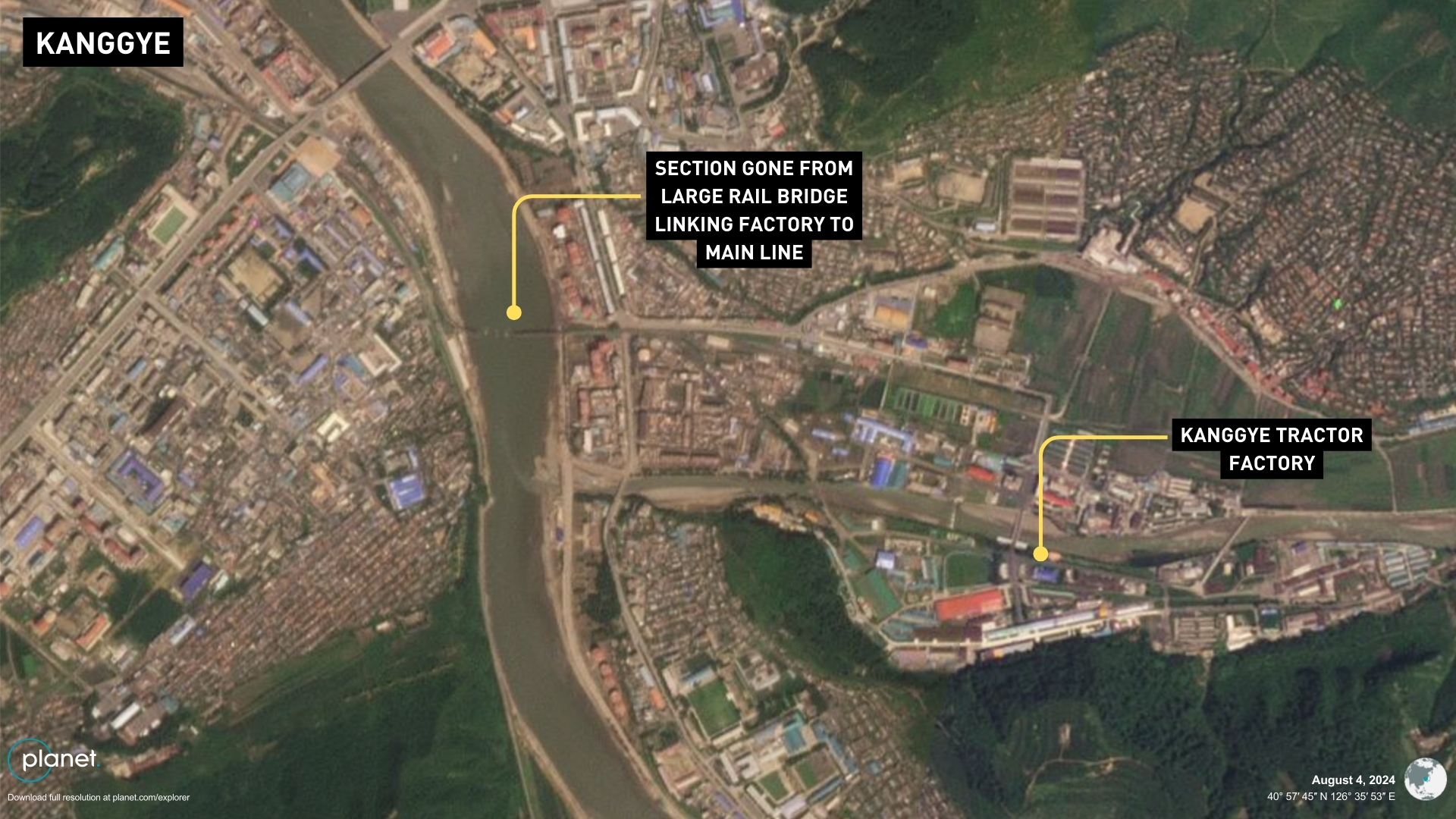
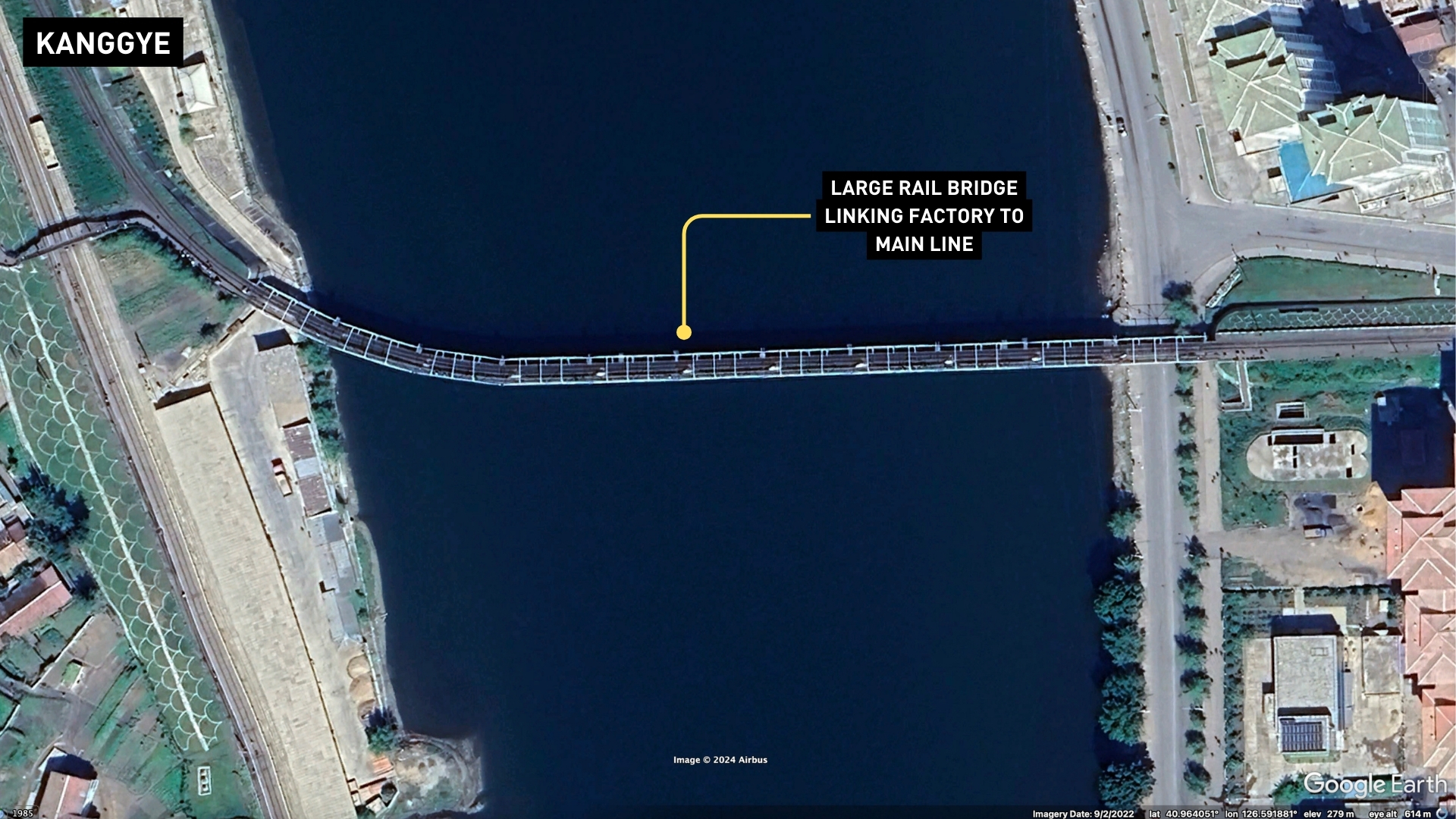
In the first major blow to weapons transport networks that run south, NK Pro analysis of Planet Labs satellite imagery confirms that the Kanggye Tractor Factory on the east side of Kanggye has been completely cut off by rail, as the only rail bridge connecting it to the network has partially collapsed. A section around 80 meters (262 feet) or longer has appeared missing in imagery taken since July 29, but pylons under the section may have survived, possibly shortening repair times. The Kanggye Tractor Factory produces 300mm and 600mm multiple-launch rocket system (MLRS) shells, which experts believe Russia is interested in acquiring. Further south in Songgan County is a new factory built in the last year that North Korea says produces “ultramodern precision munitions” weapons. Experts have said the weapons likely include “smart” guidance systems and could be anti-tank guided missiles (ATGMs). State media also said in April that a newly built munitions plant is producing the 240mm MLRS, likely ones previously referred to as including “controllable shells and ballistic control systems” — possibly hinting at this factory. Strong evidence has emerged in the last year of Russia importing North Korean short-range ballistic missiles and 122mm shells. A video recently surfaced suggesting Russia has started to import DPRK-made ATGMs and their launch vehicles as well, suggesting more types of weapons could also show up soon. There are more munitions factories to the south in Songgan — the February General Steel Enterprise and the Jagang Machine Plant — but it is unclear precisely what kinds of weapons or components they produce. 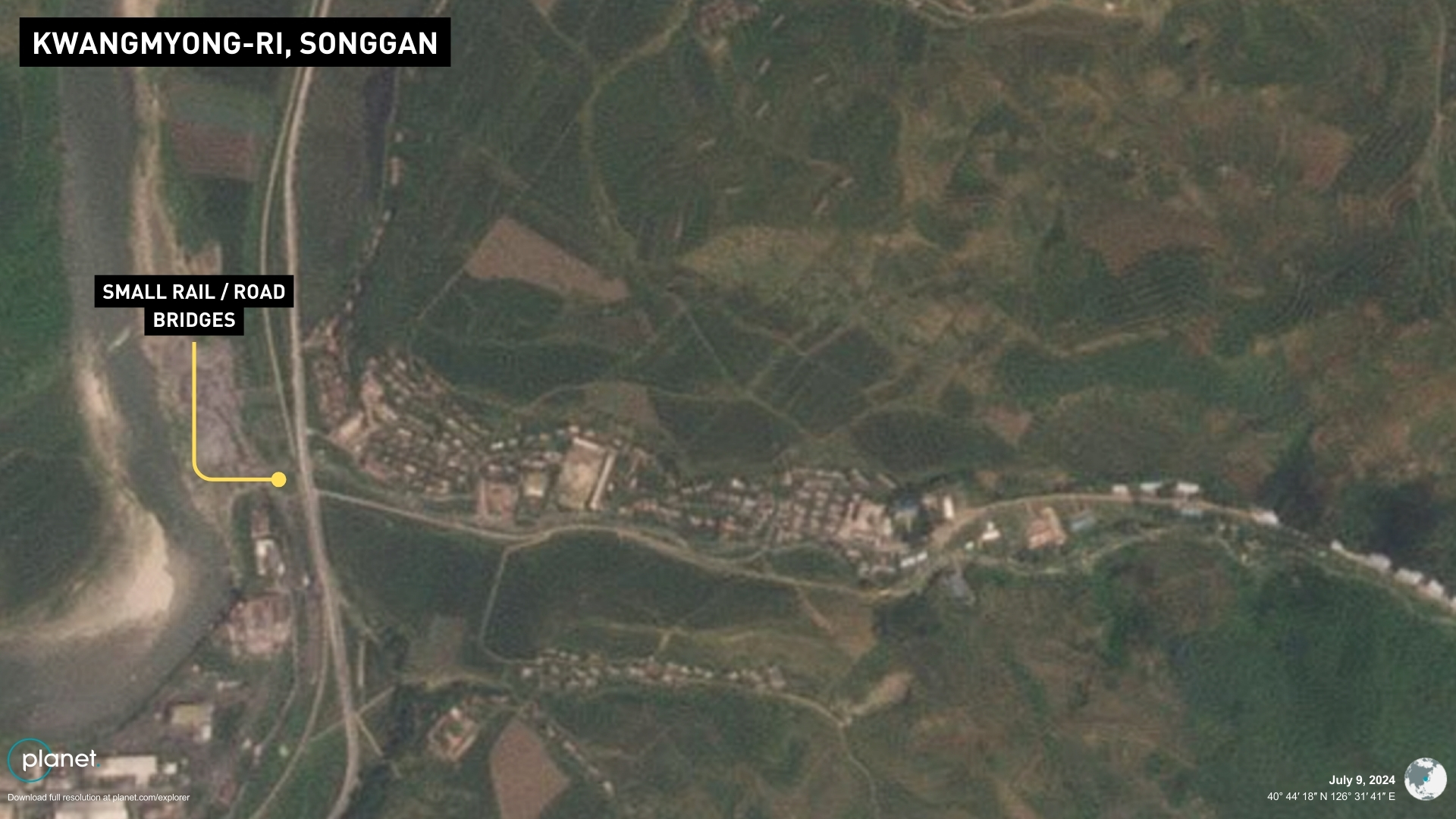
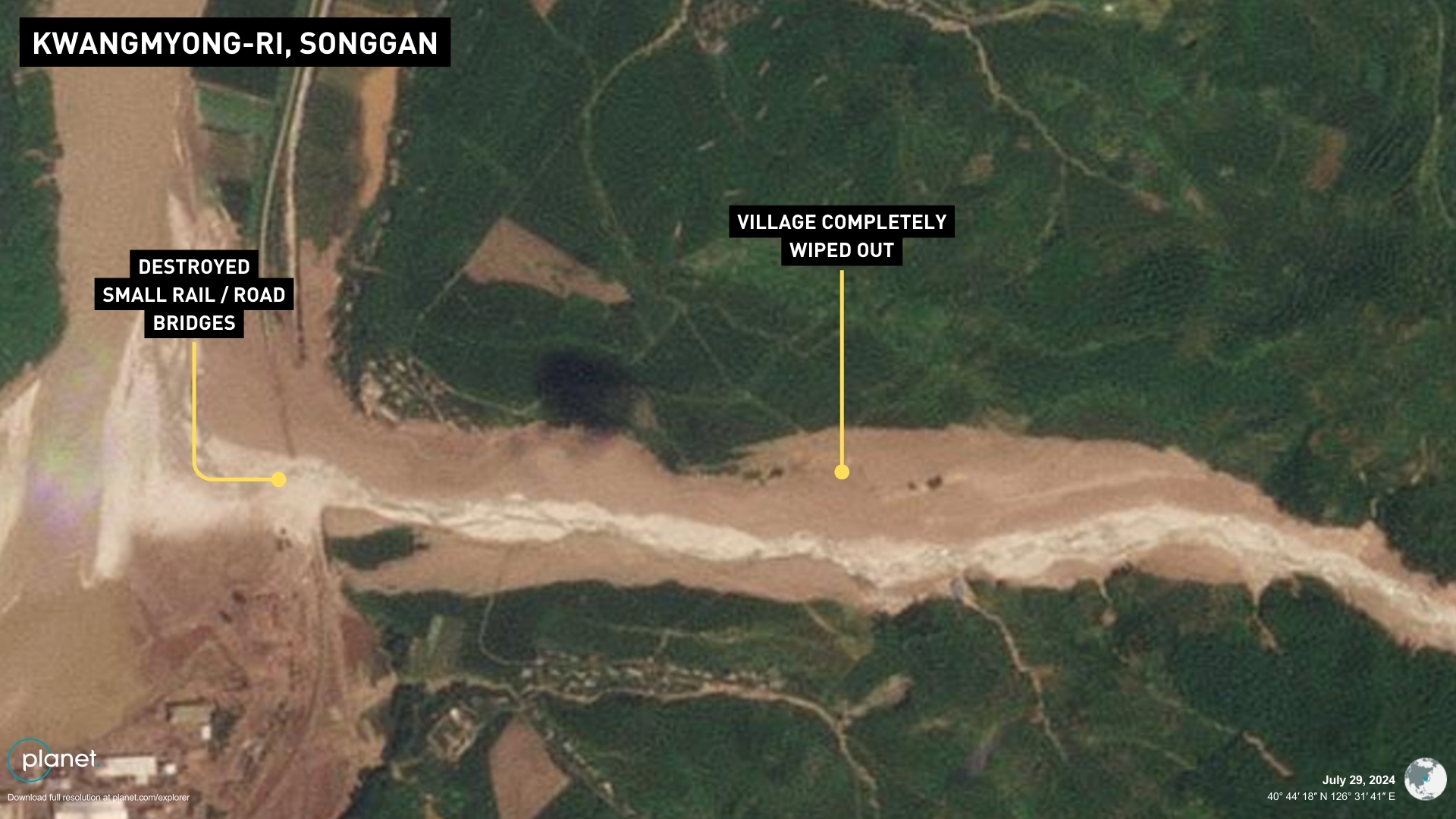
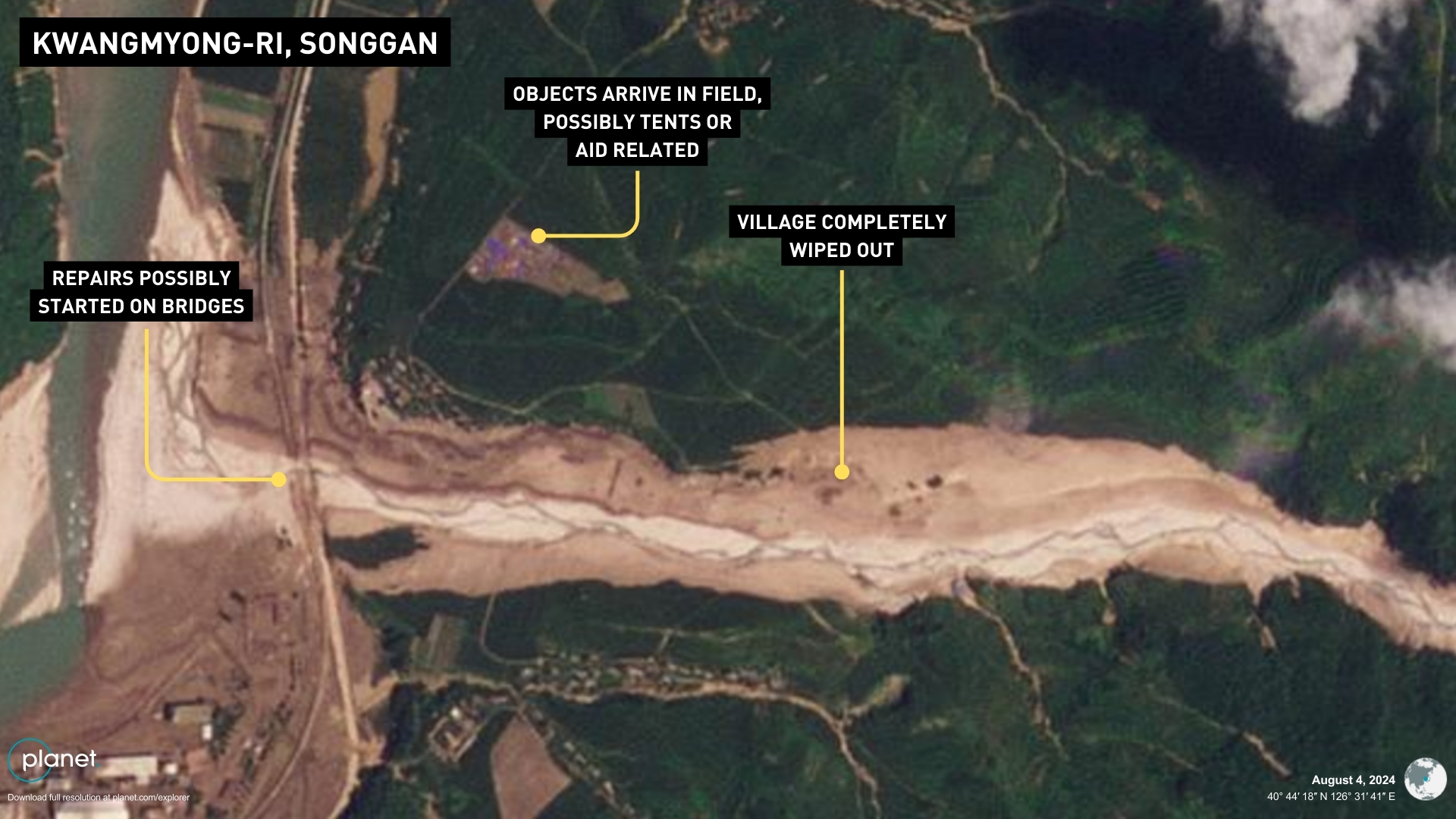
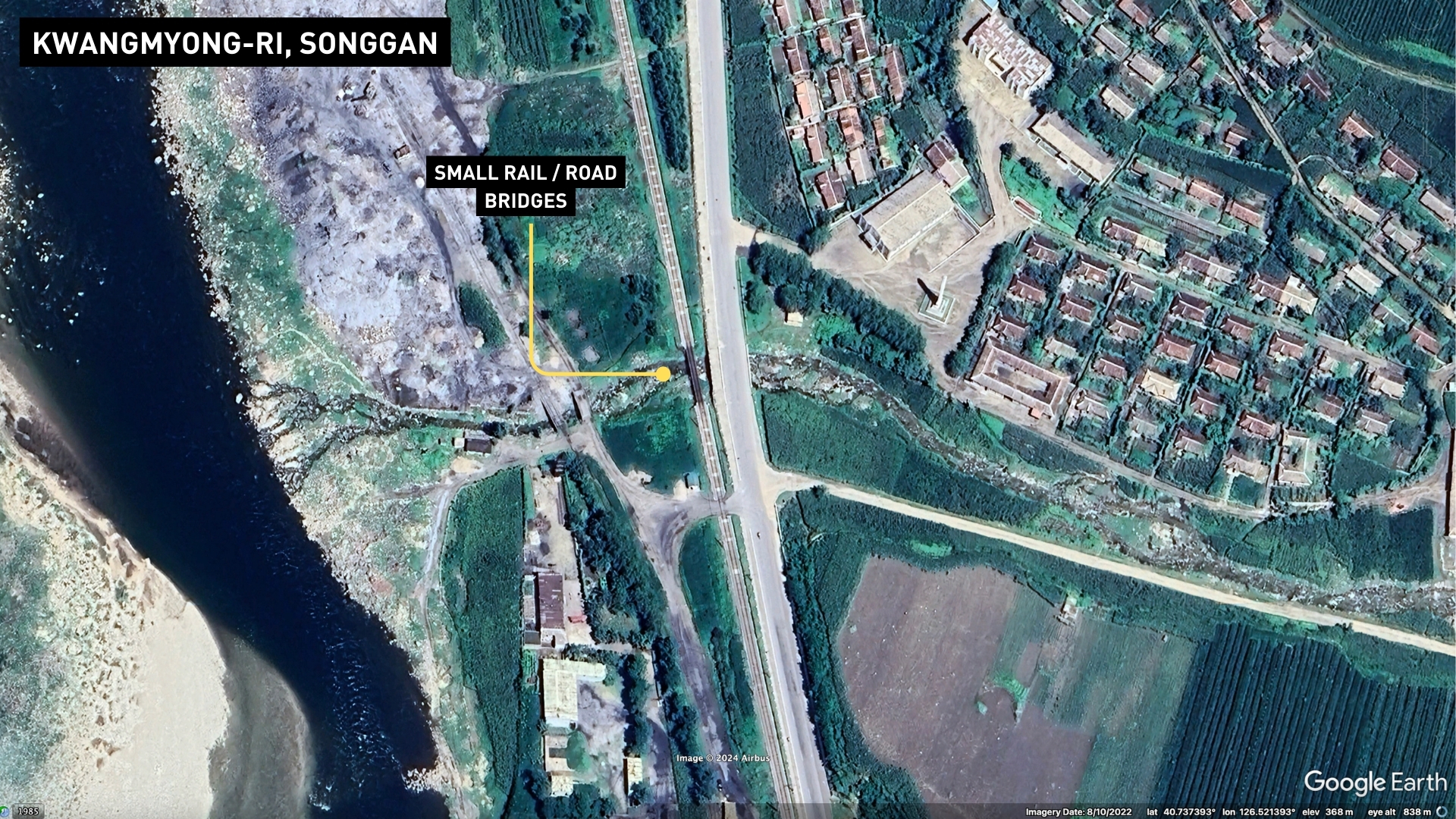
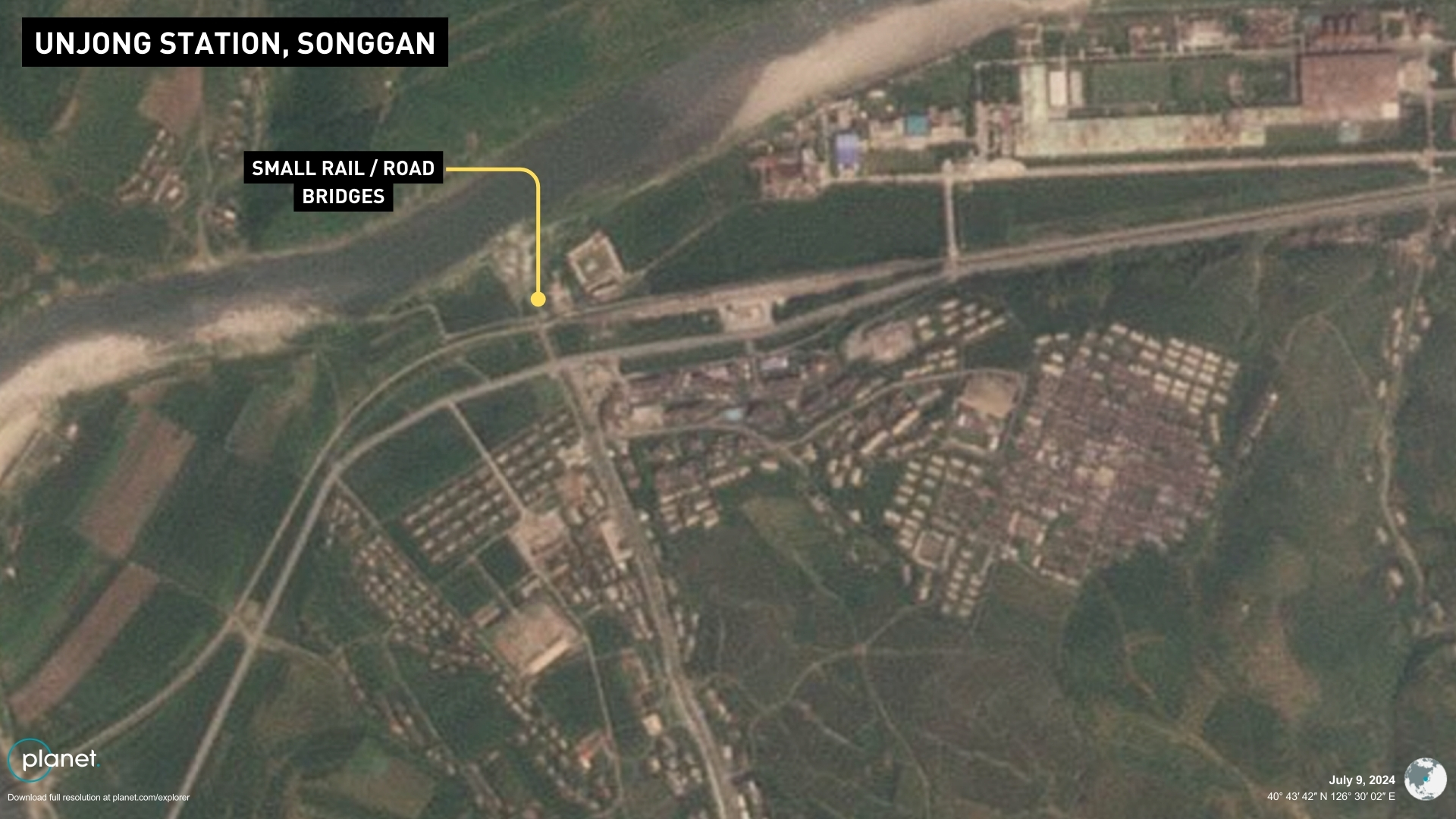
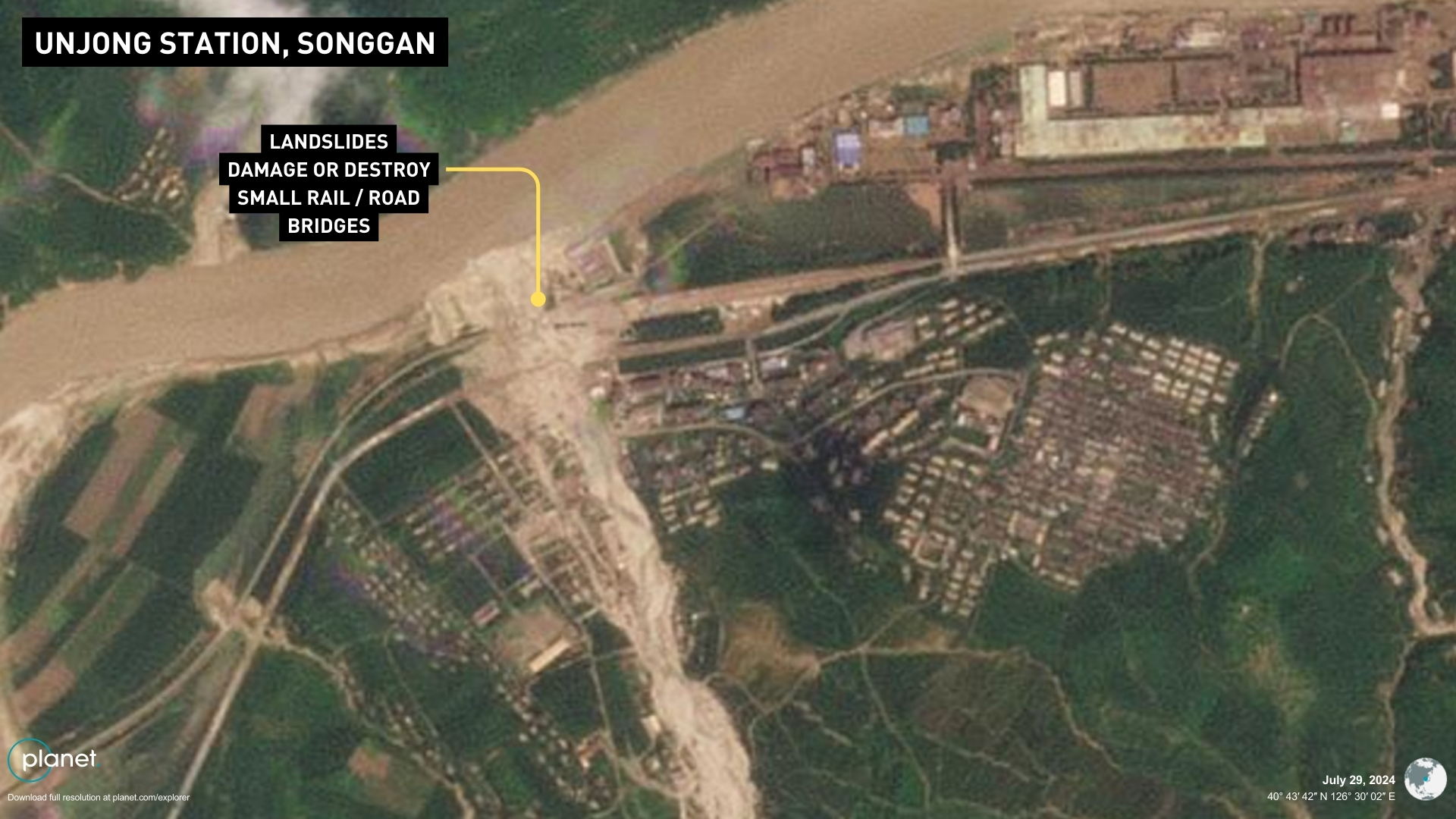
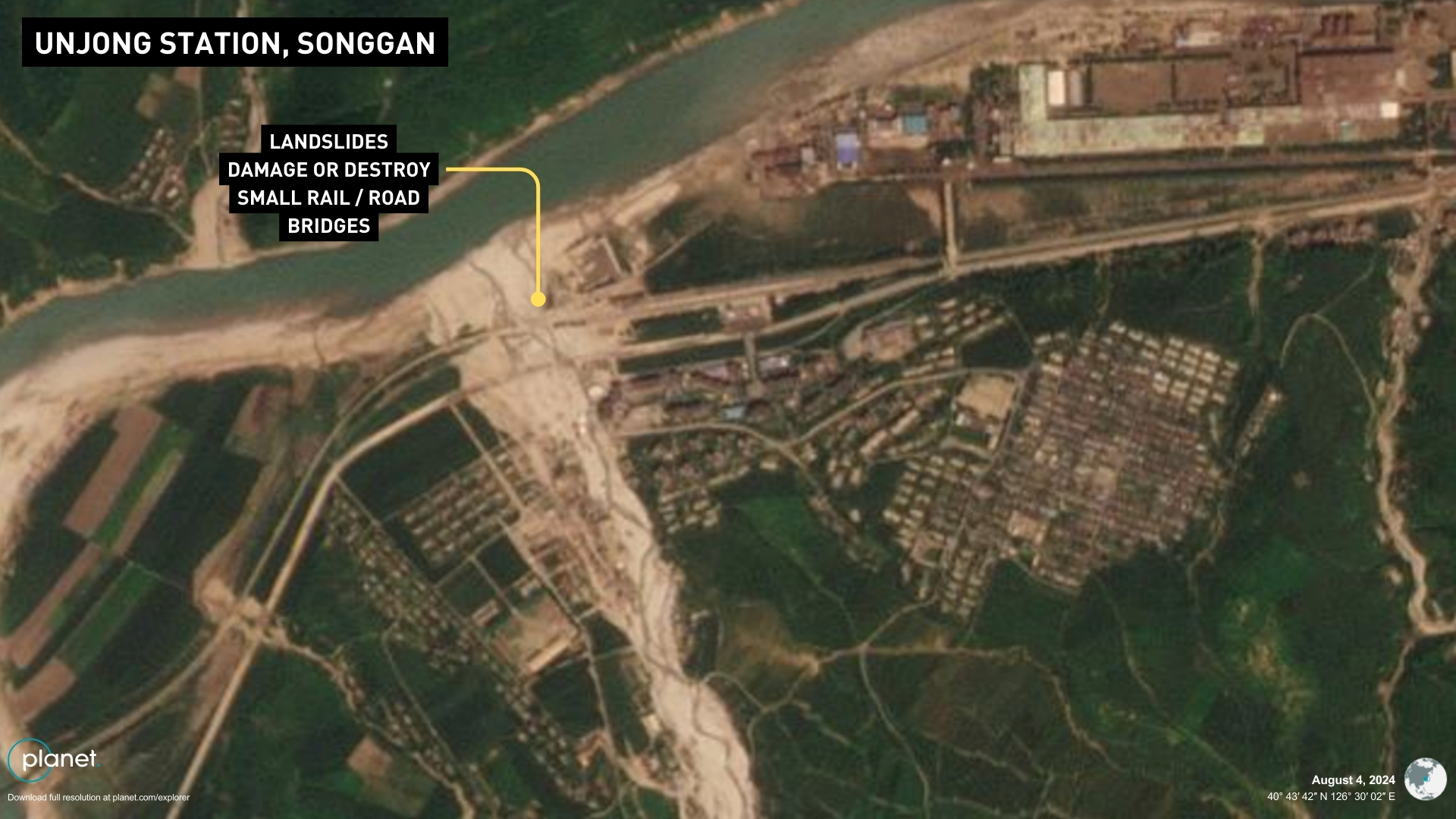
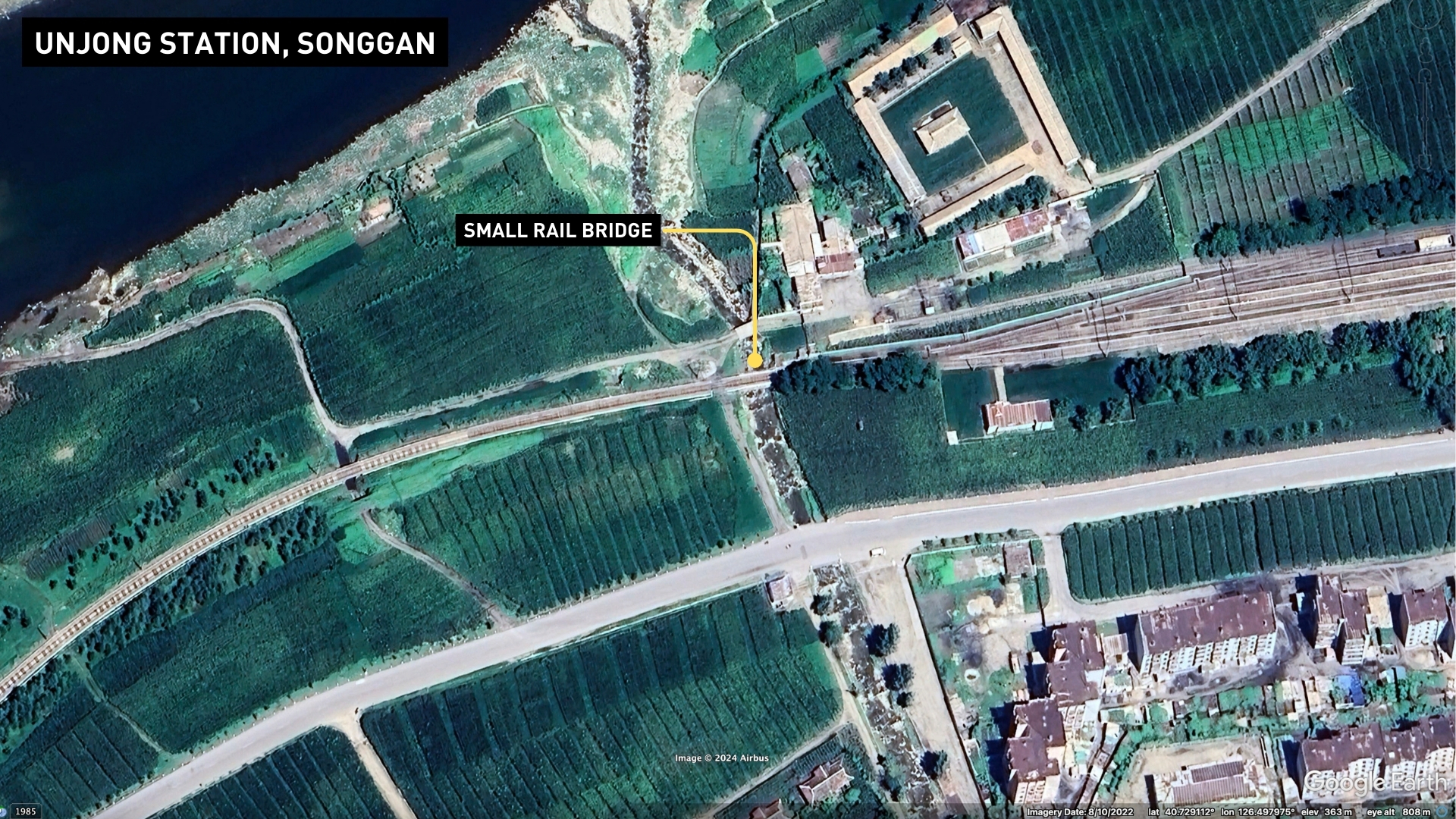
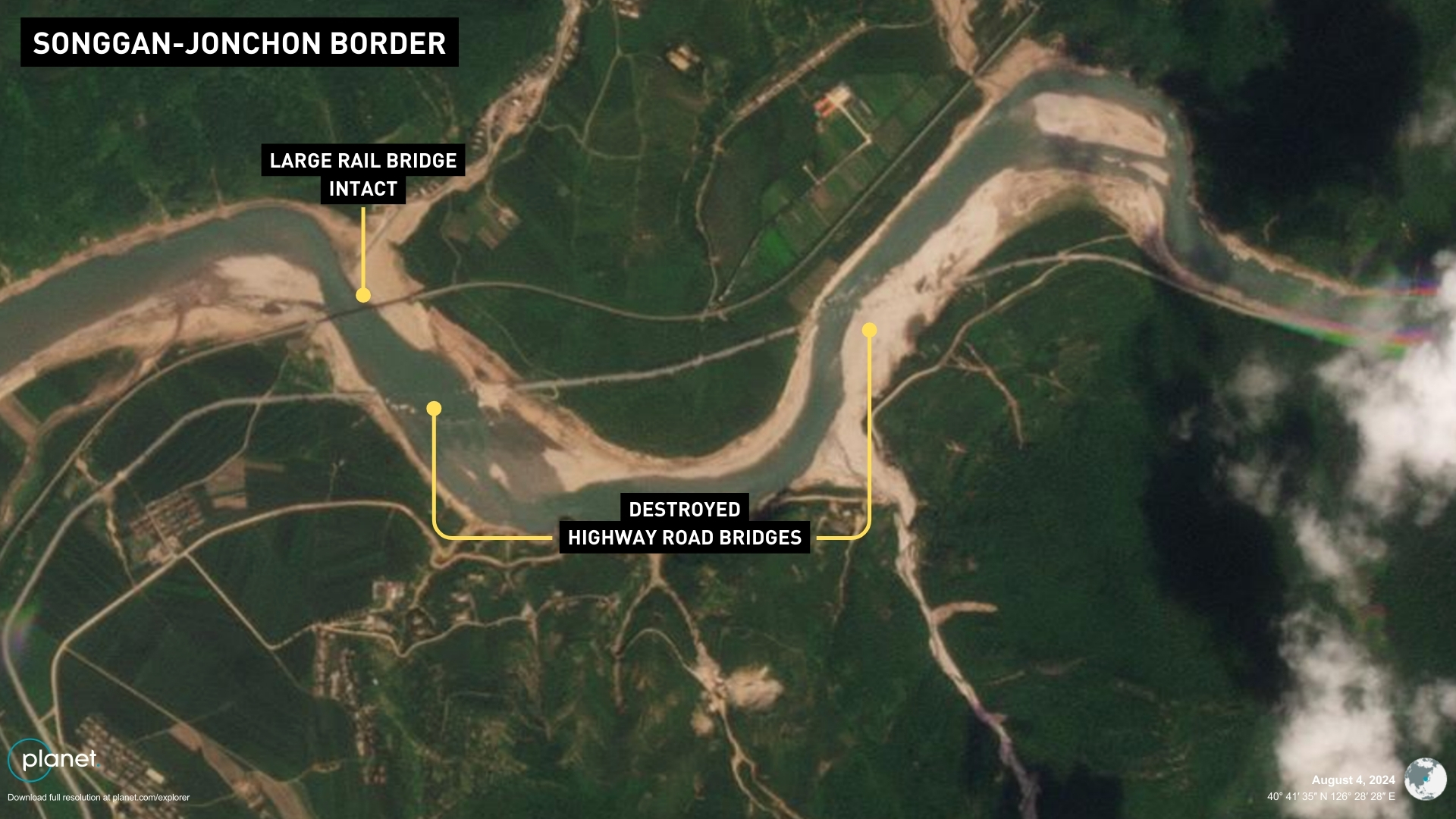
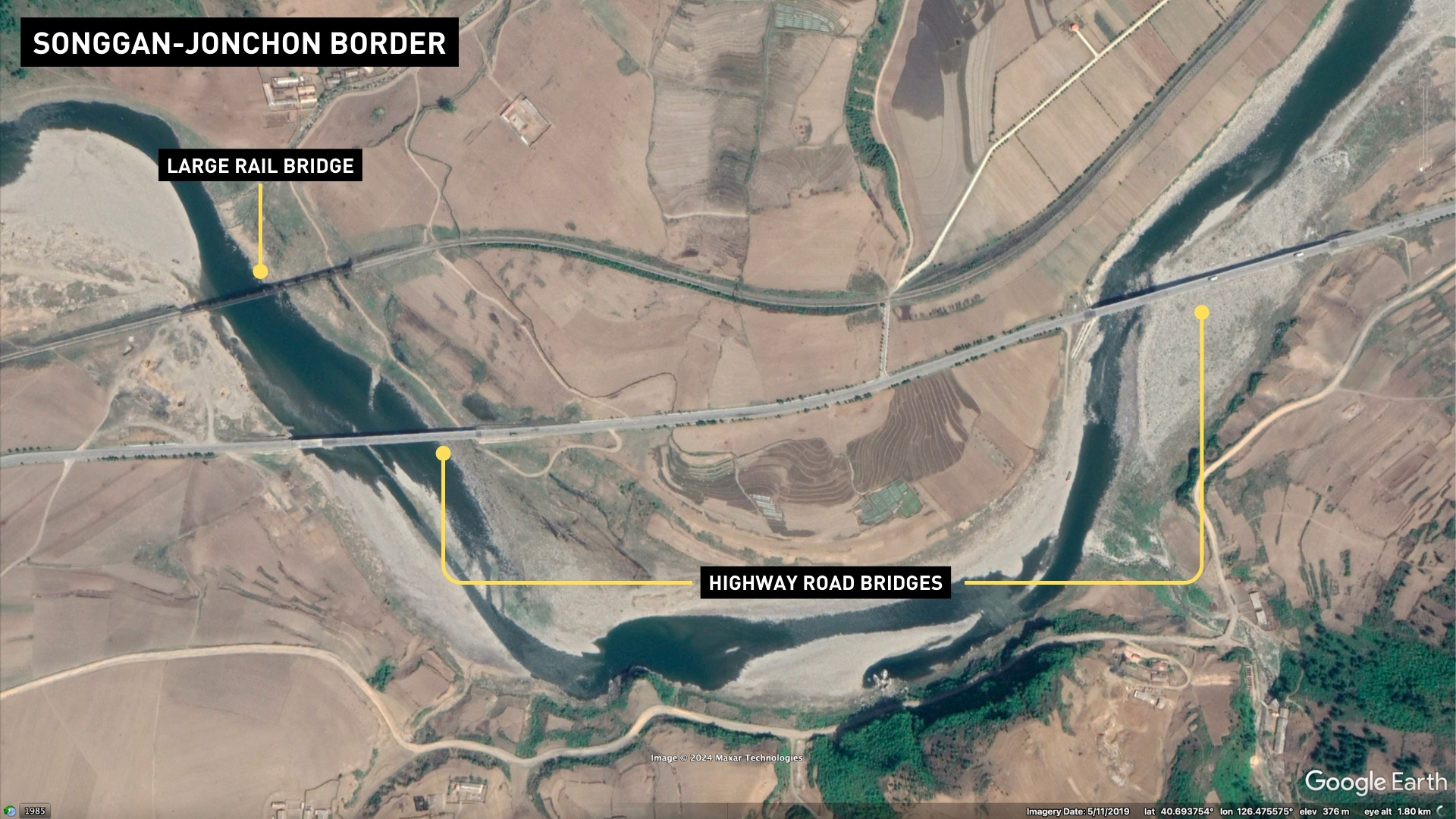
At the southern edge of Songgan, violent landslides raging down the slopes of Pisambong wiped out an entire village and a possible military installation, before destroying small road and rail bridges as well as paved sections on the ground next to the Jangja River. Another landslide on a different part of the mountain flowed over small road and rail bridges down the line nearby at Unjong Station, adding to the tasks of repairing networks connecting the above factories to the national network. Larger transport problems emerge with the complete destruction of two 300-meter long (985 feet) road bridges around between Songgan and Jonchon to the south. This means both rail and road networks at this point are cut, making it harder to establish alternative routes. 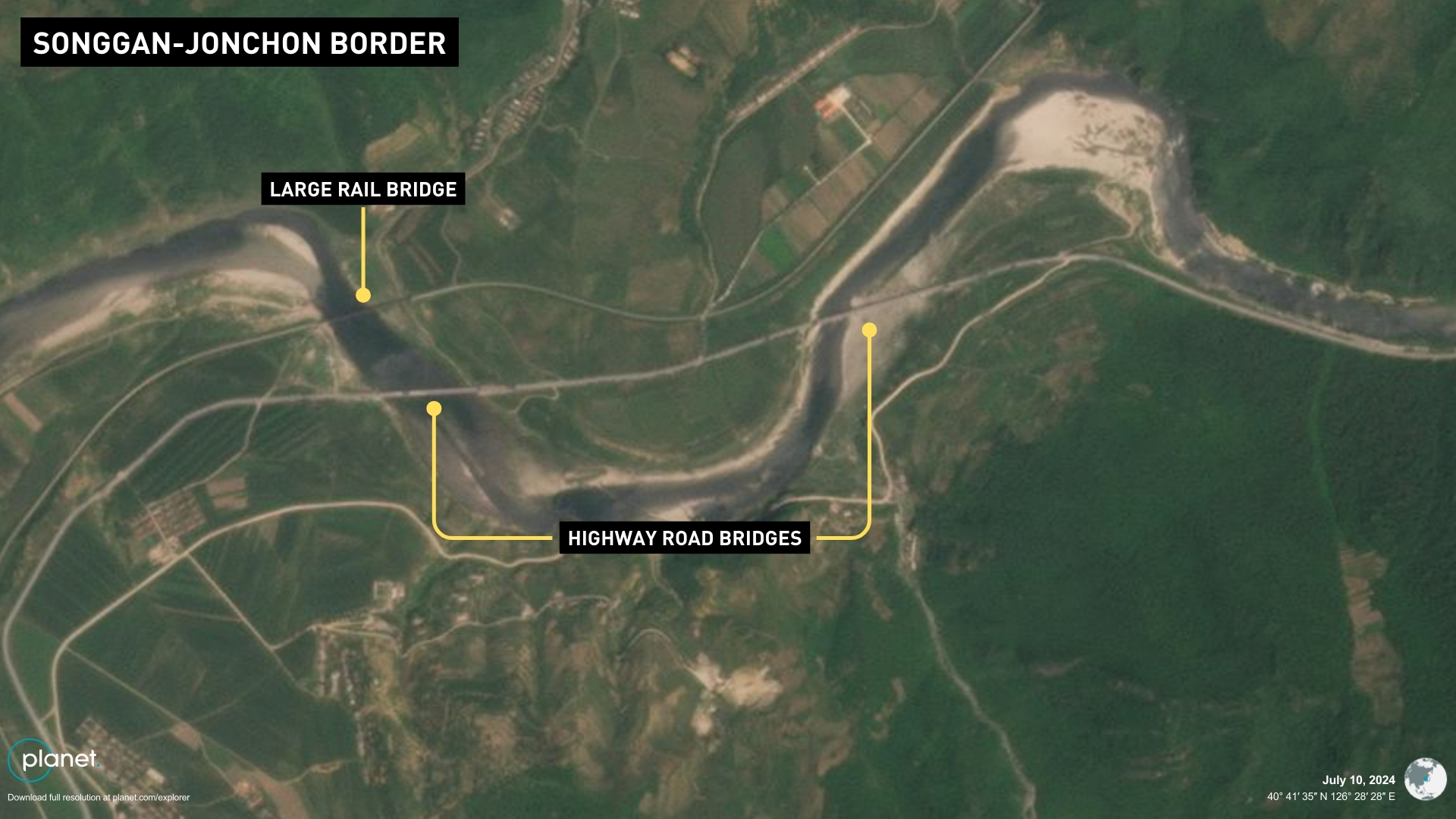
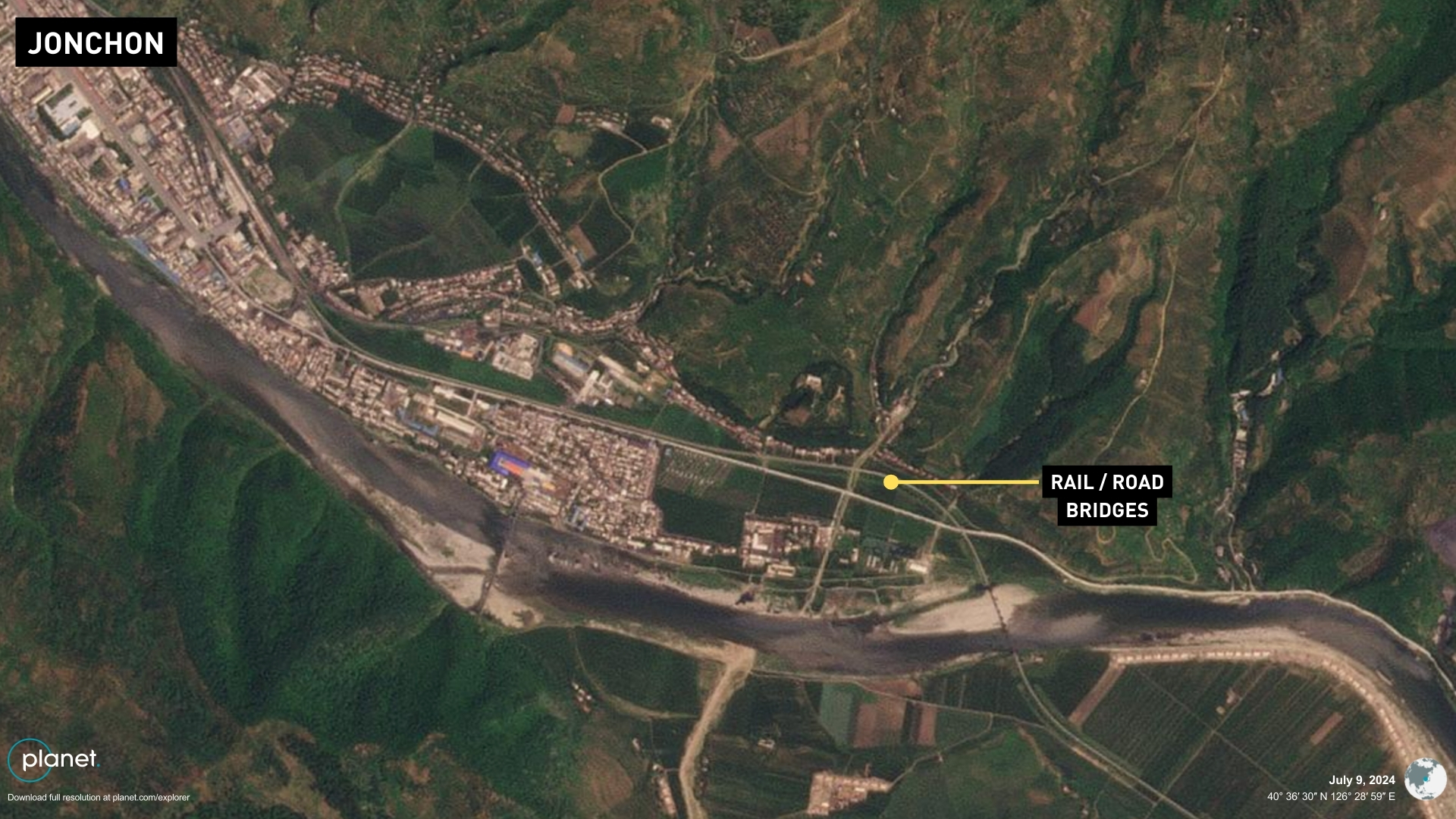
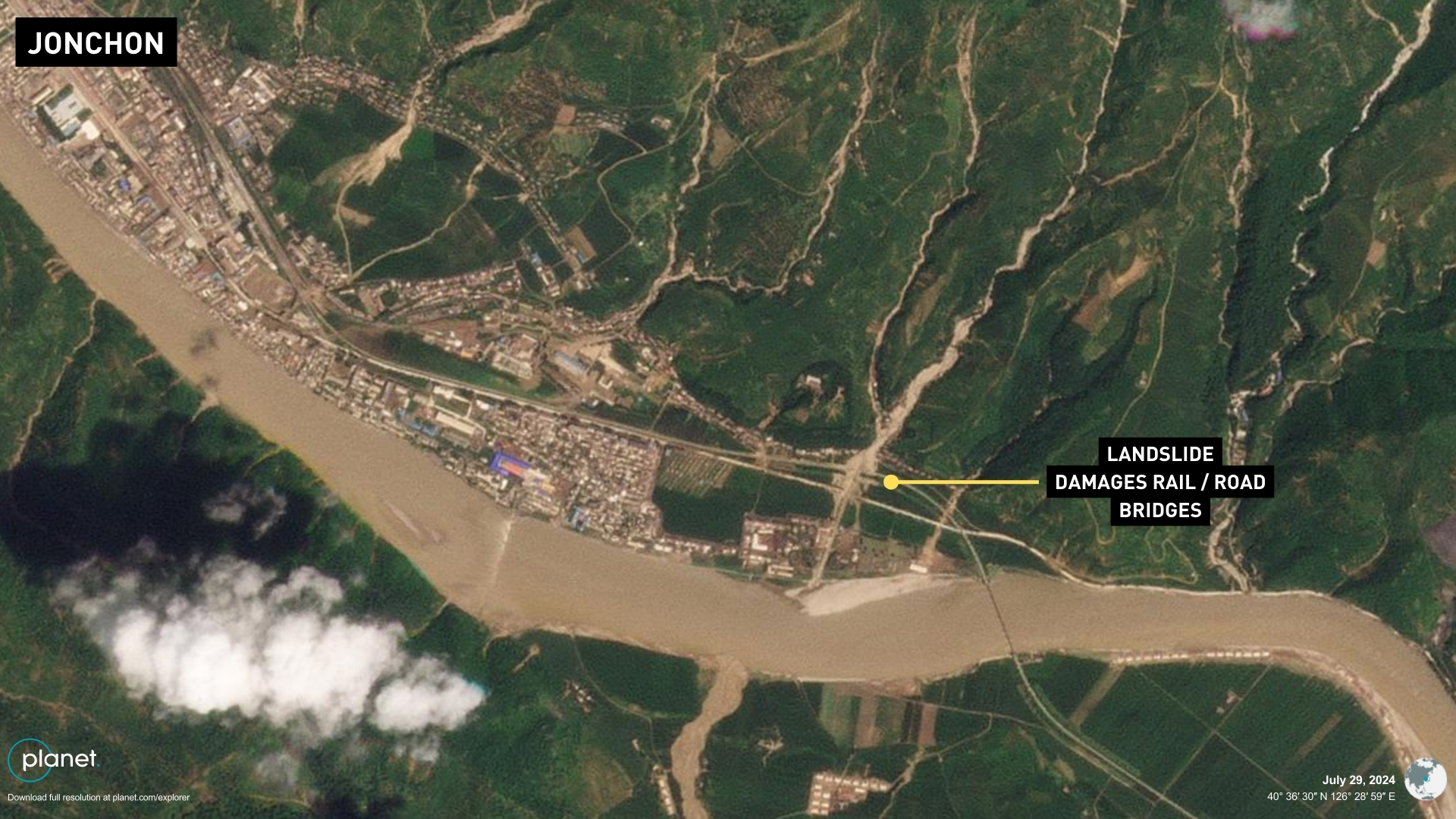
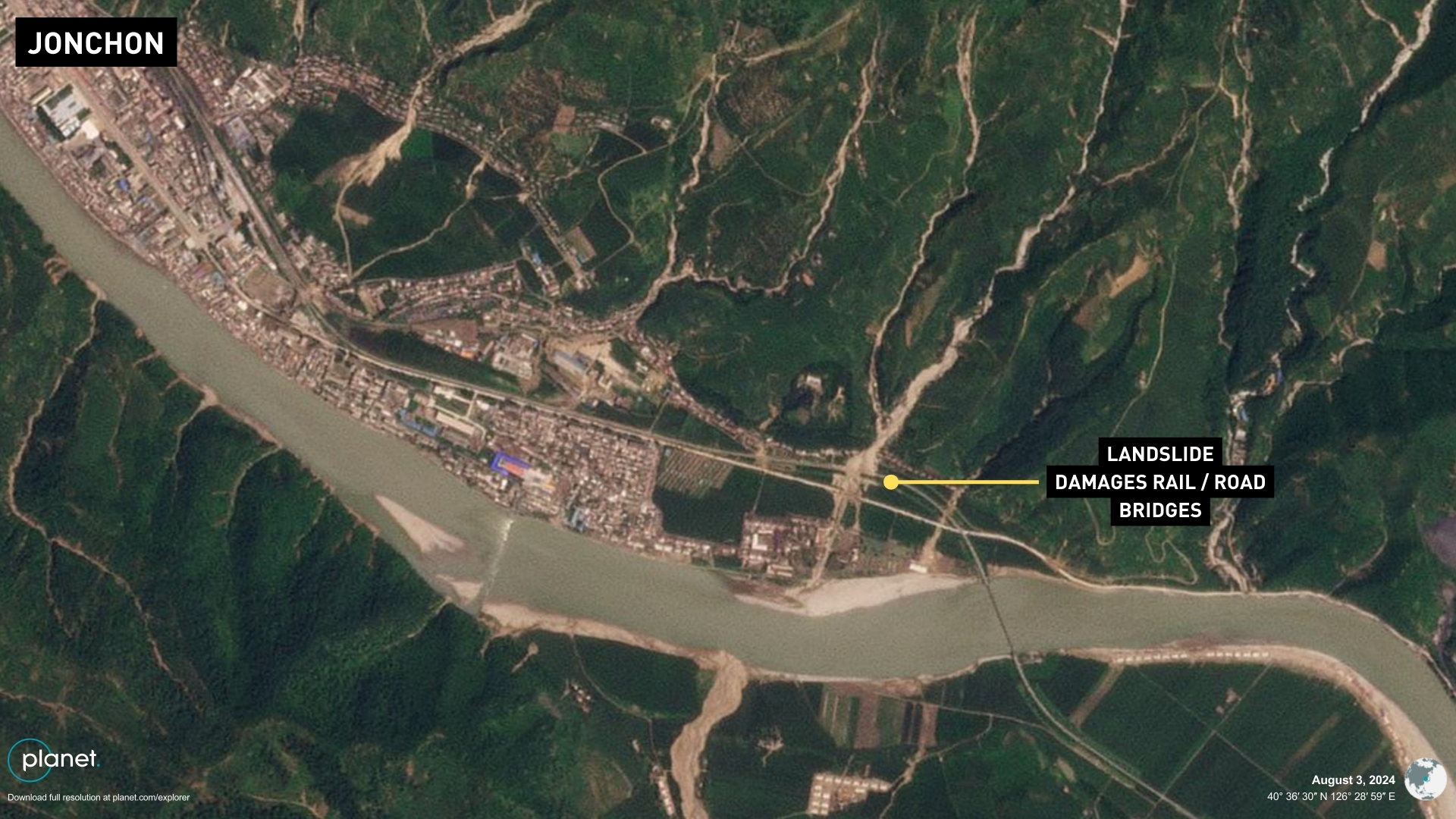
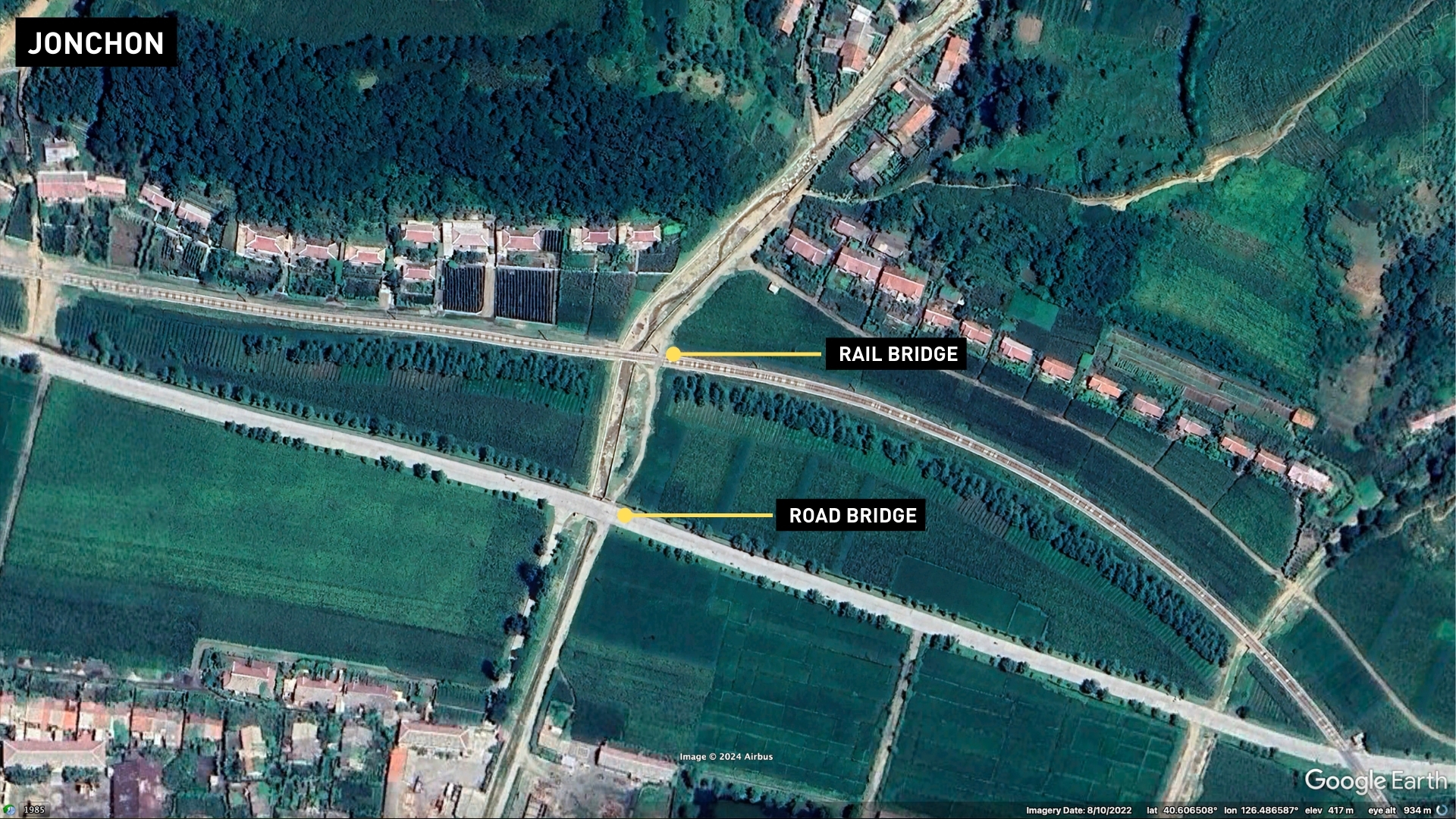
An additional small rail bridge appeared to be damaged or broken in a landslide in Jonchon down the line from the February 8 General Machine Factory, a facility producing small arms like rifles and possibly other weapons. A small road bridge inside the factory complex itself appeared destroyed, but there are other bridges to cross the stream running through it. Other small bridges across runoff streams where landslides also appeared to occur along the Jangja river between Manpho and Jonchon were likely also damaged or destroyed, but they are difficult to see without high-resolution imagery. The city of Huichon to the south, where there are a number of munitions factories, including one newly discovered to be producing surface-to-air missiles, appeared to be spared from any major flood damage. But the city is cut off from the plants in Jonchon, Songgan, Kanggye and Manpho to the north, meaning they can’t receive components or machine tools produced in Huichon. Satellite imagery in the coming days and weeks is expected to reveal the scale of rebuilding efforts around the weapons factories in Jagang and their transportation network. Edited by Bryan Betts © Korea Risk Group. All rights reserved. |

October 08, 2026Oct 08, 2026

The ultimate resources for professionals working on North Korea
 SHARE
SHARE COPY LINK
 X
X MASTODON