  Analysis North Korea upgrading over 10 weapons factories in sweeping production pushNK Pro uncovers construction at facilities for missiles, launchers and more as DPRK focuses on deterrence and arms sales 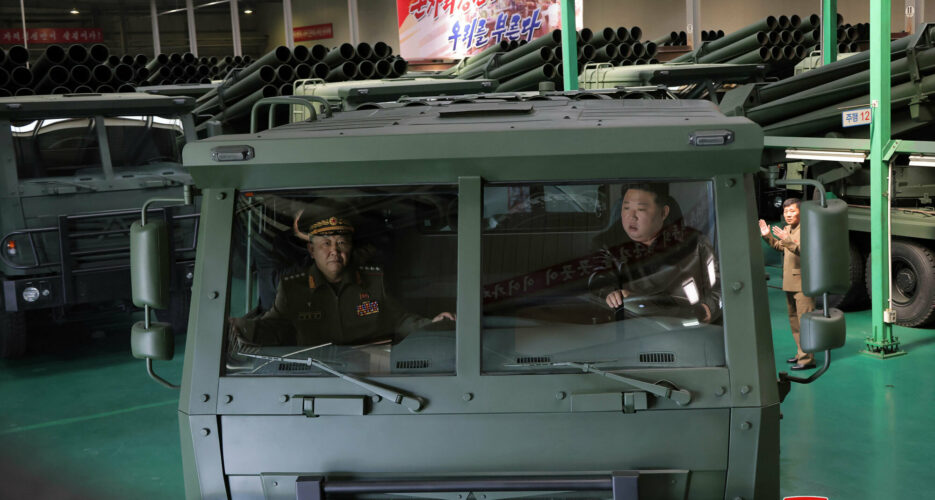 Editor’s note: This article is the first in a two-part series on North Korean weapons factory upgrades. The second part can be found here. North Korea is in the middle of a sweeping push to rebuild or expand over 10 weapons factories nationwide, NK Pro analysis of satellite imagery has found, likely seeking to boost production of assets aimed at South Korea and increase arms exports to Russia or other countries. The analysis reveals for the first time that the DPRK leader may be planning a major increase in surface-to-air missile (SAM) system production. Multiple factories now undergoing new construction also appear to produce transporter erector launcher (TEL) vehicles for short-range missile systems, and others make anti-tank guided missiles (ATGMs). Another project appears linked to boosting small arms and rifle production, while extensive new tunnel systems are being built near weapons plants. Kim Jong Un has publicly visited some of these factories in the last year. The revelations underscore the scope of North Korea’s efforts to mass-produce weapons as Pyongyang prioritizes deterrence and arms sales over diplomacy with the U.S. and South Korea. They come after Kim recently suggested the need to focus on developing short-range weapons and small arms at a weapons expo in May, as well as unusually rapid construction at factories producing short range ballistic missile (SRBM) TELs and missiles. The following covers the SAM and TEL factory projects, while the next article will cover the ATGM and other developments.
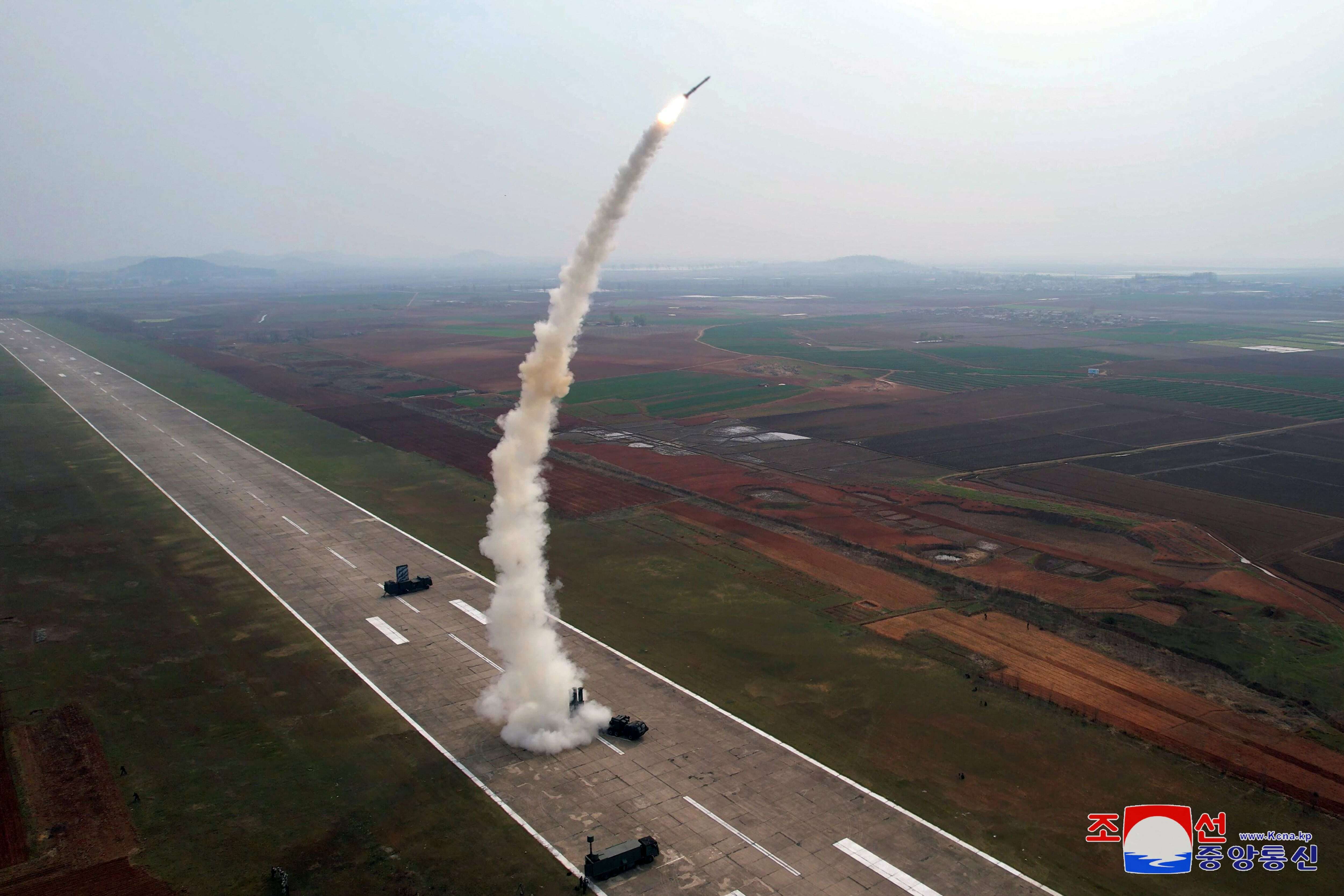
PUSHING ANTI-AIRCRAFT MISSILE PROGRAM? North Korea started building a large new production hall last summer at the Huichon Youth Electrical Complex (희천청년전기련합기업소) in Jagang Province. The factory appeared to produce SAM systems of the “Pongae” (Lightning) series (KN-06) when former leader Kim Jong Il visited numerous times in the final years of his rule, according to NK Pro analysis of old photos geolocated to the factory grounds for the first time. Pyongyang has touted SAM development in recent years and has promoted the capability as needed to fend off U.S. and South Korean air forces and potentially shoot down American spy planes flying far off the east coast. If still producing SAMs and/or their TELs, this would fit with North Korea’s increased testing and development of these missiles in recent years. In the most recent test in April, state media revealed the latest SAM series is named “Pyoljji” (meteorite). North Korea has also developed a range of new mobile radar trucks, which could be produced at the factory too. 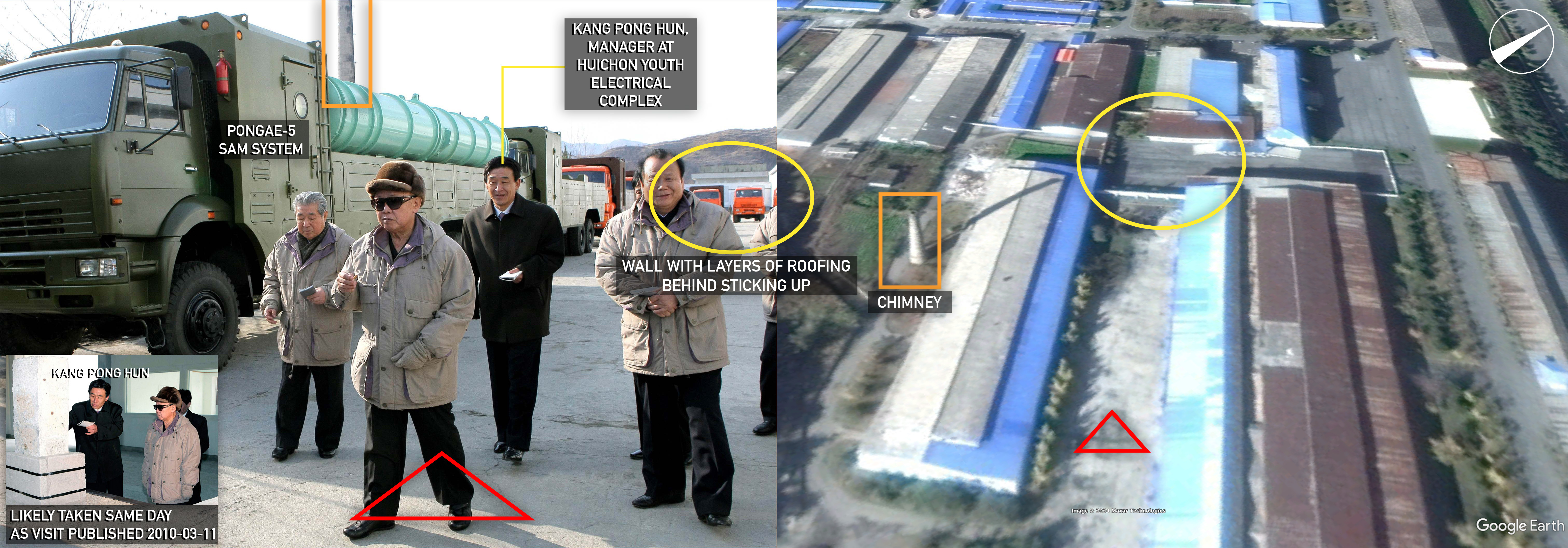 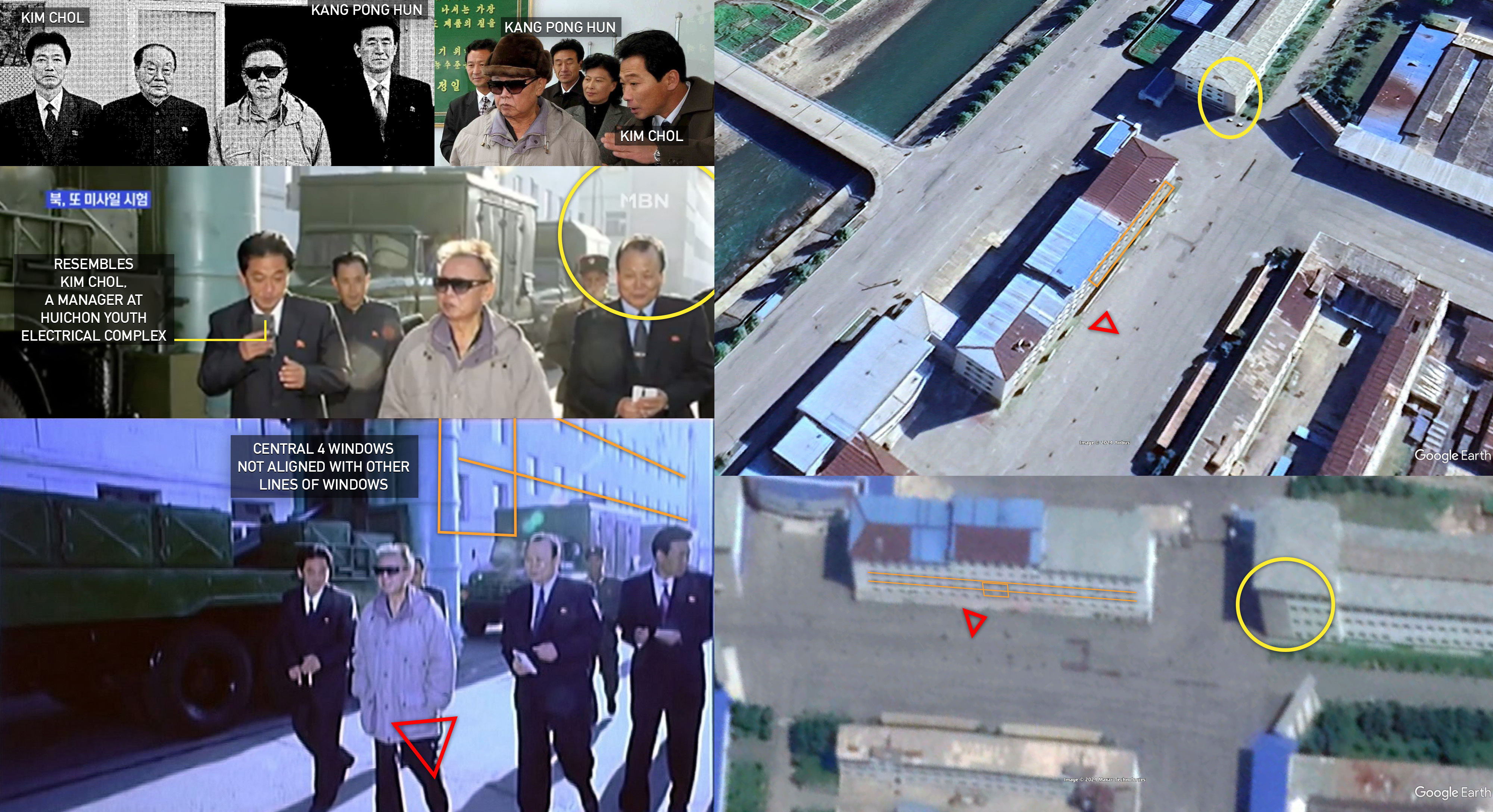
Planet Labs satellite imagery shows work has sped up on the new production hall since late June after a period of inactivity, with roof work starting over some areas along the edge of the new 2.5-acre (1-hectare) structure. But roofing hasn’t been installed over the main area of the building, meaning it will still take time before machines are installed and production starts. It is still unclear precisely what parts of SAM systems the Huichon factory produced, but the older photos showed fully assembled TELs with missile launch tubes installed, as well as command post trucks and possibly mobile radars. One defector, who identified themselves as Bok Koo Lee, claimed to have worked there in the 1990s and said it produced missile parts and related electronics, while another named Ko Chong Song wrote in his book “Kim Jong Il’s Secret Weapons Factories” that the Huichon complex made “military-use electronics, various communications equipment and various radar equipment.” 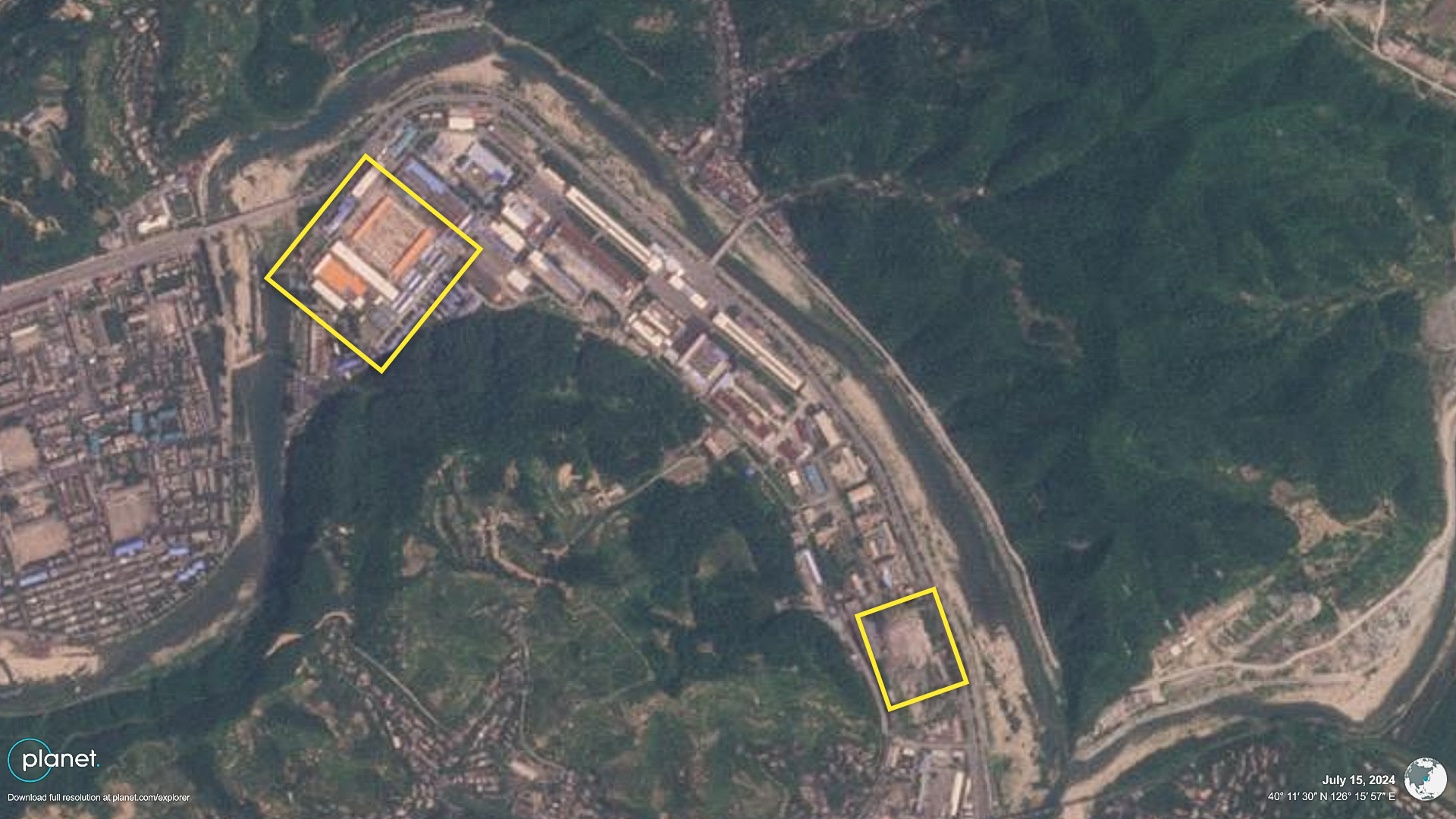
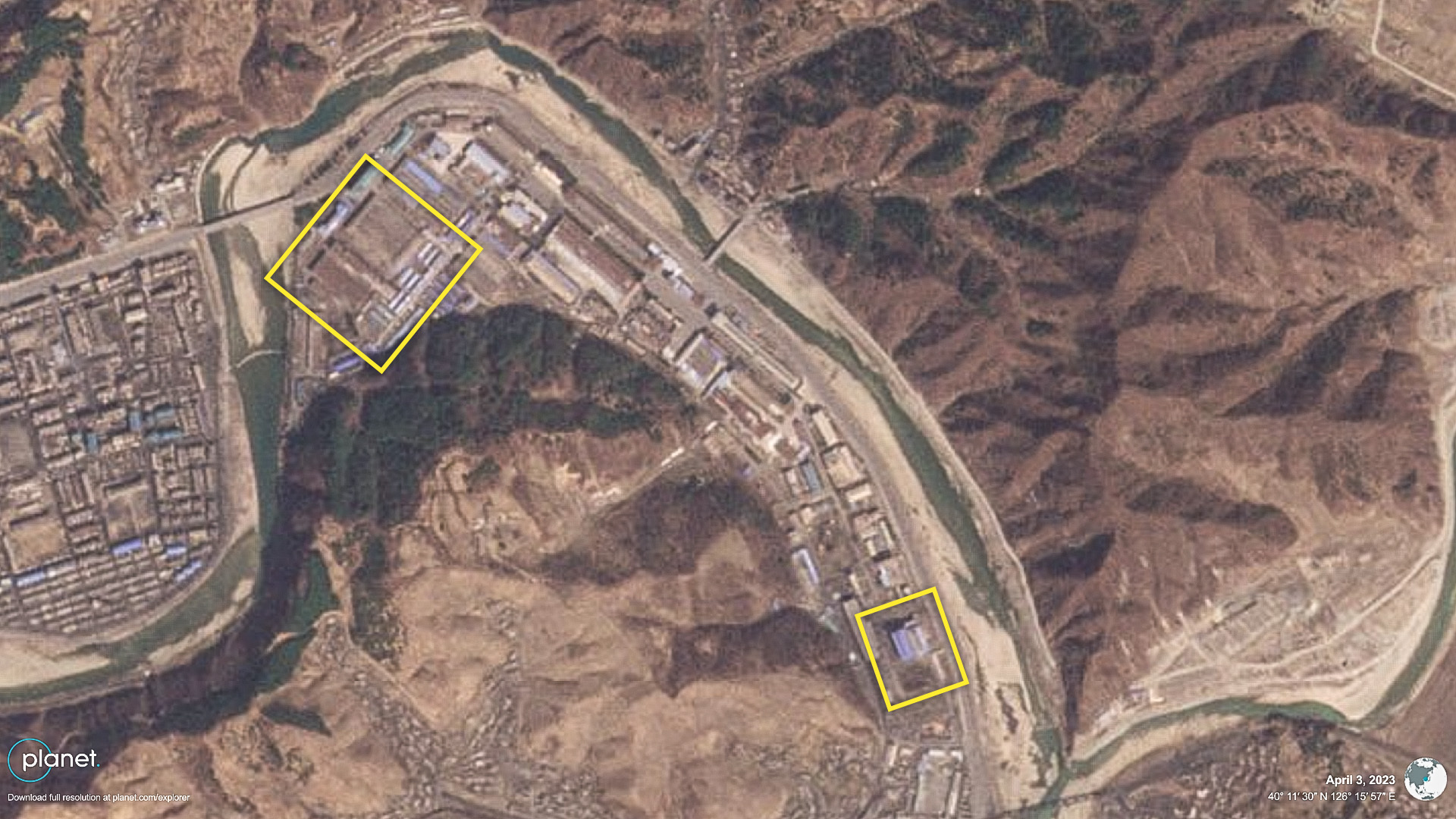
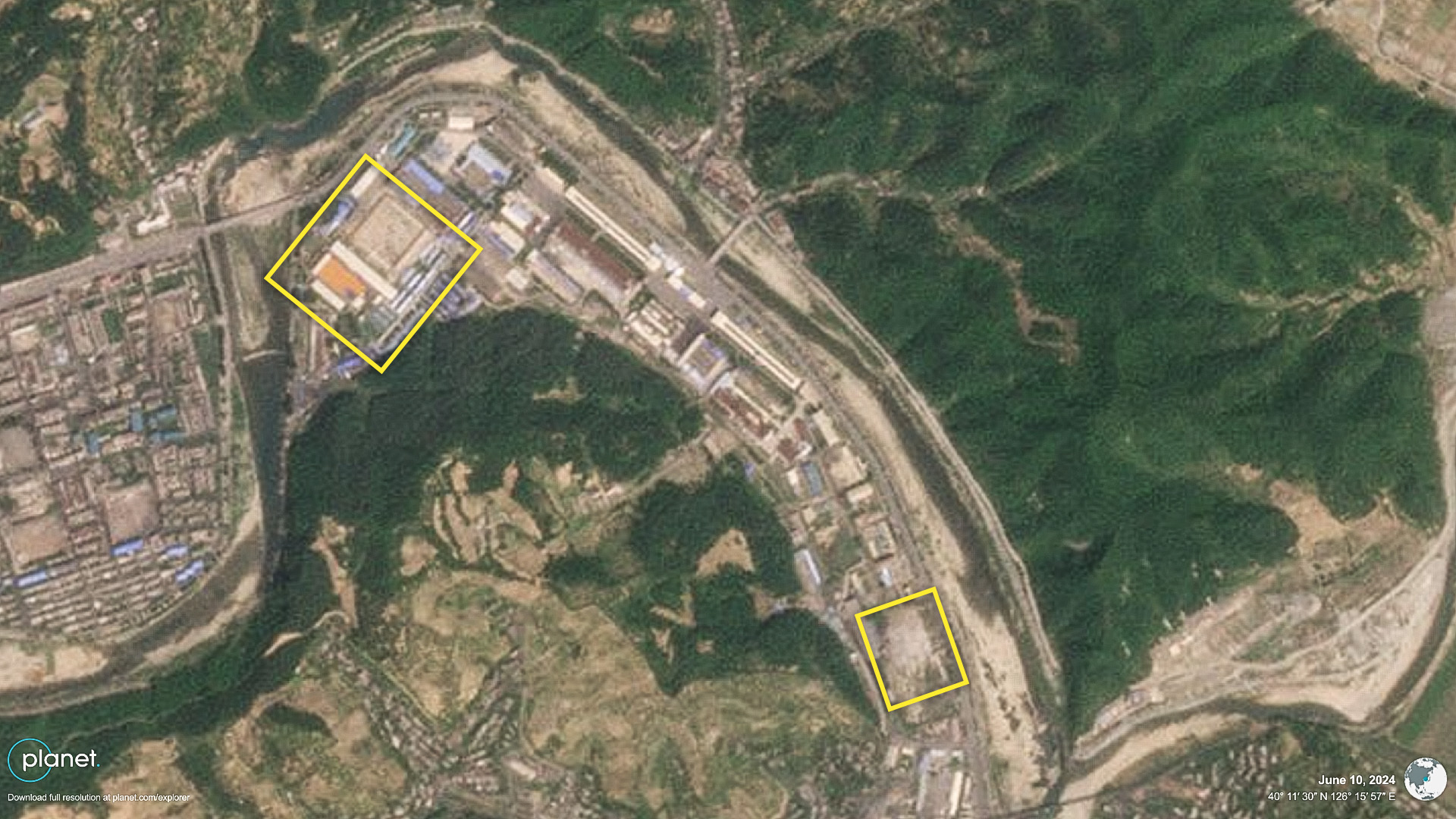
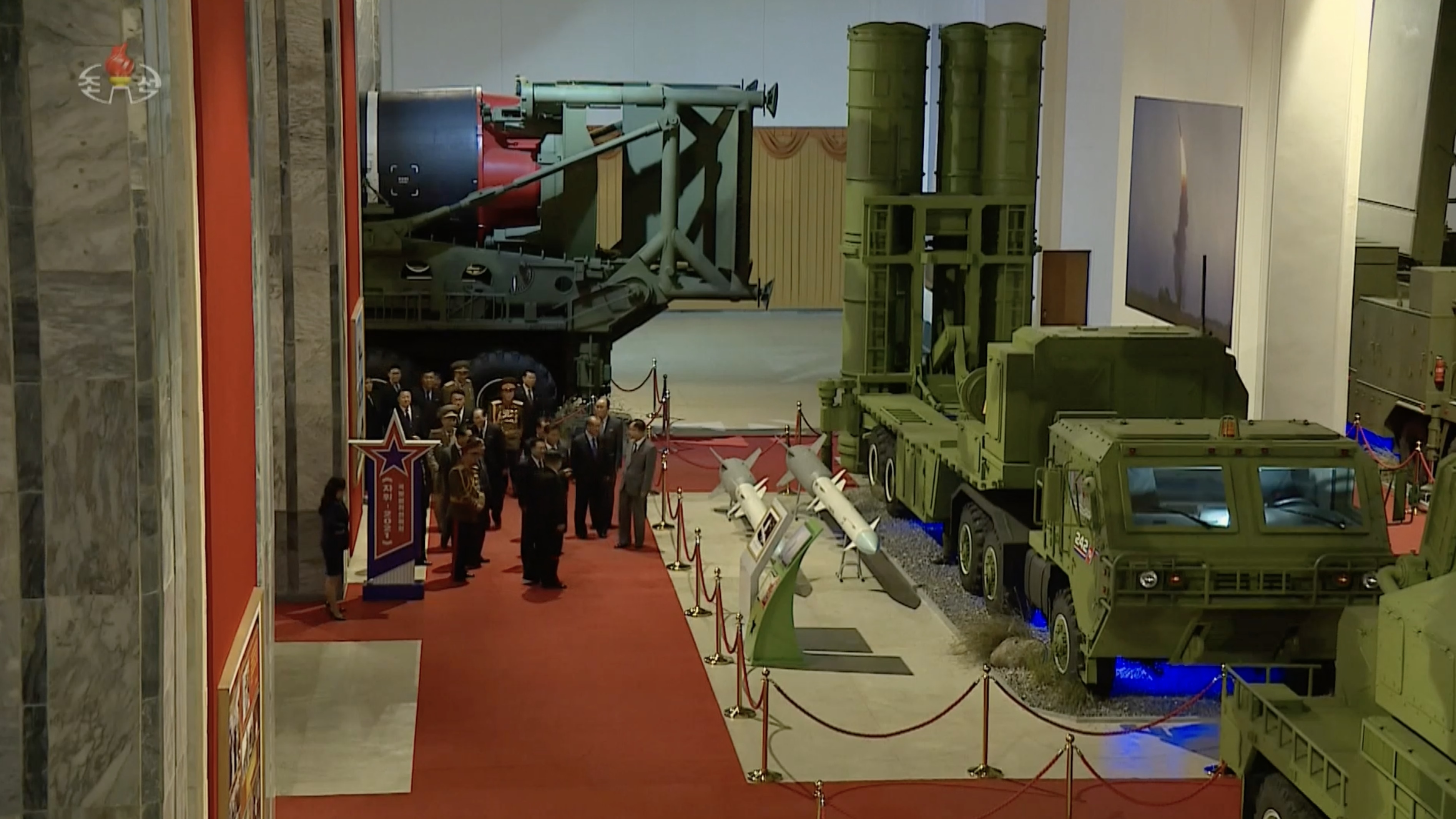
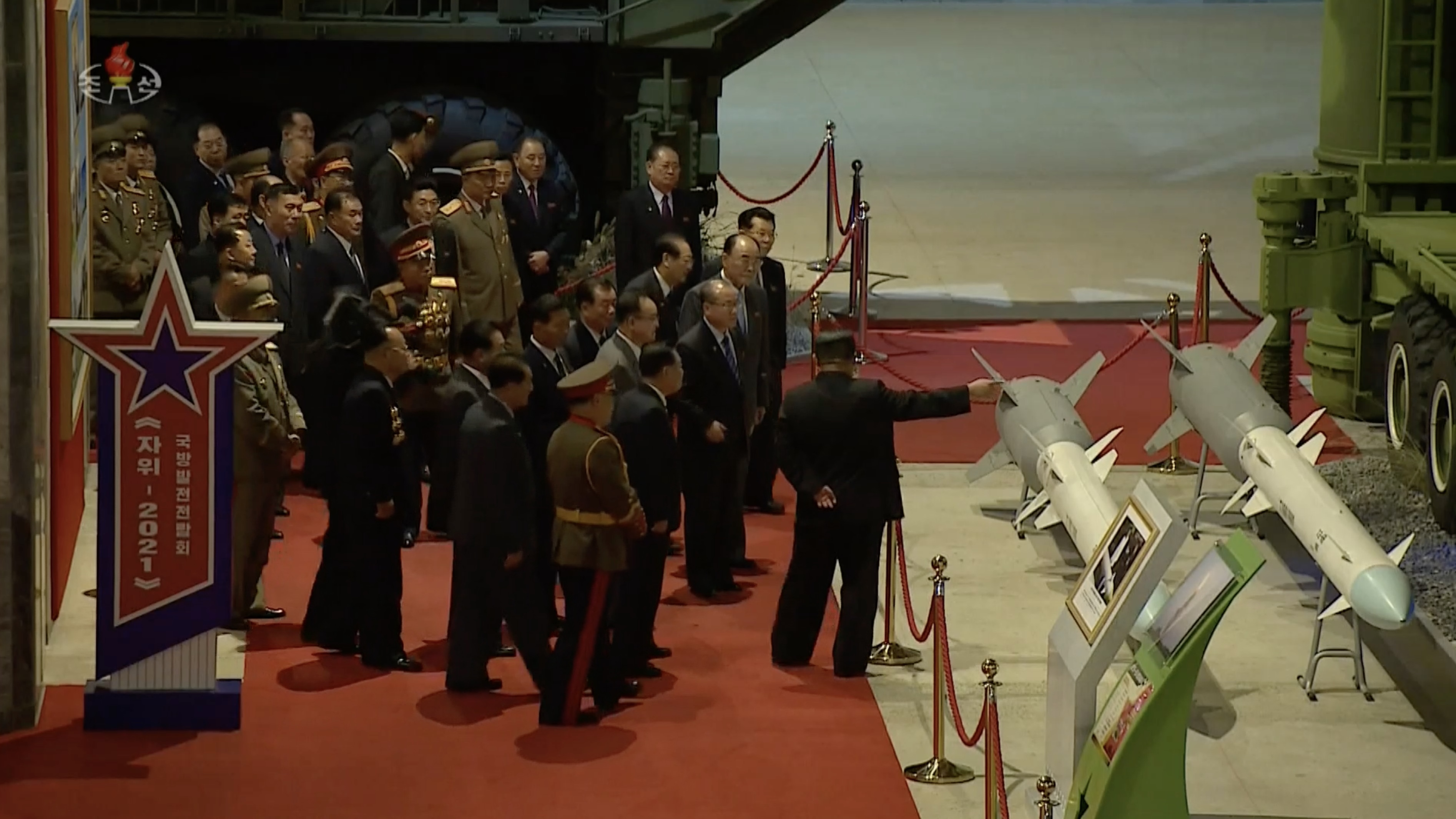
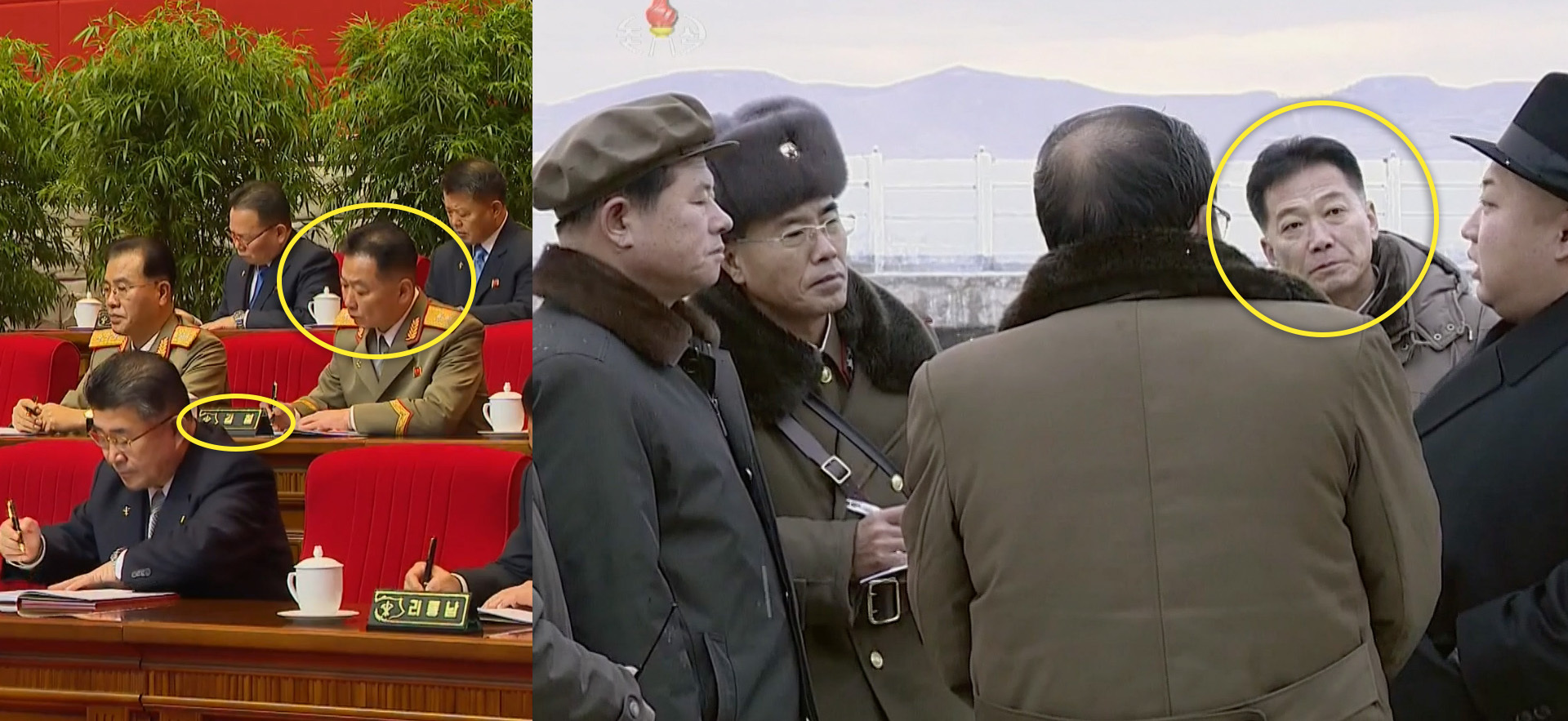
It remains possible the factory is now making different weapon systems, as North Korean munitions factories are known to make multiple products, though they typically prioritize weapons. For example, NK Pro found that the factory likely produced rudimentary farm machines on an order from central authorities in late 2022, with satellite imagery showing dozens of farm machines at the complex and other munitions factories around Jagang Province that September. The Huichon Ceramic Factory producing kitchenware like plates and bowls was also located inside the Huichon Youth Electrical Complex when Kim Jong Il visited in the past, according to NK Pro analysis of old state TV footage. Kang Pong Hun, now Jagang Province party committee chief, appeared to be a manager of the Huichon complex during Kim Jong Il visits between 2008 and 2010, and he appeared showing Kim one of the Pongae-5 SAM TELs on display outside the north end of the factory in a photo KCNA released in May 2017 during a report on a SAM test. Another man likely named Kim Chol, according to low-resolution images of a nametag in front of him at the Jan. 2021 party congress, was the other manager alongside Kang during those visits. He appeared to also show Kim Jong Il SAM TELs and command post trucks outside toward the central area of the Huichon complex grounds in another photo released in the same SAM test coverage. 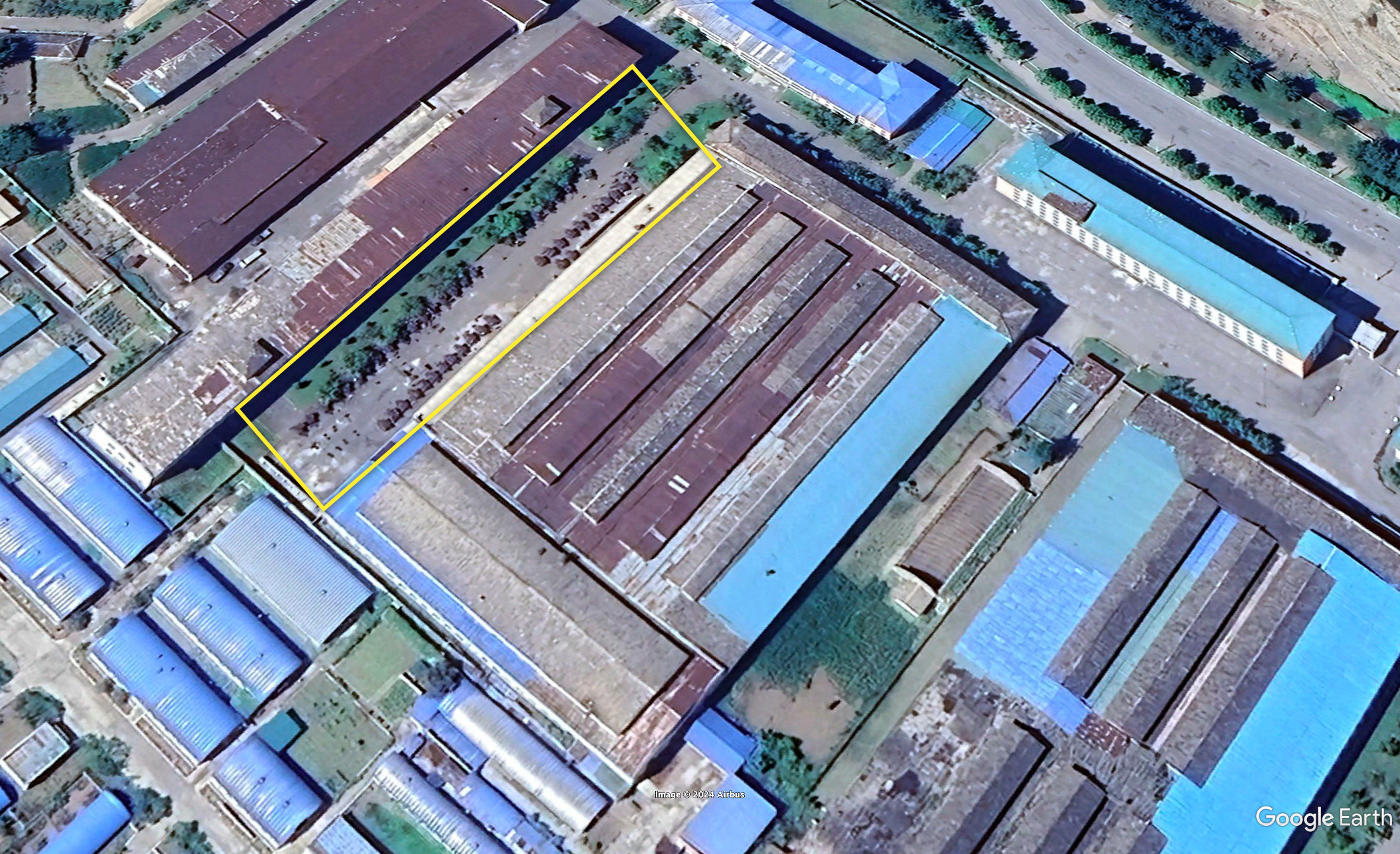
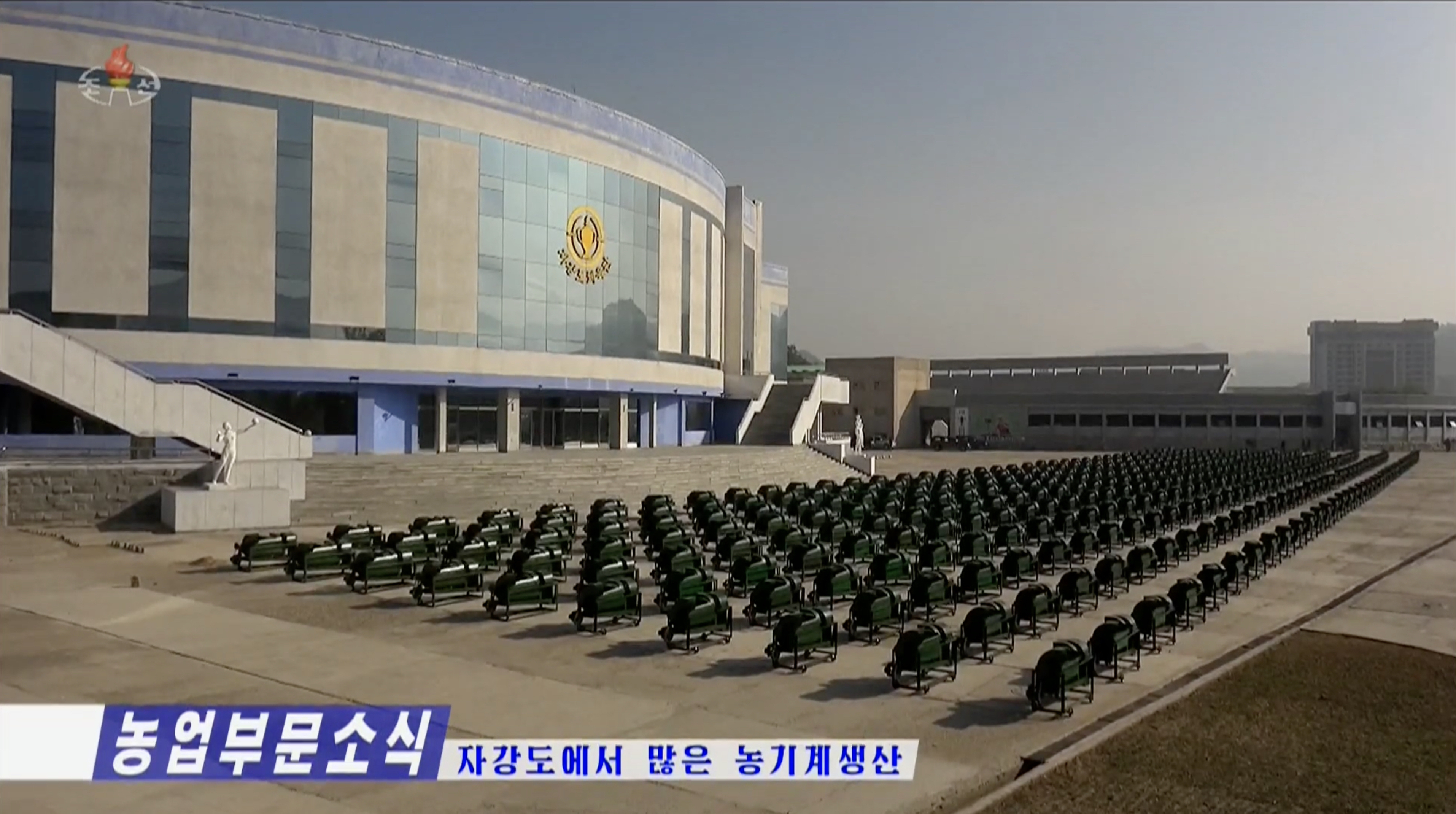
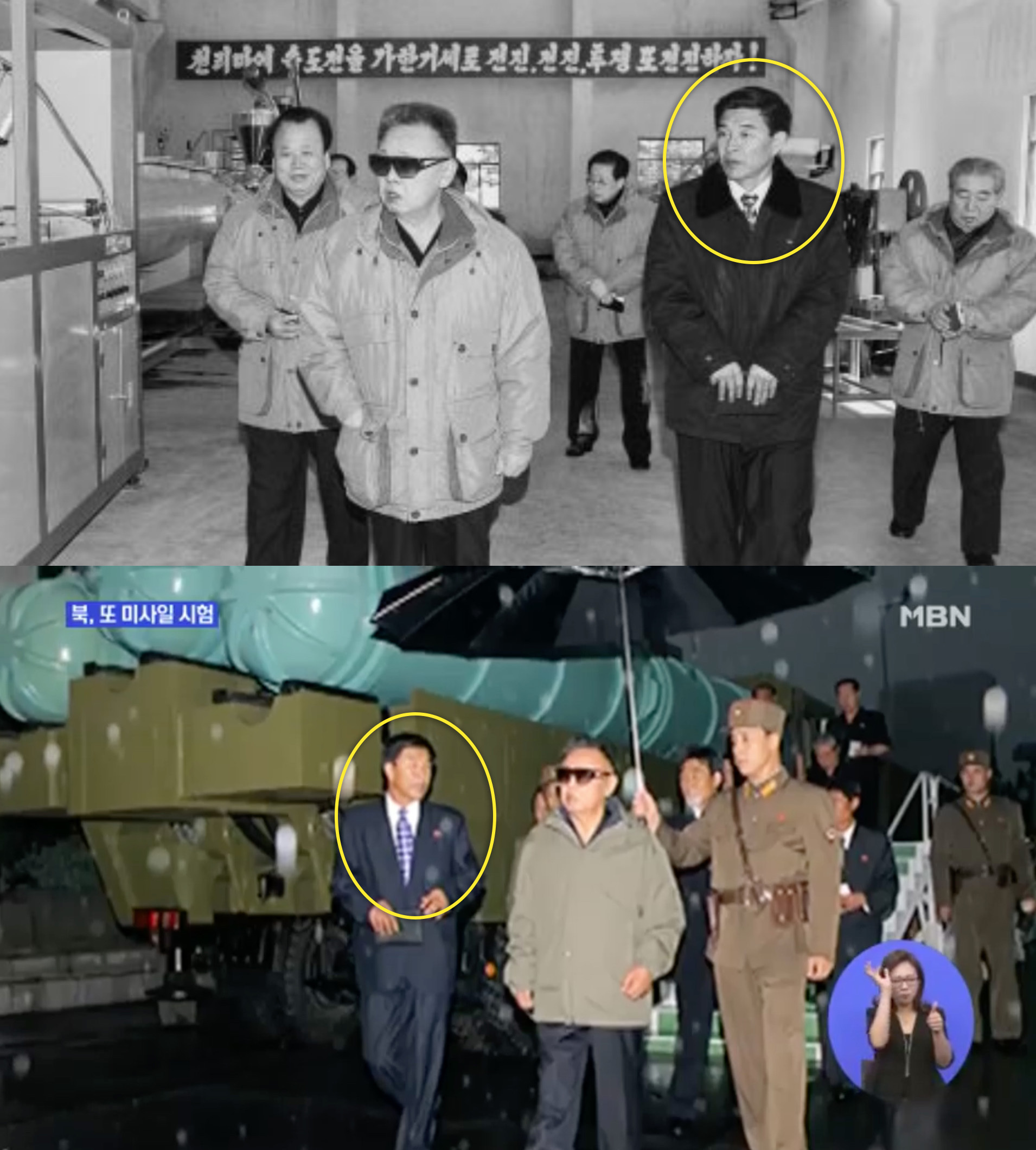 A third manager appeared in a third photo to show Kim SAM systems in the rain at night, making the photo difficult to geolocate, but he appears similar to the man said to be manager of the Chilsong Electric Appliances Factory in March 2010, which is connected to the Huichon complex by a direct tunnel road. Kim Jong Un last publicly visited the complex in Dec. 2010 with his father, but has not been back since coming to power the following year. Meanwhile, Planet Labs imagery shows renewed work in recent weeks to finish a long-stalled construction project to build a large new campus after demolishing the Chilsong complex in 2019. The new structures appear more similar to administrative or even military base buildings instead of production facilities. UPGRADES AT TEL FACTORIES Pyonghwa / Pyeonghwa Motors General Factory (평화자동차종합공장) Satellite imagery shows new efforts since May to expand facilities at the Pyonghwa Motors General Factory producing 240mm multiple-launch rocket system (MLRS) TELs. The plant in Nampho on the west coast was formerly a joint project with South Korea. Upgrading the plant would help increase the number of MLRS systems ready for deployment following the completion of work to expand the Tonghungsan Machine Factory in Hamhung producing the rockets themselves. Pyongyang has touted MLRS as a key asset to targeting South Korea and could also be preparing to send TELs to Russia to complement the rockets they are already providing for use against Ukraine. 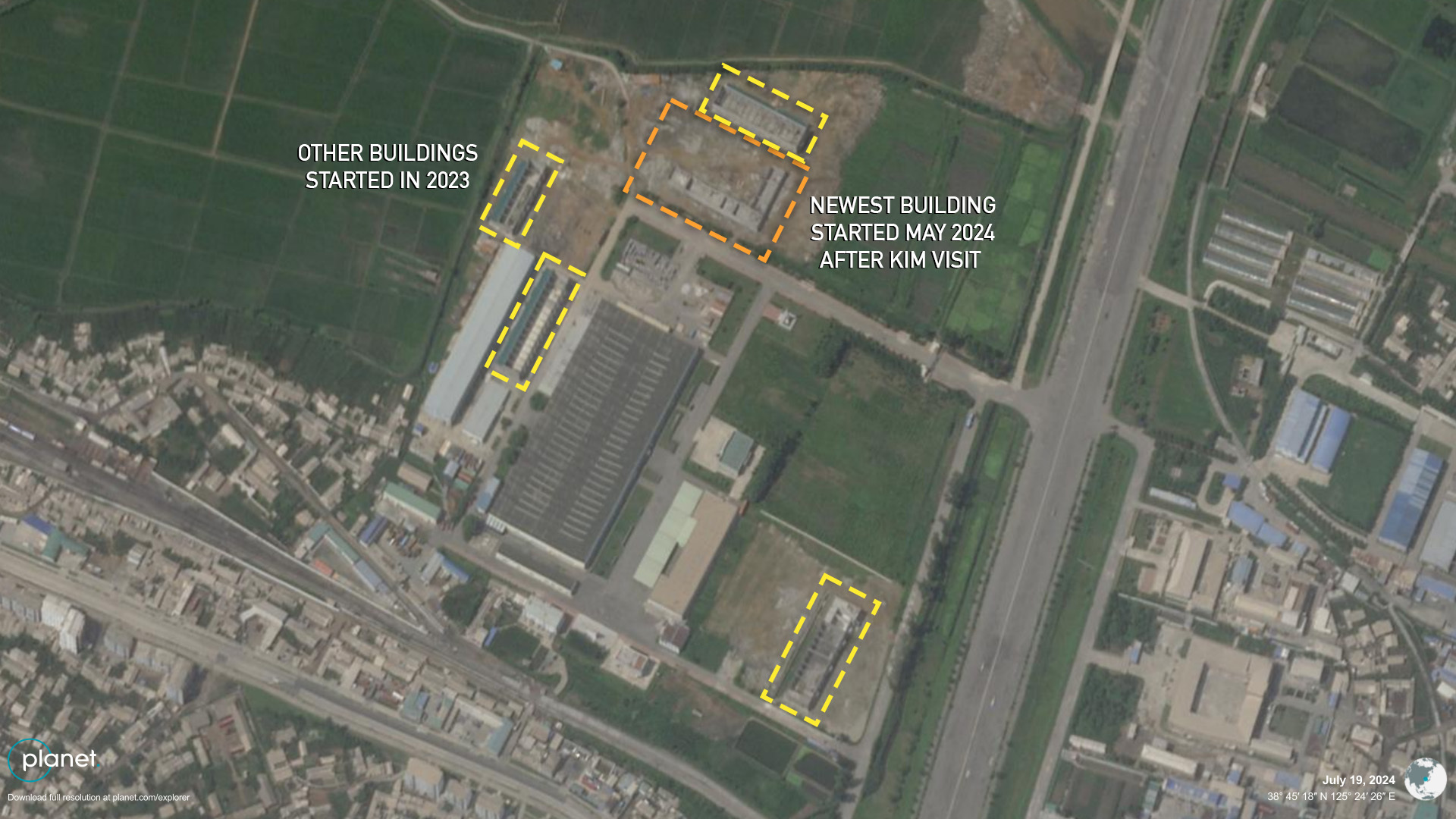
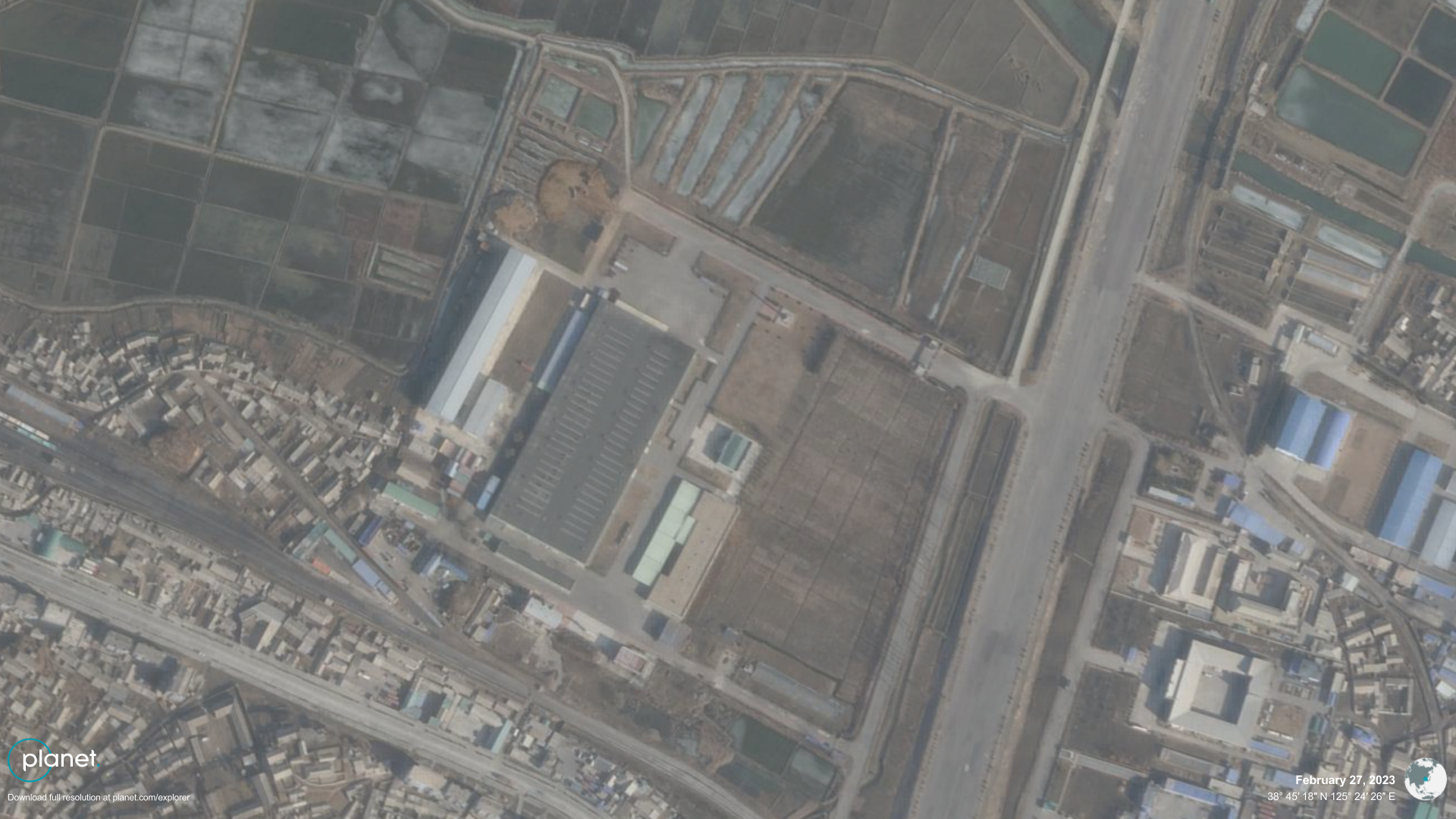
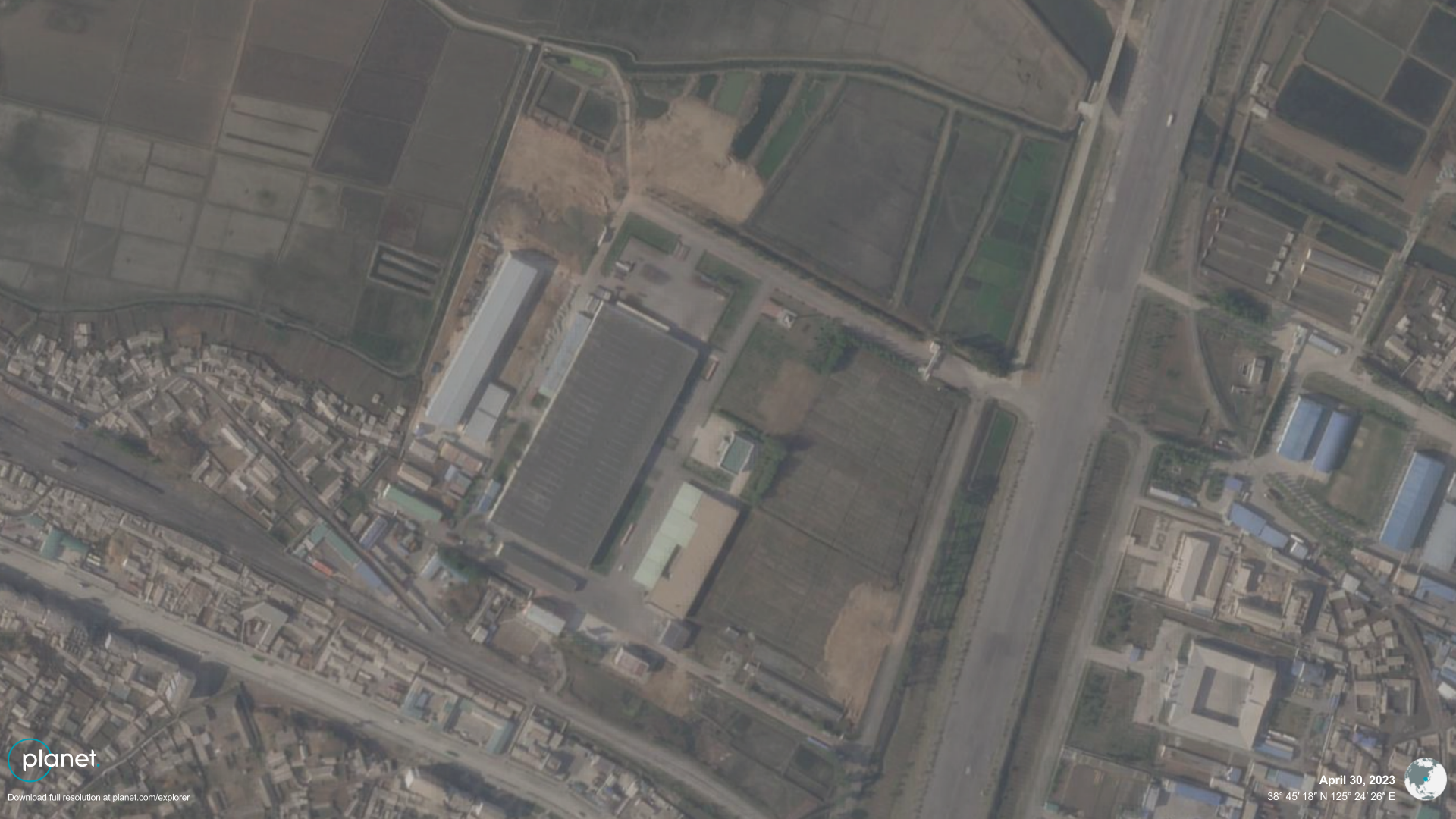
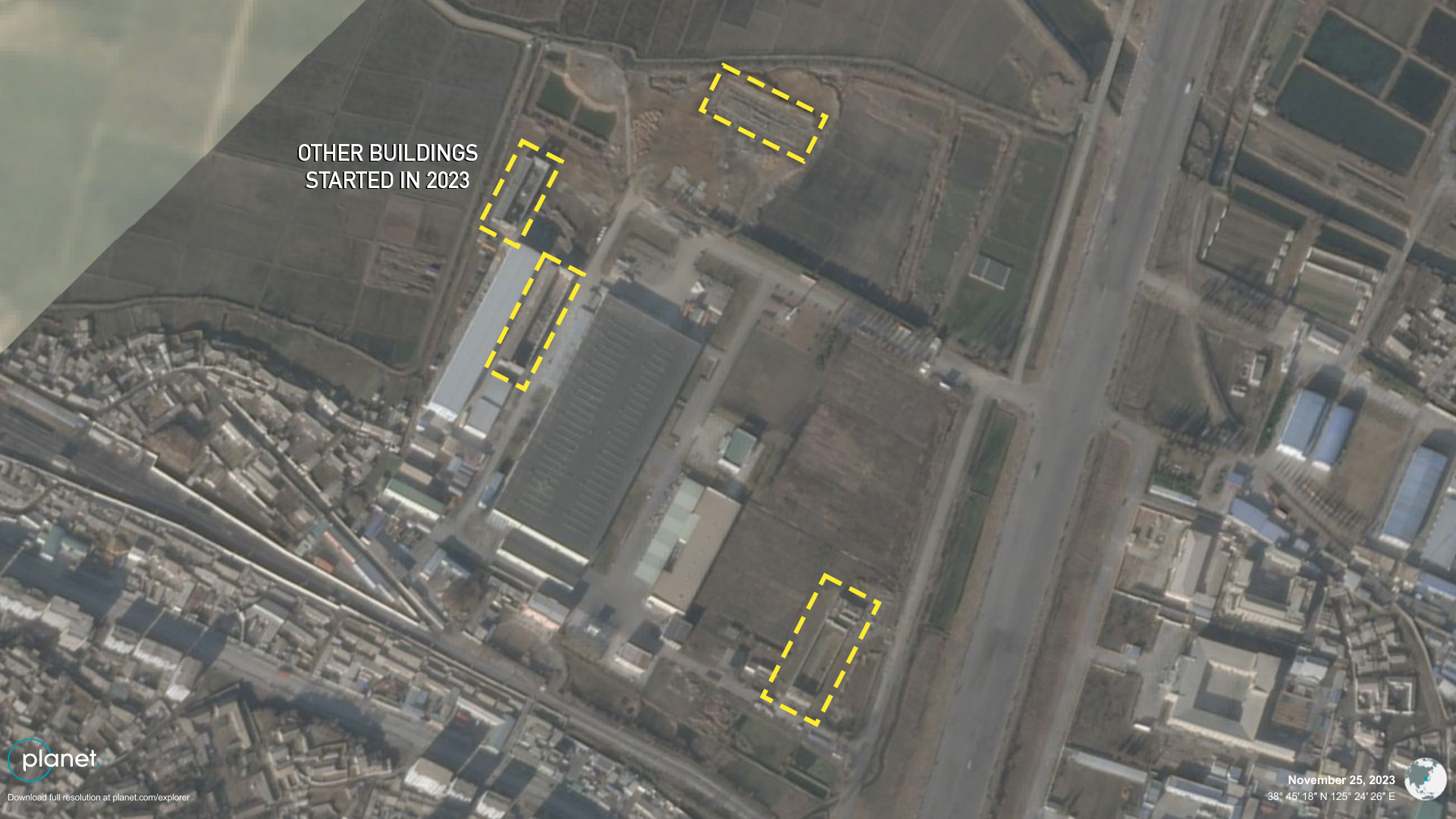
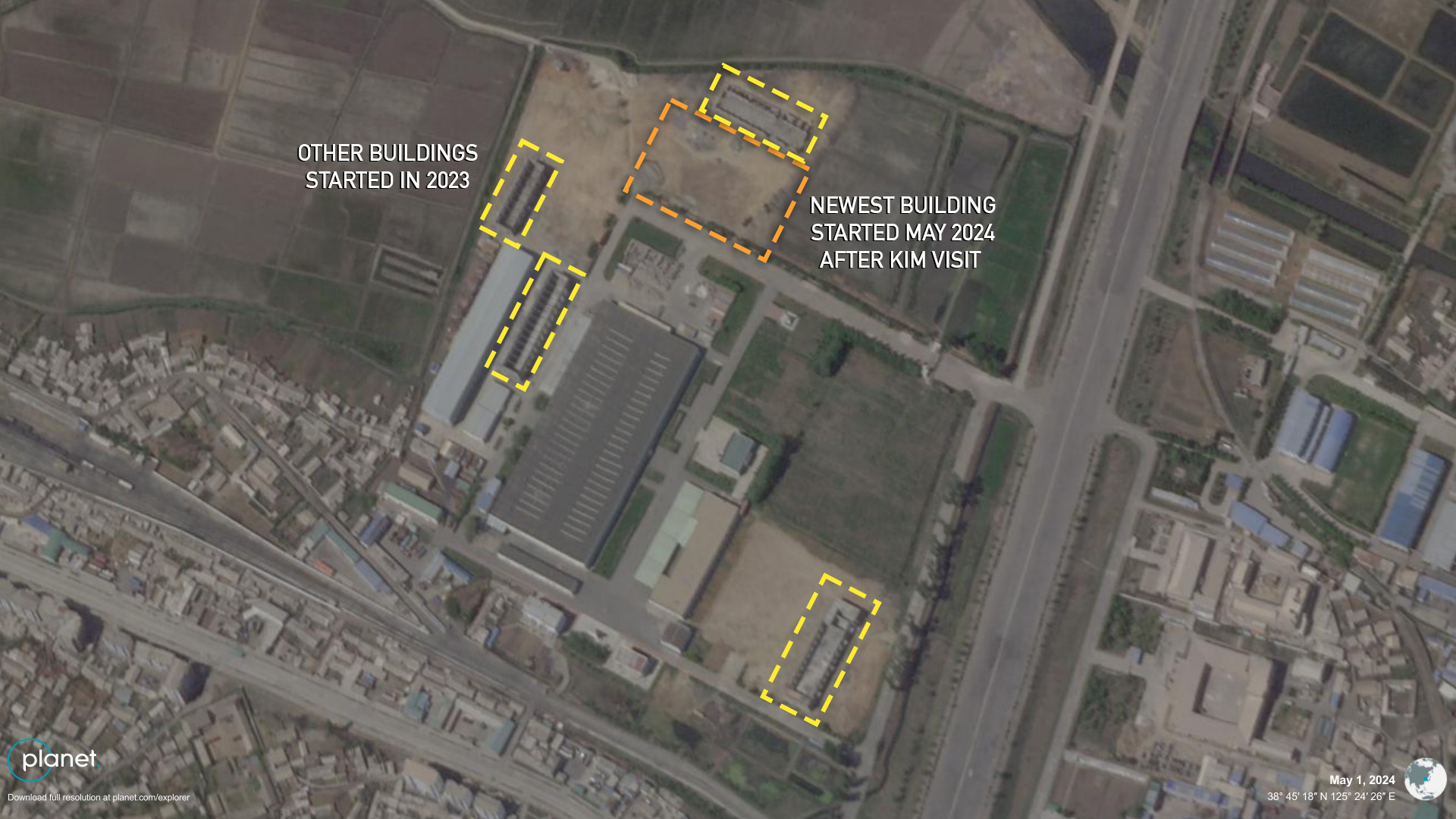
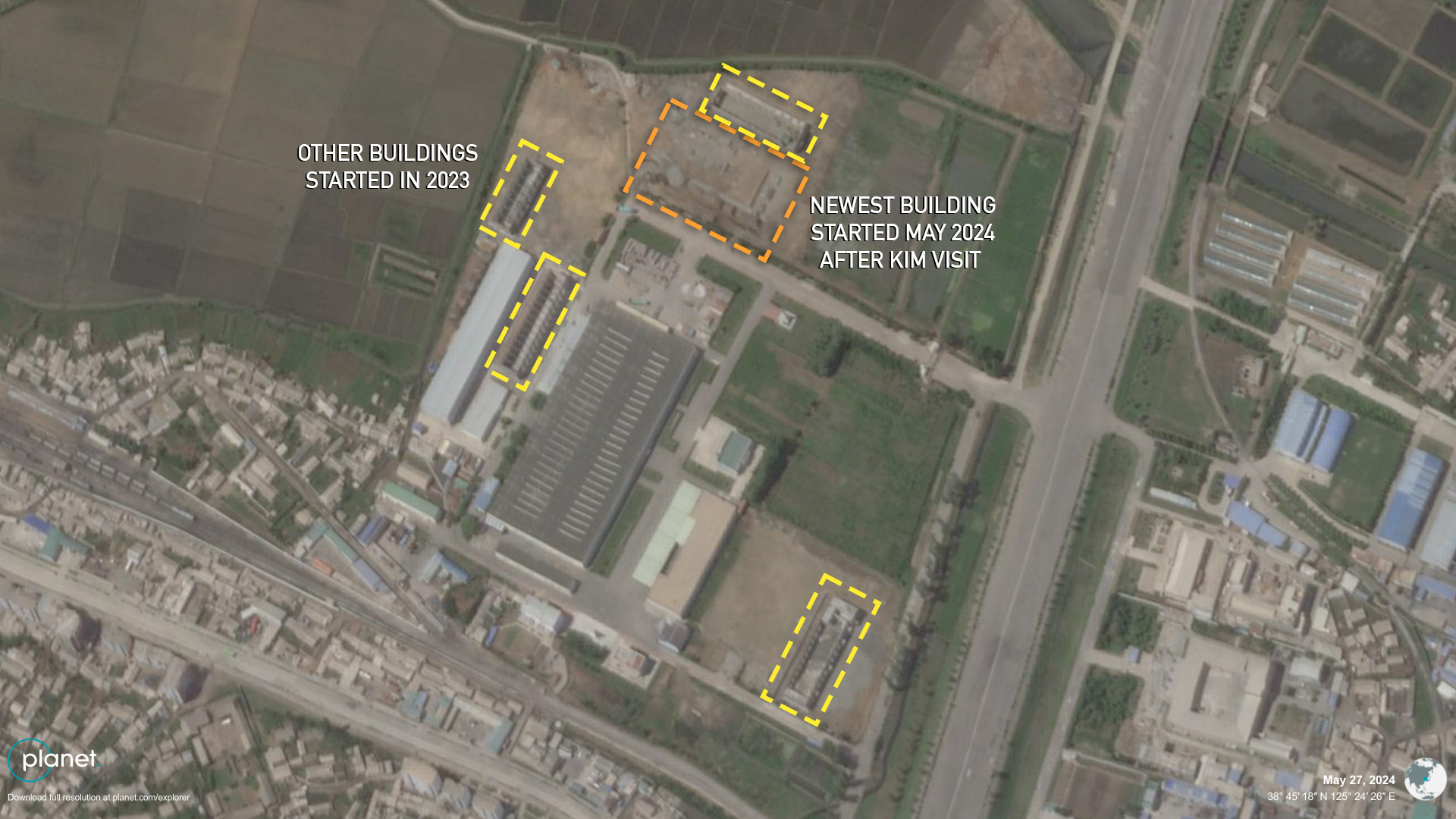
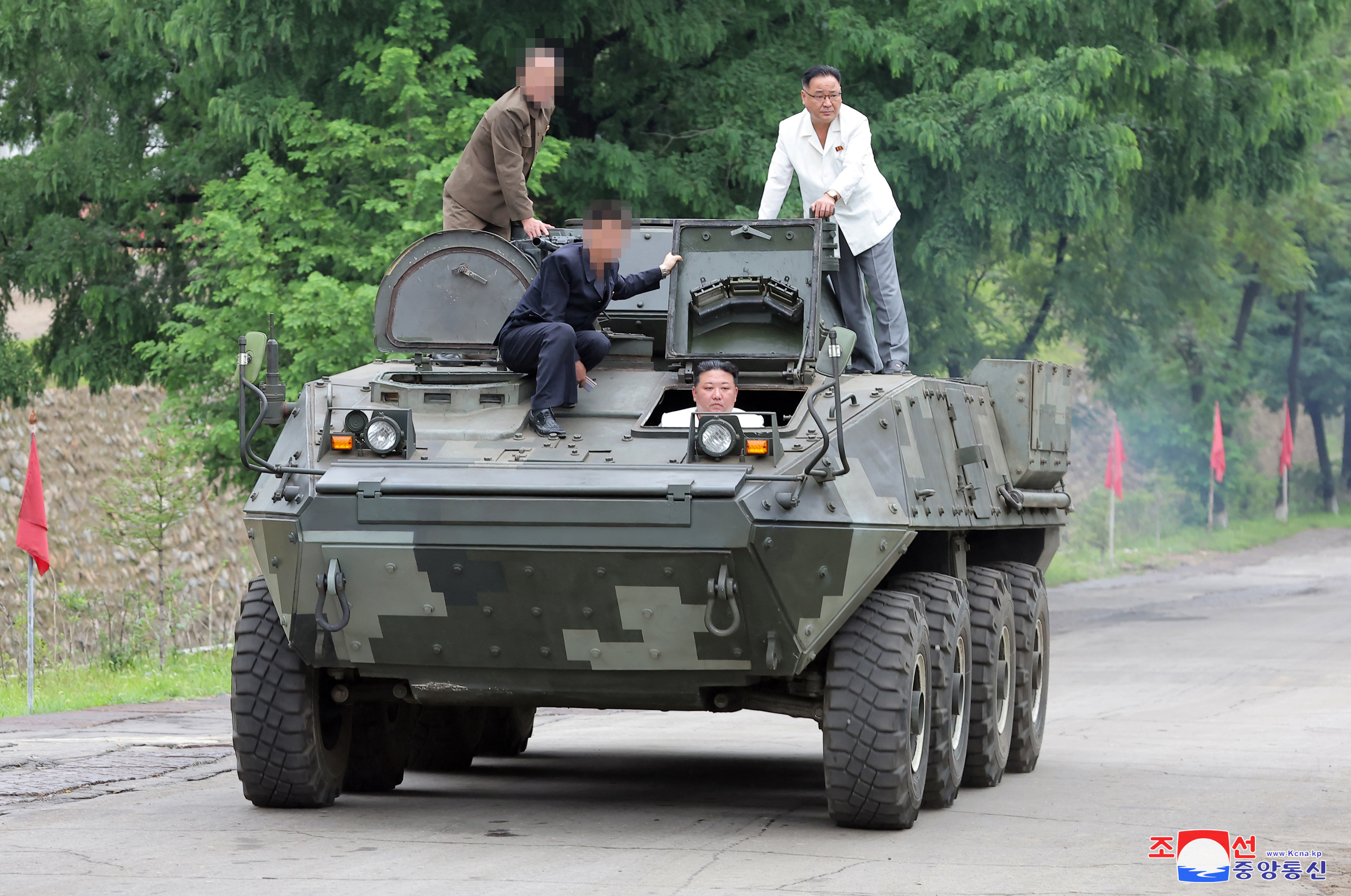
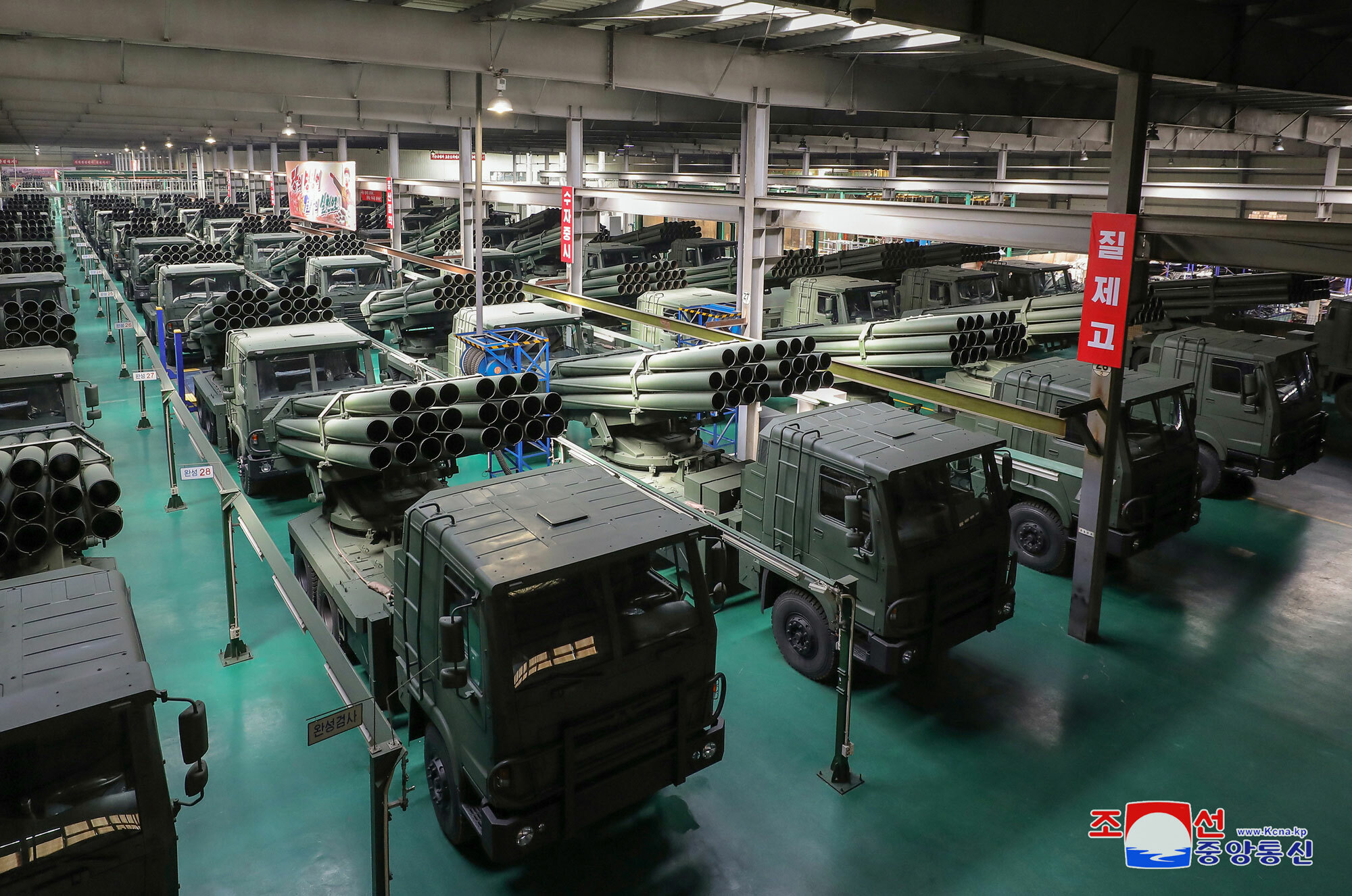 The new construction appeared to start after Kim Jong Un visited in mid-May this year, and involves building a new L-shaped structure to the north of the main building covering around 2,000 square meters (21,000 square feet). Work has also appeared to resume on construction that started in Feb. 2023 but stalled toward the end of the year to the west, north and east of the main assembly hall. The basic structures for four narrow buildings, each measuring just over 20 meters wide (65 feet) and between 60 and 90 meters long, have been built but not yet roofed. Sinhung Machine Factory (신흥기계공장) NK Pro analysis of Planet Labs satellite imagery shows work started earlier this year on a project that could expand a factory producing armored personnel carriers (APCs) that is affiliated with the Sinhung Machine Factory on the east coast. This expansion could be a sign that Pyongyang plans to deploy APCs en masse to border areas to deter the ROK, or that it will ship them to Russia for its war on Ukraine. The vehicles are equipped with indigenous ATGMs modeled after the Russian Kornet ATGM. 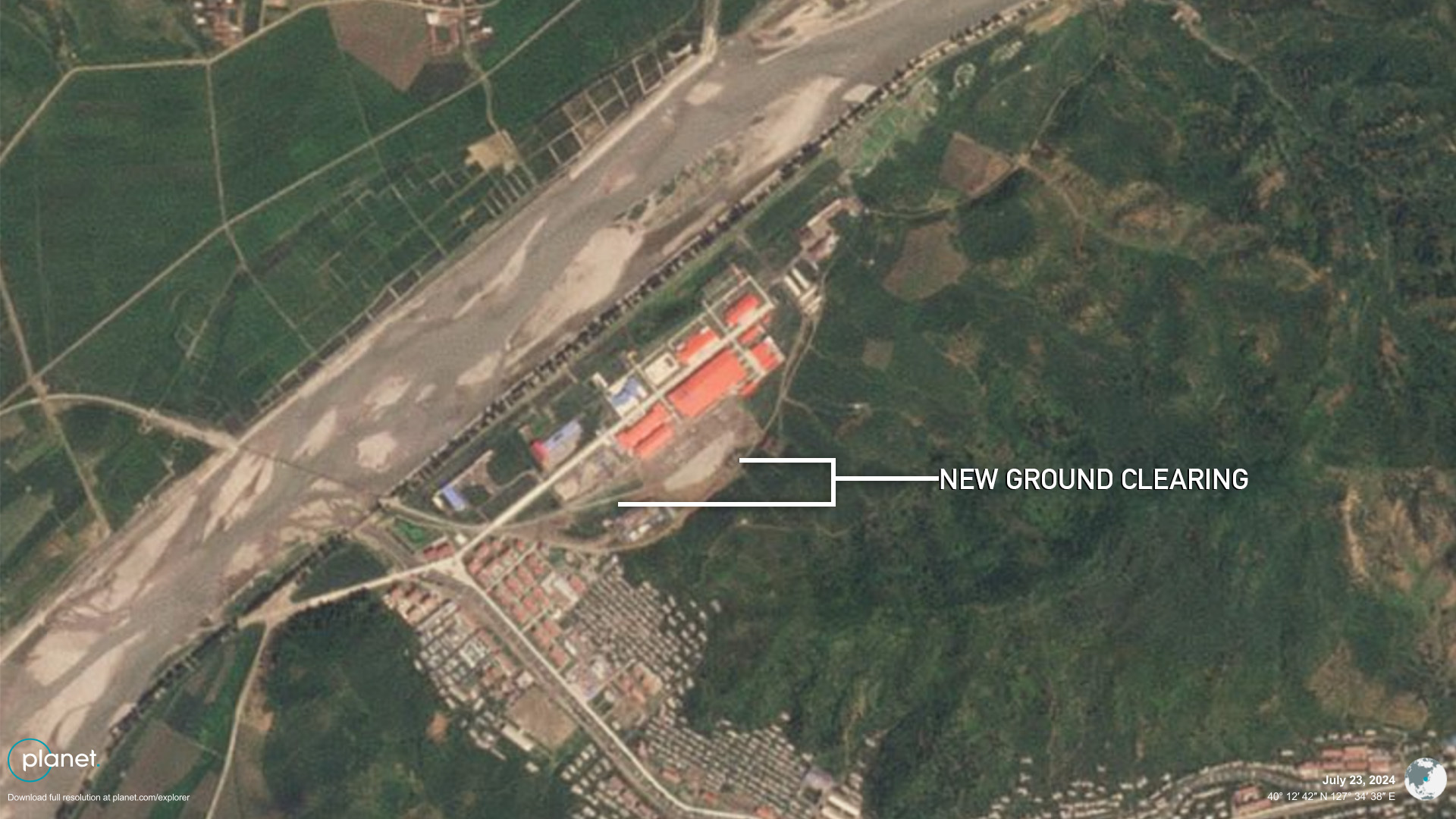
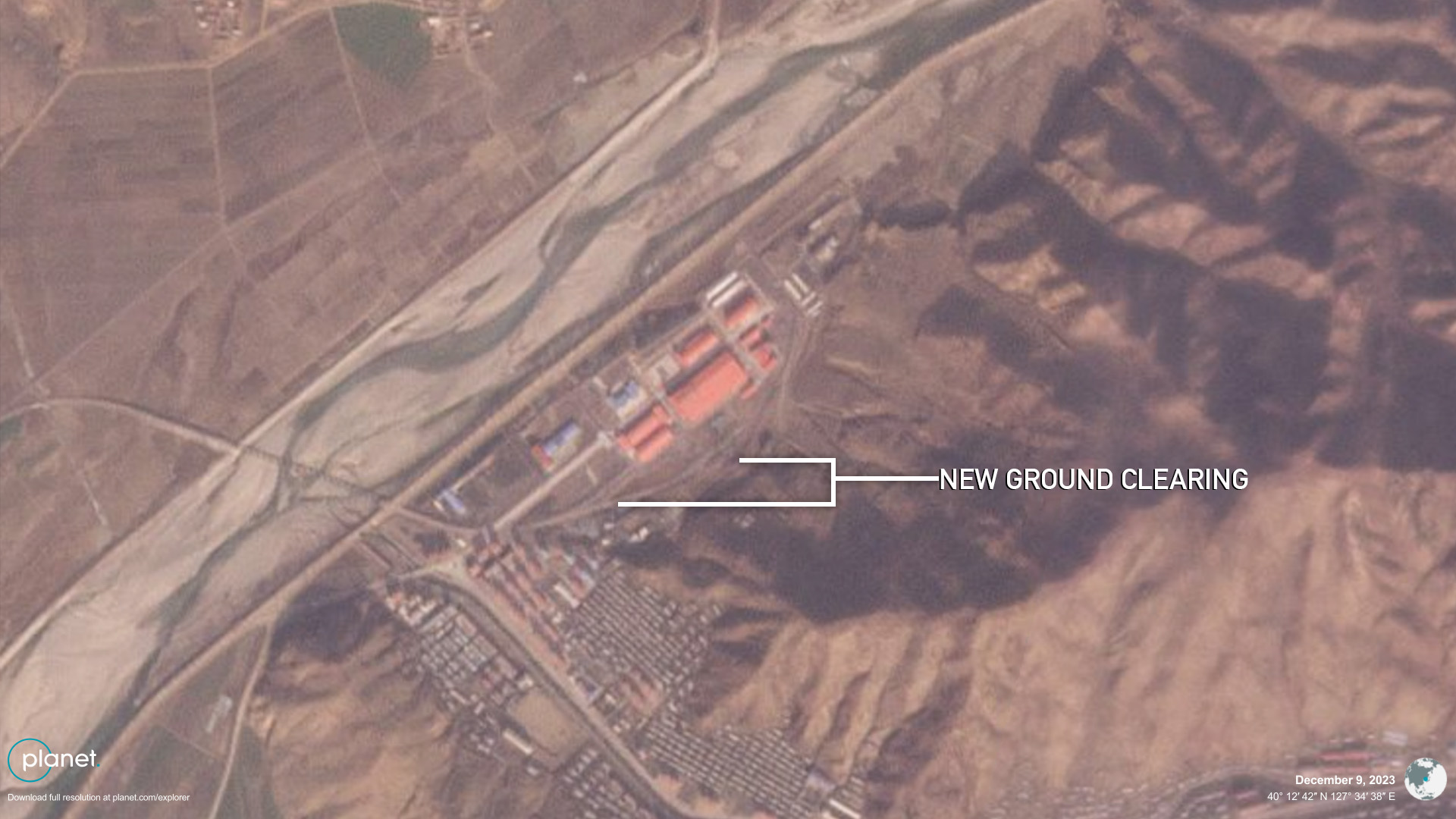
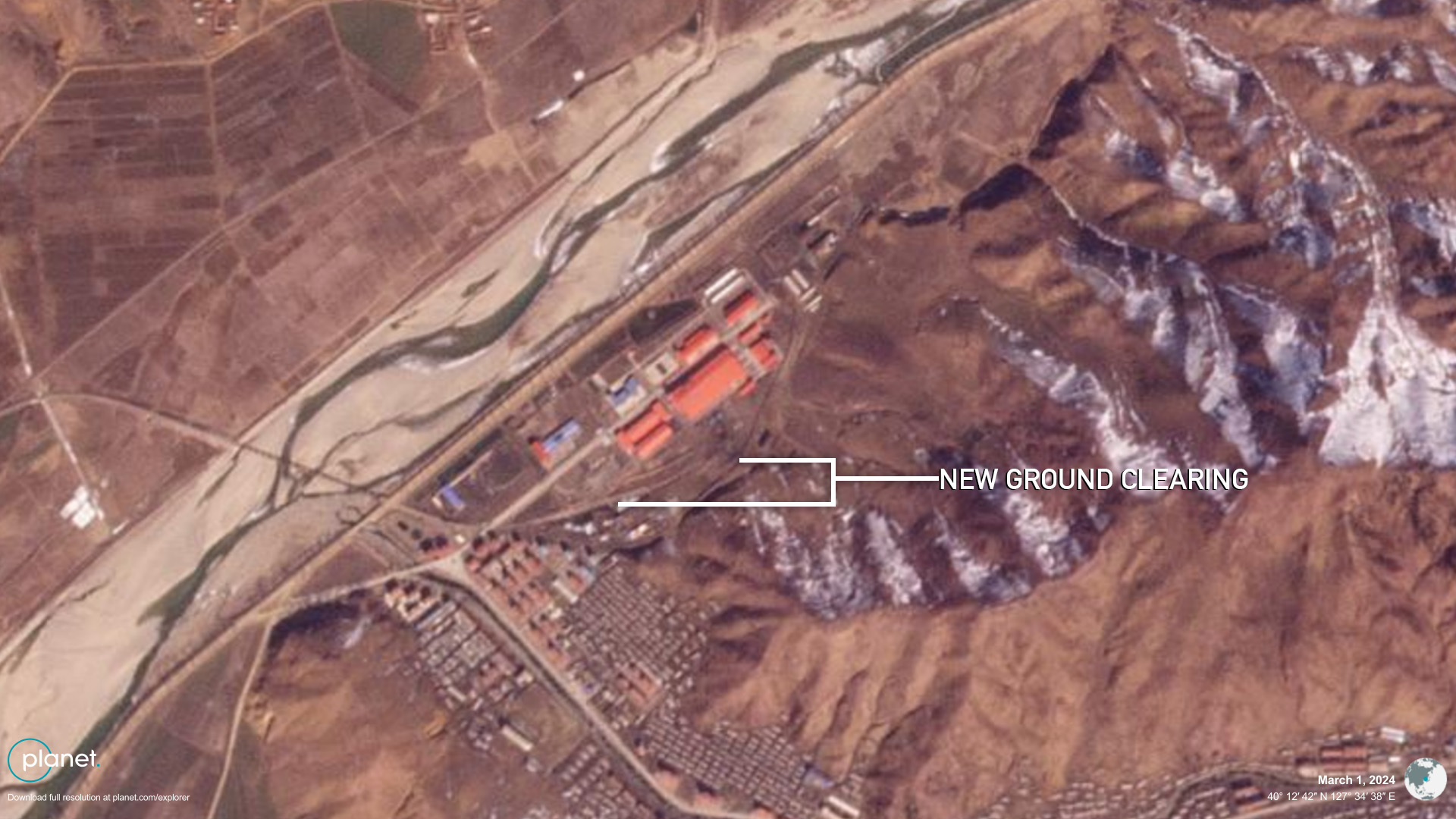
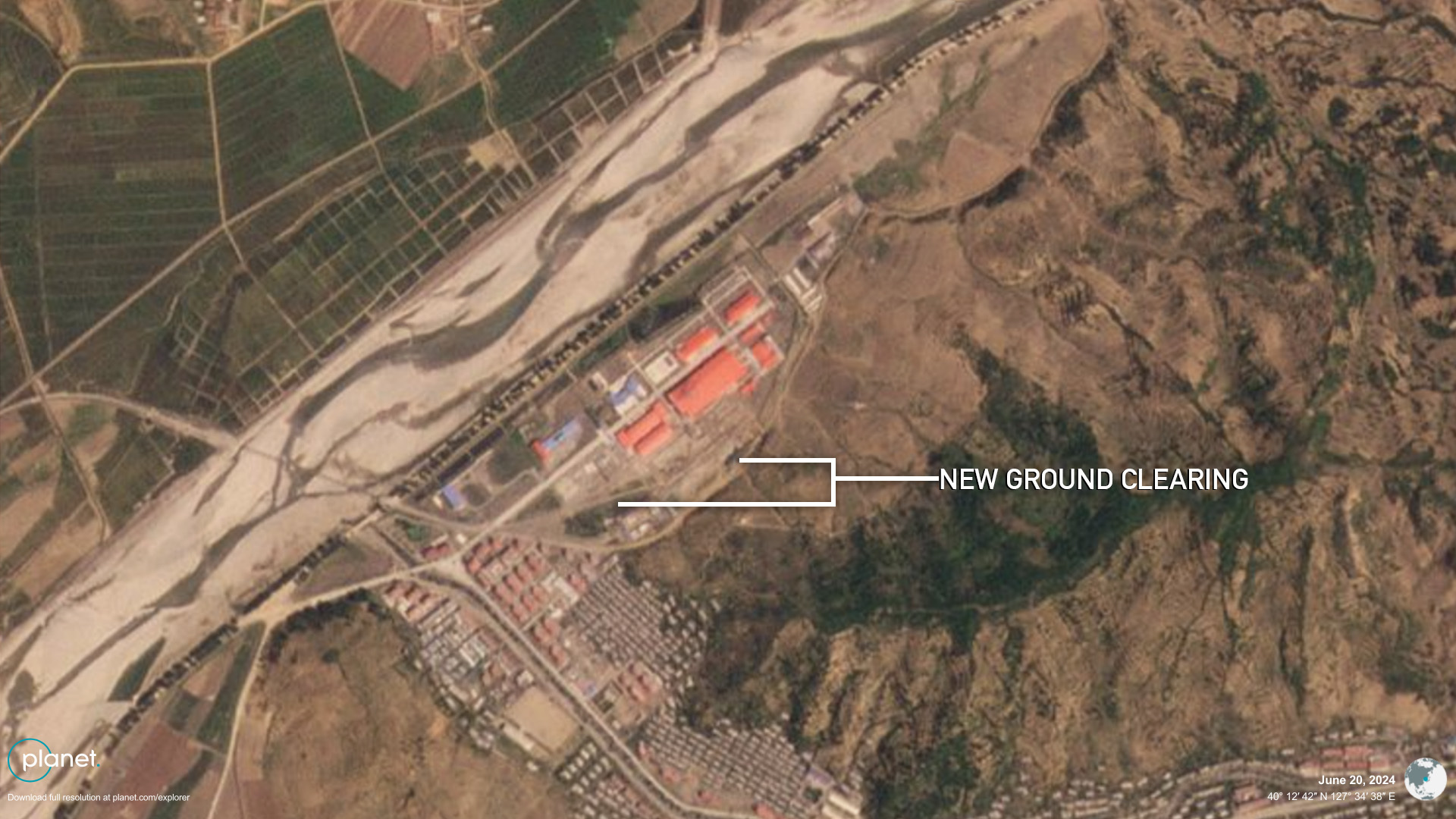
 Ground clearing appeared to begin in or before March at the south and east ends of the newer riverside factory complex — closer to the town center west of the main factory, where Kim Jong Un inspected TEL assembly for Hwasong-11B SRBMs and anti-ship cruise missiles (ASCMs) last August. New structures have yet to be built, but imagery shows the ground clearing continued between July 19 and 23. Sungri Motor Complex / Sungri General Motor Enterprise (승리자동차종합기업소) Though there is no evidence yet that the Sungri Motor Complex is currently producing military vehicles, the conversion of similar factories like Pyeonghwa to make TELs suggests it could be used for this function, especially as new construction is underway. Planet Labs imagery shows unfinished work to build a large new production hall with an area of around 2.5 acres (1 hectare) at the main eastern section of the complex, while new roofing was installed at larger production halls at the western section. 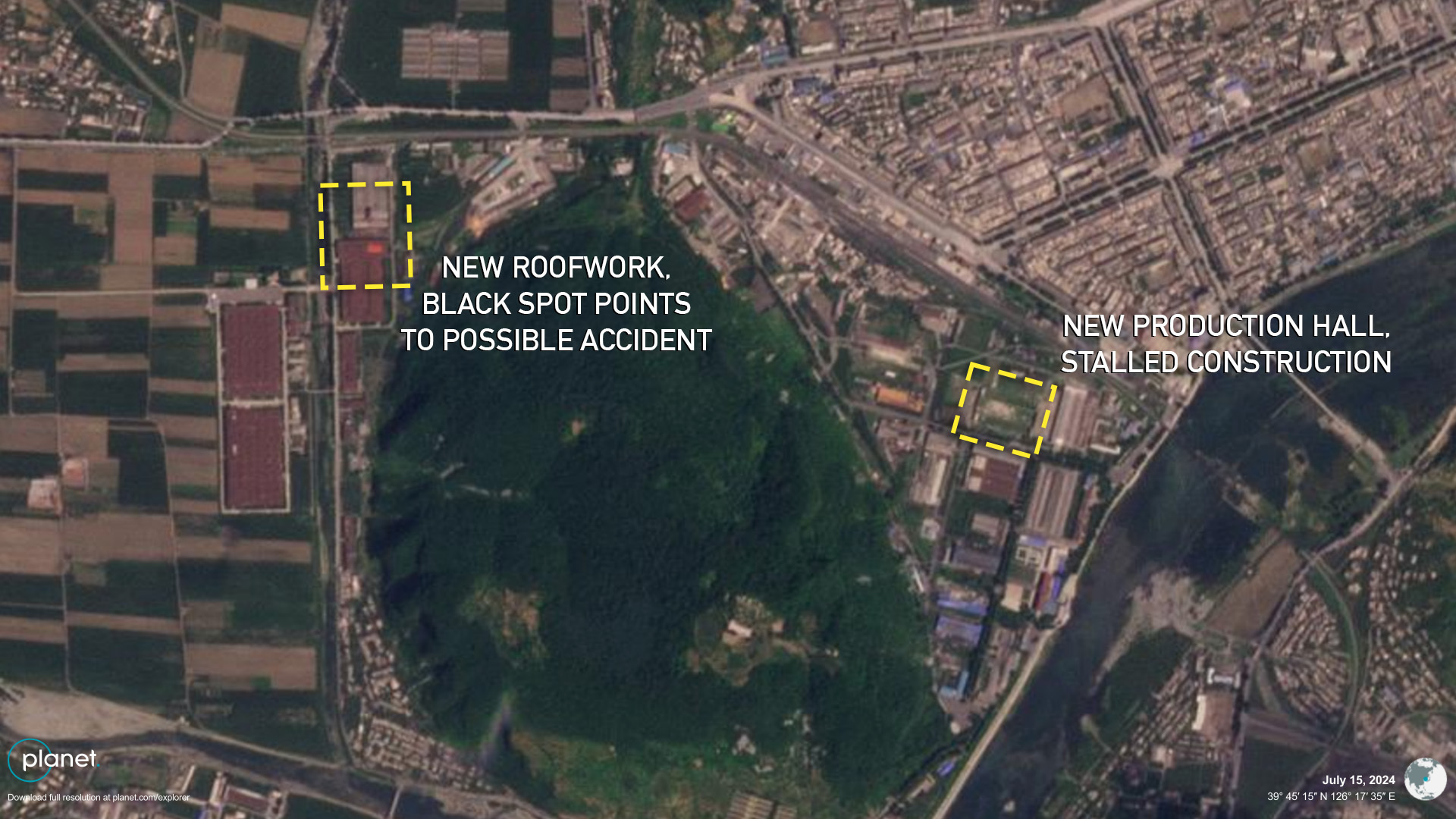
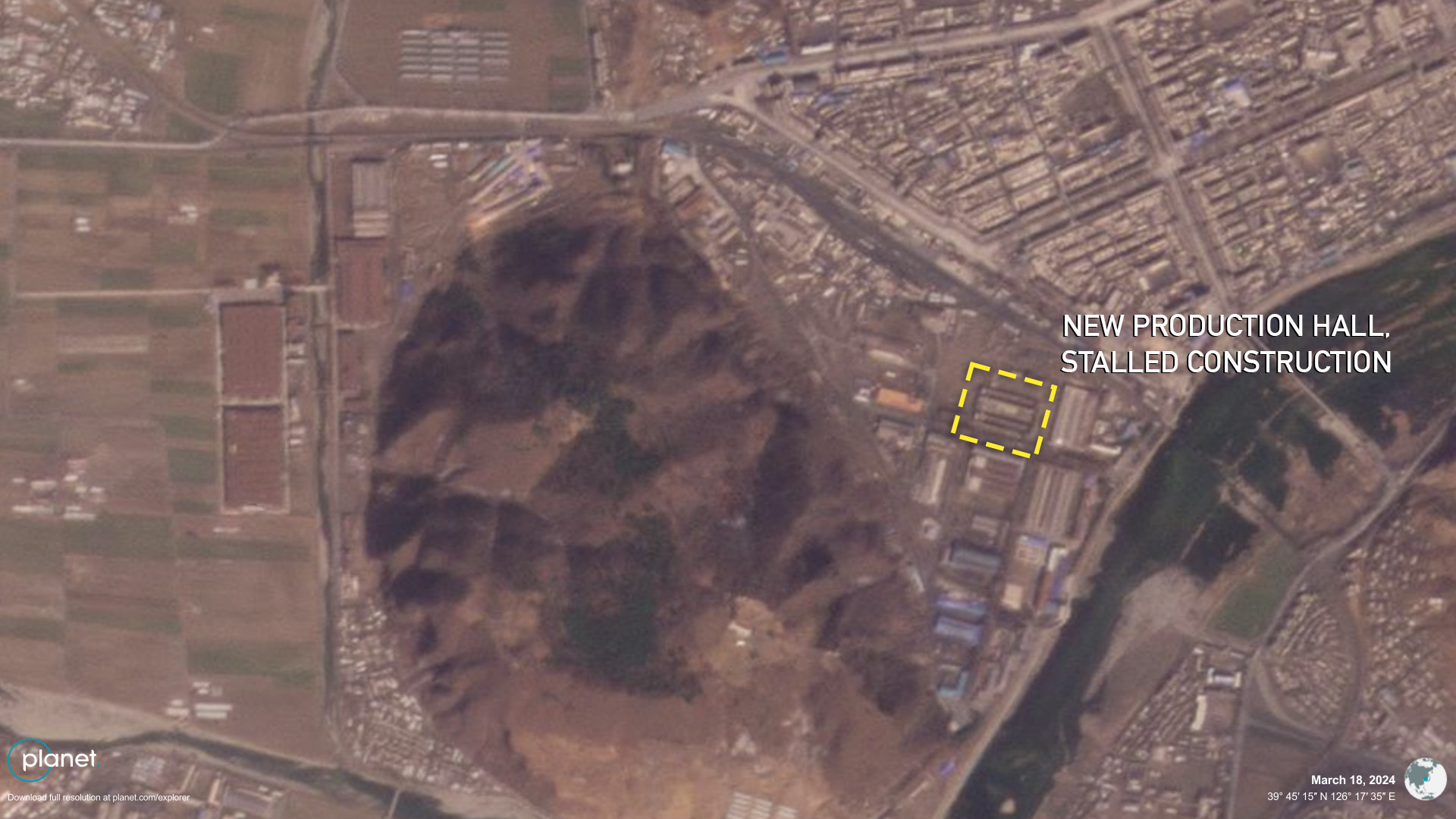
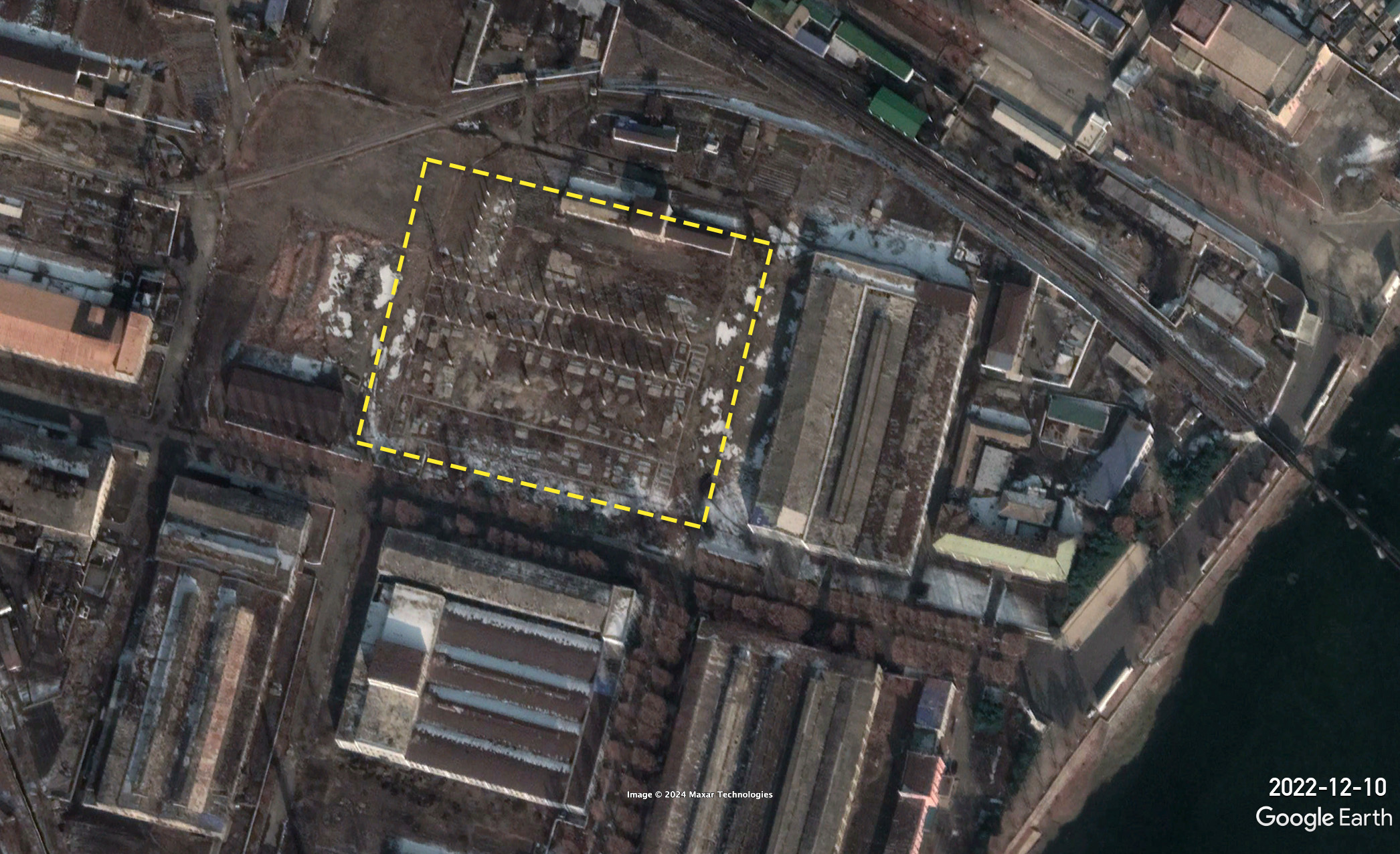
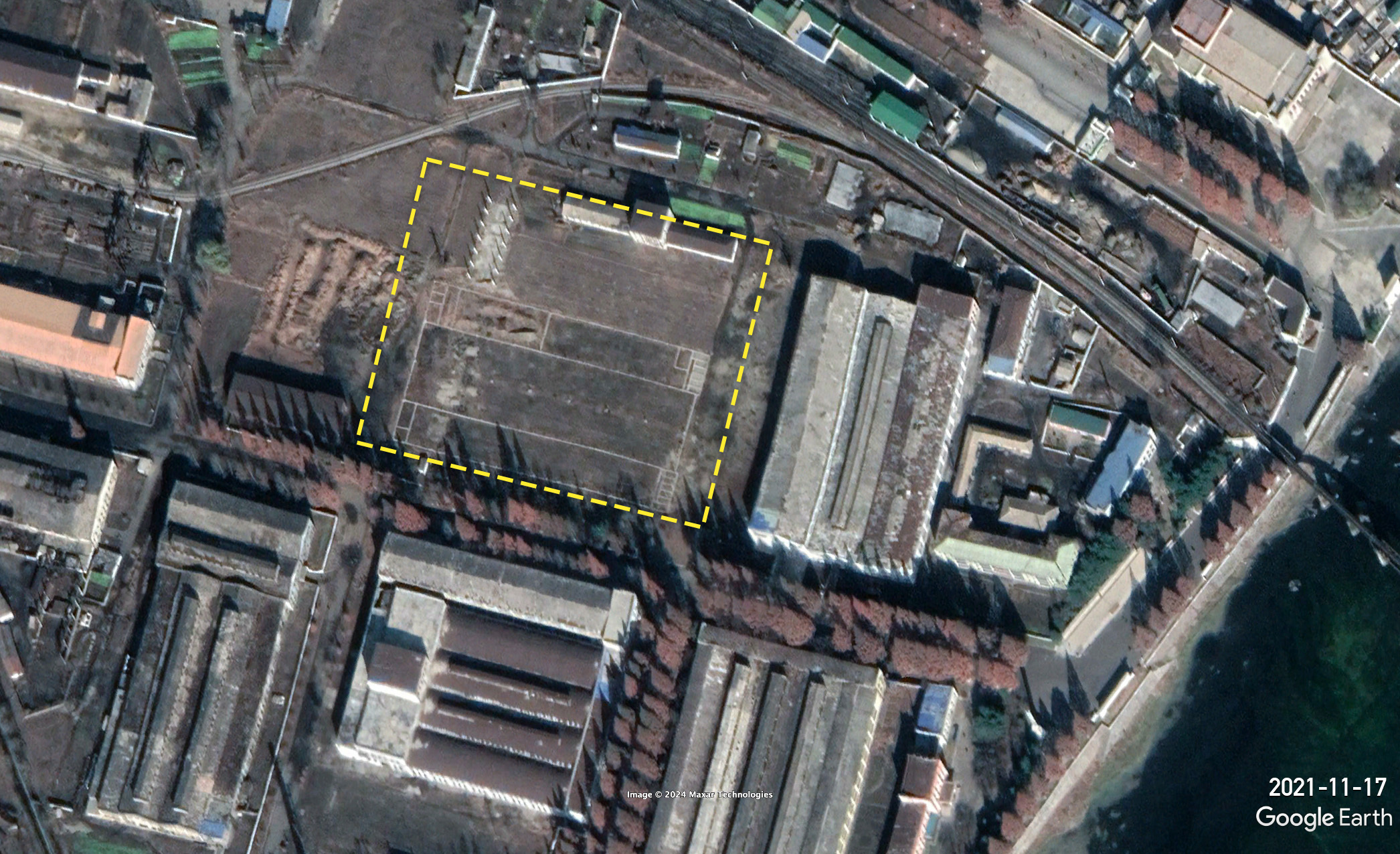
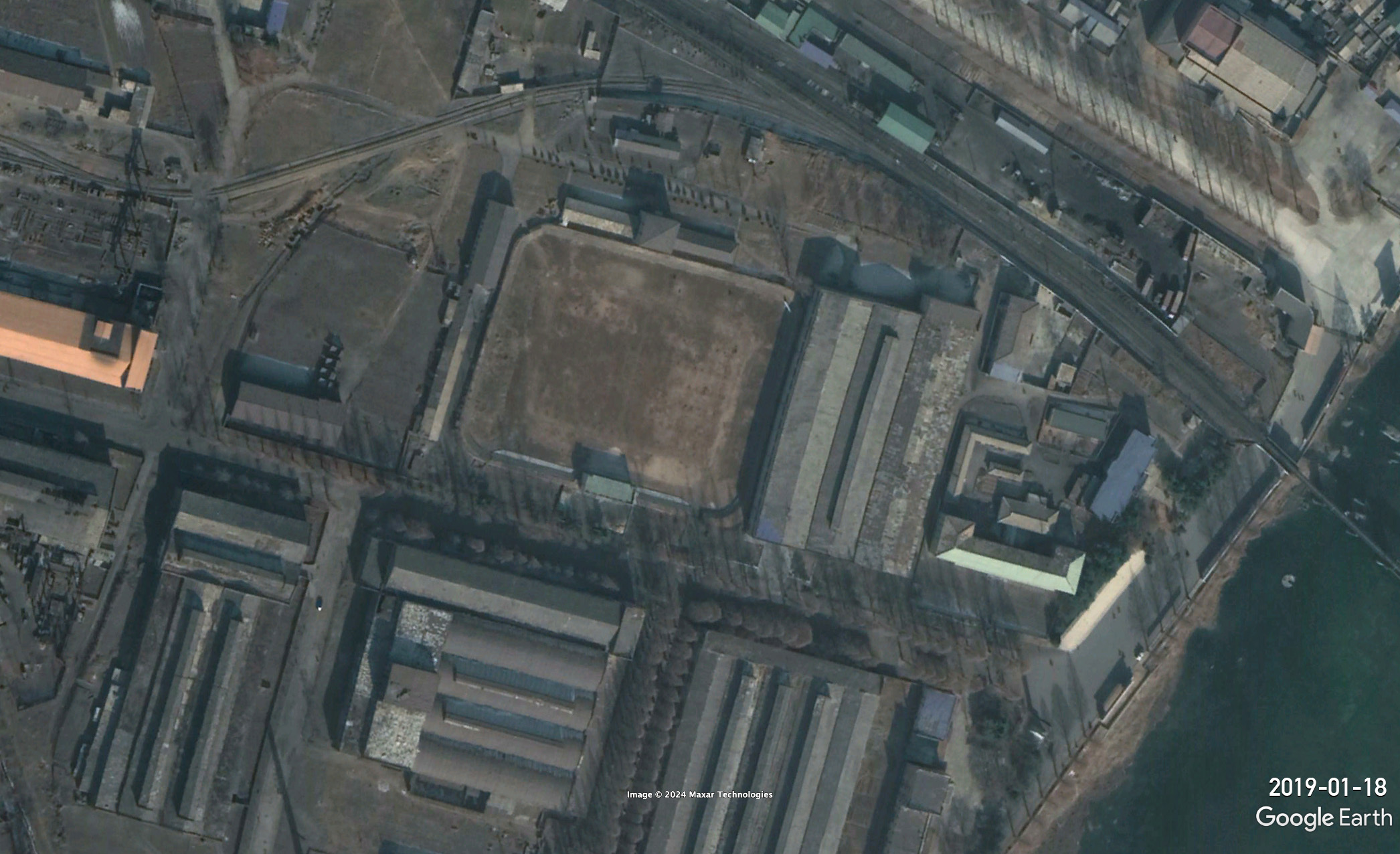
However, work started on the new production hall back in early 2021 and the project appears to have stalled indefinitely. The new roofing on existing buildings also appears to be only partial, likely related to repairs instead of a major modernization. The site is worth watching since state media mentioned a “modernization project” for the complex under a “phased plan” in April, after Premier Kim Tok Hun also talked about modernization during a public inspection in January. Others Meanwhile, rapid construction has continued in recent weeks on a factory in Pyongyang’s Mount Ryongak (Ryongaksan) area, which NK Pro previously found to be a strong candidate location for a brand new Hwasong-11D SRBM TEL plant. Another of the four main large production halls was roofed in early June, but one remains unroofed and the factory grounds in general are still covered in dirt. There does not appear to be any construction at the nearby November 20 Factory, which also appeared to produce Hwasong-11D TELs as well as conversions of regular industrial trucks into disguised rocket launchers during Kim’s visits in the last year. Major ongoing construction on the Kumsong Tractor Factory to the southwest of Pyongyang may also be related to boosting military vehicle production. State media continues to show the vast majority of farms using imported tractors — indicating domestic production has not increased to the level suggested by propaganda and that the completed main facilities at Kumsong could be used for other purposes. Edited by Bryan Betts © Korea Risk Group. All rights reserved. |

October 27, 2026Oct 27, 2026

The ultimate resources for professionals working on North Korea
 SHARE
SHARE COPY LINK
 X
X MASTODON