  News Some North Korean exports to China resold in EU and South Korea, data suggestsFigures could represent what may be a significant and previously-unreported loophole in global sanctions regime 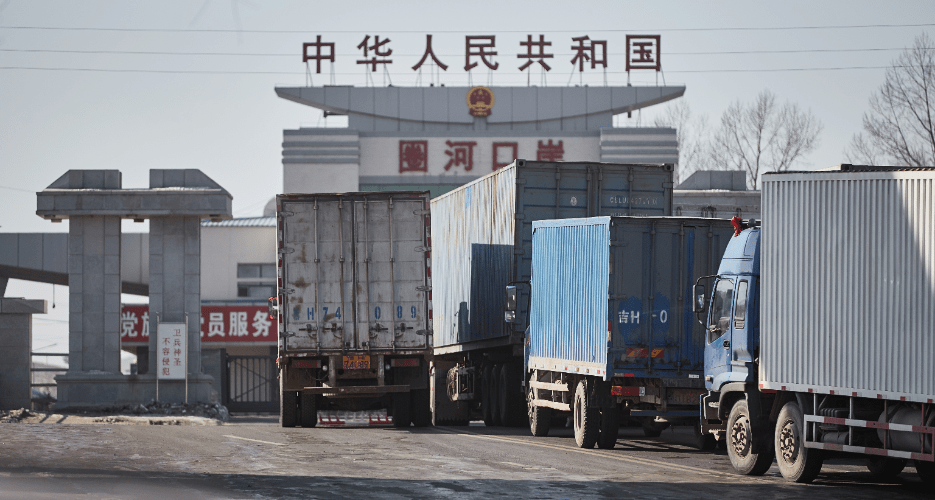 Chinese imports from North Korea last year included millions of dollars’ worth of goods that may have been purposely resold in third countries including France, Italy, and South Korea, an NK Pro analysis of recent customs data from Beijing has found. The publicly-available data, published by China’s General Administration of Customs (GAC), reveals what may be a significant and previously-unreported loophole in the global sanctions regime that has allowed Pyongyang to ship a steady flow of goods through a scattering of Chinese provinces to consumers around the world. The items include hundreds of accordions sent to Italy, thousands of willow baskets to South Korea, 27 tons of fake eyelashes and similar goods sent to France and Belgium, and ferrosilicon — a sanctioned metal that was also the North’s number-two export last year — to four different countries. The numbers suggest that even as the DPRK relies on China for the vast majority of its trade, many other countries around the world appear to be purchasing goods from Pyongyang too. What is less clear is whether those countries know they are trading with North Korea. More than 90 percent of the DPRK’s exports go to China, but the GAC data show that many of those goods last year did not stay in the country or enter the Chinese market once they arrived. Instead, like travelers waiting in an airport on a layover, many of the goods were sent to China’s customs warehouses and entrepôt trade zones — places specifically used to hold goods that are set to be re-exported abroad to a third country. According to the GAC, after a pause in those warehouses and trade zones, many of the North Korean goods for sale appear to have been subsequently sent to places as far away as Europe — and as close as South Korea. Unlike airline passengers, however, the goods arriving in their final destination countries would not list North Korea as their origin. Instead, the local customs agencies would record them as imports from China. This type of re-export trade is common in the global economy, and it would likely be hard to find a country that does not also send its wares to China’s customs zones for other destinations overseas. It is also difficult to prove whether the exact goods that North Korea sent to China’s customs warehouses are the same exact goods that those customs warehouses sent back out abroad. But officials and diplomats who reviewed NK Pro’s findings said they were taken aback by what one described as a “serious loophole.”  For two sets of goods — accordions and willow baskets — North Korea’s exports to China’s provincial customs warehouses matched exactly, like perfect mirror images, with those same customs warehouses’ exports to their destination countries. Between 2019 and 2020, North Korea shipped 94 accordions to China’s Guangdong Province and another 431 accordions to Liaoning Province, according to the GAC. Guangdong exported 94 accordions to Italy, and Liaoning sent 431. In the same period, North Korea exported 32,010 kilograms of baskets to customs warehouses in Liaoning and Jilin Provinces — and customs warehouses in Liaoning and Jilin exported 32,010 kilograms of baskets to South Korea. The fake eyelashes, eyebrows, and beards — more than 27 tons of them — missed a perfect match by just one kilogram. Through 2019 and early 2020, the DPRK sent 27,003 kilograms of the fashion accessories to customs warehouses in Guangdong, Liaoning, and Anhui Provinces, according to the GAC. During the same period, the customs warehouses in Guangdong, Liaoning, and Anhui sent 27,002 kilograms of fake eyelashes, eyebrows, and beards to France and Belgium. A fourth item — ferrosilicon, an alloy of iron and silicon — was off by one percent. North Korea exported 1.37 million kilograms of the metal to Henan Province in China — and Henan exported 1.38 million kilograms of the same metal, in the same period, to India, Japan, Ukraine, and South Korea. It is unclear why the numbers do not match, but no other country sent those four goods to those five specific customs houses in 2019, according to the GAC. Peter Ward, a writer and researcher focusing on North Korea’s economy, told NK Pro that the numbers present a compelling case that many nations — wittingly or not — may be conducting previously undiscovered trade with the DPRK. “The evidence strongly suggests that North Korean exports bound for third countries continue to transition through China,” he said. “Some of the goods are sanctioned, and this may be the tip of an unreported iceberg.”  North Korea is one of the most heavily sanctioned countries in the world — a punishment for its nuclear weapons program — and many nations do not conduct normal trade with Pyongyang. The DPRK is also known to have brutal labor conditions that may give consumers around the world pause about whether to buy products that were made by workers in the country. But those consumers likely wouldn’t know if their accordions and fake eyelashes were made in North Korea either. When goods are routed through China as a re-export, the origin country is not typically recorded in customs data. According to the International Trade Center’s (ITC) TradeMap — a UN website that compiles countries’ customs data — Italy listed no accordion imports from the DPRK last year, but did record accordion imports from China (along with other countries). France did not list any fake eyelashes from North Korea either, but did record importing them from China and other countries. The recent data would not be the first time that DPRK-made fake eyelashes have entered the global supply chain: the U.S. Treasury Department last year fined a California-based company nearly one million dollars for importing false eyelashes that allegedly contained materials sourced from North Korea from China. According to South Korea’s Yonhap News Agency, citing a Korea International Trade Association (KITA) report, North Korea’s second-largest export last year was ferrosilicon — the alloy of iron and silicon. In the UN Security Council’s latest Panel of Experts (PoE) report, which documents North Korea’s alleged sanctions violations, China was singled out for importing North Korean iron products, which are sanctioned. But the report did not mention that most of the North Korean iron products sent to China were actually marked for customs warehouses and trade zones, destined for other countries outside China. NK Pro’s analysis of the GAC data found that more than 80 percent of North Korea’s iron exports to China were tagged for re-export — including 99.9 percent of North Korea’s ferrosilicon exports. According to China’s customs data, those ferrosilicon exports were worth more than $31 million. Min Chao Choy contributed reporting Edited by Oliver Hotham © Korea Risk Group. All rights reserved. |

October 23, 2026Oct 23, 2026

The ultimate resources for professionals working on North Korea
 SHARE
SHARE COPY LINK
 X
X MASTODON