  Analysis Russian weapons ship returns to North Korea for first time since China repairsReappearance of Angara suggests arms trade for Ukraine invasion will continue following Putin-Kim summit in Pyongyang 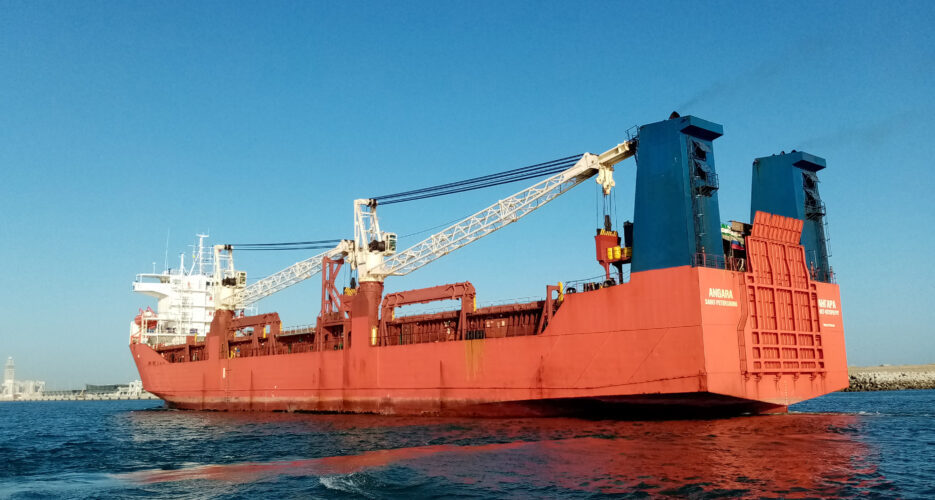 A Russian cargo ship accused of participating in weapons trade with North Korea has returned to the DPRK for the first time since undergoing extensive repairs at a Chinese shipyard, according to NK Pro analysis of satellite imagery. The return of the Angara to North Korea’s Rason Port this week will likely increase pressure on the shipyard over its choice to fix up the ship in the middle of an active weapons trade operation in violation of U.N. sanctions. It coincided with Russian leader Vladimir Putin’s visit to Pyongyang this week, where experts say he likely discussed arms deals with Kim Jong Un and the two sides announced a new treaty detailing mutual defense obligations. The U.S. government identified the Angara last October and said it was shipping DPRK weapons to Russia. NK Pro confirmed that the Angara was making trips between Rason and a Russian military port between September and January, while Russia has been found to be using North Korean ballistic missiles against Ukraine since the start of this year. MULL ON A CHINA STOP Planet Labs satellite imagery shows that a cargo ship matching the size and appearance of the Angara (IMO: 9179842) dropped off shipping containers at Pier 1 of Rason Port on June 17 and picked up cargo from Pier 2 on June 18. It last appeared to pick up cargo at Rason almost five months prior on Jan. 20, imagery shows, before dropping containers off at Russia’s Vostochny Port on Jan. 28. 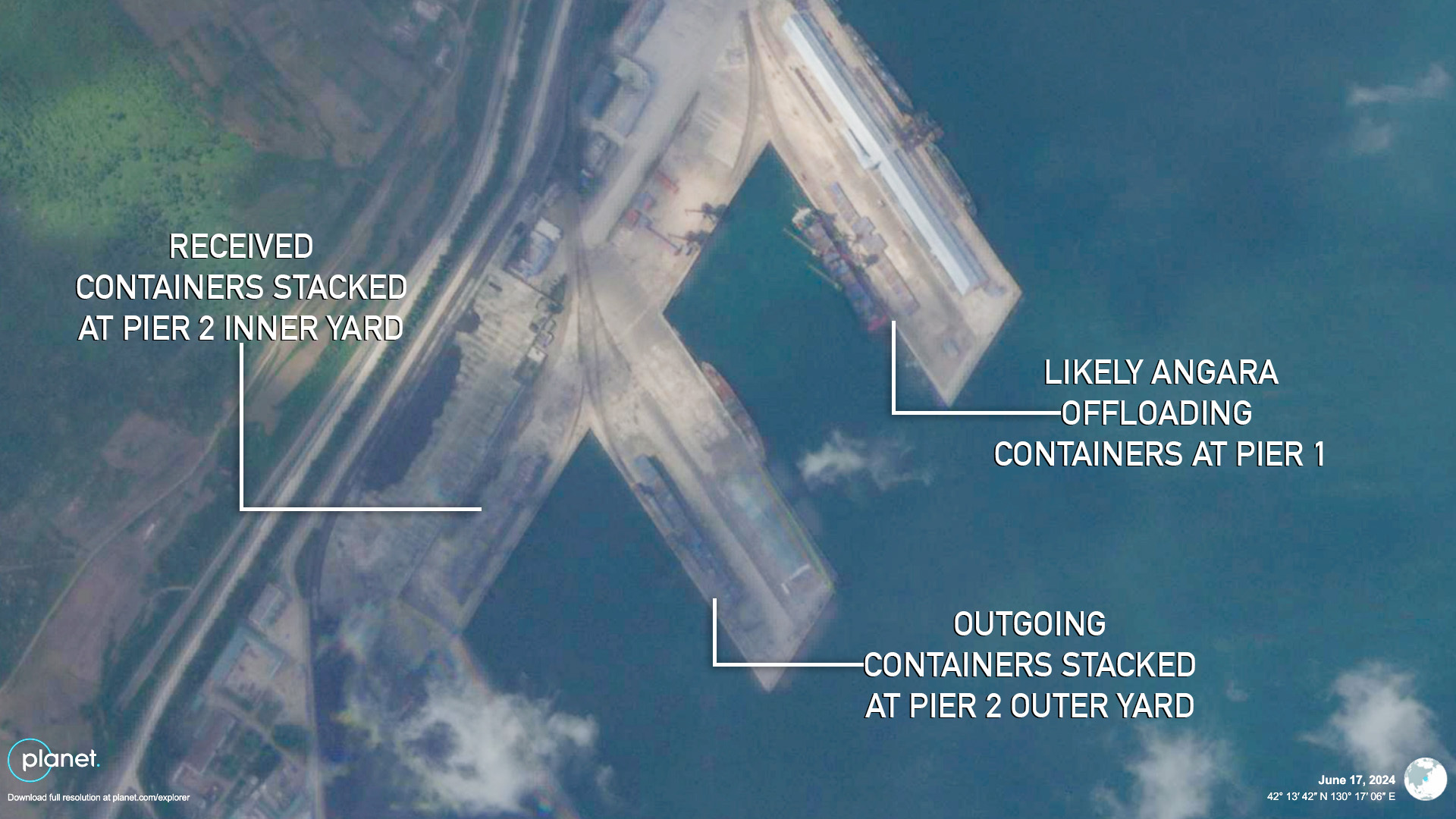
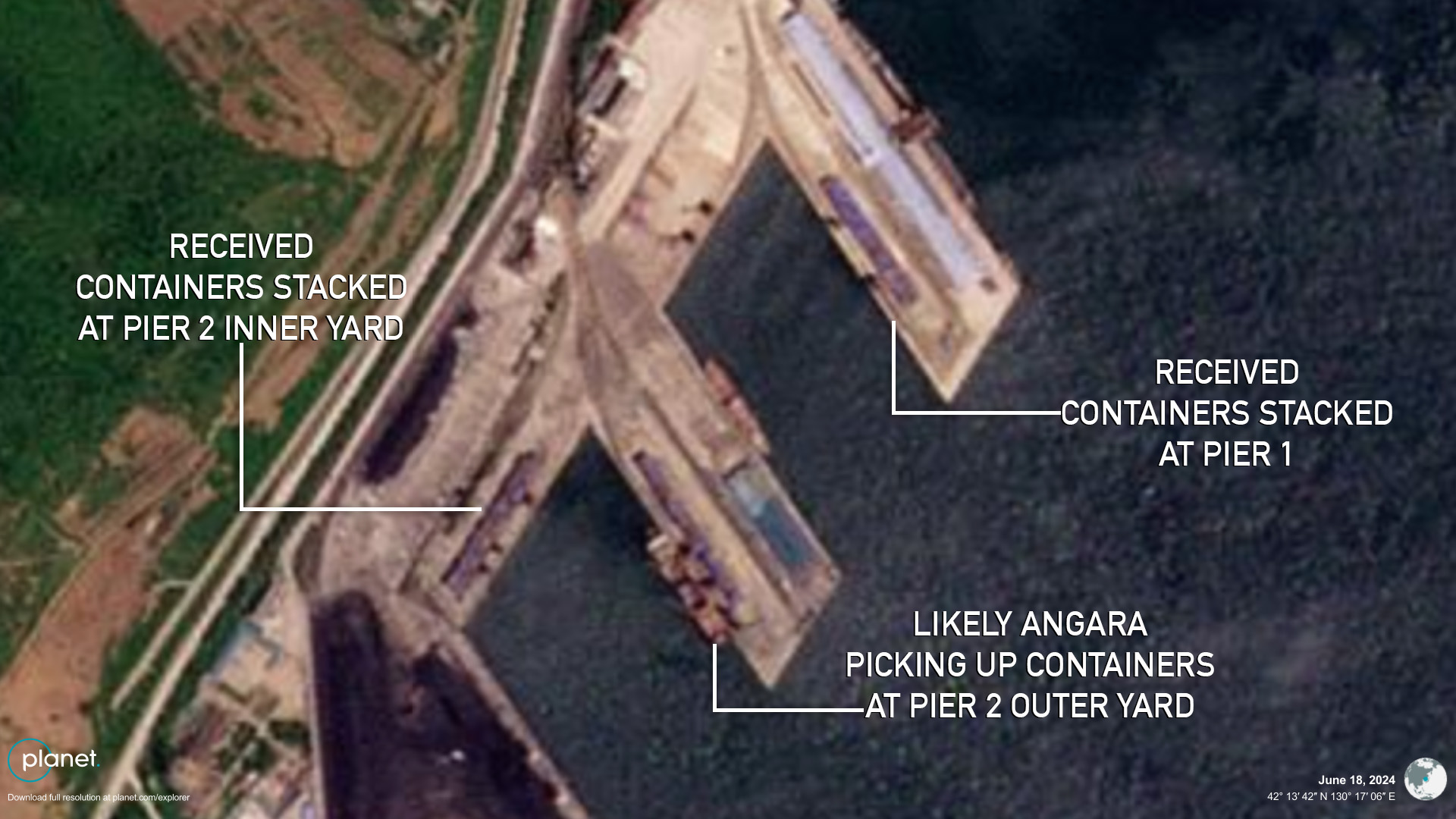
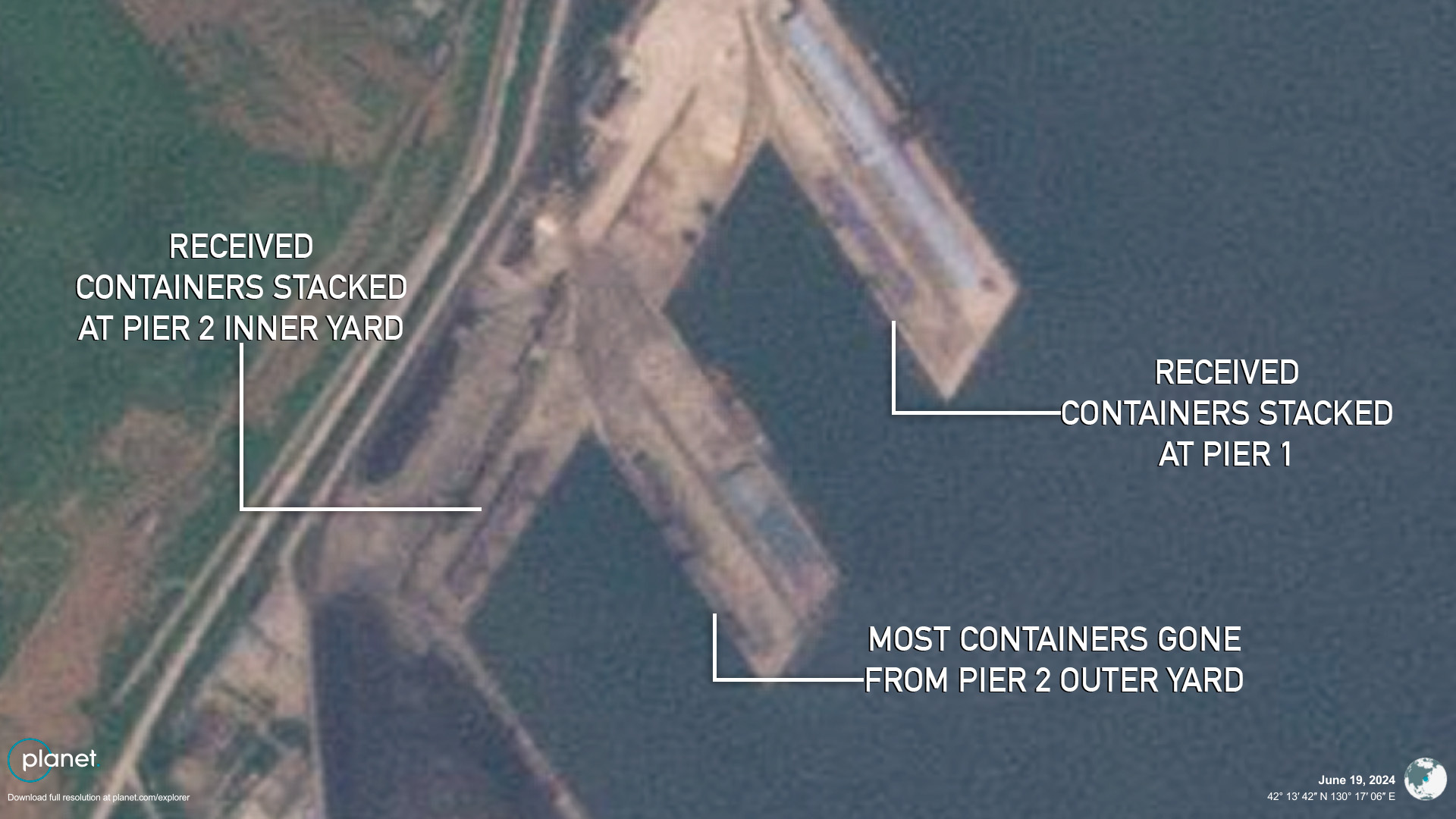
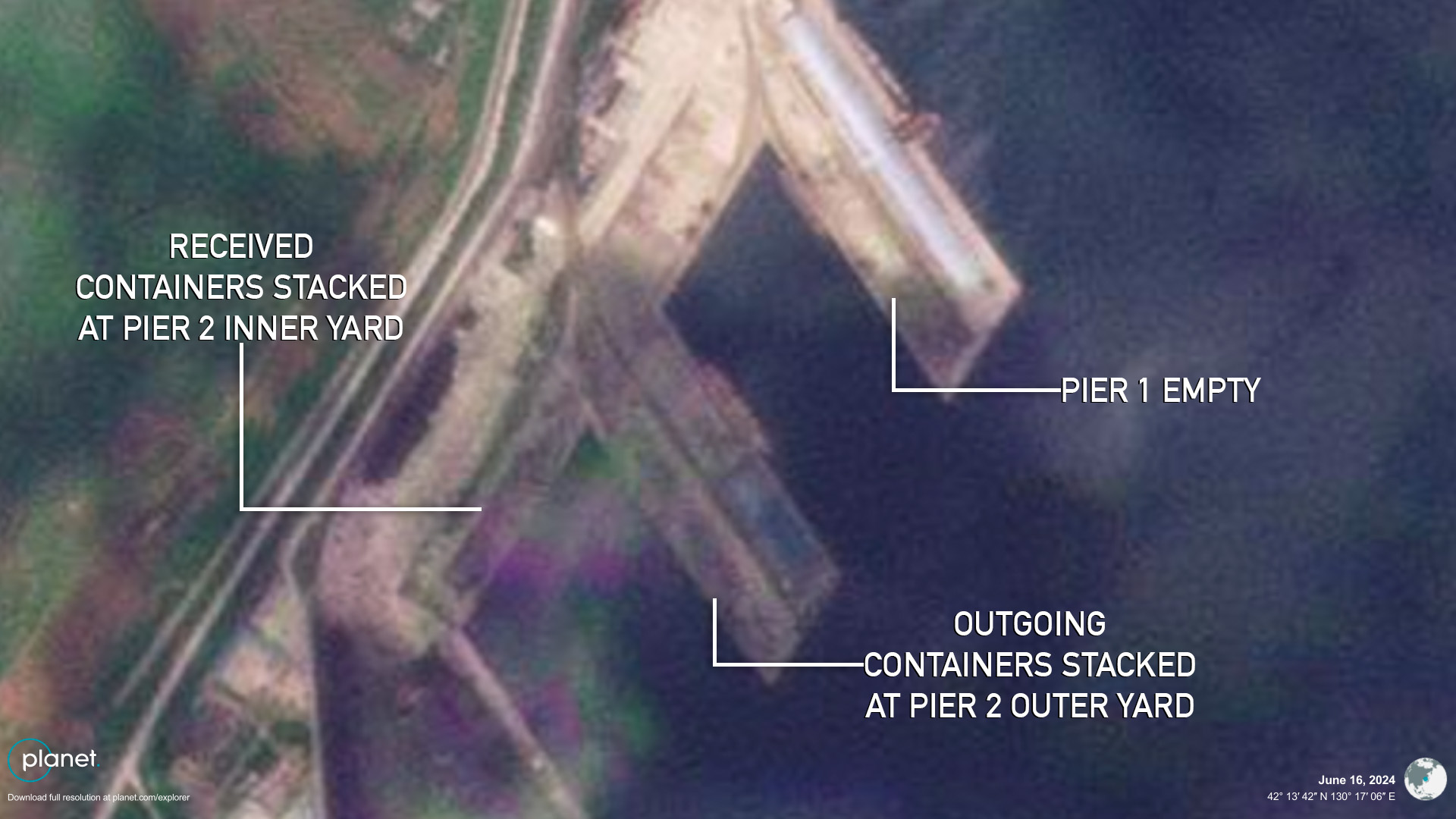
Automatic Identification System (AIS) tracking data from MarineTraffic shows the Angara sailed south to the Zhoushan Xinya Shipyard on an island off China’s Zhejiang Province on Feb. 8, where it received repairs over 11 weeks. During that time, the U.S. State Department reportedly “raised this issue” of the ship’s repair work to Chinese authorities. It left China on April 27 before anchoring near Russia’s Vladivostok from May 21 to 28, when it turned off AIS broadcasting. The U.S. originally sanctioned the Angara in 2022 under measures related to Russia’s war against Ukraine. The ship has not been designated by the U.N., but Security Council resolutions require China to “seize, inspect, and freeze (impound) any vessel in their ports” if they have “reasonable grounds to believe that the vessel was involved in activities, or the transport of items, prohibited” by resolutions, including weapons transfers to or from North Korea. Katsu Furukawa, a former member of the U.N. Panel of Experts on DPRK sanctions, told NK News in April that China would have had to dismiss U.S. and open-source evidence about the ship’s weapon trade activities as “incorrect or unfounded” in order to ignore the seizure requirement. “The Chinese government and Zhoushan Xinya Shipyard should think twice” about offering services to a vessel sanctioned by the U.S. for alleged arms shipments, he said, adding “such disregard of U.N. and U.S. sanction measures will invite critical results for this Chinese ship repair company.” The Angara and three other ships identified in the Russia-DPRK arms trade — the Lady R, Maia-1 and Maria — are also unlikely to be sanctioned by the U.N. in the future. Russia would likely veto any resolution calling for its own ships to be designated for violating the measures, which prohibit all arms transfers to or from North Korea. INCREASE IN SHIPMENTS? Another notable aspect of the Angara’s appearance in Rason this week is its use of Pier 1, the northernmost pier, to unload shipping containers — a possible sign of intentions to increase shipments. Since the start of the apparent arms trade operation at Rason last August, ships appeared to unload containers at Pier 1 before moving to Pier 2 a day later to pick up containers. But Pier 1 last appeared to be used in satellite imagery on March 10, with the typical stacks of hundreds of containers disappearing until the Angara dropped more off again on June 17. In the interim, imagery showed the Lady R and a ship resembling the Maria dropping off containers at the inner yard of Pier 2 before moving to the typical spot at the same pier for picking up containers. This suggested both parts of the operation would be contained at Pier 2, without a noticeable change in volume from when Pier 1 was used. But Planet Labs images taken on June 17 and 18 show more stacks of containers at Rason than ever at Pier 1 as well as in two places at Pier 2, for a total of over 600 containers or at least 200 at each spot. Offering two places to unload containers could allow North Korea to increase the frequency of visits by Russian cargo ships. Ships wouldn’t be held up as long waiting for containers to be cleared away from the pier shipping yards before arriving to drop off and then pick up fresh containers. However, the frequency of shipments also depends on North Korea’s ability to bring containers to the port via rail from around the country. Though it is unknown whether Russia is delivering anything in the containers to North Korea, NK Pro analysis shows ships tend to take only a day or two to travel from Rason to Vostochny Port but have taken significantly longer to return to North Korea after leaving Vostochny. This implies Russian recipients are expecting quick shipments, likely for urgently needed weapons, but that what they are sending back is less urgent — perhaps because they are only sending empty containers. It also could mean it takes North Korea longer to prepare shipments, leading ships to have to wait before traveling to Rason to pick them up. Alternatively, the use of three areas could allow an increase in exports if two of them begin to be used for outgoing shipments and only one for dropping off containers. Since the shipping operation started at Rason last August, NK Pro analysis shows the four ships confirmed to be involved have traveled there more than 56 times to pick up containers. South Korean defense minister Shin Won-sik told Bloomberg last week that the ROK military has counted roughly 10,000 shipping containers moving from North Korea to Russia as part of the operation, holding an estimated 4.8 million artillery shells. This is equal to around 178 containers per trip across the 56 documented trips. Edited by Bryan Betts © Korea Risk Group. All rights reserved. |

October 13, 2026Oct 13, 2026

The ultimate resources for professionals working on North Korea
 SHARE
SHARE COPY LINK
 X
X MASTODON