  Analysis Russian navy escorts ships known to shuttle arms from North Korea: JapanExodus of sanctioned freighters alongside military convoy heralds change in Moscow-Pyongyang arms trade, experts say  Russian warships escorted sanctioned cargo vessels known to have smuggled arms from North Korea to the Russian Far East, according to Japan, with experts saying the move signals a major shift in Pyongyang and Moscow’s weapons trade. Japan’s Joint Staff reported on May 12 and 14 that two Russian warships and two navy logistical vessels sailed through the Tsushima Strait alongside six Russian cargo vessels on May 9-10, before passing Iriomote Island near Taiwan on May 12-13. 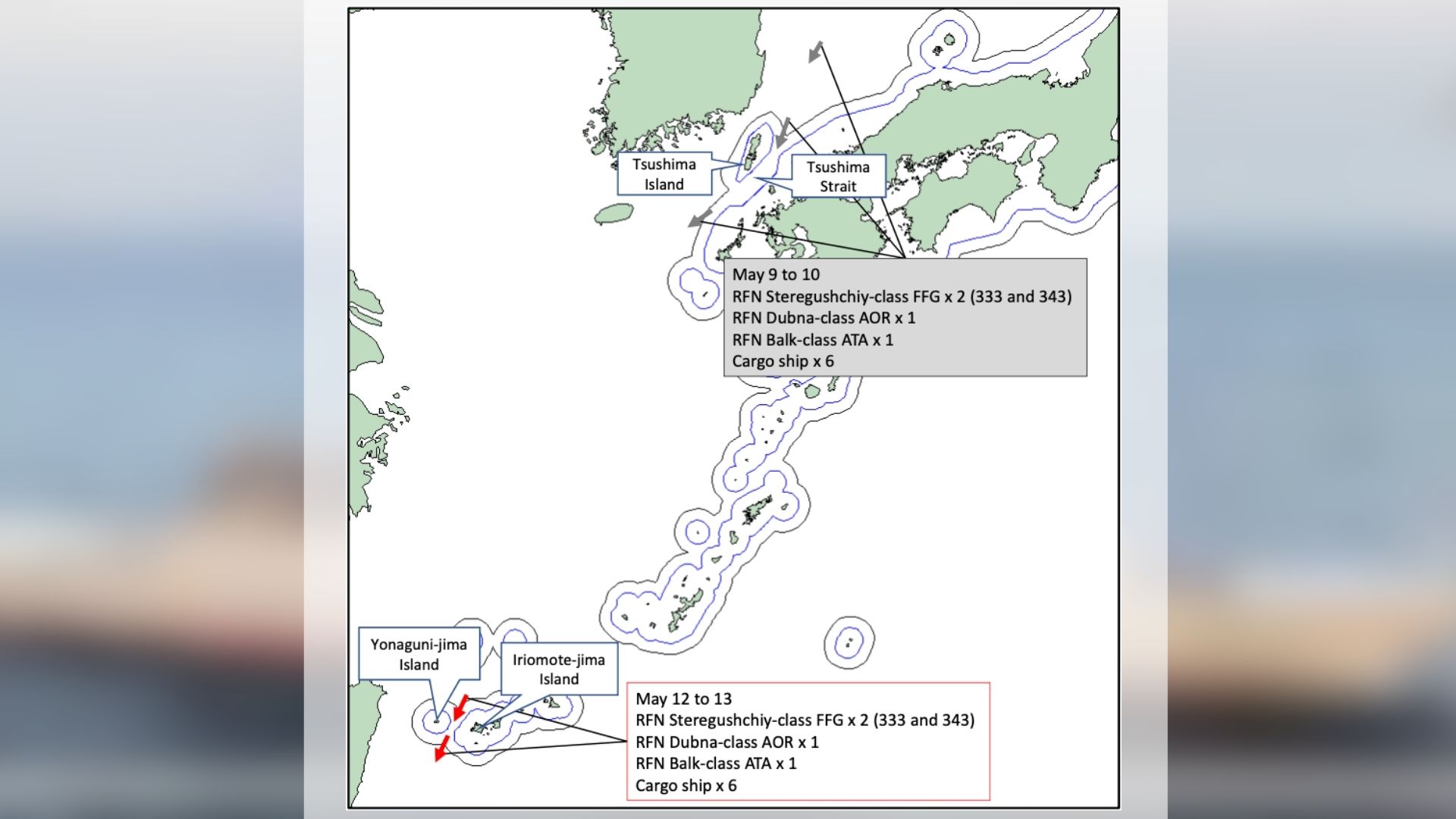
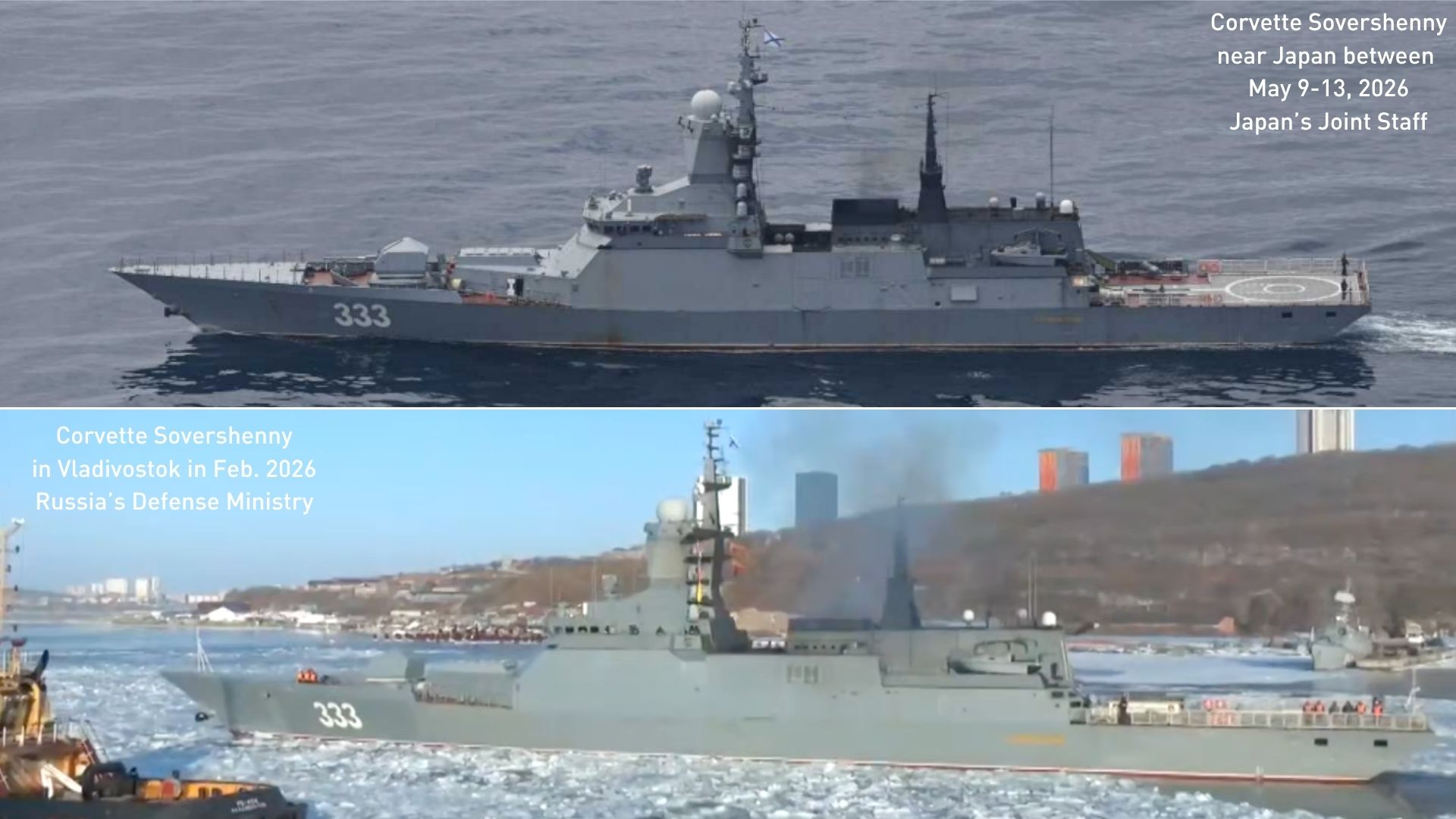
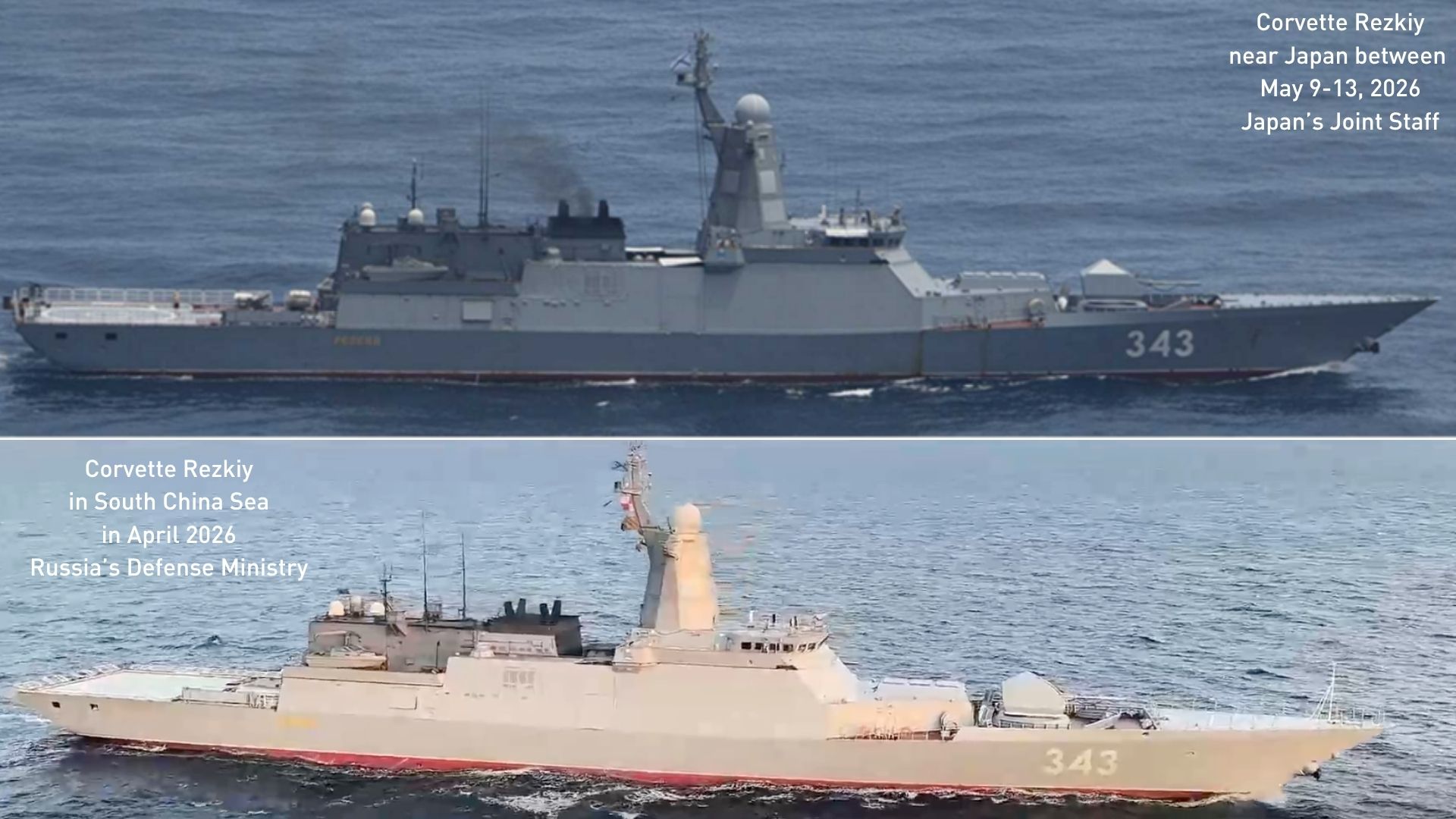
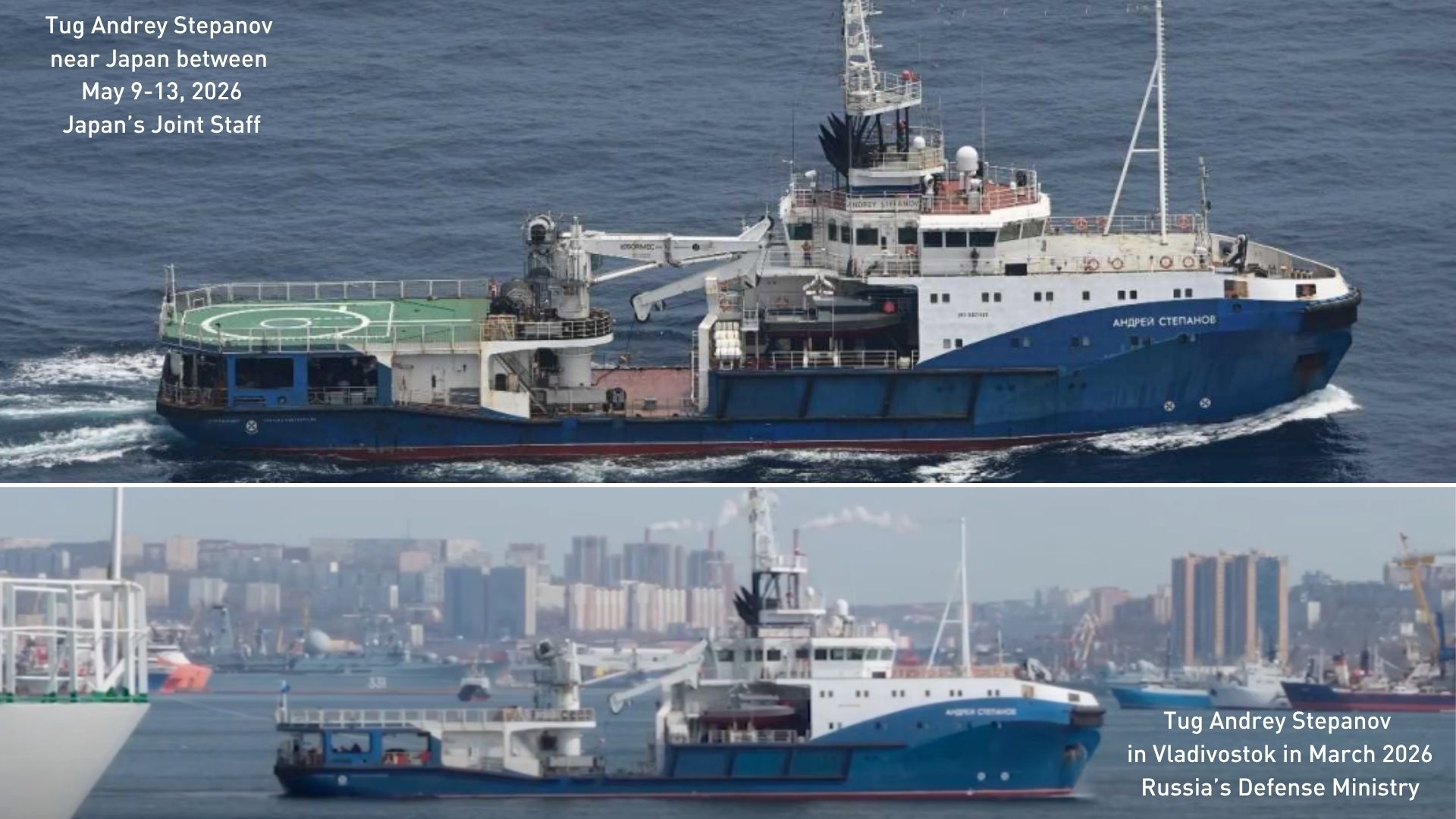
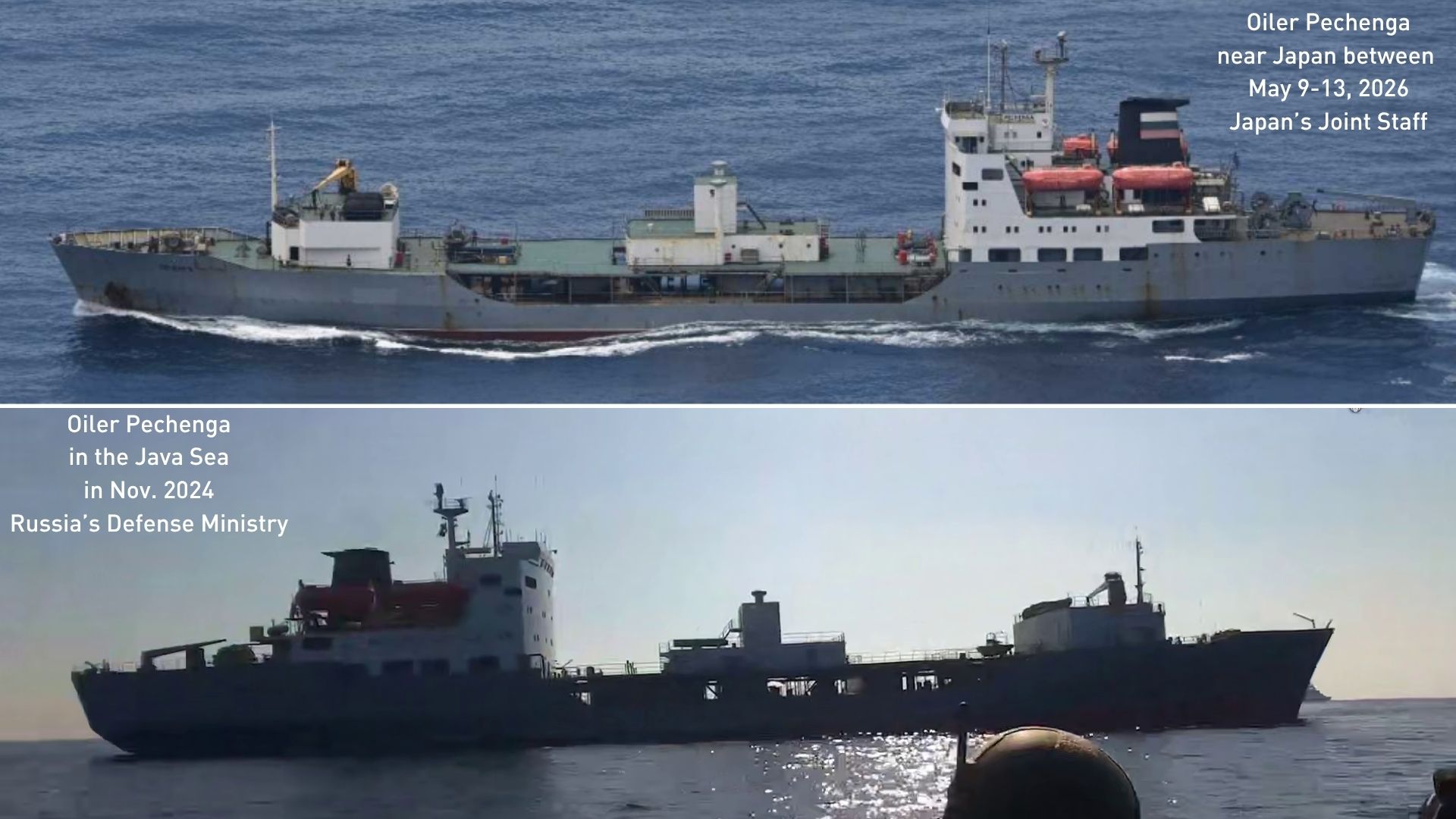
The Japanese military identified the warships by their hull numbers (333, 343) and listed them as “Steregushchiy-class guided-missile frigates,” but without additional details. The hull numbers correspond to the Russian corvettes Sovershennyy and Rezkiy, both recent additions to the Pacific Fleet. They were accompanied by the tug Andrey Stepanov (IMO 9801146) and the oiler Pechenga (IMO 7710977), according to NK Pro analysis of Tokyo’s images. NK Pro also identified the six cargo vessels as the Angara (IMO 9179842), Lady R (IMO 9161003), Maia-1 (IMO 9358010), Lady Mariia (IMO 9220641), Kapitan Danilkin (IMO 8406729) and Lady D (IMO 9349289). 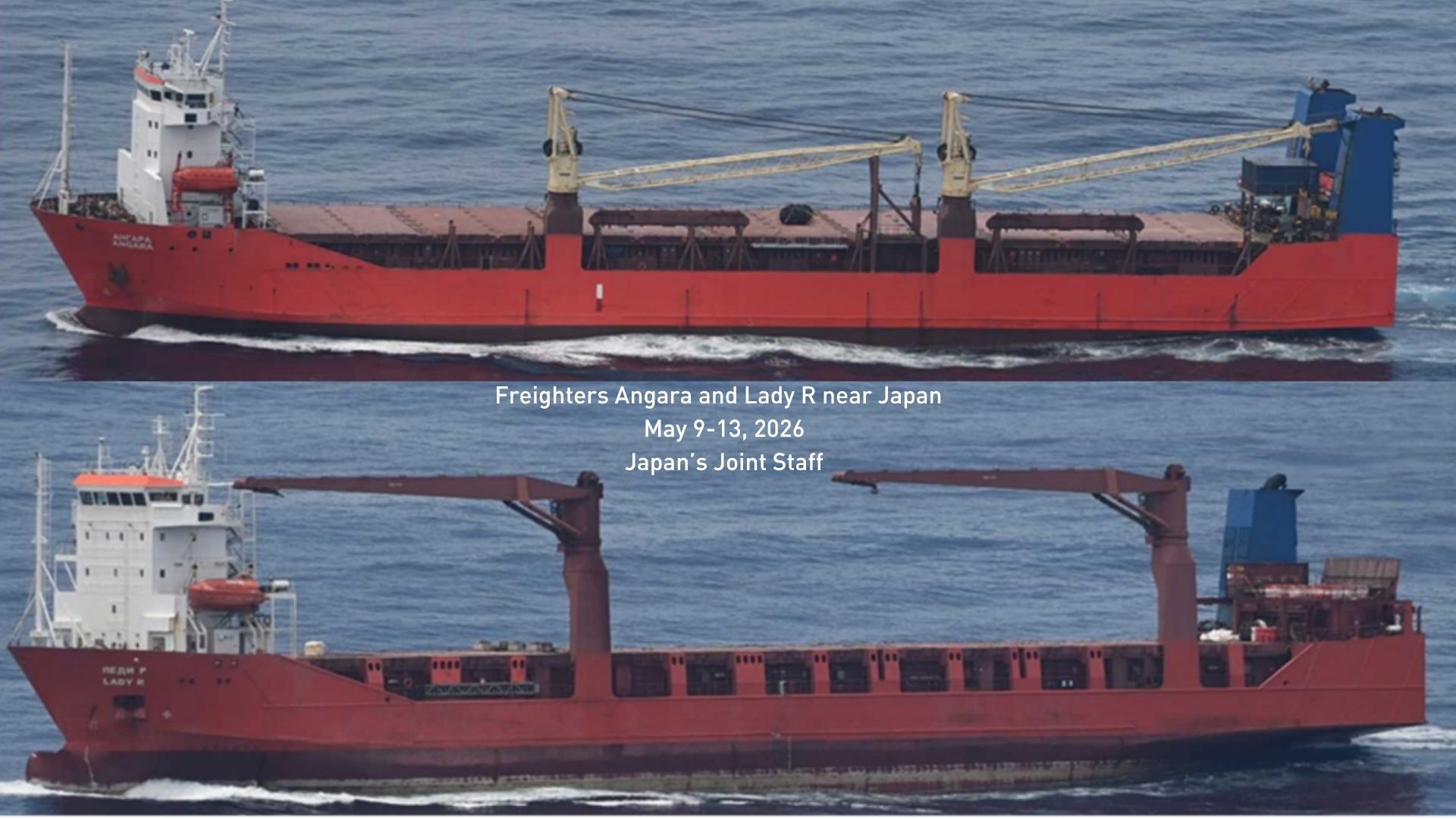
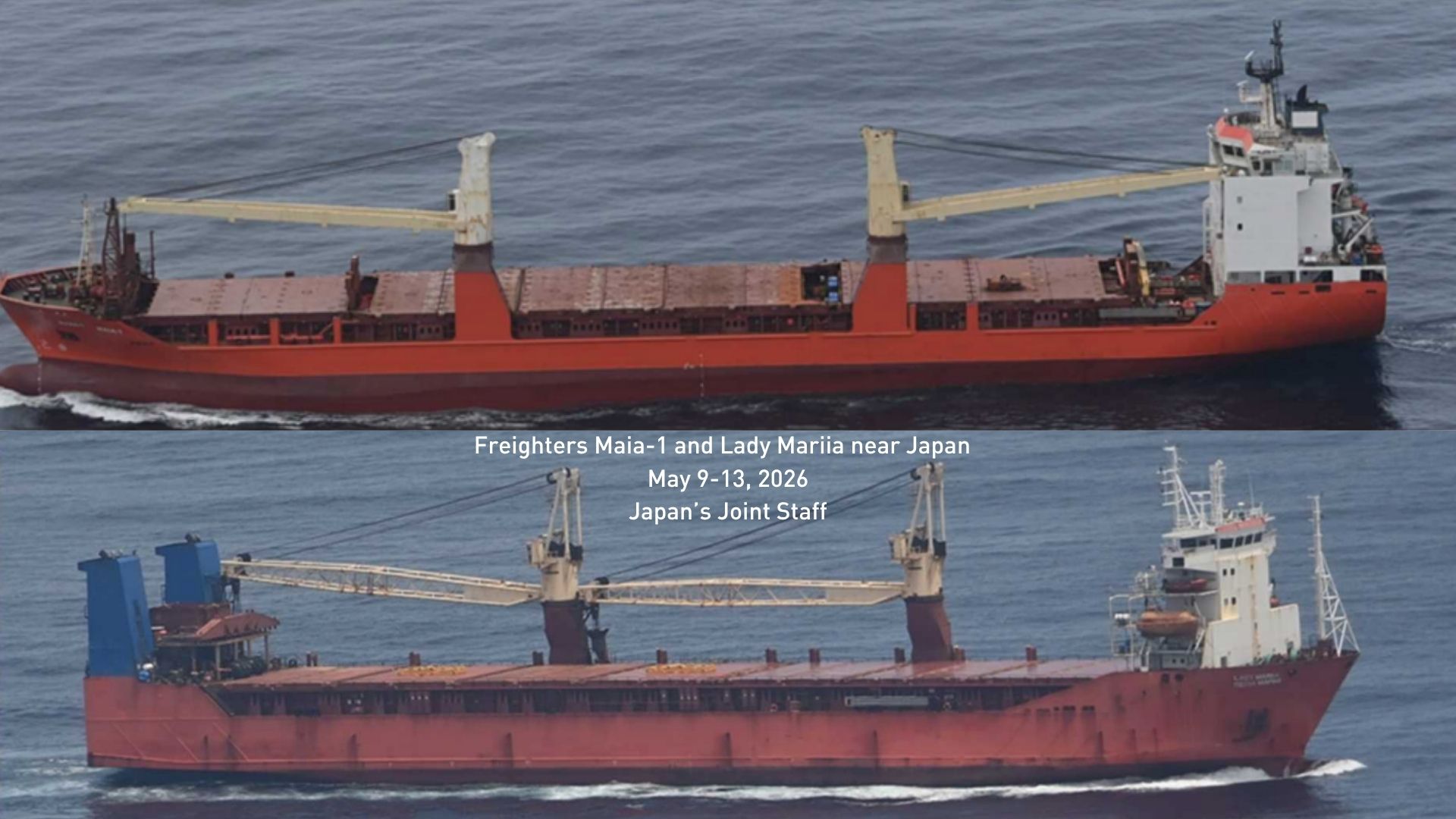
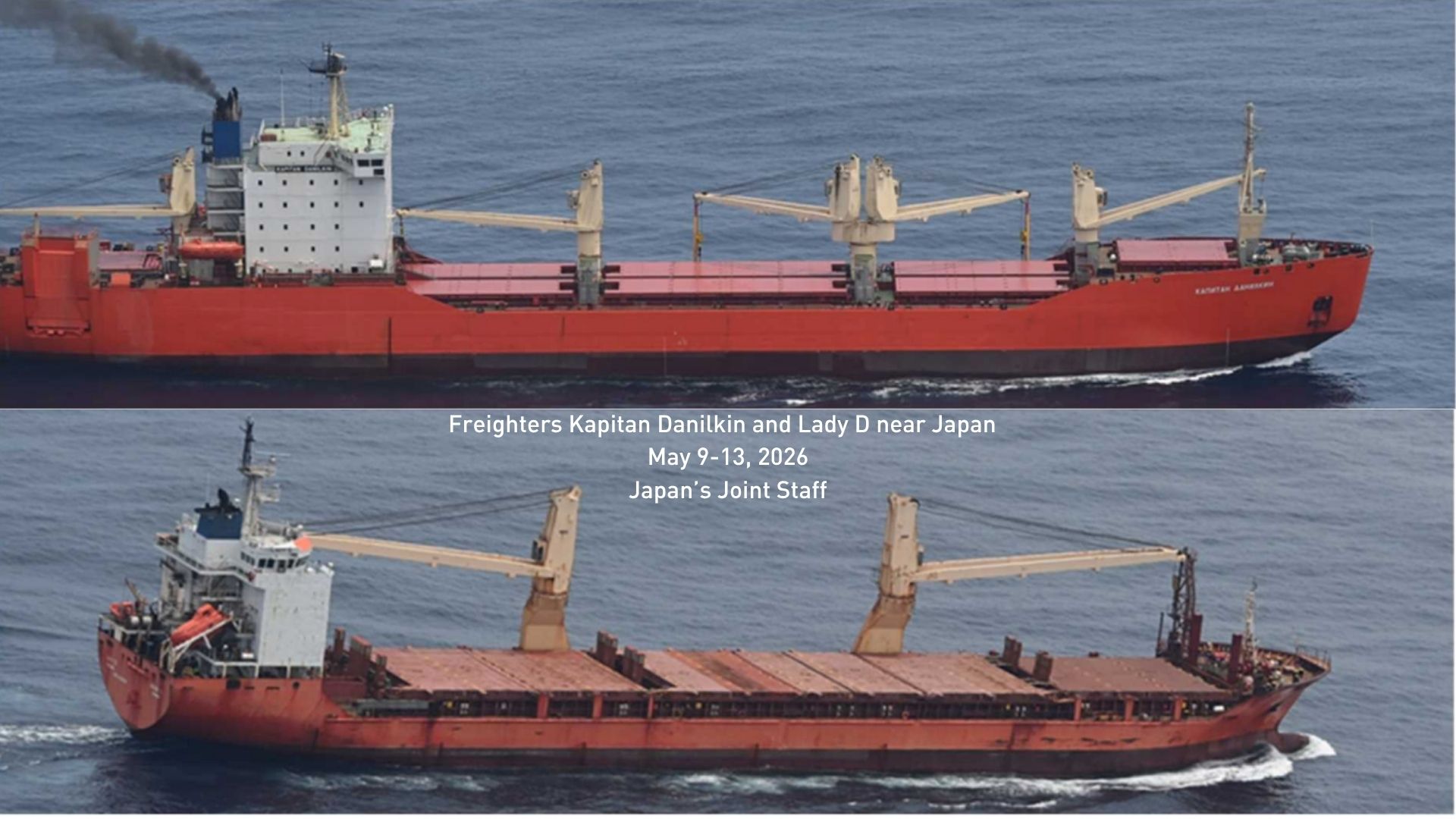
Experts told NK Pro that the vessels’ departure from the Sea of Japan (East Sea), which include three ships directly implicated in DPRK-Russia arms transfers, mark a reconfiguration of the illicit weapons trade that stems as far back as 2023. OBVIOUS CHANGE Over the past three years, the Angara, Lady R and Maia-1 were observed picking up containers of suspected munitions at the DPRK port of Rason for delivery to Russia’s Vostochny Port. The Lady R most recently docked at Rason on April 21. Katsu Furukawa, a former member of the U.N. Panel of Experts, said he observed “obvious changes” to the vessels, as they left their normal area of operations under Russian navy escort. “The fleet of six vessels is unusual and the amounts of the sensitive cargo may likely be impressive,” he said, suggesting that the vessels could be carrying a limited load in their holds, given the absence of bulk cargo or containers visible in Tokyo’s photos. Furukawa said the flotilla likely has a long voyage ahead, given the presence of a “Dubna-class replenishment ship and the Balk-class ocean-going tug,” normally used for “long-range deployments for an extended period of time.” “Depending on their destinations, it will become clear whether they are transporting DPRK weapons to war zones in the West or exporting Russian weapons to its customers,” Furukawa said, suggesting Ukraine’s recent drone strikes may have pushed Moscow to transport cargo from Asia by sea instead of rail. As of Thursday, the group sailed roughly 170 to 200 nautical miles southeast of Vietnam, according to the Maia-1, Lady D, Lady Mariia and Kapitan Danilkin’s geolocation broadcasts via MarineTraffic. None of the four ships transmitted their future ports of call. 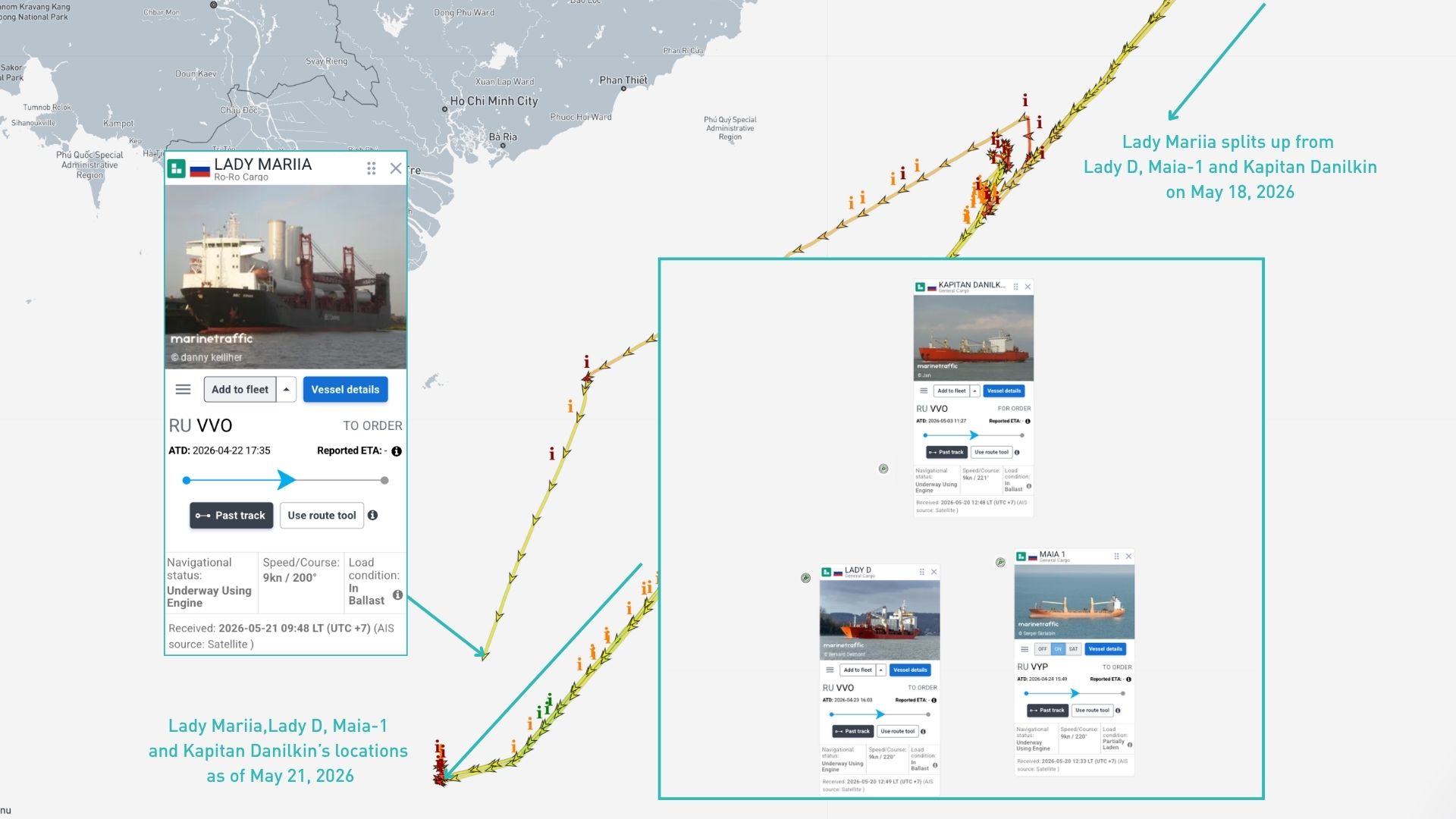
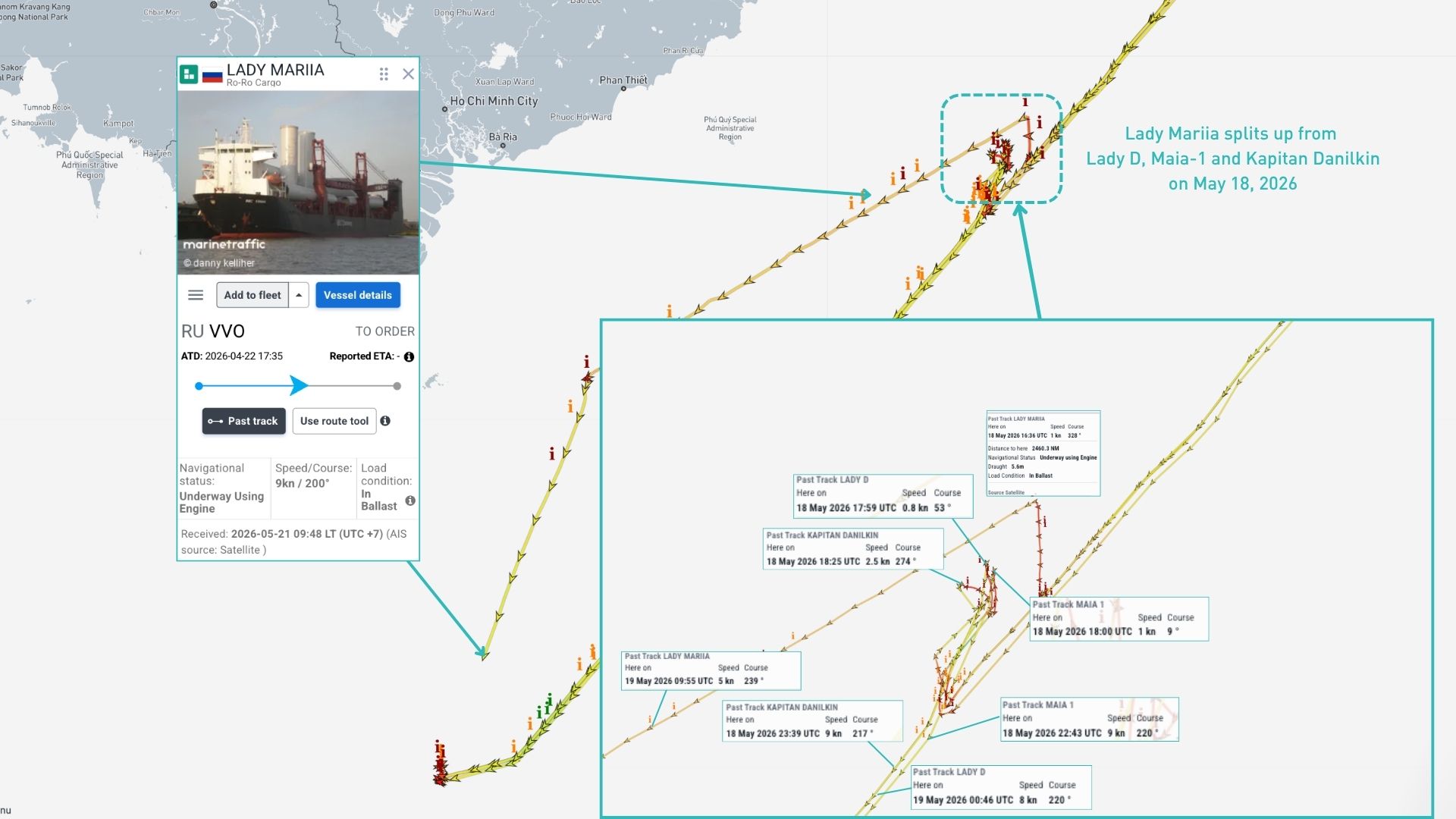
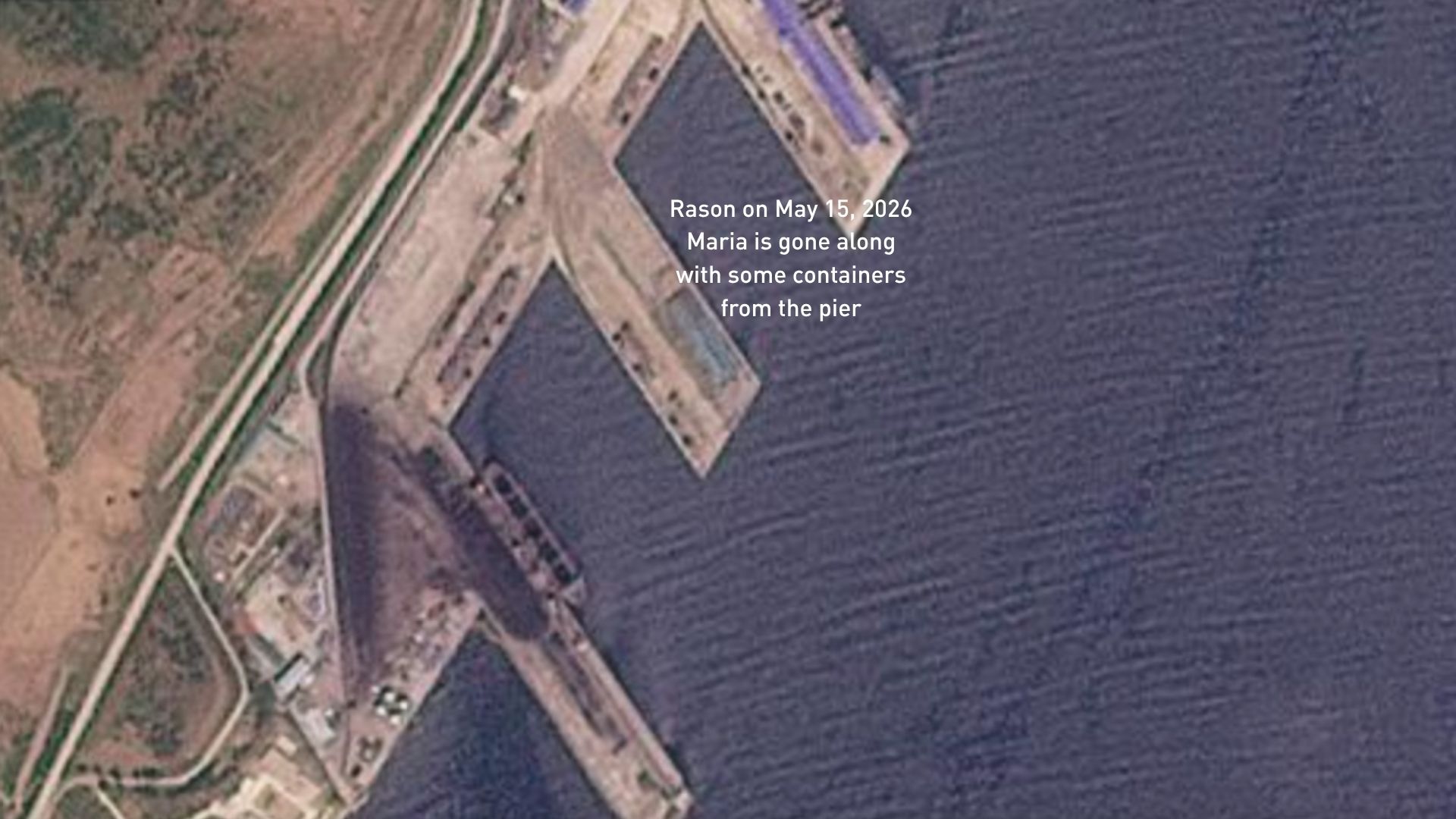
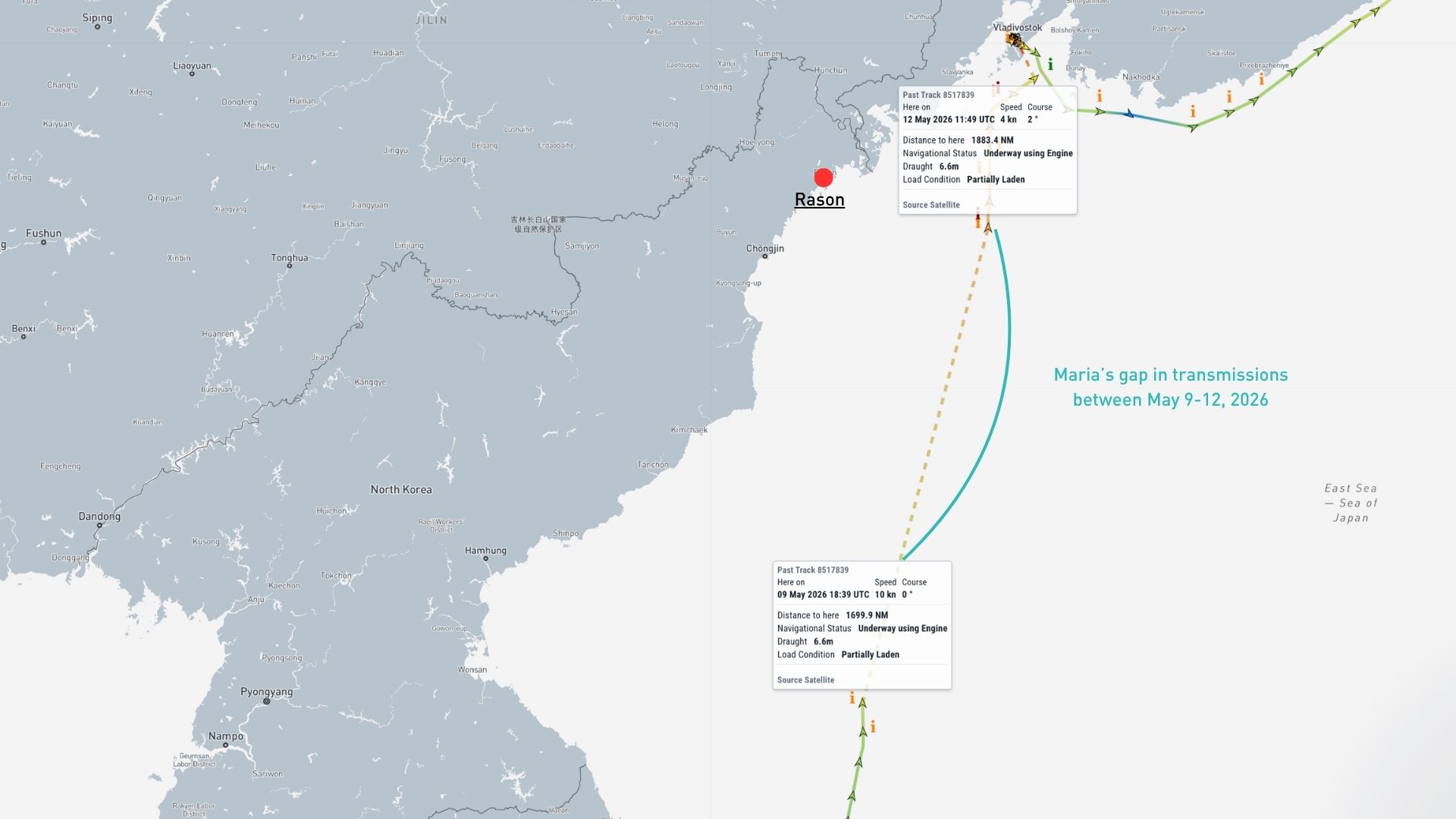
The Angara and Lady R, which have mostly handled Rason deliveries in recent years, continued sailing with their transponders off. However, the Maia-1 has been transmitting globally since dropping out of the scheme in 2024, including recently near Port Vostochny, where it set sail from the area with the other vessels on May 7. The voyage past Japan came as another likely Russian vessel appeared to be docked at Rason on May 12. NK Pro analysis of low-resolution Planet Labs imagery shows that the ship’s proportions match the 113-meter-long Maria (IMO 8517839) that had frequented Rason until 2025. The vessel saw a three-day gap in its transmissions east of the DPRK between May 9-12 — long enough for a quick stop at Rason. 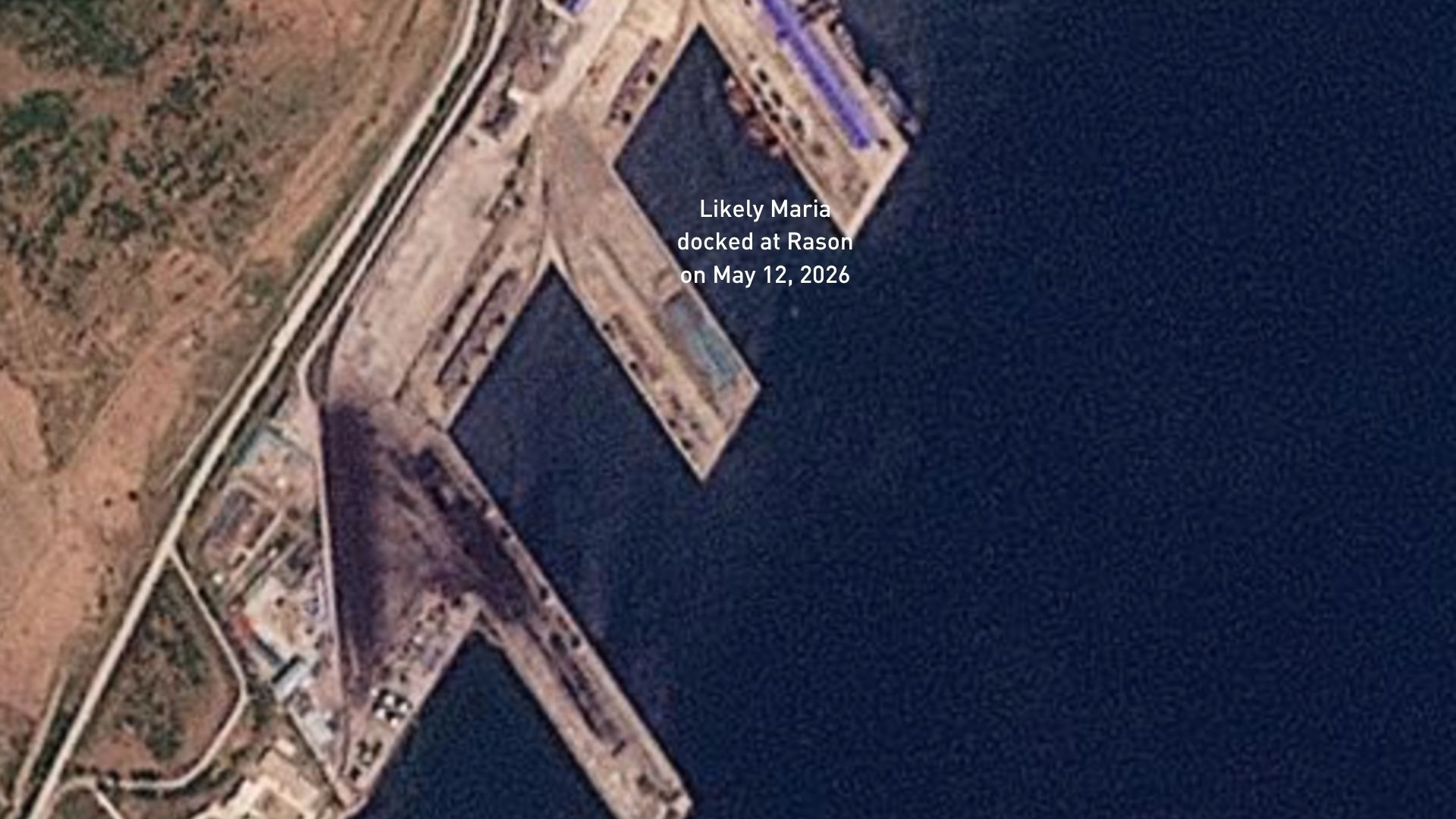
Ryo Hinata-Yamaguchi of Tokyo International University agreed with Furukawa that the voyage may signal a “reconfiguration in the supply chain between North Korea and Russia,” possibly due to the need to use these vessels on other routes. Pointing to the military escort, he suggested that the vessels either carry or plan to load valuable cargo that Russia is not willing to leave unprotected. Security concerns similar to those faced by the Russian shadow fleet freighter Ursa Major before it sank off Spain in 2024 may have required the warship escort, he said. The experts also raised the possibility that the vessels are practicing naval convoy operations, with Russian corvettes serving as a deterrent against torpedo attacks, boarding or seizure by hostile states. Hinata-Yamaguchi suggested that Russia’s reduced reliance on North Korean weaponry may have contributed to the vessels’ temporary repurposing, but stressed this does not mean they have been permanently “taken out of operations with North Korea by any means.” After another assignment, the vessels could still pass through North Korea on their way back, he added. SANCTIONS The three vessels in question are under numerous international sanctions over their involvement in arms deliveries for Russia, including restrictions imposed by the U.S., EU, South Korea and Japan. They also belong to sanctioned entities, including MG Flot — a Russian firm formerly known as TransMorFlot and accused of shipping arms for Moscow — which controls the Maia-1, Lady Mariia and Lady D. M Leasing and Sovfracht that own the Angara and Lady R, respectively, are also under U.S. sanctions. The Kapitan Danilkin belongs to Murmansk Shipping, an entity not found on international sanctions lists. 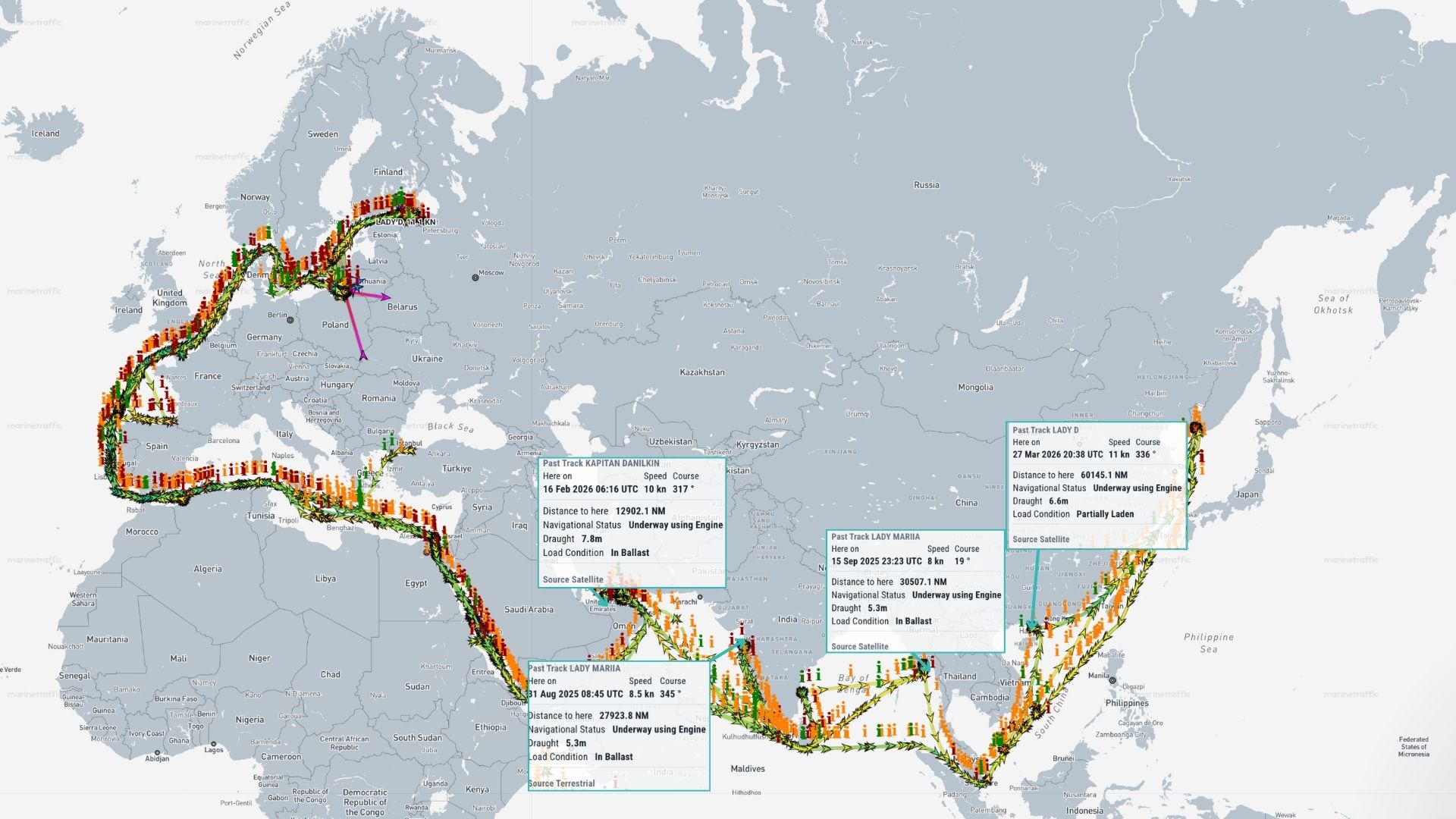 While not known to have participated in the Rason operation, the Lady Mariia and Lady D are subject to U.S. restrictions as part of measures against their owner, a logistics provider of Russia’s defense sector. Edited by David Choi © Korea Risk Group. All rights reserved. |

October 15, 2026Oct 15, 2026

The ultimate resources for professionals working on North Korea
 SHARE
SHARE COPY LINK
 X
X MASTODON