  Analysis Pyongyang airport ditches quarantine for first foreign flights in 3 yearsRare flights for Russian and Chinese delegations to military parade suggest North Korea has shed COVID fears 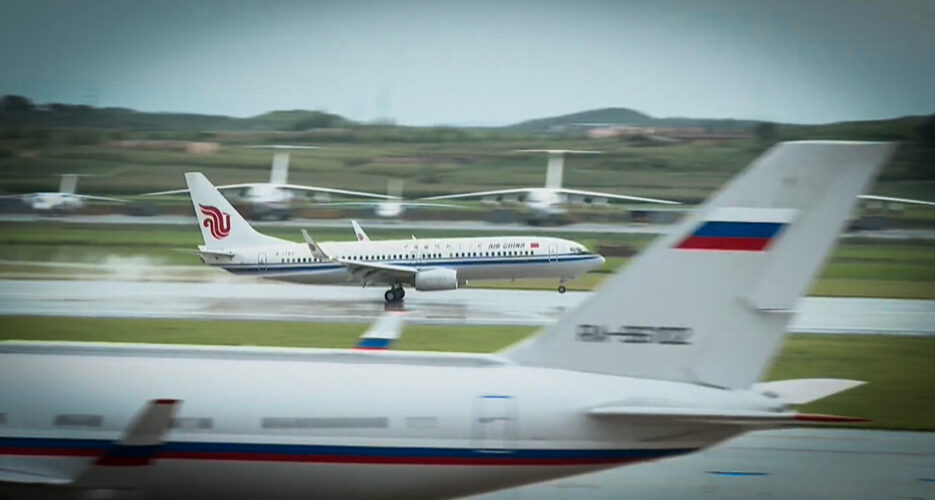 Pyongyang International Airport welcomed flights from foreign airlines for the first time in over three years last week, including a Chinese plane that left and then returned again to North Korea, in a sign that authorities have shed their fundamental fears about the spread of COVID-19. The aircraft carrying Russian and Chinese delegations notably touched down amid the DPRK military’s frequent use of the airport as a missile test center throughout the pandemic and as recently as a week before their arrival. The Russian and Chinese delegations visited to meet with leader Kim Jong Un and celebrate his nuclear weapons at a military parade. Flight records show the Russians’ plane stayed in Pyongyang during the duration of their two-day visit, while the Chinese delegation’s plane dropped them off and returned three days later to pick them up. They are the first known international flights to Pyongyang (IATA airport code FNJ) since three cargo planes from North Korea’s national carrier Air Koryo picked up supplies in China in May 2022 before being isolated and quarantined for around six weeks on Pyongyang’s northern runway. Before North Korea completely shut its borders in Jan. 2020, Air China was the only foreign airline operating flights to Pyongyang, and its last flight was on Jan. 20 that year. The last international Air Koryo flight took foreign diplomats to Vladivostok in March 2020. 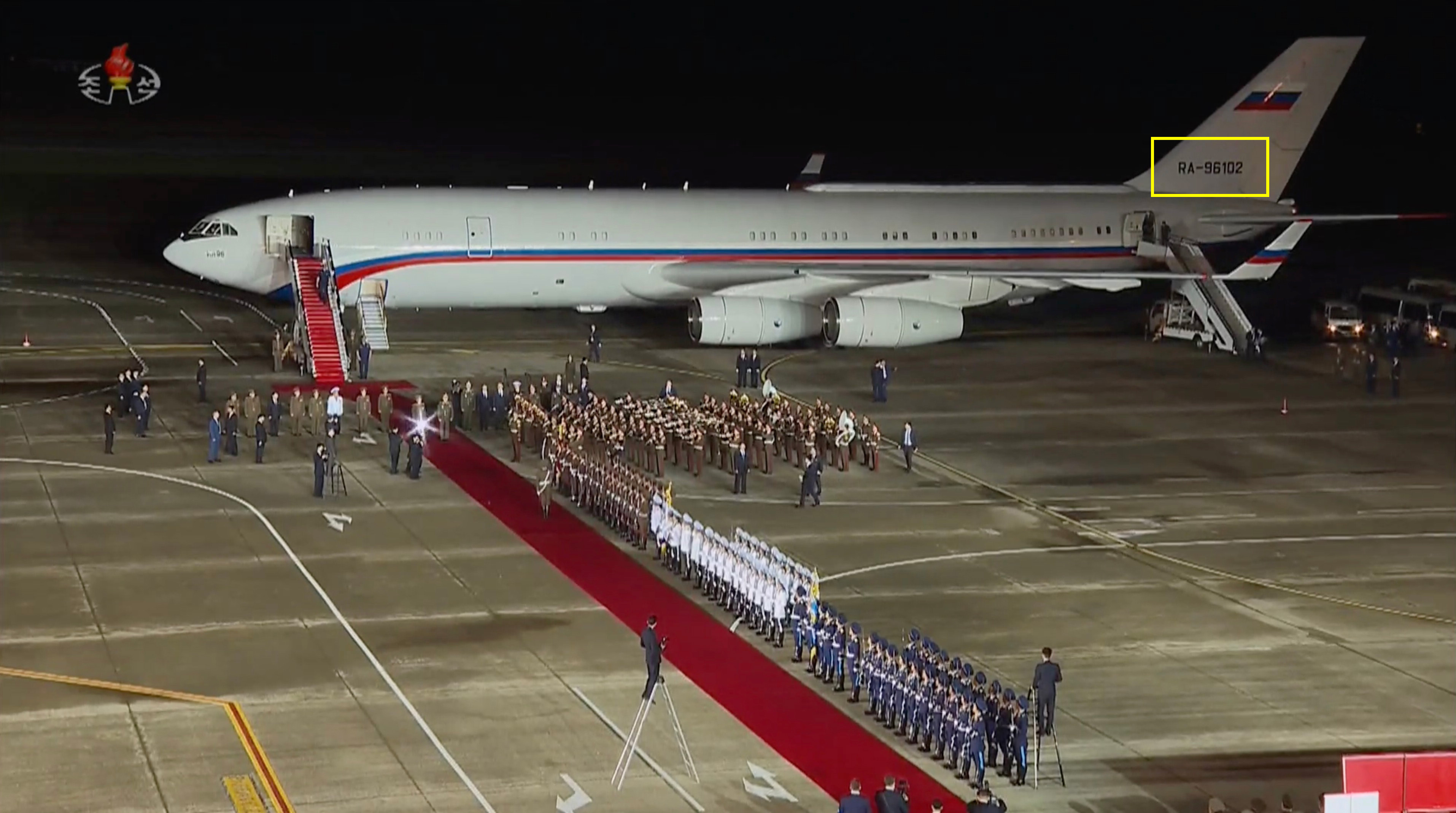 RUSSIA HOLDS DOWN THE FORT The Russian military delegation led by defense chief Sergei Shoigu was first to break the Pyongyang airport’s seal on foreign passenger flights, arriving in a Russian Air Force Il-96 long-haul aircraft with registration number RA-96102 after dark on July 25, according to video and text reports published by DPRK state media and the Russian defense ministry. The plane appeared to depart from Moscow around 10 a.m. local time that day, according to flight tracking website Flightradar24. A Planet Labs satellite image taken on July 27 shows a plane matching the Il-96’s dimensions parked in front of the Pyongyang airport terminal, and DPRK state media said the delegation flew out on the night of July 27 just after Shoigu and his team attended the military parade. Flightradar24 didn’t capture its departure from Pyongyang, but tracked it flying past Krasnoyarsk just before 5 a.m. KST on July 28 and arriving in Moscow around four hours later. North Korean TV footage suggests the delegation deplaned immediately after landing and no quarantine or disinfection-related staff in protective gear were visible on site. 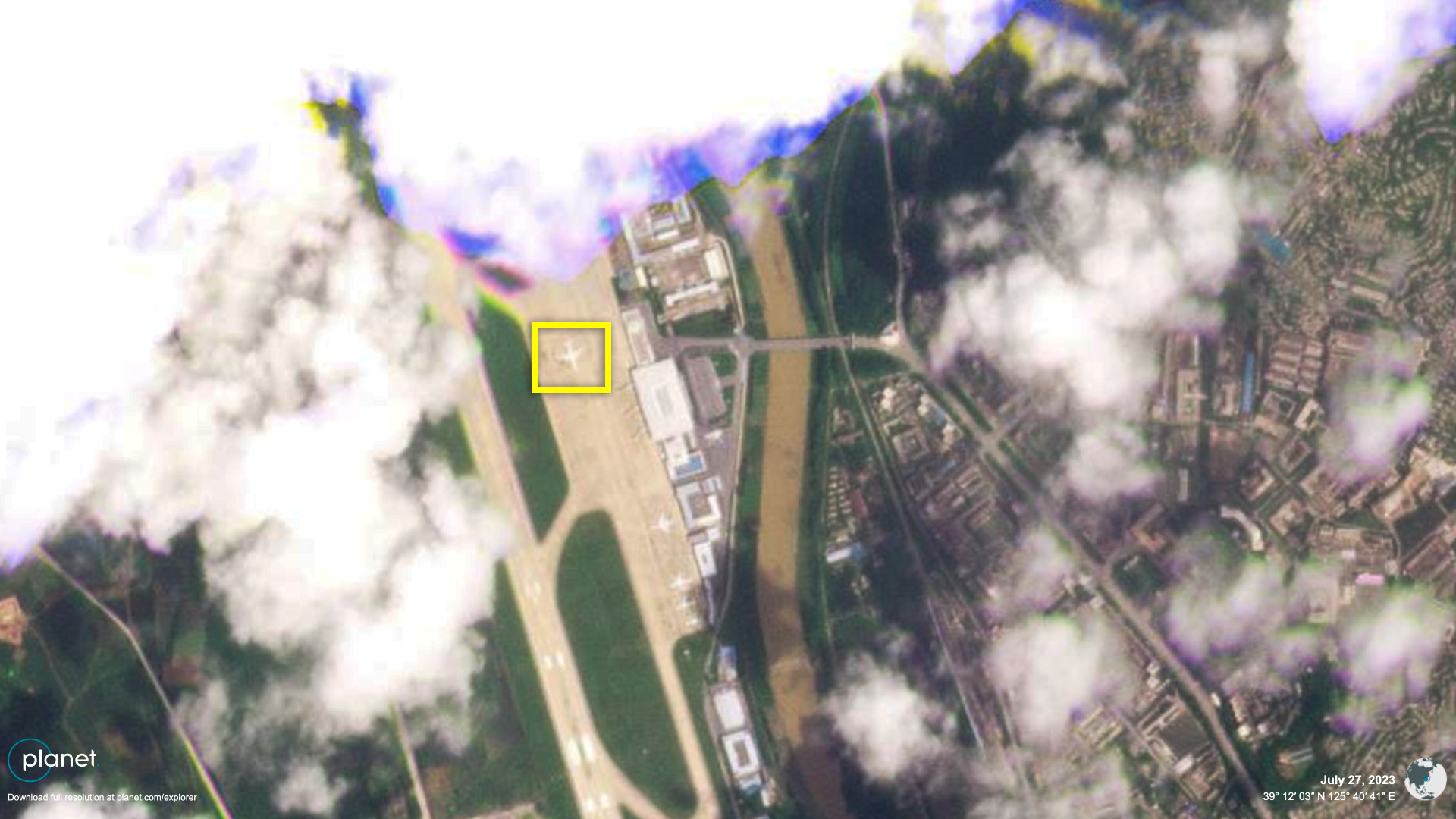 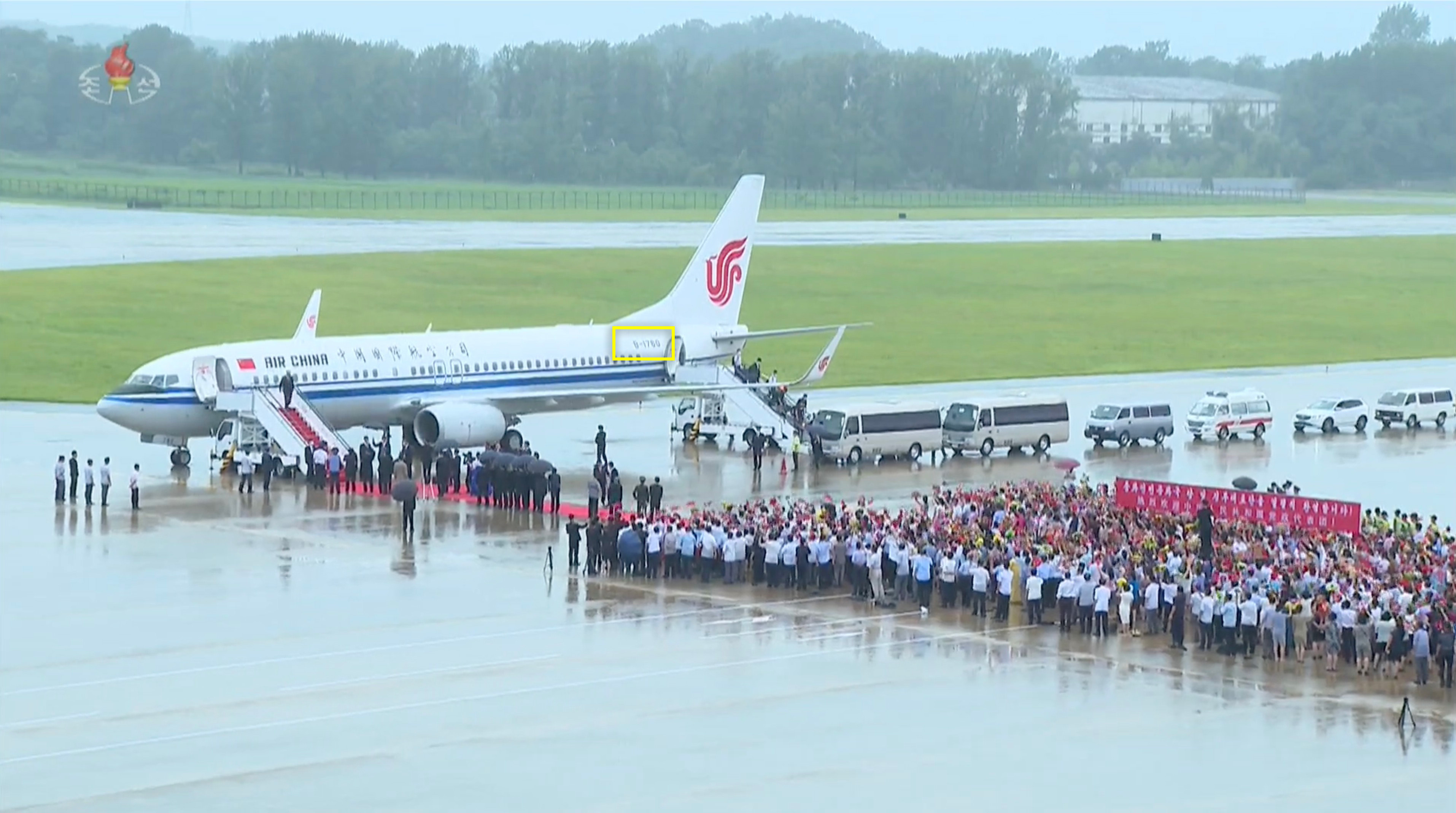 CHINESE DROP-OFF Unlike the Russian delegation’s plane, visiting Chinese politburo member Li Hongzhong’s plane returned to Beijing during his three-day stay instead of parking in Pyongyang. Flightradar24 shows that an Air China Boeing 737 with registration number B-1760 — the number seen on the plane on the Pyongyang runway — departed Beijing Capital International Airport at around 9:30 a.m. KST on July 26 and arrived in North Korea before noon. Some Chinese airline and support staff were wearing masks but again no North Koreans appeared in protective gear. After a welcoming ceremony in front of the terminal, the plane departed for Beijing around 1:15 p.m. KST. The same plane took off from Beijing again before 5 a.m. KST on July 29, arriving in time for a farewell ceremony at the Pyongyang airport and departing before 11:45 a.m. This particular plane services daily commercial routes between a range of cities both domestic and international, traveling to Mongolia, Taiwan and even South Korea earlier in the month. It appears to have been taken out of regular service for the delegation, and possibly underwent a test flight in preparation for the VIP passengers a day before their departure for Pyongyang, as Flightradar24 shows it flying in a loop for an hour north of Beijing that morning. 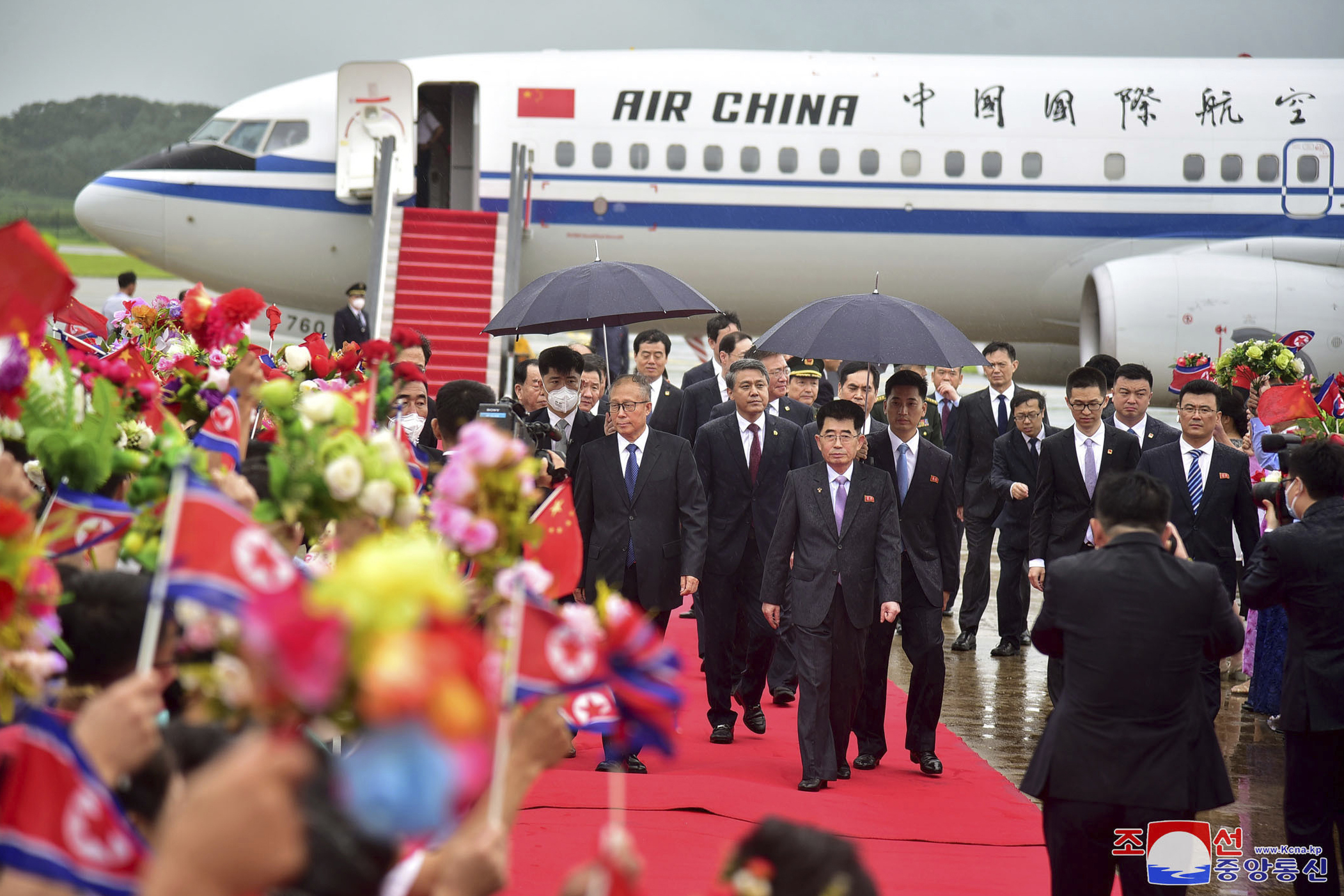 While raising the risk of being stranded, Chinese authorities may have preferred to handle maintenance and meal preparation for the return flight at their own facilities in Beijing. The Russians may have wished to do the same, but the trip to and from Moscow is far longer. The Air China plane may have also returned to Beijing in the interim in order to deliver special supplies sent by North Korean authorities, or passengers including Chinese Embassy staff or family members as well as DPRK diplomats or businesspeople. COVID IMPLICATIONS It appears North Korean authorities are largely no longer concerned about the potential for planes and personnel to carry COVID-19 into the country. But despite abandoning their preference for total control, it remains possible that last week’s activities involving the two delegations were conducted inside a “bubble” tracked by DPRK authorities. This could involve separating all participants in North Korea who came in contact with the delegations from the rest of the population and requiring them to quarantine for a certain period of time after the delegations’ departure. With no announcement yet on reopening borders and resuming international commercial flights, it appears authorities are sticking to an exemption-only policy for the time being — whether over fears that a wider reopening would lead to another virus outbreak or as a cynical move to maintain control on movement and the flow of unwanted goods or information. 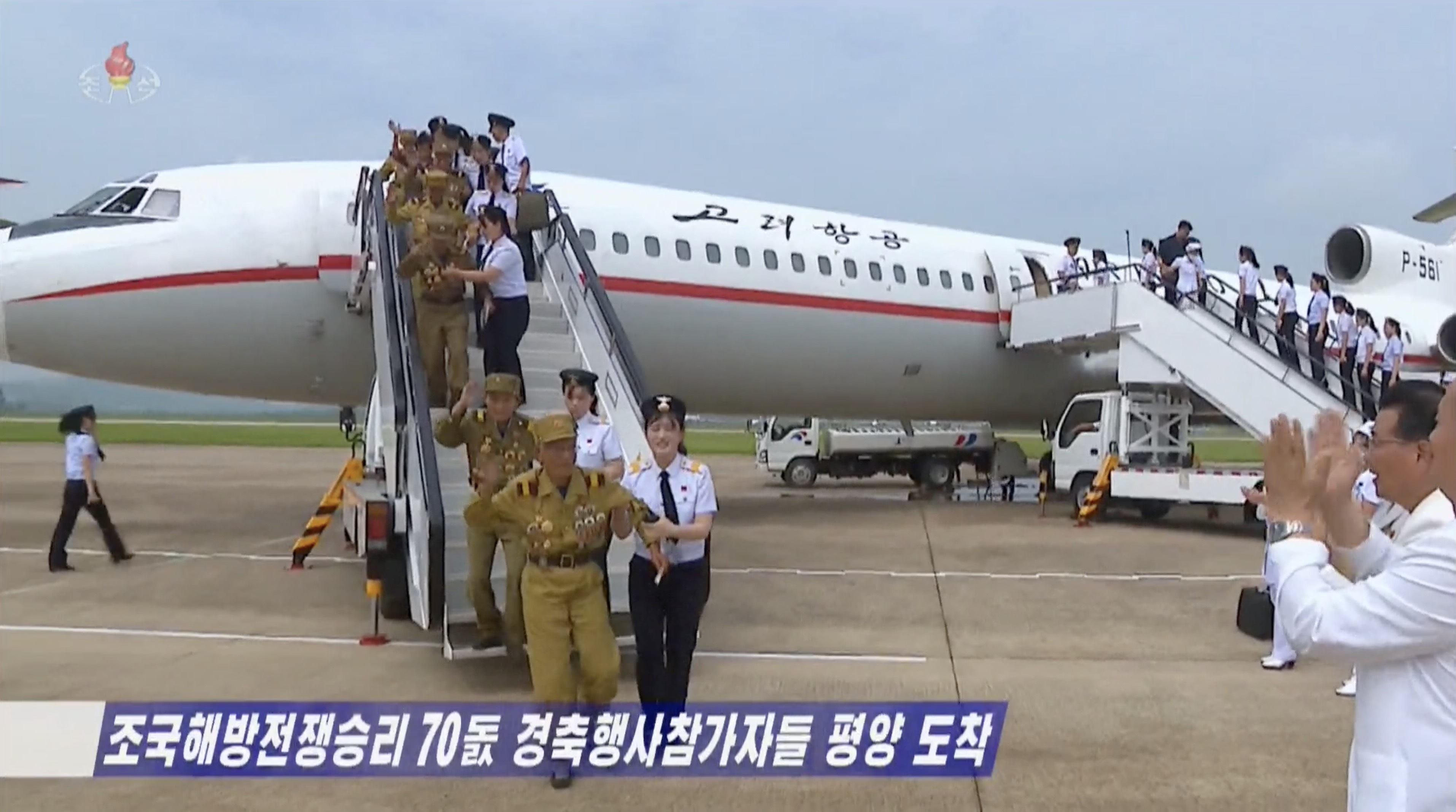 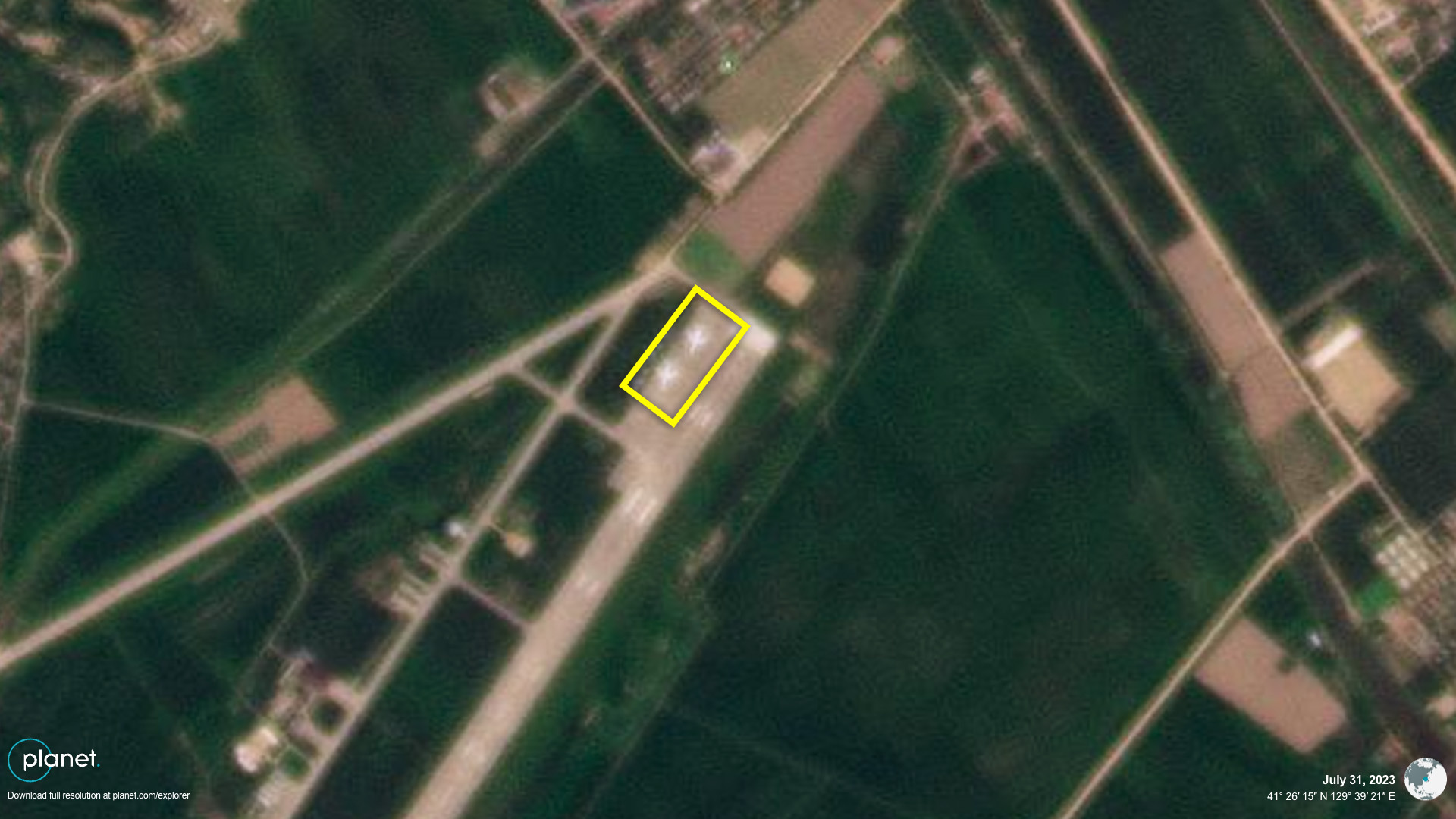 AIR KORYO DOMESTIC FLIGHTS Meanwhile, two Air Koryo planes appeared in Planet Labs satellite imagery at Orang Airport in the northeast of North Korea near Chongjin on Monday, likely to take elderly war veterans home after they participated in the military parade and other war anniversary events. Korean Central Television (KCTV) showed Air Koryo flights ferrying war veterans from Samjiyon Airport to Pyongyang last week, and similar domestic flights have been common around holidays and events throughout the pandemic. The Chinese and Russian visitors did not appear to have close contact with many war veterans, and the veterans’ reported travel to the Yangdok hot springs resort after the military parade and apparent flights home at least imply authorities did not require most participants in the parade or other events to quarantine. Edited by Bryan Betts © Korea Risk Group. All rights reserved. |

October 28, 2026Oct 28, 2026

The ultimate resources for professionals working on North Korea
 SHARE
SHARE COPY LINK
 X
X MASTODON