  Analysis North Korean party plenum: bracing for “long-term confrontation” with U.S.Kim Jong Un calls for domestic resilience and continued development of strategic weapons 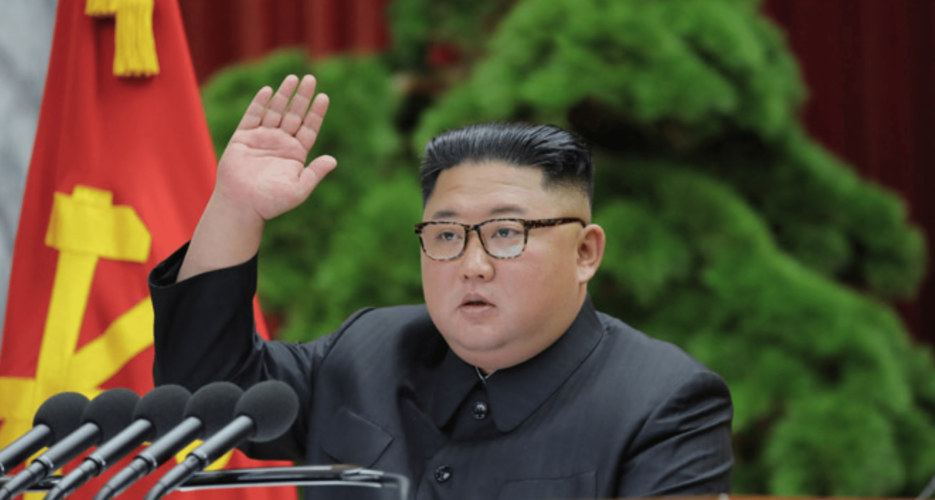 North Korean state media on January 1 provided further details from an unusual four-day party plenum held during December 28 to 31. According to the readout, Kim Jong Un proclaimed a “revolutionary line on carrying out a head-on breakthrough battle.” The plenum likely followed up on issues from a preceding party Central Military Commission (CMC) meeting, which addressed, inter alia, the development of “self-defensive national defense capabilities” and military reorganization. The crux of Kim’s “head-on breakthrough battle” policy is as follows: a “long-term confrontation with the U.S.” is inevitable, and North Korea will continue to develop “strategic weapons” and maintain its “nuclear deterrent” to defend itself. To successfully overcome the difficulties during this time, North Korea needs to further strengthen its domestic resilience — economic, military, and ideological — and reinforce the foreign policy front. According to this line, national security is the top priority, and the economy and national defense will be the two main pillars of the country. In effect a revival of byungjin — simultaneous development of the economy and nuclear forces, which the North implemented from April 2013 until April 2018 — this appears to be North Korea’s “new path” for 2020. This author since early September has repeatedly warned of the possibility of Pyongyang’s return to byungjin, based on state media signals that began to appear in late August. Key takeaways
 U.S. and nuclear policy Immediate to short term: the calm before showcasing the “strategic weapon” North Korea’s immediate- to short-term U.S. policy at a glance appears ambiguous. Kim appears to not have altogether ruled out diplomacy, cautioning the U.S. against “dragging its feet,” and conditioning its weapons development on “future U.S. attitude toward the DPRK.” Moreover, Kim did not explicitly lift his self-imposed moratorium on ICBM and nuclear testing. This ‘ambiguity,’ however, may be due more to domestic factors rather than Kim holding out hope for a diplomatic breakthrough with Washington. One reason may be that the “strategic weapon” the North wishes to showcase is not ready for testing: Kim said the world “will witness a new strategic weapon the DPRK will possess in the near future.” (Bold added by the author for emphasis.) “Strategic weapon” typically refers to longer-range missiles and nuclear weapons. The plenum coverage of the U.S. was negative and left little maneuvering space for Pyongyang for future negotiations with Washington. Unlike his 2019 New Year’s address and policy speech to the Supreme People’s Assembly in April 2019, where Kim expressed hope for progress in relations with the U.S. — even setting a year-end deadline in the latter speech — Kim in his plenum speech made no reference to further talks with the U.S. Kim may not feel the need to formally suspend diplomacy with the U.S. given the ongoing stalemate, but he could officially annul the moratorium before introducing the country’s “strategic weapon.” The plenum readout cited Kim as saying “the basis for being one-sidedly tethered to the pledges” — a reference to the moratorium and the dismantlement of the Punggye-ri nuclear test site — are “gone,” using the past tense. Pyongyang could take a step further and annul its pledge made in April 2018 to contribute to global nuclear disarmament and nonproliferation efforts. Kim at the party plenum implied this could be on the cards by saying the U.S. was “throwing cold water over our efforts toward global nuclear disarmament and prevention of proliferation.”  Long term: keeping the nuclear deterrent North Korea’s long-term U.S. policy is clearer: it has no intention of giving up its nuclear deterrent. This comment by Kim at the plenum seems to capture this: “Such leap forward in state-of-the-art national defense science [development of strategic weapons systems] will make our military technical strength an irreversible thing, quite expedite the elevation of our national strength, enhance our ability to control the surrounding political situation, and give the enemies serious and severe anxiety and a blow of fear.” Kim implied he will maintain his “nuclear deterrent” and continue to develop “strategic weapons” unless the U.S. withdraws its “hostile policy,” which includes, but may not be limited to, U.S. joint military drills with South Korea, U.S. exports of advanced weapons to South Korea, and U.S. economic sanctions on the DPRK. Kim at the plenum “resolutely declared…that [the DPRK] will continue to unyieldingly, and without interruption, carry on with strategic weapons development, which is necessary and is a priority for national security, until U.S. hostile policy toward the DPRK is withdrawn, and a permanent and solid peace regime is established on the Korean Peninsula.” The withdrawal of “hostile policy,” which became North Korea’s official precondition for nuclear talks after the breakdown of the Stockholm working-level talks in October, is broad and ambiguous. It therefore begs the question of North Korea’s sincerity about diplomacy. Implicitly (and cautiously) bringing back byungjin A consistent message of the plenum was that the economy remains important, but national security takes precedence. For example, Kim said, “It is true that we desperately need an external environment conducive to economic construction. However, we can never sell the dignity we have hitherto defended as our life, expecting a fancy transformation.” He also noted that he would “never trade our state’s security and dignity, or the security of the future for anything.” More importantly, the party plenum implied what appears to be, in effect, the North’s return to byungjin, despite the official policy of concentrating on the economy. At the plenum, Kim called for directing “all energy into the national defense-building work on a nationwide level,” which, while falling short of official acknowledgement, seemed to place national defense on a par with the economy. This was in addition to his repeated emphasis on further bolstering defense capabilities, specifically continuous development of “strategic weapons” and maintenance of an “constant mobilization posture of a powerful nuclear deterrent.” Notably, this is observed to be the first time “nuclear deterrent” appeared in Kim’s national speech after he announced a shift from byungjin to the economy at the April 2018 party plenum. “Nuclear deterrent” is evocative of “nuclear armed forces,” which constantly appeared in state media during the days of byungjin. Further implying a slip back to byungjin, Kim alluded to the possibility of “belt-tightening,” a euphemism for sacrificing the civilian sector to build up national defense that has been closely associated with byungjin. He said “it is our people’s firm revolutionary faith to defend the country’s dignity and defeat imperialism by achieving wealth, power, and prosperity with our own strength at all costs, even if it means tightening our belts.” Though this formulation was mentioned only once and subtly, it is notable that it was directly attributed to Kim Jong Un. This appears to be the first time Kim used this expression in a major speech after the policy transition at the April 2018 party plenum. The apparently cautious way in which Kim brought up “belt-tightening” seems to suggest domestic sensitivities. For example, there may be leadership concern about the potential repercussions of diverting resources away from the civilian economy, such as how the policy may impact or be received by the tonju, North Korea’s nouveaux riches. “Offensive measures” for foreign policy and defense industry sectors According to the plenum readout, Kim Jong Un called on the foreign policy and defense sectors to take “offensive measures” based on his analysis of the “complex current dynamics of international relations.” Although not mentioned in state media, it is possible that the plenum discussed ways to strengthen relations with China and Russia — or even manage ties with these two countries should Pyongyang go down the path of launching ICBMs or even conducting nuclear tests. “Offensive measures” also could involve a more forward-leaning military posture vis-a-vis South Korea. The recent CMC meeting’s discussion of military reorganization issues likely targeted South Korea. It may be worth recalling that Kim visited a military unit in the West Sea (Yellow Sea), inside the inter-Korean maritime buffer zone, and instructed artillery firing on November 23, the ninth anniversary of North Korea’s shelling of South Korea’s Yeonpyeong Island. Edited by Jacob Fromer © Korea Risk Group. All rights reserved. |

October 09, 2026Oct 09, 2026

The ultimate resources for professionals working on North Korea
 SHARE
SHARE COPY LINK
 X
X MASTODON