  News North Korean bank’s demands ‘stopped’ UN banking channelForeign Trade Bank wants sanctions lifted before it will play role in U.N. banking channel, says Russia’s Sputnik Bank 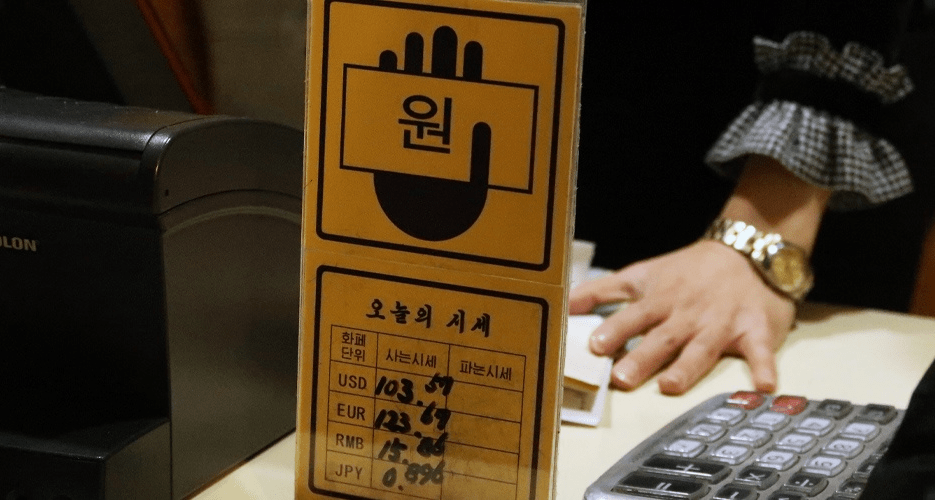 Longtime efforts to restore a stable banking channel for international humanitarian operations in North Korea have reached a screeching halt due to demands from the nominated Pyongyang banking partner, Russia’s Bank Sputnik told NK Pro on Monday. Bank Sputnik, which previously helped the U.N. send money to North Korea despite major sanctions against the country’s banking sector, said its DPRK partner, the Foreign Trade Bank, is now posing major obstacles to resuming regular service. That’s despite years of U.N. efforts to reconnect the isolated country with the global financial system. “Over the past year, a relevant financial scheme has been agreed with all participants and put into operation, and test payments have been successfully carried out,” Pavel Nikitin, the sole owner of Sputnik Bank and the chairman of its board of directors, wrote in an email to NK News on April 26. “[However], project implementation is stopped due to the fault of the key executor, namely the DPRK Foreign Trade Bank.” In a phone call with NK Pro on Tuesday, Nikitin elaborated that early success with test transactions in 2021 soon led to problems, despite the fact that his bank had been given approvals by the U.N’s 1718 Committee to restart work on the banking channel. An initial test transaction of 5,000 euros to Pyongyang was successfully remitted on January 4, 2021, according to Nikitin. “It was the first transaction since 2016, so it’s almost five years,” he said. But a subsequent transaction of 27,000 euros for U.N. usage in Feb. 2021 was partially blocked: Half the amount was credited on U.N. accounts, but the other half was blocked by the FTB, Nikitin said. When Bank Sputnik inquired with diplomatic channels to understand why the FTB was not releasing half of the cash, the Pyongyang-based financial institution effectively issued an ultimatum. “They insisted that the U.N. must unblock all [of] FTB,” Nikitin said. “They are insisting that all sanctions must be off, their accounts must be unfrozen, and (only) then we will be able to transfer the money to DPRK.” The FTB is currently sanctioned by the U.N. Security Council, the U.S. Department of Treasury and the European Union. After months of work trying to rebuild the connection, Nikitin said the FTB’s insistence that sanctions on it first be lifted had left his bank confused. “I really don’t understand the FTB position,” he said. “Because we are trying to do a good thing for their country, for their people, and trying to do it for free … It’s just [going to facilitate] free investment that will help and they are just blocking the transactions.” An official from the DPRK’s Foreign Trade Bank in Pyongyang was unable to immediately respond to questions from NK Pro on Tuesday. Meanwhile, Russia’s Embassy in Pyongyang did not respond to an NK Pro request for comment on the matter, nor the head of the Norwegian mission in New York – the country currently leading the 1718 Sanctions Committee. Go Myong-hyun, a research fellow at the Asan Institute for Policy Studies, said it’s possible that cash flow problems led North Korea to make this decision. “Maybe it’s because they don’t have access to physical foreign currency at the moment, and so they are not able to live up to the commitment to pay out cash to whoever is going to spend the money in Pyongyang,” he said. “If they’re really running out of physical cash in North Korea, it makes sense for them to argue: ‘We are not going to honor any more payments until you guys lift all the sanctions.’” Andrei Lankov, a director at Korea Risk Group and a professor at Kookmin University, said that Pyongyang’s refusal to facilitate the flow of inbound financial assistance was consistent with its longstanding behavior. “It’s a brilliant example of the fairly typical North Korean government’s approach to doing business with the outside world,” he said. “They do not understand the value of credit ratings [and] they don’t really care about their reputation because, for most of their history, their partners were willing to put up with their sometimes irrational, sometimes super predatory behavior.”  According to Lankov, the FTB’s bold behavior is likely due the North Korean bank’s assumption that “rich foreigners will eventually find some way to send them money” — a conclusion that’s “probably right,” he said. Anthony Ruggiero, a sanctions specialist at the Foundation for Defense of Democracies in Washington, D.C., said the North Korean state bank response was selfish. “The Kim regime does not care about the North Korean people,” Ruggiero said. “Kim uses North Korea’s resources for prohibited nuclear and missile programs and makes it impossible for humanitarian assistance to reach North Korea.” The ongoing absence of an international banking channel for humanitarian purposes was criticized by multiple aid organizations in the latest U.N. Panel of Experts report. “The continued lack of a stable banking channel, coupled with the border closures and a lack of international flights, had created severe cash flow problems, which would likely result in reduced humanitarian efforts and possible fiscal reprogramming for the next year,” the U.N. panel noted in March 2021. An Aug. 2020 report also stated that efforts to reconnect the Pyongyang banking channel had been making “marginal progress” due to the COVID-19 pandemic, “jeopardizing supply chain operations and also creating risky situations for humanitarian personnel.” © Korea Risk Group. All rights reserved. |

October 19, 2026Oct 19, 2026

The ultimate resources for professionals working on North Korea
 SHARE
SHARE COPY LINK
 X
X MASTODON