  Analysis North Korea prioritizing land reclamation over major tidal power plant: ImageryNew seawall laid groundwork for leader-approved plant but then changed course, leaving timeline for construction unclear 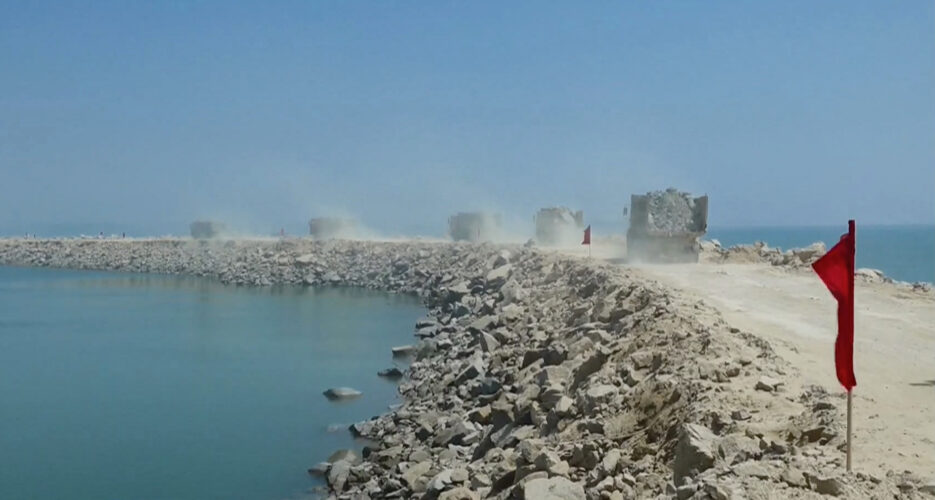 North Korea appears to be prioritizing a new land reclamation project over plans to build the country’s largest tidal power station, according to NK Pro analysis of satellite imagery, laying the groundwork for the plant but leaving it unclear when construction will move forward. Planet Labs imagery shows a new seawall was built extending just under a mile (1.5 km) into Haeju Bay between January and June this year, following a plan for a tidal power station, before turning away from a straight path across the bay. Signs of the energy project continuing have also yet to appear, and this suggests the seawall is currently intended as part of a tideland reclamation effort similar to others up and down the west coast, though it will likely be part of the planned power station if it resumes in the future. Both the locations where the seawall juts out from the east end of the bay and its projected meeting point with a peninsula straight across on the west side match a power station design Kim approved in March 2020. 
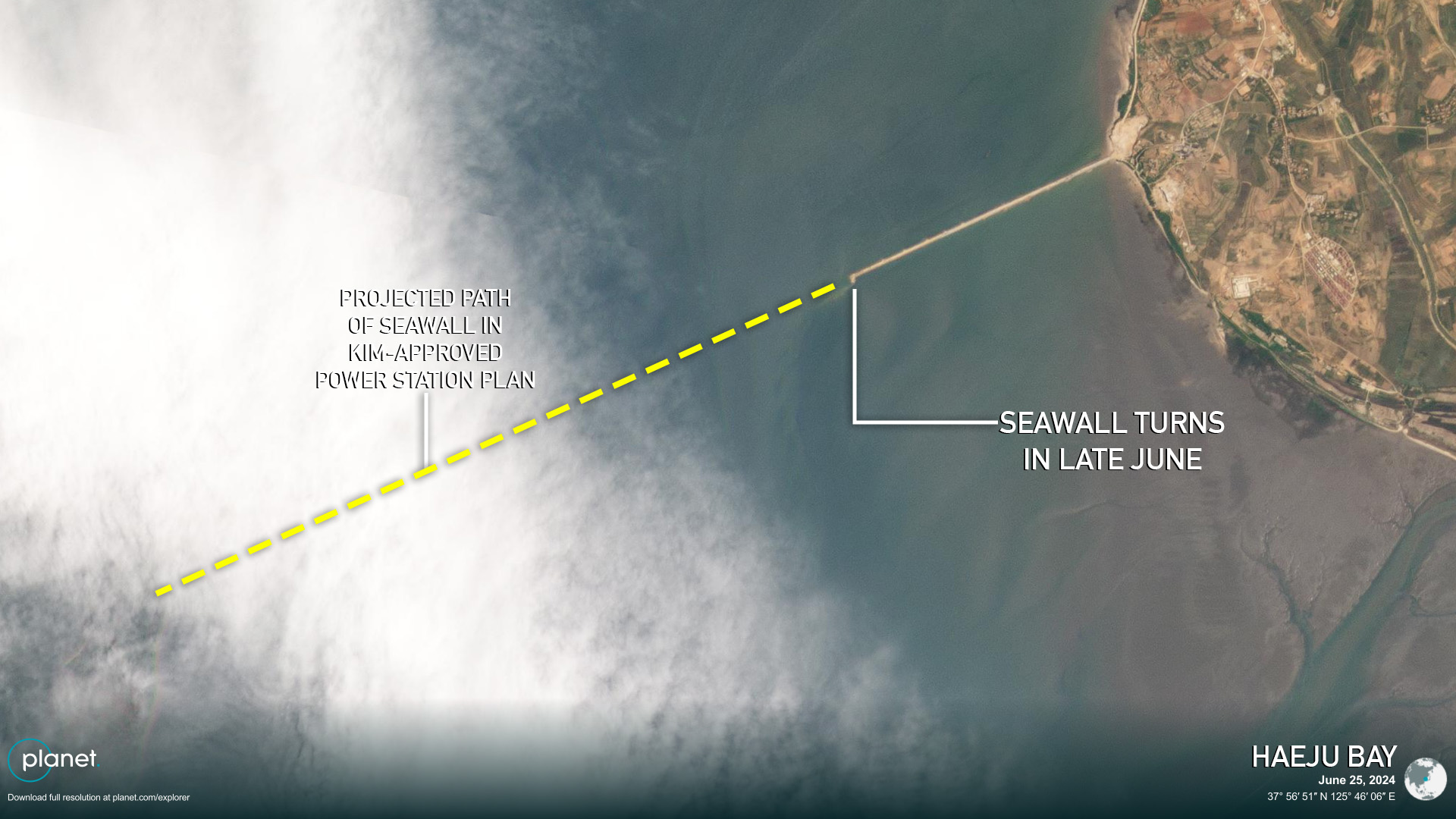
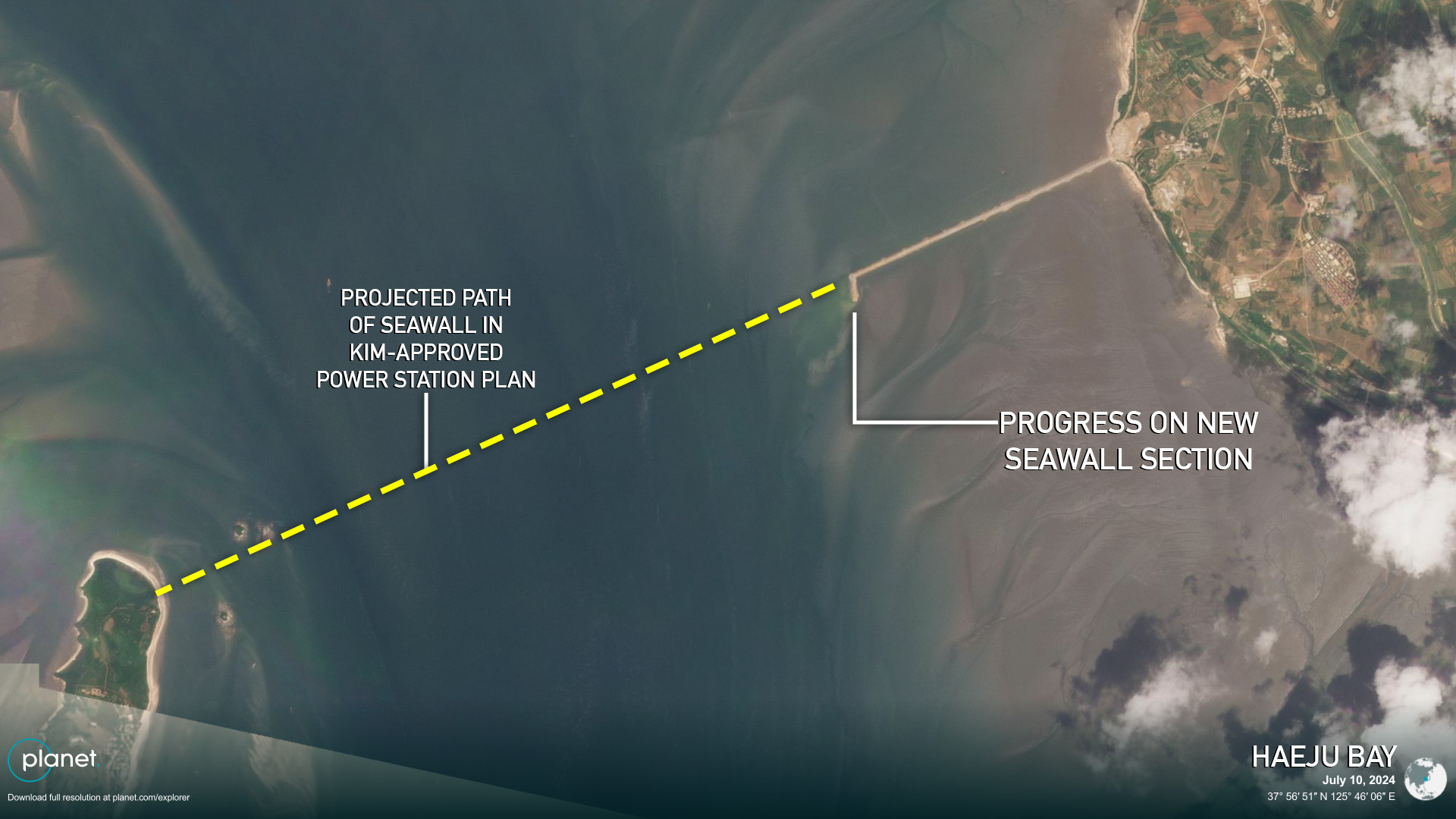
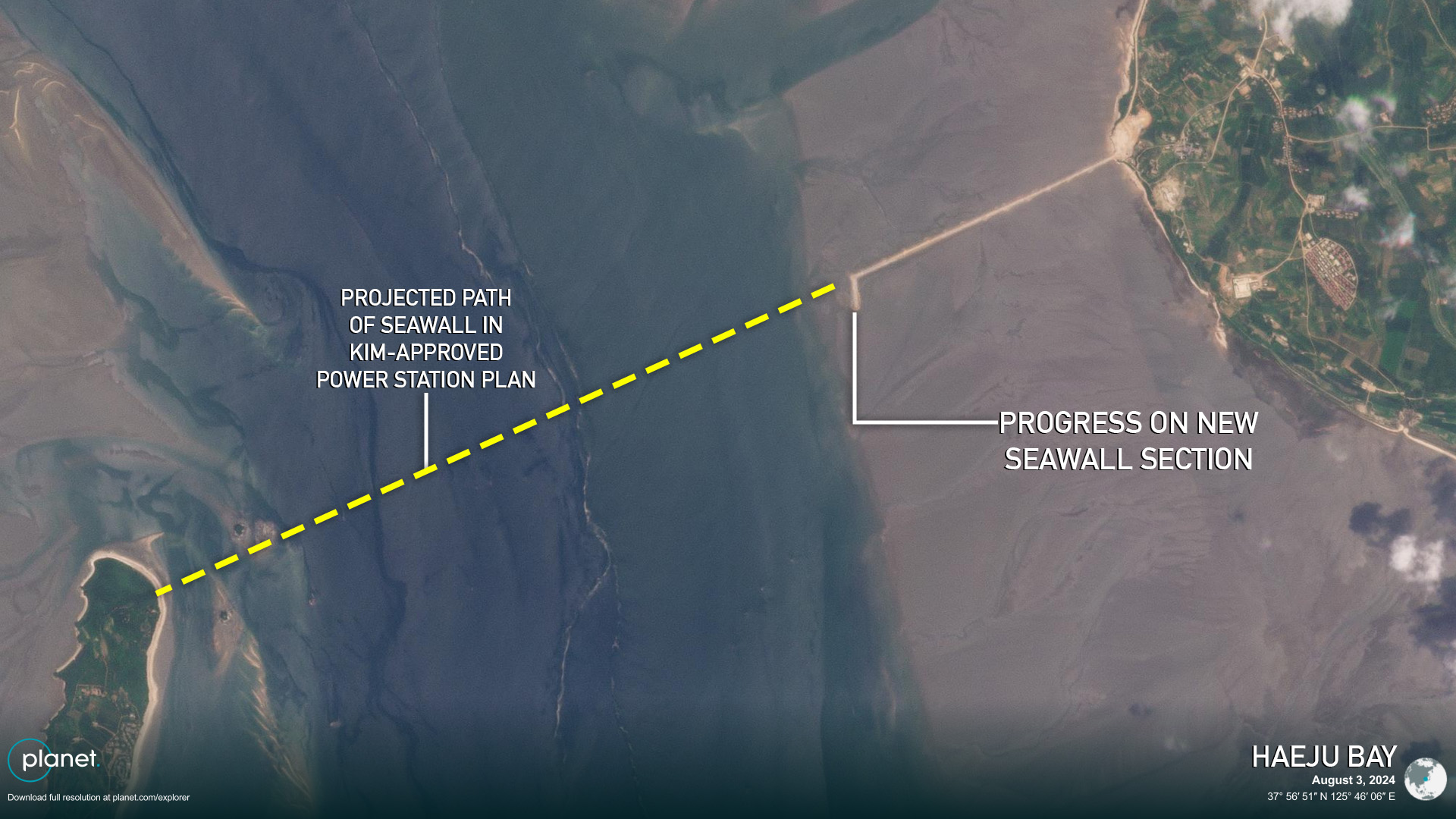
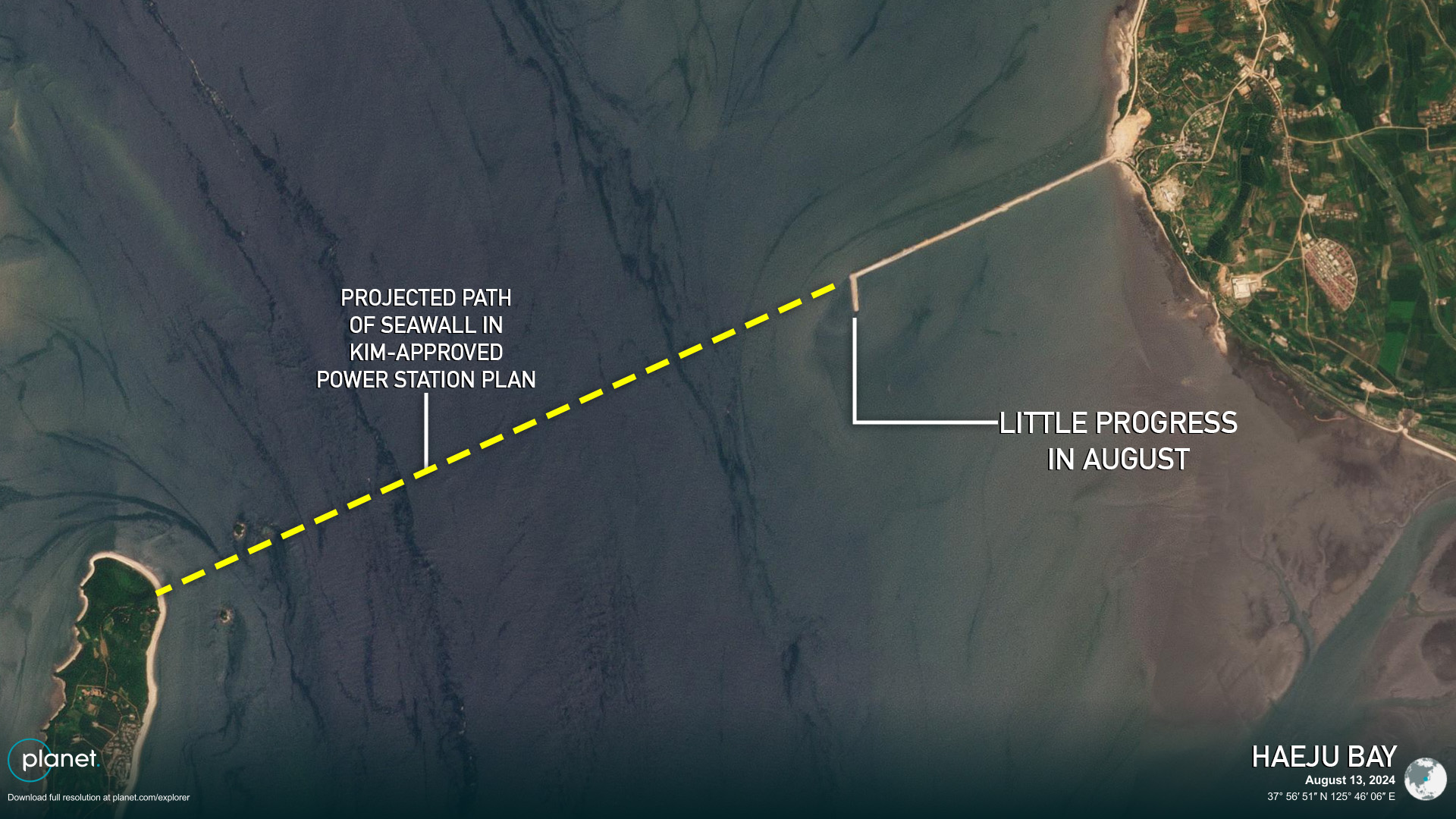
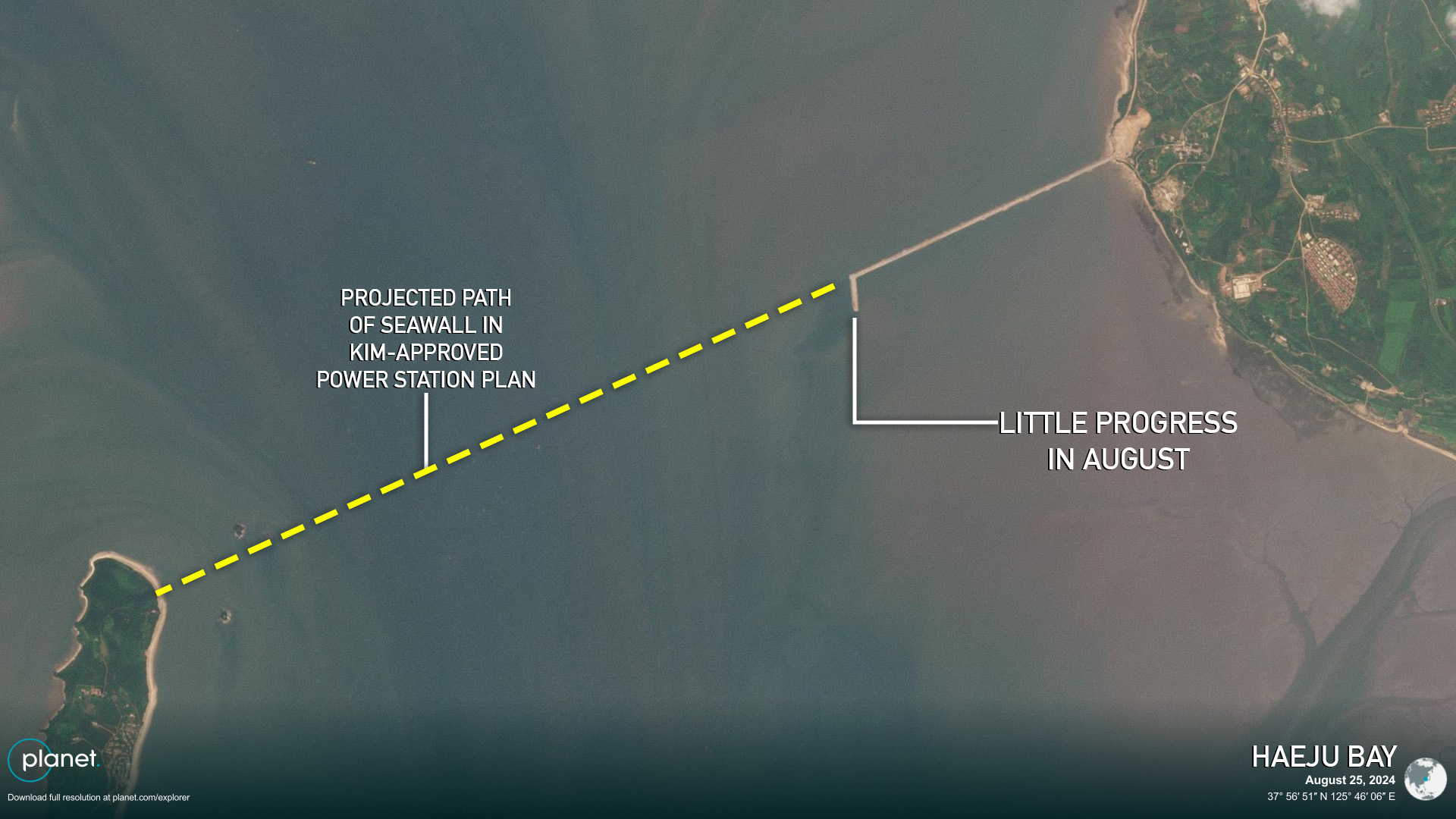
South Korea’s Daewoo Engineering & Construction also previously proposed the same path as an ideal location and said it could achieve a capacity of 508 megawatts, which would be the highest-capacity tidal power station in the world. The section of seawall built this year is only about 30% of the total length across the bay. Its construction turned southward between June 21 and 25 near the boundary between the tideland and deeper tidal channel. Construction crews only built about 550 feet (165 meters) of this southbound section of the seawall from late June to early August and not much more in recent weeks, indicating the pace of work has slowed significantly compared to the first five months. Building the actual tidal power station infrastructure further west along the projected line, as well as a lock gate for ships entering the bay, would be significantly more complicated than seawall construction and require specialized materials. While the matching locations of the initial seawall and power station design suggest North Korea is following through with the project, it is still in the early stages and the land reclamation project is apparently a higher priority. The DPRK leader called for operating “atomic and tidal power stations in the future” to solve ongoing power shortages in a policy speech in January this year. The party-run Rodong Sinmun reported in June that the west coastline “will become straight” after building tideland reclamation projects up and down the coast. “This will make it possible to turn the vast expanse of tidelands into fertile fields, golden fields, sharply increasing the grain production of the country while expanding its territory and open up a bright prospect for offshore culture,” the report said. Meanwhile, Kim Jong Un fired a barrage of rockets at another new tideland reclamation project seawall further up the west coast on Tuesday, reportedly in order to test the accuracy of new weapon designs. Edited by Bryan Betts © Korea Risk Group. All rights reserved. |

October 11, 2026Oct 11, 2026

The ultimate resources for professionals working on North Korea
 SHARE
SHARE COPY LINK
 X
X MASTODON