  Analysis North Korea appears to have taken control of junk vessel, now largest in fleetShip transferred just a month after U.S. seizure of DPRK's "Wise Honest" 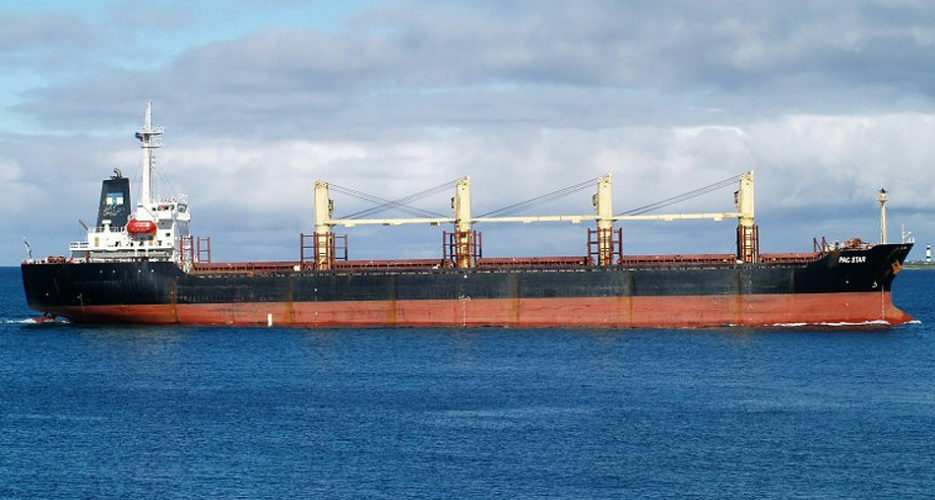 North Korea may have taken control of what would constitute the largest vessel in its fleet, NK Pro analysis of company records and shipping movements indicated this week, despite UN sanctions intended to stop it obtaining new or used vessels. Notably, the sale of the 33-year old bulk carrier Fu Xing 12 in June 2019 came just a month after the DPRK’s then-largest vessel had been seized by the U.S. following extended detention in Indonesia. While the 17,275 gross tonnage (GT) Fu Xing 12 was originally intended for sale as scrap by the financially-distressed Chinese shipping company Ningbo Maritime, its new owners promptly put it into long-distance service, records show. In particular, the vessel broadcast a flurry of suspicious movements in-and-out of DPRK ports, one of which satellite imagery showed to involve an outbound transfer of sanctioned North Korean coal to a third-party. Also used for coal transportation during its service with Ningbo Maritime, the vessel was purchased for USD $2.34M – three times its stated net book value – by an individual Chinese buyer named Ms. Liu Tieyan, Chinese language transaction records show. There is no indication of why the ship was sold for 300% of its listed price, given that even after its sale to Liu the transfer was described as being for scrap purposes only. While open-source records don’t show clear links between North Korean entities and Liu – who owns a trading company and previously operated three health food stores in Zhoushan, China – the vessels’ subsequent history suggests it promptly went into DPRK control.  KOREA CONNECTIONS Currently reported by Marine Traffic to be decommissioned, records show following sale it was renamed twice, temporarily flagged to North Korea, and spotted on multiple sailings to-and-from DPRK ports. The vessel is now under the management of a British Virgin Islands (BVI) company – Honour Sail Limited – which was created on April 24, less than two months before the transaction. No contact details exist for the company or information beyond its BVI registration paperwork. Under management of its new owners, the vessel on July 23 last year broadcast via its automatic identification system (AIS) that it had switched from a Chinese flag to a Sierra Leone one, while on August 14 changed names from the Fi Xing 12 to the Pu Zhou. On November 1, 2019, the Pu Zhou broadcast its position under a North Korean flag, coinciding with AIS data which tracked it from the West coast port of Nampo to the inland DPRK river port of Songnim, data on the NK Pro Ship Tracker indicated. Songnim port has multiple cranes and is capable of loading coal onto vessels like the Pu Zhou.  Though it temporarily stopped broadcasting AIS data shortly after, a March-dated investigative report by the UK-based Royal United Services Institute (RUSI) used satellite imagery to show it carried coal later in the same month from Songnim to a ship-to-ship transfer hotspot near Zhoushan, China. The Pu Zhou’s last AIS transmission on December 1 then showed it flying the Chinese flag and returning to Nampo, DPRK, despite a declared destination of “Tai Bei” or Taipei, Taiwan. Overall, the RUSI report said that the Pu Zhou (exhibited) “traits common to North Korean vessels engaged in illicit activity.” NK Pro was unable to contact Liu Tieyan for comment, however, about her rationale in buying the vessel, its subsequent voyages to-and-from North Korea, and its activities near the port of Zhoushan – where her businesses were long based. Furthermore, there is also no publicly-facing detail about her connection to the BVI-based management company Honour Sail Ltd, established just two months before her acquisition of the vessel. A company contact for an “Honour Sail Ltd” incorporated in Hong Kong on June 3, 2019 – shortly before the Fu Xing 12’s sale on June 12 – denied connection to its BVI name-sake. A maritime analyst said the connection of the vessel to North Korea was, however, probable. “The ship displays patterns seen in other DPRK-owned vessels seeking to hide their activities,” said Gregory Poling, Director of the Asia Maritime Transparency Initiative at CSIS. These similarities included “its previous registry… [of] a flag of convenience and its continual cycling through fake or misleading MMSI and IMO numbers, names, and call signs.” SCRAP ACQUISITIONS Overall, the case could offer important clues about how North Korea is able to promptly muster significant amounts of cash, entrust it with third-party buyers, and then coordinate a complicated acquisition of a large vessel. Somehow, a small business owner of health food stores in a hotspot city for coal transfers had the desire and ability to purchase a 17,000 GT bulk carrier for USD 2.4 million. The vessel was then promptly transferred into the ownership of a BVI-based company and conducted illegal coal export operations from North Korea. At 17,275 GT the Pu Zhou is larger than the 17,061GT Wise Honest, which at the time of its seizure by U.S. authorities in May 2019 was the largest cargo vessel in the DPRK’s active fleet. Because of seizures like that of the Wise Honest, North Korea has suffered “significant problems…and a certain amount of attrition of the fleet,” said James Byrne, a research fellow at London’s Royal United Services Institute (RUSI). Due to sanctions pressure and increased international scrutiny on the DPRK maritime sector, “the country has needed to acquire and field new ships through front-company networks ostensibly unconnected to North Korea,” he said. The Pu Zhou’s acquisition a month later in June 2019, therefore, illustrates how quickly North Korean agents may be able to harness trusted partners to replace lost assets. It also shows a higher risk tolerance for individuals outside its immediate circle of trust as necessary agents. Indirect DPRK activities in the scrap sector, therefore, may be important for sanctions investigators to keep track of. “Despite multilateral and unilateral sanctions targeting North Korea, they have recently been able to acquire a number of bulk carriers, cargo ships and oil tankers from scrap markets, auctions and through a number of other Asian-based ship-brokers,” Byrne said. Notably, its transfer follows a similar case in which a large Vietnamese-owned bulk carrier was sold in mid-2018, later emerging under a North Korean flag, as reported this month by the Wall Street Journal in conjunction with RUSI. Such acquisitions are nevertheless prohibited by UN sanctions. USNC 2397 (December 2017) obliges Member States to “prevent the direct or indirect supply, sale or transfer to the DPRK” of “new or used vessels” – unless approved by the 1718 Sanctions committee on a “case-by-case basis”. Edited by Chad O’Carroll and Oliver Hotham © Korea Risk Group. All rights reserved. |

October 09, 2026Oct 09, 2026

The ultimate resources for professionals working on North Korea
 SHARE
SHARE COPY LINK
 X
X MASTODON