  Analysis North Korea appears to confirm existence of second uranium enrichment plantNuke facility toured by Kim Jong Un is likely Kangson site near Pyongyang, analysis by James Martin Center suggests 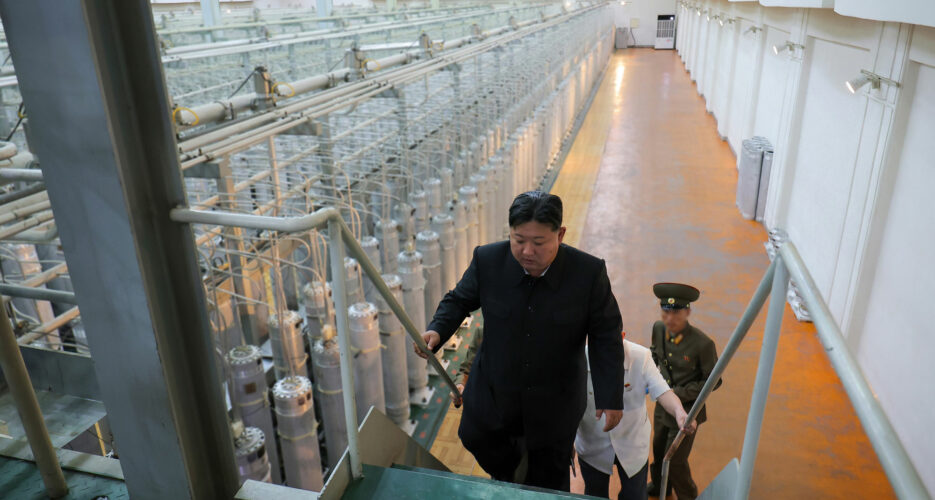 The uranium enrichment plant where North Korean leader Kim Jong Un recently inspected new centrifuges is likely a covert facility near Pyongyang long suspected of being a nuclear site, according to analysis by the Open Source Team at the James Martin Center for Nonproliferation Studies of the Middlebury Institute and NK Pro. Photos published in state media on Friday and satellite imagery point to a facility known as Kangson located west of the capital, which underwent construction to expand floor space earlier this year. The photos appear to confirm the existence of a second uranium enrichment site beside one at the already disclosed Yongbyon nuclear complex, a revelation that will fuel suspicions that North Korea can produce more fissile material than previously known. During his undated visit to the Nuclear Weapons Institute and a “uranium enrichment facility,” Kim inspected “the construction site for expanding the capacity for the current production of nuclear weapons,” the Korean Central News Agency (KCNA) reported. Of the five photos included in the report, one shows a modern-looking room where the outer wall outlines “line up well with the new construction at Kangson,” Sam Lair of the Open Source Team told NK Pro. 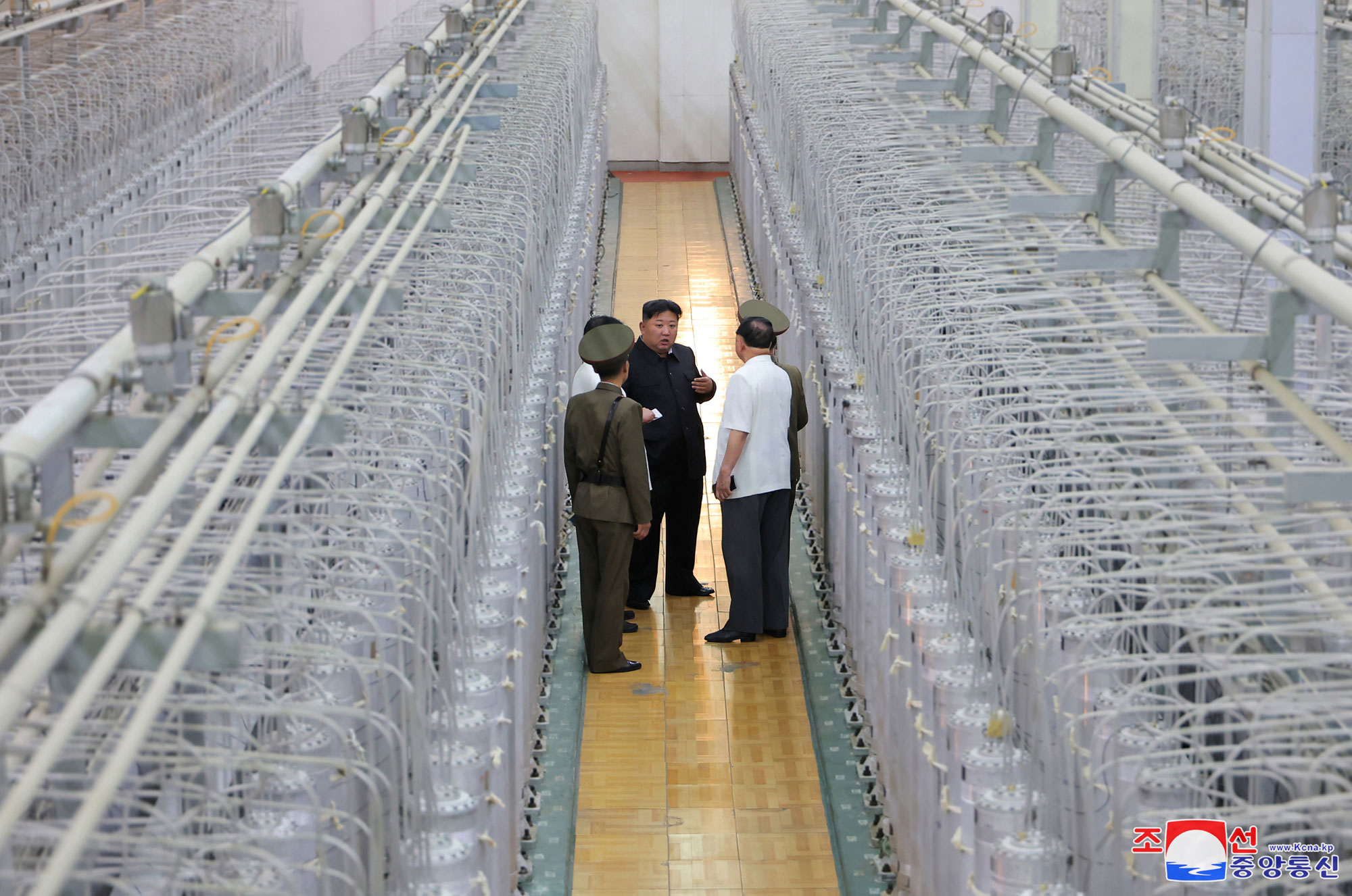

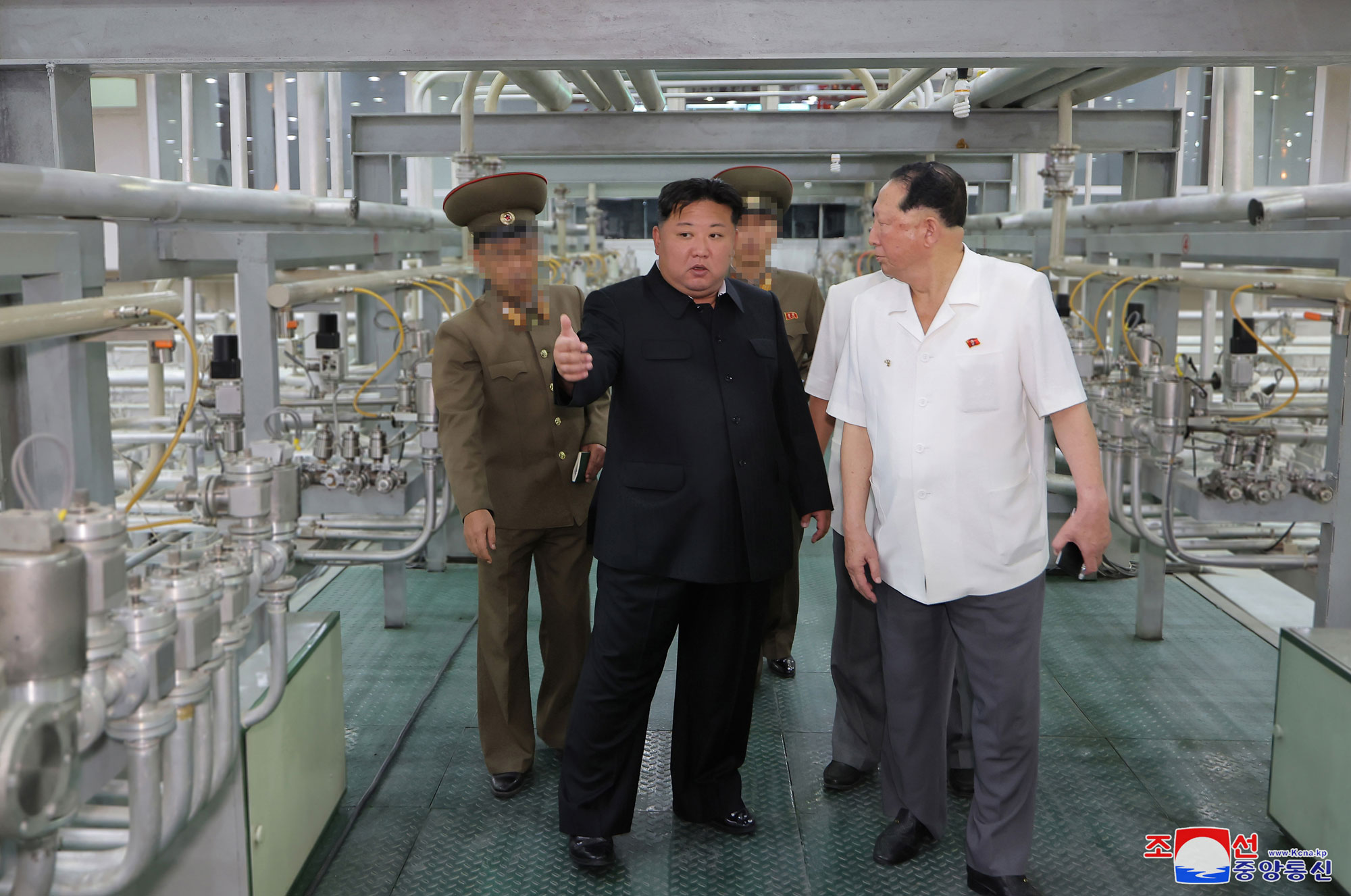
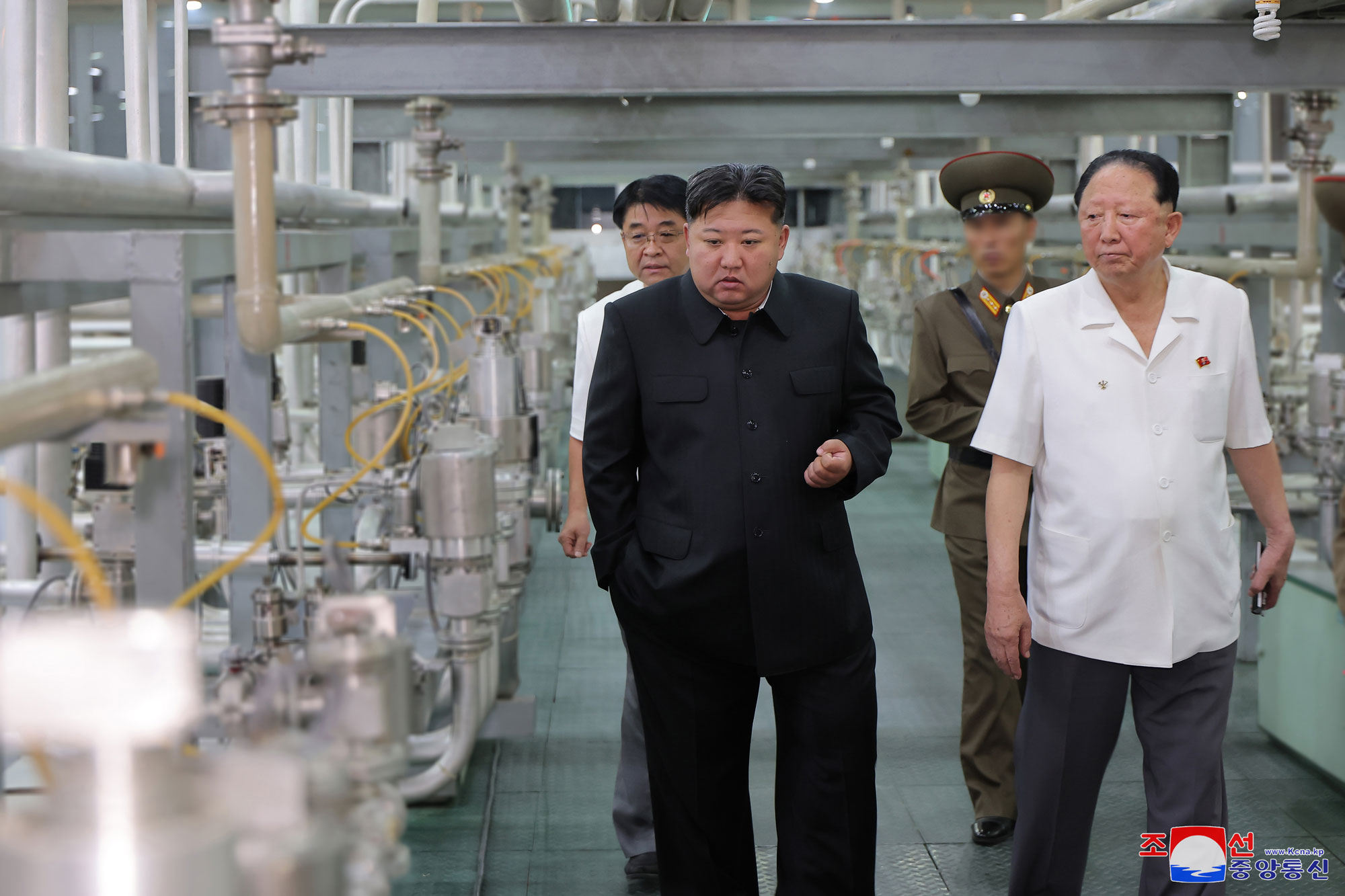
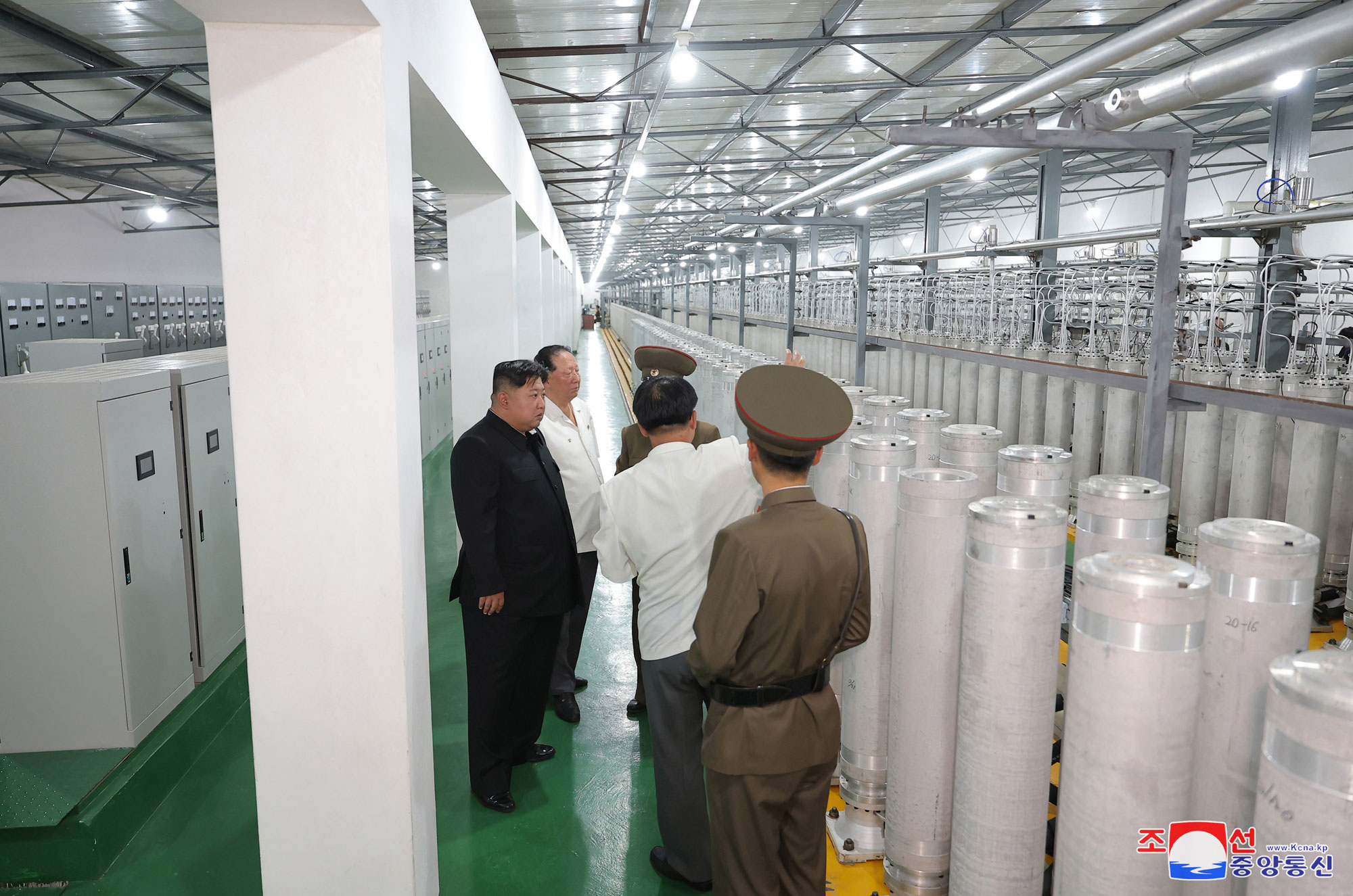
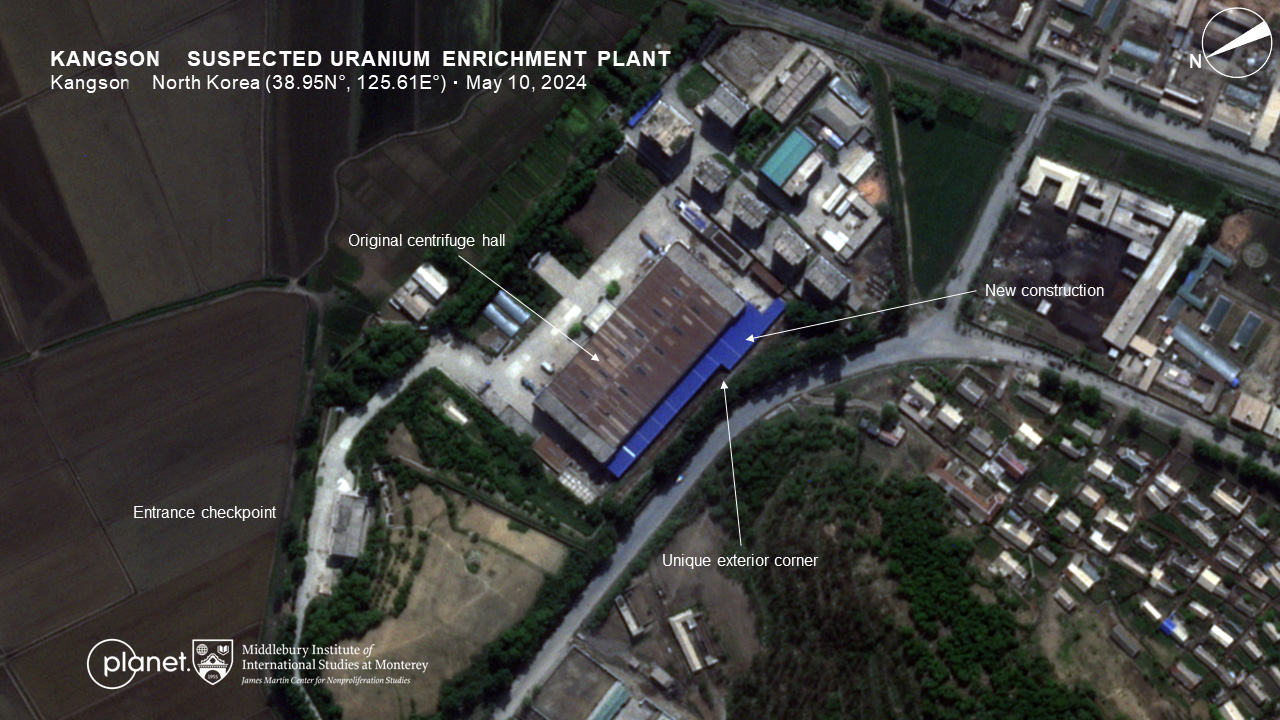
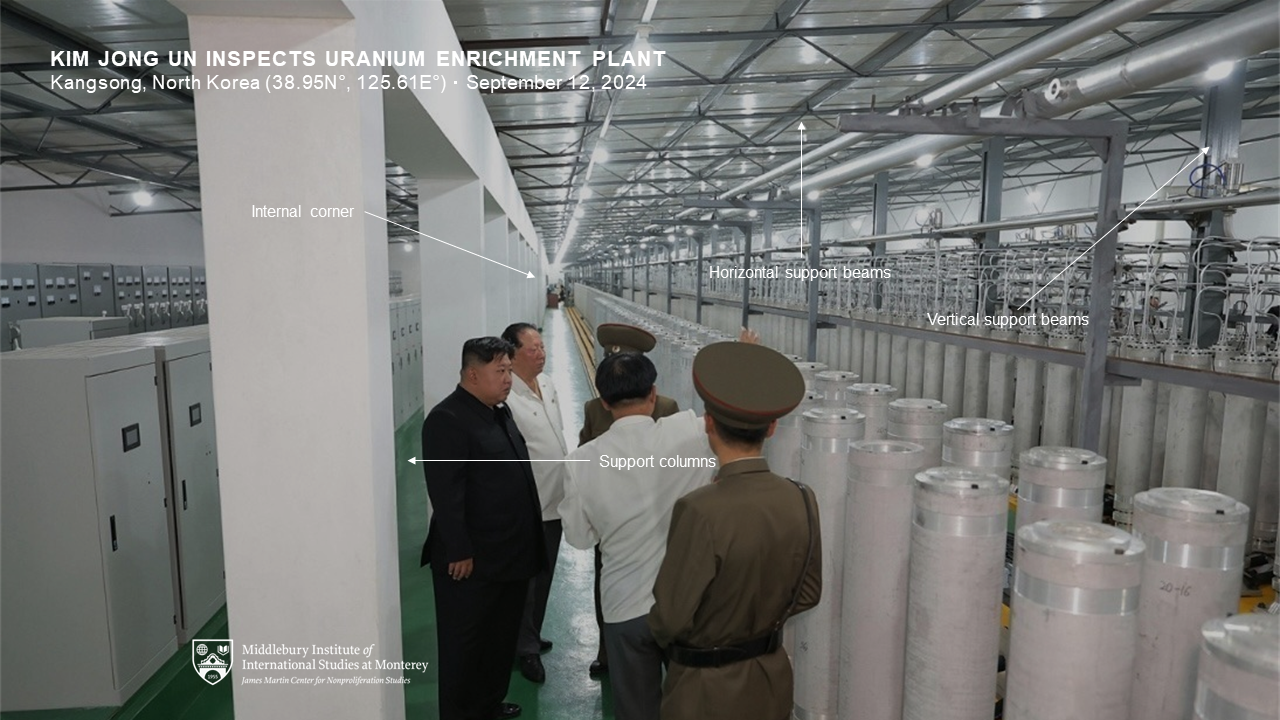
NK Pro was the first to reveal new construction at Kangson starting in March this year and its potential to increase floor space for centrifuges. The project involved building a new annex along the side of the main building that is believed to be a uranium enrichment facility. The Kangson complex was built in the early 2000s but was only publicly revealed in 2018 as a location that foreign intelligence services suspected was a secret enrichment site. Experts believe there is also a third covert site, though its location is unknown. “In the image we see what looks like a centrifuge column under construction,” John Ford of the Open Source Team added, stating that the installation efforts occurring now line up with the completion of roofing construction on the Kangson annex in April. The researchers estimate that a large centrifuge cascade hall with a more dated interior seen in the other four KCNA photos could contain 2,500 or more centrifuges. NK Pro reached a similar estimate based on counting the number seen clearly in one row and multiplying that by the number of rows that appear to be on two sides of a raised platform in the center, though only one side appears in full. North Korea’s revelation of the facility and its apparently homegrown centrifuges mean experts “may have to significantly revise many of the estimates that are out there at the moment on how much weapons-useable fissile material they’ve amassed,” according to Ankit Panda, Stanton Senior Fellow in the Nuclear Policy Program at the Carnegie Endowment for International Peace. Ford said it’s difficult to estimate precisely how many warheads Kim could build based on the new information about the enrichment plant. But he said Pyongyang likely released such photos for the first time in order to “show they are serious about their claims to expand weapons production.” Kim reiterated his calls for “exponential” nuclear weapons production to counter the U.S. and South Korea in Friday’s report, as well as in a major policy speech earlier this week and at other military appearances in recent years. He mentioned manufacturing efforts for “tactical nuclear weapons” specifically during his visit to the enrichment site, mirroring state media’s reveal the same day of an improved launch vehicle for a rocket system designed to overwhelm South Korean missile defenses. North Korea revealed tactical nuclear warhead production plans in March 2023, possibly at the Nuclear Weapons Institute. North Korea is also continuing to develop nuclear-capable cruise missiles, hypersonic intermediate-range ballistic missiles (IRBMs) and more effective intercontinental ballistic missiles (ICBMs) targeting the U.S. 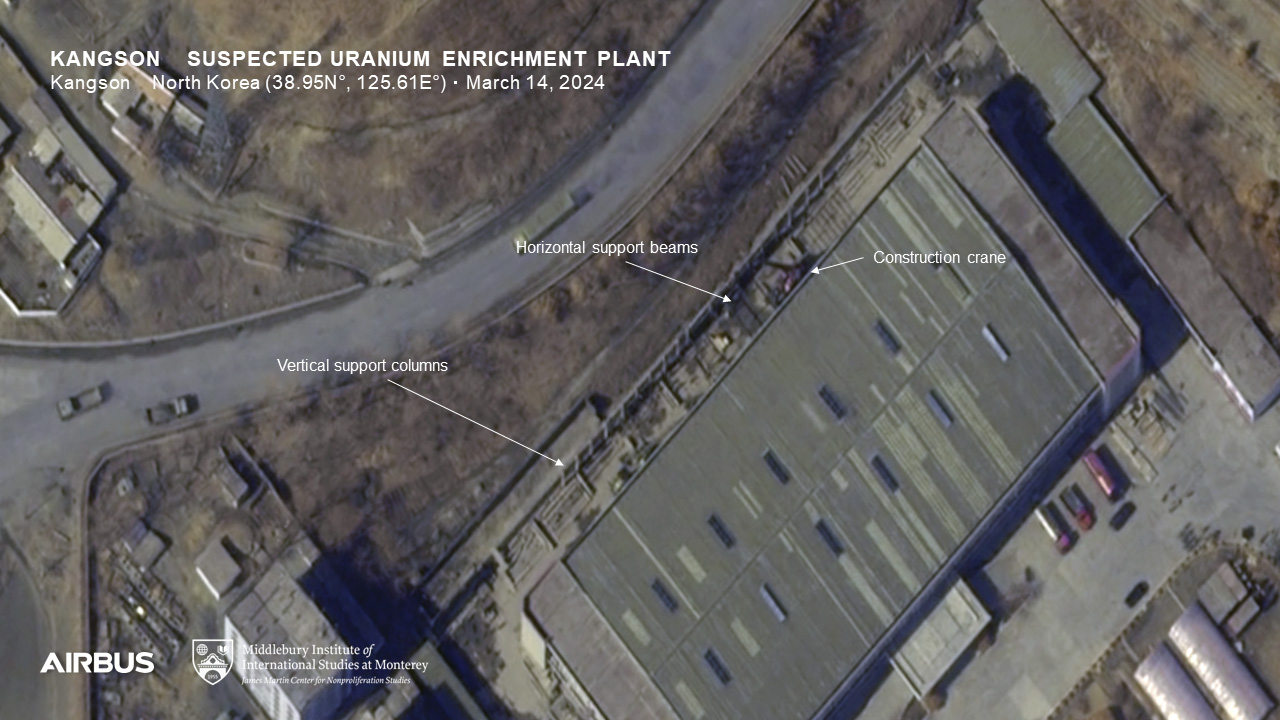
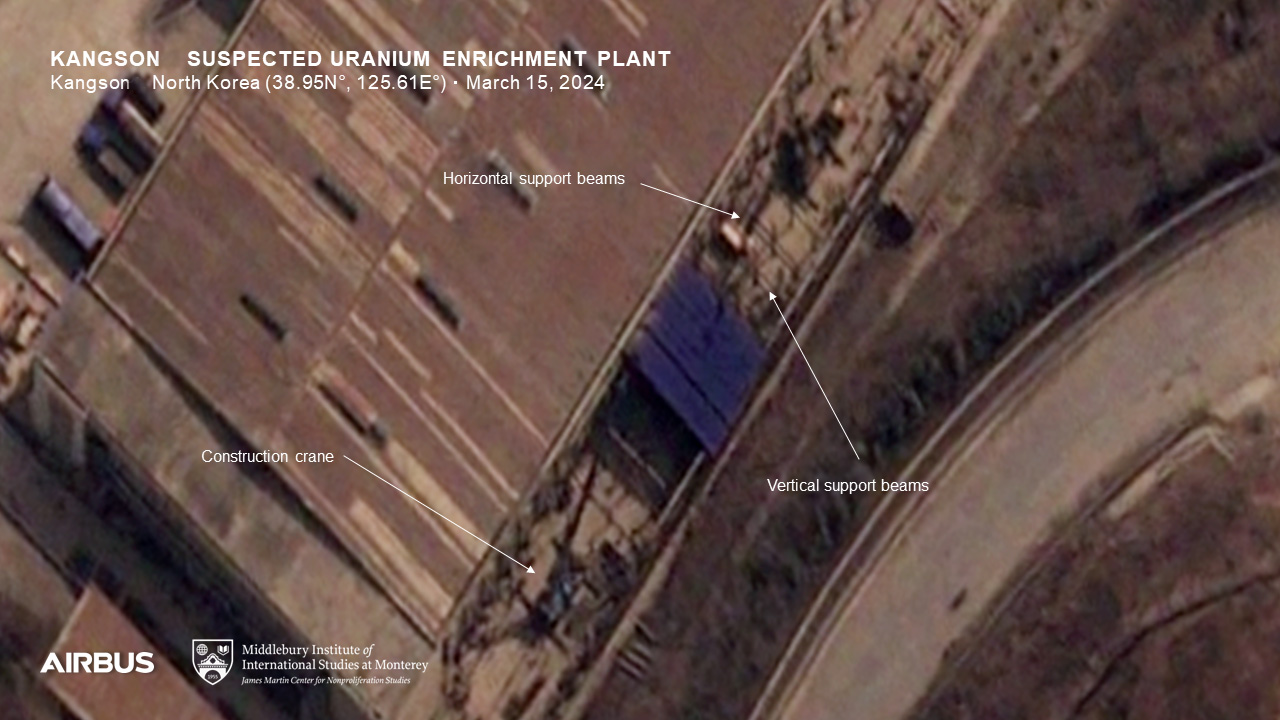
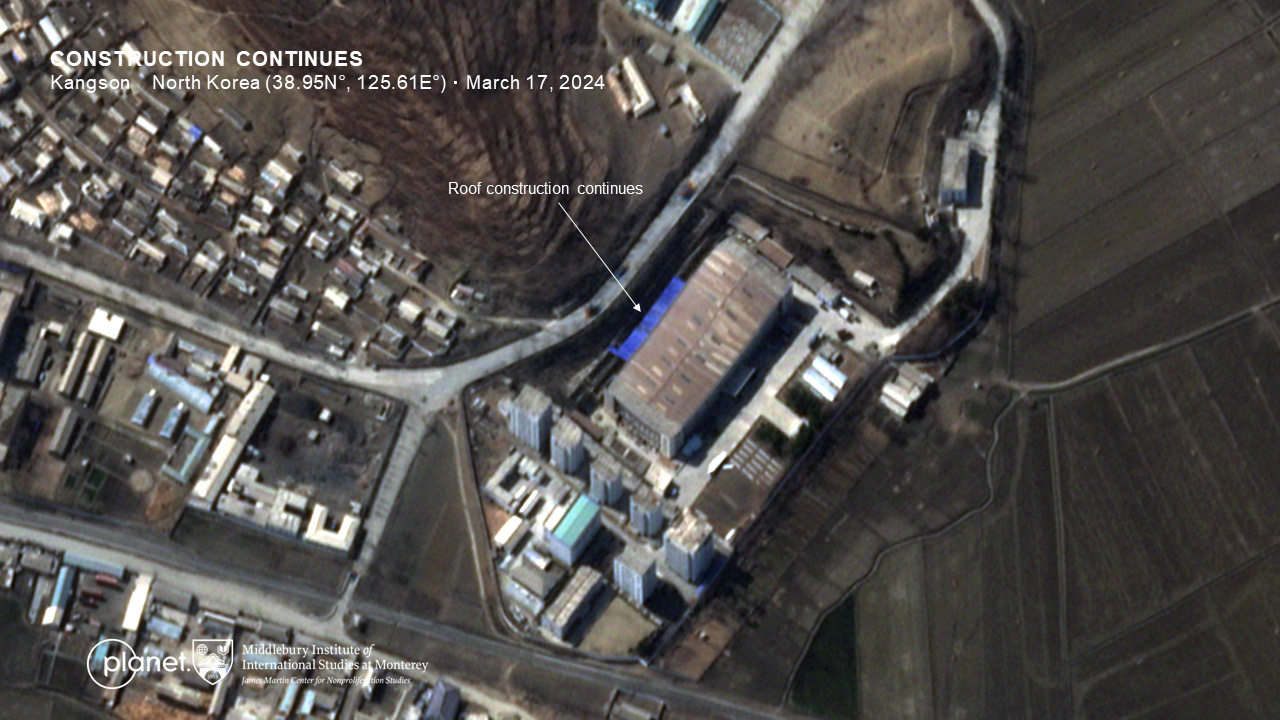
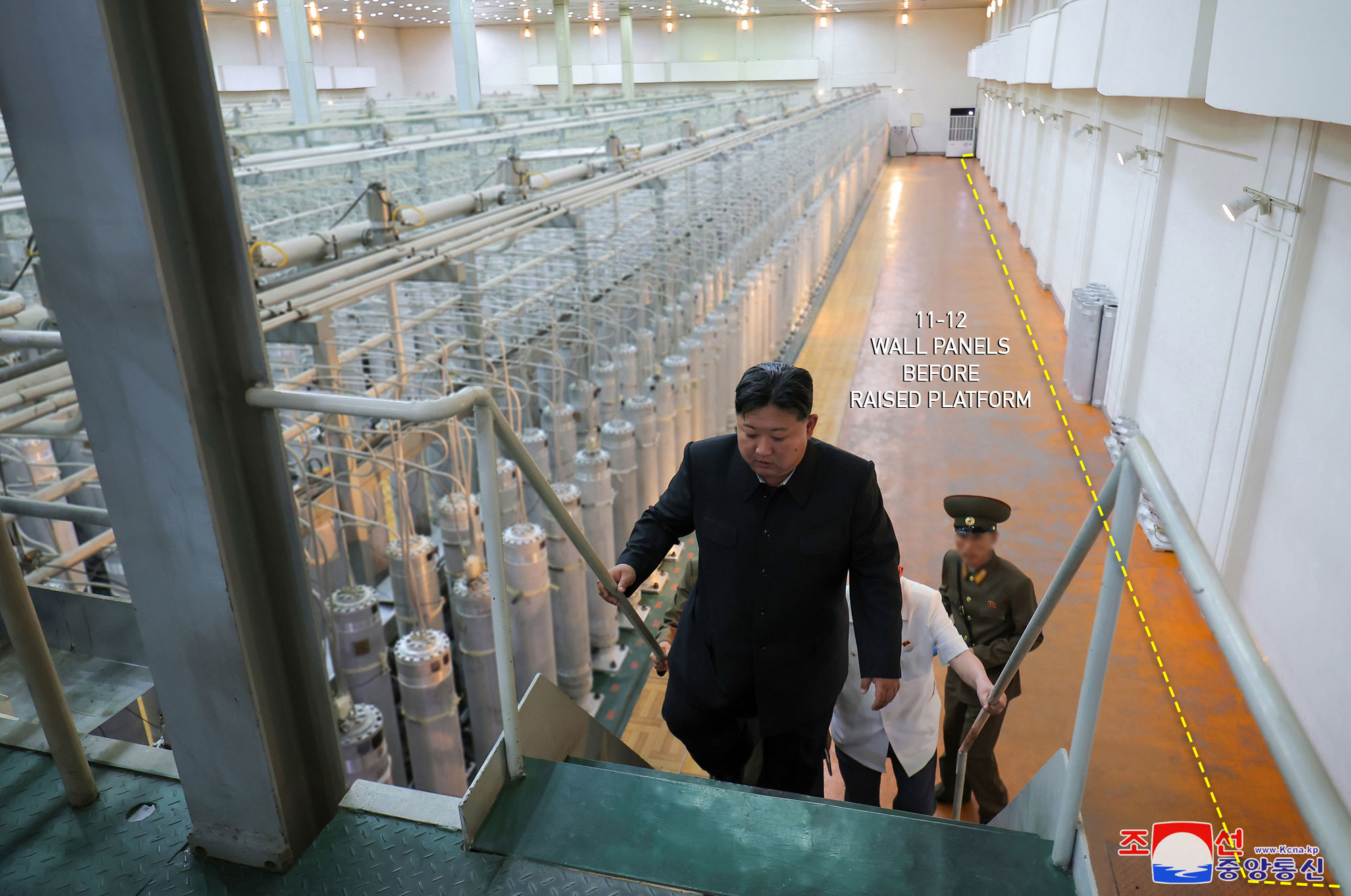
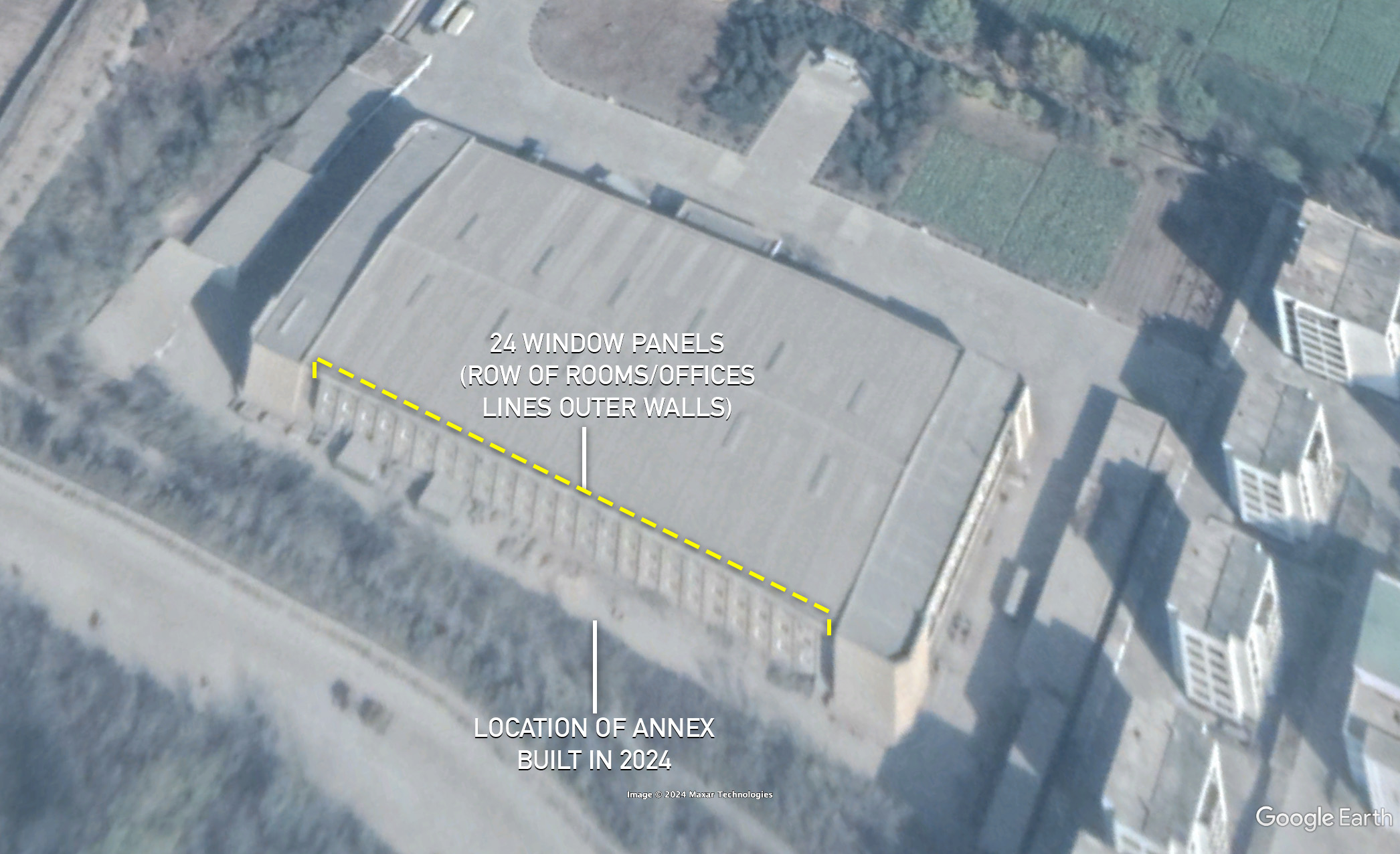
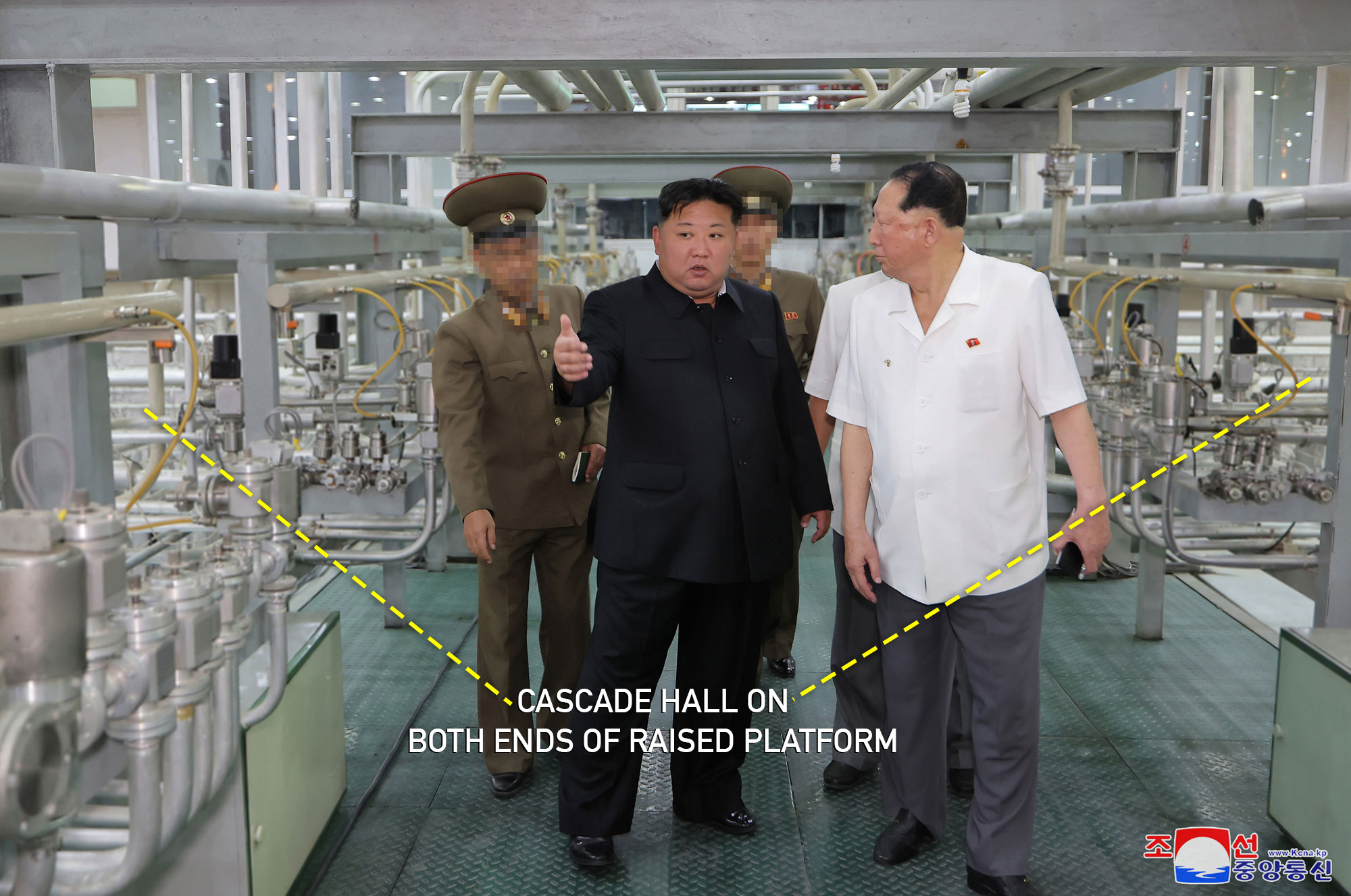
MATCHING KANGSON CONSTRUCTION Lair of the Open Source Team said vertical support columns visible in satellite imagery of the Kangson construction and a wider section at one end of the annex “line up well with those we see in the image with Kim,” suggesting the DPRK leader was inspecting Kangson in the photos. “Upon examining those support columns, we saw they were supporting piping for the centrifuges as well as the roof, and noticed there is a wholly new line of centrifuges being installed,” Lair added. While North Korea’s only publicly disclosed uranium enrichment facility at the Yongbyon nuclear complex was expanded in 2021, Lair said it would make more sense for the installation of new centrifuges to be inside the newly built annex at Kangson. Nuclear scientist Sigfried Hecker visited Yongbyon in 2010 and wrote a report describing it, but he was not permitted to take photos. Hecker described a more narrow centrifuge cascade hall than the larger room seen in the new KCNA photos, though his visit came before two expansion projects at Yongbyon. He was not available for comment at the time of publication. NK Pro analysis of the other four KCNA photos, which show a large centrifuge cascade hall with a more dated interior than the one in the fifth photo, suggests the room is consistent with the main Kangson building. International Atomic Energy Agency (IAEA) Director General Rafael Grossi said in a statement earlier this week that North Korea has been “expanding the available floor space” at Kangson this year. “The Agency has also observed indications consistent with the operation of the 5MW(e) reactor and the reported centrifuge enrichment facility at Yongbyon,” he stated at a Sept. 9 meeting, adding the Yongbyon 5MW(e) reactor operating cycle “has ended and that the reactor may then be refueled.” Grossi said “the continuation and further development of the DPRK’s nuclear program … is a clear violation of relevant U.N. Security Council resolutions and is deeply regrettable” and that the IAEA “continues to maintain its enhanced readiness to play its essential role in verifying the DPRK’s nuclear program.” Edited by Bryan Betts © Korea Risk Group. All rights reserved. |

October 28, 2026Oct 28, 2026

The ultimate resources for professionals working on North Korea
 SHARE
SHARE COPY LINK
 X
X MASTODON