  Analysis Imagery reveals North Korea’s deceptions about ‘world’s largest’ greenhouse farmConstruction ongoing at Ryonpho despite state media claims to contrary, a month after Kim Jong Un attended grand opening 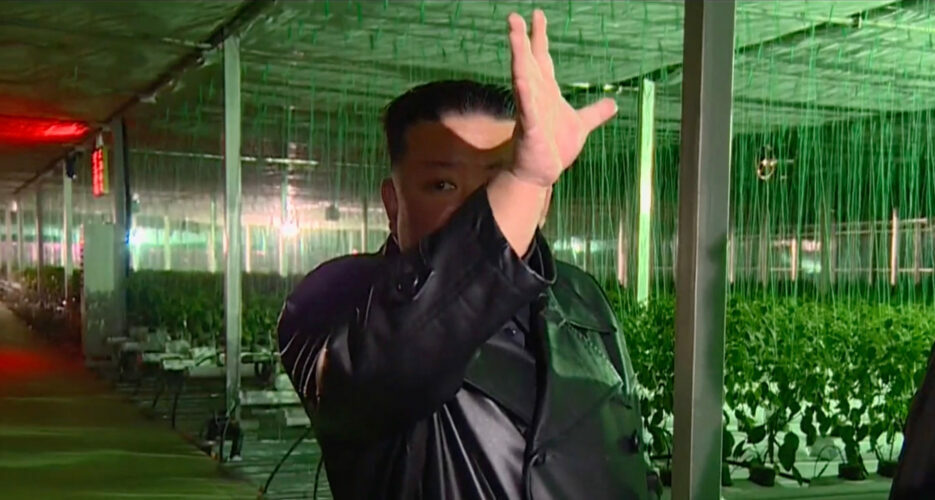 North Korea’s prestige project to build the “world’s largest” greenhouse farm in its east coast missile production stronghold remains incomplete, NK Pro analysis of satellite imagery shows, more than a month after leader Kim Jong Un officially opened the facility to state media fanfare. The continued construction on the Ryonpho Greenhouse Farm and activity at a temporary worker camp on site contradict sustained propaganda that the military finished the project by Oct. 10 and that all construction workers left the site. The fact that the facility doesn’t appear to be up and running means it won’t be able to help solve “food problems” for locals in the city of Hamhung and South Hamgyong Province, including for scientists and weapons manufacturers whom the ruling party consider priority recipients. It also means state media is actively deceiving the population about the project held up as a “miracle” showcasing Kim’s leadership and the military’s might, as Kim once again demonstrated his overriding obsession with speedy construction and deadlines centered on holidays. Kim ordered the military in February to build the farm to double the size of the similar Jungphyong greenhouse farm completed three years prior, but in just 230 days, or half the time as that project. It’s unclear how long the delay will last, but satellite imagery shows that at least basic exterior work is finished on the 850 greenhouses and homes for 1,000 families. 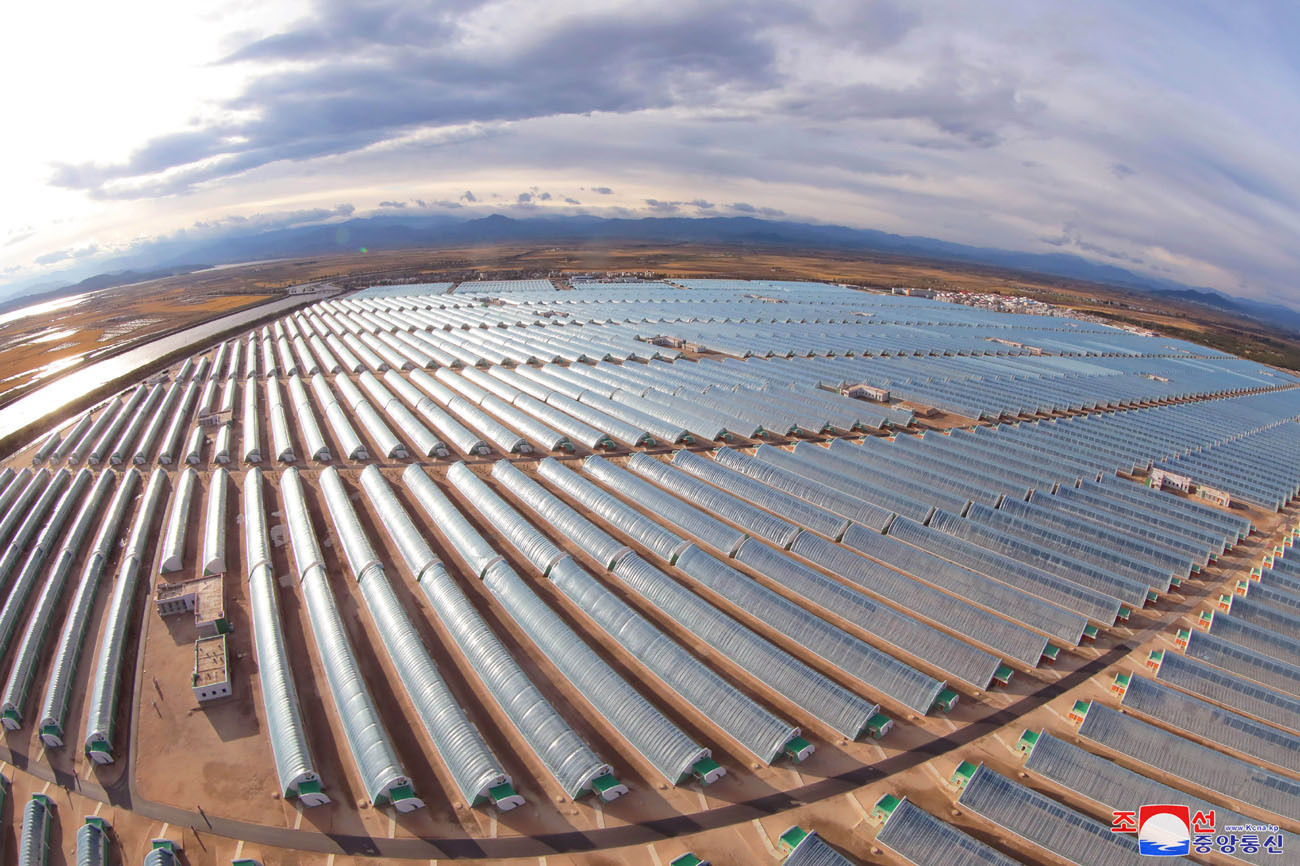 WHAT THE IMAGERY SHOWS Planet Labs satellite imagery shows that construction-related sand dredging along the shore has continued and new construction or paving has occurred throughout the sprawling Ryonpho farm since the Oct. 10 “inauguration ceremony.” Plans to landscape and plant grass in areas surrounding the greenhouses, which were displayed in renders at the ceremony, have also yet to materialize. Additionally, while some temporary structures inside the main 80-acre (32-hectare) construction worker camp have disappeared, the vast majority remained in place as of imagery taken on Nov. 9. North Korea’s original Ryonpho plans indicate the camp must be razed to make way for 86 acres (35 hectares) open fields for growing animal feed. 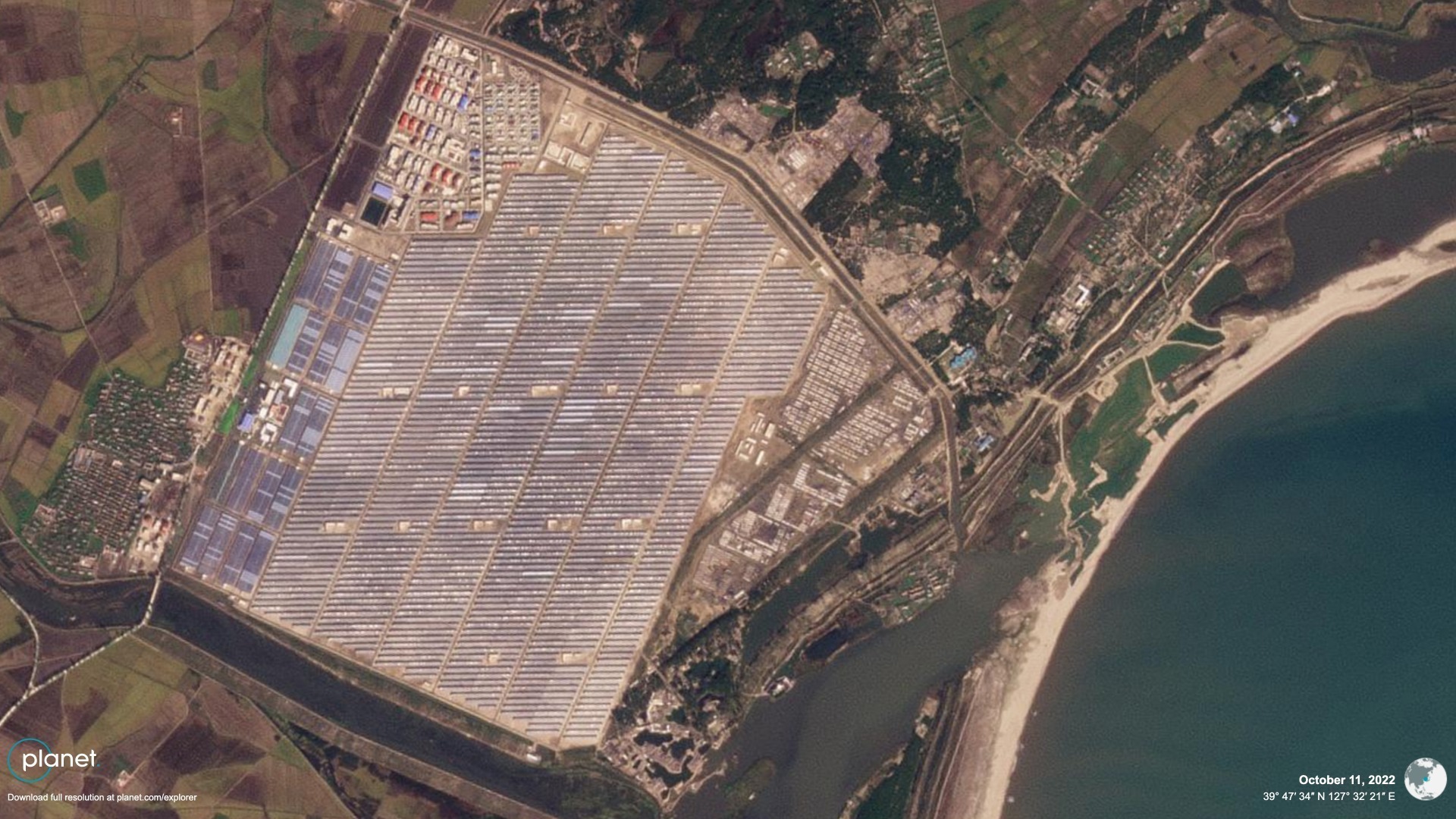 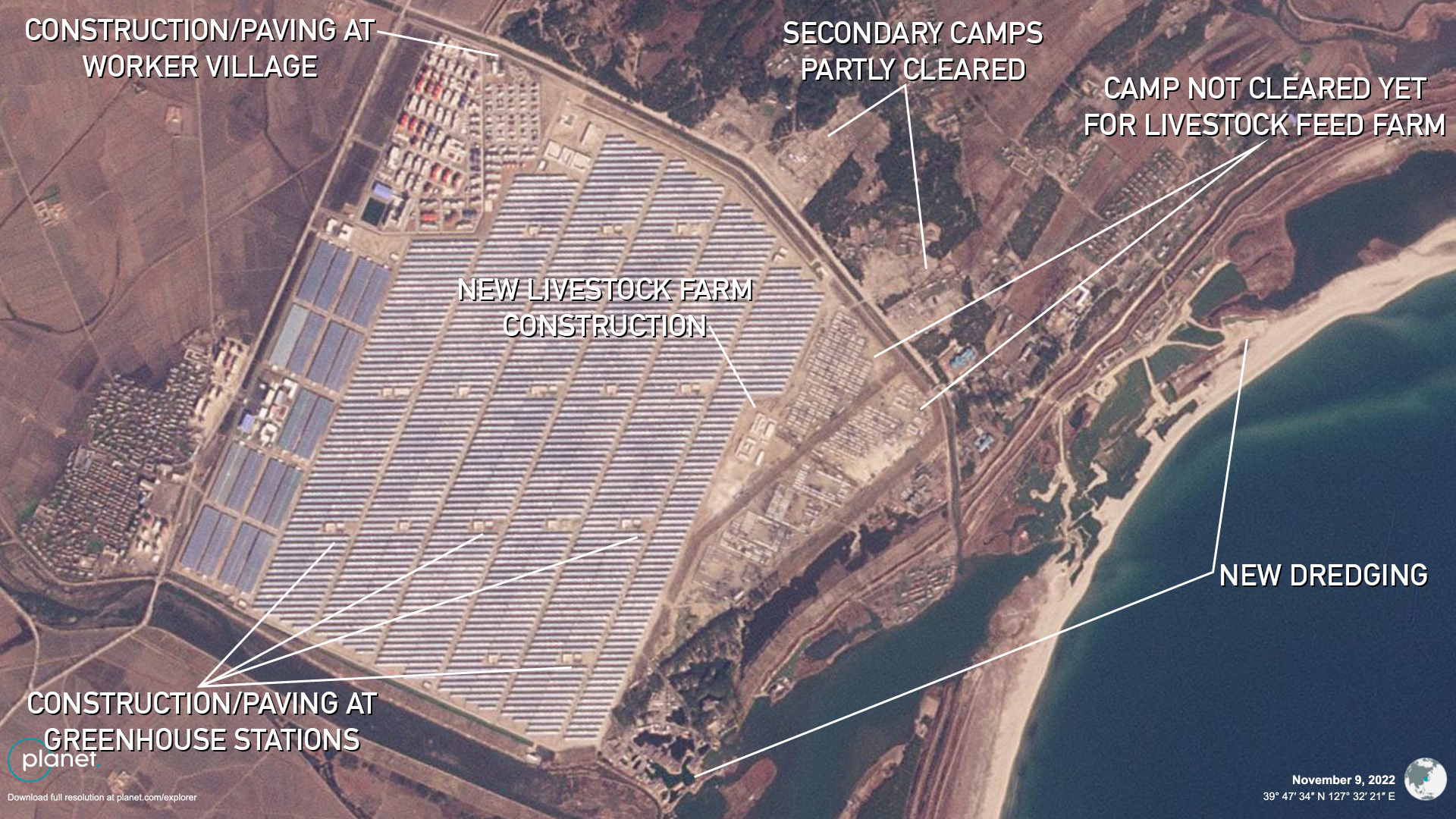 This comparison of images taken a day after the Oct. 10 opening ceremony and a month later on Nov. 9 shows there has been ongoing activity across the farm despite state media claiming construction finished and workers cleared out of the site | Images: Planet Labs PBH, edited by NK Pro Imagery also reveals there has been new construction near the camp over the last month on a cluster of buildings that original plans indicated would be a livestock farm. Sprawling worker camps were quickly cleared before and soon after opening ceremonies for past megaprojects such as the Jungphyong farm, a new street of skyscrapers in Pyongyang and the Yangdok hot springs, according to an NK Pro review of historical imagery, indicating their actual completion. The military’s inability to finish within Kim’s deadline may simply be due to the unrealistic deadline for a farm that size — soldiers rushed to finish exterior work in the final weeks before Oct. 10 — or the country’s self-imposed, coronavirus-related trade restrictions may be preventing the import of specialized equipment. WHAT STATE PROPAGANDA SAYS Images of ongoing construction expose state media’s recent deceptions about how Kim and the ruling party have delivered another “success” to help solve problems with living standards outside the capital. The claims of success started from the top, with state media’s report on the Oct. 10 opening ceremony stating that Kim expressed satisfaction with the project’s overall “completion” numerous times. In a speech at the ceremony, top official Jo Yong Won even accused the U.S. of “hoping to see us collapse” and fail in building the farm but said the DPRK military showed their “enemies … the terrifying iron hammer” of construction victory instead. 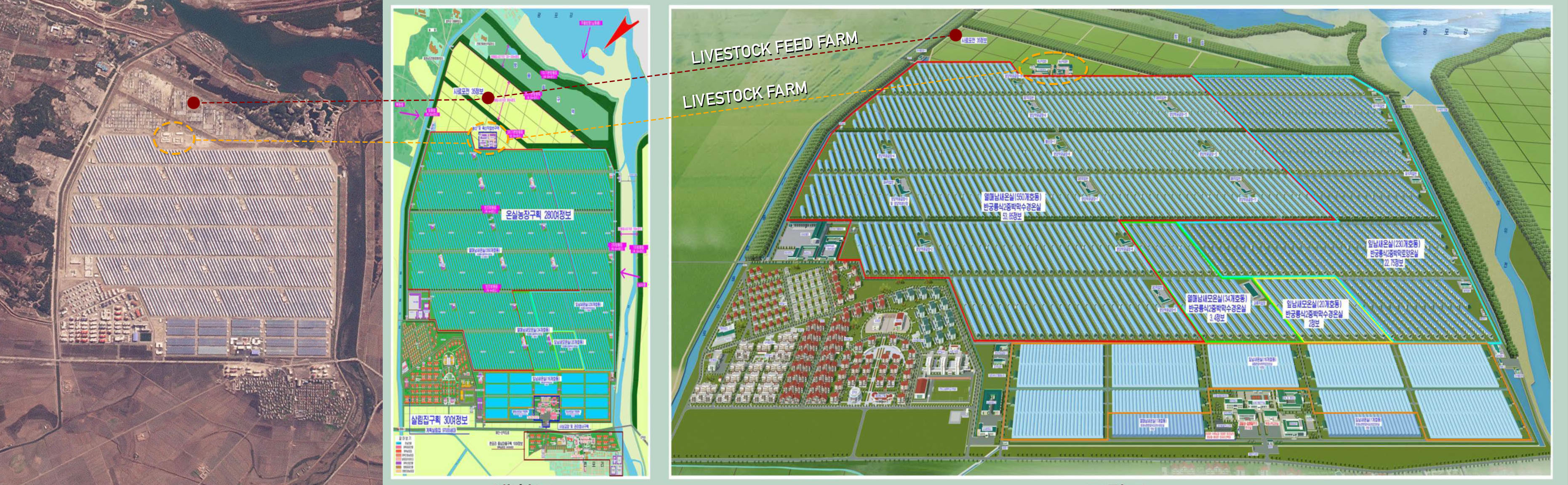 DPRK Today published an emotional propaganda essay on Oct. 17 claiming thousands of military construction workers “left quietly” after the inauguration ceremony. The outlet reported again days later that “soldiers disappeared and the sound of construction could not be heard” anymore. In fact, imagery shows the gigantic soldier camp teeming with activity between Oct. 11 and Nov. 9. The intention behind these deceptions appears to be to boost Kim Jong Un’s reputation as a man capable of delivering “miracle” achievements, as well as to convince workers of important economic sectors that the state will soon solve their food problems. Regarding the on-site village for farm employees specifically, Kim Jong Un at least appeared to acknowledge that it wasn’t ready yet at the time of the Oct. 10 opening ceremony: The state media report on the ceremony quoted Kim as saying it “should materialize” in the future. By comparison, state media reported that people began moving into homes at the previously built Jungphyong farm just two days after Kim Jong Un cut the tape at a “completion ceremony.” State TV also offered extensive coverage of production being underway within weeks and described it as starting “operation” (조업) on opening day. In contrast, state media has not yet described the Ryonpho farm as “operating” nor reported on the village opening to residents. 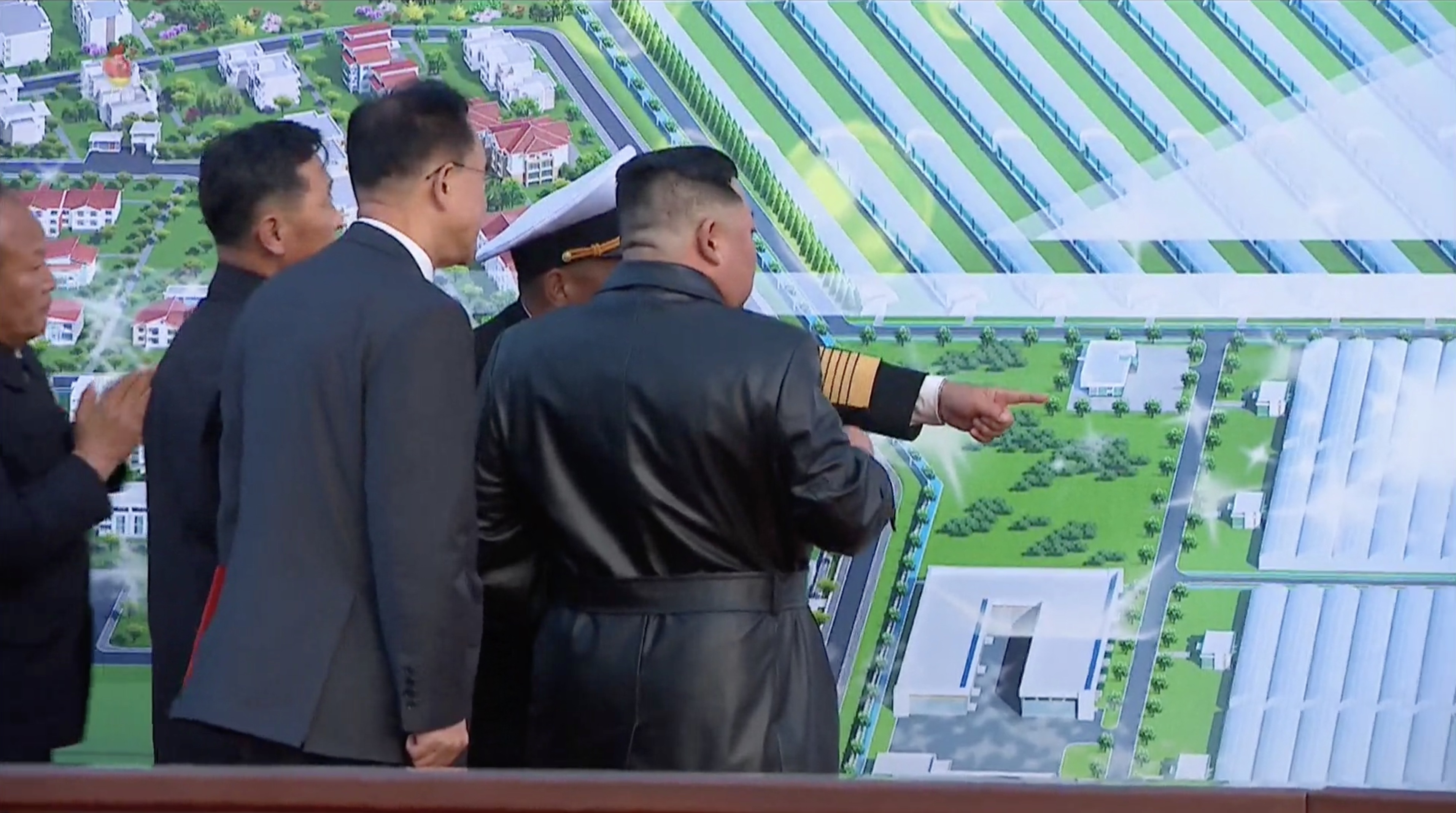 REPEATED FAILURES, REPEATING “SUCCESS” The Ryonpho farm is not the first time Kim Jong Un has proudly touted the successful completion of a project that was not yet operational. In May 2020, Kim came back from a long public absence to open the Sunchon Phosphatic Fertilizer Factory and dispel rumors of his death, but state media has mostly ignored the factory since then. Satellite imagery has revealed low levels of activity, likely pointing to ongoing problems getting facilities up and running. And while a modern hospital in Pyongyang to provide people with high-quality medical treatment and a gigantic beach resort on the east coast to give ordinary people luxurious vacations both blew past Kim’s deadlines years ago, that hasn’t stopped state media from continuing to claim them as “brilliant successes” in construction. It is likely that the Ryonpho farm will ultimately avoid the fate of these projects as vegetable production is a simpler task than chemical making or advanced medical care, but it is already apparent that locals in South Hamgyong Province will have to wait longer than authorities initially led them to believe before seeing the fruits of Kim’s promises of food shortage relief. Edited by Bryan Betts © Korea Risk Group. All rights reserved. |

October 28, 2026Oct 28, 2026

The ultimate resources for professionals working on North Korea
 SHARE
SHARE COPY LINK
 X
X MASTODON