  News Construction underway on North Korean island set to become joint EDZ with ChinaNorth Korean land on Chinese side of Tumen river has been promoted as opportunity by nearby Hunchun authorities  A planned China-North Korea cross-border economic development zone (EDZ) stalled under sanctions in recent years may finally be under construction, satellite imagery taken since October suggests. The Kyongwon Economic Development Zone (경원경제개발구), as it is called in North Korea — first announced in October 2015 — has received sustained interest from local authorities across the border in China and even detailed blueprints developed by a Chinese company. It has also received renewed attention in DPRK state media this year, but had until recently seen little movement on the ground. New construction An effort was started in October 2017 to create a new grid of wide roads on the mostly agricultural patch of land on the Chinese side of the Tumen river — but still North Korean side of the border — known as Ryuda island (류다섬), but the roads do not appear to have ever been paved.   But starting last month, construction began on a new large structure — about the length of a football field — at one of the new intersections, according to daily medium-resolution satellite imagery provided by Planet Labs.  It is unclear if the recent construction is part of the planned EDZ, but a Chinese company which developed detailed blueprints for the zone told NK Pro on Wednesday that the project is ongoing. What’s planned for the zone The new structure sits inside what was referred to in an October 2018 article in the North Korean state-run Pyongyang Times as the “lower half” of Ryuda encompassing a “development industry area [that] will embrace the sections for high-tech and other industries.” “According to the master plan,” the article said, the upper half of the island will “comprise the sections for inspection, bonded goods, meeting and exhibition centre, eco-friendly greenhouse, food alley and folk architecture, and a holiday and health resort.” An article published to another state-run site Naenara in January this year said construction of the Kyongwon EDZ “is aimed at contributing to the economic development of North Hamgyong Province by attracting foreign investors who have interests in the business activities of the park and creating favourable conditions for its economic and trade activities.” Plans for the EDZ as described in DPRK state media also line up with blueprints published to the website of the Changchun-based Jilin Qidingdong Technology Co., Ltd. 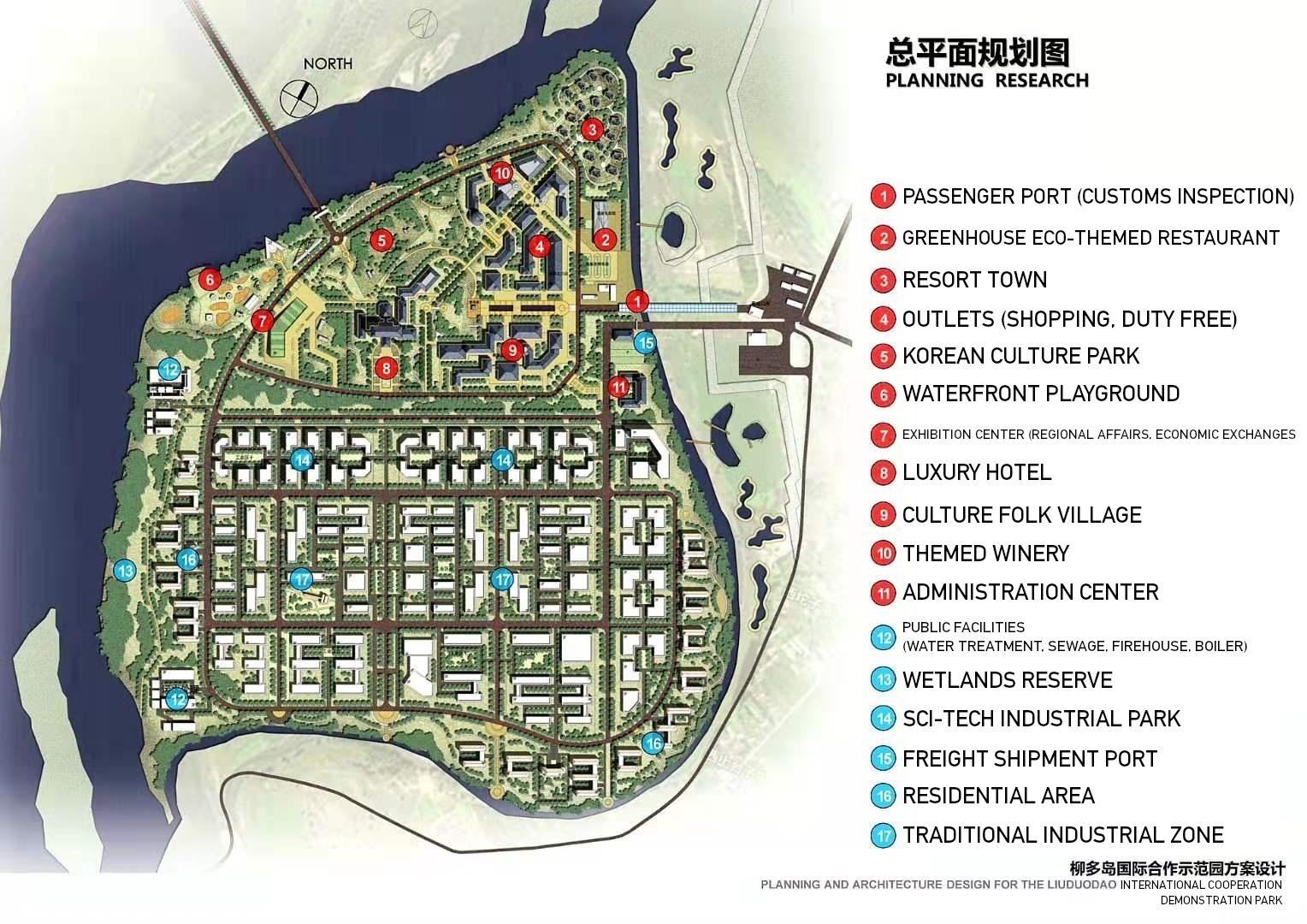 Calling the zone the Liuduodao — Ryuda island in the Chinese spelling — International Cooperation Demonstration Park, the company provides six images on their website detailing districts of the island from an overhead perspective and also including 3D models of a shopping complex and other areas. The northern half shows existing bridges — to the east connecting to China at the Shatuozi Port (沙坨子口岸) and to the west crossing the Tumen to Kyongwon county — as well as plans for an additional cross-border bridge and customs inspection area, leisure parks, a luxury hotel, winery, and duty-free shopping. Plans for the southern half include a large industrial park, a “sci-tech industrial park,” and residential areas along the edges. Also planned are administration buildings, water treatment facilities, a firehouse, and others. 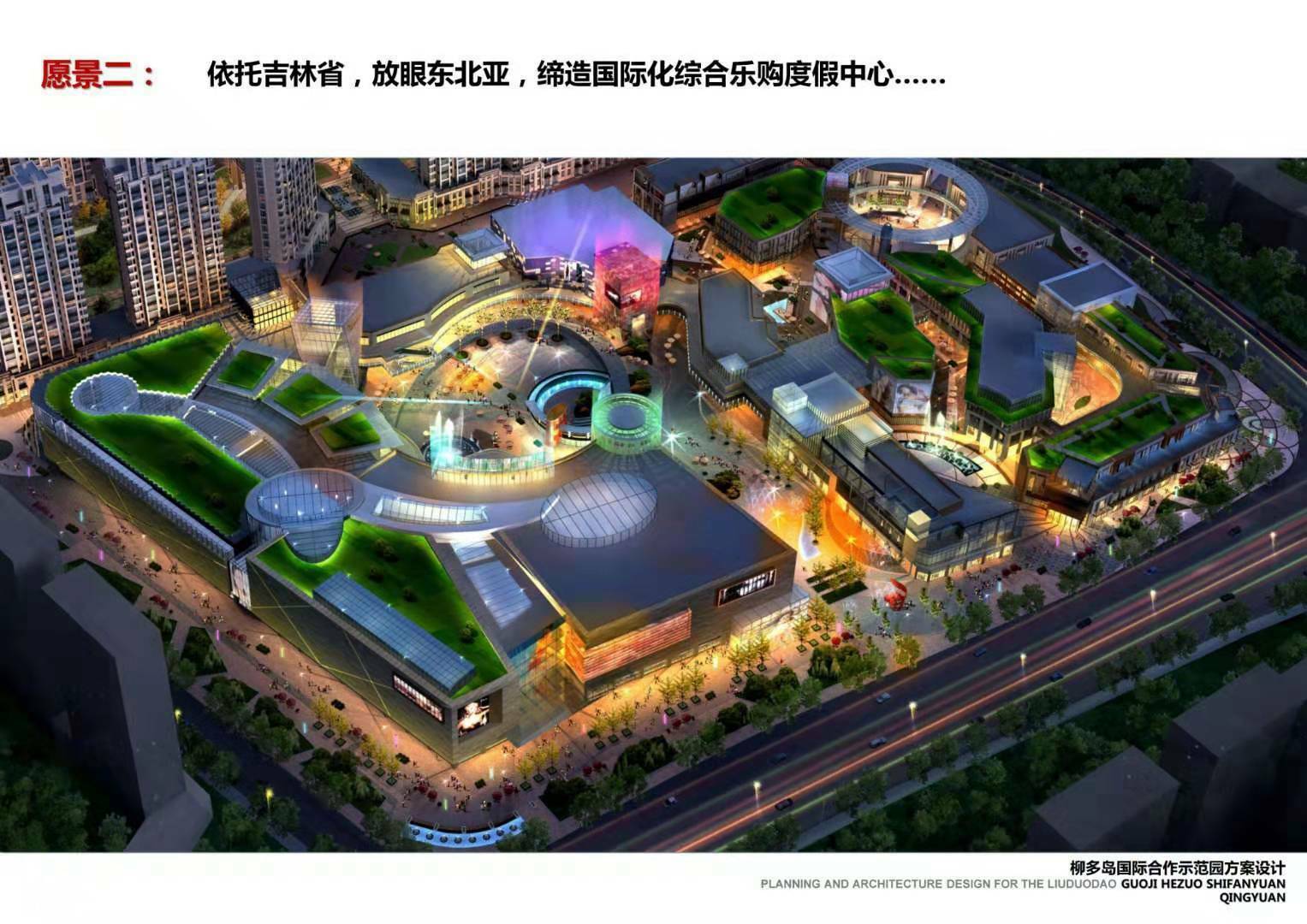 Speaking to NK Pro over the phone on Wednesday, a company representative confirmed the project as presented on the company website is still ongoing and that other countries are involved as well, declining to provide further details. High hopes from the Chinese side The governments of Hunchun — a medium-sized industrial city around 11 km to the northeast of the Kyongwon EDZ — and Jilin province have frequently promoted the joint project as a vehicle for cross-border cooperation. Hunchun authorities originally stated plans to begin construction in March 2017, though later it was revealed that UN sanctions were preventing the project from moving forward. An article published by the Jilin Provincial Government Development Research Center in October last year stated plans to “seize the opportunity to develop Liuduo island once sanctions are lifted.” The government research center also recommended that “preparations … should be made well in advance.” South Korea’s Chosun Ilbo published additional details in February this year which garnered significant attention in other South Korean and Chinese media, citing an official document it said was posted to the Hunchun government’s website that month. NK Pro found an article matching Chosun Ilbo’s description but published in November 2017 by the Jilin Investment Network, titled “Suggestions on accelerating the construction” of the Liuduo island EDZ. 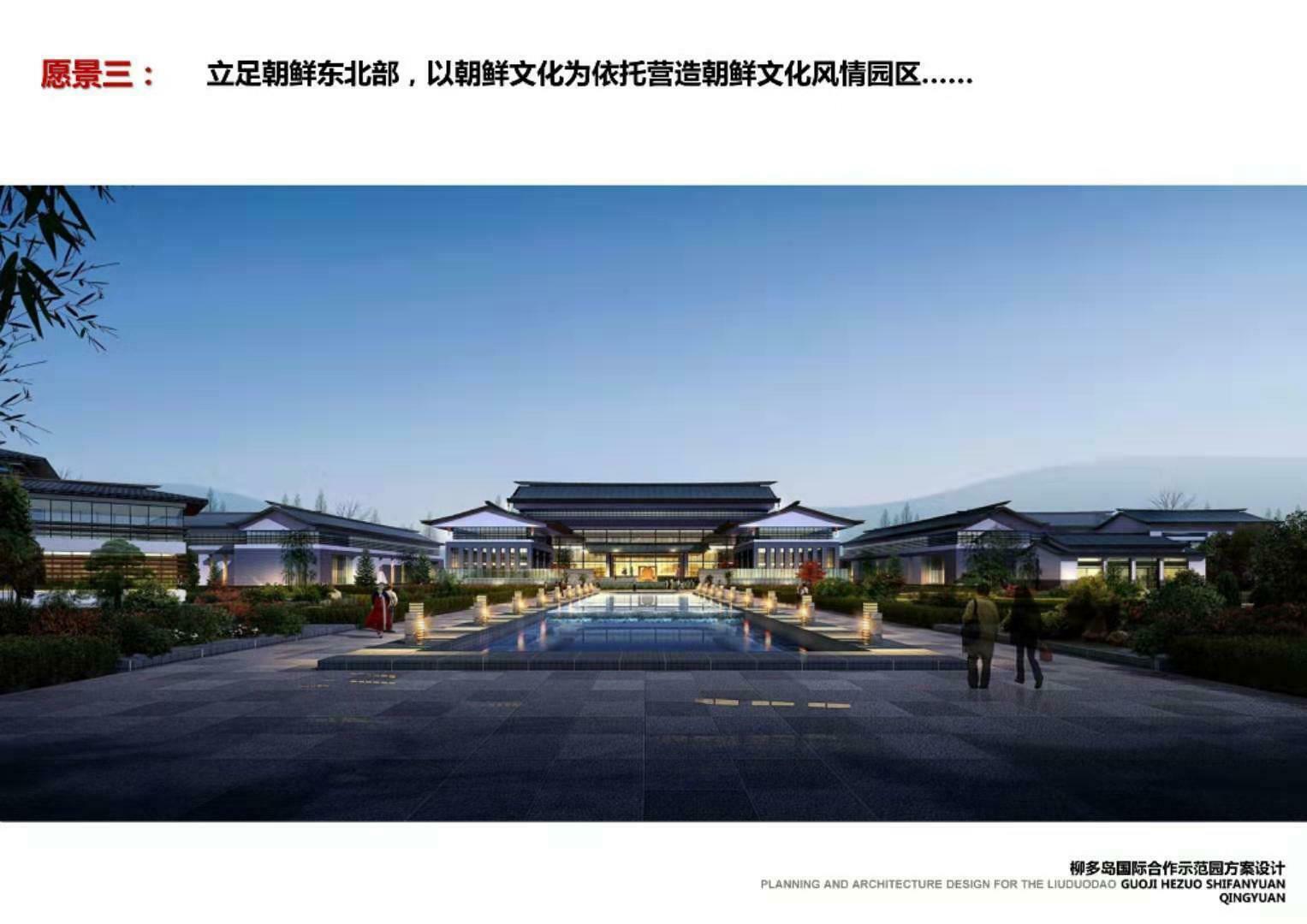 It is unclear if the plans detailed in the article have been changed in the interim, though it says agreements had already been made between relevant authorities from both sides of the border. As for how plans began to take shape, the document mentions the October 2015 North Korean decree laying out the project, and that Hunchun authorities received a letter from the Management Committee of [North] Korea’s Kyongwon Economic Development Zone on June 24, 2016 requesting the project be jointly restored and promoted. One of the key planned perks for Chinese visitors doing business or purchasing goods in the EDZ is a per-day exemption on import tariffs for items valued up to 8,000 RMB ($1,100 USD). The document also sheds light on plans for the additional cross-border bridge shown in the above blueprints, calling the existing bridge too old and unsafe for the expected increase in traffic. It said a new bridge will be built from 2019-20 at a cost of 29.63 million RMB ($4.2 million), and will be 387m long and 12m wide. Satellite imagery shows that work has yet to begin on the planned bridge. Instead of direct investment by the Hunchun government, however — whose representatives are said to have visited Ryuda multiple times in the planning stage — it says the Hong Kong Xincheng Environmental Protection International Group Co., Ltd. (香港心诚环保国际集团股份有限公司) would take the lead in building the project, and that it would start the following June, presumably in 2018. 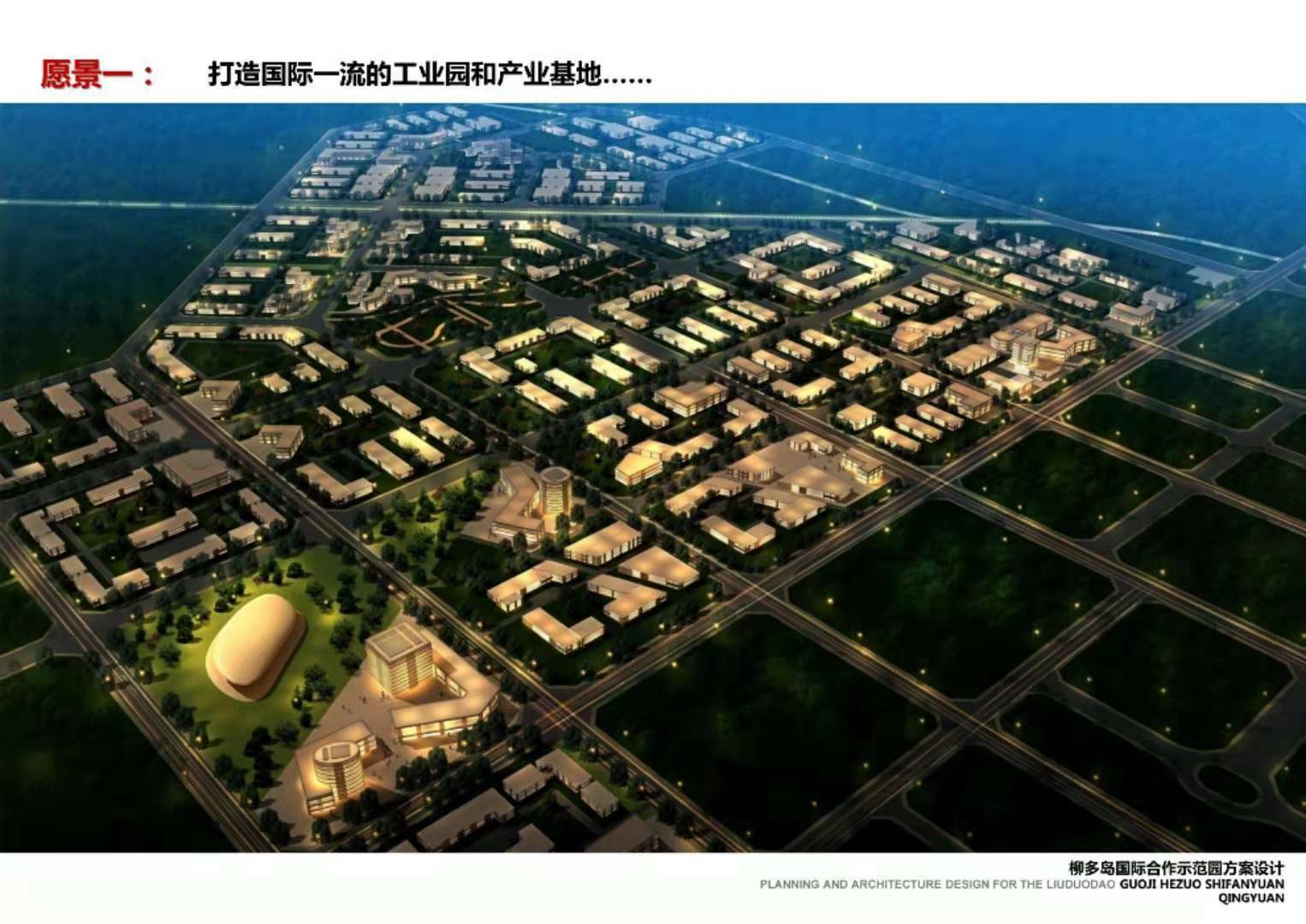 The Chinese search engine Baidu’s Enterprise Credit website shows that at least four companies appear to have been set up in the past few years in anticipation of operating in the new Kyongwon EDZ, all of whose company names begin with Hunchun and Liuduodao, the Chinese name for the EDZ. The four are registered to the same address in an industrial park in nearby Hunchun, and appear to have some overlapping ownership, though none appear to be operating as of yet. Progress at last? Hunchun and the Jilin region have been pushing for more cross-border cooperation this year, with a Chinese state-owned company building a new road bridge to the west of Ryuda at the Namyang-Tumen crossing, and with local Hunchun authorities overseeing a new large customs complex at the eastern edge of the Sino-DPRK border down the river from Ryuda. It is unclear from the available satellite imagery if the new construction on the island is indeed part of the new EDZ, though with the entire island designated for that purpose in 2015 and promoted again in North Korean state media in the last year, it is possible that the project is finally underway. Some questions remain, such as how it could be constructed under current UN sanctions, where metals and other construction equipment — let alone trade in industrial goods from a finished EDZ — are technically prohibited from being shipped across the border. 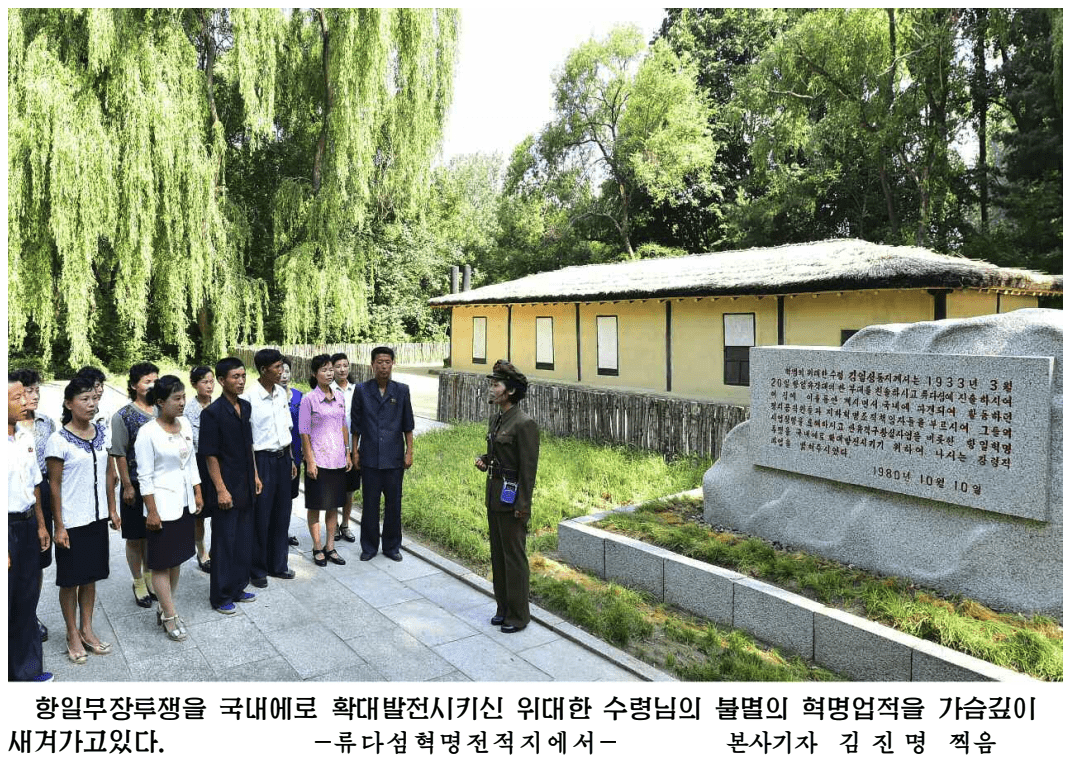 Another uncertainty involves existing structures on the island, which include some possibly considered politically significant under state propaganda that claims founding leader Kim Il Sung stayed there during the anti-Japanese struggle. According to the blueprints shown above, however, most existing structures on Ryuda would have to be wiped out to make way for the new buildings. It could be that the North Korean side has begun preliminary construction on only some parts of the zone, as evidence of large-scale building has yet to appear. Some arrangement may also have been made, regardless of potential sanctions issues, to restart some aspects of the project — just as a road to finally connect the large Chinese-built bridge on the opposite end of the border near Sinuiju and Dandong began in September. But just as detailed plans were made for another EDZ in Sinuiju to be built primarily with Chinese help — set to begin sometime last spring — have apparently failed to materialize as of yet, the zone on Ryuda will likely also experience slow progress or continued delay until sanctions are more comprehensively lifted. Edited by James Fretwell Featured image: Jilin Qidingdong Technology Co., Ltd. © Korea Risk Group. All rights reserved. |

October 27, 2026Oct 27, 2026

The ultimate resources for professionals working on North Korea
 SHARE
SHARE COPY LINK
 X
X MASTODON