

|
News ‘Serious accident’ derails launch of new North Korean warship: State mediaKim Jong Un condemns failure during side launch of 5000-ton destroyer as ‘criminal act’ after ramp ‘detached prematurely
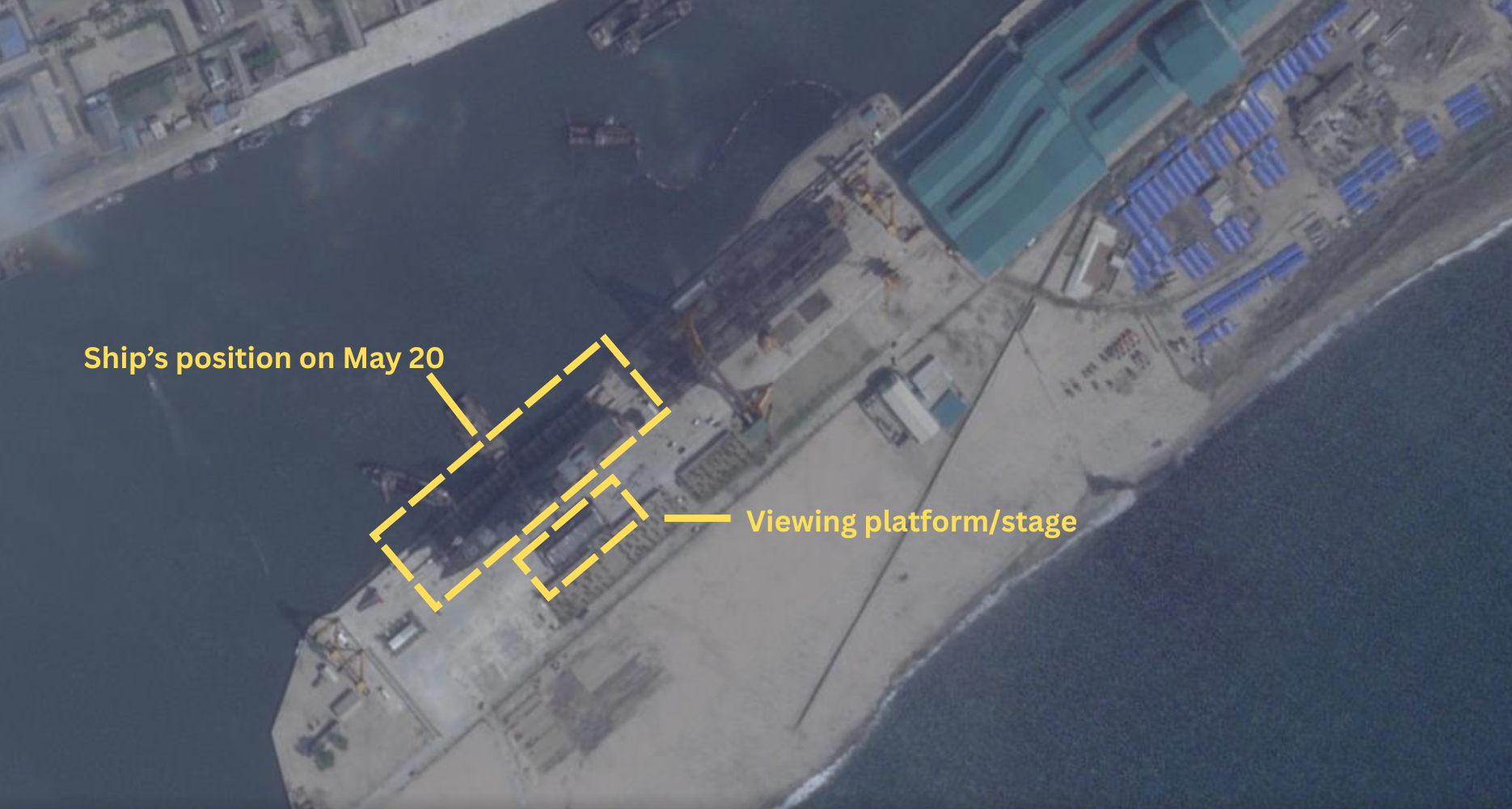
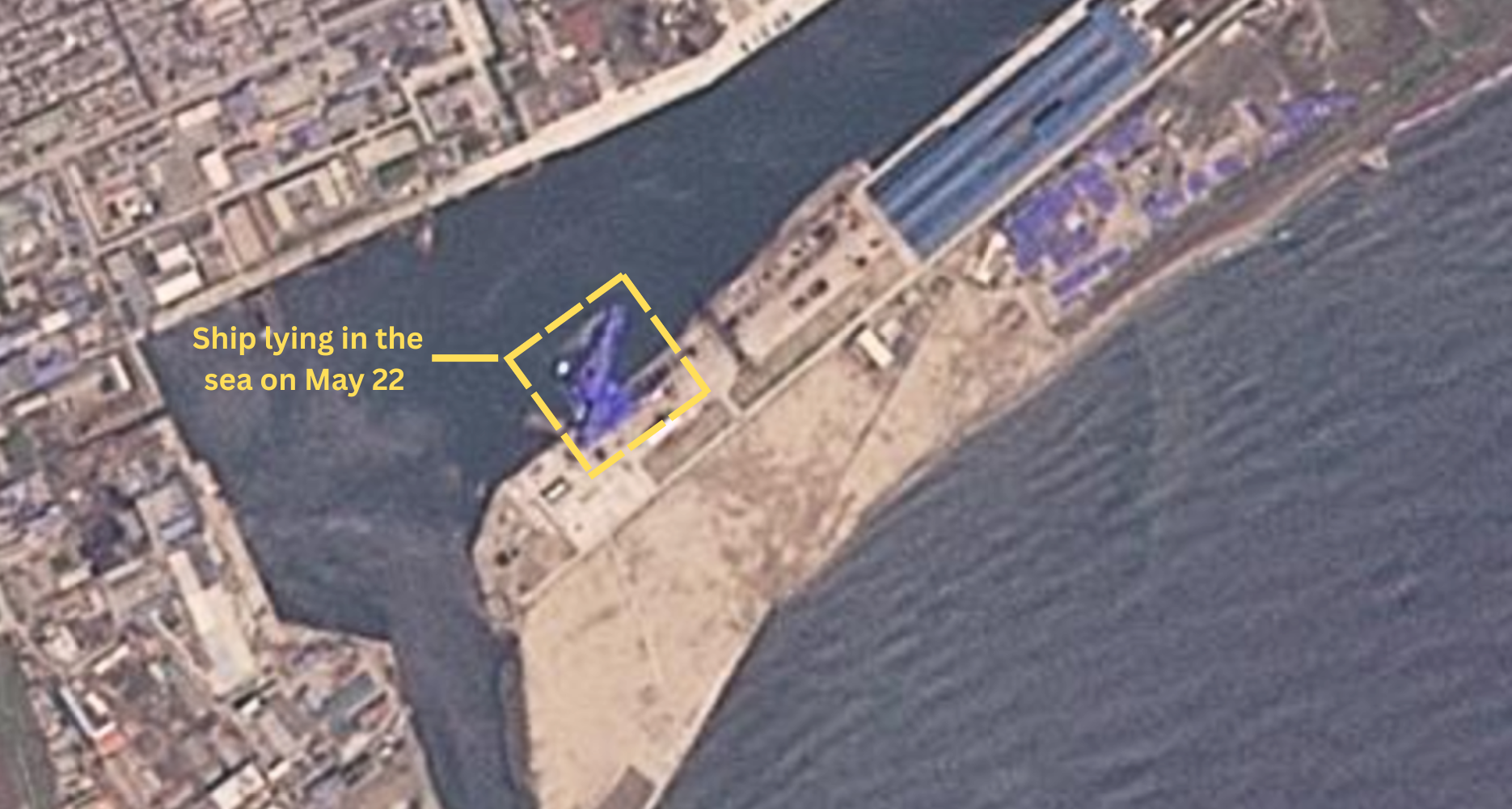
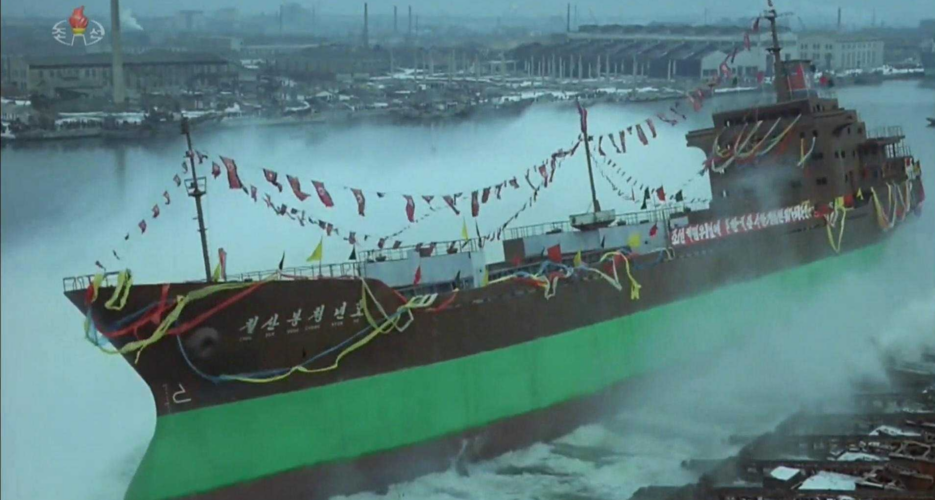 The anticipated launch of North Korea’s latest warship in Chongjin was derailed by a “serious accident” on Wednesday, sparking an angry reaction from leader Kim Jong Un, according to state media. During the launch ceremony of a new 5,000-ton-class destroyer at the eastern port city’s shipyard, the ship’s hull was damaged when the stern launching ramp “detached prematurely and ran aground,” the ruling party newspaper Rodong Sinmun said on Thursday. The report added that the ship’s bow failed to detach from the slipway used to move the vessel to the water, blaming “inexperienced command and operational carelessness during the launch” for the “grave” accident. Kim, who was in attendance at Thursday’s ceremony, reportedly condemned the incident as “a criminal act” that arose from “carelessness, irresponsibility and unscientific empiricism,” following the leadership’s oft-used method of responding to problems by deflecting blame to others. On this occasion, the leader called for officials of the party’s Munitions Industry Department, the State Academy of Sciences’ Mechanical Institute, Kim Chaek University of Technology, the Central Ship Design Institute, Chongjin Shipyard and other departments to be held responsible for the incident, which he said “severely damaged the dignity and pride of our nation in an instant.” The Rodong Sinmun announced on Thursday that the ruling Workers’ Party will host a plenary meeting in late June, and Kim stressed that the accident must be addressed at the meeting and called for the destroyer’s restoration before then. Shin Seung-ki, a research fellow at the Korea Institute for Defense Analyses, told NK News the bottom of the hull was likely “severely damaged” and cracked due to a collision with the ground as the ship’s underside struck the surface. He added that the accident was likely caused by “a lack of precision, skill and expertise” required to launch such a large vessel, as well as by the hull’s weight and asymmetric load bearing, in which forces acting on the hull are not evenly distributed and cause structural issues. Ryo Hinata-Yamaguchi, an associate professor at Tokyo International University’s Institute for International Strategy, also emphasized DPRK’s lack of engineering experience with side launches as a likely culprit for the failure. In addition to the apparent hull damage, repairs to address structural damage to other components such as propellers and propeller shafts could delay the warship project, according to Joost Oliemans, co-author of “The Armed Forces of North Korea.”  With just a month to go until the plenum, North Korean engineers face an uphill battle to investigate the failure and its possible causes. Previous analysis suggested the ship at Chongjin was in development since May 2024, and satellite images captured earlier this week indicated it was soon to be launched from the Chongjin shipyard’s pier, after being moved along rails. Recent satellite imagery also suggested the destroyer would be side-launched from the quay, a method that North Korea has not been known to use in the past for warships, which Shin described as the “second-best option” for the launch based on the conditions of the shipyard and construction dock. Oliemans explained that Chongjin was likely used for this launch as other east coast shipbuilding hubs like Wonsan and Najin lack the space for such a large ship, but it lacks a floating dry dock like the one used for the launch of a similar warship last month at the western Nampho port. While North Korea has been known to conduct side launches for commercial ships, he suggested the ship’s balance may have been affected by its “novel design” and the amount of weapons systems potentially installed, which may have made it “relatively top-heavy.” South Korea’s Joint Chiefs of Staff reported during a briefing on Thursday morning that the vessel is currently lying in the sea, which satellite images captured shortly before noon confirmed. 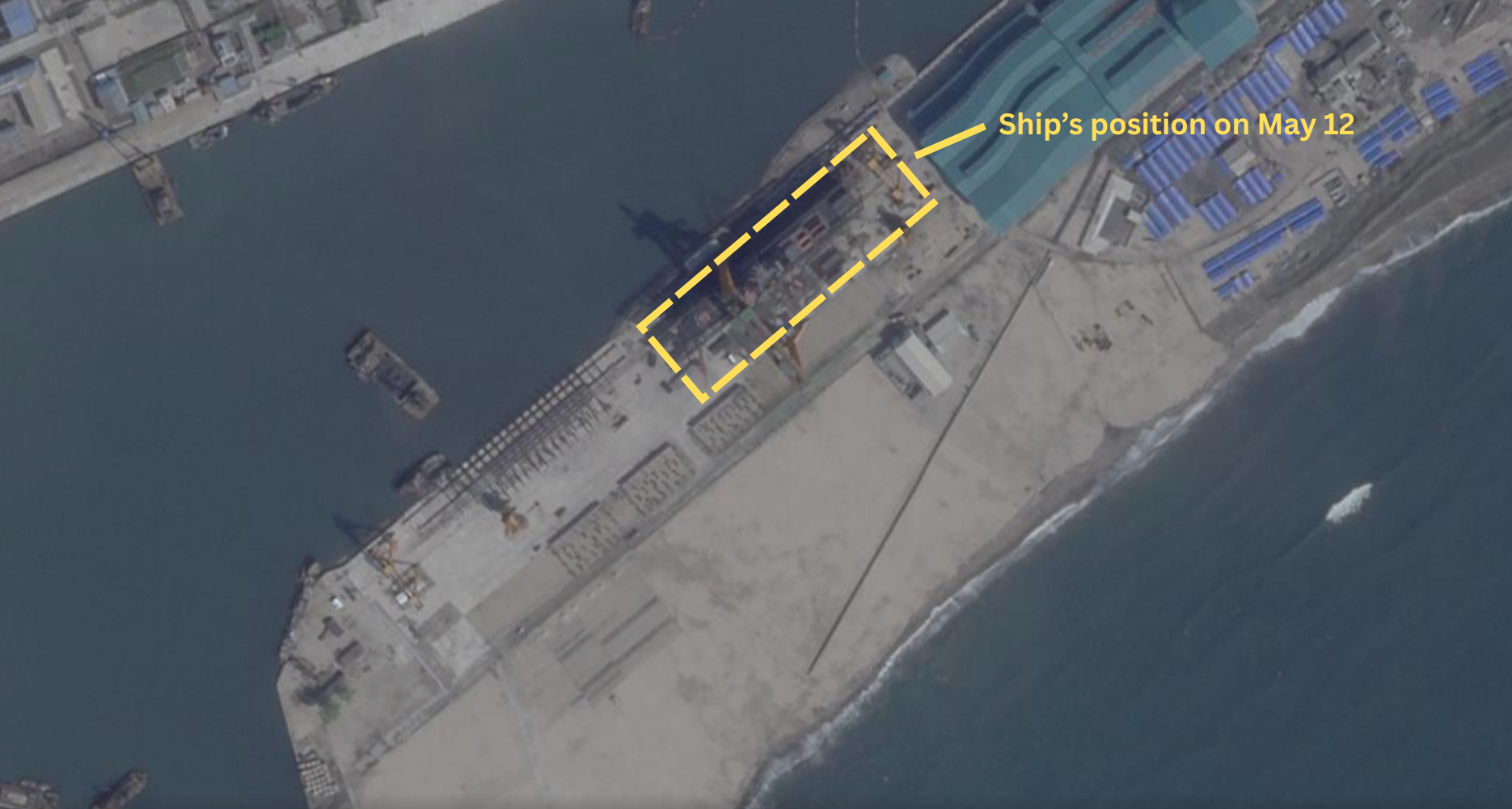
SETBACK FOR NAVAL MODERNIZATION State media’s spotlighting of the accident is unusual for a country that seldom advertises its failures to domestic audiences, particularly as it occupied a prominent position at the top of the Rodong Sinmun’s front page. Andrei Lankov, a professor at Kookmin University and director of Korea Risk Group, told NK News that accidents happen with complex new weapons systems all over the world, but what is remarkable in this case is Pyongyang’s decision not to keep it a secret. This approach isn’t entirely new, with Pyongyang quick to admit to significant problems in its failed satellite launches in 2023 and 2024, setting the stage for Kim to pledge redoubled efforts toward achieving success. “Unlike his father and grandfather, Kim Jong Un occasionally admits such kinds of debacles and basically orders the official media to publish short reports about the incident, which is quite unusual,” Lankov said. “Kim Jong Un demonstrated an emotional reaction when he decided not merely to punish people who are responsible in his mind for the incident, but also to make this incident public,” he added. “It probably means North Korea is going to lose some of its best naval engineers.” He highlighted the development of the new destroyer as a priority project for the leader, who oversaw last month’s warship launch on the west coast as part of efforts to upgrade the DPRK’s naval capabilities and envisioned the Chongjin vessel as “one of the most powerful surface ships of the North Korean navy.” Lankov questioned the new ship’s strategic importance as the ongoing Russia-Ukraine war has demonstrated that such vessels are “not particularly useful and very vulnerable,” but sees it as more of a prestige project that held “symbolic value” for the leader. Kim has made a big show of his plans to modernize North Korea’s outdated naval fleet in recent years with the development of new warships, bases, submarines and advanced missiles, and Oliemans stated that this vision of a “bold and confrontational future” revolves around quickly producing new massive warships on a large scale. “These destroyers are essentially meant to herald the start of a new age for the [navy]: one in which North Korea asserts itself more boldly, tries to attain ‘blue water’ capabilities, and match their South Korean counterparts in naval production,” he said. But he added that this incident could prove to be “a major fly in the ointment” for both the modernization project’s practical progress as well as its international perception. Shin stated that Thursday’s failure could delay Kim’s long-term plan to enlarge and modernize its fleet of warships by “about one to two years,” with this model intended to add a new dimension to North Korea’s maritime warfare strategy. “This particular vessel is a multipurpose destroyer expected to provide anti-submarine and anti-air capabilities at sea — capabilities North Korea previously did not possess,” he explained. “Thus, it appears that North Korea is seeking to expand its capabilities from past coastal defense to near-sea defense, with the goal of more rapidly responding to the ROK-U.S. combined naval forces in a contingency.” He added that the new ship, once operationalized, is also expected to support the operation and protection of North Korea’s new submarines. Meanwhile, the DPRK faces a different challenge with its plan to deploy the other new warship unveiled at the western Nampho port last month to the East Sea (Sea of Japan) by next year, as it would have to sail around South Korea to get there.  Hong Min, a senior research fellow at the Korea Institute for National Unification, told NK News these challenges present setbacks for Kim’s likely goal of presenting the new warships as tangible defense development achievements before the ruling party’s Ninth Congress next year, but added that it will not have disrupted the overall plan that much. “The will to modernize the navy hasn’t been broken, and it’s unlikely that additional naval modernization plans will be seriously affected. That’s because today’s incident is hard to attribute to a fundamental problem with the destroyer itself,” he said. Hong explained that the DPRK has little experience in building ships larger than 3,000 tons, so the incident suggests a lack of know-how in the launch process rather than a serious technical flaw, meaning the biggest consequences will likely be short-term suspensions or reprimands for some engineers. He suggested it could take a few months to repair the possible damage to its lower section — later than Kim’s June deadline, but not a long time in the context of the naval modernization plan. Anton Sokolin, Colin Zwirko and Joon Ha Park contributed reporting to this article. Edited by Kristen Talman Updated at 10:41 a.m., 12:42 p.m, 2:52 p.m. and 5:17 p.m. KST on May 22 with historical footage of a ship launch at Chongjin, additional context, expert comments and the South Korean military’s statement © Korea Risk Group. All rights reserved. |


 SHARE
SHARE COPY LINK
 X
X MASTODON


Recent Stories