
|
Analysis Lively beach culture of North Korea’s ‘steel city’ revealed in satellite imagesChongjin locals covered coast in makeshift tents as beaches opened for first time in three years, imagery shows
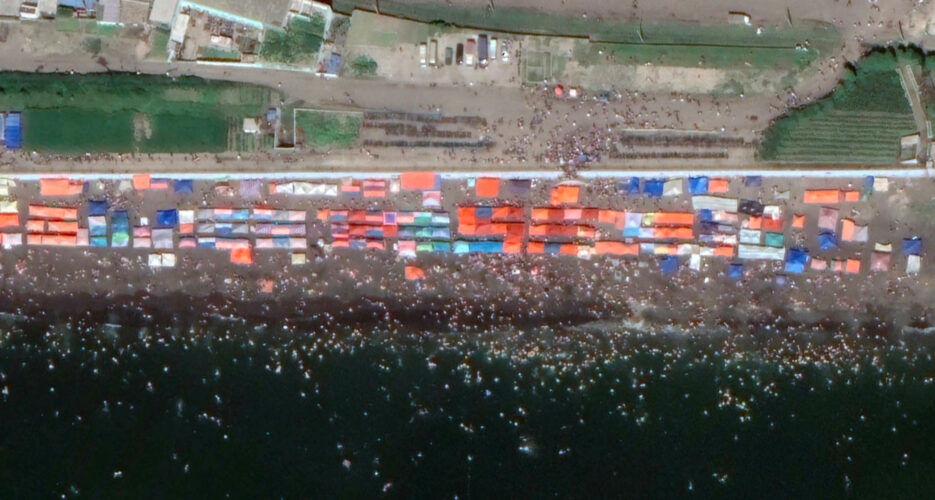 On black beaches in the shadow of North Korea’s “steel city” smokestacks, thousands of people let loose in the waves and under hundreds of multicolored tents this summer to enjoy their first sand and surf in three years. These were the surprising scenes revealed in newly released high-resolution satellite images of the northeast industrial city of Chongjin in August, showcasing the locals’ unique and lively beach culture at a spot rarely seen by outsiders. Photos show the beach’s dark sand almost completely covered by a patchwork of large colorful tarps set up on sticks, with swarms of people in the water, on the shore and making their way there from downtown past construction worker slums. 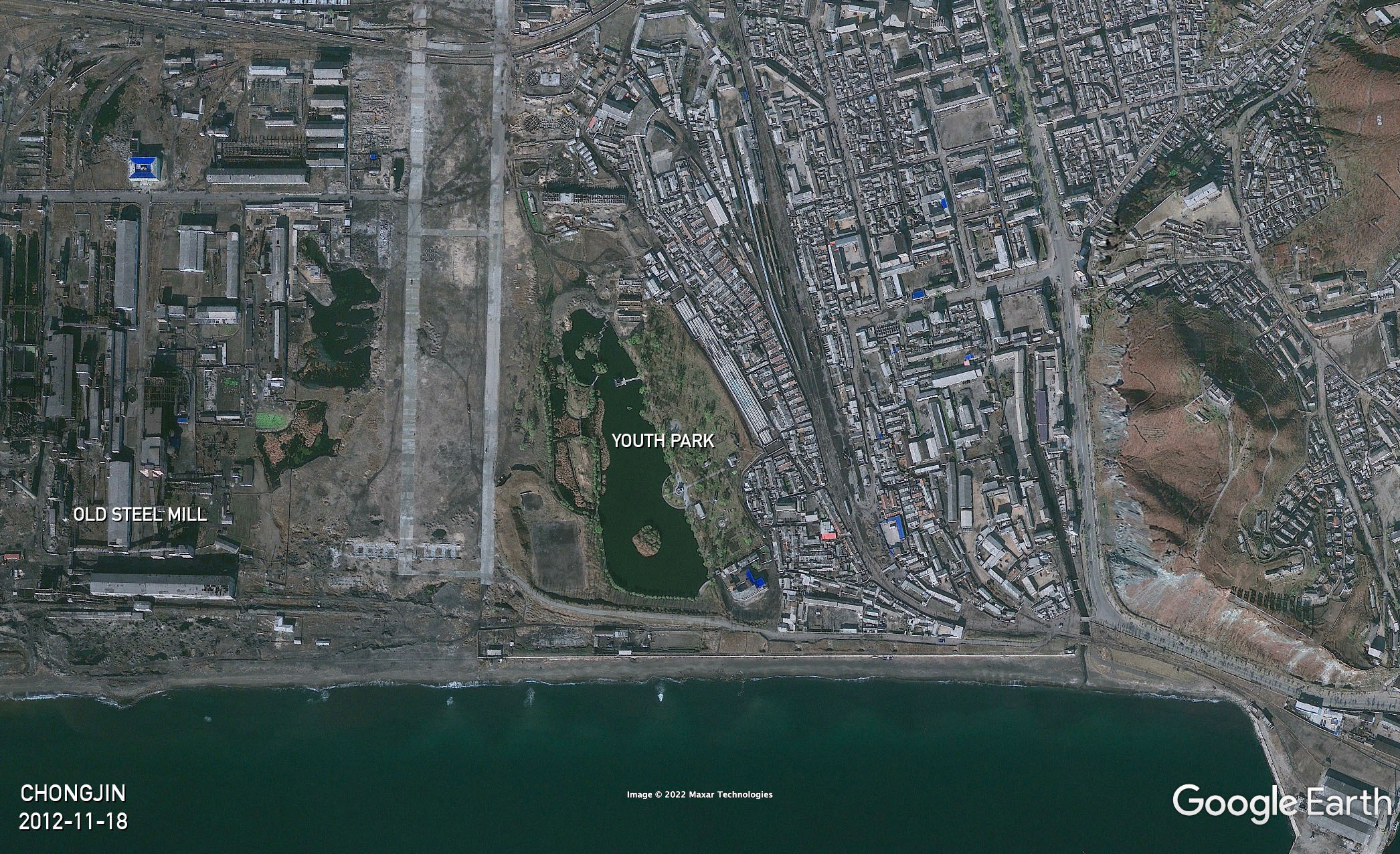 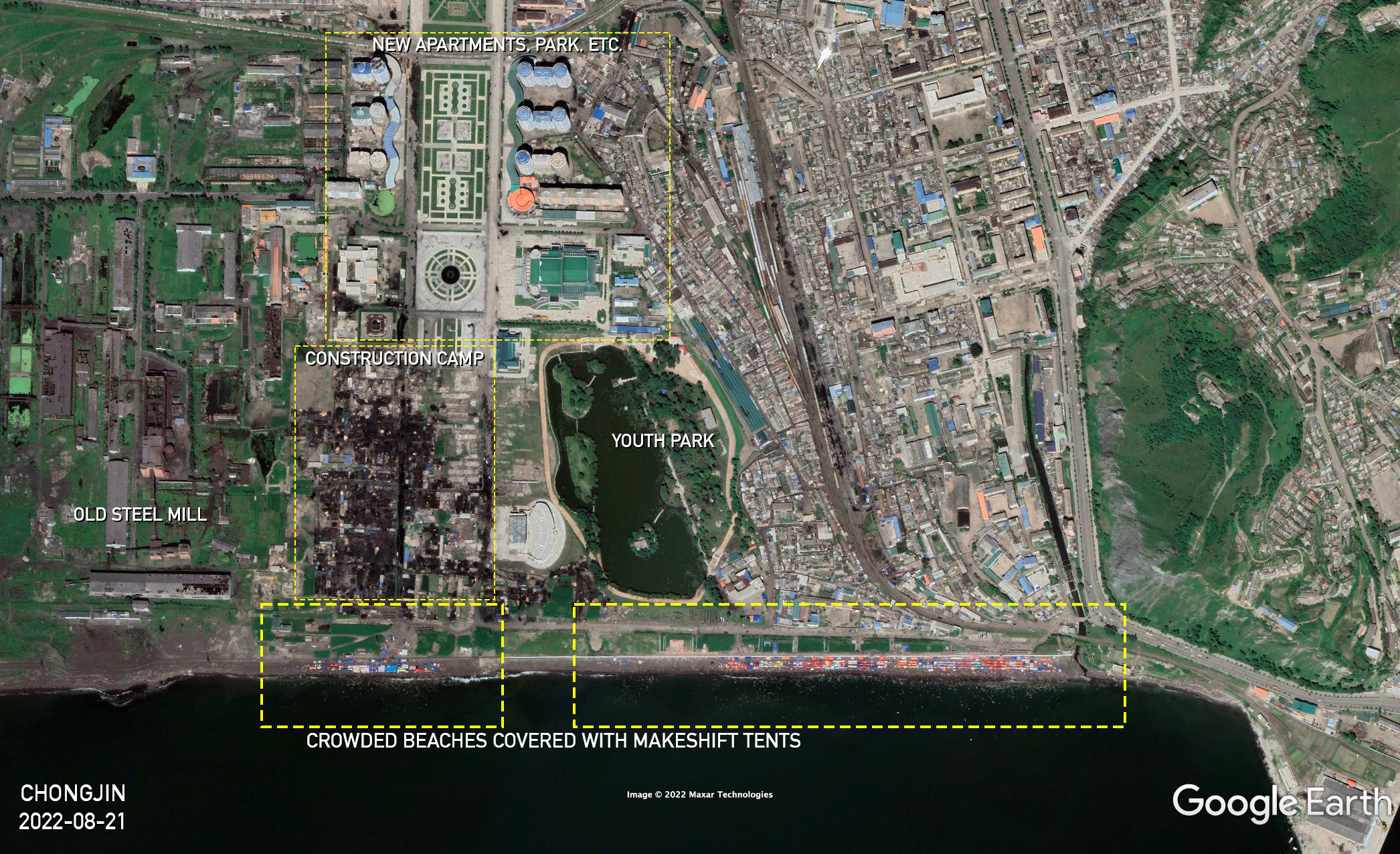 Central Chongjin has undergone significant changes in the last decade, with new apartments, a park, restaurants and state-run theaters for propaganda dissemination slowly sprouting up. This wide shot compares the city’s appearance in 2012 with the latest high-resolution shot of massive crowds at the beach taken on Aug. 21 this year. | Images: Google Earth, edited by NK News 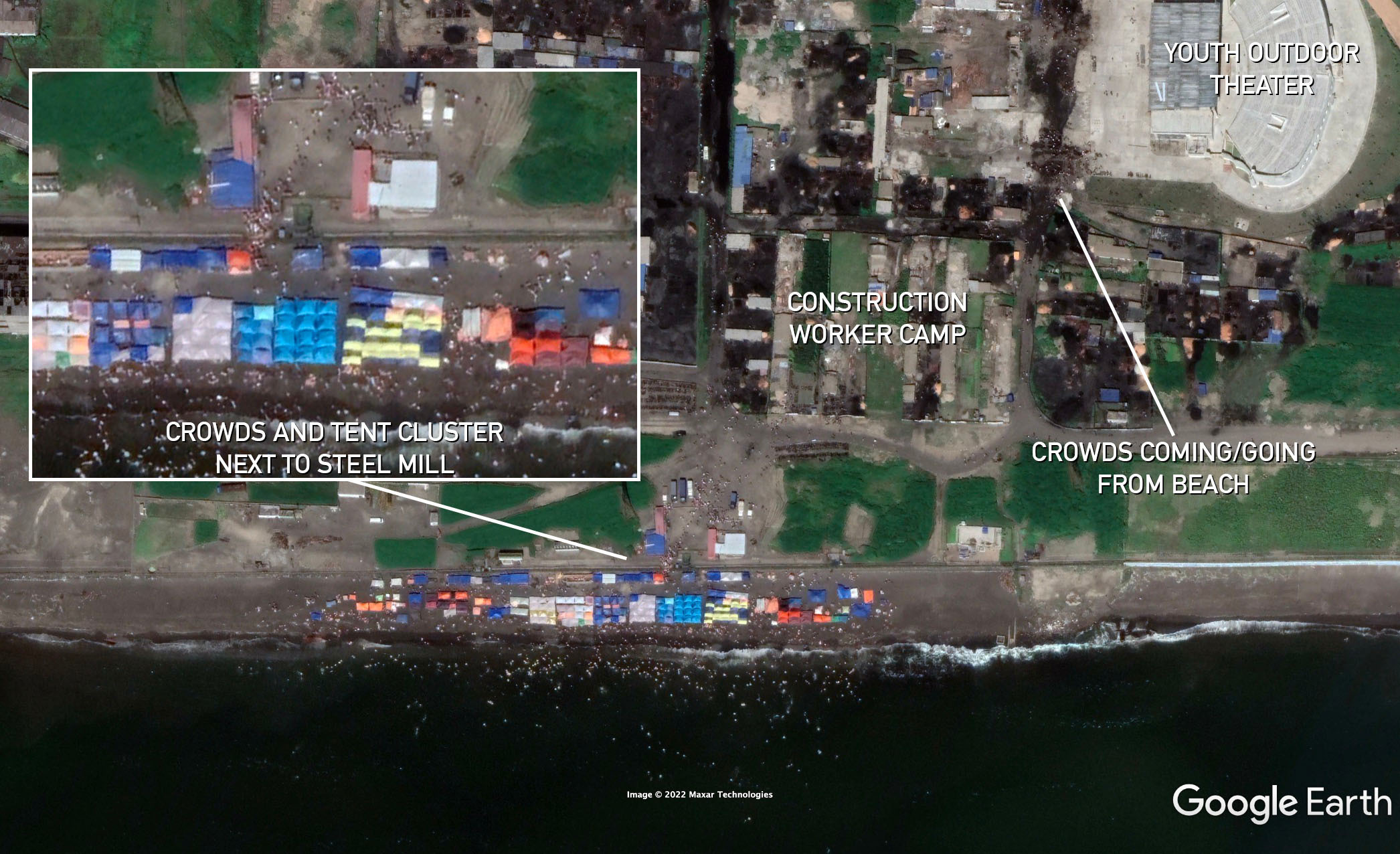
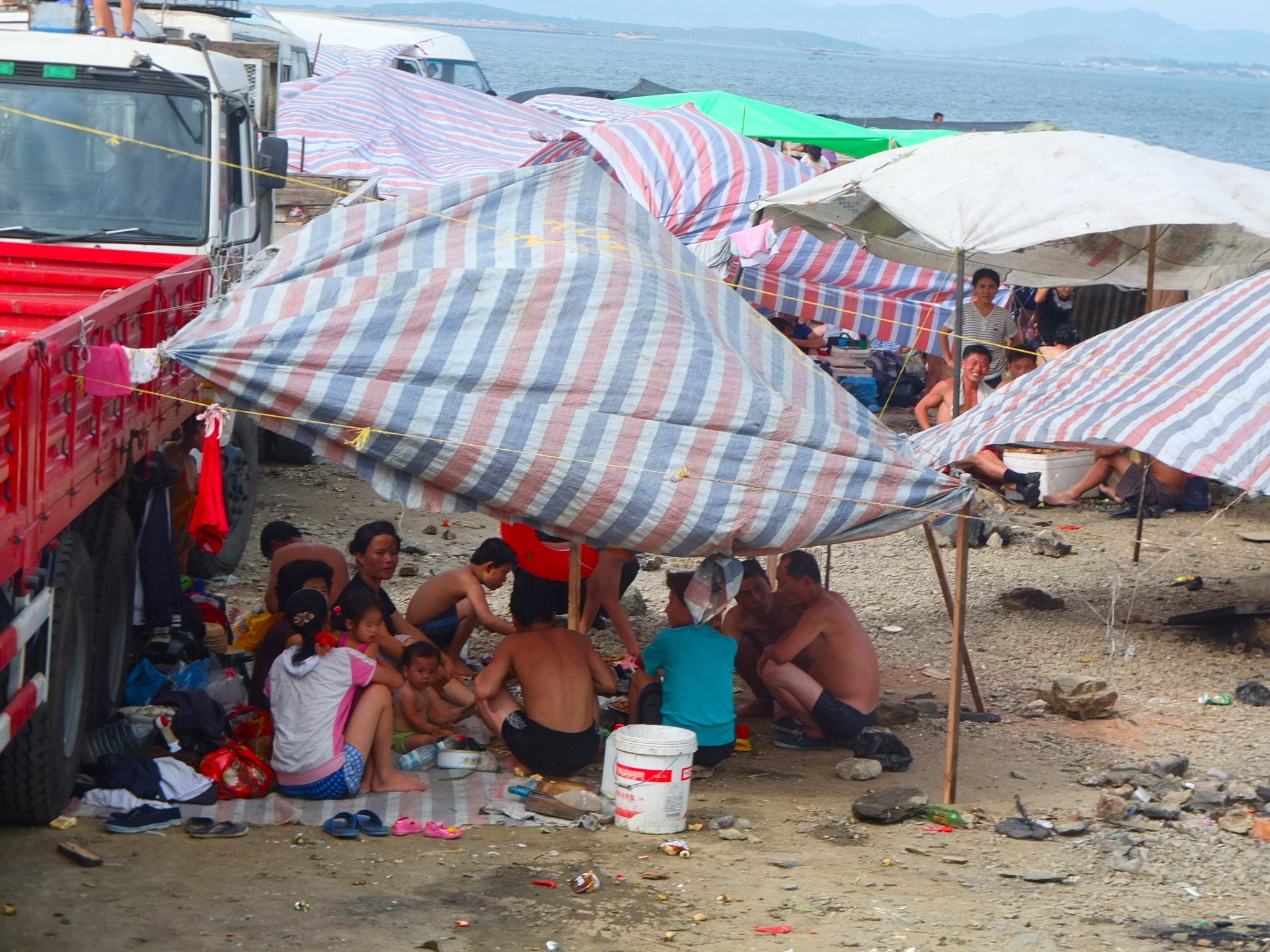 Lower-resolution daily satellite images from Planet Labs reveal the people of Chongjin were only allowed a truncated beach season of around three weeks this year compared to more than double that in years prior to the pandemic. State-approved fun in the sun appeared to start around Aug. 20, soon after DPRK leader Kim Jong Un announced the lifting of heavy COVID-19-related restrictions and the re-opening of leisure spots. Beaches had been closed nationwide in 2020 and 2021 under strict COVID-19 prevention policies, NK News analysis of satellite imagery of the DPRK’s most popular sandy shores confirmed. 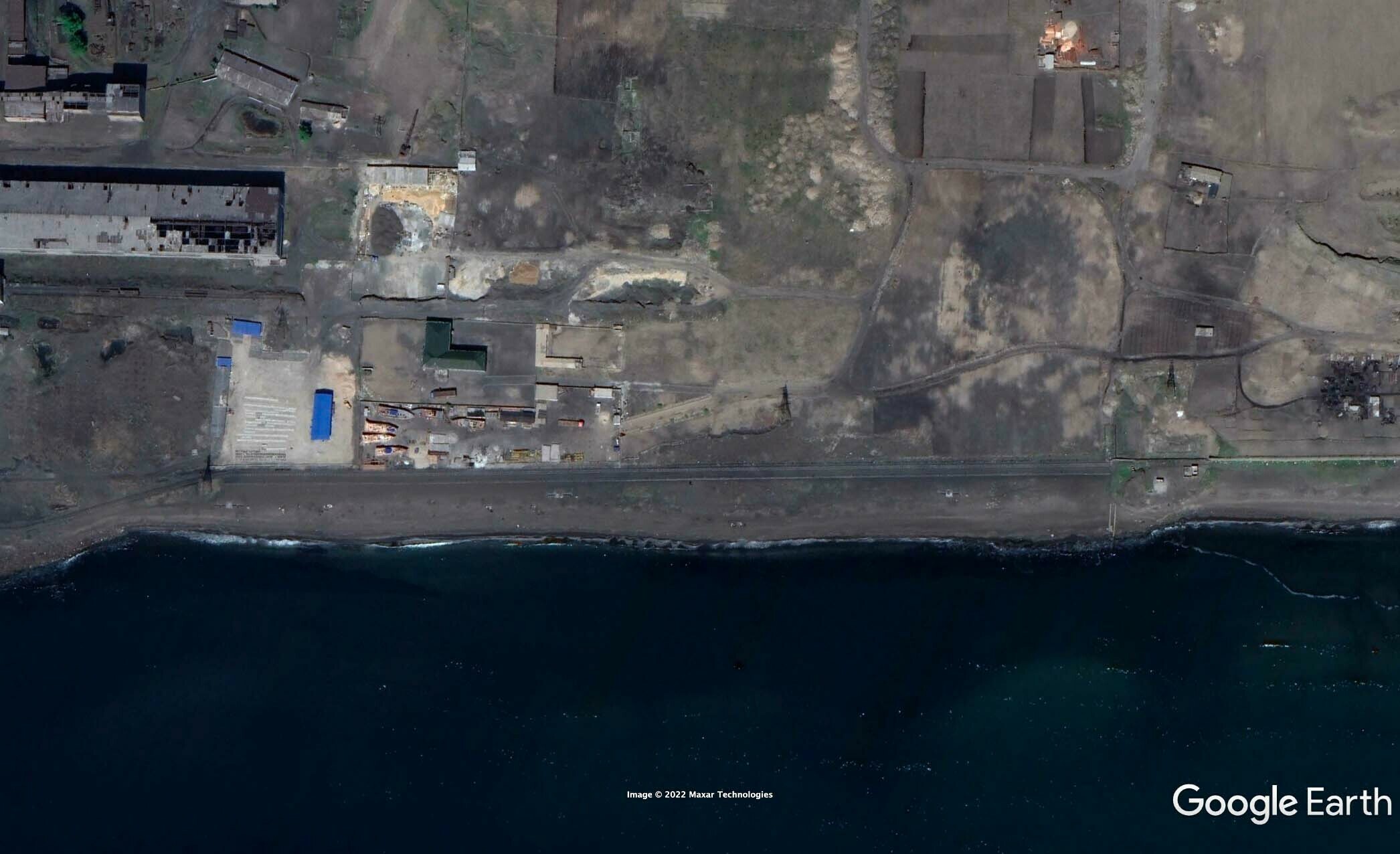 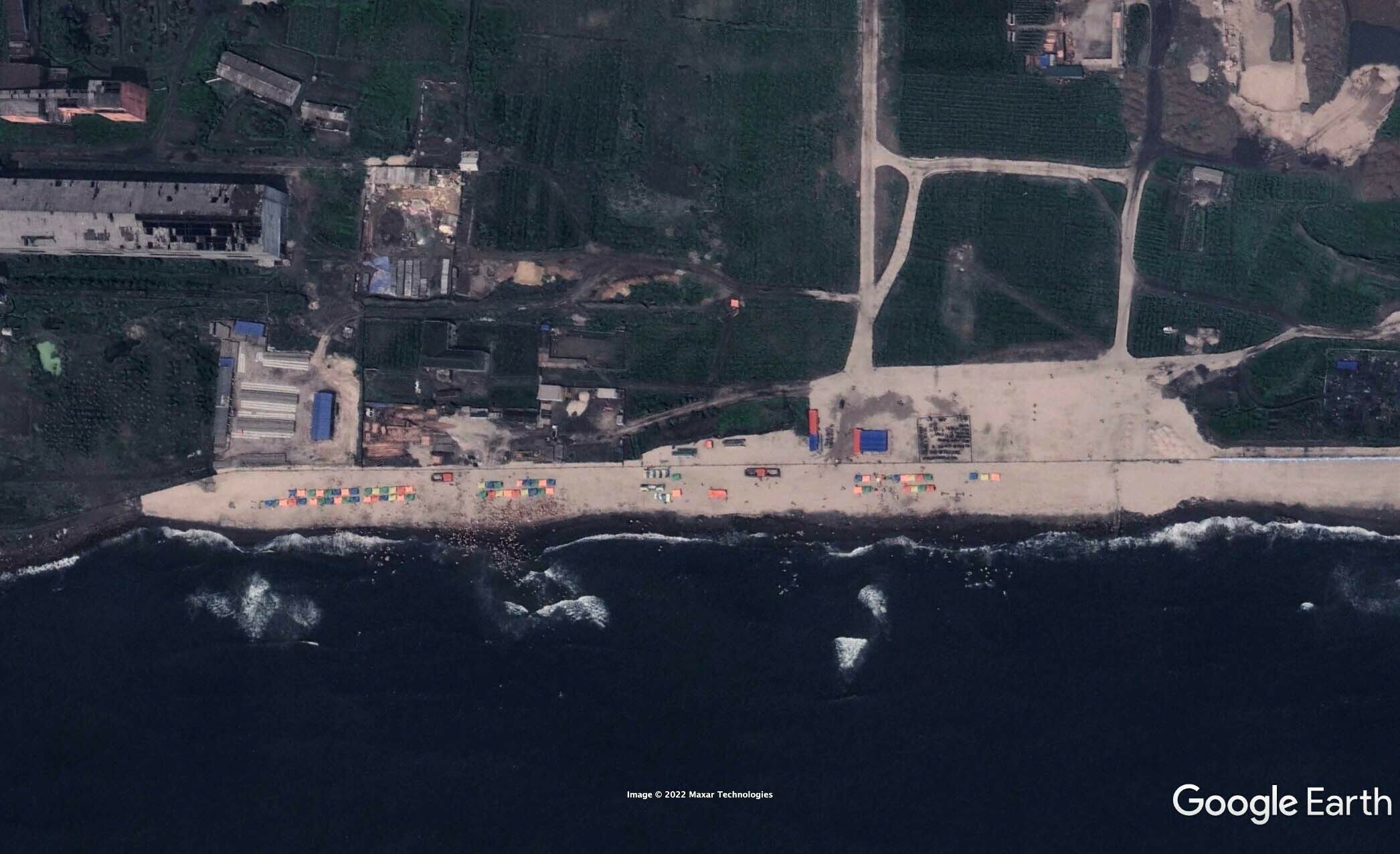 These two shots taken in May and August 2019 show how local authorities cleaned up the south section of Chongjin’s main beach before swimming season began | Images: Google Earth, edited by NK News  One visible change at the Chongjin beach this year was the lack of extensive cleaning and preparations such as laying down lighter-colored sand before opening up to visitors. This kind of work took place over several days in 2018 and 2019, while this year locals flocked to the beach in droves regardless of its darker tone. Satellite imagery also reveals hundreds of people packed their tarps and headed from Chongjin’s inland southern cluster to a more remote white-sand beach during the same period from late August until earlier this month. Rowan Beard, a tour guide with Young Pioneer Tours who has traveled to North Hamgyong Province and its capital Chongjin numerous times, told NK News his North Korean partners do not take outsiders to the city’s downtown beach since it’s on the industrial side of the city. Visitors to the area are typically taken to resort beaches north in Rason or south near Mount Chilbo instead. Beard said Chongjin’s apparent crowded beach scene in the region’s notoriously cold waters could stem from locals being “more outdoorsy than your typical North Korean,” having grown up in “one of the most rural and impoverished parts of the DPRK.” He added that in his travels over the years, he’s never seen a beach completely covered in tents and with such huge crowds as visible at Chongjin this summer. Similar but smaller-scale scenes of tarps and tents have appeared on beaches without a lot of tourist infrastructure on the southwest coast in the past, while top beaches on the east coast maintain smaller areas of rented tent space. 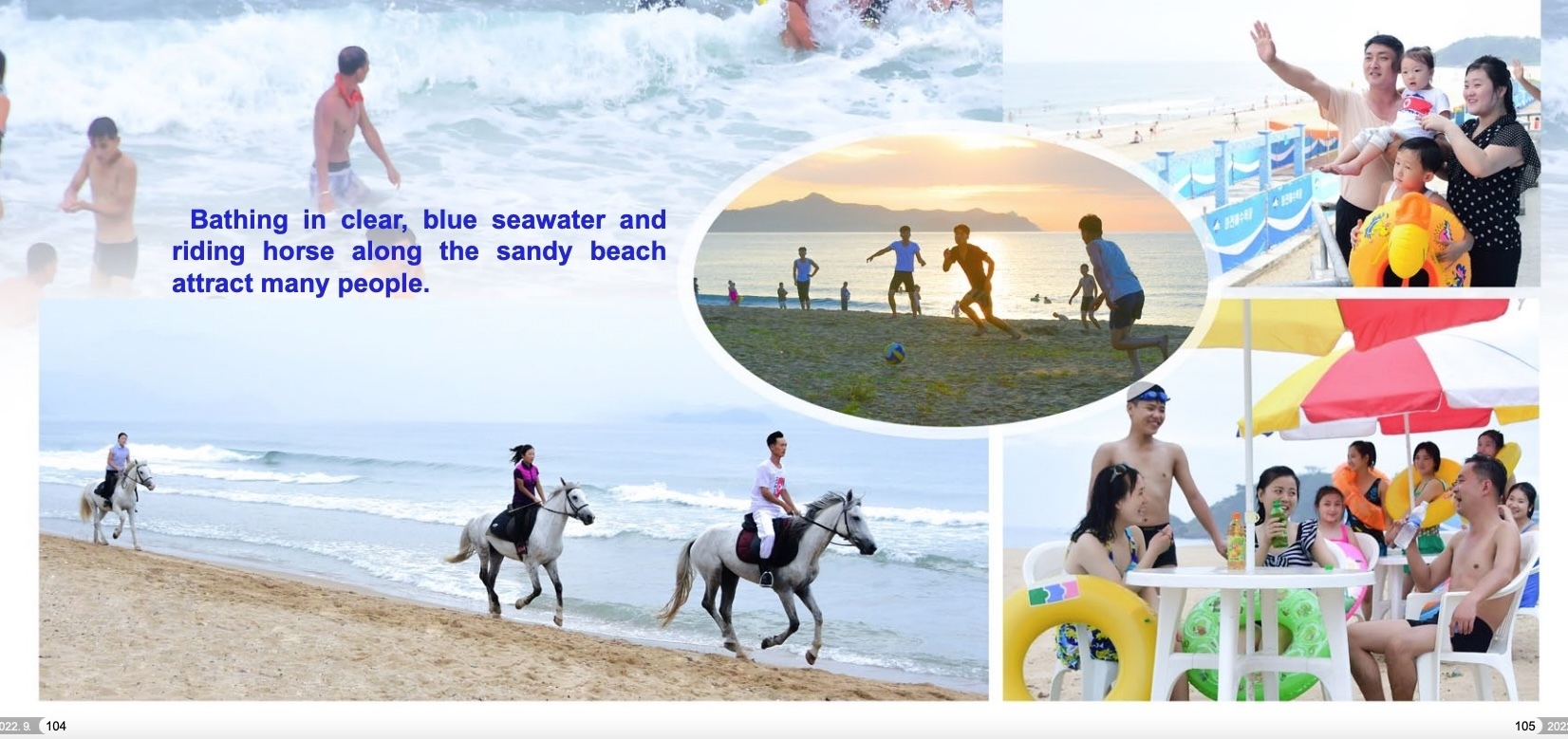 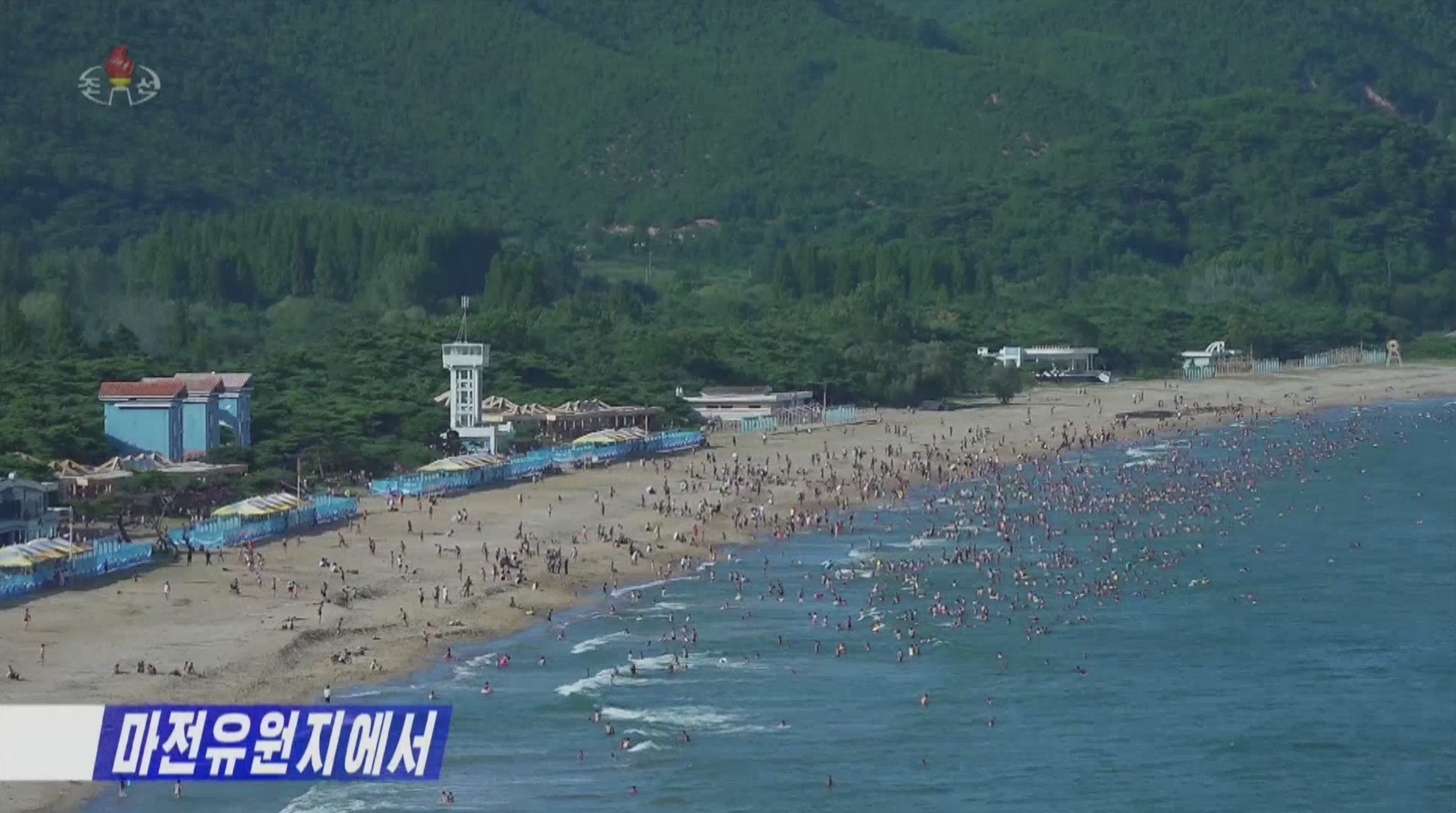 A SHORE THING? Satellite imagery shows evidence of large tents and crowds of people finally getting beach time this summer to the north in Rason as well. Two spots — Pipha beach and Kalumdan beach — suddenly appeared with tents dotting the sand around Aug. 20, the same time as activity kicked off in Chongjin. Visits appeared to continue throughout September at Pipha beach, located next to the luxurious foreign tourist-only Imperial Hotel and Casino, while Kalumdan appeared to quiet down in late August. North Korean state media reported beaches were crowded in late August in Majon, Wonsan and Kosong on the east coast and Ryongsupho on the west coast. However, similar swaths of tents were not visible in imagery of these beaches, likely due to tighter controls on the use of makeshift tents. Edited by Arius Derr © Korea Risk Group. All rights reserved. |


 SHARE
SHARE COPY LINK
 X
X MASTODON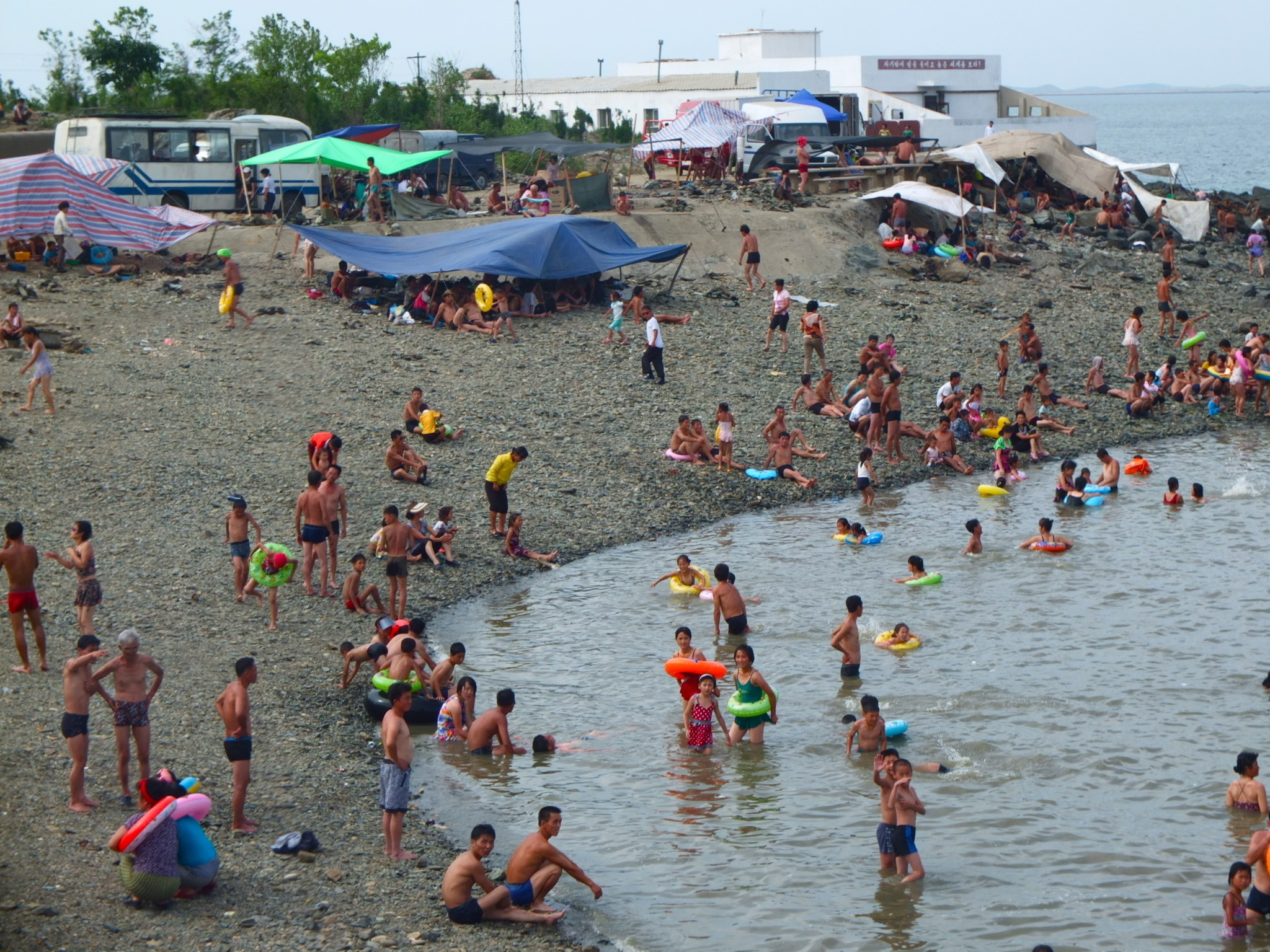



Recent Stories