
|
Border Controls North Korea will boost trade after months of COVID-19 lockdown: Russian officialNew disinfectant centers are being built on the North Korean border, Russia’s ambassador to the DPRK says
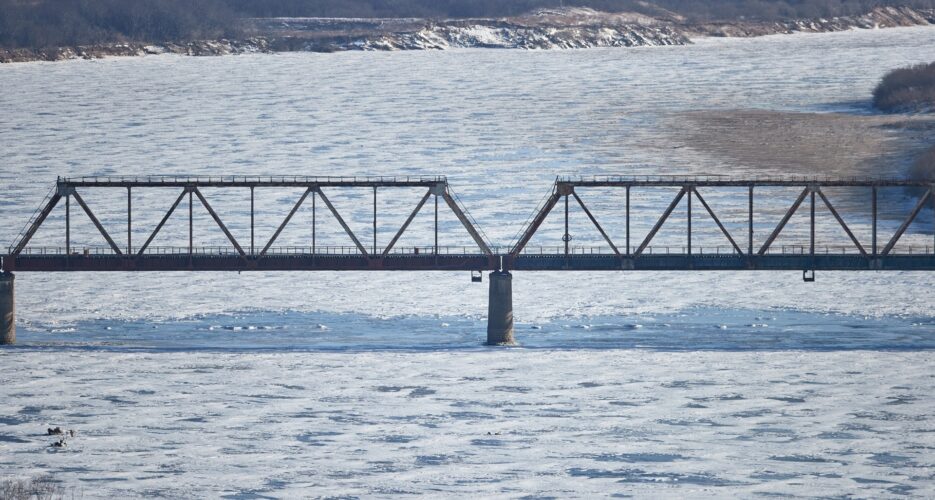 More than a year after North Korea shut its borders to protect against COVID-19, a top Russian diplomat gave a glimpse into the country’s state of affairs, describing medicine shortages, public transit restrictions and new virus disinfection centers that could help resume trade. On Monday, the Russian Embassy’s Facebook page posted an Interfax News Agency interview with Ambassador Alexander Matsegora, who said that borders will be opened for trade with Russia and China “after some time.” According to Matsegora, “large disinfection complexes” are being built at border crossing points “to ensure the safe entry of imported goods” after Pyongyang nearly put a full stop to foreign trade activities last summer. One such complex is being built along the narrow DPRK-Russia border, Matsegora said, but it’s unclear where the others will appear. Meanwhile, the ambassador doubted that foreign aid shipments would drastically increase anytime soon. “This year, it will be difficult to increase the volume of humanitarian assistance to the DPRK, at least until its borders are opened,” he said.  During the Interfax interview, the Russian ambassador also stated that North Korea’s pandemic-related restrictions have “had a negative impact on the economy and the living conditions of the population.” “Many enterprises have stopped working due to the lack of imported materials, raw materials and components — and many people have lost their jobs accordingly,” he said. “Children have not been going to school for almost a year. They are just staying at home, which is not that good for their studies and their health.” Matsegora also confirmed a recent NK News report on the dwindling variety of goods in Pyongyang’s supermarkets, claiming that items are now “three to four times more expensive than before the [COVID-19] crisis” and that medicines in the country are lacking. “It’s difficult to buy even basic things such as pasta, flour, vegetable oil and sugar,” he told Interfax. “You can’t find any normal clothes and shoes, either.” When it comes to the lives of Russian diplomats stationed in Pyongyang, the ambassador relayed that children of diplomat families “were instructed not to leave the embassy at all.” Matsegora also said it’s “a really big problem” that individuals cannot fly home quickly in the case of illness and that foreigners have been “prohibited” from using public transit in the capital city or to other parts of the country. As for North Korea’s COVID-19 situation, Matsegora said that the upcoming delivery of nearly 2 million British-Swedish AstraZeneca vaccine doses means that the DPRK government may soon allow its citizens to travel abroad. He added that Russia is “ready to admit more North Korean students” if they are vaccinated, and that North Korea’s claims to have zero confirmed cases of the virus “are true.” According to the Interfax interview, Matsegora did not answer a question on whether or not Moscow and Pyongyang are in talks about sharing the “Sputnik V” vaccine. Matsegora has worked at the Russian Embassy in Pyongyang for decades, but rose to the position of ambassador in early 2015. His predecessors generally served as ambassador for four to five years, but Matsegora has been serving in the role for even longer. Edited by Kelly Kasulis. Petro Chaikovskyi contributed to this report. © Korea Risk Group. All rights reserved. |


 SHARE
SHARE COPY LINK
 X
X MASTODON


Recent Stories