

|
Border Controls Russian workers leave North Korea as joint coal project nears year-long shutdownSome employees of RasonConTrans remain in border city despite COVID-19 lockdown putting indefinite pause on business
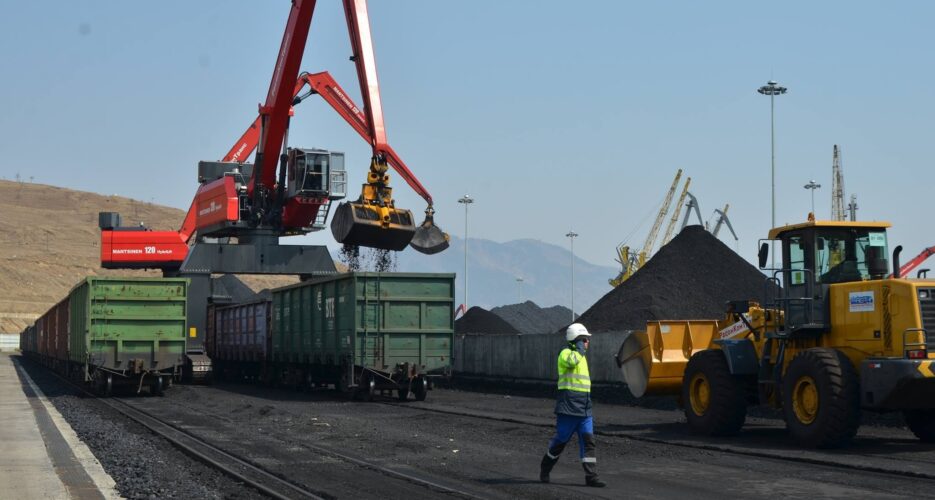 For only the seventh time this year, Russian workers living in North Korea were allowed to bypass a strict border lockdown and exit the country, according to a report this week from the Russian consulate in Chongjin. It comes as the foreigner community, mostly stationed in Pyongyang, continues to gradually dwindle. The consulate posted to their Facebook page on Dec. 20 that, with their help, seven Russians were granted special permission to cross into Russia two days earlier via the nearby railway border bridge. They were living and working for the RasonConTrans joint venture in the northeast border zone of Rason. It appears that at least eight employees of RasonConTrans remain in the country, according to a photo posted by the consulate purporting to show a group of 15 workers from the company taken just before the seven departed. 37 employees of the company were still in Rason in April 2020, according to the Russian Embassy in Pyongyang. A group of four RasonConTrans workers reportedly left that month, while NK News understands that a single Russian individual was also allowed to leave the country at the end of October under contentious circumstances following a health emergency. And as the consulate’s post this week repeated, foreigners will not be able to reenter North Korea to continue their work until Pyongyang lifts the border lockdown. This means that, if RasonConTrans wants to continue its operations, some of its employees won’t be able to visit home indefinitely: The DPRK foreign ministry recently said that the country is not likely to relax its border measures until the spread of COVID-19 has mostly stopped worldwide.  WORKING IN RASON IN 2020 RasonConTrans is one of only a few companies to receive an exemption to U.N. sanctions prohibiting joint ventures with North Korea, allowing them to transship strictly Russian-origin coal from Russia and through the Rason port on to third countries. But what are the remaining employees of RasonConTrans doing in Rason during a year when cross-border business has been made nearly impossible? “[They’re] getting supplies to support facilities,” according to Roman Minkevich, the Deputy Director General for HR at RasonConTrans. Speaking to NK News on Thursday, Minkevich said that no transshipments have been made since the border closed in Feb. 2020. Instead, employees have been maintaining the modern machinery at its port facilities and the connecting DPRK-Russia railway line that they help manage along with the North Koreans. Minkevich said the company needs to be ready to resume transshipments when the border eventually reopens.
 This means that a number of employees will have to continue to endure even harsher conditions in Rason than in years past, with fewer foreign goods coming into the zone and with no opportunities to visit home. However, Minkevich added that business was already down pre-pandemic, due to fears from some Russian companies that they may be targeted by the U.S. using secondary sanctions — despite RasonConTrans holding a U.N. sanctions exemption. The U.N. Security Council began limiting exports of North Korean coal in 2016 and completely banned the exports in 2017. Some companies have nevertheless expressed interest in resuming coal transshipments through RasonConTrans in the future, he said, which have mostly been destined for China. NK News previously reported on satellite imagery showing a significant slowdown in transshipments through RasonConTrans facilities in 2018. A timelapse of Planet Labs imagery taken in 2020 shows no shipping activity at the company’s terminal this year (the bottom of the three extending out from the port in the images). High-resolution Google Earth imagery also revealed no changes in the size of coal mounds at their terminal throughout 2020. Images: © 2020 Planet Labs Inc. All Rights Reserved. Reprinted by permission. A review of more recent Planet Labs satellite imagery reveals that the downturn continued in 2019 and that transshipments stopped altogether in 2020. The complete halt to shipping operations in 2020 follows a year of hope for new opportunities for RasonConTrans. In Nov. 2019, the company’s CEO Ivan Tonkikh joined discussions between top transport officials of Russia and the DPRK, reportedly to raise the prospect of South Korea transshipping containers through Rason’s “ice-free” port into Russia. He also traveled to Seoul in Apr. 2019 to push for South Korean participation in the port. Edited by James Fretwell © Korea Risk Group. All rights reserved. |


 SHARE
SHARE COPY LINK
 X
X MASTODON



Recent Stories