
|
COVID-19 Unification minister nominee proposes inter-Korean public health complex Lee In-young says South Korea should pursue humanitarian work and tourism with the DPRK independently of the U.S.
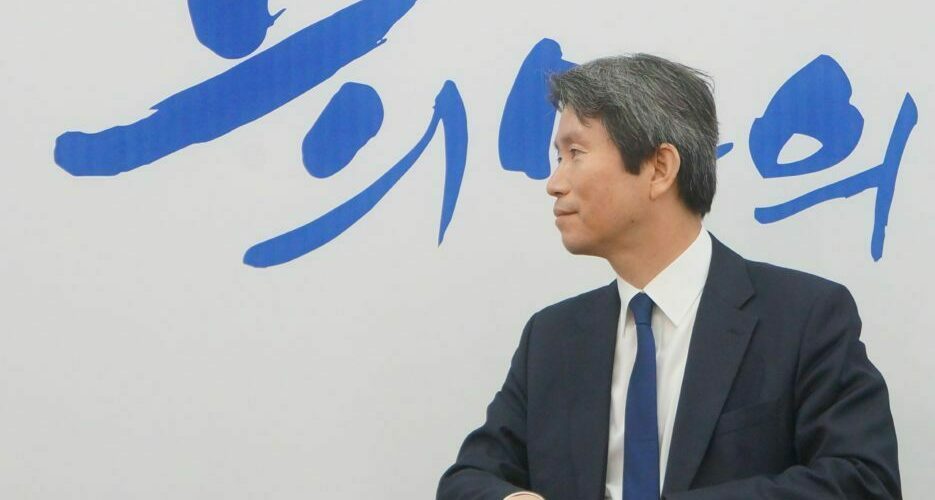 Correction at 22:45 KST: this article has been amended to revise details regarding the confirmation hearing. South Korean unification minister nominee Lee In-young proposed that Seoul proactively engage with Pyongyang in areas like public health, food security and “independent tourism” in a memo on Sunday. In a written response to a South Korean Democratic Party lawmaker Kim Young-ho ahead of his July 23 confirmation hearing, Lee expressed the need for the South to push forward with inter-Korean humanitarian projects “on our own” — meaning independently of the United States. Lee also stressed the need to reconsider the scale of upcoming U.S.-ROK joint drills and outlined a number of other initiatives meant to improve soured relations with the North. “A sustained inter-Korean cooperation is needed, without calculations in politics and national security, at least in [dealing with] food, sickness, and what people hopes to see before they die,” Lee stated. Lee — who was nominated by South Korean President Moon Jae-in to become the next unification minister earlier this month — notably suggested that the two Koreas open a joint public health complex in the city of Kaesong or other areas in the Demilitarized Zone (DMZ). Kaesong used to be the symbol of inter-Korean cooperation, harboring both the Kaesong Industrial Complex and the recently-demolished inter-Korean liaison office, which was blown up on June 16 after Pyongyang complained about anti-regime leaflets launched over the border by some defector-activists. 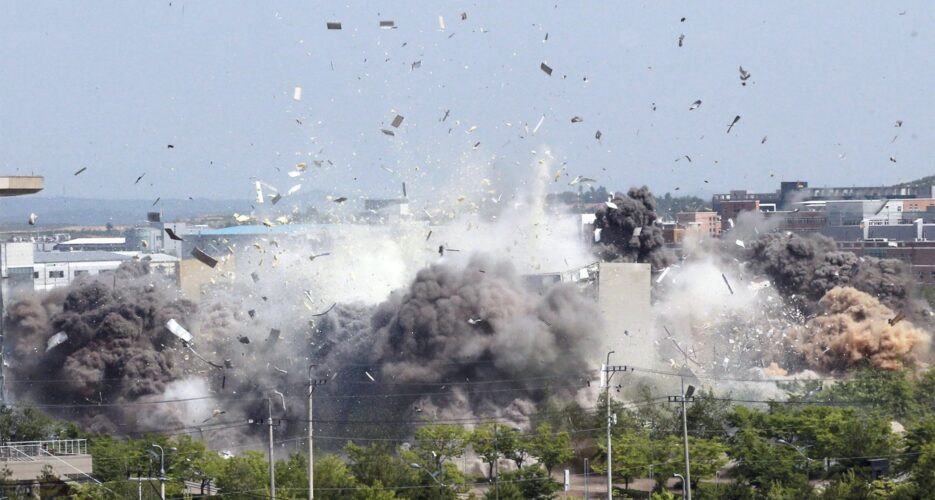 HUMANITARIAN PRIORITIES Lee’s proposal was wide-ranging and touched upon several potential areas of inter-Korean engagement. Within the humanitarian sector, his ideas largely break down into three parts: a joint response to epidemics, food assistance and the reunion of families separated by the Korean War. Issues such as the global pandemic COVID-19 and the African swine fever can be resolved only through sustained joint response between the two Koreas rather than “one-time aid” projects, Lee argued. The unification minister nominee called for a comprehensive inter-Korean system to “diagnose, prevent and treat” infectious diseases, stating that “there is no border in disease and calamities.” Lee called improving North Korea’s hospitals and medical capacity “an urgent task” for the two Koreas and stressed how the DPRK is “paying a keen interest” to the construction of Pyongyang General Hospital, which is supposed to be built before Oct. 10. Kim Jong Un recently paid a visit to the hospital’s construction site and criticized it for budget and supply shortages, North Korean state media reported on Monday. Along with medical cooperation, Lee also proposed food aid, underscoring the fact that this year’s inter-Korean cooperation fund has a large enough budget to send 200,000 tons of rice to the North. Recent reports from international aid organizations have underscored the continuous malnourishment of everyday North Koreans, and Lee further pointed to the fact that North Korea could be facing broader food insecurity because of decreased Sino-DPRK trade caused by COVID-19 border lockdowns. Lee also suggested that some items, such as medicine or food, can be exchanged between the two Koreas as a mutually-beneficial barter. Meanwhile, Lee stated in his memo that the issue of family reunions will take “utmost priority” to him should he become the next unification minister. He further suggested working with North Korea to organize a reunion honoring the 20th anniversary of inter-Korean family meetups, which first took place in 2000. Lee aims for the two Koreas to hold this reunion during this fall’s Chuseok holidays, which start in late September, but he also alternatively proposed small-group reunions of 10 families at a time in Panmunjom is the COVID-19 situation continues to pose challenges. 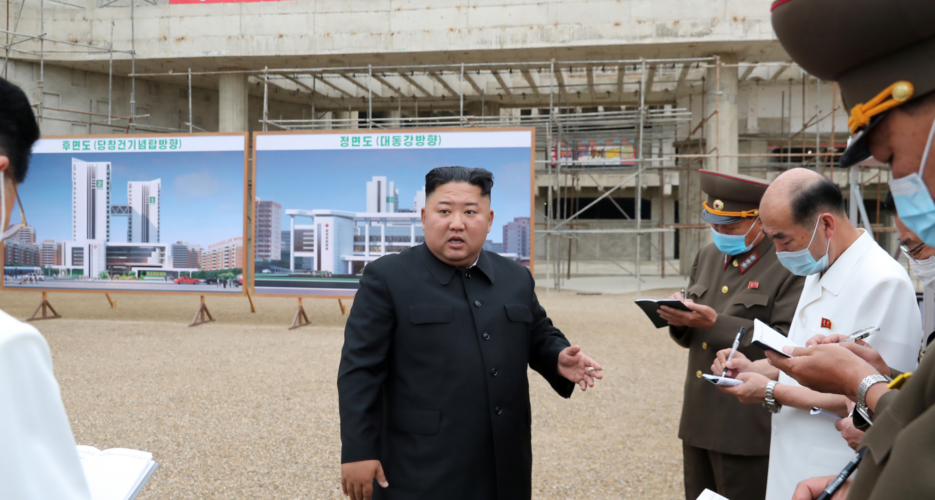 VIEWS ON U.S. PRESENCE In his written response to lawmaker Kim Young-ho, Lee stressed the need to treat sustained U.S.-ROK cooperation regarding North Korea as a core principle. However, Lee emphasized that the Moon administration should distinguish what types of engagement the U.S.-ROK Working Group should or should not discuss. “Expanding inter-Korean cooperation for implementing agreements between the South and North is needed,” Lee stated, adding that South Korea should take on a more “proactive and leading” role. According to Lee, “independent visits” or “independent tourism” to North Korea is one area that the South can pursue by itself. “Independent visits should be actively pushed forward with, as it has positive aspects, such as resolving issues regarding Mount Kumgang tourism,” he wrote. Lee also explicitly criticized how economic sanctions against North Korea have become an obstacle for humanitarian aid from the South. He specifically referred to an incident where Seoul attempted to deliver Tamiflu to North Korea, which came to a halt when those delivering the medication were unable to cross the border because of sanctions on the vehicles that transfer the goods. On the military front, Lee stated that U.S.-ROK military drills “should not work as factors [escalating] tension on the Korean Peninsula.” Lee admitted that joint drills are necessary for streamlining the process of the transferring wartime operational control (OPCON) to South Korea, but stated that the U.S. and South Korea should consider downsizing the scale of such drills because of COVID-19 risks. Ultimately, it’s unclear whether Lee will have his shot at carrying out items listed in his proposal. The unification minister position has remained vacant ever since Kim Yeon-chul took responsibility for souring relations and resigned in June. A confirmation hearing for Lee is set to take place at the National Assembly on Thursday. Edited by Kelly Kasulis © Korea Risk Group. All rights reserved. |


 SHARE
SHARE COPY LINK
 X
X MASTODON

Recent Stories