

|
COVID-19 North Korea touts new remote learning tech as COVID-19 fears keep students homeState media promotion follows adoption of new law on "tele-education" back in April
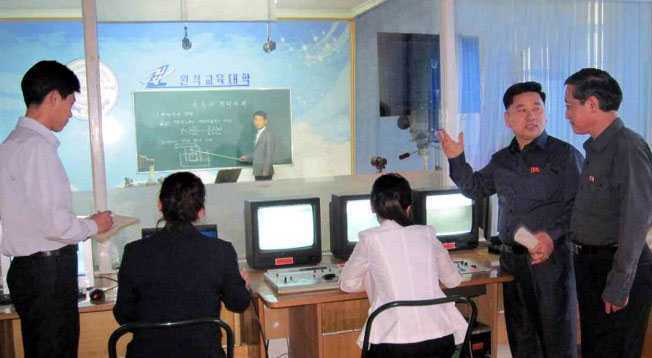 North Korean state media on Thursday touted new technology aimed at providing real-time remote education from a number of different digital devices, as daily reports in the country’s ruling party daily stress the importance of tele-education amid nationwide quarantine measures against COVID-19. While North Korea has reportedly developed such technology for years, widespread school closures aimed at preventing the spread of the pandemic have seen state media increase reporting on the country’s remote education capacities. “The Tele-education Department of Kim Chaek University of Technology… has added a new function for the remote education website to make debate and discussion possible via the [online] network,” the externally-focused Tongil Voice outlet reported Thursday. Students can use mobile phones, tablet PCs, and laptops to take live-streamed lectures and tests, it added. “Based on the firm information infrastructure… remote lectures are being held actively these days.” 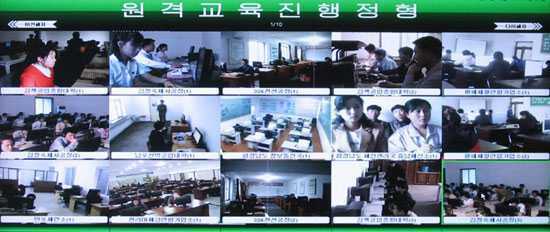 Party daily the Rodong Sinmun on Thursday also lauded the country’s tele-education infrastructure, reporting that in addition to students, workers — for example, technicians at a factory in Jagang province — are benefiting from such education. The party daily in the past week dedicated multiple articles to highlight the North’s “scientific and pragmatic” tele-education infrastructure. On Wednesday, the Rodong also carried an article similar to today’s Tongil Voice report promoting the achievements by the Kim Chaek University of Technology in the sector, reporting that a “new instructional management system” using remote lectures now also allows exams and feedback from professors. Notably, the article linked the recent boost in the technology to the COVID-19 pandemic. The university, it stressed, put extra effort into increasing the quality of remote education to “suit [the current situation in which] the Emergency Quarantine work done nationwide to respond to novel coronavirus infection that is wreaking havoc around the world.”  Many remote education departments in North Korean universities were originally reported to have been set up to provide diplomas for adults seeking higher education but unable to attend school due to work or disabilities — still a point of pride in recent articles. While North Korean universities have long worked on improving software and infrastructure for remote education, starting this March the party daily focused on how students whose vacations were extended due to coronavirus prevention measures were making good use of the new system. “As a part of the work to prevent the spread of novel coronavirus infection that is sweeping around the world… classes were halted and vacation was extended in campuses across the country,” the Rodong reported in late March. Students at the elite Kim Il Sung University were reportedly given the “network address” from the remote education department to study foreign languages, it said.  Kim Chaek University of Technology Natural Sciences students and Wonsan University of Fisheries students, it reported, also began attending online courses. The Korean Central News Agency (KCNA) article on Saturday also reported that Pyongyang Medical University professors were working to improve the quality of tele-education for students. Almost 690 lectures on 20 subjects have been filmed in a student-to-instructor discussion format by the professors from that university, according to last week’s Rodong article. Methods were also implemented to make sure the students can practice medical techniques despite staying home, it added. North Korea’s rubber-stamp parliamentary session this April unanimously approved the adoption of a new law on “tele-education,” also deciding to increase expenditure on “science and technology” by 9.5% compared to the previous year — the highest spike among all sectors. Edited by Oliver Hotham © Korea Risk Group. All rights reserved. |


 SHARE
SHARE COPY LINK
 X
X MASTODON


Recent Stories