
|
COVID-19 North Korean state media pushes anti-corruption line following Politburo meetingOfficial reactions to corrupt “betrayal," self-criticisms highlighted on Party daily front page
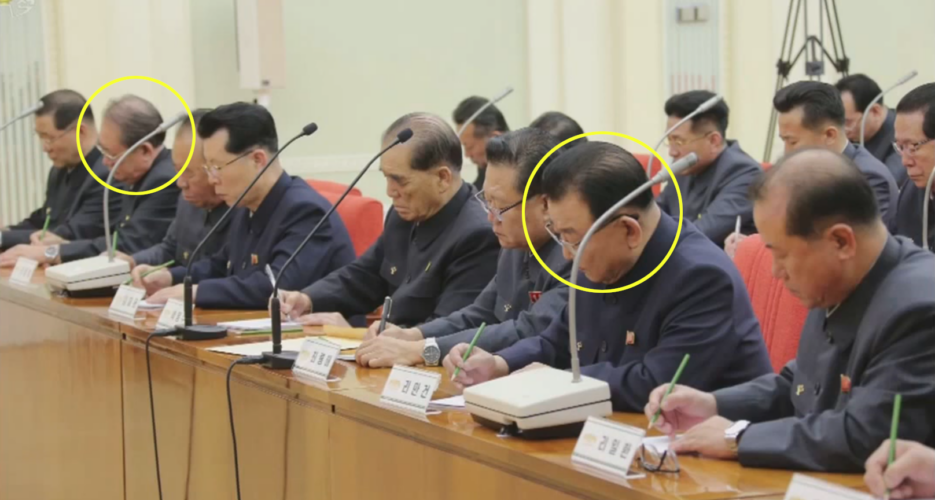 The front page of North Korea’s party-run daily Rodong Sinmun emphasized a recent scandal as a key ideological target for self-reflection on Monday, following the announcement of a dismissal of top officials for corruption on Saturday. That announcement came in coverage of a recent Politburo meeting led by Kim Jong Un, which was said to have covered the primary topics of the corruption scandal and the country’s efforts to prevent the spread of the novel coronavirus. On the front page of Monday’s Rodong, seven articles appeared supporting the Politburo’s dismissal of officials and disbanding of a cadre’s training center, using the opportunity to promote a party policy of “people-first-ism” and featuring self-criticisms and declarations from top party members. Under the banner slogan saying “Let us carry forward a new change in the work of the Party and thoroughly realize people-first-ism in line with the central Party’s ideology and intentions,” the main article at the top called the Politburo meeting “historic” and one which “boasted the character of our Party as being one of the people.”
 After stressing policies to improve the lives of ordinary people and referencing this year’s primary propaganda slogan — “Let us break through head-on all the barriers impeding our advance!” — the article turned to the corruption scandal. “If you turn your back on the people or damage the people’s interest, you directly abandon the revolution and it is a betrayal of the people,” the article, written by staff writer Kim Pyong Jin, said. Elaborating, it said that “recently, the phenomenon of extreme bureaucratization and pretentious behaviors occurred among some of the cadres, not in line with the revolutionary attitude and character consistently emphasized by our Party.” The “phenomenon of extreme bureaucratization” in the North Korean context refers to individuals not taking the party’s directives as important personal responsibility, and “pretentious behaviors” means those only pretending to carry out the party’s work. Top officials named Saturday as having been dismissed from their positions as Workers’ Party of Korea (WPK) Central Committee (CC) vice-chairmen were Ri Man Gon — who also held positions as member of the State Affairs Commission (SAC) and director of the Organization and Guidance Department (OGD) — and Pak Thae Dok. Monday’s article also said that “severe corruption of the cadre training center, which carries the main responsibility of our Party’s central work, occurred.” At the recent Politburo meeting, Kim Jong Un led votes deciding to disband the training center and “impose the relevant penalty.” The article then called the corruption “a defect” and “a dangerous deed that can absolutely never be accepted,” though details of the incident once again were not provided. “The officials are the planners, strategists, and practitioners who convey and execute the Party’s ideology and intentions before anyone else,” it said. “If officials, who must be in service of the people, actually only manage their own life and their authority and indulgence in bureaucracy, then the Party’s essence will become muddied and the revolution can also be ruined. This is a severe teaching in the history of the world socialist movement.” The story also briefly emphasized the WPK’s attention to nationwide prevention efforts against the novel coronavirus (COVID-19) and the need for people to find solutions — in line with the “breakthrough” slogan — to achieve economic goals despite any disruptions. Monday’s Rodong front page then dedicated the bottom half to five articles written by top party officials and economic leaders.  Chairman of the North Hamgyong provincial people’s committee Ri Hi Yong said in one article that “in retrospect, the phenomenon of extreme bureaucratization and pretentious behaviors of some Party members in the provinces in the previous period was no small occurrence.” Ri also said that even though Kim Jong Un guided several economic projects in his province, “the thought occurs that, after again ruminating on the Party’s intentions and demands, they are still far [from being realized].” “Through this opportunity, I shall once again put in more effort,” he declared. Another official, Sakju county Party committee chairman Sung Sang Bom, also used the opportunity to self reflect, saying the Politburo meeting inspired him to “look back on the question of whether [the committee] faithfully served the people.” “After such a serious analysis, I feel a great sense of blame,” he said, going on in the article to promise better results and more projects to improve the lives of people in his county. Contributing articles discussing “frontal breakthrough” efforts in the context of the corruption scandal were also featured from Party committee officials of the Pukchang Thermal Power Complex, the Bureau of Passenger Service, and the Wonsan Shoe Factory.  Writing for NK News’s sister site NK Pro on Saturday, senior North Korean media analyst Rachel Minyoung Lee said the topic of “irregularities and corruption” has been a theme under Kim Jong Un. She said that in both his 2019 New Year Address and a major policy speech that April, Kim used the terms when more broadly signaling his apparently keen attention on the problem of corruption. References to lazy or insubordinate party members by Kim in his site visits has also become a regular occurrence, and the terms regarding corruption and abuse of power have been used frequently in state media in recent months. Lee added, however, that this weekend marked the first instance of the terms “irregularities and corruption” being used to refer to dismissals since the high-profile purge and execution of Jang Song Thaek in 2013. But Monday’s narrow focus on the scandal on the Party daily front page, linked with key propaganda slogans and reassurances of an apparent priority on improving livelihoods, may signal the beginning of a wider campaign to place more attention on the issue. Additional translation assistance by Jeongmin Kim Edited by Oliver Hotham © Korea Risk Group. All rights reserved. |


 SHARE
SHARE COPY LINK
 X
X MASTODON


Recent Stories