
|
Evergreen “Friend”: Paek Nam Nyong and the long search for a decent North Korean novelPyongyang's literary output has long been seen as stilted and doctrinaire. Could a new translation change that?
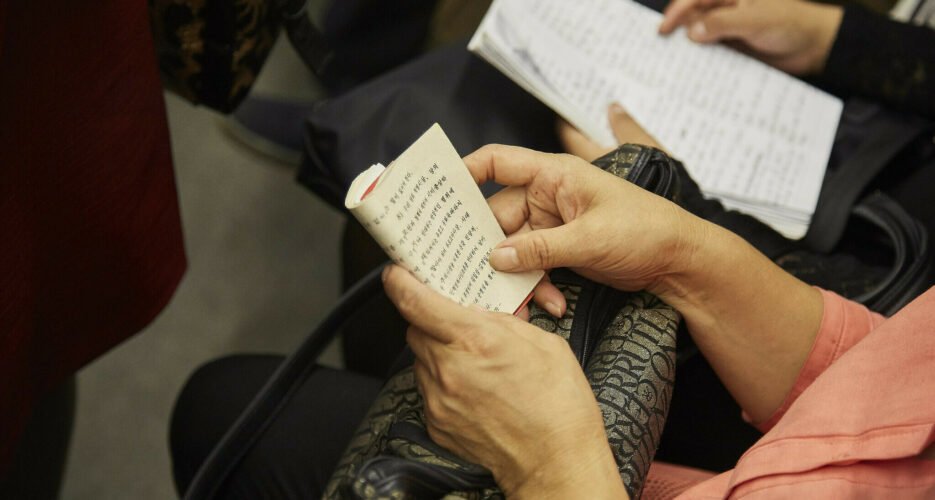 “Friend” by Paek Nam Nyong and translated by Immanuel Kim is out in May. You can pre-order it here. A good book is a precious thing in North Korea. In a society where propaganda is omnipresent in every other form of media, books offer their readers a form of escape between the lines, an oblique hinterland of interpretation that the regime might shape, but cannot truly define. They are also one of the only forms of entertainment untethered to the country’s unreliable electricity grid. Finding one worth adding to the collection is hard. Expensive for the state to print, most novels are produced using recycled paper and cardboard, are prone to tearing, easily scuffed, and haphazardly distributed. The quality of most prose is just as dismal. The culmination of a Stalinist vision of literature as yet another means for the party to indoctrinate the masses, North Korean fiction is a morass of short stories and novels written to the same propagandistic template in slightly different guises, full of characters as flimsy as the pages on which they appear. Identifying truly popular fiction in North Korea is almost impossible from a distance; “bestsellers” don’t exist in the country, as the state never publishes sales figures. Instead, one has to rely on anecdotal evidence from defectors, or else try and look for the tattered novels passed from reader to reader. It was one of these books — his book, as a matter of fact — that Paek Nam Nyong spotted in the hands of a fellow commuter as he was riding one of Pyongyang’s many trolleybuses. The novel she was reading, “Friend,” had been written by Paek in 1988, and had been well-received by the party and public alike. Acquiring one of these ratty tomes as a souvenir was an enduring obsession for Paek. His attempt to persuade the commuter to swap her version for a new copy, however, was quickly thwarted. “She shot me a dirty look and got off at the next stop,” he later told an interviewer. “She walked away slowly while reading.” “Friend” remains a classic of North Korean literature, but its author is less well-known. While writers in North Korea are valued by the regime as both entertainers and moral guardians, information about individual authors is tightly controlled by the state, with little or no biographical details included in the books published in their name. Frequently, the novelist is only identifiable to their readers through their prose, much like radio hosts in the West are known to their listeners through the sound of their voices, explains Immanuel Kim, a specialist in North Korean literature at George Washington University. “In North Korea, they all know the name of certain writers they’ve come to love, but they’ve never seen his or her face,” he says. “They could walk down the street, and nobody would know.”  “Friend” tells the story of a young couple on the brink of divorce. Told from the vantage point of a judge investigating whether their marriage should be dissolved, the novel unfolds through a series of flashbacks, forcing several characters – including the protagonist – to question the stability of their own relationships. Consistently popular in North Korea, “Friend” has also proven uniquely attractive to foreign publishers. Four years later after its original publication, the novel was republished in South Korea, and was translated into French in 2011. An English version translated by Kim will be released in May by Columbia University Press. Although fragments of North Korean fiction have been published in English before, this will be the first time that a state-approved novel will be reproduced by a U.S. publishing house. For Kim, the novel’s value in translation stems from its enduring popularity in North Korea itself, only made possible by a brief period of political liberalization in the 1980s. Coinciding with the ‘Hidden Hero’ propaganda campaign of that decade, which promoted the feats of ordinary people accomplishing extraordinary feats through intellectual self-improvement, North Korean writers were suddenly free to turn their gaze away from stock Stakhanovite characters and toward the everyday struggles of the average citizen. For Paek, it was a chance to depict family life in the country in its most distressed state, drawing heavily on his observations of proceedings at the divorce court in Kanggye, two floors down from his office at the provincial writer’s union.
“I witnessed arguments that can cut through steel, and the psychological warfare between the couples,” Paek told Kim in a 2015 interview. The author also grew close to one of the judges, Jong Son U, on whom the main character in the novel is largely based. It is from this fractious setting that Paek attempts to craft what is, at its heart, a morality tale about the sanctity of marriage. Unusually for a North Korean novel, however, every main character in “Friend” struggles – and, occasionally, fails – to meet the expectations placed upon them by their community, family, and spouse. The reader eventually learns that the marital rift at the heart of the novel springs from the disappointment of Sun Hee, a mezzo-soprano in the local arts company, at her husband Seok Chun’s unwillingness to seek promotion at his factory. The judge examining their divorce case, meanwhile, resents the frequent absences of his wife, an enterprising biologist trying to grow new types of crops in the neighboring town. Not until the end does he appreciate that his punishing work ethic and male chauvinism might have also contributed to their estrangement. The secondary characters are no less imperfect, from the miner driven to alcoholism by the strains of life down the pit, the apparatchik discovered to have embezzled prize money intended for local inventors on a brick wall surrounding his offices, to Ho Nam, the young son of Seok Chun and Sun Hee, who refuses to make a choice on which parent he loves the most. Whether or not “Friend” is uniquely qualified among North Korean novels for translation depends on who you ask. Immanuel Kim is skeptical. Out of everything he’s read, only one work of literature, a historical romance about the Joseon Dynasty-era courtesan Hwang Jini, would make the cut. Despite its popularity in South Korea — the book won the nation’s prestigious Manhae Prize — he fears that its appeal in the West would be diminished by its coincidental resemblance to the Arthur Golden novel, “Memoirs of a Geisha.”  The French translator of “Friend” is more optimistic. An editor for the publisher Actes Sud and a veteran Koreanologist (“It’s not a disease, it’s an academic field”), Patrick Maurus estimates that the novel sold around 5000 copies in France. In addition to publishing “Friend,” Maurus has also published a collection of short stories from the country to moderate acclaim. He plans to release another by Paek once the coronavirus crisis has abated, in addition to what he describes as a North Korean whodunnit, a surprising product from a country where crime is officially non-existent. There are ways to work around this obstacle, explains Maurus. “The bad guy has to be a guy who listens to American radio, or is of Japanese descent or something like this, to explain that he’s not really a Korean,” he says. Maurus has met Paek dozens of times. The novelist has always struck him as ebullient, kind and — crucially — an enthusiastic champion of North Korean literature, going out of his way to introduce the publisher to several other writers of equal esteem (if not as charming; many of Paek’s contemporaries struck him as being “as ‘funny as jail doors,’ as we say in French.”) That Paek’s personal influence stretches this far is testament to the esteem placed on him by the state. Maurus offers proof of this in the form of a 25-minute documentary he shot with the author in 2012. The charming raconteur described to me by the French publisher is almost completely absent in the DVD that pops through my letterbox a week later.
Mostly consisting of two long, dry interviews with the author in a library setting and by the Taedong river, glimpses of the man behind the persona are fleeting: Paek at his desk, scribbling on notepaper; Paek with his grandson on his knee; Paek posing awkwardly next to a pair of newlyweds, the groom barely concealing his glee. The lack of insight provided by the film into Paek’s life, however, is less important than the fact of the documentary’s existence, which is probably the first example of a North Korean author being interviewed on camera by a Western academic. Clearly, someone high up wanted the world to get to know Paek a little better. Paek is also reportedly given wide latitude to write whatever and whenever he wants. “He’s at such a high level in the Writer’s Union that he’s not pressured to do anything,” explains Kim. Other privileges, he says, include a private office at the Writer’s Union headquarters and a large apartment in Pyongyang, the seat of the country’s power. Paek’s two translators are at odds on how the author actually spends his days. Maurus describes a man who never really shed the work ethic or lifestyle of the factory worker he once was. Kim is more circumspect. When he met Paek in 2015, the author was in the midst of researching a novel about chess – precisely what the plot was going to be, he wasn’t sure, but it did seem to involve playing endless rounds with the local patzers. “That’s basically his life,” says Kim. “He wakes up in the morning, takes his grandchildren to daycare, spends time in his office a little bit – God knows what he’s doing – steps out, plays chess with the elderly men in the park. When it’s time to pick up his grandchildren, he goes and picks them up, keeps them at his apartment until his daughter comes, and the next day starts all over again.”  There are some duties Paek is expected to perform. Every professional author in North Korea has to be a member of the Chosun Writer’s Union, a state-approved hierarchy of novelists and essayists organized at the provincial and national level. The output of its lowest rungs is largely defined by the heavily propagandistic short stories and novellas that have come to define the country’s literature abroad. More talented writers, however, are promoted to the national office in Pyongyang, accumulating all the benefits — a generous stipend, a well-built apartment — that come with residency in the capital. A select few, like Paek, are eventually invited to join the April 15th Literary Production Unit, the crack battalion of authors assigned to write the official historical novels depicting the Kim dynasty. Novelists in the group are afforded some degree of artistic freedom, and according to Kim, the chance to create some genuinely gripping works of fiction. Even so, not everyone who is asked joins. “You might need some raw talent, sure, because the writers for that group are extremely talented,” he says. “But you also have to show signs of loyalty to the party and the state.”
Paek was invited, and proved willing. Most other authors, like Kim Ju Song, never get close. A Zainichi Korean, he emigrated with his family to the DPRK in the 1970s. Having heard about the good living professional authors could make in the country, Kim tried hard to win the regional writing competitions that would catapult him into the higher echelons of the Writer’s Union. Nevertheless, his attempts to contribute works influenced by the foreign authors he’d read in Japan – Maupassant, Dumas, O. Henry – were regularly overlooked. Kim Ju Song would later defect from North Korea and publish a book on his experience in Japanese. Nowadays, his spare time is spent reading books about the underbelly of life in his new South Korean homeland, and watching Marvel movies (“I’m a big fan of Scarlett Johansson”). He doesn’t look back on his time in North Korea with pride. “Those who are most keenly aware that novels in North Korea are propaganda textbooks are its writers and intellectuals,” he tells me over email. And yet, somewhat surprisingly, he considers it no bad thing that Paek Nam Nyong is receiving wider recognition abroad. “His way of writing is very natural, and a little different from what you typically see in North Korean literature.” The regime, he adds, will be pleased for different reasons. “It’s already been recognized as a work of high value in North Korea,” says Kim, and it’s a source of pride that a work originating in their system is being read abroad. “The things they’re concerned with, however, are the copyright and royalties being given to Paek Nam Nyong as an individual. They’re a greedy country concerning matters of money.” According to Maurus, Paek is pleased with the reception “Friend” has already received in South Korea and France. Absent being invited to talk about the novel abroad, though, he remains confined to Pyongyang, living out his days in his apartment with his extended family. Obtaining a first copy of “Friend” remains an enduring obsession. Maurus remembers one such attempt when, whilst drinking at a local bar with Paek, the author was finally recognized by a passer-by. “The young readers were all coming to greet him and thank him for the book, and other books too,” he says. “He asked them for their copies, because he didn’t have the first printing. And everybody refused.” Edited by James Fretwell and Oliver Hotham © Korea Risk Group. All rights reserved. |


 SHARE
SHARE COPY LINK
 X
X MASTODON


Recent Stories