
|
Border Controls Roughly a thousand North Korean workers remain in Russia, despite UN ban: MFA"Limited" transport options responsible for delay, spokesperson Maria Zakharova says
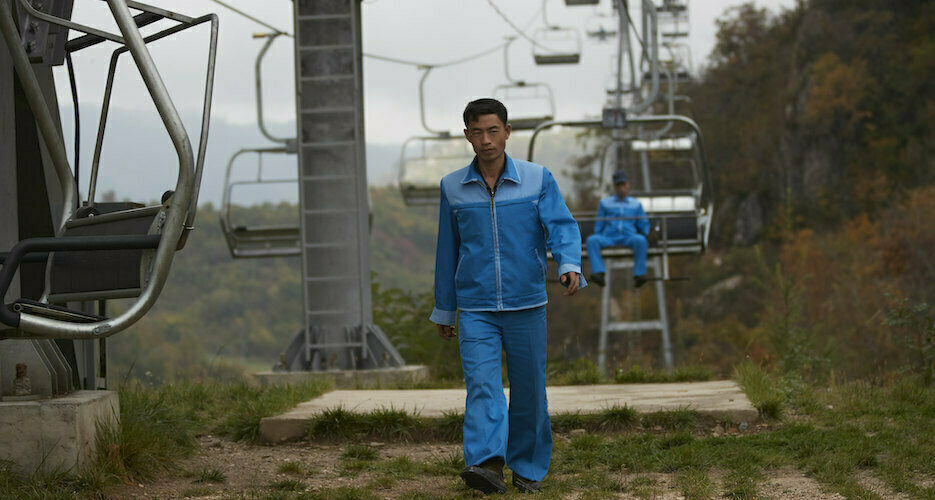 Roughly a thousand North Korean laborers remain in Russian territory, a spokesperson for the country’s Ministry of Foreign Affairs (MFA) said Thursday, over a month after UN sanctions requiring their repatriation came into effect. Speaking during a briefing to press, MFA spokesperson Maria Zakharova insisted that the country was nonetheless “strictly fulfilling” its obligations under United Nations Security Council (UNSC) Resolution 2397. “The majority of North Korean workers have already left our country,” she said, in comments carried by Russia’s TASS News Agency. Those that remain — “about a thousand people” — are no longer earning money and are in Russia on expired work permits, she continued, claiming that logistical challenges had prevented Moscow from repatriating them by December 22. “Due to objective difficulties, sending all by December 22 failed,” Zakharova continued. “Only one North Korean airline serves flights to Russia. It operates no more than two flights a week. The possibilities of railway transport are also limited.” Resolution 2397, approved by the Security Council in December 2017, mandated that member states repatriate all North Koreans earning currency in their territory by the end of 2019. Despite a last-ditch effort by China and Russia to reverse the ban at the UNSC last month — a proposal swiftly rejected by the U.S. — the new rules came into effect on December 22. Speaking to press last week, a senior Russian diplomat said almost all of the 11,490 North Koreans reported to have been working in the country’s territory last year had been sent home. Those that remained, Pyotr Ilyichev — who heads the Russian foreign ministry’s Department of International Organizations — said, were being prevented from leaving by “logistic” issues. “There are not enough flights to take everyone out,” he insisted. But while the Russian foreign ministry claimed that logistical hurdles are preventing the full repatriation of DPRK workers in its territory, steps appeared to have been taken ahead of the ban’s coming into effect likely aimed at mitigating these issues. North Korean national airline Air Koryo, for example, was reported to have in December planned an additional 19 round-trips (36 additional flights) between Vladivostok and Pyongyang, on top of its regular twice-weekly service between the two cities.  It’s unclear how plans to repatriate the remaining thousand North Korean workers might be affected by new travel restrictions imposed by the DPRK government this week aimed at stemming the spread of the Chinese coronavirus. NK News learned on Thursday that foreign diplomats and NGO workers in Pyongyang are now “completely forbidden” from flying to China for the time being, with the Pyongyang-Vladivostok service now operating as an emergency service for foreigners needing to leave the country. But questions also remain over Russia’s broader commitment to repatriate all North Korean workers in its territory, and whether it may seek to skirt the new restrictions by simply assigning would-be DPRK laborers with different visas. In the run-up to the December ban coming into effect, data from the country’s interior ministry revealed this week, thousands of North Koreans traveled to Russia on student visas, tourist visas, and work visas. According to analysis of the official numbers by NK News’s sister site NK Pro, more than 12,000 DPRK citizens entered Russia in the three months from October to December 2019. “I’d say the tourist visas are the area to keep the biggest eye on,” Anthony Rinna, a senior editor at Sino-NK, told NK Pro. If those visas suddenly, unexpectedly increase, he said, that “could indicate potential malfeasance.” “If the numbers for visas that could be used as loopholes for sanctions violations remain relatively stable over the course of the next year or so, then that could be an indication that the Russian authorities are keeping their word.” Also under the spotlight is China, where the U.S. has previously estimated 50,000 North Koreans had been at work in 2017, with the U.S. Treasury having earlier this month slapped new sanctions on two companies accused of circumventing the UN ban. Speaking to journalists at an off-the-record briefing, an unnamed State Department official accused Beijing of failing to abide by its obligations under UNSC resolutions. “Many – most others have actually taken this to heart and moved them,” the official said. “But we know one particular country has the large majority of North Korean guest workers and has not taken action, hence the steps we had to take in terms of sanctions.” The official clarified that he was referring to China. Edited by James Fretwell © Korea Risk Group. All rights reserved. |


 SHARE
SHARE COPY LINK
 X
X MASTODON


Recent Stories