
|
Analysis N. Korea tourism companies struggle through travel banEventual lifting of ban may result in spike for 2015, but episode reveals inherent problems with North Korea travel
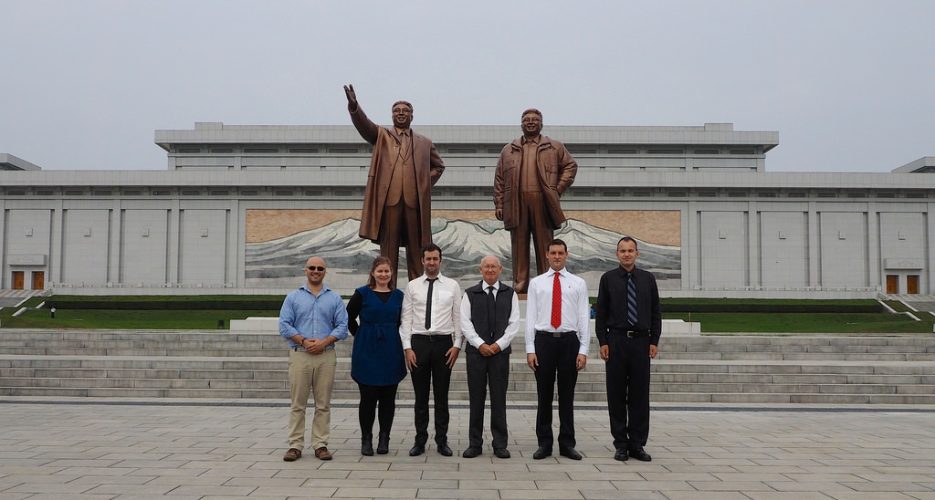 In late October, in an alleged effort to prevent the spread of Ebola, North Korea closed its borders and implemented a series of quarantine measures applied with very few exceptions. The measures include a ban on foreign visitors, resulting in the cessation of North Korea’s tourism industry. While the Ebola crisis is under control outside North Korea, the regime has maintained the ban far beyond initial estimates. In a further blow to foreign tour companies, North Korean authorities have recently announced a ban on foreign participants in the April 12 Pyongyang Marathon. But while there have been rumors emerging in recent days that the border may open again on April 1, the impact of the ban has already been felt by travelers and tour operators alike. SHORT-TERM LOSSES The immediate consequences of the Ebola ban include losses of revenue for foreign companies forced to cancel the tours they have advertised, and in some cases already booked. “We had to cancel all our tours from October 23rd to April this year…It’s not a very high number, as winter is usually low season,” André Wittig, director of Pyongyang Travel, told NK News. But multiple Western tour companies, speaking to NK News on the condition of anonymity, provided differing reports on how many tours had to be cancelled, with some signaling large revenue losses and others losing out on “only a couple of private tours.” And though winter is typically a slow season, some tour companies said they had registered a significant upswing in bookings during the period. “It’s affected us in quite a few ways. We have had our busiest winter this year; generally its quite tough, in winter we don’t have many bookings but in October we have had quite a lot, especially for February,” Dylan Harris of Lupine Tours, a British-based tour company, told NK News. “I’d say up until early January the bookings were still coming in but definitely since then we have just seen a massive decrease and people are kind of saying they are starting to make other plans.” And if recent rumors aren’t true, the coming of the spring season would mean a more significant number of tours lost. “We have had to cancel about a dozen tours so far and may need to cancel more soon,” Troy Collings, the DPRK managing director at Young Pioneer Tours (YPT) told NK News. Andrea Lee, CEO of Uri Tours, said that her company had expected to take around 200 runners to the April marathon alone. “I know that all of the other tour operators are marketing this pretty heavily,” Lee said prior to the announcement barring foreign runners. With amateur and professional runners put together, she said that tour companies collectively took around 500 participants last year and estimated that as many as 1,000 were due to participate in 2015. Tourists also did not anticipate the length of the ban and had booked trips with the expectation that the measures would be lifted prior to their departure. “I booked my trip just as they were introducing the Ebola quarantine measures. Like most people I was not thinking that the measures would last anywhere near as long as they have,” said one tourist, speaking to NK News on the condition of anonymity.
While most tour companies offer refunds for canceled tours, tourists’ plans are also complicated by the fact that they must fly to China before entering North Korea. “The big problem that made me decide not to book was the uncertainty, still one month prior to departure and the need to book flights,” one tourist said. In addition to offering refunds in the event of cancellations, most companies offer opportunities for their clients to reschedule trips to the North. Tour operators said that many individuals opt for the latter option, but that these are usually for recurring tours that can happen any time of year. However the cancellation of seasonal tours or those involving specialist events – such as skiing trips and the Pyongyang Marathon – mean fewer reschedulings and more refunds. “I didn’t book. I wanted to go on the skiing trip offered by Koryo the first week of January but never proceeded due to the Ebola measures,” Luca Presotto, a prospective tourist, told NK News. “Of course this impacts my plans regarding visits to the country. I changed my decision (from) ‘Go there one week this same winter’ to ‘I’d like to go back there, when it will be feasible.’”  A BUMP IN THE ROAD? The medium- to long-term consequences on the tourism industry are less clear at the moment. “It is fair to say that it has increased uncertainty for customers looking to book later in 2015,” said a tour operator speaking to NK News on the condition of anonymity. “We have a lot of people on our ‘maybe’ list rather than going ahead and confirming their booking, which makes sense given the circumstances “Regretfully, it adds a certain element of uncertainty to DPRK tourism as no doubt potential customers will think, ‘If they can just close the country to tourism overnight like that, what’s stopping them doing it again?’” the operator added. Harris of Lupine Tours believes that there will be a boost in bookings following the eventual relaxation of the quarantine measures but that the long-term damage may have already been done. This sentiment was echoed by some would-be travelers. “If the trip is cancelled I would still like to visit North Korea, but I may be a bit more hesitant as it is quite a long process to go through,” one tourist told NK News. Other companies, however, are adamant that the ban will not have a sustained impact on the industry or those wanting to visit North Korea. “Medium term it will reduce greatly the number of visitors over the next few months…I expect by summer, however, the effects will have largely been countered,” one tour operator said. Another Europe-based tour company said that, if the ban is lifted soon, 2015 will “be a very busy year for us.” People have not been deterred from visiting North Korea following other controversial events such as the much publicized arrest and detention of several tourists in North Korea and subsequent updates to Western travel warnings. “Once people decide to visit the DPRK it’s not normally a decision they can just walk away from, for some however life will probably get in the way, but on the whole we expect most will eventually visit,” Collings said.
Many of the companies indicated that the number of bookings and inquiries have actually increased for 2015. “The DPRK has been in the news quite a bit and always it generates interest in the country and the interest in traveling to the DPRK is relatively higher than other years,” Lee said “This Ebola travel restriction is just a hiccup in the overall outlook on tourism. I think the DPRK is gearing up for a strong rest of the year, as are we.” CONFLICTS OF INTEREST While the ban may not quell the curiosity of those already keen to visit North Korea, it may prevent the type of growth in the industry that North Korean authorities are aiming for and which established companies have been hopeful of. North Korea has expressed a desire to increase the number of tourists visiting the country to 1 million annually. Around 6,000 Western tourists visit the country yearly, according to industry estimates in 2014, with Chinese tourists representing the majority. In an effort to develop tourism further, the North Korean government has spent heavily on infrastructure to support further visitors, such as those in Wonsan, and on attractions such as the Masikryong Ski resort. “The push for tourism is still pretty high on the agenda and the country is focused on bringing in more tourists and there have been a lot of developments,” Lee said, also citing increasing options for itinerary diversification. However despite this investment, the closing of the border and the general lack of information as to when it will reopen has worked in opposition to these goals and the interests of those looking to invest or operate a North Korea-related business. “There is clearly a tension and schism between the interests and goals of business-minded and economy-minded people and perhaps other decision-makers who are sufficiently insulated from how the economy works that they can make this kind of decision,” Andray Abrahamian, department director at Choson Exchange, told NK News.  “What is clear is that under the last two year under Kim Jong Un there has been a greater focus on the economy both rhetorically and in terms of policy experiments but at the same time we have something like this that really undermines a lot of basically positive steps taken.” This contradiction between the state’s push for economic development and investment and the implementation of policies that impede this is an all-too-familiar one for investors and for some in the tourist industry. “In the medium to long term it kind of fits into that unfortunate perception that North Korea is not a place where business is a priority which is ironic because they are taking these issues more seriously,” Abrahamian said. Tour operators are still hopeful of a continuing increase in bookings and inquiries, but are also realistic about the current limitations. “Visitor numbers are increasing and, despite the obvious effect this suspension on tourists will have on this year and last year that trend should continue. However the growth they hope to attain is pretty impossible under current conditions and practices,” Collings of YPT said. There are certainly internal competing interests at play in North Korea with the top-down policy affecting North Korea’s tourism bureaus and placing the country’s ability to generate capital at risk. “Obviously the KITC (Korea International Travel Company), they are going to be lobbying for a removal of this policy as soon as possible I imagine also the Ministry of External Economy and a few others, they’ll also be lobbying for this ban to go away as well,” Abrahamian said. “There will be others that are quite happy with how things are with the Ebola measures in place.” And while some may be turned off from new investment in North Korea, for some the recent ban is another indication of underlying inherent issues in North Korea which may not be fixed in the foreseeable future. “I never really wanted to put it all on North Korea but this has speeded up the fact that I am trying to diversify to other places as well,” Harris from Lupine Tours told NK News. “The longer it carries on (it) becomes obvious that there are those issues and that leads to the fact that they are not going to go away any time soon.” North Korean tours count for about 50 percent of Lupine Travel’s trips, while other companies have much higher shares. “Some of the other companies, they must be in a terrible state at the moment,” Harris said. It has proved even more frustrating for the industry given the level of investment in areas like Wonsan. “Spending millions of dollars on new tourist facilities only to shut the country on a whim due to a perceived threat of Ebola is hard to justify from our Western viewpoint,” one tour operator said. “However, a DPRK view might be that it is a perfectly rational economic sacrifice to make, to eliminate the threat of a virus that they are ill-equipped and prepared to deal with.” © Korea Risk Group. All rights reserved. |


 SHARE
SHARE COPY LINK
 X
X MASTODON

Recent Stories